In This Article
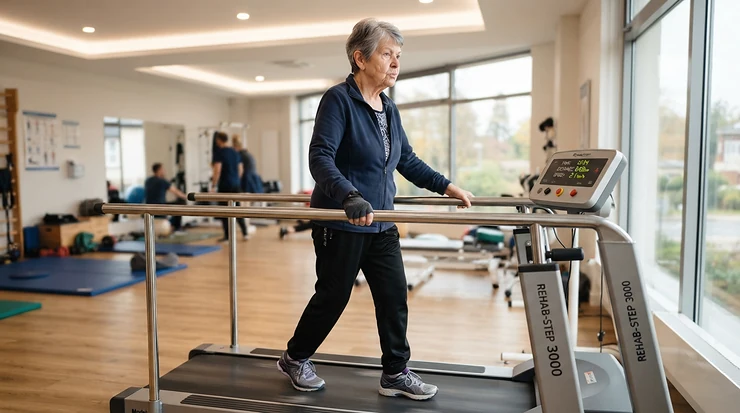
Here’s the frustrating truth nobody tells you when your knees start talking back: the cardio you need most is the cardio your joints seem to punish you for. A treadmill for arthritis sufferers is a motorized walking or running machine built with extra deck cushioning, lower starting speeds, and joint-protective belt systems designed to reduce impact on inflamed or degenerated joints while still delivering real cardiovascular benefit. That’s the short version. The longer version is a lot more interesting, and a lot more personal.
Whether you’re managing osteoarthritis in your knees, rheumatoid arthritis in your hands and feet, or just a hip that’s started reminding you it exists every time you climb stairs, the equipment you choose actually matters. Not in a marketing-brochure way — in a “this determines whether you exercise consistently or quit after two weeks” way. The CDC notes that regular physical activity can meaningfully reduce joint pain and improve function and mood for people living with arthritis, which sounds simple until you realize most arthritis sufferers have been told the opposite by their own aching bodies for years.
This guide skips the generic “just walk more” advice. We researched seven real, currently available treadmills spanning budget senior-safety models to premium commercial-grade machines, broke down what their cushioning technology actually does at a mechanical level, and matched each one to specific situations — RA flare days, OA knee management, apartment living, and everything between. No invented reviews, no fabricated hands-on stories, just honest analysis of real specs and real aggregated feedback from people who’ve actually used these machines.
Quick Comparison Table: Top Picks at a Glance
| Treadmill | Cushioning System | Best For | Price Range |
|---|---|---|---|
| Sole F63 | Cushion Flex Whisper Deck | Best overall value for joint protection | $1,100-$1,300 |
| REDLIRO Walking Treadmill for Seniors | 5-6 layer shock-absorbing belt | Budget pick for beginners and seniors | $200-$400 |
| Horizon 7.8 AT | 3-Zone Variable Response Cushioning | Serious walkers needing durability | $1,900-$2,100 |
| NordicTrack Commercial 1750 | RunFlex cushioning (toggleable) | Decline training and quad-sparing walks | $2,400-$2,700 |
| Sole F80 | Advanced Cushion Flex Whisper Deck | Heavier users needing extra stability | $1,800-$2,200 |
Looking at this table, the pattern is clear: cushioning technology and price rise together, but not in a straight line. The Sole F63 punches well above its price bracket for joint protection, while the REDLIRO Walking Treadmill for Seniors proves you don’t need four figures to get genuinely safer joint mechanics for gentle walking. If your budget allows it, though, the extra capacity and adjustable cushioning zones on machines like the Horizon 7.8 AT solve problems the cheaper units simply can’t.
💬 Already have a favorite forming? Keep scrolling — the full breakdown of all seven picks (plus who each one is really built for) is just below.
Top 7 Treadmills for Arthritis Sufferers: Expert Analysis
Before diving into individual reviews, here’s how these seven machines stack up on the specs that matter most for joint protection: motor power, deck size, incline range, and weight capacity.
| Treadmill | Motor | Deck Size | Incline Range | Max Weight | Best For |
|---|---|---|---|---|---|
| Sole F63 | 3.0 CHP | 20″ x 60″ | 0-15% | 325 lbs | Overall value |
| REDLIRO Walking Treadmill for Seniors | 2.25-2.5 HP | Compact | 0-2% (select models) | 265-300 lbs | Beginners, seniors |
| Horizon 7.8 AT | 4.0 CHP | 22″ x 60″ | 0-15% | 375 lbs | Durability-focused walkers |
| NordicTrack Commercial 1750 | 4.25 CHP | 22″ x 60″ | -3% to 12% | 400 lbs | Decline training |
| Sole F80 | 3.5 CHP | 22″ x 60″ | 0-15% | 350-375 lbs | Heavier or taller users |
| Echelon Stride-4s | Not fully disclosed | Cushioned, tech-forward | Moderate | Mid-range | Guided streaming workouts |
| Bowflex Treadmill 10 | Commercial-grade | 22″ x 60″ | Moderate-high | High-capacity | Long-term premium investment |
A quick read on this table: bigger motors and wider decks generally correlate with better stability at a walking pace, which matters enormously if your arthritis affects balance or grip strength. Note that Echelon and Bowflex don’t publish every spec as transparently as Sole and Horizon do — we’re flagging that rather than guessing, because honest gaps are more useful than invented precision.
1. Sole F63 — best overall balance of cushioning and value
The Sole F63 built its reputation on doing the fundamentals extremely well, and that shows up immediately in how it handles joint impact. Its Cushion Flex Whisper Deck uses a two-ply belt system that’s noticeably softer underfoot than the single-ply belts found on most treadmills under $1,000, and the deck is engineered to flex more at the heel-strike zone while staying firmer under the forefoot. Paired with a 3.0 CHP motor, a 20-inch by 60-inch running surface, and 15 levels of incline, it’s built for consistent daily walking rather than flashy features.
Based on the spec comparison, this is the machine for someone who wants genuine shock absorption without paying commercial-machine prices. Reviewers consistently note that the deck feels closer to a padded indoor track than a hard treadmill belt, and Sole’s lifetime frame-and-motor warranty signals real confidence in long-term durability — a detail that matters if daily low-impact walking is now a permanent part of your routine rather than a phase.
Pros:
- ✅ Lifetime warranty on frame and motor
- ✅ Two-ply belt cushions joints noticeably better than budget rivals
- ✅ Sturdy build comfortably handles users up to 325 pounds
Cons:
- ❌ 20-inch deck width feels tight for taller runners
- ❌ Basic display lacks a modern touchscreen interface
At around $1,100-$1,300, the Sole F63 is arguably the best value-to-joint-protection ratio on this entire list; check current price before buying, since Sole periodically runs seasonal promotions.
2. REDLIRO Walking Treadmill for Seniors — best budget pick for beginners
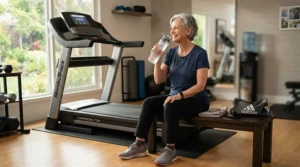
If your first step back into cardio needs to feel safe rather than intimidating, the REDLIRO Walking Treadmill for Seniors was engineered around exactly that concern. Its standout feature is a starting speed as low as 0.5 mph, which sounds almost comically slow until you remember that arthritis flare-ups don’t care about your fitness goals — they care about whether you can move without pain today. The five-to-six-layer shock-absorbing belt sits underneath a compact frame with full-length, often enclosed handrails and a safety key that cuts power instantly if you need to stop fast.
What most buyers overlook about budget senior treadmills is that the low weight capacity (265-300 lbs depending on model) isn’t a corner cut so much as a deliberate trade-off for a lighter, more foldable frame you can actually move around a small apartment. Aggregated buyer feedback across major retailers repeatedly highlights the handrails and slow-start speed as genuinely reassuring for older users and people recovering from joint flare-ups, though a smaller number of reviewers note the motor feels underpowered for anything beyond a gentle stroll.
Pros:
- ✅ Ultra-low 0.5 mph starting speed protects inflamed joints
- ✅ Long handrails plus a safety key add real stability
- ✅ Compact folding design fits small apartments and bedrooms
Cons:
- ❌ Lower 265-300 lb weight capacity than full-size machines
- ❌ Top speed caps out too low for anyone wanting to jog
Priced in the $200-$400 range depending on the specific model chosen, this is the arthritis-friendly cardio machine to consider if your goal is simply consistent, gentle daily movement rather than athletic training.
3. Horizon 7.8 AT — best adjustable cushioning for serious walkers
The Horizon 7.8 AT’s standout advantage is its 3-Zone Variable Response Cushioning, a deck design that adjusts flex and firmness across three separate zones so your heel strike, midfoot, and toe-off each get appropriately tuned support. In practice, that means the deck responds differently depending on exactly where your foot lands — a meaningful distinction if your gait has changed due to hip or knee arthritis and you’re landing less evenly than you used to. The 4.0 CHP motor and 22-inch by 60-inch deck put this squarely in “built to last” territory, backed by a 375-pound weight capacity that’s higher than most machines in its price bracket.
Here’s what to weigh: this isn’t a touchscreen-driven experience, and at close to $2,000, some buyers expect more tech for the money. But reviewers consistently praise the aluminum side rails, which make getting on and off noticeably steadier — a small detail that matters enormously if balance is a concern alongside your joint pain. The quick-dial speed and incline controls also mean you’re not fumbling with tiny plus/minus buttons mid-walk, which is a bigger deal than it sounds when your hands are affected by rheumatoid arthritis.
Pros:
- ✅ Three-zone cushioning adapts to each phase of your stride
- ✅ 375-pound capacity accommodates larger or less-steady users safely
- ✅ Aluminum side rails ease getting on and off the deck
Cons:
- ❌ No touchscreen despite the near-$2,000 price point
- ❌ Heavier frame makes repositioning around a room difficult
At around $1,900-$2,100, the Horizon 7.8 AT is the pick for buyers who’ve decided durability and cushioning quality matter more than streaming apps and screens.
4. NordicTrack Commercial 1750 — best for decline training and quad support
What makes the NordicTrack Commercial 1750 genuinely different from everything else on this list is its decline capability — a -3% to 12% incline range instead of the standard 0-to-something most treadmills offer. On paper this means you can train on a slight downhill grade, which strengthens the quadriceps with comparatively low compressive force on the knee joint, something physical therapists frequently recommend for people managing knee osteoarthritis. The RunFlex cushioning system can be toggled on for softer, joint-friendly walks or switched off to mimic a firmer road-running feel, giving you flexibility most competitors don’t offer at all.
A 4.25 CHP motor and 22-inch by 60-inch deck round out a genuinely commercial-feeling machine, and the lifetime motor warranty backs that up with real confidence. What the spec sheet won’t tell you, but reviewers note, is that the full experience leans heavily on the iFit ecosystem — the guided workouts and terrain-matching features are excellent for keeping low-impact sessions mentally engaging, but they come with an ongoing subscription cost that budget-conscious buyers should factor in before purchase, not after.
Pros:
- ✅ Decline setting lets you train downhill with less joint strain
- ✅ RunFlex cushioning can be toggled on or off per session
- ✅ Lifetime motor warranty backs a genuinely durable drivetrain
Cons:
- ❌ Full iFit experience requires an ongoing monthly subscription
- ❌ Assembly is reportedly time-consuming on the first attempt
Typically priced in the $2,400-$2,700 range (often discounted seasonally), the NordicTrack Commercial 1750 suits buyers who want variety and guided motivation alongside genuine joint-conscious engineering.
5. Sole F80 — best for heavier users needing extra stability
The Sole F80’s standout feature is its wider, more stable footprint — a 22-inch by 60-inch deck paired with a 350-to-375-pound weight capacity that comfortably outpaces most home treadmills at this price point. This matters more than it might seem: excess joint load is one of the biggest modifiable factors in osteoarthritis progression, and a machine that stays rock-solid under a heavier frame reduces the wobble and micro-instability that can aggravate already-sensitive knees and hips. The Advanced Cushion Flex Whisper Deck reduces impact meaningfully compared to firmer decks, and the 3.5 CHP motor has genuine headroom for both slow rehabilitation walks and faster interval sessions as your tolerance improves.
Based on the spec comparison with its sibling, the F63, the F80’s biggest upgrade isn’t cushioning technology itself but sheer structural capacity — a wider deck and stronger frame that simply holds up better for larger or taller bodies. Reviewers consistently mention the deck’s “road-like” firmness under load, which some users managing significant joint pain may find slightly less plush than they’d prefer, so it’s worth considering alongside the more overtly cushioned Horizon and NordicTrack options.
Pros:
- ✅ Wider 22-inch deck suits taller or broader-framed walkers
- ✅ No subscription needed to access built-in workout programs
- ✅ 350-plus pound capacity holds up well at higher speeds
Cons:
- ❌ Firmer “road-like” feel may suit some joints less than others
- ❌ Freight delivery can take one to two weeks
Expect to pay around $1,800-$2,200 for the Sole F80; it’s the value pick specifically for larger-bodied buyers who don’t want to compromise on structural stability.
6. Echelon Stride-4s — best for guided, streaming low-impact workouts
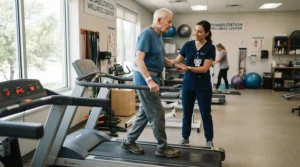
The Echelon Stride-4s earns its spot here through a genuinely comfortable, bouncy cushioned deck combined with a strong focus on streamed, instructor-led workouts — a combination that solves a real problem for arthritis sufferers who find that guided pacing and motivation matter as much as the hardware itself. What most buyers overlook about “tech-forward” treadmills is that the entertainment layer isn’t just a gimmick for people managing chronic joint pain; having a trainer set your pace and remind you to ease off actually reduces the risk of overdoing it on a good day and paying for it for the next three.
Reviewers consistently describe the deck as comfortable enough for sensitive knees, and testers report no noticeable shake or wobble even at higher speeds, which speaks well of the frame’s underlying stability. In the interest of honesty, Echelon publishes fewer granular specs (exact motor CHP and incline range) than Sole or Horizon, so if you need precise numbers for a specific rehabilitation plan, it’s worth confirming directly with the manufacturer before buying rather than assuming parity with similarly priced machines.
Pros:
- ✅ Cushioned deck stays comfortable for sensitive, arthritic knees
- ✅ Stable frame shows no shake even at top speed
- ✅ Streaming classes keep low-impact sessions mentally engaging
Cons:
- ❌ Full class library requires a recurring membership fee
- ❌ Exact motor and incline specs are harder to verify than rivals
Generally listed in the $1,000-$1,600 range depending on bundle, the Echelon Stride-4s is best for buyers who know that accountability and guided pacing will keep them consistent.
7. Bowflex Treadmill 10 — best premium pick for long-term investment
Reviewers have described the Bowflex Treadmill 10 as the cardio-machine equivalent of a full-size luxury sedan, and the comparison holds up once you look at the specs: a generous 22-inch by 60-inch running path paired with what Bowflex calls “Comfort Tech” deck cushioning. The extended running surface is a genuine advantage for anyone with a longer or less symmetrical stride — a common reality when hip or knee arthritis has subtly changed how you walk.
Testers report the deck feels comfortable and well-cushioned across extended sessions, and the heavy-duty frame construction translates into a stable, low-vibration ride even during faster intervals, which reduces the jarring micro-impacts that aggravate sensitive joints over time. What the spec sheet won’t tell you, but the overall build quality suggests, is that this machine is designed as a decade-plus investment rather than a starter treadmill — which is exactly the mindset arthritis sufferers should bring to equipment they’ll rely on daily. The trade-off is straightforward: this is a genuinely premium price point, and it demands a dedicated footprint in your home that smaller apartments may struggle to accommodate.
Pros:
- ✅ Extra-long 60-inch running path suits longer, natural strides
- ✅ Comfort Tech deck cushioning absorbs impact on bigger frames
- ✅ Heavy-duty build feels stable during higher-intensity intervals
Cons:
- ❌ Premium price sits well above most budget-conscious options
- ❌ Large footprint demands a dedicated space at home
Pricing generally sits above $2,500 and climbs from there depending on configuration — check current price directly, as premium home-gym equipment shifts often; the Bowflex Treadmill 10 rewards buyers who see this as a long-term joint-health investment rather than a trial purchase.
Setting Up & Optimizing Your Treadmill for Arthritis-Safe Walking
Getting the machine into your house is the easy part. Setting it up so it actually protects your joints — instead of just sitting there looking cushioned — is where most people drop the ball. Start with placement: position your treadmill on a flat, stable surface, and consider a rubber utility mat underneath. This isn’t cosmetic; it absorbs additional vibration and keeps the frame from creeping slightly during use, which can throw off your stride mechanics without you noticing.
Before your first session, set the incline to 1-2%, not zero. It sounds backwards, but a completely flat belt actually increases strain on the Achilles tendon and calf compared to a slight incline that more closely mimics natural outdoor walking. During your first 30 days, resist the urge to chase speed. Instead, focus on consistent duration at a pace where you could hold a conversation — this is the “moderate-intensity” zone the CDC references, and it’s genuinely where most of the joint-health benefit lives.
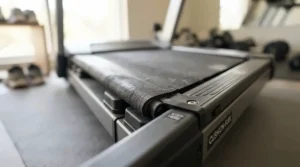
Maintenance matters more for arthritis sufferers than casual users, because a poorly lubricated belt creates subtle drag that translates into extra joint stress with every step. Check your belt tension monthly, and lubricate according to the manufacturer’s schedule — usually every 150-300 miles for silicone-based systems. A common first-30-days mistake is holding tightly onto the handrails out of nervousness; this actually distorts your natural gait and reduces the workout’s effectiveness. Use the rails for balance checks, not as a constant crutch.
Real-World Scenarios: Matching the Right Machine to Your Life
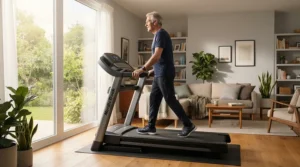
Consider Diane, 68, managing knee osteoarthritis and living in a two-bedroom condo. Her environment calls for something foldable and low-impact rather than powerful — the REDLIRO Walking Treadmill for Seniors fits because her priority is safety and consistency over speed, and she uses it four mornings a week for 20-minute sessions.
Now consider Marcus, 45, diagnosed with rheumatoid arthritis but still training for occasional 5Ks between flare-ups. He needs a machine that can flex between gentle recovery walking and more demanding sessions on good days. The NordicTrack Commercial 1750‘s toggleable RunFlex cushioning and decline option suit that unpredictability — soft settings on flare days, firmer road-like feel when he’s feeling strong.
Finally, picture Renata, 58, at 230 pounds and managing hip arthritis alongside a family history of joint replacement. Stability and weight capacity matter more than bells and whistles here. The Sole F80 or Horizon 7.8 AT, both rated well above her body weight with wide, stable decks, remove the wobble-related anxiety that smaller machines might introduce during faster walking intervals.
✨ Don’t wait for “someday” to start protecting your joints.
🔍 Whichever budget tier fits your life, the right cushioned treadmill can turn a painful daily obstacle into a genuinely enjoyable habit — one consistent, low-impact session at a time.
Common Treadmill Pain Points and How to Solve Them
Problem: Knee pain flares up mid-walk. Reduce your incline to zero temporarily and slow your pace by 0.5-1 mph rather than stopping abruptly — a gradual deceleration is easier on inflamed joints than an immediate halt.
Problem: Hands ache from gripping handrails. Look toward machines like the Horizon 7.8 AT with contoured rail grips, and practice brief “hands-free” intervals at slow speeds to rebuild confidence without constant grip strain.
Problem: Motivation drops on bad pain days. Guided programming, like what you get on the Echelon Stride-4s or through NordicTrack Commercial 1750‘s iFit integration, can externalize pacing decisions so you’re not negotiating with your own willpower mid-flare.
Problem: Belt feels harder over time. This is often a maintenance issue, not a design flaw — check lubrication schedules, since a dry belt transmits noticeably more impact than a properly serviced one.
Problem: Uncertainty about safe starting intensity. Start at the Arthritis Foundation’s Walk With Ease pacing philosophy: short, consistent sessions building gradually, rather than an ambitious jump straight to 150 minutes weekly.
How to Choose an Arthritis-Friendly Cardio Machine
- Prioritize deck cushioning technology over brand name. Look specifically for named systems — Cushion Flex, RunFlex, 3-Zone Variable Response — rather than vague marketing claims about “comfort.”
- Match weight capacity generously above your body weight. A machine rated close to your exact weight will flex and wobble more than one with genuine headroom.
- Check the minimum starting speed. If flare-ups are a factor, a 0.5 mph starting point matters more than a 12 mph top speed you’ll rarely use.
- Evaluate handrail design for grip-friendliness. Rheumatoid arthritis specifically affects hand joints, so contoured, easy-grip rails aren’t a luxury — they’re functional.
- Consider incline and decline range together. A slight negative incline can reduce compressive knee force during recovery-focused sessions.
- Factor in ongoing subscription costs. Some of the most engaging cushioned treadmills lean on paid app ecosystems — budget for that recurring cost upfront.
- Read the warranty terms closely. A lifetime motor warranty signals real manufacturer confidence in long-term joint-safe durability.
Common Mistakes When Buying a Joint-Safe Treadmill for Arthritis
The single most common mistake is chasing top speed specs that arthritis sufferers will genuinely never use — a 12 mph ceiling means nothing if your real walking pace tops out around 3.5 mph. A second mistake is ignoring deck size in favor of price; a shorter, narrower deck can force an unnatural, choppier stride that puts uneven stress through already-compromised joints. Buyers also frequently underestimate assembly complexity, assuming a “gentle senior treadmill” will be simple to set up when some models actually require more hardware assembly than premium units. Finally, many people skip reading return policies closely, discovering too late that a machine’s cushioning doesn’t suit their specific joint pattern only after the return window has closed — always confirm the trial period before purchase.
Features That Actually Matter (And Those That Don’t)
What actually matters: named cushioning systems with published engineering details, weight capacity well above your body weight, adjustable incline for varying joint loads, and handrail ergonomics. What matters far less than marketing suggests: massive touchscreens, streaming class libraries beyond what you’ll realistically use weekly, and top speeds above 10 mph for anyone not training for competitive running. Bluetooth speakers and cup holders are nice, but they’ve never once reduced anyone’s joint inflammation — don’t let a flashy console distract from deck quality, which is the one spec doing the actual protective work every single step.
Joint-Safe Treadmill vs Elliptical: Which Wins for Arthritis?
This comparison comes up constantly, and the honest answer is: it depends on which joints and which movement pattern bothers you most.
| Factor | Treadmill | Elliptical |
|---|---|---|
| Joint impact | Low with cushioned deck; adjustable via incline | Lowest overall — feet stay in constant contact |
| Natural gait training | Yes — closer to real walking mechanics | No — fixed elliptical motion pattern |
| Best for | OA/RA sufferers wanting functional walking practice | Those needing near-zero impact during flares |
| Learning curve | Minimal | Slightly higher for balance-impaired users |
Health guidance on this trade-off is fairly consistent: walking on a treadmill at a slight incline puts noticeably less strain on the knees than walking flat or running, and while an elliptical trainer distributes weight more evenly and generally puts less strain on the joints overall, a treadmill offers something an elliptical simply can’t: practice at your actual functional movement pattern. If your goal is maintaining the ability to walk confidently and safely in daily life, a cushioned treadmill trains the exact mechanics you’ll use at the grocery store or on a hike, while an elliptical is arguably gentler during acute flare periods but doesn’t reinforce the same real-world skill.
Rheumatoid Arthritis vs Osteoarthritis: Tailored Treadmill Considerations
Rheumatoid arthritis and treadmill selection
Rheumatoid arthritis is an autoimmune condition, meaning inflammation can flare unpredictably and often affects smaller joints — hands, wrists, and feet — alongside larger ones. For RA sufferers, handrail ergonomics deserve outsized attention, since gripping a standard rail can be genuinely painful during a flare. Machines with contoured, easy-grip rails and quick-access safety controls, like the Horizon 7.8 AT, reduce unnecessary hand strain. Toggleable cushioning, as found on the NordicTrack Commercial 1750, also lets RA sufferers adjust intensity day-to-day as inflammation fluctuates, rather than being locked into one fixed cushioning level regardless of how they’re feeling.
Osteoarthritis management through treadmill walking
Osteoarthritis management centers on a different mechanical problem: cartilage breakdown from repeated joint loading over time, most commonly in the knees and hips. Here, weight capacity headroom and deck cushioning quality matter most, since reducing peak impact force at each footstrike is the primary protective mechanism. The Arthritis Foundation’s Walk With Ease program is a scientifically studied six-week walking plan built around exactly this principle, and it translates naturally to treadmill use — consistent, moderate sessions rather than sporadic intense ones. Machines like the Sole F80 or Sole F63, with their proprietary cushioned decks, directly support this slow-and-steady osteoarthritis management approach.
Low-Impact Exercise Guidelines and Safety Compliance
Following established low-impact exercise guidelines isn’t optional caution — it’s the actual mechanism through which treadmill walking helps rather than harms arthritic joints. The CDC recommends adults with chronic conditions who are able aim for at least 150 minutes of moderate-intensity aerobic activity per week, broken into manageable sessions rather than attempted all at once. Wearing supportive, cushioned athletic shoes is non-negotiable, since a treadmill’s deck cushioning can’t compensate for inadequate footwear — experts consistently advise proper athletic shoes for treadmill use, and starting every session at a genuinely comfortable pace rather than your treadmill’s default setting. For safety, always keep a phone or emergency contact accessible, use the safety clip when available, and stop immediately — not “push through” — if sharp pain develops, as opposed to the normal muscular fatigue of moderate exercise. If your normal walking gait has changed noticeably due to arthritis, a brief consultation with a physical therapist before starting a treadmill program can prevent reinforcing compensatory movement patterns that create new problems elsewhere.
Long-Term Cost & Maintenance
A cushioned treadmill’s true cost extends well beyond the sticker price. Budget for belt lubrication supplies (roughly $10-$20 every few months), potential belt replacement every 3-5 years of regular use, and any subscription fees for connected platforms like iFit or Echelon’s class library, which can add $200-$500 annually depending on the plan. Weighed against the alternative — ongoing physical therapy copays, or the medical costs associated with inactivity-related joint stiffness — even a premium machine like the NordicTrack Commercial 1750 or Bowflex Treadmill 10 tends to pay for itself within two to three years for someone using it consistently four-plus times weekly. Machines with lifetime motor warranties, including the Sole F63, Sole F80, and Horizon 7.8 AT, meaningfully reduce your long-term repair risk compared to budget models with shorter coverage windows.
Frequently Asked Questions
❓ What is the best treadmill for arthritis sufferers?
❓ Is walking on a treadmill good for osteoarthritis?
❓ Can a treadmill help rheumatoid arthritis?
❓ What incline is best for arthritic knees on a treadmill?
❓ How much should I spend on an arthritis-friendly treadmill?
Conclusion
There’s no single “correct” treadmill for arthritis sufferers, and honestly, anyone claiming otherwise is oversimplifying a genuinely personal decision. What matters is matching the machine’s cushioning technology, weight capacity, and handrail design to your specific joints, your specific flare patterns, and your specific living space. The Sole F63 remains the strongest all-around value pick for most people managing osteoarthritis, while the REDLIRO Walking Treadmill for Seniors removes cost and intimidation as barriers entirely. For rheumatoid arthritis sufferers dealing with unpredictable flares, the flexibility built into the NordicTrack Commercial 1750 and the ergonomic handrails on the Horizon 7.8 AT solve real, specific problems rather than generic ones.
What all seven of these machines share is a genuine engineering commitment to reducing joint impact — not just marketing language slapped onto a standard treadmill. Pick based on your body, your budget, and your daily reality, not the flashiest spec sheet. Consistency, at a pace your joints actually tolerate, beats intensity every single time.
Recommended for You
- Budget Treadmill for Knee Rehab: 7 Proven Picks for 2026
- 7 Best Treadmills for Runners With Knee Injuries in 2026
- Cushioned Deck Treadmill for Knee Pain: 7 Proven Picks (2026)
Disclaimer: This article contains affiliate links. As an Amazon Associate, I earn from qualifying purchases. If you purchase products through these links, we may earn a small commission at no additional cost to you. This content is for informational purposes only and is not a substitute for professional medical advice — consult your doctor or physical therapist before starting any new exercise program, especially if you manage rheumatoid arthritis, osteoarthritis, or another chronic joint condition.
✨ Found this helpful? Share it with someone else navigating arthritis-friendly fitness! 💬🤗
