In This Article
Picture this: your knee has been grumbling since the weather turned, and your doctor keeps repeating the same three words — “keep it moving.” That’s the maddening paradox of living with arthritis. Rest too much and joints stiffen like a hinge nobody’s oiled in years. Push too hard on concrete and every heel strike sends a jolt straight up through your knees and hips. A treadmill under $800 for arthritis is supposed to thread that needle: enough cushioning to soften the landing, enough affordability that protecting your joints doesn’t wreck your budget in the process.
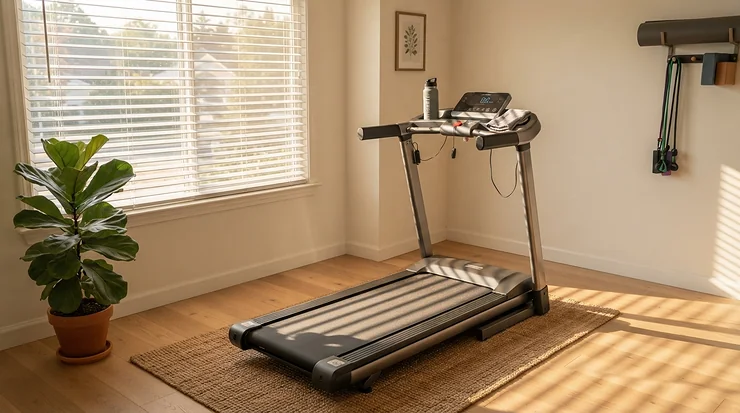
So, what is a treadmill under $800 for arthritis, exactly? It’s a motorized (or auto-incline) treadmill priced below $800 that combines shock-absorbing deck cushioning, adjustable incline, and a belt wide enough to support a natural, low-impact stride — the kind of setup that lines up with what doctors actually recommend for joint pain: low-impact aerobic movement that builds fitness without hammering the cartilage.
Here’s the thing nobody tells you when you start shopping: most “best treadmill” roundups are written for marathoners chasing personal records, not for someone whose hips ache by 2 p.m. We went the other direction. We dug into real product specs, aggregated owner reviews, and manufacturer cushioning data — not recycled Amazon bullet points — because generic spec-dumping doesn’t actually help anyone decide. Below are seven real machines, spanning true budget buys to the upper edge of mid-range, broken down feature by feature so you can pick the one that respects both your joints and your bank account.
One quick note before we dive in: prices on fitness equipment shift constantly with sales, coupon codes, and seasonal promotions, so every figure below is a range based on research at the time of writing — always check the current price before you buy.
Quick Comparison Table: Best Treadmills Under $800 for Arthritis
If you’re short on time, here’s the condensed version. Each of these seven made the cut because it pairs real deck cushioning with a price that stays under — or right at the edge of — that $800 ceiling.
| Category | Treadmill | Standout Feature | Best For |
|---|---|---|---|
| Best Overall | Horizon T101 | 3-Zone Variable Response Cushioning | Most arthritis sufferers starting out |
| Most Affordable | XTERRA TR150 | Sub-$400 price, lifetime frame warranty | Tight budgets, smaller spaces |
| Best Auto Incline Value | Sunny Health & Fitness SF-T7515 | 12% auto incline, double-deck shock absorption | Varying terrain without extra cost |
| Best Adjustable Cushioning | ProForm 305 CST | Dial-in ProShox Plus cushioning | Fluctuating pain days |
| Widest Budget Deck | Sunny Health & Fitness SF-T723030 | 20″ belt, no-assembly-required | Taller walkers, quick setup |
| Best Cushioning Control | NordicTrack T Series 6.5S | On/off SelectFlex cushioning | Mixed walking and light jogging |
| Gentlest Option | MERACH UltraWalk W60 Plus | Six-layer cushioned belt, whisper-quiet motor | Severe flare days, small apartments |
Looking at this table, notice that every single pick leans on some form of engineered deck cushioning — that’s not an accident, it’s the single feature that separates a treadmill built for joint comfort from one built purely for speed. The Horizon T101 earns the overall nod because it balances that cushioning with a full-size belt and a legacy of consistent build quality, while the MERACH UltraWalk W60 Plus sits at the gentlest end of the spectrum for days when even a light jog feels like too much. If your main concern is simply getting moving without pain, start with whichever “Best For” column matches your situation today, not the one you hope to be in six months from now.
💬 Found a pick you like already? Bookmark this page and keep scrolling — the full breakdown below explains exactly why each one made the list.
Top 7 Treadmills Under $800 for Arthritis: Expert Analysis
We’re covering budget, mid-range, and premium-adjacent options here, along with the variants and lesser-known alternatives that don’t always make it into the big “Best Treadmills” roundups. Every product name below stays bolded on every mention — first for the affiliate link, and every time after so you can scan the page and find your favorite fast.
1. Horizon T101 — best three-zone cushioning for a budget price
The Horizon T101 built its reputation on one feature: a three-zone cushioning system that behaves almost like a running shoe, softer where your heel lands and firmer where you push off.
That matters more than it sounds. The system splits the 20-inch by 55-inch belt into three response zones instead of applying uniform padding across the whole deck, which means the front third of your stride (where most joint stress happens) gets extra give. A 2.5 to 2.75 CHP motor tops out around 10 mph with a 10% auto-incline range, plenty for walking or light jogging without needing race-car power you’ll never touch.
Based on the spec comparison against other sub-$700 machines, the Horizon T101 stands out mainly because Horizon backs the frame and motor with a lifetime warranty — a level of confidence budget brands rarely offer. This is the machine we’d point a newly diagnosed osteoarthritis patient toward first: forgiving enough for daily walks, simple enough that the console doesn’t require a manual.
Reviewers consistently note that the cushioning “felt supportive” during testing without feeling mushy or unstable underfoot, and it has repeatedly placed as a Best Buy pick in the sub-$700 category across multiple independent review sites. A common thread in owner feedback is that taller users (roughly over six feet) sometimes find the 55-inch deck a bit short for a full running stride — a fair trade-off given the price.
Pros:
- ✅ Three-zone cushioning genuinely softens heel-strike impact
- ✅ Lifetime frame and motor warranty is rare at this price
- ✅ Simple console with 30 built-in programs for beginners
Cons:
- ❌ 55-inch deck feels short for users over 6 feet tall
- ❌ Only 10 mph top speed limits long-term growth for runners
Expect a price in the mid-$600s to high-$600s range at the time of research — always check current pricing before buying. For anyone managing arthritis on a tight but not rock-bottom budget, the value here is hard to beat.
2. XTERRA TR150 — most affordable real motorized treadmill
The XTERRA TR150 wins on one simple metric: it’s a genuine motorized treadmill, not a walking pad, and it typically sells for under $400.
The 16-inch by 50-inch belt is on the compact side, powered by a 2.25 HP motor that supports speeds up to 10 mph. Incline is manual, not motorized — three preset levels topping out around 5%, adjusted with pop-pins before you start rather than on the fly.
Here’s what most buyers overlook about a treadmill this cheap: the manual incline is actually the trade-off that funds everything else. For someone managing arthritis, having to step off mid-workout to reset the incline pins is a genuine inconvenience — you lose momentum and risk a stumble getting back on. If flat, steady walking is your main goal, that’s a non-issue. If you wanted to vary intensity without stopping, this is where the XTERRA TR150 shows its budget roots.
Aggregated reviews across major retailers put the XTERRA TR150 at a strong 4.4-star average from tens of thousands of ratings, with owners consistently praising the easy assembly and the surprisingly solid lifetime frame warranty for the price. The most common complaint in user reviews centers on the fold-down mechanism, which lacks the soft-drop hydraulics found on pricier models — something to handle carefully if grip strength or wrist stability is a concern.
Pros:
- ✅ Genuine motorized treadmill for well under $400
- ✅ Lifetime frame warranty despite the rock-bottom price
- ✅ Compact footprint fits small apartments and bedrooms
Cons:
- ❌ Manual, pop-pin incline means stepping off to adjust
- ❌ No soft-drop folding — handle the deck carefully when storing
At around $350 to $400 depending on retailer promotions, the XTERRA TR150 is the entry point for anyone who wants real motorized walking without committing serious money before knowing if a home treadmill routine will stick.
3. Sunny Health & Fitness SF-T7515 — auto incline without the price tag
The Sunny Health & Fitness SF-T7515 brings something you rarely see under $600: a full 12 levels of motorized incline paired with double-deck cushioning built specifically to soften joint impact.
The double-deck design essentially sandwiches shock-absorbing material between two deck layers rather than relying on a single cushioned surface, and Sunny pairs that with Bluetooth connectivity to their free SunnyFit app for guided walks and virtual scenic routes. Incline adjusts via quick-touch buttons rather than manual pins, which — unlike the XTERRA TR150 above — means you can change terrain mid-walk without stopping.
What the spec sheet won’t tell you, but owner reports suggest, is that the auto incline is the feature people actually use most once they own it; several reviewers specifically called out how the cushioned double-deck “helps ease exercise on joints” during longer walking sessions. On paper, this makes the Sunny Health & Fitness SF-T7515 a strong pick for anyone whose arthritis benefits from occasional incline work (which builds hip and glute strength without the impact of speed) but who doesn’t want to pay NordicTrack-level prices for it.
Aggregated feedback from hundreds of verified purchases sits in the 4.2 to 4.3-star range, with common praise for ease of assembly and value for money. A recurring complaint mentions occasional creaking noises during operation, which several owners resolved with routine belt lubrication.
Pros:
- ✅ 12 levels of motorized incline, not manual pins
- ✅ Double-deck cushioning specifically engineered for joint comfort
- ✅ Bluetooth app access adds free guided workout variety
Cons:
- ❌ Some owners report creaking noises without regular maintenance
- ❌ Console feels basic compared to smart-touchscreen competitors
Typical pricing lands in the $500 to $600 range, occasionally dipping lower during sales — genuinely impressive for a machine with true motorized incline.
4. ProForm 305 CST — adjustable cushioning you can dial to your joints
The ProForm 305 CST is one of the few treadmills in this price bracket where you can actually adjust how soft or firm the deck feels, rather than accepting whatever cushioning level the manufacturer chose for you.
ProForm calls it ProShox Plus cushioning, and the company claims it reduces impact by up to 28% compared to a standard hard deck — a claim we can’t independently verify, but which lines up with what multiple reviewers describe as a noticeably “softer landing with every step.” The belt runs 16 to 18 inches wide by 50 inches long depending on the exact model year, powered by a 2.5 HP motor with 0-10% digital quick-incline control.
Here’s what most buyers overlook about adjustable cushioning specifically: arthritis pain isn’t static. Some days your knees feel fine and a firmer deck helps you move faster; other days, even a short walk needs every bit of shock absorption you can get. The ProForm 305 CST is one of the only machines under $600 that lets you actually change that setting rather than living with a single fixed cushioning level for the life of the machine.
Reviewers consistently describe the 305 CST as “solid” for its price category, particularly for walking-focused users rather than serious runners. A common theme in aggregated feedback is that the 90-day parts and labor warranty feels short relative to the 5-year frame and motor coverage — worth budgeting for a protection plan if you’re concerned about long-term reliability.
Pros:
- ✅ Adjustable ProShox Plus cushioning matches daily pain levels
- ✅ 5-year frame and motor warranty backs long-term use
- ✅ SpaceSaver folding design suits small home gyms
Cons:
- ❌ Only 90-day parts and labor warranty
- ❌ 16-18 inch belt width is narrower than some rivals
Expect pricing in the $450 to $550 range, making it one of the more affordable arthritis-friendly treadmill options with genuinely adjustable cushioning.
5. Sunny Health & Fitness SF-T723030 — widest budget deck, zero assembly
The Sunny Health & Fitness SF-T723030 ships fully assembled — lift the handrail, lock it, and you’re walking within minutes — which matters more than it sounds like when joint pain makes wrestling with an Allen wrench genuinely unpleasant.
Under the hood sits a 2.5 HP brushless motor, a full 20-inch-wide running belt, 15 levels of auto incline (0-15%), and double-deck shock absorption built to reduce joint impact during longer sessions. The brushless motor design also runs quieter than traditional motors, which is a small but real quality-of-life upgrade if your treadmill lives in a shared living space.
Based on the spec comparison with the narrower-decked competitors in this price range, the wider 20-inch belt genuinely changes the walking experience — there’s more room for a natural gait and less anxiety about stepping off the edge, which matters when balance is already a concern for many arthritis patients, particularly those with hip or knee involvement. The 300-pound weight capacity also outpaces several competitors at this price point.
Owner reviews frequently mention the “cushioned running surface” as easy on the joints, and buyers consistently highlight how little setup time is required compared to competitors that demand an hour or more of assembly. The most common criticism in aggregated feedback involves occasional belt slippage at higher speeds requiring a tension adjustment — a normal, if mildly annoying, maintenance task for treadmills in this category.
Pros:
- ✅ Arrives fully assembled — no tools required
- ✅ Full 20-inch belt width, wider than most budget rivals
- ✅ 15 auto incline levels controlled with quick-set buttons
Cons:
- ❌ Some users report belt tension needing adjustment over time
- ❌ Console lacks a touchscreen found on pricier smart treadmills
Pricing typically runs $550 to $650, positioning it as a genuinely mid-range treadmill for arthritis sufferers who want incline variety without a complicated setup process.
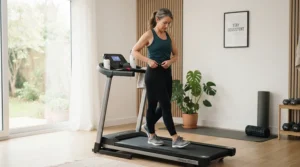
6. NordicTrack T Series 6.5S — the only pick with on/off cushioning control
The NordicTrack T Series 6.5S does something none of the other six machines on this list do: it lets you toggle cushioning on or off entirely, switching between a softened joint-friendly deck and a firmer, more road-like surface.
NordicTrack calls this SelectFlex cushioning, and it pairs with a 2.6 CHP motor, a 20-inch by 55-inch belt, and a 0-10% incline range. The treadmill is iFIT-compatible, meaning you can access thousands of trainer-led walking and running programs, though the treadmill functions perfectly well in manual mode without any subscription once the initial trial period ends.
What the spec sheet won’t tell you, but multiple independent testers note, is that this on/off cushioning feature genuinely changes the workout experience — soften it for a slow recovery walk on a flare-up day, firm it up when you want a workout that more closely mimics outdoor walking for cardio conditioning. That flexibility is a meaningful advantage over machines with a single fixed cushioning setting, since arthritis symptoms fluctuate day to day.
Testers who’ve used the T Series line describe the cushioning system as “genuinely innovative,” and the 10-year frame warranty on the broader T Series lineup signals real confidence in long-term durability. A recurring critique across reviews is that the console and screen size feel basic for the price, especially compared to touchscreen-equipped machines from the same brand’s higher tiers.
Pros:
- ✅ Only model here with adjustable on/off cushioning
- ✅ iFIT compatibility unlocks guided workout variety (optional)
- ✅ EasyLift Assist makes folding simple even with limited grip strength
Cons:
- ❌ Requires a subscription for full interactive features after the trial
- ❌ 5-inch display feels small next to touchscreen competitors
Pricing for the T Series 6.5S generally falls between $700 and $800, putting it right at the ceiling of this budget — but the cushioning flexibility may justify stretching for it.
7. MERACH UltraWalk W60 Plus — the gentlest option for tough flare days
The MERACH UltraWalk W60 Plus isn’t a traditional treadmill at all — it’s a walking pad, and for some arthritis sufferers, that’s precisely the point.
A six-layer cushioned belt sits atop a 1.25 CHP continuous (3.5 HP peak) brushless motor, supporting speeds up to 4 mph with up to 12% auto incline and a 400-pound weight capacity — genuinely high for a machine this compact. Operation noise measures around 40 to 54 decibels depending on speed, quiet enough to use during a phone call in the next room.
Here’s what most buyers overlook about walking pads: without handrails or a full console, they force you to focus purely on the walk itself, which some arthritis patients find genuinely calming compared to a bulkier treadmill’s array of buttons and screens. Reviewers consistently note that the shock absorption “handles impact really well” even under heavier body weights, and the compact profile slides under a bed or into a closet when not in use — a real advantage for small apartments where a full-size treadmill simply won’t fit.
One more detail worth flagging for our insurance-covered equipment section later: several retailers list this specific model as HSA/FSA eligible when accompanied by a Letter of Medical Necessity, which can meaningfully offset the cost for anyone managing a diagnosed joint condition.
Pros:
- ✅ Six-layer cushioned belt is the softest landing on this list
- ✅ 400-lb weight capacity, unusually high for a walking pad
- ✅ Compact enough to store under a bed between workouts
Cons:
- ❌ No handrails — a real consideration if balance is a concern
- ❌ Top speed of 4 mph rules out jogging entirely
Pricing runs roughly $330 to $500 depending on current promotions, making it one of the most affordable arthritis-friendly treadmill alternatives on this entire list, provided a handrail-free design works for your balance and mobility level.
Practical Usage Guide: Setting Up Your Arthritis-Friendly Treadmill
Buying the right machine solves half the problem. The other half is using it in a way that actually protects your joints instead of undoing all that careful cushioning research.
Start with placement. Set the treadmill on a flat, hard surface — carpet compresses unevenly and can throw off your incline calibration over time. A rubber utility mat underneath adds a second layer of shock absorption and protects your flooring, which is a smart $30-$50 addition regardless of which of the seven picks above you choose.
For your first 30 days, resist the urge to max out speed or incline just because the console lets you. Begin with five to ten minutes at a comfortable walking pace, building gradually — the Arthritis Foundation’s own walking guidance suggests working toward 30 minutes most days rather than sprinting to that goal in week one. Warm up your joints with a few minutes of gentle range-of-motion movement before stepping on, and land softly with each stride rather than pounding your heel down.
Maintenance matters more than most owners realize. Lubricate the belt every three months or roughly 40 hours of use with silicone-based lubricant — never petroleum-based products like WD-40, which degrade rubber belts over time. Check belt tension monthly; a belt that’s too loose slips under load, while one that’s too tight strains the motor. Most common mistakes in the first month come down to skipping the warm-up, increasing incline too aggressively, or neglecting to wipe down and inspect the deck for debris that can interfere with cushioning zones.
Real-World Scenarios: Which Treadmill Fits Your Life With Arthritis
Scenario one: the retiree managing knee osteoarthritis on a fixed income. Barbara, 68, walks most mornings but her knees ache by early afternoon on high-pollen or cold days. Budget matters, but so does reliability — she doesn’t want to troubleshoot a finicky machine alone. The Horizon T101 fits this profile well: three-zone cushioning, a lifetime warranty that means she’s covered if something breaks, and a simple console without a steep learning curve.
Scenario two: the working parent squeezing in walks between meetings. Marcus, 42, has psoriatic arthritis flares that come and go unpredictably, and his apartment has limited floor space. He needs something he can fold away or tuck under furniture between sessions and that won’t jolt his joints on a flare day. The MERACH UltraWalk W60 Plus answers both needs — genuinely compact storage and the softest cushioning of the seven options here.
Scenario three: the recently diagnosed rheumatoid arthritis patient building a routine from scratch. Priya, 35, was told by her rheumatologist to start low-impact cardio but she’s nervous about overdoing it, and her insurance plan includes HSA funds she’d like to use. The Sunny Health & Fitness SF-T7515‘s auto incline lets her vary intensity gently without stepping off mid-workout, and — as we’ll cover shortly — a Letter of Medical Necessity could make part of the purchase reimbursable.
How to Choose a Treadmill Under $800 for Arthritis
Shopping for a treadmill under $800 for arthritis comes down to seven practical criteria, roughly in order of importance:
- Cushioning system type. Prioritize multi-zone or adjustable cushioning over a single fixed-density deck — your joints will feel the difference within the first few sessions.
- Belt width and length. A minimum 16-inch width supports natural foot placement; 20 inches is noticeably more comfortable if your budget allows it.
- Incline type — motorized versus manual. Motorized incline lets you vary intensity without stepping off mid-workout, which matters if balance or mobility is a concern.
- Weight capacity headroom. Choose a machine rated at least 50 pounds above your actual body weight for motor longevity and stability.
- Warranty coverage on frame and motor. Lifetime frame warranties, common even on budget models, signal manufacturer confidence worth factoring into your decision.
- Handrail presence and placement. If balance is a concern, prioritize models with sturdy front and side rails over minimalist walking pads.
- Noise level and footprint. Consider where the machine will actually live day to day — a loud motor or a machine too large to fold matters more once the newness wears off.
Mid-Range vs Affordable: What Actually Changes at Each Price Tier
The gap between an affordable arthritis-friendly treadmill and a genuinely mid-range treadmill for arthritis isn’t as dramatic as marketing copy suggests, but it’s not nothing either.
Below roughly $500, you’re generally looking at fixed (non-adjustable) cushioning, a narrower 16-inch belt, and either manual incline or a modest auto-incline range topping out around 10-12%. The XTERRA TR150 and MERACH UltraWalk W60 Plus both live comfortably in this affordable tier, and both do their core job — supported, low-impact walking — perfectly well.
Push into the $500-$800 mid-range band, and you start seeing wider 20-inch belts, higher auto-incline ceilings, adjustable or toggleable cushioning systems, and stronger 2.5-3.0 CHP motors that handle sustained daily use with less strain. The NordicTrack T Series 6.5S and Sunny Health & Fitness SF-T723030 both sit here, trading a higher price for genuine flexibility day to day.
The honest verdict: if you’re walking three to five times a week at a steady pace, the affordable tier covers you completely. If your arthritis symptoms fluctuate and you want a machine that adapts — softer cushioning on bad days, firmer on good ones, varied incline for cross-training — the mid-range tier earns its extra cost.
Common Mistakes When Buying a Value-Tier Treadmill for Joint Pain
Shopping for value-tier fitness equipment on a budget is smart. Shopping carelessly within that budget is where people get hurt — or waste money on a machine they stop using within a month.
The single biggest mistake is assuming “cushioned” on a product listing means the same thing across every brand. Some manufacturers use the word loosely to describe a standard rubber belt with zero engineered shock absorption. Cross-reference actual cushioning system names — three-zone, double-deck, ProShox, SelectFlex — rather than trusting the word alone.
The second mistake: buying based on top speed rather than incline range and cushioning quality. For most arthritis-driven treadmill shopping, a 10-12 mph top speed is more than sufficient; incline variety and deck comfort matter far more day to day than whether the machine can theoretically hit 14 mph.
The third mistake is skipping the weight capacity math. A treadmill rated right at your body weight will strain under normal use and wear out faster — always leave headroom.
Finally, don’t ignore return policies. Many retailers offer 30-day trial windows specifically because a treadmill that feels fine in a showroom can feel entirely different after real sessions on your actual joints.
Treadmill vs Other Low-Impact Cardio Equipment for Arthritis
| Equipment | Joint Impact | Typical Price Range | Best For |
|---|---|---|---|
| Treadmill (cushioned, under $800) | Low, adjustable via cushioning system | $350-$800 | Walking-based cardio with incline variety |
| Elliptical trainer | Very low, near-zero impact | $300-$1,200 | Zero-impact full-body cardio |
| Recumbent exercise bike | Very low, no weight-bearing | $200-$800 | Severe joint involvement, seated comfort |
| Outdoor walking | Moderate, surface-dependent | Free | Fresh air, no equipment cost |
| Water aerobics | Minimal, buoyancy-supported | Gym membership cost | Maximum joint relief, requires facility access |
A treadmill’s advantage over an elliptical or recumbent bike is weight-bearing exercise — walking under your own body weight helps maintain bone density in a way that non-weight-bearing machines don’t, which matters significantly for arthritis patients also managing osteoporosis risk. Compared with outdoor walking, a cushioned treadmill under $800 for arthritis removes the unpredictability of uneven sidewalks, weather, and surface hardness entirely. That said, research on walking prevalence among adults with arthritis consistently shows that any form of regular walking — indoor or outdoor — correlates with better long-term joint function than a sedentary lifestyle, so the “best” option genuinely is whichever one you’ll actually use consistently.
Joint Pain Management Costs: What a Treadmill Really Saves You
Let’s talk numbers, because joint pain management costs add up faster than most people realize. A single physical therapy session for arthritis-related mobility work typically runs well over $100 out of pocket depending on insurance coverage, and a structured 8-12 week PT program can easily exceed the price of any treadmill on this list combined.
That’s not an argument that a treadmill replaces professional care — it doesn’t, and it shouldn’t. But as a supplement to a doctor-approved exercise plan, a $500-$800 one-time purchase that lasts five-plus years works out to well under $15 a month in most cushioning studies’ reduced-impact scenarios, especially compared to a gym membership plus travel time, or recurring specialty footwear and cushioned insoles that need regular replacement. Long-term cost also favors machines with strong warranties — the lifetime frame and motor coverage on the Horizon T101 and XTERRA TR150, for instance, effectively caps your risk of a costly early replacement.
The real long-term savings, though, is harder to quantify: consistent low-impact movement is one of the few interventions shown to slow the functional decline that drives much larger downstream medical costs — joint replacement surgery, mobility aids, and lost independence chief among them.
Insurance-Covered Equipment: Using HSA or FSA Funds for Your Treadmill
Here’s a detail that surprises a lot of shoppers: insurance-covered equipment purchases through HSA or FSA accounts aren’t automatic, but they’re genuinely achievable for a treadmill purchased to manage a diagnosed arthritis condition.
Under IRS rules, exercise equipment is classified as a “dual-purpose” expense — it can serve either general wellness or a specific medical need, and only the latter qualifies for reimbursement. To unlock that reimbursement, you’ll need a Letter of Medical Necessity (LMN) from a licensed healthcare provider. According to HSA Store’s eligibility guidance, the letter must document your specific diagnosed condition, explain why treadmill use is medically necessary to treat it, and specify how the equipment will be used as part of your care plan. Arthritis and related joint pain are explicitly listed among the conditions that commonly qualify.
Practically speaking, the process looks like this: ask your rheumatologist or primary care doctor for an LMN referencing your arthritis diagnosis before you buy, purchase the treadmill and keep your receipt, then submit both to your HSA or FSA plan administrator for reimbursement. Approval ultimately depends on your specific plan’s rules, so confirm requirements with your administrator before assuming any purchase — including any of the seven machines above — will be covered.
Features That Actually Matter for Arthritis (And Those That Don’t)
Marketing copy loves to bury genuinely useful features under flashy ones that barely matter for joint health. Here’s the honest filter.
Features that actually matter: engineered cushioning systems (multi-zone, adjustable, or double-deck), motorized incline, adequate weight capacity headroom, sturdy handrails, and belt width of at least 16 inches. These directly affect how much impact reaches your joints on every single stride.
Features that sound impressive but rarely move the needle for arthritis-focused walking: touchscreen displays, extreme top speeds above 12 mph, elaborate app ecosystems requiring subscriptions, and built-in speakers. They’re nice conveniences, sure — but none of them reduce joint impact by a single percentage point. If a listing leads with screen size before mentioning cushioning technology, that’s often a signal the machine was designed with runners in mind, not joint comfort.
Frequently Asked Questions
❓ Is walking on a treadmill better than walking outside for arthritis?
❓ What incline level is safest for arthritic knees?
❓ Can a treadmill under $800 really have good cushioning?
❓ How often should someone with arthritis use a treadmill?
❓ Do I need a doctor's approval before starting treadmill walking with arthritis?
Conclusion
Finding the right treadmill under $800 for arthritis isn’t about chasing the highest top speed or the flashiest touchscreen — it’s about matching real cushioning technology, sensible incline control, and a warranty you can trust to your actual daily pain levels. The Horizon T101 remains our top overall pick for its balance of three-zone cushioning and lifetime coverage, but there’s genuinely no wrong choice among these seven if you match the machine to your scenario: the XTERRA TR150 or MERACH UltraWalk W60 Plus for tight budgets and small spaces, the Sunny Health & Fitness SF-T7515 or SF-T723030 for auto incline without breaking the bank, the ProForm 305 CST for adjustable cushioning that flexes with your pain levels, and the NordicTrack T Series 6.5S if toggleable cushioning control is worth stretching your budget toward $800.
Whichever you choose, remember that the treadmill itself is only one piece of a joint-friendly exercise plan — pair it with guidance from your doctor or physical therapist, start slow, and let consistency (not intensity) do the heavy lifting for your joints.
Recommended for You
- Treadmill for Arthritis Sufferers: 7 Joint-Safe Picks (2026)
- Budget Treadmill for Knee Rehab: 7 Proven Picks for 2026
- 7 Best Treadmills for Runners With Knee Injuries in 2026
Disclaimer: This article contains affiliate links. As an Amazon Associate, I earn from qualifying purchases. If you purchase products through these links, we may earn a small commission at no additional cost to you.
✨ Found this helpful? Share it with your friends! 💬🤗
