In This Article
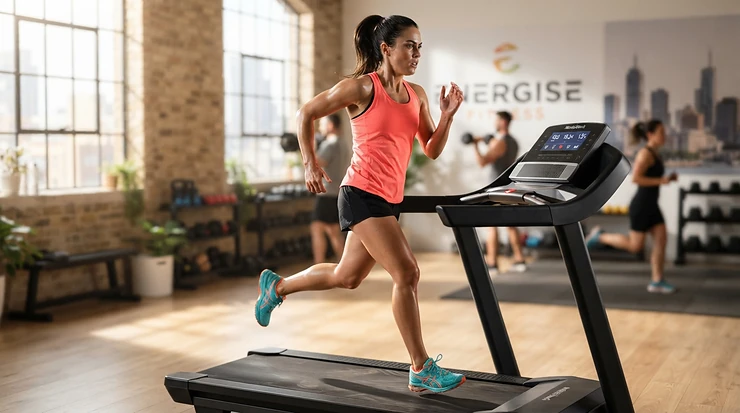
Let’s be honest about the gym card in your wallet. It has a perfect attendance record on January 2nd and a spotty one after that. The treadmill in your living room has no commute, no waiting list, and no judgment. It also has one big enemy: the 77-inch slab of machinery that eats half your floor. That is exactly why a foldable treadmill for weight loss at home has become the sensible middle path in 2026.
The science is not complicated. The CDC says adults need at least 150 minutes of moderate-intensity aerobic activity a week, plus muscle-strengthening on two days. A treadmill is the lowest-friction way to chase that number, because the weather never cancels your workout.
Weight loss itself is mostly a kitchen story, and we’ll cover that honestly later. But exercise is what keeps the weight off. Consistency is the whole game, and a machine you can fold away is one you’ll keep in the house.
Below you’ll find seven real, researched machines, from sub-$400 starters to premium folders. I’ve sorted them by who they actually suit, not by who pays the fattest commission. Every spec comes with what it means in practice, and every review claim reflects aggregated tester and reviewer reports, not invented testimonials.
Quick Comparison: Foldable Treadmill for Weight Loss at Home at a Glance
Here is the 30-second version before we dig in. Prices are approximate ranges at the time of research and will move, so always check current pricing.
| Treadmill | Motor | Deck | Price Range | Best For |
|---|---|---|---|---|
| XTERRA TR150 | 2.25 HP | 16″ x 50″ | Under $400 | Budget walkers |
| Sunny Health & Fitness SF-T7603 | 2.2 HP peak | 16″ x 49″ | Mid-$300s | Tiny apartments |
| Echelon Stride | 1.75 CHP | 20″ x 55″ | Around $1,000 | Flat-fold storage |
| Bowflex T6 | 3.0 HP | 20″ x 60″ | $1,200-$1,400 | Beginner runners |
| Sole F63 | 3.0 HP | 20″ x 60″ | $1,200-$1,400 | Simple, steady walking |
| Bowflex T16 | 3.5 HP | 22″ x 60″ | $2,200-$2,400 | Tech-loving households |
| NordicTrack Commercial 1750 | 4.25 HP | 22″ x 60″ | $2,000-$2,500 | Incline-heavy training |
Notice the pattern: motor size and deck length climb together with price. The two sub-$400 machines are honest walking tools. The Echelon Stride trades power for a clever fold. Everything from the Bowflex T6 up is a genuine jogging machine. If your plan is brisk walking for fat loss, the first four rows deserve your attention. If you want to run intervals, skip straight to row four.
💬 Just one click — help others make better buying decisions too!😊
Top 7 Foldable Treadmill for Weight Loss at Home Picks: Expert Analysis
A quick word on method. These picks come from cross-referencing published tester reports, manufacturer specs, and reviewer feedback in 2026. I have not owned or lab-tested any of them, so everything below is analysis built on that material, not personal anecdote.
1. XTERRA TR150 — roomy 50-inch deck at an entry price
The XTERRA TR150 earns its place by being the machine that gets people started. Its 50-inch deck is longer than most treadmills in this price class, which matters because a cramped belt makes walkers shorten their stride.
The 2.25 HP motor tops out at 10 mph, with three manual incline levels you adjust by pop-pins at the rear. That is fine for brisk walking and light jogging. Manual incline, though, means you stop and crouch to change it, so forget spontaneous hill intervals.
The listed weight limit is 250 pounds, which is below the 300-pound benchmark one reviewer calls standard. Heavier users should look higher up this list.
One tester flagged the fold: without a gas shock, the deck can drop quickly, so lower it with deliberate care. Reviewers also describe the cushioning as minimal, which is worth knowing if your knees are fussy.
Buyers and testers commonly praise the value and the roomy deck. The recurring complaints center on that fold and the basic console.
Pros:
- ✅ Longer deck than most budget rivals
- ✅ Simple, low-cost entry to home cardio
- ✅ Lifetime frame warranty included
Cons:
- ❌ Fold lacks a gas-shock assist
- ❌ 250 lb limit and thin cushioning
Expect to pay somewhere under $400. As a walking-first foldable treadmill for weight loss at home, it is hard to beat for the money.
2. Sunny Health & Fitness SF-T7603 — gentle soft-drop fold for tight apartments
Where the Sunny Health & Fitness SF-T7603 shines is portability. Reviewers highlight that it can be assembled solo, rolls on transport wheels, and uses a soft-drop system so the deck lowers gently instead of slamming.
The 2.2 HP peak motor and 16″ x 49″ deck make it a walker’s machine. One reviewer’s rule of thumb is that enjoyable running wants roughly a 3.0 CHP motor, so treat this one as a power-walking and light-jog tool.
That matters for fat loss. Brisk walking at a steady incline is perfectly good moderate-intensity work, and a machine that is easy to fold is a machine you’ll set up on a tired Tuesday evening.
The weight limit is 220 pounds, which is the tightest on this list. Taller users with long strides may feel the narrow, short deck. Folded, reviewers describe a compact footprint, though you’d still want a closet corner, not a drawer.
User feedback in aggregate is positive on value and ease of folding, with a minority reporting that the fold can pinch a hand or arm if you are careless. Keep fingers clear of the hinge.
Pros:
- ✅ Soft-drop fold lowers gently and safely
- ✅ Easy solo setup and transport wheels
- ✅ Three manual incline levels for variety
Cons:
- ❌ Short, narrow deck for taller users
- ❌ 220 lb capacity limits the audience
At roughly the mid-$300s, it is a strong starter for small spaces and short walkers.
3. Echelon Stride — folds nearly flat for hidden storage
The Echelon Stride is the design-school graduate of this group. Its console and uprights collapse against the frame, so reviewers report a folded depth of roughly ten inches. That makes it one of the few options that truly qualifies as a storable treadmill for weight loss.
Specs: a 55″ x 20″ deck, speeds from 0.5 to 12 mph, and incline up to 10%. The wide belt is a quiet luxury.
The catch is the motor: 1.75 CHP on the original model. Reviewers consistently say that is plenty for walking and recreational jogging, but not for hard running. For fat-loss walking with an incline, that is a fair trade.
Two cautions. The console is basic, so you’ll want your own tablet or phone for the Echelon app, and reviewers also note a short one-year warranty. Echelon has since launched a newer Echelon Stride-6s with a stronger 3.0 CHP motor and 60-inch deck, so confirm which version a listing actually sells.
Testers praise the easy assembly and quiet belt, and critique the underpowered motor.
Pros:
- ✅ Folds nearly flat for tight storage
- ✅ Wide 20-inch deck feels roomy
- ✅ 12 mph top speed, 10% incline
Cons:
- ❌ 1.75 CHP motor limits hard running
- ❌ Basic console and short warranty
Pricing sits around $1,000. It earns that if flat-fold storage is your priority.
4. Bowflex T6 — three-zone deck that coaches your stride
The Bowflex T6 is where this guide shifts from walking tools to proper training machines. The 3.0 HP motor, 20″ x 60″ deck, 12 mph top speed, and 0-15% incline give you real range.
Its signature is a three-zone deck: softer at the front for landing, firmer at the back for push-off. Testers describe the quick-dial controls as seamless, and one rated the noise 4 out of 5.
For weight loss, the 15% incline is the star. Walking a steep incline raises heart rate without pounding your joints, and the Bowflex T6 makes that a two-second adjustment. A free two-month JRNY trial adds guided workouts.
The honest critique: one tester felt the shock absorption was closer to pavement, especially at speed, and would want more cushion for marathon training. For walking, intervals, and 5K prep, they considered it a strong fit.
Folded, its length drops from about 76 to 44 inches, which testers say tucks into a corner or large closet but not under a bed. The display is metrics-only, with no streaming screen.
Pros:
- ✅ Strong 3.0 HP motor, 15% incline
- ✅ Quiet operation reported by testers
- ✅ Three-speed fan and fast dial controls
Cons:
- ❌ Firm deck feel at higher speeds
- ❌ No built-in screen for streaming
Expect roughly $1,200-$1,400. For beginners planning to progress, this is the value pick of the premium tier.
5. Sole F63 — no-nonsense console, lifetime frame and motor
The Sole F63 is the machine for people who find touchscreens exhausting. A 6.5-inch backlit LCD, speed and incline buttons on both screen and handles, and a tablet holder cover everything you need.
It carries a 3.0 HP motor, a 20″ x 60″ deck, 12 mph top speed, and 15 incline levels. Seven preset programs and two user-defined ones keep things simple, and the free Sole app adds classes without a subscription wall.
Fortune’s tester called it stable and approachable. Two flags from the same review matter, though. At low speeds while changing incline, the belt felt like it bunched slightly. The deck also felt firm rather than cushioned.
Heads-up for anyone with an implanted medical device: the maker’s materials warn that its magnetic fields can interfere with devices like pacemakers. Check with your doctor first.
For weight loss, the F63’s strength is predictability. You press, it moves, and you stop thinking about the machine. That sounds boring, but boring is how habits form.
Pros:
- ✅ Lifetime motor and frame warranty
- ✅ Simple controls on screen and handles
- ✅ Free app with no subscription
Cons:
- ❌ Firm, pavement-like deck feel
- ❌ Weak fan, awkward angle when folded
At about $1,200-$1,400, it competes directly with the Bowflex T6. Choose the Sole F63 for simplicity and warranty, the Bowflex T6 for cushioning zones and dial controls.
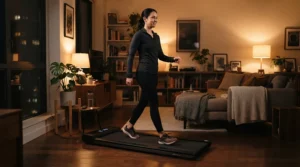
6. Bowflex T16 — hydraulic-assist fold with a big touchscreen
The Bowflex T16 is the premium all-rounder. A 3.5 HP motor, 22″ x 60″ deck, 12 mph, and 0-15% incline sit behind a 16-inch HD touchscreen with built-in apps and Apple Watch syncing.
The fold is its showpiece. A hydraulic assist helps you raise the deck, a grip bar underneath gives you leverage, and a foot-release lever lowers it gently. One tester who weighs about 140 pounds moved it alone, though she noted shorter or lighter users may struggle. At 187 pounds, it is not light.
Testers described the deck as sturdy, the incline changes as smooth, and the motor as controlled. The weak points were software: screen lag, clunky app integration, and a fan and speakers that could be stronger. You also can’t browse other apps mid-workout without ending the session.
If you’ll be using this foldable treadmill for weight loss at home with a screen as your motivation, the Bowflex T16 delivers. If screens distract you, the cheaper Bowflex T6 gives the same incline without the tech tax.
Pros:
- ✅ Hydraulic-assist fold with transport wheels
- ✅ Wide 22-inch deck, sturdy feel
- ✅ Large touchscreen with built-in apps
Cons:
- ❌ Reported screen lag and weak speakers
- ❌ Heavy at 187 pounds
Plan on roughly $2,200-$2,400. Worth it only if you’ll use the screen.
7. NordicTrack Commercial 1750 — widest incline range with a -3% decline
The NordicTrack Commercial 1750 has the strongest motor here, at 4.25 HP, plus a 22″ x 60″ deck and a 16-inch pivoting touchscreen. Its headline is the incline range: -3% decline up to 12%, the widest on this list.
Why does that matter for fat loss? Variety. Decline walking uses muscles differently, and interval patterns that mix steep climbs with flat recoveries keep sessions engaging long after the novelty fades.
Testers praised the interface and the wide speed and incline range, and noted it syncs with Strava, Garmin, and Apple Health. The costs: programming requires an iFIT subscription, the speed buttons felt stiff to one tester, and that same tester found the deck hard on his feet and shins.
Portability was rated 1 out of 5. It folds fairly easily but is heavy enough that moving it takes multiple people, and it still won’t slide under a bed.
Pros:
- ✅ Powerful 4.25 HP motor
- ✅ -3% decline to 12% incline range
- ✅ Syncs with Strava, Garmin, Apple Health
Cons:
- ❌ Needs an iFIT subscription for programming
- ❌ Heavy, with a firm-feeling deck
Pricing runs roughly $2,000-$2,500 depending on the retailer and promotions. It makes sense for households with a dedicated corner and a love of structured classes.
Here’s the full spec picture side by side, with what each difference means for your money.
| Treadmill | Max Speed | Incline | Fold Style | Best For |
|---|---|---|---|---|
| XTERRA TR150 | 10 mph | 3 manual levels | Knob-release fold | Budget walkers |
| Sunny Health & Fitness SF-T7603 | About 9 mph | 3 manual levels | Soft-drop fold | Compact apartments |
| Echelon Stride | 12 mph | 0-10% | Auto-fold, near flat | Hidden storage |
| Bowflex T6 | 12 mph | 0-15% | Standard fold, 44″ folded length | Beginner runners |
| Sole F63 | 12 mph | 15 levels | Standard fold | Simple walking routines |
| Bowflex T16 | 12 mph | 0-15% | Hydraulic assist | Tech-forward homes |
| NordicTrack Commercial 1750 | 12 mph | -3% to 12% | Standard fold | Incline training |
The takeaway: speed is nearly identical above $1,000, so don’t pay for it. The real differences are fold ease, incline range, and software. If incline-based fat burn is your plan, the Bowflex T6 and Bowflex T16 give the most incline per dollar, while the XTERRA TR150 and Sunny Health & Fitness SF-T7603 keep you walking on a budget.
What Is a Foldable Treadmill for Weight Loss at Home?
A foldable treadmill for weight loss at home is a motorized treadmill whose deck hinges upward for storage, used to build a calorie deficit through regular walking, jogging, or incline training. The fold reclaims floor space between sessions, which helps you exercise consistently without dedicating a permanent room.
That definition hides an important point. The treadmill doesn’t cause weight loss; it supplies a reliable place to burn calories. The CDC explains that using calories through activity while eating less creates the deficit that drives weight loss.
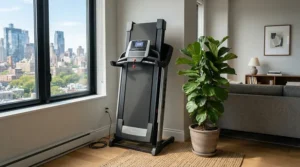
This is also where fold-up treadmill for home workouts gets confusing. “Foldable” covers three designs: a hinge that raises the deck (the Bowflex T6, Sole F63), a hydraulic or soft-drop assist (the Bowflex T16, Sunny Health & Fitness SF-T7603), and a true flat-fold (the Echelon Stride). Each trades storage depth for weight and cost.
How to Choose a Foldable Treadmill for Weight Loss at Home
Follow these six steps in order, and you’ll avoid most regrets.
- Decide walker or runner first. Walkers can thrive on a 2.2-2.25 HP motor. Runners should look for around 3.0 HP and a 60-inch deck, since short belts feel cramped at speed.
- Measure three spaces. Measure the open footprint, the folded footprint, and the path from storage to workout spot. Many units unfold into a 77-inch length, so check doorways too.
- Check weight capacity with a margin. The Sunny Health & Fitness SF-T7603 lists 220 pounds and the XTERRA TR150 250. Pick a limit comfortably above your weight so the motor isn’t always working hard.
- Prioritize incline. Incline raises effort without raising impact. Motorized incline beats manual pop-pins for consistency.
- Weigh the fold mechanism. Gas shocks and hydraulics matter if you’ll fold daily. A heavy machine you dread folding stays unfolded.
- Budget for subscriptions. The NordicTrack Commercial 1750 needs iFIT for programming. Factor that into the real cost.
Does a Fold-Up Treadmill for Home Workouts Actually Burn Fat? What to Expect
Yes, with caveats worth stating plainly. Mayo Clinic notes that 150 minutes weekly of moderate aerobic activity is the baseline, and that 300 minutes or more may help with weight loss or keeping it off. A treadmill makes both numbers easy to reach, because it’s always there.
Here’s what that looks like in practice. Moderate intensity means your breathing and heart rate are noticeably faster but you can still talk. For most people, a brisk walk at a modest incline reaches that zone without wrecking their joints.
What the spec sheet won’t tell you is that the machine’s quality shows up in your adherence, not your calorie burn. A wobbly, noisy treadmill burns the same calories as a premium one but gets used less. Testers rated the Bowflex T6 quiet and the Bowflex T16 controlled, while the Horizon 7.4 AT was described as noticeably noisier at speed.
Be realistic about the kitchen. The CDC states that most weight loss comes from decreasing calories, while regular activity is what helps you maintain it. Treat the treadmill as your maintenance engine and your diet as the steering wheel. And talk to a clinician before starting if you have health conditions.
Storable Treadmill for Weight Loss: Matching Fold Type to Your Floor Plan
Storage is the unglamorous reason most home treadmills fail. If folding feels like a chore, the machine becomes a very expensive clothes rack. A storable treadmill for weight loss has to pass the “tired Tuesday” test: could you put it away after a late workout?
The Echelon Stride passes best, with a flat-fold that reviewers say reduces folded depth to roughly ten inches. Slide it behind a couch or against a wall. The Sunny Health & Fitness SF-T7603 is the next easiest, thanks to the soft-drop system that lowers the deck without a fight.
The mid-tier machines are heavier. The Bowflex T6 drops from about 76 to 44 inches of length when folded, which suits a corner or large closet but not under a bed. Testers also say the Sole F63 sits at an awkward angle when folded, so measure for it.
At the heavy end, the NordicTrack Commercial 1750 folds fairly easily but still demands real floor space. Treat it as semi-permanent. If you must hide your treadmill daily, choose by fold ease, not horsepower.
Small Home Gyms: Building Around a Foldable Treadmill
Small home gyms live or die on a simple principle: every piece must earn its footprint. A treadmill is the anchor because cardio is the hardest thing to replicate in a living room, and everything else (dumbbells, bands, a mat) tucks away easily.
Start with the treadmill’s open zone. Leave clear space behind the belt for safety, and keep the cord away from the walking path. Then layer in the cheap stuff. Adjustable dumbbells or resistance bands handle the CDC’s two weekly muscle-strengthening days without needing a rack.
Here’s the stack I’d recommend for apartments: a foldable treadmill, a thick exercise mat, resistance bands, and one pair of adjustable dumbbells. That’s cardio, strength, and floor work in about the footprint of a wardrobe. Skip the elaborate multi-gym until you’ve proven you’ll use the basics.
Floor protection matters too. A dense mat under the treadmill reduces vibration for downstairs neighbors and protects hardwood. Testers noted the Bowflex T16 and Bowflex T6 run quietly, but any machine transmits some footfall through a floor.
Foldable Fitness Equipment vs Traditional Alternatives
Foldable fitness equipment isn’t just treadmills. Folding bikes, collapsible rowers, and wall-mounted racks all follow the same logic. So how does a folding treadmill compare with what it replaces?
| Option | Footprint | Convenience | Cost Trend | Best For |
|---|---|---|---|---|
| Foldable treadmill (e.g., Bowflex T6) | Large open, mid-size folded | Always ready, weather-proof | Moderate to high | Walkers and joggers |
| Non-folding treadmill | Large, permanent | Always ready | Often higher | Dedicated gym rooms |
| Gym membership | None at home | Travel required | Recurring monthly | Social, equipment variety |
| Outdoor walking | None | Weather and daylight limits | Free | Mild climates |
Fortune’s testers point out that foldable machines tend to have somewhat smaller motors and can feel a bit less solid at high speeds than full-size models. That is a fair trade-off for most walkers, but serious runners should weigh it carefully.
Looking at this table, a foldable treadmill wins on availability and sheds the permanent footprint of a standard model. Outdoor walking wins on cost, but you’ll skip it in the rain. If your goal is home workout consistency, convenience tends to beat price.
Home Workout Consistency: A Practical Usage Guide for the First 30 Days
Here’s where most buyers go wrong: they buy the treadmill and skip the system. Home workout consistency comes from lowering friction, not raising willpower. This guide covers setup, a schedule, and the mistakes that sink month one.
Setup (day one): Place the treadmill where you can see it from the couch. Lubricate the belt per the manual, level the machine, and clip the safety key on every single session.
Weeks one and two: Walk 20 minutes at a comfortable pace, four days a week. Don’t chase speed. The aim is to make the routine automatic.
Weeks three and four: Add incline. Use a steady 2-4% for a few minutes at a time. Then stretch toward 30-minute sessions. Research on walking cadence is a useful reference for judging when a brisk walk crosses into moderate intensity; roughly 100 steps per minute is commonly cited, though individual fitness varies.
Common first-30-day mistakes:
- Starting too hard and quitting by day ten
- Holding the handrails while walking, which changes your posture and reduces effort
- Skipping the belt check and lubrication schedule
- Leaving the machine unfolded in a way that blocks a doorway
Treat the schedule like a meeting with yourself. Put it on the calendar, and keep the first month boring on purpose.
Real-World Scenarios: Which Treadmill Fits Which Life?
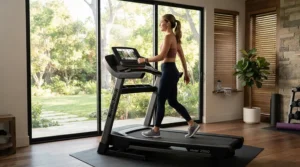
Specs mean little until they meet a real living room. Here are three profiles matched to specific machines, based on budget, space, and use frequency.
Scenario 1: The studio renter on a tight budget. Imagine someone in a 500-square-foot studio, walking five days a week for 30 minutes, with about $400 to spend. The Sunny Health & Fitness SF-T7603 is the logical fit. Its soft-drop fold and transport wheels make daily setup easy, and its 220-pound limit works if the user is comfortably under it. If a longer deck matters, the XTERRA TR150 gives 50 inches.
Scenario 2: The family sharing one machine. Picture a household where a parent walks and a teenager jogs, with a closet corner for storage. The Bowflex T6 covers both with its 3.0 HP motor and cushioned zones, and its 44-inch folded length fits a corner. The Sole F63 is a close alternative if everyone wants simple controls.
Scenario 3: The class-lover with a dedicated corner. Think of a person who loves guided classes and has about $2,500 to spend. The Bowflex T16 or NordicTrack Commercial 1750 suits them, provided they accept the app ecosystems and the weight. Pick the NordicTrack Commercial 1750 for decline and wider incline, or the Bowflex T16 for its hydraulic fold.
Buyer’s Decision Framework: If This, Choose That
Use this quick decision tree when the specs start to blur.
- If your budget is under $500 and you walk, choose the XTERRA TR150 for deck length or the Sunny Health & Fitness SF-T7603 for easier folding.
- If hiding the machine daily is the priority, choose the Echelon Stride, because the flat-fold wins on storage.
- If you want to progress from walking to jogging, choose the Bowflex T6, the best balance of power and price.
- If you hate touchscreens, choose the Sole F63.
- If you love classes and apps, choose the Bowflex T16 or NordicTrack Commercial 1750.
- If you weigh more than 250 pounds, skip the budget tier and verify each model’s rated user weight before buying.
When two machines tie, pick the one you’d rather fold. That sounds silly, but a fold you enjoy is a fold you’ll repeat, and repetition is the entire point.
Long-Term Cost and Maintenance: What a Foldable Treadmill Really Costs
The sticker price is only the first line of the bill. Total cost of ownership includes subscriptions, electricity, belt lubrication, and the cost of replacing a machine that dies early.
| Tier | Typical Price Range | Hidden Costs | Long-Term Value |
|---|---|---|---|
| Budget (XTERRA TR150, Sunny Health & Fitness SF-T7603) | $350-$400 | Short motor warranties, limited power | Good for walking, replace sooner under heavy use |
| Mid (Echelon Stride, Bowflex T6, Sole F63) | $1,000-$1,400 | App fees on some models | Best balance of warranty and power |
| Premium (Bowflex T16, NordicTrack Commercial 1750) | $2,000-$2,500 | iFIT subscription on NordicTrack Commercial 1750 | Best features, highest outlay |
Warranties tell a story. The XTERRA TR150 carries a lifetime frame but only one year on the motor, and the Echelon Stride reviewers flag a one-year warranty. The Bowflex T6 and Sole F63 pair lifetime motor and frame coverage, which is a meaningful hedge for daily users.
On value, a $1,300 machine used daily for three years costs pennies per session, while a $350 machine that dies in eighteen months can end up costing more per workout. Walkers who use their machine lightly will do fine with budget models. Anyone planning to run should spend up.
Features That Actually Matter (And Those That Don’t)
Marketing loves a feature list. Here’s the honest sort.
Features that matter:
- Motor size relative to your goal. About 3.0 HP is a sensible floor for running.
- Deck length and width. A 60-inch belt is comfortable for most strides.
- Weight capacity. It’s the clearest durability signal.
- Fold mechanism and weight. If you can’t fold it, you won’t.
- Warranty coverage. Motor and frame coverage predicts how the maker thinks about reliability.
Features that rarely matter:
- Huge touchscreens. Fortune’s testers found glitchy screens on the Bowflex T16, and you can watch a show on a tablet for free.
- Built-in streaming apps. Most people won’t use them mid-workout.
- Dozens of preset programs. A handful covers every real need.
- Speakers. Wireless earbuds beat nearly every treadmill speaker.
The best question to ask about any feature is: “Will this get me on the belt on a day I don’t feel like it?” If the answer is no, don’t pay for it.
Common Mistakes When Buying a Foldable Treadmill for Weight Loss at Home
After reading the research, a handful of mistakes show up repeatedly.
Mistake 1: Buying for the best-case you. People purchase a runner’s machine for a walker’s habits. Be honest about what you’ll do in month three, not week one.
Mistake 2: Ignoring weight and doorways. The Bowflex T16 weighs 187 pounds, and the NordicTrack Commercial 1750 was rated 1 out of 5 for portability. Measure stairs, hallways, and doors.
Mistake 3: Trusting the folded photo. Folded dimensions vary, and some models fold at an awkward angle. Check the folded height and depth on the spec sheet.
Mistake 4: Forgetting subscriptions. The NordicTrack Commercial 1750 needs iFIT for programming, and some other models want app fees for full content.
Mistake 5: Skipping safety. Use the safety key, keep children and pets away from the belt, and clear space behind the deck. If you have an implanted medical device, check the maker’s guidance, since the Sole F63 materials warn about magnetic fields.
Mistake 6: Expecting the machine to do the dieting. Exercise helps, but food choices drive most of the deficit.
Frequently Asked Questions
❓ Can a foldable treadmill for weight loss at home replace a gym?
❓ How long should I use a fold-up treadmill for home workouts to see results?
❓ Is a storable treadmill for weight loss too loud for apartments?
❓ What is the best foldable treadmill for weight loss at home under $500?
❓ Do foldable treadmills last as long as regular treadmills?
Conclusion
If you’ve read this far, you already know the secret: the best foldable treadmill for weight loss at home is the one you’ll actually use. Specs matter, but they matter because they decide whether you step on the belt on a gray Wednesday.
Here is the short version. For tight budgets and walking, the XTERRA TR150 and Sunny Health & Fitness SF-T7603 do the job. For hidden storage, the Echelon Stride folds nearly flat. For a machine you can grow into, the Bowflex T6 and Sole F63 offer real power at mid-range prices. For tech lovers and incline devotees, the Bowflex T16 and NordicTrack Commercial 1750 top the list.
Whichever you choose, pair it with a realistic plan, sensible eating, and two weekly strength sessions. Treat the first month as practice, not performance. Consistency, not intensity, is what changes bodies over time, and a machine that folds away makes that consistency easier to protect.
Check current pricing and availability before you decide, since listings and promotions shift often. And if you have health conditions, a short chat with your doctor beats any buying guide.
✨ Ready to start moving?
🔍 Pick the treadmill that matches your space and your habits, click through to check current pricing, and take that first walk this week. Your future self will thank you!
Recommended for You
- Budget Treadmill For Beginners Weight Loss: 7 Best Picks (2026)
- HIIT Treadmill Workout Machine Review: 7 Proven Picks 2026
- Incline Treadmill For Calorie Burning: 7 Proven Picks 2026
Disclaimer: This article contains affiliate links. As an Amazon Associate, I earn from qualifying purchases. If you purchase products through these links, we may earn a small commission at no additional cost to you.
✨ Found this helpful? Share it with your friends! 💬🤗
