In This Article
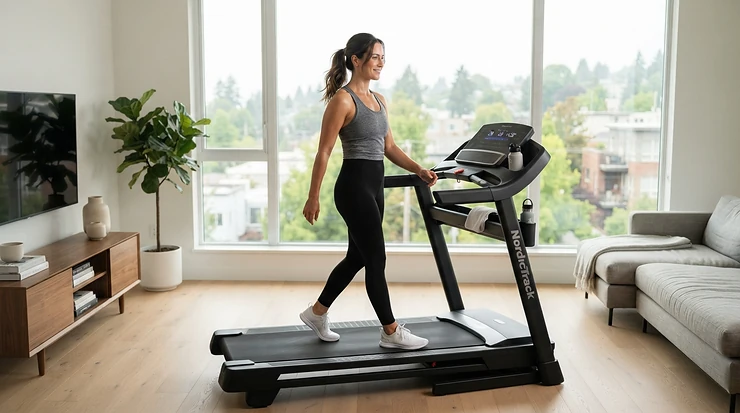
Your knees remember every mile you’ve ever run, and lately they’ve been sending you strongly worded complaints. If that sounds familiar, you’re not alone, and you’re not broken — you just need a machine that meets your joints where they actually are right now, not where they used to be. A slow-paced treadmill for joint pain relief is a motorized or manual walking machine engineered to run comfortably at low speeds, typically between 0.5 and 6 mph, with cushioned decks that soften impact on the knees, hips, and ankles while still delivering real cardiovascular benefit.
The beautiful, slightly annoying truth about joint pain is that the fix usually isn’t “do less.” It’s “do it slower, more consistently, and on a surface that isn’t actively working against you.” Concrete pavement doesn’t care about your cartilage. A quality low-speed treadmill for joint pain does. This guide walks through seven real, currently available machines — from a $400 recovery-style walker to a premium smart treadmill with decline training — and breaks down exactly who each one is for, based on genuine specs and aggregated review sentiment rather than marketing fluff.
We’ll also dig into the practical side most product pages skip entirely: how to build a gradual exercise progression that doesn’t trigger a flare-up, what gentle cardio routines actually look like week to week, and how the research on chronic pain management lines up with what you feel underfoot. By the end, you’ll know which machine fits your knees, your budget, and your living room — not just which one has the flashiest touchscreen.
Gentle Pace Treadmill Review: Quick Comparison at a Glance
Before the deep dive, here’s the bird’s-eye view. Every treadmill below was chosen because it either caps out at a genuinely gentle top speed, offers standout cushioning, or both.
| Treadmill | Speed Range | Standout Feature | Best For |
|---|---|---|---|
| Sole F63 | 0.5–12 mph | Cushioned Whisper Deck | Daily joint-friendly walking |
| Horizon 7.4 AT | 0.8–12 mph | 3-Zone Variable Cushioning | Gradual pace progression |
| NordicTrack Commercial 1750 | 0–12 mph | RunFlex deck, -3% decline | Rehab variety, incline/decline work |
| Sunny Health & Fitness SF-T7857 | 0.6–5 mph | Low step-up, multi-grip rails | Balance and mobility limits |
| XTERRA TR150 | 0.5–10 mph | XTRA Soft Deck cushioning | Budget beginners |
| Sunny Health & Fitness SF-T4400 | 0.5–9 mph | Compact shock-absorbing tread | Small spaces, casual walkers |
| WalkingPad A1 Pro | 0.5–3.7 mph | Foot-sensor auto speed, EVA cushion | Truly slow, under-desk movement |
A quick read of that table tells you most of what you need: if you want genuine slow-only pacing with zero temptation to sprint, the WalkingPad A1 Pro and Sunny Health & Fitness SF-T7857 cap themselves at 3.7 mph and 5 mph respectively, which is a feature, not a limitation, for anyone managing arthritis flare-ups. The NordicTrack Commercial 1750 stands apart because its -3% decline setting lets you rehab hips and knees at a downhill grade, something none of the budget models offer. Meanwhile, the Sole F63 and Horizon 7.4 AT split the difference — full speed range for days you feel strong, serious cushioning for days you don’t.
💬 Already have a favorite from the table? Jump straight to its full review below — or keep reading for the honest breakdown.😊
Top 7 Slow-Paced Treadmills for Joint Pain Relief: Expert Analysis
1. Sole F63 — best cushioned deck for daily joint-friendly walks
The F63 has quietly become the treadmill personal trainers point to when someone asks for “just something solid that won’t hurt my knees.” Sole builds this deck with a two-ply rubber-and-PVC belt designed specifically to soften footstrike, and the brand claims this cushioned running surface reduces impact on joints by roughly 40%.
On specs alone, this is a serious machine: a 3.0 CHP motor paired with a 20-inch by 60-inch running deck, which matters more than it sounds — most budget decks stop at 55 inches, and those extra five inches mean you’re not clipping the console with your toes on a longer stride. The 325-pound user weight capacity also puts it ahead of most machines in its price bracket, so it’s not quietly excluding larger-bodied walkers the way some “budget” treadmills do.
Here’s what most buyers overlook about the F63: its true value for joint pain isn’t the 12 mph top speed — you’ll likely never touch that — it’s that the cushioning stays consistent whether you’re strolling at 1.5 mph or picking up the pace on a good day. Reviewers who’ve tested it for months describe it as a high-quality treadmill for an affordable price, with a motor that’s quiet and powerful enough to handle light to moderate use comfortably. Aggregated owner sentiment across major retailers consistently praises the deck feel and the fact that it doesn’t require a subscription to function — you get full use of the on-board programs without ongoing fees.
Pros:
- ✅ Long 60-inch deck accommodates a full natural stride
- ✅ Lifetime frame and motor warranty ease long-term worry
- ✅ No subscription required for on-board workout programs
Cons:
- ❌ Console fan isn’t adjustable and can feel weak
- ❌ Kick-release folding mechanism feels clunky compared to pricier models
Expect this one in the around $1,000 to $1,300 range depending on retailer promotions — solid mid-range value if you want a machine that can grow with you as your tolerance for pace increases.
2. Horizon 7.4 AT — best zoned cushioning for gradual pace progression
If the Sole F63 is “one good cushion for everybody,” the Horizon 7.4 AT is “three different cushions, each doing a specific job.” Its deck uses 3-Zone Variable Response Cushioning, with softer elastomers where your foot strikes at the front, a moderate zone through mid-stride, and firmer elastomers at the back for push-off — essentially trying to replicate what a good running shoe does, built into the floor itself.
What that means in practice: as you slowly rebuild tolerance for longer walks, the front-loaded softness absorbs the heel-strike shock that tends to aggravate knee and hip pain first, while the firmer push-off zone keeps you from feeling like you’re walking through wet sand. Testers who tried it at low speeds specifically noted the cushioning still provided a subtle, natural cushion underfoot even well below running pace — which is exactly the use case that matters here, since most cushioning marketing is written with runners in mind, not someone doing a careful 20-minute joint-safe walk.
The 22-inch by 60-inch deck is genuinely roomy, and the machine’s 3.5 HP motor with Rapid Sync technology means speed changes happen smoothly rather than in a jarring lurch — a small detail that matters a lot if sudden movement is what triggers your pain. Aggregated review sentiment frequently flags this as one of the more “premium-feeling” machines in its price tier, particularly for anyone planning to gradually work back up to a faster pace over months, not days.
Pros:
- ✅ Front-to-back zoned cushioning mimics running-shoe support
- ✅ Smooth motor response avoids jarring speed transitions
- ✅ Spacious 60-inch deck fits taller walkers comfortably
Cons:
- ❌ Heavier and bulkier than most budget alternatives
- ❌ Touchscreen and app features add cost some buyers won’t use
Typical pricing lands in the $1,600 to $2,000 range, with frequent seasonal discounts pulling it closer to $1,600.
3. NordicTrack Commercial 1750 — best for decline walking and joint rehab variety
This is the splurge pick, and it earns that status through one feature almost nothing else on this list has: a genuine decline setting. The Commercial 1750 adjusts from a 12% incline down to a -3% decline, and that decline option is a legitimately underused tool in joint-pain management — walking slightly downhill strengthens the stabilizing muscles around the kneecap without adding the pounding of flat-ground running.
Under the hood, a 4.25 CHP motor drives a deck built with RunFlex cushioning designed to reduce joint impact whether you’re walking, jogging, or running. Based on the spec comparison with everything else here, this is the only machine offering a true decline, and combined with its 22-inch by 60-inch tread belt, it gives you room to genuinely vary your gait pattern instead of grinding the same flat stride every session — something orthopedic specialists generally recommend to avoid overloading any single joint structure repeatedly.
The 16-inch tilt-and-pivot touchscreen with iFIT integration is the headline feature for most shoppers, and while iFIT membership is sold separately, the machine’s core mechanics work fine without it. What most buyers overlook here is that a subscription-free “manual mode” plus the incline/decline range alone justifies the price for anyone doing structured physical therapy-style walking at home.
Pros:
- ✅ Rare -3% decline setting for joint-strengthening variety
- ✅ Powerful 4.25 CHP motor handles years of daily use
- ✅ RunFlex deck cushioning noticeably softer than base NordicTrack models
Cons:
- ❌ iFIT membership required to unlock full workout library
- ❌ Highest upfront price on this list
Prices generally sit in the $1,900 to $2,500 range, though it regularly goes on sale toward the lower end of that band.
4. Sunny Health & Fitness SF-T7857 Recovery Walking Treadmill — best low step-up deck for balance and mobility limits
This one isn’t trying to be a “treadmill” in the traditional sense — it’s built for people whose top priority is safely getting steps in without tripping, stumbling, or straining to climb onto a tall deck. The 44-inch by 19.5-inch low-profile deck sits noticeably closer to the ground than a standard treadmill, and its speed range runs from just 0.6 mph up to 5 mph — genuinely slow, in a way that most “budget treadmills” only pretend to be.
Here’s what the spec sheet won’t tell you outright, but the design makes obvious: extensive multi-grip handrails run along the top, middle, and sides of the deck, which is a meaningful safety feature if balance is part of your joint pain picture, as it often is with hip or knee arthritis. The 2.5-peak-horsepower motor and emergency stop clip round out a machine clearly engineered around caution rather than performance metrics.
This is the honest trade-off pillar: you are not getting a machine to train for a 5K here. You’re getting a tool purpose-built for rebuilding a walking habit after injury, surgery, or a long period of inactivity caused by pain. Reviewers and buyers researching recovery-focused equipment consistently frame machines like this one around confidence and safety first, speed a distant second — which is precisely the right hierarchy for this use case.
Pros:
- ✅ Extra-low step-up height reduces fall risk
- ✅ Extensive handrails support balance-impaired walkers
- ✅ Genuinely slow top speed prevents accidental overexertion
Cons:
- ❌ Not suitable for anyone wanting to eventually jog
- ❌ Smaller motor limits long-term durability under heavy daily use
Look for it in the $300 to $500 range, making it one of the more accessible entries here.
5. XTERRA TR150 — most affordable folding treadmill for beginners
Budget treadmills have a well-earned reputation for feeling flimsy, but the TR150 pushes back on that a little. Its 50-inch running deck uses XTRA Soft Deck cushioning specifically designed to reduce impact and keep knees and joints comfortable, and the 0.5 to 10 mph speed range with a 2.25 HP motor covers slow rehabilitation walking all the way up to a light jog for good days.
What most budget shoppers overlook is the lifetime frame warranty paired with a 1-year motor warranty — that’s a meaningfully longer commitment than many machines twice its price offer on the frame. The 3 manual incline levels are a genuine limitation compared to motorized incline on pricier machines (you’ll be stepping off to adjust it), but for someone whose main goal is consistent flat walking, that’s a minor sacrifice for the savings.
One reviewer who tested it extensively admitted their expectations were low going in, given it’s among the least expensive treadmills tested — and came away pleasantly surprised by how it held up. Aggregated buyer sentiment leans heavily toward “exceeded expectations for the price,” with the most common complaint being the shorter, narrower deck compared to premium models, which can feel tight for taller walkers.
Pros:
- ✅ XTRA Soft Deck cushioning at a genuinely low price point
- ✅ Lifetime frame warranty rare at this price tier
- ✅ Foldable design saves space between sessions
Cons:
- ❌ Manual incline requires stepping off to adjust
- ❌ Deck feels narrow for taller or wider-stance walkers
Expect pricing under $450, frequently closer to $380-$400.
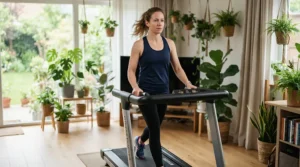
6. Sunny Health & Fitness SF-T4400 — best compact walking treadmill for small spaces
If your living situation rules out anything the size of a door, the SF-T4400 solves that problem directly. Its footprint is genuinely small, and the 49-inch by 15.5-inch deck comes with shock absorption technology built into the tread, plus a soft-drop folding feature so it won’t slam down and startle you (or your downstairs neighbors) when you’re done.
The 0.5 to 9 mph speed range covers slow, deliberate walking comfortably, and the honest trade-off is a 220-pound user weight capacity, lower than most other picks here — worth flagging clearly rather than glossing over. Reviewers describe it as ideal for general trainees who want a low-impact way to improve cardiovascular fitness rather than train for athletic goals, which is precisely the audience managing joint pain rather than chasing a personal record.
What the spec sheet doesn’t emphasize but the design shows: this is a “just get your steps in” machine, not a training tool. The three manual incline levels add mild variety without motorized complexity, keeping the price low and the mechanism simple — fewer moving parts generally means fewer things to break down over years of gentle daily use.
Pros:
- ✅ Small footprint fits apartments and tight rooms
- ✅ Soft-drop fold prevents jarring noise and impact
- ✅ Shock-absorbing tread even at this price point
Cons:
- ❌ Lower 220-pound weight capacity than most competitors
- ❌ Shorter deck may feel cramped for longer strides
Priced generally under $500, often available closer to $350-$400 during sales.
7. WalkingPad A1 Pro — best under-desk walking pad for truly slow-paced movement
Every other machine on this list technically could go fast. The A1 Pro can’t, and that’s the entire point. Its speed range tops out at 3.7 mph, which sounds restrictive until you remember that a genuinely joint-friendly pace for chronic pain management often sits well under 3 mph anyway — this machine simply removes the temptation to overdo it.
The standout engineering here is the Foot Sense Speed Control, which uses eight built-in sensors to detect where your feet land on the deck, automatically speeding up or slowing down based on foot placement across three zones. On paper this sounds like a gimmick; in practice, it means you never have to fumble with a remote mid-stride if you need to slow down suddenly because of a twinge — you simply shift your feet back and the belt eases off.
A multi-layer belt with EVA shock cushioning protects joints while keeping operation quiet, which matters enormously for anyone using it under a desk during work hours or in a shared living space. The double-fold design also means it disappears under a bed or sofa when you’re done, a genuinely useful feature if space is tight. Aggregated owner sentiment is generally positive on comfort and quietness, though a smaller subset of reviews mention occasional sudden-stop glitches in the first weeks of use, worth knowing about upfront rather than discovering the hard way.
Pros:
- ✅ Automatic foot-sensor speed control removes guesswork
- ✅ Genuinely capped low top speed prevents overexertion
- ✅ Ultra-thin fold-flat design for tight living spaces
Cons:
- ❌ No incline option of any kind
- ❌ Some units report occasional sudden-stop glitches early on
Typical pricing runs $500 to $700, with a lower-capacity 230-pound variant sometimes available closer to $500.
Your First 30 Days: Setting Up a Joint-Safe Walking Routine
Buying the treadmill is the easy part. The habit is the actual project, and the first month is where most people either build lasting relief or accidentally talk themselves out of the whole thing by overdoing it on day three.
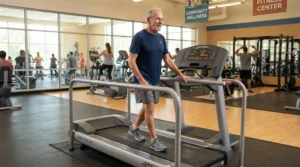
Start with duration, not speed. Week one, aim for two or three sessions of 8-10 minutes at whatever pace feels genuinely easy — not “I can push through this,” but “I could hold a full conversation without effort.” Week two, extend duration before you touch the speed dial. Most joint-pain flare-ups from treadmill use come from increasing intensity too fast, not from walking itself.
Set up your space correctly before you ever step on. Place the treadmill somewhere the emergency stop clip is easy to reach, wear proper footwear with real cushioning (a common mistake is walking in socks or worn-out sneakers, undermining even the best cushioned deck), and keep a water bottle within reach so you’re not tempted to skip hydration breaks. If your model has a fan, use it — overheating makes joint stiffness and general discomfort noticeably worse.
By week three or four, you can begin gently nudging the pace upward, but the rule of thumb worth following: increase speed OR duration in any given week, never both simultaneously. This single habit prevents the majority of setbacks people experience in their first month.
✨ Set your treadmill up right, and the habit sticks. Skip these steps, and most people quit by week two — don’t be most people.
Real-Life Scenarios: Who Actually Needs a Low-Speed Treadmill for Joint Pain?
Sometimes it’s easier to see yourself in someone else’s situation than to parse a spec sheet. Here are three common profiles.
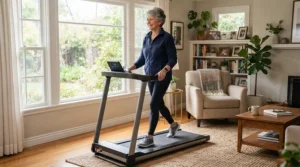
The post-surgery walker. Maria is six weeks out from a knee replacement, cleared for light walking by her physical therapist but understandably nervous about her balance. A machine like the Sunny Health & Fitness SF-T7857, with its low step-up deck and extensive handrails, matches her situation far better than anything with a high top speed she’ll never use — the safety features are the actual product here, not the horsepower.
The desk-bound professional with chronic hip stiffness. James sits for nine hours a day and notices his hips seizing up by mid-afternoon. He doesn’t need a dedicated workout session; he needs movement woven into his existing schedule. The WalkingPad A1 Pro tucked under his standing desk lets him accumulate slow, steady steps throughout the workday without ever “exercising” in the traditional sense.
The weekend hiker managing early-stage knee arthritis. Priya still wants to build real fitness, just without the pounding of her old running routine. The Horizon 7.4 AT or Sole F63 gives her room to progress from a gentle 2 mph recovery pace on bad days up toward a brisker 4-5 mph walk on good ones, all cushioned by a deck engineered to handle that range without punishing her joints.
Gradual Exercise Progression: Building Up Safely Without Flare-Ups
Gradual exercise progression is the single most underrated concept in joint pain management, and it’s almost never explained clearly anywhere near a product listing. The core idea: your joints, tendons, and supporting muscles adapt to load more slowly than your motivation does. Your enthusiasm might be ready for 30 minutes at 3.5 mph in week one. Your cartilage is not.
A workable framework looks like this: increase total weekly walking time by no more than 10-15% from one week to the next, and hold your pace steady for at least a full week before nudging it upward. If a session leaves you noticeably more sore than usual the following day — not the normal “I did something” ache, but a sharper or lingering pain — that’s a signal to hold your current level for another week rather than push forward.
Machines with a wide, well-labeled speed range like the Sole F63 or XTERRA TR150 make this progression easy to track precisely, since you can nudge speed by fractions of a mile per hour rather than guessing your pace on an outdoor route. What most people get wrong is treating progression as a straight line upward; in reality, a good month often includes one deliberately easier week to let tissue recover, especially if you’re managing an inflammatory condition rather than simple deconditioning.
Which Slow-Paced Treadmill Fits Your Situation? A Buyer’s Decision Framework
Cutting through seven options is easier with a simple decision tree.
If balance and fall risk are your primary concern, choose a low-profile deck with extensive handrails — the Sunny Health & Fitness SF-T7857 is purpose-built for exactly this, because its design prioritizes stability over speed capability.
If you’re working with a tight budget and want the most cushioning per dollar, choose the XTERRA TR150 or Sunny Health & Fitness SF-T4400, because both deliver genuine shock-absorbing decks well under the $500 mark, with the trade-off being smaller motors and lower weight capacities.
If you want room to grow from a very gentle pace toward a real workout over months, choose the Sole F63 or Horizon 7.4 AT, because their wide speed ranges and zoned cushioning support both today’s slow walk and next year’s brisker one.
If you have space constraints and want to sneak movement into a desk-bound day, choose the WalkingPad A1 Pro, because its fold-flat design and capped low speed are engineered for exactly that use case.
If you’re doing structured rehab and want incline and decline variety, choose the NordicTrack Commercial 1750, because it’s the only machine here offering a true negative-grade decline setting alongside a serious cushioned deck.
How to Choose a Slow-Paced Treadmill for Joint Pain Relief
Choosing a slow-paced treadmill for joint pain relief comes down to five factors: cushioning quality, true low-speed range, deck size, weight capacity, and safety features like handrails or emergency stops. Here’s how to weigh each one.
- Check the actual low end of the speed range. A treadmill advertised as “0.5-12 mph” is not automatically a slow-paced treadmill if it doesn’t hold steady and smooth at that low end — read reviews specifically mentioning low-speed performance, not just top speed.
- Prioritize cushioning system over horsepower. A bigger motor doesn’t help sore knees. Zoned or elastomer-based cushioning, like what’s on the Horizon 7.4 AT or NordicTrack Commercial 1750, does the actual joint-protection work.
- Measure your space before your ambition. A 60-inch deck feels wonderful until it doesn’t fit your room. Confirm both unfolded and folded dimensions against your actual space.
- Match weight capacity honestly to your needs. This isn’t just about body weight — it affects long-term durability. A machine running near its weight limit daily will wear out faster than one with headroom.
- Look for safety features proportional to your risk. If balance is a concern, handrail coverage and step-up height matter more than any other spec on this list.
- Consider whether you need incline or decline at all. For pure joint-pain walking, flat ground is often gentler; incline and decline are tools for variety and specific rehab goals, not requirements.
- Read aggregated review sentiment, not just star ratings. A 4.5-star average tells you little. Look for recurring themes — repeated mentions of “quiet motor” or “sturdy at slow speeds” carry more signal than the number itself.
Common Mistakes When Buying a Low-Speed Treadmill for Joint Pain
The most common mistake is buying based on top speed rather than low-speed smoothness. A treadmill that lurches or hums unevenly at 1.5 mph will be miserable to use daily, regardless of what it can theoretically do at 10 mph.
A close second: ignoring deck length relative to your height. Reviewers frequently flag shorter 49-50 inch decks as feeling cramped for taller walkers, even at slow paces, because a natural gentle stride is still longer than most people estimate.
Buyers also commonly underestimate warranty terms. A 90-day parts warranty on a $1,500 machine is a meaningful red flag worth weighing against a $700 machine backed by a longer commitment. Finally, many people skip checking the emergency stop and handrail design entirely, treating it as an afterthought rather than a genuine safety consideration — a mistake worth avoiding if mobility or balance is part of your picture at all.
Slow-Paced Treadmill vs Outdoor Walking
| Factor | Slow-Paced Treadmill | Outdoor Walking |
|---|---|---|
| Surface impact | Cushioned deck absorbs shock | Pavement transfers full impact |
| Weather dependence | None — usable year-round | Fully weather-dependent |
| Pace consistency | Locked, precise speed control | Variable, harder to track |
| Fall/twist risk | Flat, predictable surface | Uneven terrain, curbs, obstacles |
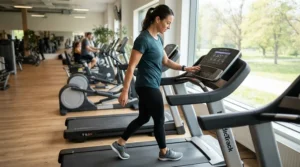
A cushioned treadmill deck absorbs impact that hard pavement transfers directly to your joints, and treadmills also offer a predictable, even surface that reduces the risk of sudden twists or missteps that can aggravate knee pain. That said, outdoor walking offers fresh air, natural terrain variation for balance training, and zero equipment cost — real advantages a treadmill can’t replicate. For most people managing joint pain, the ideal approach isn’t choosing one exclusively, but leaning on the treadmill during flare-ups, bad weather, or early rehab, and returning outdoors once tolerance and confidence rebuild.
Gentle Cardio Routines for Chronic Pain Management
A slow-paced treadmill is only half the equation — what you actually do on it matters just as much. Gentle cardio routines for chronic pain management generally follow an interval-style structure rather than one flat, unchanging pace, even at low speeds.
A workable template: five minutes at your easiest comfortable pace as a warm-up, followed by alternating two-minute blocks between your “easy” speed and a slightly brisker “moderate” speed for 15-20 minutes total, then a five-minute cool-down back at your easiest pace. This gentle variation, rather than a single flat speed, helps build tolerance without demanding your joints hold one load for the entire session.
The Physical Activity Guidelines for Americans recommend two hours and thirty minutes of moderate-intensity aerobic activity weekly, which can be broken into smaller increments such as three ten-minute sessions throughout the day — a structure that maps almost perfectly onto how most people actually use a home treadmill: in short, manageable chunks rather than one grueling hour. You can read the CDC’s full guidance on arthritis pain management without medication for more on how this framework was developed.
What to Expect: Real-World Performance at Slow Speeds
Specs on paper rarely translate directly into how a machine actually feels underfoot, especially at the low speeds this guide focuses on. Here’s the honest, practical picture.
At speeds under 2 mph, cushioning differences between machines become less noticeable — nearly every treadmill on this list feels reasonably comfortable that slow, since impact forces are already low. The differences show up more clearly in the 3-5 mph range, where a well-zoned deck like the Horizon 7.4 AT starts to noticeably outperform a basic budget deck.
Noise is another underrated factor. Machines with smaller motors, like the WalkingPad A1 Pro, tend to run quieter at slow speeds — a genuine consideration if you’re using the treadmill early morning, late at night, or in a shared space. Expect a short adjustment period regardless of which machine you choose; most people report their gait and confidence stabilizing within the first week, once the belt speed and rhythm feel natural rather than foreign underfoot.
Long-Term Cost & Maintenance
A treadmill’s sticker price is only the opening chapter. Budget for a annual deck lubrication (most manufacturers recommend silicone-based lubricant every three to six months for regular use), periodic belt alignment checks, and eventually a belt replacement somewhere around the five-to-eight-year mark on a well-used machine.
Looking at total cost of ownership, a $400 budget treadmill used daily for years may cost more in cumulative repairs and belt replacements than a $1,300 mid-range machine with a lifetime frame warranty and a more robust motor from the start. If you’re planning to use this machine for the long haul as part of ongoing chronic pain management rather than a short-term experiment, the mid-range tier genuinely earns its higher price through reduced maintenance headaches over a five-year horizon.
Safety, Regulations & Compliance Guide for Slow-Paced Treadmill Use
Home fitness equipment in the U.S. isn’t subject to the same rigorous pre-market testing as medical devices, so the safety burden largely falls on setup and usage habits rather than regulation. Always use the safety key or emergency stop clip clipped to your clothing during every session — this single habit prevents the majority of serious treadmill injuries.
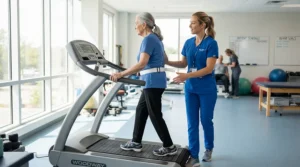
If you’re managing a diagnosed condition like osteoarthritis or recovering from surgery, working with a physical therapist to build an individualized exercise program remains the gold standard, since a professional can tailor intensity, and reduce pain safely based on your specific joints. For general guidance on integrating this kind of exercise into a broader arthritis management plan, Mayo Clinic’s overview on osteoarthritis prevention and coping strategies is a genuinely useful starting point before you begin.
Also worth flagging: applying heat for 15-20 minutes before a session can relax muscles and ease pre-existing aching, and proper supportive, closed-toe athletic footwear is non-negotiable regardless of how gentle your pace is.
Frequently Asked Questions
❓ How slow should a treadmill go for joint pain relief?
❓ Can walking on a treadmill make joint pain worse?
❓ What is the best treadmill speed for arthritis in the knees?
❓ How much does a good joint-friendly treadmill cost?
❓ Is a treadmill better than walking outside for joint pain?
Conclusion
Joint pain has a way of making you feel like your options have shrunk down to “push through it” or “give up entirely.” Neither is true, and the right slow-paced treadmill proves it pretty quickly — usually within the first two weeks of consistent, genuinely gentle use.
If you take away one thing from this guide, let it be this: the fanciest touchscreen and the highest top speed are almost never what actually protects your knees and hips. It’s the cushioning quality, the honest low-speed performance, and whether the machine matches your specific mobility picture right now. Whether that’s the safety-first Sunny Health & Fitness SF-T7857, the versatile Sole F63, or the decline-capable NordicTrack Commercial 1750, the best choice is the one you’ll actually step onto tomorrow morning, not the one that looks most impressive in a spec sheet.
Start slow, track your progress by duration before speed, and let your body — not a marketing page — set the pace.
Recommended for You
- Treadmill For Seniors With Hip Arthritis: 7 Best Picks (2026)
- Low Impact Treadmill For Hip Pain: 7 Real Picks for 2026
- Treadmill Under $800 for Arthritis: 7 Best Picks for 2026
Disclaimer: This article contains affiliate links. As an Amazon Associate, I earn from qualifying purchases. If you purchase products through these links, we may earn a small commission at no additional cost to you.
✨ Found this helpful? Share it with your friends! 💬🤗
