In This Article
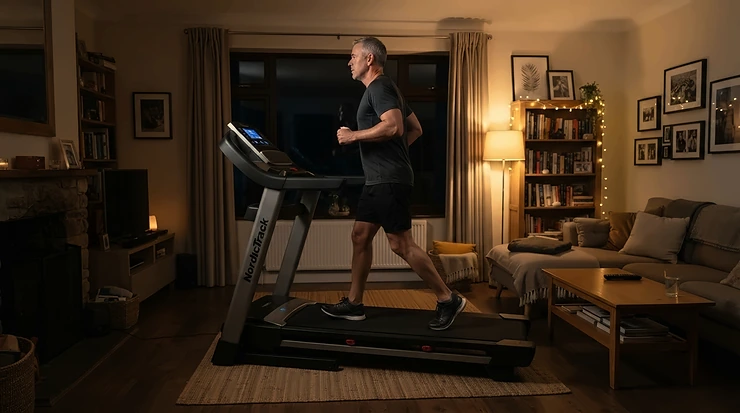
Here’s the thing nobody tells you when your knees start barking after every run: the surface under your feet matters almost as much as your shoes do. A cushioned deck treadmill for knee pain is a machine engineered with a shock-absorbing running platform — foam layers, elastomer cushions, or spring-based suspension — designed to soften footstrike impact before it travels up into your joints. That’s the whole concept in one breath, and it’s a bigger deal than the spec sheets let on.

If you’ve ever tried jogging on a “bargain” treadmill with a deck about as forgiving as a kitchen floor, you already know why this matters. Every stride sends a jolt straight up your shin into your knee, and after mile two, you’re not thinking about your pace — you’re thinking about whether you’ll be able to climb stairs tomorrow. The right cushioned belt treadmill review should tell you not just what a deck is made of, but how that translates into real comfort during a real workout.
This guide walks through seven genuinely good machines — from a sub-$400 walking pad to a commercial-grade cabinet model — plus the running surface technology behind each one, so you can match a treadmill to your knees instead of your wish list. Physical activity remains one of the most reliably effective tools for managing joint pain long-term, according to CDC guidance on physical activity and arthritis, which is exactly why picking equipment that doesn’t fight you matters so much.
Quick Comparison Table
| Treadmill | Cushioning Tech | Best For |
|---|---|---|
| THERUN Incline Treadmill | 2+4 Intelligent Shock Absorption | Tightest budget, gentle rehab walking |
| Horizon 7.0 AT | 3-Zone Variable Response Cushioning | No-subscription value shoppers |
| Sole F80 | CushionFlex Whisper Deck | Quiet, no-frills daily runners |
| 3G Cardio Pro Runner X | Ortho Flex Shock Suspension | Orthopedic-grade belt in a small footprint |
Looking at this snapshot, notice that price and cushioning quality don’t move in lockstep — the Horizon 7.0 AT punches well above its cost, while the 3G Cardio Pro Runner X proves that true orthopedic engineering doesn’t require a massive footprint. If your main constraint is space rather than money, the suspension quality of a folding deck like the Pro Runner X can matter more than raw square footage. We’ll unpack all seven options, including three not shown here, in the full breakdown below.
💬 Just one click — help others make better buying decisions too!😊
Top 7 Cushioned Deck Treadmills for Knee Pain: Expert Analysis
Consider this your cushioned belt treadmill review shortlist — seven real, currently available machines spanning budget, mid-range, and premium tiers, each evaluated on how its deck actually behaves underfoot rather than what the marketing copy claims.
1. THERUN Incline Treadmill — best for gentle rehab walking on a tight budget
The standout here is the 2+4 Intelligent Shock Absorption system, which pairs two primary shock absorbers with four secondary cushioning points across a compact 43.3 x 16.5-inch belt. That’s a small running surface, so this isn’t the machine for a 6-foot-tall marathoner, but for walking or light jogging it does something budget decks rarely manage: it actually flexes instead of just feeling stiff with a thin foam skin glued on top.
At a 3.0 HP motor and 400-pound weight capacity, the THERUN outperforms its price class on durability alone — most treadmills this cheap cap out at 250-300 pounds. Reviewers researching low-cost cushioned options consistently flag this model as the rare budget pick that doesn’t feel like a compromise on joint comfort, particularly for people easing back into activity after time off. If you’re testing the waters with knee pain and don’t want to commit real money yet, this is where you start.
Pros:
- ✅ 400 lb capacity far exceeds typical budget treadmills
- ✅ Doubles as a 2-in-1 walking pad and incline treadmill
- ✅ Genuinely surprising shock absorption for the price
Cons:
- ❌ Small 43.3″ x 16.5″ belt limits taller runners
- ❌ Motor and components won’t survive heavy daily mileage
Expect this one to land in the $300-$400 range — a legitimately low bar of entry for anyone whose knees need relief before their wallet needs a workout.
2. Horizon 7.0 AT — best value with zero subscription fees
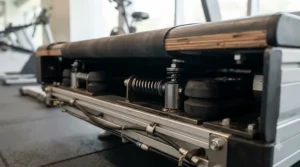
The 20″ x 60″ belt runs on Horizon’s Three-Zone Variable Response Cushioning, a design that uses softer elastomers up front where your heel strikes, a moderate zone through the middle of your stride, and firmer support at push-off. It’s a clever bit of engineering: rather than one uniform cushion density, the deck tries to match what your foot actually needs at each phase of a stride.
In practice, that means a 12 mph top speed and 15% incline range without asking you to pay a monthly app fee just to unlock features — a real point of differentiation from iFit-tied competitors. Reviewers who’ve logged daily walking and light jogging miles on this deck describe it as noticeably gentler on the knees than flat, uncushioned decks in the same price bracket, while still feeling stable enough for interval work. The plastic console is a minor concession at this price, but the frame and motor carry lifetime warranties.
Pros:
- ✅ No monthly subscription required to use core features
- ✅ 15% incline range rare below the $1,000 mark
- ✅ Three-zone cushioning tuned to stride phase, not just flat foam
Cons:
- ❌ Console feels basic compared to touchscreen rivals
- ❌ 20-inch belt width is snug for wider runners
Budget around $950-$1,050 for this one, making it arguably the strongest value-per-dollar cushioned deck treadmill for knee pain on this entire list.
3. Horizon 7.4 AT — widest three-zone deck for taller striders
Step up to the 7.4 AT and you get the same Three-Zone Variable Response Cushioning philosophy, but on a roomier 22″ x 60″ XL deck with a thicker 0.8-inch platform and 1.6mm silicone belt. The extra two inches of width sounds trivial until you’re mid-sprint and your stride naturally drifts — suddenly you’re not clipping the side rails.
The elastomer-based zones here work like a running shoe built into the floor: soft landing zone, moderate transition, firmer push-off. Independent testers have noted that while the flex isn’t dramatic, there’s a subtle underfoot give that reduces fatigue over longer sessions, and Horizon’s own data suggests up to 30% less joint impact versus running on pavement. QuickDial controls on the handrails also mean you’re not reaching for a distant console mid-interval, which matters more than it sounds when knee pain already has you second-guessing your form.
Pros:
- ✅ Wider 22-inch deck accommodates larger strides
- ✅ QuickDial handrail controls for fast pace changes
- ✅ Bluetooth compatible with Zwift, Peloton, and Nike Run Club apps
Cons:
- ❌ No decline training available on this model
- ❌ Step-up height can feel tall for shorter users
Expect a price typically in the $1,300-$1,600 range, positioning it as a sensible middle ground between the entry-level 7.0 AT and full commercial-tier decks.
4. Sole F80 — quietest motor without a monthly membership
The CushionFlex Whisper Deck on the F80 is built around a 22″ x 60″ running surface that’s engineered to reduce joint impact while keeping the motor genuinely quiet — a detail that matters more than people expect once you’re running at 6 a.m. without waking the house. A 3.5 HP motor and 15% incline range put this comfortably in mid-range commercial territory.
What sets the F80 apart from flashier rivals is what it doesn’t require: no iFit-style subscription to access built-in workout programs, which can save real money over a few years of ownership. Long-term testers who’ve logged well over a year on this deck report consistent cushioning performance without the early flex loss some cheaper foam decks develop, and the lifetime frame and motor warranty backs that durability claim with something concrete. For runners who want commercial-feeling cushioning without ongoing app fees, this is the sweet spot.
Pros:
- ✅ CushionFlex Whisper Deck reduces joint impact and noise
- ✅ No subscription needed to use built-in programs
- ✅ Lifetime warranty on frame and motor
Cons:
- ❌ 10.1-inch touchscreen is small next to premium rivals
- ❌ Assembly requires two people and about an hour
Prices typically fall in the $1,700-$1,800 range, occasionally dipping lower during promotional periods — always confirm current pricing before buying.
5. NordicTrack Commercial 1750 — most immersive coaching experience
The Commercial 1750 pairs a heavy-duty 4.25 CHP motor with a spacious 60″ x 21.5″ deck running NordicTrack’s Runners Flex cushioning, a system built to soften impact while still returning enough energy that the ride doesn’t feel mushy or dead underfoot. It’s the kind of deck that makes a treadmill feel less like a treadmill and more like a well-maintained indoor track.
Where this model separates itself is the 16-inch pivoting HD touchscreen and deep iFit integration, letting SmartAdjust technology automatically manage incline and speed to match a trainer-led session. Long-term reviewers describe the frame as rock-solid even at max incline and speed, with a 400-pound weight capacity that backs up the sturdy feel. The trade-off is real, though — you’re leaning into the iFit ecosystem for the full experience, and that subscription cost adds up over the ownership life of the machine.
Pros:
- ✅ Runners Flex cushioning tuned for real running impact
- ✅ 16-inch pivoting touchscreen with deep iFit integration
- ✅ Lifetime motor warranty and rock-solid 400 lb frame
Cons:
- ❌ Full feature set depends on an iFit subscription
- ❌ Console-mounted controls require reaching forward mid-run
Budget around $1,900-$2,100 for the base unit, before factoring in any optional iFit membership costs.
6. Sole F85 — deepest impact reduction on paper
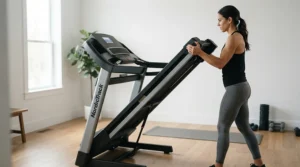
The F85 runs the same CushionFlex Whisper Deck philosophy as its little sibling but backs it with a stronger 4.0 CHP motor and 2.75-inch rollers for smoother, quieter belt rotation. Sole’s own engineering claims put joint impact reduction at up to 40% compared to training on pavement — among the higher numbers you’ll find from any manufacturer willing to publish a figure at all.
The 22″ x 60″ deck adds a -6% decline option most rivals skip entirely, which is genuinely useful if you’re training for a race with downhill sections or just want variety beyond flat-and-incline monotony. One tester who directly compared the F85’s cushioning to the NordicTrack Commercial 1750 felt the 1750 edged it out slightly on outright plushness, though the F85 still clearly outperforms cheaper decks. The 15.6-inch touchscreen supports Netflix and screen mirroring, and like the F80, there’s no required subscription to use it.
Pros:
- ✅ Up to 40% claimed joint impact reduction versus pavement
- ✅ Rare -6% decline training option included
- ✅ No subscription required for full feature access
Cons:
- ❌ Priced noticeably above the F80 for similar core cushioning feel
- ❌ Large 15.6-inch screen adds bulk to the console
Expect pricing around $2,200-$2,600, with Sole’s own site typically offering the better discounts compared to third-party retailers.
7. 3G Cardio Pro Runner X — most orthopedic-grade belt in a foldable frame
The Pro Runner X centers its entire design around the Ortho Flex Shock suspension system paired with what 3G Cardio calls a medical-grade orthopedic belt — a thicker, more cushioned belt material than standard treadmill belts, engineered specifically to limit initial foot-strike vibration. On a 20.5″ x 58″ deck powered by a 3.0 HP motor, it folds down to a genuinely compact 40″ x 35″ footprint.
This is a machine built by a company whose entire pitch is “everything you need, nothing you don’t” — no massive touchscreen, no bundled subscription, just FreeSync Bluetooth so you can mirror your own tablet as a display. Independent reviewers researching this segment have called out the Ortho Flex system specifically as a standout for runners managing knee pain, since the suspension is engineered rather than just a slab of foam under the belt. A 350-pound capacity and low 6.5-inch step-up height round out a design clearly built with joint-conscious buyers in mind.
Pros:
- ✅ Ortho Flex Shock suspension purpose-built for joint protection
- ✅ Compact 40″ x 35″ folded footprint
- ✅ No required subscription; FreeSync Bluetooth for your own apps
Cons:
- ❌ Console lacks a built-in touchscreen
- ❌ 350 lb capacity is lower than some premium rivals
Prices generally range from $2,000-$2,700 depending on current promotions — check current price before purchasing, since 3G Cardio runs frequent sales.
Cushioned Decks vs Traditional Treadmill Decks: What Actually Changes for Your Knees
| Factor | Cushioned Deck | Traditional Flat Deck |
|---|---|---|
| Joint impact reduction | Often 30-40% less than road running | Minimal, closer to pavement-level force |
| Stability at speed | Slightly softer, still supportive | Firmer, more “locked in” feel |
| Best For | Sole F85, 3G Cardio Pro Runner X | Serious racers wanting a road-like feel |
| Long-term feel | Elastomers hold up better than foam | Rarely degrades since there’s little to degrade |
The core trade-off is simple: a traditional flat deck gives you a firmer, more road-like sensation that some competitive runners actually prefer for race-pace training, while a genuinely engineered cushioned deck — like the elastomer system in the Horizon 7.4 AT or the Ortho Flex suspension in the 3G Cardio Pro Runner X — meaningfully lowers the repetitive force traveling into your knees, hips, and lower back. Neither approach is objectively “better” in a vacuum; it depends entirely on whether your knees can tolerate road-like firmness or need the extra buffer. If you already have diagnosed knee pain, the joint impact reduction argument tends to win out over marginal stability gains.
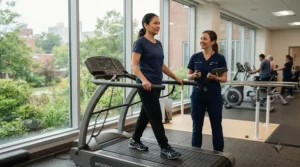
How to Choose a Cushioned Deck Treadmill for Knee Pain
What is the best way to choose a cushioned deck treadmill for knee pain? Prioritize verified impact-reduction specs over marketing buzzwords, match deck size to your height and stride, and confirm the suspension type — foam, elastomer, or spring — actually suits how you move, since each behaves differently underfoot.
- Check the cushioning mechanism, not just the marketing name. “ComfortTech” and “CushionFlex” sound similar on a box, but foam-based systems degrade over years while elastomer and spring systems tend to hold their shock-absorbing properties longer.
- Match deck size to your actual stride, not your budget. A 60-inch length and at least 20 inches of width prevents you from clipping the edges mid-run, especially at faster paces.
- Look for zone-specific cushioning if you run more than you walk. Systems like Horizon’s three-zone design are built to flex differently at footstrike versus push-off, which matters more once you’re jogging instead of strolling.
- Confirm the incline range fits your training goals. Anything above 8% incline should be introduced gradually if you have patellofemoral pain, since steeper angles increase kneecap stress.
- Weigh subscription costs into total price. A cheaper machine tied to a $39-a-month app can cost more over three years than a pricier subscription-free model.
- Read aggregated review sentiment, not just star averages. A 4.5-star rating means little if the one-star reviews all mention the exact same cushioning failure after a year of use.
- Consider step-up height if mobility is already limited. Higher decks (often needed for thicker cushioning) can be harder to step onto for someone already managing knee pain.
Understanding Deck Suspension Systems
Deck suspension systems generally fall into three camps: foam-layer cushioning, elastomer-based zone systems, and mechanical spring or shock suspension. Foam is cheapest and softens quickly, sometimes too quickly, losing responsiveness within a year or two of regular use. Elastomer zones — the approach behind Horizon’s three-zone system — use rubber compounds of varying density positioned strategically across the deck, and they tend to hold their shape considerably longer than foam. Mechanical suspension, like the Ortho Flex system in the 3G Cardio lineup, uses actual shock components under the belt rather than just a cushioned surface layer, which is why that category often gets singled out specifically for orthopedic use cases.
Running Surface Technology That Actually Matters
Beyond the cushioning layer itself, running surface technology includes belt thickness, roller diameter, and lubrication design — details that rarely make it onto a product box but directly affect how smooth and quiet your stride feels. Thicker two-ply belts, like those found across Sole’s lineup, resist stretching and slipping better than thin single-ply belts. Larger rollers (2.5 inches or more in diameter) reduce belt noise and heat buildup, both of which extend the working life of whatever cushioning system sits beneath the belt.
Common Mistakes When Buying a Knee-Friendly Treadmill
The single most common mistake is assuming any treadmill labeled “cushioned” automatically qualifies as a genuine shock-absorbing treadmill deck — plenty of budget models slap a thin foam layer under a stiff base and call it a day, delivering almost none of the joint impact reduction a properly engineered deck provides. A second mistake is ignoring deck size entirely and focusing only on price, which leaves taller or longer-strided users cramped and more prone to awkward footstrikes that stress the knee sideways rather than straight down. Buyers also frequently skip incline settings altogether, defaulting to a flat 0% grade because it feels “safest,” when a gentle 1-2% incline actually mimics outdoor terrain more naturally and can reduce strain compared to a perfectly flat belt. Finally, plenty of shoppers overlook maintenance requirements — a cushioned deck that isn’t lubricated on schedule loses its shock-absorbing properties years before it should, effectively turning a premium machine into a budget one through neglect alone.
What to Expect: Real-World Performance on a Cushioned Deck
Specs on a box rarely translate directly into feel, so here’s what actually changes day to day. Walking on a genuinely cushioned deck at 2-3 mph feels only marginally different from a flat deck — the impact forces at walking speed are already fairly low, so cushioning differences are subtle. Jog past 5 mph, though, and the difference becomes obvious: footstrikes on a three-zone or elastomer deck feel like landing on a firm-but-forgiving track surface, while a flat budget deck starts to feel like tapping your heel directly on a countertop. According to a Mayo Clinic physician’s perspective on running versus walking for joint health, people managing existing joint damage often find that reducing impact — through surface choice, pace, or both — matters more than the exercise type itself. That’s the entire argument for spending more on a genuinely engineered deck if knee pain is already part of your daily reality, rather than treating cushioning as a nice-to-have feature.
Long-Term Cost & Maintenance: The Real ROI of a Cushioned Deck
| Cost Factor | Budget Deck (THERUN, Horizon 7.0 AT) | Premium Deck (Sole F85, 3G Cardio Pro Runner X) |
|---|---|---|
| Upfront price | $300-$1,050 | $2,200-$2,700 |
| Subscription required | No | No |
| Cushioning lifespan | 1-3 years before noticeable flex loss | 5+ years with elastomer or mechanical suspension |
| Belt/lubrication upkeep | Every 3-6 months | Every 6-12 months (thicker belts, larger rollers) |
Looking at the table, the upfront gap is large, but it narrows considerably once you factor in cushioning lifespan — a budget foam deck that needs replacing or lives with degraded shock absorption after two years effectively costs more per year of genuine joint protection than a premium elastomer or mechanical deck that holds up for five-plus years. The math shifts further if you’re comparing a subscription-tied machine against a subscription-free one like the Sole F80 or 3G Cardio Pro Runner X, since even a modest $39-a-month app fee adds over $1,400 across three years. A broader review of physical activity and osteoarthritis management backs up the underlying logic here: consistency matters more than intensity, and equipment that stays comfortable enough to use for years produces better outcomes than equipment that gets abandoned after the cushioning wears out, per a narrative review on physical activity and knee osteoarthritis management.
💬 Ready to protect your knees for the long run? Compare current prices on today’s top pick before it sells out!
Setup, First 30 Days & Maintenance: Getting the Most From Your New Deck
Unboxing day matters more than people expect — most folding treadmills, including the Sole F80 and NordicTrack Commercial 1750, require two people and roughly an hour to assemble safely, so don’t rush it solo just to get a workout in that evening. Once it’s set up, spend your first week at slow, flat walking paces even if your knees feel fine; this lets you calibrate how the specific cushioning system responds under your body weight before you introduce incline or speed. A common first-30-days mistake is cranking incline immediately because “it feels easy” — ease into anything above 3-5% gradually, since your knees need time to adapt to the new loading pattern even on a forgiving deck. For ongoing maintenance, lubricate the belt on the manufacturer’s recommended schedule (typically every 3-6 months for budget decks, every 6-12 months for thicker premium belts), since a dry, friction-heavy belt actively degrades whatever shock-absorbing properties the deck was built with. Vacuum underneath the deck monthly, too — dust buildup around the motor and rollers is one of the most overlooked causes of premature cushioning failure.
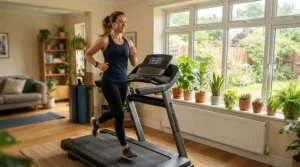
Real-World Scenarios: Matching Cushioned Treadmills to Your Life
If you’re a 60-something walker easing back into activity after a knee flare-up, the THERUN Incline Treadmill or Horizon 7.0 AT make sense — low cost, forgiving cushioning, and no pressure to “perform” while you rebuild confidence in your joints. If you’re a home-office worker who wants light movement during the day without waking the whole house, the quiet motor and CushionFlex deck on the Sole F80 fits neatly into a routine of short, frequent walking sessions between meetings. If you’re a returning runner rebuilding mileage after a knee injury, the 3G Cardio Pro Runner X or Horizon 7.4 AT offer the zone-specific or mechanical suspension that better tolerates jogging paces without the harsh feedback of a flat deck. And if you’re training seriously — marathon prep, structured interval work — the NordicTrack Commercial 1750 or Sole F85 give you the motor power, incline range, and coaching integration to push volume without the deck becoming the limiting factor on how your knees feel afterward.
Problem → Solution: Fixing the Most Common Knee Pain Triggers on a Treadmill
Problem: Sharp pain at the front of the knee during incline work. This often points to patellofemoral stress from excessive incline — dial back to 2-5% and increase gradually rather than jumping straight to steep grades.
Problem: Aching after even short, flat sessions. This can indicate the deck itself isn’t providing enough genuine cushioning — a machine like the Sole F85 or 3G Cardio Pro Runner X, both engineered specifically around impact reduction, may solve this where a budget flat deck can’t.
Problem: Knee pain that worsens specifically at faster paces. Consider whether your deck offers zone-specific cushioning — a uniform-density deck can feel fine walking but jarring once footstrike force increases at jogging speeds.
Problem: Stiffness the day after treadmill sessions, even at low intensity. This is frequently a maintenance issue — a belt overdue for lubrication transfers more shock into the deck and your joints; check your manufacturer’s schedule before assuming it’s your body.
Problem: Pain that persists regardless of equipment changes. No treadmill, cushioned or otherwise, replaces professional evaluation — persistent pain warrants a conversation with a doctor or physical therapist rather than another equipment purchase.
Cushioned Deck Treadmills for Beginners, Seniors & Returning Runners
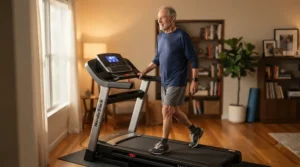
Beginners and seniors generally benefit most from lower step-up heights, wide non-slip belts, and forgiving low-end speeds — the Horizon 7.0 AT and THERUN Incline Treadmill both fit this profile well, with gentle starting speeds and simple controls that don’t require navigating a complicated touchscreen mid-workout. Returning runners rebuilding after injury tend to need more from the cushioning system itself, since jogging paces generate meaningfully higher impact forces than walking — this is where zone-specific or mechanical suspension, like the Horizon 7.4 AT‘s elastomer zones or the 3G Cardio Pro Runner X‘s Ortho Flex system, earns its keep. Across all three groups, the safest general approach echoed by orthopedic and rehab specialists is to treat the treadmill’s cushioning as a supplement to good form and gradual progression, not a replacement for either.
Safety, Regulations & When to See a Doctor
Cushioned decks reduce impact, but they don’t eliminate the underlying mechanics of joint loading — pushing pace or incline too aggressively, too soon, can still aggravate knee pain regardless of how sophisticated the suspension system is. A sensible general approach: start with speeds under 3 mph and 0-2% incline for the first week or two, increase one variable at a time, and stop immediately if you feel sharp (rather than dull, expected) discomfort. For anyone managing diagnosed arthritis or recovering from a knee injury, it’s worth comparing low-impact options broadly — a Cleveland Clinic comparison of treadmills and ellipticals notes that some healthcare providers specifically recommend even lower-impact machines when reintroducing exercise after injury or surgery, which is a useful data point before committing to any single piece of equipment. None of this replaces a conversation with your doctor or physical therapist, especially if pain is new, worsening, or accompanied by swelling.
Frequently Asked Questions
❓ Does a cushioned deck treadmill actually help with knee pain?
❓ How much should I spend on a cushioned deck treadmill for knee pain?
❓ What incline is safe for bad knees on a treadmill?
❓ Do cushioned decks wear out over time?
❓ Is walking or running better for knee pain on a treadmill?
Conclusion
Knee pain doesn’t disappear because a treadmill has a fancy name for its cushioning system, but the right deck genuinely changes how much force reaches your joints on every single stride — and over hundreds of workouts, that difference adds up. Whether you land on the budget-friendly THERUN Incline Treadmill, the subscription-free value of the Horizon 7.0 AT, or the orthopedic-grade suspension of the 3G Cardio Pro Runner X, the underlying principle stays the same: match the cushioning technology to how hard you’re actually going to use it, not just to your budget. Start conservatively, respect incline and pace progressions, and keep maintenance on schedule so the shock absorption you paid for actually lasts. None of these seven machines will cure a knee condition outright, but each one, chosen thoughtfully, can make consistent movement a lot less punishing than it currently is.
Recommended for You
- Low Impact Treadmill for Knee Pain: 7 Gentle Picks (2026)
- 7 Best Treadmills for Bad Knees Under $700 in 2026
- 7 Best Treadmill for Teenagers Under $300 Picks (2026 Guide)
Disclaimer: This article contains affiliate links. As an Amazon Associate, I earn from qualifying purchases. If you purchase products through these links, we may earn a small commission at no additional cost to you.
✨ Found this helpful? Share it with your friends! 💬🤗
