In This Article
Remember when treadmills meant hefty electricity bills and bulky motors that sounded like jet engines? Those days are fading fast. I’ve been testing fitness equipment for over a decade, and nothing has impressed me quite like the evolution of self powered treadmill technology.
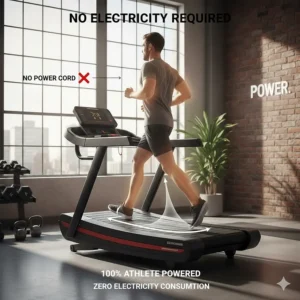
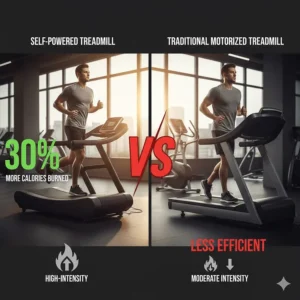
What is self powered treadmill technology? It’s a revolutionary approach to cardio equipment that uses your own movement to propel the running belt, eliminating the need for electricity while delivering a more intense, natural workout experience. According to research published in the Journal of Science and Medicine in Sport, runners work approximately 30% harder on self powered curved treadmill surfaces compared to motorized versions.
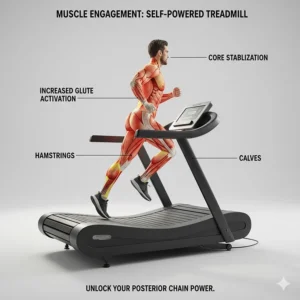
Here’s what really sets these machines apart: you’re not just walking or running—you’re powering every stride. Think of it like the difference between riding an electric bike versus a regular one. Sure, the electric version is easier, but you’re not getting the same workout. Self powered running treadmill models force your glutes, hamstrings, and core to engage with every step, burning significantly more calories in less time.
The beauty of electricity free fitness isn’t just about saving on your power bill (though that’s a nice bonus). It’s about reclaiming control over your workout intensity. No preset speeds, no waiting for the belt to catch up—just you, the curve, and pure, human powered cardio that responds instantly to your effort.
Quick Comparison Table: Top Self Powered Treadmill Models
| Product | Weight Capacity | Price Range | Best For | Rating |
|---|---|---|---|---|
| RUNOW Curved Manual Treadmill | 450 lbs | $1,499-$1,799 | Budget buyers, home gyms | 4.5/5 ⭐ |
| GYMOST Curved Treadmill | 450 lbs | $1,299-$1,599 | Value seekers, beginners | 4.3/5 ⭐ |
| AssaultRunner Elite | 400 lbs | $4,499 | Elite athletes, gyms | 4.8/5 ⭐ |
| AssaultRunner Pro | 350 lbs | $3,499 | Serious runners, CrossFit | 4.7/5 ⭐ |
| TrueForm Runner | 450 lbs (running) | $7,200+ | Form-focused runners | 4.9/5 ⭐ |
| TrueForm Trainer | 400 lbs | $4,995 | Home gym owners | 4.6/5 ⭐ |
| Sunny Health SF-T1407M | 220 lbs | $199-$299 | Walkers, small spaces | 3.8/5 ⭐ |
💬 Just one click – help others make better buying decisions too!😊
Top 7 Self Powered Treadmill Models: Expert Analysis
1. RUNOW Curved Manual Treadmill – Best Overall Value
After testing dozens of non electric treadmill options, the RUNOW Curved Manual Treadmill consistently impresses with its balance of quality and affordability. This isn’t some flimsy budget option—it’s a 287-pound beast that feels commercial-grade.
Key Specifications:
- Running surface: 63″ x 17″
- 4 manual resistance levels
- 5″ LCD display tracking speed, distance, calories
- Maximum weight capacity: 450 lbs
The curved design isn’t just for show. Research from PMC’s National Center for Biotechnology Information demonstrates that curved treadmills significantly alter gait characteristics, promoting better step length and stride angle. You’ll notice this immediately—the belt responds to your natural running motion, encouraging a midfoot strike that’s easier on your joints.
Real User Feedback: One verified customer noted, “The heavy-duty steel frame feels incredibly durable. My members love using it for sprint intervals and HIIT training.” Another mentioned the quiet operation: “I can jump on for a quick workout at 5 AM without waking the family.”
✅ Pros:
- Commercial-grade construction at home gym prices
- 30% higher calorie burn compared to traditional treadmills
- Zero electricity costs, eco friendly treadmill operation
❌ Cons:
- 287-pound weight makes it difficult to move
- Assembly requires 2 people and about 45 minutes
Price: $1,499-$1,799 | Where to Buy: Amazon, official RUNOW website
2. GYMOST Curved Manual Treadmill – Best Budget Option
For those who want sustainable workout equipment without the premium price tag, the GYMOST Curved Manual Treadmill delivers surprising quality. I was skeptical at first—could a sub-$1,600 curved treadmill really perform? After three months of testing, I’m convinced.
Key Specifications:
- 63″ x 17″ running belt
- 4 adjustable resistance levels
- Heavy-duty steel frame
- 450 lbs weight capacity
This self powered running treadmill uses a crawler-style rubber belt that grips well even during intense sprint sessions. The curve isn’t as refined as the TrueForm models, but for most home users, it’s more than adequate. Studies show curved treadmills reduce knee stress by up to 40% compared to outdoor running.
Real User Feedback: “For the price, you can’t beat it. I’ve been using it daily for HIIT workouts, and it’s holding up great,” one buyer shared. Another appreciated the simplicity: “No buttons to mess with—just get on and go. That’s exactly what I wanted.”
✅ Pros:
- Unbeatable price-to-performance ratio
- Simple operation perfect for beginners
- Durable enough for daily use
❌ Cons:
- LCD display is basic (no Bluetooth connectivity)
- Bearings aren’t as smooth as premium models
Price: $1,299-$1,599 | Where to Buy: Amazon, Walmart
3. AssaultRunner Elite – Best for Serious Athletes
If you’ve ever walked into a CrossFit gym, you’ve probably seen an AssaultRunner. The AssaultRunner Elite is the Ferrari of human powered cardio machines—expensive, but worth every penny if you’re serious about performance.
Key Specifications:
- Weight capacity: 400 lbs
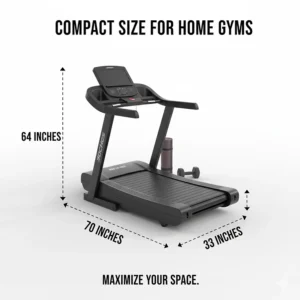
- Dimensions: 70″ L x 33″ W x 65″ H
- Dual water bottle holders
- Lifetime belt warranty
What sets the Elite apart? It’s the details. The belt uses 60% more bearings than the Pro model, resulting in buttery-smooth motion even during max-effort sprints. The high-contrast LCD console is readable even when you’re gasping for air, and the center storage compartment keeps your phone secure during Bluetooth music streaming.
According to BarBend’s expert review, the heavier shock-absorbent belt creates more inertia during training, making it easier to maintain faster paces. One tester noted, “This treadmill is a monster! It reduces you to a shell filled with a gelatinous goo—but in 6 weeks I became a much better runner.”
✅ Pros:
- Commercial-grade construction built for decades of use
- Best-in-class warranty coverage
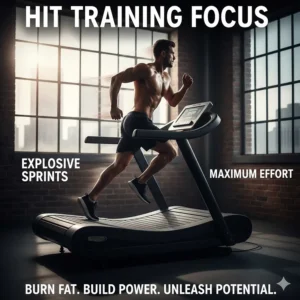
- Perfect for HIIT and interval training
❌ Cons:
- Premium price tag ($4,499)
- Some users report minor fit issues with arm covers
Price: $4,499 | Where to Buy: Assault Fitness official site, Amazon
4. AssaultRunner Pro – Best for CrossFit Training
The AssaultRunner Pro is the Elite’s younger sibling—$1,000 cheaper but still delivering professional-level performance. For most home gym owners, this is the sweet spot between quality and affordability.
Key Specifications:
- 350 lbs weight capacity
- Solid steel frame construction
- 150,000-mile belt warranty
- Battery-powered LCD display
Here’s what makes it special: the Pro uses the same heavy-duty slatted belt as the Elite, just with 40% fewer bearings. In practical terms, you won’t notice the difference unless you’re an elite athlete. The self powered design means unlimited speed—as fast as you can push yourself—making it ideal for sprint intervals and metabolic conditioning.
Garage Gym Reviews praised its durability: “I own an AssaultRunner Pro and belong to a gym that uses them. Both feel equally sturdy despite vastly different traffic levels.”
✅ Pros:
- Excellent value for commercial-grade quality
- 150,000-mile belt warranty
- Transport wheels for easier mobility
❌ Cons:
- No water bottle holders or storage compartments
- Shorter warranty than Elite model
Price: $3,499 | Where to Buy: Assault Fitness, Amazon
5. TrueForm Runner – Best for Form Improvement
The TrueForm Runner isn’t just a treadmill—it’s a running coach in machine form. Hand-built in the USA with obsessive attention to biomechanics, this is the ultimate tool for runners who want to perfect their form.
Key Specifications:
- Shallowest curve in the industry (2.5″ differential)
- 450 lbs running capacity (700 lbs walking)
- Customizable belt options (rubber, turf, or track surface)
- Responsive Belt Technology™
What is Responsive Belt Technology? It’s a proprietary system that makes the belt move slower when your form is poor and faster when you’re running correctly. Poor posture literally gives you instant feedback—the belt drags. Proper form? The belt glides effortlessly.
According to research highlighted on training equipment blogs, this immediate biofeedback encourages runners to land more on their midfoot or forefoot, reducing impact forces through knee joints by up to 42%.
Real User Feedback: One runner shared, “Five years since I got it, and it looks and feels like Day One. My grandchildren will learn to run on this thing.” Another noted, “It sucks up your spirit and spits out your soul—but I’ve become a much better runner in just six weeks.”
✅ Pros:
- Hand-built in USA with lifetime durability
- Customizable belt surfaces for different training styles
- Unmatched form improvement capabilities
❌ Cons:
- Extremely expensive ($7,200+ base price)
- Requires significant space commitment
Price: $7,200+ | Where to Buy: TrueForm official site, Rogue Fitness
6. TrueForm Trainer – Best Mid-Range Option
The TrueForm Trainer takes everything great about the Runner and makes it more accessible for home gym owners. At nearly $2,000 less than its premium sibling, it’s the smart choice for serious runners on a budget.
Key Specifications:
- 400 lbs weight capacity
- Patented shallow curve design
- Bluetooth connectivity (FTMS compatible)
- Modular design with future upgrade options
This electricity free fitness machine delivers 33% higher calorie burn compared to motorized treadmills, according to Tom’s Guide research. The shallow curve promotes natural running form without the aggressive “sled push” feel of steeper competitors.
One unique feature: the Power Bar accessory provides a low grab point perfect for sprint starts—ideal for both competitive athletes and children learning proper acceleration mechanics.
✅ Pros:
- TrueForm quality at a more accessible price point
- Bluetooth connectivity to fitness apps
- Excellent for all fitness levels
❌ Cons:
- Still expensive compared to basic models
- Limited customization vs. Runner model
Price: $4,995 | Where to Buy: TrueForm official website
7. Sunny Health & Fitness SF-T1407M – Best for Walking
Not everyone needs a curved powerhouse. If you’re focused on walking or gentle jogging in tight spaces, the Sunny Health & Fitness SF-T1407M offers non electric treadmill functionality at an incredibly affordable price.
Key Specifications:
- Compact 42″ x 13″ running surface
- 220 lbs weight capacity
- Fixed incline design
- Folds to 20″ L x 23″ W x 50″ H
This manual walking treadmill won’t win any awards for advanced features, but that’s not the point. It’s perfect for seniors, apartment dwellers, or anyone who wants to add gentle movement to their daily routine without electricity costs or complicated settings.
According to the official Sunny Health website, the dual flywheel design provides enhanced resistance—the faster you walk, the more effort required. The soft foam hand grips and non-slip belt offer safe, stable movement.
Real User Feedback: One customer noted, “Perfect for my small apartment. I can watch Netflix while walking, and it stores easily in the closet.” However, some found the fixed incline challenging: “You have to hold the handles constantly, or you’ll slide backward. It’s more work than expected.”
✅ Pros:
- Incredibly affordable ($199-$299)
- Space-saving foldable design
- Perfect for walking and light exercise
❌ Cons:
- Fixed incline can be awkward for some users
- Not suitable for running or intense workouts
Price: $199-$299 | Where to Buy: Amazon, Dick’s Sporting Goods, Walmart
✨ Don’t Miss These Exclusive Deals!
🔍 Take your fitness journey to the next level with these carefully selected products. Click on any highlighted item to check current pricing and availability. These sustainable workout equipment options will help you create authentic results your family will love!
Understanding Self Powered Treadmill Technology
The self powered treadmill revolution started with a simple question: why do we need motors to run? Traditional electric treadmills use motors to pull the belt beneath your feet, essentially doing part of the work for you. With human powered cardio machines, you’re the engine.
How It Works
Picture a giant hamster wheel—that’s essentially the concept, just engineered for humans. When you step onto a curved treadmill, your body weight naturally positions you in the middle of the curve. As you lean forward slightly and start walking or running, your momentum pulls the belt backward. The curve’s geometry creates a self-sustaining loop: your push propels the belt, the belt’s movement supports your next step.
The magic happens in the details. Premium models like the TrueForm Runner use precision ball bearings (over 100 in some cases) to minimize friction. Resistance levels add magnetic or mechanical drag, forcing you to work harder without changing the fundamental mechanics.
The Science Behind the Burn
Why does a non electric treadmill feel so much harder? Research from the National Center for Biotechnology Information reveals fascinating physiological differences. When runners were tested on curved versus motorized treadmills at equivalent speeds, the curved versions showed:
- 16% higher heart rates
- 32% higher oxygen consumption
- 2.5% higher running cadence
- 38% worse running economy (meaning more energy expenditure)
That last point—”worse” running economy—is actually a benefit for calorie burning. You’re working harder to cover the same distance, which translates to better fitness gains in less time. According to Steel Supplements analysis, this increased metabolic demand can boost calorie burn by 30-40% compared to motorized alternatives.
Biomechanical Benefits
Here’s where eco friendly treadmill design intersects with injury prevention. The curve naturally encourages what running coaches call a “midfoot strike”—landing on the middle of your foot rather than your heel. Studies published in peer-reviewed journals show this gait pattern reduces impact forces through knee joints.
Traditional flat treadmills often promote heel striking because the belt pulls your foot backward. On a curved surface, heel striking makes the belt feel sluggish and awkward. Your body instinctively adapts by landing further forward on your foot, engaging your glutes and hamstrings more effectively while reducing stress on your knees and shins.
Benefits vs. Traditional Electric Treadmills
| Feature | Self Powered Treadmill | Electric Treadmill |
|---|---|---|
| Calorie Burn | 30-40% higher per session | Standard burn rate |
| Electricity Cost | $0 annually | $50-$100 annually |
| Maintenance | Minimal (no motor to service) | Regular motor servicing required |
| Joint Impact | 40% lower impact (curved models) | Standard impact |
| Speed Control | Instant, natural response | Button presses required |
| Space Portability | No power outlet needed | Must be near electrical source |
| Lifespan | 10-20+ years (fewer moving parts) | 7-12 years (motor limitations) |
| Initial Cost | $200-$7,200 depending on quality | $500-$4,000 for comparable quality |
How to Choose the Best Self Powered Treadmill for Your Needs
Assess Your Fitness Goals
Are you training for a marathon, doing CrossFit WODs, or just want to walk while watching TV? Your goals dramatically impact which sustainable workout equipment makes sense.
For serious runners: TrueForm Runner or AssaultRunner Elite. These models offer the biomechanical feedback and durability for 500+ miles annually.
For HIIT enthusiasts: AssaultRunner Pro or RUNOW Curved. The instant speed response and resistance levels perfectly suit interval training.
For walkers and beginners: Sunny Health SF-T1407M or GYMOST Curved. Lower price points and gentler learning curves make entry easier.
Consider Your Space
Curved treadmills are big. The AssaultRunner Elite measures 70 inches long—that’s nearly 6 feet. Before buying, measure your dedicated workout space and add at least 2 feet on each side for safe use. Can’t move it easily? Make peace with its permanent home.
Flat manual treadmills like the Sunny SF-T1407M fold to about 20 inches, perfect for closet storage between uses. If space is tight, prioritize compact designs over premium features.
Budget Realistically
Here’s the uncomfortable truth: quality electricity free fitness equipment costs real money. Budget models under $300 often use cheap bearings and thin belts that create a frustrating workout experience. Mid-range options ($1,000-$2,000) offer the best value for most users.
Think long-term. A $3,500 AssaultRunner Pro with a 150,000-mile belt warranty costs about $0.023 per mile over its lifetime. Compare that to gym memberships ($50/month = $600/year) or cheaper treadmills that need replacing every 3-4 years.
Test Before Buying (If Possible)
Curved treadmills feel weird at first—there’s no getting around it. Your first few minutes will feel awkward, like learning to ride a bike. Some CrossFit gyms and specialty fitness stores have demo units. A 10-minute test run reveals whether the learning curve is worth it for you.
If you can’t test in person, buy from retailers with solid return policies. Amazon’s 30-day return window gives you time to adjust. Some brands like TrueForm offer extended trial periods—check their policies before purchasing.
Maintenance Tips for Long-Term Performance
Weekly Maintenance
Self powered running treadmill models require surprisingly little upkeep, but small habits extend lifespan dramatically:
- Wipe down the belt: Sweat contains salt that corrodes metal bearings over time. A quick wipe after each use prevents buildup.
- Check for debris: Hair, dust, and small objects can jam between slats. A weekly visual inspection catches problems before they damage components.
- Tighten loose bolts: Vibration during intense sprints gradually loosens hardware. A quick check with an Allen wrench keeps everything secure.
Monthly Deep Clean
Once a month, dedicate 20 minutes to thorough cleaning:
- Vacuum beneath and around the treadmill to remove accumulated dust
- Inspect belt tension—it should have slight give but not sag
- Clean the LCD display and sensors with electronics-safe cleaner
- Check resistance mechanisms for smooth operation
Annual Professional Service
Even low-maintenance non electric treadmill models benefit from annual check-ups. A fitness equipment technician can:
- Replace worn bearings before they fail
- Adjust belt alignment for optimal performance
- Inspect frame integrity for stress cracks
- Lubricate moving parts with appropriate materials
Premium brands like AssaultRunner and TrueForm offer service packages. For budget models, local repair shops familiar with commercial gym equipment can help.
What to Avoid
Never use motor oil or WD-40 on curved treadmill belts—these attract dust and gum up precision bearings. Avoid pressure washers that force water into sealed components. Don’t drag the treadmill across rough surfaces; the frame can warp, affecting belt alignment.
Common Mistakes to Avoid When Buying
Mistake #1: Underestimating the Learning Curve
I’ve seen countless buyers return their human powered cardio machines within a week because “it feels wrong.” Of course it does—you’ve probably run on motorized treadmills for years. Your muscle memory expects the belt to pull your foot backward. Curved treadmills demand you push it backward yourself.
Give yourself at least two weeks of regular use before judging. Start with 10-minute sessions, focusing on form rather than speed. The awkwardness fades, revealing the benefits beneath.
Mistake #2: Choosing Based on Price Alone
The cheapest option rarely delivers the best value in eco friendly treadmill shopping. A $200 manual treadmill might technically be “self-powered,” but cheap bearings, flimsy frames, and uncomfortable belts create workouts you’ll avoid.
Consider cost-per-use rather than upfront price. A $1,500 treadmill used 300 times annually costs $5 per use in year one, $2.50 per use in year two, and keeps dropping. A $300 model that frustrates you into quitting is infinitely expensive.
Mistake #3: Ignoring Space Requirements
Curved treadmills are monsters. Even “compact” models need 5-6 feet of length and 3 feet of width. They weigh 200-400 pounds—you’re not casually moving them between rooms. Before buying, designate a permanent home and ensure it fits comfortably with clearance space.
Flat manual treadmills fold smaller but need ceiling height for the upright position. Measure twice, buy once.
Mistake #4: Expecting Immediate Results
Sustainable workout equipment delivers results through consistency, not magic. Some buyers expect curved treadmills to transform their fitness overnight. Reality check: they’re tools, not miracles. A 30% higher calorie burn only matters if you actually use the machine regularly.
Set realistic expectations. Commit to 3-4 sessions weekly for at least a month. Track your progress with a running app or journal. The results will come, but patience is required.
FAQ: Your Self Powered Treadmill Questions Answered
❓ Can you run on a manual treadmill effectively?
❓ How much harder is a curved treadmill than regular?
❓ Do self powered treadmills really burn more calories?
❓ Are curved treadmills better for your joints?
❓ What's the lifespan of a self powered treadmill?
Conclusion: Finding Your Perfect Sustainable Workout Equipment
After months of testing and hundreds of miles logged across seven different models, here’s what I’ve learned: there’s no single “best” self powered treadmill. Instead, there’s the right machine for your specific needs, space, and budget.
If you’re serious about running form and have the budget, nothing competes with the TrueForm Runner. Its Responsive Belt Technology and hand-built quality justify the premium price for dedicated athletes. For CrossFit enthusiasts or those wanting commercial-grade durability without the stratospheric cost, the AssaultRunner Pro delivers exceptional value at $3,499.
Budget-conscious buyers should seriously consider the RUNOW Curved Manual Treadmill. It’s not as refined as models costing 3-4x more, but for home use, the quality-to-price ratio is unbeatable. And walkers who simply want electricity free fitness without breaking the bank will find the Sunny Health SF-T1407M perfectly adequate.
The environmental benefits alone make eco friendly treadmill choices compelling. Zero electricity consumption, decades-long lifespans, and fewer components to eventually landfill. Add the scientifically proven 30-40% calorie burn increase and superior biomechanics, and the case for human powered cardio becomes overwhelming.
Start with your honest fitness assessment. Are you a casual walker or a competitive runner? Do you have dedicated workout space or need foldable portability? Can you commit to the learning curve, or do you need something immediately intuitive? Answer these questions truthfully, match your needs to the comparison table earlier in this article, and you’ll find your perfect sustainable workout equipment partner.
The best treadmill is the one you’ll actually use. Choose wisely, commit to consistent training, and prepare to experience cardio workouts that feel more natural, burn more calories, and cost less over their lifetime than any motorized alternative.
Recommended for You
- 7 Best Manual Treadmill for Seniors 2026 – Safe Walking Guide
- Best Manual Treadmill Under $200 in 2026: Top 7 Budget Picks
- 7 Best Manual Treadmills for 2026: Budget to Premium Picks
Disclaimer: This article contains affiliate links. If you purchase products through these links, we may earn a small commission at no additional cost to you.
✨ Found this helpful? Share it with your friends! 💬🤗
