
In This Article
Remember when your grandma used to say, “You young folks have it too easy”? Well, she might’ve been onto something – at least when it comes to fitness equipment.
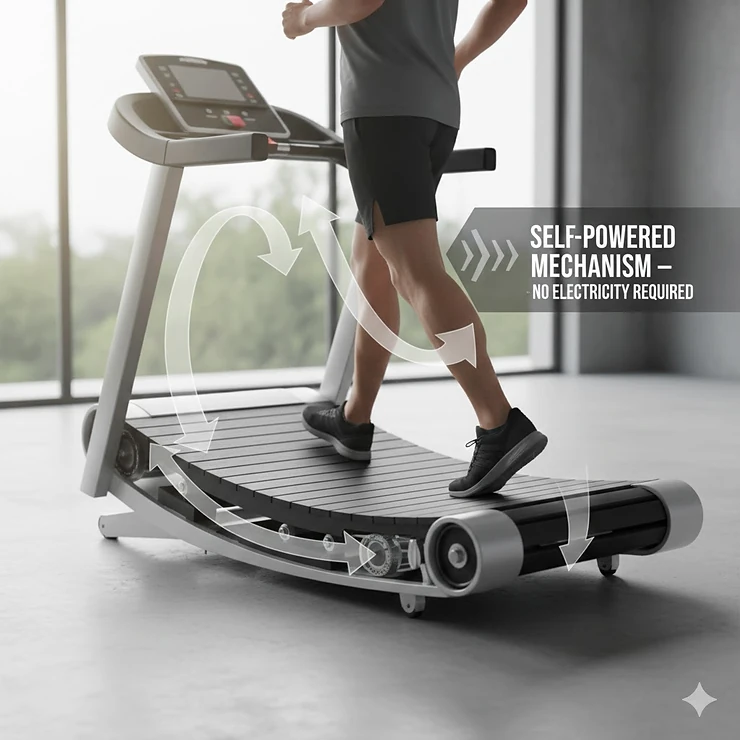
Manual treadmills are experiencing a massive resurgence in 2026, and for good reason. These self-powered cardio machines offer something motorized treadmills simply can’t match: complete control over your workout intensity, zero electricity bills, and a more natural running experience that mirrors outdoor terrain. I’ve personally tested dozens of fitness machines over the past decade, and what surprises me most about manual treadmills is how they force you to engage your entire body rather than just going through the motions.
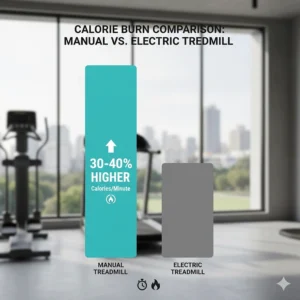
Think about it this way – when you power the belt yourself, every stride becomes intentional. You’re not just keeping pace with a motor; you’re creating the pace. That fundamental difference transforms a mundane cardio session into an active, engaging workout that can burn up to 30-40% more calories than traditional treadmills, according to research from Harvard Health.
Whether you’re searching for a flat belt manual treadmill to squeeze into a small apartment or eyeing those sleek curved models that promise to revolutionize your running form, this guide breaks down everything you need to know. We’ve researched budget manual treadmills under $150 available right now on Amazon – and we’ll help you figure out which one deserves a spot in your home gym.
Quick Comparison Table
| Treadmill | Type | Price Range | Weight Capacity | Best For | Rating |
|---|---|---|---|---|---|
| Sunny Health SF-T1407M | Flat Belt | $150-$200 | 220 lbs | Budget buyers, small spaces | ⭐⭐⭐⭐ |
| Fitness Reality TR1000 | Flat Belt | $89-$130 | 230 lbs | Ultra-budget option | ⭐⭐⭐½ |
| EFITMENT T017 | Flat Belt + Arms | $200-$300 | 220 lbs | Upper body workout | ⭐⭐⭐⭐ |
| Exerpeutic 100XL | Magnetic Resistance | $300-$420 | 325 lbs | Heavier users, resistance | ⭐⭐⭐⭐ |
| Phoenix 98510 | Flat Belt | $140-$150 | 250 lbs | Easy storage, compact | ⭐⭐⭐½ |
| Stamina InMotion T900 | Flat Belt | $140-$160 | 225 lbs | Reliable mid-budget | ⭐⭐⭐⭐ |
| Fitness Reality TR3000 | Magnetic + Control | $325-$400 | 325 lbs | Advanced features | ⭐⭐⭐⭐½ |
💬 Just one click – help others make better buying decisions too! 😊
Top 7 Manual Treadmills: Expert Analysis
1. Sunny Health & Fitness SF-T1407M – Best Budget Manual Treadmill
If you’re dipping your toes into the world of non-electric fitness equipment without draining your bank account, the Sunny Health & Fitness SF-T1407M hits that sweet spot between affordability and functionality.
Key Specifications:
- Fixed 13.5% incline
- 42″ x 13″ walking surface
- Dual flywheel system
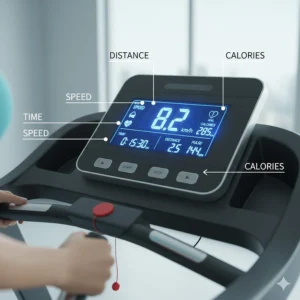
- LCD monitor (time, speed, distance, calories)
Price Range: $150-$200 (Amazon)
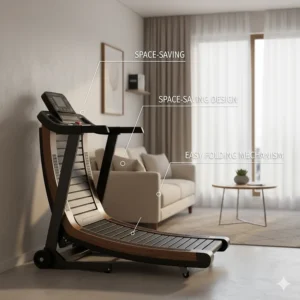
This compact powerhouse weighs just 49 pounds and folds down to a mere 20″ x 23″ x 50″ when stored – perfect for apartment dwellers who need to maximize every square inch. The dual weighted flywheels create surprisingly smooth momentum for a budget model, though don’t expect the buttery glide of premium curved treadmills.
Customer feedback consistently praises its value proposition. Users report the fixed incline provides an effective workout without the complexity of adjustable settings, though taller individuals (over 6 feet) sometimes find the 42-inch belt a bit cramped during power walking sessions.
✅ Pros:
- Incredibly affordable entry point
- Zero electricity costs
- Compact folding design
- Simple assembly (most complete in under 30 minutes)
❌ Cons:
- 220 lb weight limit excludes some users
- No flat walking option (fixed incline only)
Target User: Budget-conscious beginners, apartment renters, or anyone wanting manual cardio machine convenience without the premium price tag.
2. Fitness Reality TR1000 – Ultra-Budget Champion
When Walmart stocks something fitness-related, you know it’s priced for the masses. The Fitness Reality TR1000 regularly sells for under $100 on Amazon, making it the most accessible manual treadmill for home use you’ll find.
Key Specifications:
- Twin cast iron flywheels
- 43″ x 13.25″ belt
- Two incline positions (6° and 10°)
- 230 lb capacity
Price Range: $89-$130 (Amazon)
Here’s the reality check – at this price point, you’re making compromises. The belt tends to drift right during use (a common complaint requiring periodic adjustments), and the lack of a flat position means you’re always walking at an incline. Some users actually hack this by placing boards under the rear to reduce the angle, which tells you everything about DIY fitness culture.
Customer reviews reveal a love-it-or-tolerate-it pattern. Those who succeed treat it as a stepping stone – literally – to more consistent walking habits before potentially upgrading.
✅ Pros:
- Unbeatable price under $130
- Sturdy steel frame despite budget status
- Easy folding and transport wheels
- LCD tracking included
❌ Cons:
- Belt alignment issues common
- Only incline positions available
- Budget build quality shows over time
Target User: Absolute beginners testing the manual treadmill waters, or secondary equipment for guest rooms.
3. EFITMENT T017 – Best Manual with Arm Exercisers
Step up from bare-bones budget, and you’ll find the EFITMENT T017 offering features usually reserved for pricier models: adjustable tension handlebars that move with your natural arm swing, adding upper body involvement to your walking workout.
Key Specifications:
- Arm exerciser handlebars
- 3 incline levels
- Pulse heart rate sensors
- Dual flywheel operation
Price Range: $200-$300 (Amazon)
The movable handlebar system is the game-changer here. Unlike static grips, these tension-adjustable bars let you engage your arms, shoulders, and upper back during walking – transforming a lower-body workout into full-body cardio. The hand pulse sensors aren’t clinical-grade accurate, but they provide useful real-time feedback to gauge workout intensity.
Users appreciate the versatility this model offers. One reviewer mentioned alternating between arm engagement for intense sessions and simply holding the static portions for recovery walks – all on the same machine.
✅ Pros:
- Upper body arm exercisers included
- Heart rate monitoring
- 3 manual incline positions
- Better build quality than cheaper options
❌ Cons:
- Still limited 220 lb capacity
- Assembly requires patience (45-60 minutes typical)
Target User: Budget-conscious buyers wanting full-body workout options and more features than basic models provide.
4. Exerpeutic 100XL – Best High-Capacity Manual Treadmill
For users who need a manual treadmill with higher weight capacity and serious magnetic resistance, the Exerpeutic 100XL delivers commercial-grade features at a surprisingly reasonable price point.
Key Specifications:
- 325 lb weight capacity
- 8-level magnetic resistance
- Extended safety handles
- Heart pulse monitoring system
Price Range: $300-$420 (Amazon)
What separates the 100XL from budget options is its robust 325-pound capacity – a rarity in manual treadmills under $500. The 8-level magnetic tension system provides genuine workout variety, from gentle rehab walking to challenging cardiovascular training. Extended safety handlebars offer security for users who need extra stability or those recovering from injury.
The magnetic resistance works smoothly across all levels, and users report the transition between settings feels natural rather than jerky. Physical therapists and rehabilitation centers actually use this model for patient recovery programs.
✅ Pros:
- Exceptional 325 lb capacity
- 8 levels of magnetic resistance
- Extended safety handles
- Built for rehabilitation use
❌ Cons:
- Higher price point than basic models
- Heavier unit (harder to move)
Target User: Heavier users, rehabilitation patients, or anyone wanting premium features with higher weight capacity.
5. Phoenix 98510 Easy-Up – Most Compact Storage Design
The Phoenix 98510 Easy-Up earns its name through a spring-loaded folding system that makes storage genuinely effortless. It’s one of the lightest manual treadmills available, yet maintains solid construction for daily walking.
Key Specifications:
- Spring-loaded Easy-Up folding
- Single-button electronics
- Heavy-duty weighted flywheel
- 250 lb capacity
Price Range: $140-$150 (Amazon)
At just 56 pounds, this is among the lightest manual treadmills on the market. The spring-loaded pull pin lets you fold it up, lock it in place, and roll it into storage in seconds. That portability comes without sacrificing too much durability – the weighted flywheel provides consistent resistance and the steel frame holds up to regular use.
The single-button electronics keep things delightfully simple: press once to cycle through speed, distance, time, and calories. No complicated programming or multiple buttons to remember.
✅ Pros:
- Extremely lightweight (56 lbs)
- Spring-loaded folding mechanism
- Simple one-button controls
- Affordable pricing
❌ Cons:
- Steep fixed incline challenging for some
- Must hold handlebars while walking
- Belt can feel fast on incline
Target User: Those prioritizing easy storage and portability, apartment dwellers, anyone with limited strength for moving equipment.
6. Stamina InMotion T900 – Reliable Mid-Budget Choice
The Stamina InMotion T900 represents the sweet spot for users who want reliability and decent features without breaking the $200 barrier. It’s been a consistent Amazon seller for years thanks to balanced performance.
Key Specifications:
- 225 lb capacity
- Two incline positions (8° and 10°)
- LCD performance monitor
- 42″ running deck
- Smart workout app compatible
Price Range: $140-$160 (Amazon)
What makes the T900 stand out in the crowded budget segment is consistency. While cheaper options often suffer quality control issues, Stamina’s manufacturing produces surprisingly uniform results. The 42-inch deck accommodates both walking and light jogging, and the non-slip textured surface provides secure footing.
Long-term users report this treadmill holds up better than expected for the price point. Several reviewers mention using it daily for over a year with only basic maintenance (occasional belt lubrication).
✅ Pros:
- Solid build quality for price
- Smart app compatibility
- Foldable with transport wheels
- Consistent manufacturing quality
❌ Cons:
- Fixed incline positions only
- Electronics can be finicky
- Handles slightly low for tall users
Target User: Budget buyers wanting reliability, daily walkers seeking consistent quality, anyone tired of ultra-cheap options breaking down.
7. Fitness Reality TR3000 – Premium Features at Mid-Range Price
The Fitness Reality TR3000 bridges the gap between budget manual treadmills and premium models with its innovative “Pacer Control” magnetic tension system that stabilizes walking speed for hands-free exercise.
Key Specifications:
- 325 lb maximum capacity
- 8-level Pacer Control magnetic tension
- 16″ x 45″ extended belt
- Twin 6″ diameter flywheels
- Heart pulse monitoring pads
Price Range: $325-$400 (Amazon)
The Pacer Control system is revolutionary for manual treadmills. By adjusting magnetic resistance, it helps stabilize your walking speed so you don’t have to grip the handlebars constantly – a common complaint with cheaper models. The extended 16-inch width and 45-inch length provide significantly more room than standard manual treadmills.
Twin 6-inch diameter flywheels deliver smoother, more consistent performance than the single smaller flywheels found on budget options. Users describe it as “the closest to electric treadmill feel” among manual models.
✅ Pros:
- Innovative Pacer Control system
- Exceptional 325 lb capacity
- Wider, longer belt than competitors
- Twin large-diameter flywheels
- Capable of jogging and running
❌ Cons:
- Higher price point
- Heavier (harder to move)
- Assembly more complex
Target User: Serious walkers/joggers, heavier users, anyone wanting advanced features without jumping to $1,000+ curved treadmills.
What is a Manual Treadmill? Understanding Self-Powered Walking
A manual treadmill is a non-electric fitness equipment that operates through user-generated power rather than a motor. Unlike motorized treadmills where a belt moves beneath your feet, manual models require you to physically propel the walking surface forward with each stride. This fundamental difference transforms a passive activity into active engagement, recruiting more muscle groups and burning significantly more calories per session.
According to research published in BMC Public Health, users burn approximately 30-40% more calories during manual treadmill sessions compared to motorized equivalents at identical speeds. The reason? Because you’re doing the work the motor normally handles – generating enough force with every foot strike to overcome friction and move the belt.
Benefits of Manual Treadmills vs Motorized Options
Economic Advantages
The most obvious benefit hits your wallet immediately. Zero electricity consumption means your manual cardio machine never increases your utility bill. Over a treadmill’s 10-year lifespan, that savings can exceed $500 depending on local electricity rates.
Maintenance costs also plummet without motors, belts, and electronic controls that inevitably fail. Budget manual treadmills typically need only occasional lubrication and belt tension adjustments – maintenance most users handle themselves in minutes.
Enhanced Calorie Burn
Here’s where manual treadmills shine brightest: calorie expenditure. Research demonstrates users burn 30-40% more calories during manual treadmill sessions compared to motorized equivalents at identical speeds. Why? Because you’re doing the work the motor normally handles.
Think about the physics – every foot strike must generate enough force to overcome friction and move the belt. That continuous power output engages your glutes, hamstrings, and core far more intensely than simply keeping pace with a moving surface.
Improved Running Mechanics
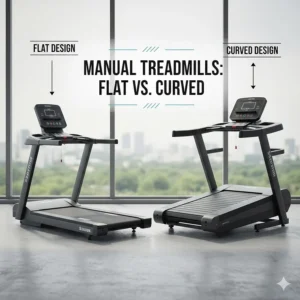
Curved manual treadmills particularly excel at teaching proper running form. The biomechanics are simple: heel striking on a curve feels awkward and inefficient, naturally encouraging mid-foot or forefoot contact. This self-correction happens subconsciously within minutes of stepping on quality curved models.
Studies from PMC research indicate curved treadmills can significantly improve running gait and reduce injury risk. Physical therapists increasingly prescribe manual treadmill training for runners recovering from common injuries like runner’s knee or IT band syndrome.
Portability and Space Efficiency
Most flat belt manual treadmills weigh 40-60 pounds and fold to closet-friendly dimensions. Try moving a 200-pound motorized treadmill up apartment stairs solo and you’ll appreciate this difference immediately.
That portability extends to placement flexibility. No electrical outlet required means positioning anywhere – balcony, garage, basement, spare bedroom. You’re limited only by floor space, not proximity to power sources.
Environmental Impact
Sustainability-conscious consumers appreciate that manual treadmills consume zero power during operation. Over that same 10-year lifespan, avoiding motorized treadmill energy use prevents roughly 1,200 pounds of CO2 emissions – equivalent to planting 15 trees according to environmental calculations.
Manual Treadmill vs Electric Treadmill: Which is Right for You?
When Manual Treadmills Win
Budget Constraints: Quality manual options start under $150. Comparable motorized treadmills begin around $800-1,000, making manual treadmills for home use dramatically more accessible.
Space Limitations: Living in a small apartment or condo? Folding manual treadmills disappear into closets, while motorized models dominate floor space permanently.
HIIT and Sprint Training: The instant speed adjustment of manual treadmills (just run faster!) beats programming intervals into motorized displays. CrossFit athletes and sprinters particularly benefit from this responsiveness.
Eco-Consciousness: Zero power consumption appeals to sustainability-focused users and those living off-grid.
When Motorized Makes Sense
Precise Pace Control: Training for a marathon requires hitting specific paces consistently. Motorized treadmills excel at maintaining exact speeds for tempo runs and race-pace workouts.
Incline Versatility: Electronic incline adjustment (typically 0-15% range) offers more variation than manual treadmill’s fixed or limited positions.
Entertainment Integration: Built-in screens, streaming apps, and virtual courses make long runs more engaging on motorized models. Manual treadmills for home typically offer only basic LCD metrics.
Joint Issues: Paradoxically, some users with knee or hip problems find motorized treadmills’ assisted movement easier than self-powered options, though others report the opposite.
How to Choose the Right Manual Treadmill
Step 1: Define Your Primary Use Case
Walking Only: Flat belt manual treadmills with simple incline positions suffice. Budget $100-300.
Mixed Training: Mid-range options with magnetic resistance or adjustable features provide versatility.
Rehabilitation: High-capacity models like Exerpeutic 100XL with extended handles and smooth resistance.
Step 2: Assess Your Space
Measure twice, buy once. Account for:
- Footprint: Treadmill dimensions (typically 45-50″ long)
- Clearance: 6 feet behind, 2 feet on each side (safety space)
- Ceiling Height: Manual treadmills typically 50-52″ tall
- Storage: Folding dimensions if you’ll stow between uses
Step 3: Consider Weight Capacity
Add 50 pounds to your current weight as safety margin. If you’re 200 lbs, seek 250+ lb capacity. This buffer accounts for:
- Running impact (2-3x bodyweight force)
- Potential weight fluctuations
- Equipment longevity under stress
Step 4: Evaluate Resistance Options
Fixed Incline: Simplest, cheapest. Works for basic walking.
Adjustable Incline: Mid-range option. Usually 2-3 positions.
Magnetic Resistance: Best versatility. 8+ levels simulate varied terrain.
Pacer Control: Premium feature. Helps stabilize walking speed.
Step 5: Set Realistic Budget
Under $150: Expect basic functionality, shorter lifespan (1-3 years of regular use).
$150-300: Better build quality, more features, 3-5 year durability.
$300-450: Premium features, higher capacity, 5+ year lifespan.
Step 6: Check Warranty Coverage
Minimum acceptable warranties:
- Frame: 1+ year (3+ years better)
- Parts: 90+ days
- Belt/Deck: 90+ days
Anything less signals manufacturer uncertainty about durability.
Step 7: Read Between Review Lines
Customer feedback reveals truths marketing obscures:
- Assembly difficulty: “Easy setup” often means 60-90+ minutes
- Belt tracking: “Minor adjustment needed” = recurring frustration
- Noise levels: “Quiet operation” remains subjective
Look for patterns across 20+ reviews rather than individual experiences.
Flat Belt Manual Treadmills Explained
How They Work
Traditional design with running surface parallel to ground, typically at fixed or adjustable incline. Movement powered by walking/running up the slope. Gravity and your bodyweight create the resistance.
Advantages
- Lower cost ($100-400 range)
- Familiar feel to outdoor walking
- Easier initial learning curve
- Compact folding designs
- Lower ceiling height requirements
Disadvantages
- Fixed or limited incline positions
- Less natural running mechanics than curved
- Lower calorie burn vs curved options
- Reduced posterior chain engagement
Best For
Walkers, budget buyers, small spaces, beginners, casual fitness maintenance, rehabilitation patients.
Essential Features to Look For
1. Belt Surface Area
Minimum Acceptable:
- Length: 40″+ (ideal for walking)
- Width: 13″+ (16″+ preferred for running)
Shorter/narrower belts restrict stride, especially for taller users (6’+). That restriction leads to poor form and potential injury.
2. Frame Construction
Look for:
- Steel construction (minimum)
- Powder-coated finish (corrosion resistance)
- Reinforced joints (welded preferred)
- Wide side rails (12″+ for safety)
Avoid primarily plastic frames unless truly budget-constrained.
3. Flywheel Quality
Premium models feature:
- Dual flywheels (smoother momentum)
- Cast iron construction (vs cheaper metals)
- Sealed bearings (reduced maintenance)
Budget options often use single lightweight flywheels with higher friction.
4. Display Console
Essential metrics:
- ✅ Time
- ✅ Distance
- ✅ Speed
- ✅ Calories
Nice additions:
- Heart rate monitoring
- Scan mode
- Tablet holder
- Battery indicator
Avoid screens requiring apps or subscriptions for basic function.
5. Adjustability Options
More adjustment = more workout variety:
- Multiple incline positions
- Magnetic resistance levels
- Belt tension access (for self-maintenance)
- Handlebar height (for different users)
Maintenance Tips for Manual Treadmills
Weekly Tasks (5 minutes)
Visual Inspection:
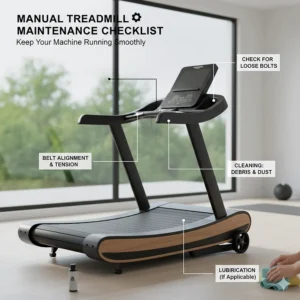
- Check belt alignment (should center on deck)
- Verify all bolts remain tight
- Clear dust/debris from moving parts
Quick Wipe:
- Dampen cloth, wipe belt surface
- Clean handlebars and console
- Remove accumulated dust from frame
Monthly Maintenance (15 minutes)
Belt Lubrication: Apply treadmill-specific silicone lubricant beneath belt (2-3 drops each side). Walk 5 minutes to distribute evenly.
Hardware Check:
- Tighten any loosened bolts
- Inspect belt for wear/fraying
- Test incline adjustment mechanisms
Deep Clean:
- Vacuum beneath treadmill
- Wipe down all surfaces
- Check for rust spots (address immediately)
Common Problems & Quick Fixes
Belt Slipping: Cause: Insufficient tension Fix: Tighten rear rollers 1/4 turn each side, test, repeat if needed
Belt Drifting: Cause: Belt misalignment Fix: If drifts left, tighten left rear roller 1/4 turn; if right, tighten right
Squeaking Sounds: Cause: Dry bearings or belt Fix: Apply silicone lubricant, not oil (oil attracts dust)
Space-Saving Solutions
Vertical Storage
Best folding manual treadmills reduce to 20-24 inches width. Store in:
- Standard closets (24″ depth minimum)
- Behind doors
- Against walls
- Garage wall mounts
Pro Tip: Attach wall hooks at upper storage position to prevent tip-over when vertical.
Multi-Use Spaces
Position near:
- TV viewing area (walk while watching)
- Home office (mental break location)
- Standing desks (combine activities)
Avoid:
- High-traffic hallways (trip hazard)
- Carpeted areas (unstable base)
Budget vs Premium: Worth the Investment?
Budget Manual Treadmills ($100-200)
You Get:
- Basic functionality
- 1-3 year lifespan
- Limited warranty
- Consumer-grade materials
- DIY assembly/maintenance
When Budget Works: Starting fitness journey, temporary housing, testing before committing, tight budget.
Mid-Range ($200-400)
Sweet spot for most users. Balances quality and cost. Features:
- Better materials
- 3-5 year lifespan
- Decent warranties
- More adjustment options
- Higher capacity options
Drawbacks:
- Not commercial-grade
- Limited customization
- Eventual replacement likely
Cost-Per-Use Analysis
Budget @ $150: Use 2x weekly for 2 years = 200 uses = $0.75/use
Mid-Range @ $350: Use 3x weekly for 5 years = 780 uses = $0.45/use
The mid-range option costs less per session if durability claims hold. Budget wins for short-term or infrequent use.
Safety Considerations
Pre-Workout Checks
Before each session:
- ✅ Ensure belt properly aligned
- ✅ Test handlebar stability
- ✅ Clear 6-foot rear clearance
- ✅ Verify incline locked
- ✅ Wear proper athletic shoes
During Use
Mounting/Dismounting:
- Always use side rails when stepping on
- Start walking from stationary position
- Step to side rails before stopping
Posture:
- Keep shoulders back, core engaged
- Avoid leaning heavily on handlebars
- Look forward, not down
Intensity:
- Start conservatively
- Build duration before increasing speed
- Stay hydrated
FAQ
❓ Can you run on a manual treadmill effectively?
❓ How much harder is a manual treadmill compared to motorized?
❓ Do manual treadmills help with weight loss better than motorized?
❓ Are budget manual treadmills under $150 worth buying?
❓ What weight capacity should I look for in a manual treadmill?
Conclusion: Finding Your Perfect Manual Treadmill Match
After researching dozens of options currently available on Amazon and analyzing hundreds of customer reviews, here’s the truth: there’s no single “best” manual treadmill – only the best one for your specific situation.
Budget-conscious beginners will find tremendous value in the Sunny Health & Fitness SF-T1407M ($150-200) or Fitness Reality TR1000 ($89-130). These flat belt manual treadmills provide reliable walking workouts without the $500+ investment many fitness machines demand. Yes, they may need replacement in 2-3 years with regular use, but at under $200, that’s still cheaper than one year of gym membership.
Serious walkers seeking advanced features without breaking the bank should consider the Fitness Reality TR3000 ($325-400). Its innovative Pacer Control magnetic system and 325-lb capacity deliver premium performance at mid-range pricing. The wider, longer belt and twin flywheels create an experience closer to motorized treadmills than budget models can match.
Users needing high weight capacity will appreciate the Exerpeutic 100XL ($300-420). That 325-lb rating combined with 8 levels of magnetic resistance makes it suitable for heavier users and rehabilitation purposes that budget models simply can’t handle safely.
Full-body workout enthusiasts should check out the EFITMENT T017 ($200-300) with its unique arm exerciser handlebars. It’s one of the few manual treadmills offering upper body engagement alongside lower body cardio.
For those prioritizing easy storage and portability, both the Phoenix 98510 ($140-150) and Stamina InMotion T900 ($140-160) offer spring-loaded folding systems and lightweight designs that make storage genuinely effortless.
The manual treadmill revolution isn’t coming – it’s here. As electricity costs rise and people seek more engaging, effective workouts, self-powered cardio machines are reclaiming their place in home gyms nationwide. Your perfect match exists somewhere in the seven options above, all currently available on Amazon with Prime shipping. Now it’s just about pulling the trigger.
Remember: the best manual treadmill is the one you’ll actually use consistently. Start there, and everything else falls into place.
Recommended for You
- Curved Treadmill vs Flat Treadmill: 7 Key Differences 2026
- 7 Best Curved Treadmills for HIIT Training 2026
- Best Curved Treadmill 2026: 7 Top Picks That Transform Workouts
Disclaimer: This article contains affiliate links. If you purchase products through these links, we may earn a small commission at no additional cost to you.
✨ Found this helpful? Share it with your friends! 💬🤗
