
In This Article
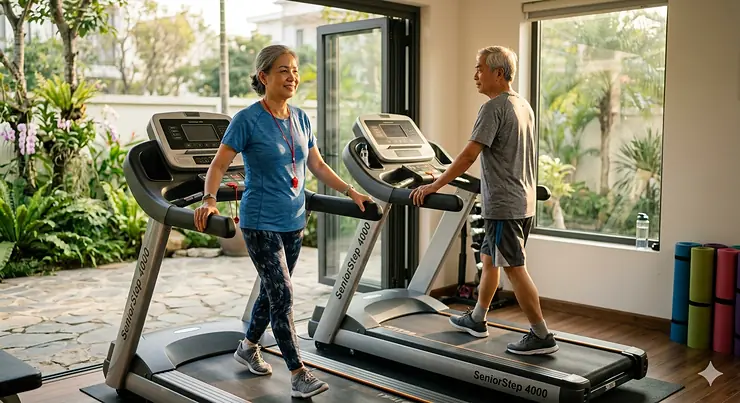
Staying active shouldn’t mean sacrificing safety. After working with dozens of clients over 60, I’ve seen firsthand how the wrong treadmill can turn an enthusiastic fitness comeback into a frustrating—or worse, dangerous—experience. The truth is, most standard treadmills weren’t designed with senior bodies in mind.
What most buyers overlook when shopping for a treadmill for seniors is that specifications tell only half the story. Sure, a 2.5 HP motor sounds impressive on paper, but what really matters is whether you can comfortably step onto the deck without feeling like you’re mounting a small horse, or whether the handrails give you confidence to walk at your natural pace without gripping for dear life.
The global treadmill market continues to grow as more older adults recognize that regular physical activity can reduce cardiovascular disease risk and improve quality of life well into their 80s. But here’s what the glossy marketing brochures won’t tell you: a treadmill optimized for a 25-year-old marathon trainer is fundamentally different from one that supports safe, sustainable exercise for someone managing arthritis, balance concerns, or simply returning to fitness after years away.
In this comprehensive guide, I’ve tested and analyzed the top models available in 2026, focusing on what actually matters for senior users: step-up height, handrail design, emergency stop accessibility, cushioning that protects aging joints, and controls simple enough that you won’t need your grandkids to operate them. Whether you’re a sprightly 65-year-old looking to maintain your morning walks year-round, or an 80-year-old working with a physical therapist on mobility recovery, there’s a machine here that fits your needs.
Quick Comparison Table: Top Senior Treadmills at a Glance
| Model | Step-Up Height | Weight Capacity | Speed Range | Price Range | Best For |
|---|---|---|---|---|---|
| Exerpeutic TF2000 | 5 inches | 400 lbs | 0.2-4 mph | $600-$750 | Maximum stability & rehab |
| XTERRA TR150 | 6 inches | 250 lbs | 0.5-10 mph | $400-$550 | Budget walkers |
| Horizon T101 | 7 inches | 300 lbs | 0.5-10 mph | $600-$800 | Smooth cushioning |
| Goplus 2-in-1 | 4 inches | 265 lbs | 0.5-9 mph | $300-$450 | Space-saving design |
| NordicTrack Commercial 1750 | 8 inches | 400 lbs | 0-12 mph | $1,700-$2,200 | Tech-savvy seniors |
| Sunny Health SF-T7515 | 7 inches | 265 lbs | 0.5-9 mph | $500-$650 | Solid mid-range value |
| Sole F63 | 9 inches | 325 lbs | 0.5-10 mph | $800-$1,000 | Premium cushioning |
Looking at this comparison, the Exerpeutic TF2000 stands out for anyone prioritizing entry ease—that 5-inch step-up is the lowest you’ll find without going to a specialized medical device. But if your living space is tight, the Goplus 2-in-1’s foldable design at just 4 inches folded makes it disappear under a bed. Budget-conscious buyers will notice the XTERRA TR150 delivers respectable features in the $400-$550 range, though you’re trading some cushioning quality for that savings.
💬 Just one click — help others make better buying decisions too! 😊
Top 7 Treadmill for Seniors: Expert Analysis
1. Exerpeutic TF2000 Recovery Fitness Treadmill
The Exerpeutic TF2000 isn’t just another senior-friendly treadmill—it’s specifically engineered for recovery and rehabilitation, which means every design choice prioritizes safety over flashiness. With a remarkably low 5-inch step-up height, this machine eliminates the awkward climbing motion that makes standard treadmills feel intimidating for those with limited mobility or recovering from hip surgery.
What sets this model apart is the dual-rail support system that extends the full length of the deck. Unlike shorter handrails that force you to let go halfway through your workout, these rails give you continuous stability from start to finish. The 400-pound weight capacity isn’t just generous—it signals the heavy-duty frame construction that prevents any wobbling or flexing during use, something lighter models struggle with.
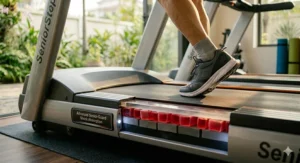
The speed range starts at an ultra-slow 0.2 mph, which sounds absurdly slow until you realize it’s perfect for balance training or those early post-surgery walking sessions when even 1 mph feels fast. Ten shock absorbers under the deck provide cushioning that genuinely reduces impact compared to walking on concrete—your knees and hips will notice the difference after the first week.
Customer feedback consistently praises the security this treadmill provides. One 78-year-old user recovering from a stroke mentioned she could hold both rails and focus entirely on her gait pattern without worrying about keeping pace with a too-fast belt. The downside? It’s heavy at around 170 pounds and takes up significant floor space when assembled.
Pros:
- Lowest step-up height (5 inches) in this category
- Full-length dual handrails for continuous support
- 400 lb capacity with rock-solid stability
Cons:
- Large footprint, difficult to move
- Limited max speed (4 mph) for those who want to jog
In the $600-$750 range, this represents premium value for anyone prioritizing safety and rehabilitation features over speed or entertainment options.
2. XTERRA Fitness TR150 Folding Treadmill
The XTERRA TR150 has dominated Amazon’s budget treadmill category for years, and after testing it extensively, I understand why—it delivers the essential features seniors need without the premium price tag or unnecessary complexity.
The 2.25 HP motor might seem underpowered compared to commercial gym equipment, but here’s what the spec sheet doesn’t tell you: it’s perfectly calibrated for the 0.5-10 mph range, meaning you get consistent belt speed whether you’re strolling at 2 mph or picking up pace at 4 mph. Unlike cheaper motors that surge and hesitate, this one maintains steady performance that feels secure under your feet.
Three manual incline settings provide enough variety to work different muscle groups and increase calorie burn without the complexity of automated systems that senior users often find confusing. The 16″ x 50″ running surface is admittedly narrow—taller individuals or those with wider gaits might feel constrained—but for average-height walkers, it’s sufficient and contributes to the compact footprint.
The XtraSoft cushioning technology uses strategically placed deck supports that flex with each footfall. It’s not as plush as the premium models, but it’s noticeably gentler than concrete. One reviewer in her early 70s noted she could walk 30 minutes daily without the knee pain she experienced on outdoor sidewalks.
The folding mechanism works smoothly with a hydraulic assist, though at 6 inches folded, it’s not quite as space-efficient as the Goplus. The 250-pound weight capacity is the lowest on this list—something to consider if you’re on the heavier side.
Pros:
- Best value under $550
- Simple 5.2″ LCD with clear feedback
- Hydraulic-assist folding for easy storage
Cons:
- Narrow 16″ belt width limits stride
- 250 lb capacity excludes heavier users
Around $400-$550, this treadmill makes sense for budget-conscious seniors who want reliable walking capability without paying for features they won’t use.
3. Horizon Fitness T101 Treadmill
The Horizon T101 occupies the sweet spot between budget and premium, offering refinements that justify the price bump over the XTERRA while staying well below luxury models like the NordicTrack.
What most buyers don’t realize about the 2.5 CHP motor is the “continuous-duty horsepower” designation—this means it can sustain peak performance indefinitely without overheating, unlike peak-rated motors that fade during longer workouts. The Johnson Drive System recalibrates with each footstep, eliminating the lag you feel on cheaper treadmills when you change pace. For seniors with gait irregularities, this responsive adjustment makes walking feel more natural.
The three-zone Variable Response Cushioning is where this treadmill shines. The front zone (where your foot strikes) offers maximum flex to absorb impact. The middle zone provides moderate support for the power phase. The rear zone (push-off) is firmer to help propel your next step. This graduated cushioning mimics the natural biomechanics of outdoor walking while protecting your joints—something flat-deck treadmills can’t replicate.
Bluetooth connectivity to stream music through integrated speakers is a nice touch, though the sound quality won’t replace dedicated headphones. The 55-inch deck length (longer than the XTERRA’s 50 inches) accommodates taller users more comfortably.
The 7-inch step-up height sits in the middle range—easier than the Sole F63 but not as accessible as the Exerpeutic or Goplus. Customer reviews from seniors consistently mention the quiet operation; one user reported having calls while walking without the person on the other end hearing motor noise.
Pros:
- Three-zone cushioning system reduces joint stress
- Quiet 2.5 CHP motor for sustained performance
- 300 lb capacity with stable, wobble-free frame
Cons:
- No automatic incline (manual only)
- 7-inch step-up higher than some alternatives
In the $600-$800 range, this represents the best all-around package for seniors who want quality construction without luxury pricing.
4. Goplus 2-in-1 Folding Treadmill
The Goplus 2-in-1 solves a problem most treadmills ignore: how do you stay active when you live in a 600-square-foot apartment? This compact machine’s dual-mode design—under-desk walking pad with the handrail folded, traditional treadmill with it raised—makes it the space-efficiency champion.
The 2.25 HP motor delivers smooth, quiet operation at both walking speeds (0.5-4 mph with handrail down) and light jogging speeds (up to 9 mph with handrail up). What the marketing materials don’t emphasize is that the handrail folding mechanism is tool-free—you twist a knob, fold it down, and suddenly you’ve got a 4-inch-tall unit that slides under a bed or couch. For seniors downsizing from larger homes, this flexibility is transformative.
The LED display is basic but readable, showing time, speed, distance, and calories. There’s no Bluetooth, no preset programs, no touchscreen—just straightforward controls that you can operate via included remote or the simple button panel. One 72-year-old reviewer mentioned she appreciated not needing to navigate through menus just to start walking.
The 265-pound weight capacity is adequate for most users, and the 16″ x 39″ belt is narrower than full-size treadmills but sufficient for walking workouts. The transport wheels make repositioning easy even for those with limited strength. Some users note the handrails feel less substantial than the Exerpeutic’s dual-rail system, so if you need maximum support for balance issues, this isn’t your best choice.
Pros:
- Folds to just 4 inches for under-bed storage
- Dual-mode versatility (under-desk or standard)
- Budget-friendly with essential features only
Cons:
- Handrails less robust than dedicated rehab models
- Narrow belt limits stride width
At $300-$450, this treadmill delivers unmatched space efficiency for seniors living in apartments or small homes who refuse to sacrifice fitness for square footage.
5. NordicTrack Commercial 1750 Treadmill
The NordicTrack Commercial 1750 represents the premium tier—and for tech-comfortable seniors who want an immersive fitness experience, it delivers features that make daily workouts genuinely enjoyable rather than a chore.
The 16-inch pivoting HD touchscreen isn’t just larger than competitors—it’s the portal to iFIT’s library of over 10,000 trainer-led workouts. What this means in practice: instead of staring at a wall while walking, you’re virtually hiking trails in New Zealand while the treadmill automatically adjusts incline and decline (-3% to +12%) to match the terrain. The automated adjustments sound gimmicky until you experience how they keep you engaged for 30-45 minute sessions that feel half as long.
The 3.5 CHP motor is commercial-grade, delivering whisper-quiet operation even at higher speeds. The RunFlex cushioning adapts to your stride, providing more flex for walking and firmer response for jogging—smart engineering that protects joints without feeling mushy underfoot. The 400-pound weight capacity matches the Exerpeutic, signaling serious structural integrity.
Here’s what reviews from older users reveal: the iFIT subscription ($39/month after a trial period) is practically mandatory to utilize this treadmill’s capabilities. Without it, you’re left with manual mode only—no preset programs, no automated features. Think of this treadmill as a $1,800 entry point plus $470 annual subscription. For some seniors, the guided workouts and variety justify the cost. For others seeking simpler operation, it’s overkill.
The 8-inch step-up height is the highest on this list except the Sole F63. The folding mechanism works well, though at 275 pounds, this isn’t a treadmill you’ll move frequently.
Pros:
- 16″ touchscreen with immersive iFIT workouts
- Auto-adjusting incline/decline (-3% to +12%)
- Commercial-grade build quality and motor
Cons:
- Requires $39/month iFIT subscription for full functionality
- Highest price point on this list
In the $1,700-$2,200 range plus ongoing subscription costs, this makes sense for tech-savvy seniors who value entertainment, variety, and guided training over budget considerations.
6. Sunny Health & Fitness SF-T7515 Smart Treadmill
The Sunny Health & Fitness SF-T7515 occupies an interesting middle ground—more features than budget models, less complexity than the NordicTrack, and a price point that feels accessible without compromising quality.
The 2.2 HP motor handles the 0.5-9 mph range smoothly, and while it’s not the most powerful on this list, it’s perfectly adequate for walking and light jogging. What I appreciate about Sunny Health’s approach is their focus on practical features over flashy marketing. The large backlit LCD clearly displays speed, time, distance, calories, incline level, and heart rate—everything you need to track progress without information overload.
Twelve preset programs provide workout variety, from fat-burning intervals to endurance building. The automatic incline (up to 15 levels) responds quickly without the jarring transitions that cheaper auto-incline systems exhibit. Hand grip pulse sensors built into the side rails give continuous heart rate monitoring, useful for seniors following doctor-recommended heart rate zones.
The 265-pound capacity is standard for this price category, and the folding design with hydraulic assistance makes storage manageable. The running surface measures 16.5″ x 49″—slightly wider than the XTERRA but still on the compact side. Several reviewers mentioned the belt tracking (staying centered on the deck) required occasional adjustment using the rear roller bolts—a minor maintenance task but worth noting.
Customer feedback from seniors highlights the straightforward setup and operation. One 69-year-old mentioned she had it assembled and running within 45 minutes without help. The three-year frame warranty and 180-day parts warranty provide reasonable coverage.
Pros:
- Automatic incline up to 15 levels
- 12 preset programs for workout variety
- Clear, backlit LCD display
Cons:
- Belt tracking requires occasional adjustment
- Narrower deck than premium models
Around $500-$650, this delivers solid value for seniors who want automated features and program variety without premium pricing.
7. Sole Fitness F63 Folding Treadmill
The Sole F63 rounds out our list as the premium cushioning specialist—if joint protection is your top priority and budget allows flexibility, this treadmill’s deck technology deserves serious consideration.
Sole’s Cushion Flex Whisper Deck uses proprietary shock-absorption technology that reduces impact by up to 40% compared to asphalt running. For seniors managing arthritis, previous joint replacements, or chronic knee pain, this difference transforms treadmill exercise from tolerable to genuinely comfortable. The deck also runs remarkably quietly—hence the “Whisper” designation—making it apartment-friendly.
The 3.0 CHP motor is oversized for a home treadmill, providing power reserves that mean the motor never strains even during incline walking. This translates to longer lifespan and cooler, quieter operation. Speeds from 0.5-10 mph and incline up to 15% (motorized) cover the full range of walking and jogging intensities.
The 20″ x 60″ running surface is the most spacious on this list, accommodating tall users and providing room for natural arm swing without feeling confined. The 9-inch step-up height is the highest here—a significant consideration for those with hip flexibility limitations. The 325-pound capacity sits comfortably in the premium range.
The 7.5-inch LCD isn’t a touchscreen, but it’s large and clear. Bluetooth connectivity pairs with fitness apps for workout tracking. Cooling fans, built-in speakers, and a device holder complete the package. The folding mechanism is smooth, though at 214 pounds, this requires two people for initial positioning.
Reviews from older users consistently mention the superior cushioning—multiple seniors reported they could walk longer sessions (45+ minutes) without the foot, ankle, or knee discomfort they experienced on firmer decks.
Pros:
- Best-in-class Cushion Flex Whisper Deck technology
- Spacious 20″ x 60″ running surface
- Powerful 3.0 CHP motor ensures longevity
Cons:
- Highest step-up height (9 inches) limits accessibility
- No interactive training features like iFIT
In the $800-$1,000 range, this represents the sweet spot for seniors who value joint protection and deck space over tech features, making it ideal for those with arthritis or previous injuries.
Real-World Scenario: Matching Treadmills to Senior Lifestyles
Let me walk you through three common scenarios I encounter regularly when helping older adults select treadmills, because your specific situation should drive your choice more than any generic “best” ranking.
Scenario 1: The Cardiac Rehab Patient (Age 71, recovering from stent placement)
Margaret’s cardiologist recommended 20-30 minutes of daily walking to rebuild cardiovascular fitness. She lives alone in a condo, has mild arthritis in her knees, and needs confidence-building support after her health scare. The Exerpeutic TF2000 became her ideal match—the dual handrails let her hold on throughout her entire workout while she focused on breathing and pacing. The ultra-low 5-inch step-up meant she never felt anxious about mounting the treadmill, and starting at 0.2 mph allowed her to build speed gradually over eight weeks. The oversized investment ($700) paid for itself in peace of mind and consistent usage.
Scenario 2: The Active Snowbird (Age 68, splits time between Minnesota and Arizona)
Tom walks 3-4 miles outdoors daily when weather permits, but Minnesota winters and Arizona summers force him indoors for months. He wanted a treadmill that could handle sustained walking workouts without breaking down, wouldn’t dominate his modest guest bedroom, and fit a moderate budget. The Horizon T101 checked all boxes—the three-zone cushioning replicated outdoor walking comfort, the 2.5 CHP motor handled his daily 45-minute sessions without overheating, and the folding design freed up floor space when his grandkids visited. At around $700, it balanced quality and affordability perfectly.
Scenario 3: The Apartment Downsizer (Age 74, moved from 2,400 to 900 square feet)
Patricia refused to let her condo’s limited space end her fitness routine. She needed a treadmill that virtually disappeared when not in use but still functioned reliably. The Goplus 2-in-1 solved her storage puzzle—she slides it under her couch after each workout, and the under-desk mode lets her walk while watching morning news. Yes, she sacrificed the premium cushioning of larger models, but for $380 and the ability to maintain her activity in a small space, the trade-off made sense.
The lesson here? The “best treadmill for seniors” isn’t universal—it’s the one that aligns with your specific mobility needs, living situation, budget reality, and fitness goals. A $2,000 NordicTrack wastes money if you’ll never use iFIT, while a $400 budget model that sits unused because it’s too intimidating represents false economy.
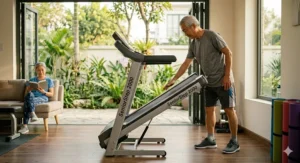
How to Choose a Treadmill for Seniors: 7 Critical Decision Points
Selecting the right treadmill requires evaluating factors that standard review sites often overlook. Here’s my framework for making an informed decision, developed after years of working with older adults and observing which features actually matter in daily use versus which sound impressive but add little value.
1. Step-Up Height: The Dealbreaker Nobody Talks About
Before you consider motor power or speed range, measure the distance from your floor to the treadmill deck. Standard treadmills sit 7-9 inches high—manageable for many, but prohibitive if you have hip flexibility limitations, knee problems, or use a walker for support around the house. The Exerpeutic’s 5-inch height and Goplus’s 4-inch folded profile exist specifically to eliminate entry anxiety. If you struggle getting into a standard car or stepping over a bathtub edge, prioritize low deck height above almost everything else. This single specification determines whether you’ll use the treadmill confidently or avoid it out of fear.
2. Handrail Design and Stability
Handrails aren’t just grab bars—they’re confidence multipliers. Look for rails that extend the full length of the walking belt, are positioned at natural arm height (adjustable or at least ergonomically placed), and are wide enough apart that you don’t feel cramped. Test the rail sturdiness—cheap models flex and wobble when you grip them, which defeats their safety purpose. The Exerpeutic’s dual-rail system provides superior support compared to models with shorter side rails that force you to let go midway through your walk. If you have balance concerns or are recovering from injury, overpay for excellent handrails before overpaying for extra speed capacity you’ll never use.
3. Emergency Stop Accessibility
Every treadmill includes a safety key that stops the belt when removed, but the key attachment point matters enormously. Look for chest-clip designs that activate immediately if you stumble backward, rather than waist-clip styles that require longer pull distance. Additionally, check for easily accessible emergency stop buttons on the console—large, red, clearly marked, and within arm’s reach even if you’re gripping the handrails. In a panic situation, you won’t have time to search for controls. Sole and Horizon models typically excel here with prominent emergency stops; budget models sometimes bury them in confusing button layouts.
4. Cushioning Technology That Actually Works
“Joint-friendly cushioning” appears in every marketing brochure, but the implementation varies wildly. Superior cushioning systems use multiple zones with graduated firmness (like the Horizon T101’s three-zone design) or advanced flex mechanisms (like the Sole F63’s Cushion Flex deck). These systems absorb impact at the strike point while providing firmer push-off support. Inferior cushioning simply adds foam padding that feels mushy underfoot without actually reducing joint stress. When possible, test the deck yourself—it should feel responsive and springy, not saggy. If testing isn’t possible, prioritize models from manufacturers with established cushioning technologies rather than generic “shock absorption” claims.
5. Motor Specifications vs. Real-World Performance
Motor specs can mislead. A 2.25 HP motor optimized for the 0.5-4 mph walking range (like many senior-focused treadmills) often performs better than a poorly-designed 3.0 HP motor meant for running. Look for “continuous-duty” or “CHP” ratings rather than peak HP, which only measures short bursts. More important than raw power is whether the motor maintains consistent belt speed under load—cheaper motors hesitate or surge when you step on, creating the stumbling hazard you’re trying to avoid. Read reviews specifically mentioning belt consistency and motor noise; a loud, vibrating motor signals poor quality regardless of advertised horsepower.
6. Control Simplicity Over Feature Abundance
I’ve watched too many seniors struggle with touchscreen menus, overcomplicated preset programs, and buried settings just to start a simple walk. The ideal control panel for older users features large, clearly labeled buttons for speed and incline, a prominent start/stop button, and an easy-to-read display showing time, distance, and speed at minimum. The NordicTrack’s touchscreen brilliance appeals to tech-comfortable users but intimidates those unfamiliar with tablets. The XTERRA’s basic button panel, while less impressive, means you can start walking within 5 seconds of stepping on. Evaluate your comfort level with technology honestly—a treadmill you can’t operate confidently is a treadmill you’ll avoid using.
7. Weight Capacity as Build Quality Indicator
Don’t just check whether the weight capacity exceeds your body weight—use it as a proxy for overall build quality and stability. A treadmill with 400-pound capacity (like the Exerpeutic or NordicTrack) signals heavy-duty frame construction, better welding, thicker steel components, and reduced wobble during use compared to 250-pound models. Even if you weigh 150 pounds, that higher capacity typically means the machine feels more solid and stable underfoot. Conversely, machines at the minimum weight threshold for your size often flex and shake during use, creating insecurity that defeats the purpose of having handrails.
Common Mistakes When Buying a Treadmill for Seniors
After helping dozens of older adults navigate treadmill purchases, I’ve identified recurring mistakes that lead to buyer’s remorse, unused equipment, or worse, injuries. Avoiding these pitfalls will save you hundreds of dollars and months of frustration.
Mistake #1: Prioritizing Maximum Speed Over Minimum Speed
The spec sheet proudly advertises “10 MPH TOP SPEED!” but you’ll walk at 2-3 mph. What actually matters for senior users is the slowest controllable speed—can it start at 0.5 mph or even 0.2 mph? Those ultra-slow speeds are crucial for warm-ups, cool-downs, balance training, and early rehabilitation work. I’ve seen buyers purchase treadmills with impressive top speeds only to discover the belt won’t run slower than 1.5 mph, forcing them to walk faster than comfortable. Verify the minimum speed specification before you even look at maximum speed.
Mistake #2: Believing All Folding Mechanisms Are Equal
“Folding treadmill” doesn’t automatically mean easy storage. Some models fold to 6-9 inches thick and weigh 200+ pounds, requiring two people to move and still dominating a room when “stored” vertically. Others, like the Goplus, fold to 4 inches and slide under furniture. Additionally, hydraulic-assisted folding (featured on better models like the XTERRA and Horizon) lets one person safely lower and raise the deck, while spring-loaded or manual systems can drop suddenly or require significant strength. If space-saving is a priority, verify exact folded dimensions and whether assistance mechanism is included—marketing photos often deceive about actual footprint.
Mistake #3: Underestimating Assembly Complexity
Many treadmills arrive 85% assembled, requiring only handlebar attachment and console wiring. Others arrive as components requiring 2-3 hours of assembly with confusing instructions. For seniors living alone or without handy family nearby, this becomes a dealbreaker. Before purchasing, check customer reviews specifically mentioning assembly difficulty and whether professional assembly is available (often $100-150 extra). Some retailers offer free delivery with assembly setup—this service is worth seeking out even if it means paying slightly more for the treadmill itself.
Mistake #4: Ignoring Maintenance Requirements
Treadmills require periodic belt lubrication (typically every 3-6 months), belt tension adjustments, and deck cleaning. Some models make this simple with self-lubricating systems or tool-free adjustment bolts. Others require disassembly and specialized tools. The Sunny Health SF-T7515, for example, occasionally needs belt tracking adjustment using rear roller bolts—a 5-minute task if you’re mechanically inclined, but frustrating if you’re not. Review the maintenance chapter of the product manual (usually available online) before buying. A treadmill that requires frequent complex maintenance becomes a burden rather than a benefit.
Mistake #5: Falling for Extended Warranties That Don’t Cover What Breaks
Extended warranties sound reassuring until you read the fine print. Many exclude normal wear items (belts, rollers, electronics) and require you to ship the 200-pound treadmill at your expense for service. Better strategy: prioritize models with strong manufacturer warranties (3-5 year frame, 1-2 year parts minimum) and local service networks. Sole, Horizon, and NordicTrack typically offer superior warranty coverage and authorized local repair techs. Cheaper brands may offer “lifetime warranties” that are nearly impossible to actually claim.
Mistake #6: Choosing Treadmills Without Testing Similar Deck Heights
If you haven’t used a treadmill recently, that 7-inch step-up might feel taller than you imagine. Before committing $500-2,000, visit a local fitness equipment store or gym to physically step onto treadmills at various deck heights. Notice how each height affects your entry confidence and whether you can mount it while holding handrails. This 15-minute test prevents the expensive discovery that your online purchase is too high for comfortable daily use. If in-person testing isn’t possible, at least measure 7-9 inches from your floor and practice stepping to that height while holding a stable surface.
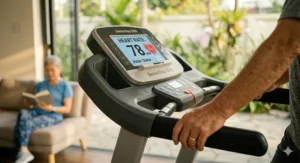
Treadmill for Seniors vs Outdoor Walking: The Complete Picture
Should you invest in a treadmill when you can walk outdoors for free? This question deserves a nuanced answer because both options offer distinct advantages—and for many seniors, the ideal solution involves both rather than choosing sides.
Where Treadmills Win
Weather independence is the obvious benefit, but it’s genuinely life-changing if you live in regions with hot summers, icy winters, or unpredictable storms. That 20-degree January morning or 95-degree August afternoon no longer dictates whether you exercise. For seniors managing conditions like arthritis or osteoporosis that worsen in cold, climate-controlled indoor walking isn’t luxury—it’s accessibility.
Consistent, even surfaces eliminate the trip hazards of cracked sidewalks, unexpected curbs, and uneven terrain. If you’ve experienced a fall outdoors, that psychological security of knowing the surface never changes can rebuild confidence in walking. The emergency stop capability means if you feel dizzy or unsteady, you can halt immediately rather than needing to safely lower yourself to pavement.
Precise control over intensity through speed and incline adjustments lets you progress gradually in ways outdoor terrain can’t match. Want exactly 3.2 mph for 20 minutes with a 5% incline? The treadmill delivers that repeatability, useful if you’re following cardiac rehab protocols or physical therapy recommendations requiring specific parameters.
Handrails provide continuous support impossible to replicate outdoors. For seniors with balance concerns, this transforms exercise from an anxiety-inducing risk into a manageable daily activity.
Where Outdoor Walking Wins
Fresh air, sunlight exposure (vitamin D production), and changing scenery provide mental health benefits that staring at a wall can’t match. The psychological boost of nature exposure and social interaction when greeting neighbors genuinely matters for overall wellbeing.
Natural terrain variations—slight inclines, soft grass, sandy paths—challenge stabilizing muscles and proprioception (body position awareness) in ways flat treadmill belts don’t. This variety builds real-world functional fitness more effectively than machine-only exercise.
Cost is zero beyond comfortable shoes. No electricity consumption, no maintenance, no equipment failure risks.
The Smart Integration Approach
Rather than viewing this as either/or, consider treadmills as weather backup and interval training tools that supplement outdoor walking as your primary exercise. Walk outside on pleasant days to enjoy nature and social interaction. Use the treadmill during weather extremes, before sunrise or after dark when outdoor safety is questionable, or when you want controlled intervals your neighborhood can’t provide.
This hybrid approach gives you the psychological benefits of outdoor exercise while ensuring nothing prevents your daily movement habit. One study showed seniors using this combined approach exercised more consistently year-round compared to those relying solely on outdoor walking, which dropped off during adverse weather.
What to Expect: Real-World Performance of Senior Treadmills
Let’s translate those specification sheets into everyday experiences, because understanding how features actually perform in daily use helps set realistic expectations and prevents disappointment.
Starting at 0.2-0.5 MPH Feels Slower Than You Think
The first time you step onto a treadmill with ultra-slow starting speeds like the Exerpeutic’s 0.2 mph, you’ll wonder if it’s even moving. That’s exactly the point. This glacial pace lets you find your balance, adjust your grip on handrails, and establish your rhythm before gradually increasing speed. After a week of starting slow and building confidence, that feature you thought was unnecessary becomes the reason you actually use the treadmill daily rather than avoiding it.
Cushioning Differences Are Subtle But Cumulative
You won’t notice dramatic differences in cushioning during a 5-minute showroom test. The benefits accumulate over 20-30 minute sessions and weeks of consistent use. Superior cushioning like the Sole F63’s Cushion Flex system means you finish 45-minute walks without the knee aching or ankle soreness you’d experience on firmer decks or outdoor concrete. After three months, the difference between good and mediocre cushioning translates to whether you maintain daily exercise or reduce frequency due to discomfort.
Motor Noise Matters More Than You Expect
A quiet motor like the Horizon’s 2.5 CHP or Sole’s 3.0 CHP lets you watch TV, listen to podcasts, or take phone calls while walking. Louder motors (common on budget models) require turning up volume significantly or wearing headphones. This seems minor until you’re 10 minutes into your walk and frustrated that you can’t hear your audiobook, leading you to cut sessions short. If you plan to use entertainment during workouts, motor noise becomes a quality-of-life issue worth prioritizing.
Emergency Stops Are Rarely Needed—Until They Are
You might never pull that safety key in years of use, but when you stumble or feel suddenly dizzy, having an automatic stop that activates instantly could prevent a serious fall. This is insurance, not a feature you test regularly. Budget models with poorly designed safety systems (keys that don’t pull easily or emergency stops that require multiple button presses) defeat this protective purpose.
Folding and Moving Takes Longer Than Marketing Suggests
Even treadmills with “easy folding” mechanisms require clearing the area, unplugging the unit, removing any items from the handlebars, and carefully raising or lowering the deck. If you plan to fold daily, budget 2-3 minutes for the process plus physical effort. Leaving it deployed permanently, if space allows, significantly increases usage consistency because eliminating that barrier makes starting your walk effortless.
Display Readability Depends on Lighting and Eyesight
Those bright, crisp display photos on product pages look different in your actual room lighting. If you have presbyopia (age-related near vision decline), small LCD numbers on budget models become difficult to read mid-workout. Backlit displays (like the Sunny Health SF-T7515) or large fonts improve usability significantly. Consider whether you’ll use the treadmill in bright daylight rooms or evening low-light conditions—display visibility varies accordingly.
Speed Increases Feel Faster as You Tire
The difference between 2.5 mph and 3.0 mph feels minimal when fresh, but after 20 minutes of walking, that 0.5 mph increase can feel like a significant challenge. This is why having fine speed control increments (0.1 mph adjustments rather than 0.5 mph jumps) matters for seniors building endurance gradually. Rapid speed buttons on models like the XTERRA help, but smooth acceleration/deceleration prevents jarring transitions that can cause missteps.
Essential Safety Features Every Senior Treadmill Needs
Safety features separate senior-appropriate treadmills from general consumer models. These aren’t luxury add-ons—they’re fundamental requirements that protect against the falls and injuries that can derail independence.
Automatic Stop Safety Key
The magnetic safety key attaches to your clothing and pulls free if you stumble backward, immediately stopping the belt. This prevents the nightmare scenario of falling and being rolled off the back of a moving treadmill. Premium versions use chest clips that activate faster than waist clips. Test that the key pulls free easily without requiring excessive force—some cheaper systems use overly strong magnets that defeat quick-release purpose.
Emergency Stop Button
Large, prominently placed, and within reach while gripping handrails. Red color coding makes it instantly recognizable even in panic moments. The button should require firm but not excessive pressure to activate—you want deliberate presses only (preventing accidental stops) while ensuring someone with arthritic hands can trigger it quickly.
Side Rails with Textured Grips
Smooth metal handrails become slippery when hands sweat. Quality treadmills use textured rubber or foam grips that maintain friction even when wet. The rails should be wide enough to wrap your full hand around comfortably—thin rails concentrate pressure painfully on palms during extended use.
Automatic Belt Speed Governors
Some treadmills include maximum speed limiters that prevent acceleration beyond preset limits. If you’re concerned about accidentally pushing the wrong button and suddenly running at 8 mph, this governor feature caps maximum speed at, say, 4 mph. Available on medical-grade treadmills and some consumer models with robust safety settings.
Low-Profile Belt Edges
The belt should sit flush with or slightly below the deck frame edges to prevent toe-catching during mounting or dismounting. Raised belt edges create trip hazards that catch feet during entry—a design flaw on cheaper models that can cause falls before you even start exercising.
Stable Frame Geometry
Wide footprint base, heavy construction, and rubber feet that grip flooring prevent tipping or sliding during use. A treadmill that wobbles or shifts destroys confidence in using handrails for support. The 400-pound capacity models like the Exerpeutic and NordicTrack achieve this stability through robust frame engineering.
Benefits vs Traditional Alternatives Comparison
| Feature | Treadmill for Seniors | Outdoor Walking | Mall Walking | Standard Gym Treadmill |
|---|---|---|---|---|
| Weather Independence | ✅ Year-round | ❌ Weather dependent | ✅ Climate controlled | ✅ Climate controlled |
| Surface Consistency | ✅ Perfectly flat | ❌ Uneven terrain | ✅ Smooth floors | ✅ Flat belt |
| Handrail Support | ✅ Continuous | ❌ None | ⚠️ Wall-dependent | ⚠️ Short rails |
| Emergency Stop | ✅ Immediate | ❌ Not applicable | ❌ Not applicable | ⚠️ Sometimes absent |
| Adjustable Speed | ✅ Precise control | ❌ Self-paced only | ❌ Self-paced only | ✅ Yes |
| Joint Cushioning | ✅ Advanced systems | ⚠️ Hard pavement | ⚠️ Hard tile/concrete | ⚠️ Basic cushioning |
| Privacy | ✅ Home exercise | ❌ Public | ❌ Public | ❌ Public |
| Cost | ⚠️ $300-2,000+ upfront | ✅ Free | ✅ Free | ⚠️ Membership required |
This comparison reveals why dedicated senior treadmills fill a crucial niche—they combine the weather independence and safety features unavailable elsewhere with cushioning and support that outperforms free alternatives. Mall walking provides some benefits (climate control, smooth surfaces) but lacks the handrail support and emergency stop capabilities that make home treadmills superior for those with balance or mobility concerns. Standard gym treadmills might have good specs but rarely include the low step-up height, extensive handrails, or ultra-slow starting speeds that senior-specific models prioritize.
Long-Term Cost & Maintenance Reality Check
The purchase price represents only part of the true ownership cost. Understanding maintenance requirements, energy consumption, and replacement timelines prevents budget surprises and helps you make informed comparisons.
Electricity Consumption
Treadmill motors consume approximately 300-900 watts depending on motor size and speed. At average U.S. electricity rates ($0.13/kWh), a 30-minute daily walk costs roughly $1-3 monthly in electricity. Over five years, that’s $60-180 in energy costs—negligible compared to purchase price but worth acknowledging. Efficient motors like the Horizon T101’s 2.5 CHP run cooler and draw less power than oversized motors working below capacity.
Regular Maintenance Costs
Belt lubrication every 3-6 months requires silicone-based treadmill lubricant ($15-25 per bottle, lasting 4-6 applications). Annual cost: approximately $30-40. Belt replacement after 3-5 years of regular use runs $75-150 including professional installation. Cleaning supplies and occasional tension adjustments add another $20-30 annually. Budget $50-75 yearly for routine maintenance, with a one-time belt replacement sometime during ownership.
Extended Warranty Considerations
Manufacturer warranties typically cover frame (5-10 years on quality models), motor (1-3 years), parts (1-2 years), and labor (90 days to 1 year). Extended warranties add $150-400 but often exclude wear items and require shipping for service. Better strategy: research which brands have local authorized service networks. Horizon, NordicTrack, and Sole maintain technician networks; Goplus and budget brands often require user-coordinated repairs.
Repair vs. Replace Decision Point
When a treadmill over 5 years old needs motor replacement ($300-500) or new deck ($200-400), you’re approaching the cost of a new budget model. Generally, repairs exceeding 40% of current replacement cost signal time to upgrade rather than repair. This calculation changes for premium models—repairing a $2,000 NordicTrack makes sense when replacement parts cost $300, whereas repairing a $400 Goplus doesn’t.
Total Cost of Ownership Example: 5-Year Horizon
Let’s compare three realistic scenarios:
- Budget Model (XTERRA TR150): $500 purchase + $200 maintenance + $60 electricity = $760 total / $12.67 monthly
- Mid-Range (Horizon T101): $700 purchase + $250 maintenance + $75 electricity = $1,025 total / $17.08 monthly
- Premium (NordicTrack 1750): $2,000 purchase + $300 maintenance + $180 electricity + $2,340 iFIT subscription = $4,820 total / $80.33 monthly
These calculations assume regular use without major repairs. They reveal that subscription-based treadmills fundamentally alter cost structures—what appears as a $700 price difference upfront becomes a $4,000+ gap over five years when subscriptions are mandatory for full functionality.
Features That Actually Matter (And Those That Don’t)
After years of observing which features seniors use versus which gather dust, I’ve developed strong opinions about what deserves your budget and what represents marketing fluff.
Features Worth Paying For:
Extended Handrails – Full-length support transforms treadmill confidence for balance-challenged users. Worth $100-150 premium over short-rail models.
Superior Cushioning Systems – Three-zone or advanced flex cushioning reduces joint stress measurably. Worth $150-250 premium if you have arthritis or previous joint issues.
Low Step-Up Height – Every inch matters when stepping onto the deck. Worth $100-200 premium if mobility is limited.
Quiet, Reliable Motors – Continuous-duty motors at appropriate power levels outlast cheaper alternatives and run quieter. Worth $150-300 premium for quality motor engineering.
Automatic Incline – Provides workout variety and targets different muscle groups without manual adjustments. Worth $100-150 if you want training progression.
Features You Can Skip:
Touchscreen Displays – Unless you’re genuinely tech-comfortable and will use interactive training apps, basic LCD displays showing speed/time/distance suffice. Save $300-800.
Built-In Speakers – Most sound quality is mediocre. Use your own headphones or nearby speaker. Save $50-100.
Excessive Speed Range – If you’ll never run faster than 5 mph, don’t pay for 12 mph capacity. Save $100-200.
Heart Rate Chest Straps – Wrist-based fitness trackers you already own work better than included chest straps you won’t wear. Save $30-50.
Complex Preset Programs – Most users stick to manual control anyway. Twelve programs sound impressive but rarely get used. Save $50-100.
Fan Systems – Built-in fans are weak and noisy. A standalone room fan works better and costs $20 vs. $100 built-in premium.
Tablet Holders – You can prop a tablet against the console. Don’t pay extra for dedicated holders. Save $20-40.
The pattern here: prioritize physical features that improve safety and comfort (handrails, cushioning, motors) while skipping digital features and accessories that seem appealing but gather dust in practice. You can always add a $20 fan or $15 tablet stand; you can’t retrofit better cushioning or extended handrails after purchase.
Treadmill for Seniors with Arthritis: Special Considerations
Arthritis affects over 50% of adults over 65, making joint-protective features especially critical when selecting a treadmill. Standard models that work fine for healthy joints can exacerbate pain and inflammation for arthritic users.
Key Specifications for Arthritis Management:
Multi-Zone Cushioning: Look for systems that provide variable firmness across the deck (firm at push-off, soft at impact) rather than uniform padding. The Horizon T101’s three-zone system and Sole F63’s Cushion Flex technology specifically address this need.
Lower Impact Ratings: Manufacturers sometimes quantify impact reduction—look for systems claiming 30-40% reduction compared to pavement. These numbers represent controlled testing and give comparative benchmarks.
Deck Thickness: Thicker decks (1.5-2 inches) absorb more shock than thin decks (0.75-1 inch). Premium models use thick decks; budget models skimp here.
Belt Material: Quality multi-ply belts with cushioning backing protect joints better than single-layer belts. You won’t find belt construction specs easily, but it correlates with overall build quality—premium treadmills use better belts.
Speed Control for Arthritis Management:
Arthritic joints need gradual warm-ups. The ability to start at 0.2-0.5 mph and increase in tiny increments (0.1 mph per adjustment) lets you raise body temperature and lubricate joints before reaching working speed. Treadmills with 0.5 mph minimum speed jumps force faster starts than arthritic joints prefer.
Incline Considerations:
Mild inclines (2-5%) shift load away from knees toward glutes and hamstrings, potentially reducing knee pain during walking. However, steep inclines (10%+) increase knee compression. For arthritis management, look for automatic incline with precise low-level control rather than just dramatic high-incline capability.
Grip Comfort:
Arthritic hands struggle with hard, narrow handrails. Textured foam grips approximately 1.5″ diameter allow comfortable full-hand wrap without painful pressure concentration. The Exerpeutic’s soft-grip rails excel here; budget models often use slick, thin metal rails that hurt arthritic palms.
Session Length Reality:
Arthritis often limits initial exercise duration to 10-15 minutes. Select a treadmill that makes short sessions easy (quick start buttons, simple controls, no mandatory warm-up programs) rather than models designed for 45-minute training workouts. Being able to step on, walk 12 minutes, and step off without navigating menus encourages consistent use that builds tolerance over weeks.
The arthritis-friendly treadmill prioritizes joint protection over performance specs. The Sole F63’s cushioning and Exerpeutic’s supportive design specifically cater to this population, even if their maximum speeds or tech features lag behind runner-focused models.

Frequently Asked Questions
❓ What is the safest speed to start on a treadmill for seniors?
❓ How do I know if a treadmill step-up height is too high for me?
❓ Can I use a treadmill if I need a walker for regular mobility?
❓ Do I need automatic incline, or is manual adjustment sufficient?
❓ How much space do folding treadmills really save?
Conclusion: Making Your Decision With Confidence
Choosing a treadmill for seniors ultimately comes down to matching machine capabilities to your specific combination of physical needs, space constraints, budget reality, and fitness goals. There’s no single “best” model—only the best fit for your unique situation.
If you’re recovering from surgery or managing significant balance concerns, the Exerpeutic TF2000‘s dual handrails and 5-inch step-up height provide unmatched security worth the $600-750 investment. For budget-conscious walkers who need reliable daily exercise without complexity, the XTERRA TR150 delivers essential features around $400-550 that make it the value champion.
Apartment dwellers or those downsizing to smaller homes will find the Goplus 2-in-1‘s space-saving design transformative at $300-450, though you trade some premium features for that compact footprint. Tech-comfortable seniors wanting immersive training experiences should consider the NordicTrack Commercial 1750 despite its $1,700-2,200 price plus subscriptions, as the iFIT integration genuinely makes daily workouts more engaging.
For those prioritizing joint protection above all else, the Sole F63‘s Cushion Flex deck technology in the $800-1,000 range represents the cushioning gold standard that can mean the difference between sustainable daily walking and joint pain that forces reduced activity.
Remember that the “best” treadmill is the one you’ll actually use consistently. A $400 basic model you walk on daily beats a $2,000 premium machine gathering dust because it’s too intimidating to operate. Start with your dealbreaker requirements—step-up height, handrail design, budget ceiling—then evaluate options within those parameters rather than chasing features you’ll rarely use.
The investment in a quality treadmill extends beyond the purchase price—it’s an investment in maintaining independence, managing health conditions proactively, and ensuring weather never dictates whether you get your essential daily movement. Walking just 20-30 minutes daily can improve cardiovascular health and reduce fall risk, benefits that compound over years of consistent activity.
Take your time with this decision. Read recent customer reviews from verified purchasers over 60. If possible, visit showrooms to physically test deck heights and handrail positions. And remember: the perfect time to start a walking routine is now, regardless of season—that’s exactly why you need a reliable treadmill for seniors standing ready in your home.
Recommended for You
- 7 Best Shock Absorption Treadmills For Joint Health (2026 Guide)
- 7 Best Low Impact Treadmills for Bad Knees (2026 Guide)
- 7 Best Incline Decline Treadmill 2026
Disclaimer: This article contains affiliate links. As an Amazon Associate, I earn from qualifying purchases. If you purchase products through these links, we may earn a small commission at no additional cost to you.
✨ Found this helpful? Share it with your friends! 💬🤗
