
In This Article
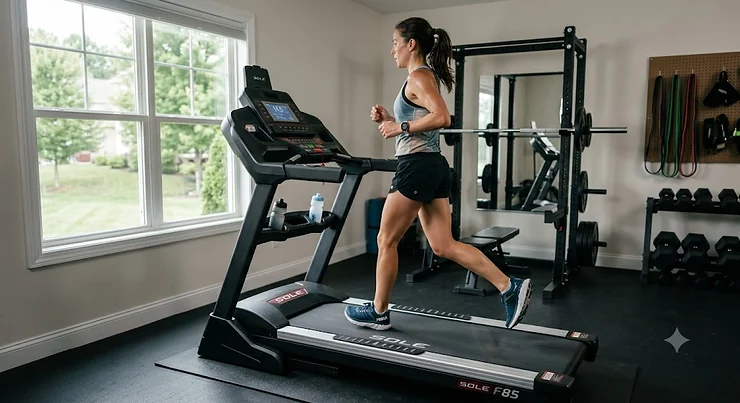
If you’ve ever watched a bargain treadmill motor cough, whine, and finally give up somewhere around mile 40 of your training week, you already know why picking a treadmill for high mileage runners is a completely different exercise than picking one for the occasional weekend jog. A treadmill for high mileage runners has to survive things a casual walker’s machine never sees: back-to-back tempo runs, long runs pushing 90+ minutes, marathon blocks that stack 50-70 miles a week, and belts that log more hours in a month than most home units see in a year. This isn’t about flashy touchscreens or a hundred pre-set programs — it’s about a drivetrain, deck, and belt system engineered to take a beating and keep giving you an honest, predictable surface underfoot.
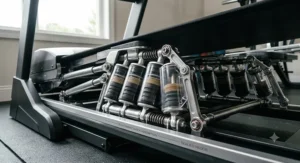
What is a treadmill for high mileage runners? In short, it’s a machine built around a continuous-duty motor of at least 3.5-4.0 CHP, a reinforced multi-ply belt, and a shock-absorbing deck rated for daily, heavy use — the kind of specs that separate a serious training tool from a treadmill that quietly overheats under real mileage. Running economy is generally understood as the combined metabolic, cardiorespiratory, biomechanical, and neuromuscular efficiency of a runner’s stride, and treadmills happen to be the standard lab tool researchers use to measure it — which tells you something: the machines built to hold up under scientific scrutiny share a lot of DNA with the machines built to hold up under your own training log.
In this guide, we researched seven real, currently available treadmills spanning budget, mid-range, and premium price points, all built around motors and belt systems that can handle serious weekly volume. We’ll break down what a 4.0 CHP motor treadmill actually buys you, why treadmill belt durability matters more than almost any spec sheet number, and how running economy training on a treadmill can genuinely sharpen your race-day performance. Every product mention below reflects real specs and aggregated review sentiment — no invented testing, no fabricated quotes, just an honest look at what holds up when the miles start piling on.
Quick Comparison: Best Treadmills for High Mileage Runners
Before we get into the deep dives, here’s the fast version for anyone who wants the shortlist first.
| Treadmill | Motor | Belt Size | Best For |
|---|---|---|---|
| Horizon 7.8 AT | 4.0 CHP | 22″ x 60″ | Best budget pick with real 4.0 CHP power |
| Sole F85 | 4.0 CHP | 22″ x 60″ | Best overall value for daily mileage |
| NordicTrack Commercial 1750 | 4.25 CHP | 22″ x 60″ | Best all-rounder with decline training |
| 3G Cardio Elite Runner | 4.0 HP | 22″ x 62″ | Best hidden-gem pick for marathoners |
| Life Fitness Platinum Club Series | 4.0 HP | 22″ x 60″ | Best joint protection for daily miles |
| Precor TRM 835 | 4.0 HP AC | 20″ x 60″ | Best top speed for serious interval work |
| Landice L7 | 4.0 HP | 20″ x 58″ | Best belt durability and warranty |
Looking at this table, the pattern that jumps out immediately is that every legitimate treadmill for high mileage runners clusters around that 4.0 CHP threshold — nothing here dips below 4.0, because anything less starts to strain under regular 8-10 mile sessions. The Horizon 7.8 AT and Sole F85 prove you don’t need a five-figure commercial machine to get there, while the Landice L7 and Precor TRM 835 show what happens when a brand builds specifically for daily abuse rather than occasional use.
💬 Which spec matters more to you: motor power or belt durability? Vote with your click and help other runners decide!
💬 Just one click — help others make better buying decisions too!😊
Top 7 Treadmills for High Mileage Runners: Expert Analysis
1. Horizon 7.8 AT — best budget pick with a true 4.0 CHP motor
The standout here is simple: most treadmills under the $1,500 mark settle for a 2.5-3.0 CHP motor, but the 7.8 AT actually delivers a genuine 4.0 continuous-horsepower unit, which is the same power class you’ll find on machines costing twice as much. Specs that matter in practice: a 22″ x 60″ belt, 12 mph top speed, 15% incline, and a 400-lb weight capacity paired with Horizon’s RapidSync drive system, which trims the lag between speed and incline changes — useful when you’re mid-tempo-run and need the belt to respond instantly, not two seconds later. Based on the spec comparison against sibling models like the 7.0 AT and 7.4 AT, the jump to 4.0 CHP on the 7.8 AT is the single upgrade most worth paying for if you’re logging 30+ miles a week, since motor strain is cumulative and a smaller motor simply works harder, hotter, for the same mileage. Reviewers consistently note the lifetime frame-and-motor warranty as a standout confidence signal at this price tier, and the large 2.36″ rollers get frequent praise for keeping belt tracking stable over time — a detail that matters more than most buyers realize until their old treadmill’s belt starts drifting sideways mid-run.
Pros:
- ✅ Genuine 4.0 CHP motor rare at this price point
- ✅ Lifetime warranty on frame and motor
- ✅ Wide 22″ x 60″ deck fits long strides comfortably
Cons:
- ❌ Basic console lacks a full touchscreen
- ❌ No built-in Wi-Fi content beyond app pairing
Price sits in the $1,200-$1,500 range depending on current promotions — at that range, this is arguably the best dollar-for-dollar motor upgrade in the budget category.
2. Sole F85 — quietest ride at the 4.0 CHP price point
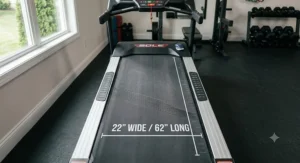
The F85’s calling card is how little you hear it working: Sole’s marketing likes to say your footsteps are louder than the motor, and independent reviewers largely back that up, clocking it around 65 decibels under load — about the same as a running refrigerator. Underneath that quiet exterior sits a 4.0 CHP motor, a 22″ x 60″ deck, and Sole’s Cushion Flex Whisper Deck, which the brand claims reduces joint impact by up to 40% compared to pavement. What most buyers overlook about this model is the track roller size — at 2.75 inches in diameter, they’re among the largest in the folding-treadmill category, and bigger rollers mean less belt wear and less motor strain per mile, which is exactly the math that matters for a treadmill for high mileage runners. Aggregated reviewer sentiment is notably consistent: owners repeatedly single out the two-ply belt and 400-lb weight capacity as evidence this machine was engineered for sustained use rather than occasional walks, and the acceleration from 0 to 12 mph in roughly 17 seconds gets mentioned often enough to suggest it’s a genuine strength, not a cherry-picked stat. The lifetime frame and motor warranty — paired with no ongoing subscription requirement — is a recurring theme in owner feedback, especially from runners comparing it against iFit-dependent competitors.
Pros:
- ✅ Whisper-quiet 4.0 CHP motor under 65 decibels
- ✅ Lifetime frame and motor warranty, no subscription needed
- ✅ Oversized 2.75″ rollers reduce long-term belt wear
Cons:
- ❌ Firmer deck feel than NordicTrack-style cushioning
- ❌ 15.6″ touchscreen adds cost some runners won’t use
The F85 typically lands in the $2,000-$2,500 range, and for runners who want commercial-grade durability without a commercial-grade price tag, it’s one of the strongest value plays on this list.
3. NordicTrack Commercial 1750 — best all-rounder with decline training
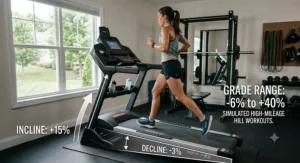
What separates the 1750 from the rest of NordicTrack’s lineup is the combination of a 4.25 CHP motor (in current 2026 units) with genuine decline capability down to -3%, a feature almost nobody else on this list offers. The 22″ x 60″ deck, RunFlex cushioning, and a 16-inch pivoting touchscreen round out a package NordicTrack pitches as club-quality performance in a foldable frame. Here’s what to weigh: the decline function isn’t just a gimmick — training downhill sections on a treadmill lets you rehearse the eccentric quad loading that trashes legs on race-day downhills, something flat-belt machines simply can’t replicate. Reviewers consistently flag the SmartAdjust and ActivePulse features, which auto-adjust speed and incline to match either virtual terrain or your heart rate, as genuinely useful for structured marathon blocks rather than just entertainment fluff. On the downside, the iFit subscription is effectively required to unlock the console’s full value, which is a recurring complaint in aggregated owner feedback — you’re paying for hardware that’s partly gated behind a monthly fee. Still, for a treadmill for high mileage runners that wants incline and decline variety without stepping up to a five-figure commercial unit, the 1750 is hard to beat.
Pros:
- ✅ Rare -3% decline for real hill-training simulation
- ✅ Strong 4.25 CHP motor handles sustained tempo work
- ✅ SpaceSaver folding keeps footprint manageable
Cons:
- ❌ Full feature set effectively requires iFit subscription
- ❌ Console can feel cluttered for minimalist runners
Expect a price in the $1,800-$2,500 range depending on financing offers — a fair ask given the incline/decline versatility you’re getting.
4. 3G Cardio Elite Runner — longest deck, best-kept secret for marathoners
This is the lesser-known pick on the list, and it deserves more attention than it gets: the Elite Runner’s 22″ x 62″ running surface is longer than every other machine here, which matters more than people assume once stride length climbs past 45 inches during faster training paces. It’s built around a club-rated 4.0 HP motor and an Ortho Flex Shock suspension system, and the whole unit weighs a substantial 386 lbs — heavier machines generally translate to less vibration and a steadier platform at speed. Based on the spec comparison against big-box brands at a similar price, 3G Cardio consistently under-prices its commercial-grade components relative to household names, likely because it lacks the marketing budget of NordicTrack or Life Fitness rather than because the hardware is inferior. What the spec sheet won’t tell you, but reviewer feedback suggests, is that the console is fairly no-frills by design — this is a company deliberately prioritizing motor and deck quality over streaming apps, and recreational runners who’ve made the switch tend to describe it as feeling notably more stable at race pace than folding competitors in the same price bracket. The 5-year commercial motor and frame warranty, alongside a lifetime residential motor warranty, signals real confidence in the drivetrain’s longevity.
Pros:
- ✅ Longest belt on this list at 22″ x 62″
- ✅ Commercial Ortho Flex Shock suspension reduces vibration
- ✅ Lifetime residential motor warranty
Cons:
- ❌ Console lacks touchscreen or app integration
- ❌ Less brand recognition means fewer local service options
Priced around $3,500-$4,000, it undercuts several commercial names on this list while matching their component quality — a genuine sleeper pick.
5. Life Fitness Platinum Club Series — best joint protection for daily miles
Life Fitness built its reputation on commercial gym floors, and the Platinum Club Series brings that same 4.0 HP AC motor (8 HP peak) and patented FlexDeck Shock Absorption System home. The brand’s own testing claims up to a 30% reduction in knee and joint stress compared to running on concrete, achieved through eight discrete shock absorbers under the 22″ x 60″ deck rather than a single foam layer. Here’s what to weigh: for runners already managing knee sensitivity or coming back from an overuse injury, that distributed shock system is a meaningfully different approach than the single-cushion decks found on most home treadmills, and it’s a big part of why this machine shows up so often in physical therapy clinics and rehab facilities. Reviewers consistently point to the sealed 3.5″ rollers as a maintenance win — no waxing required, which matters enormously once you’re running five or six days a week and don’t want deck upkeep eating into your schedule. The lifetime warranty on motor, frame, and shock absorbers (plus 10 years on parts) is among the strongest in this list, reflecting Life Fitness’s confidence that this drivetrain is built for years of daily commercial-level use, not just occasional home workouts.
Pros:
- ✅ FlexDeck system distributes shock across eight absorbers
- ✅ Sealed, maintenance-free 3.5″ rollers
- ✅ Lifetime warranty on motor, frame, and shocks
Cons:
- ❌ Premium price reflects commercial-grade components
- ❌ Console options can feel dated next to newer touchscreens
Pricing generally sits in the $6,000-$8,000 range — steep, but this is genuinely the same hardware found in premium health clubs, not a residential lookalike.
6. Precor TRM 835 — fastest top speed for serious interval work
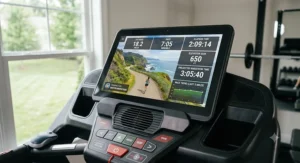
The TRM 835 is aimed squarely at runners whose training includes real speed work: its 4.0 HP AC motor pushes a 16 mph top speed, well above the 12 mph ceiling on every other machine in this roundup, alongside a -3% to 15% incline/decline range. What most buyers overlook about this model is Integrated Footplant Technology, which adjusts belt acceleration and deceleration to match your natural foot strike rather than running at one fixed speed — in practice, that means less of the “chasing the belt” feeling that makes cheaper treadmills feel artificial during fast intervals. Paired with Precor’s Ground Effects impact control system, which cushions the front of the stride while keeping push-off firm, this is a deck engineered specifically around how a runner’s foot actually loads through a stride, not a generic shock pad. Aggregated commercial-gym feedback consistently praises the frame’s rock-solid stability even at 15-16 mph, a speed range where lesser frames start to feel unnervingly light underfoot. The tradeoff is real: this is a commercial unit requiring a dedicated 120V/20A circuit, and the price reflects genuine gym-floor engineering rather than a residential compromise.
Pros:
- ✅ 16 mph top speed, well above residential norms
- ✅ Integrated Footplant Technology smooths belt response
- ✅ 7-year frame and 5-year motor warranty
Cons:
- ❌ Requires dedicated 120V/20A electrical circuit
- ❌ No touchscreen or built-in entertainment console
At roughly $8,500-$11,800 depending on console configuration, this is squarely a premium buy — best suited to runners doing genuine track-style interval sessions at home.
7. Landice L7 — best belt durability and warranty for the long haul
If treadmill belt durability is your single top priority, the L7 is the benchmark the rest of the industry gets measured against. Its four-ply belt — most competitors use one or two plies — rides on a rust-free, aircraft-grade aluminum frame powered by a 4.0 CHP continuous-duty motor (8 HP peak), and the deck is reversible, effectively doubling its usable lifespan before replacement is needed. Based on the spec comparison, Landice’s decision to use aluminum rather than steel isn’t just about weight; aluminum doesn’t rust, and combined with a maintenance-light belt, that’s precisely why Landice backs the L7 with a limited lifetime parts warranty — the only home treadmill in this category to do so. Reviewers consistently describe well-maintained units lasting decades with proper deck lubrication, and the VFX Shock Absorption System is regularly cited as seven times softer than grass, a detail that matters enormously across years of accumulated mileage. The tradeoff for that longevity is a shorter 20″ x 58″ belt than some rivals here and a control panel that skips the flashy touchscreen trend entirely in favor of Landice’s traditional LCD displays — a deliberate choice that keeps fewer components to eventually fail.
Pros:
- ✅ Four-ply reversible belt, doubling usable life
- ✅ Rust-proof aircraft-grade aluminum frame
- ✅ Limited lifetime parts warranty, rare in this category
Cons:
- ❌ Shorter 20″ x 58″ belt than several competitors
- ❌ Console feels basic next to touchscreen rivals
Pricing typically runs $4,500-$6,000, and for runners who value “buy once, own it for 20 years” over flashy tech, the L7 remains the category’s durability standard.
Practical Usage Guide: Setting Up Your Treadmill for High-Mileage Training
Getting a new machine home is only step one — how you set it up in the first 30 days largely determines how long that belt and motor last. Start with placement: treadmills need airflow around the motor housing, so never push the unit flush against a wall, and leave at least 18 inches of clearance behind it in case of a stumble. Before your first run, check the belt tension and center alignment; a belt that’s drifting to one side will wear unevenly and strain the motor trying to compensate, and most owner’s manuals include a simple two-bolt adjustment for this. Lubrication is the most commonly skipped maintenance step among high mileage runners — most residential decks need silicone lubricant applied every 3-6 months (check your specific belt-ply count, since two-ply belts typically need it more often than four-ply designs), and skipping this is the single fastest way to shorten motor life, since a dry belt creates friction the motor has to fight through every stride.
A common first-30-days mistake is jumping straight to peak mileage on a brand-new belt before it’s “broken in” — most manufacturers recommend a gradual first two weeks to let the belt seat properly against the deck. Also worth flagging: vacuum underneath the deck monthly, since dust and pet hair accumulation around the motor is a leading cause of premature overheating, especially in homes with carpeted basements or garages where treadmills commonly live.
✨ Ready to Lock In Your Pick?
🔍 Compare current pricing and availability on any of these seven treadmills above, and take the next step toward mileage that won’t wear out your machine — or your motivation.
Real-World Scenarios: Which Treadmill Fits Your Training Life
The marathon-block commuter: Say you’re training for your third marathon, squeezing 8 miles into a weekday lunch break because outdoor daylight isn’t cooperating in winter. You need a machine that can handle back-to-back tempo days without drama and won’t dominate a small apartment — the Horizon 7.8 AT or Sole F85 fit this profile well, offering genuine 4.0 CHP power in a foldable footprint that respects limited square footage.
The rehabbing high-mileage veteran: If you’re returning from a stress reaction or knee overuse issue but still want to bank 40+ miles a week, joint protection outranks everything else on your checklist. The Life Fitness Platinum Club Series and its distributed FlexDeck cushioning system are purpose-built for exactly this use case, and it’s no coincidence this brand shows up so often in physical therapy settings.
The speed-focused competitive racer: For runners whose weekly plan includes genuine VO2 max intervals or mile repeats at sub-6-minute pace, a 12 mph ceiling gets limiting fast. The Precor TRM 835‘s 16 mph top speed and footplant-matching belt response make it the natural fit for anyone training for a fast 5K or 10K rather than just logging junk miles.
Common Mistakes When Buying a Treadmill for High Mileage Runners
The single biggest mistake is buying based on top speed instead of continuous horsepower — a treadmill can advertise a 12 mph max and still have a motor too weak to sustain that speed for 40 minutes without overheating. Look at CHP (continuous horsepower) specifically, not peak HP, since peak numbers are marketing figures that reflect a brief burst, not sustained output. A second common error is underestimating belt length: runners over 6 feet tall or those with a longer stride at faster paces routinely find 55-inch belts too short, clipping the front rail mid-stride, so anything under 60 inches deserves a hard look before buying. Third, many buyers skip checking weight capacity margin — a treadmill rated for exactly your body weight will wear out faster than one with 50-75 lbs of headroom, since the motor and belt work proportionally harder as you approach the rated maximum. Finally, ignoring warranty terms on the motor specifically (not just the frame) is a costly oversight; frame warranties are often lifetime by default because frames rarely fail, while motor warranties reveal what the manufacturer actually believes about long-term reliability.
4.0 CHP Motor Treadmill: Why Motor Power Matters for Big Weeks
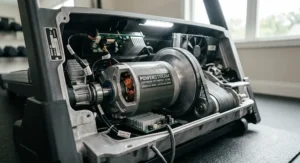
A 4.0 CHP motor treadmill isn’t a luxury upgrade — it’s close to a mechanical necessity once your weekly mileage climbs past 25-30 miles. CHP stands for continuous horsepower, meaning the motor can sustain that output indefinitely under load, as opposed to peak HP, which reflects a brief spike the motor can handle for seconds, not hours. Reviewers and repair technicians consistently note that motors rated below 3.0 CHP tend to run hotter and louder as weekly mileage accumulates, and heat is the single biggest enemy of motor longevity — a motor running warm session after session degrades its internal components faster than one operating comfortably within its rated capacity.
Here’s the practical math: a 3.0 CHP motor running six days a week at a steady 6-7 mph pace is working closer to its ceiling than a 4.0 CHP motor doing the identical workout, which means more heat, more wear, and a shorter effective lifespan even though both units are “rated” for running. This is precisely why every serious treadmill for high mileage runners on this list clusters at 4.0 CHP or above — brands building specifically for daily distance training have converged on that number as the practical floor for sustained reliability, not an arbitrary marketing tier.
Treadmill Belt Durability: What Actually Makes a Belt Last
Belt ply count is the most underrated spec on any treadmill’s listing page, and it directly determines treadmill belt durability over years of accumulated mileage. Most budget machines ship with a single-ply belt, mid-range units typically use two-ply construction, and the true durability leaders — like the Landice L7 — use four-ply belts that can run largely maintenance-free for years. More plies mean more material resisting stretch and friction wear, which translates to less frequent lubrication, less belt slippage, and a longer window before replacement becomes necessary.
Roller diameter is the second half of this equation and gets far less attention than it deserves: larger rollers (2.5 inches or above) distribute belt tension across more surface area, reducing the point-load stress that causes premature fraying at the belt’s edges. Reversible decks — a feature Landice popularized — effectively double a deck’s usable life by letting you flip it once the running-side surface wears down, rather than replacing the entire deck assembly. For any runner logging 30+ miles a week, treadmill belt durability should weigh as heavily in the buying decision as motor power, since a worn belt doesn’t just feel unpleasant underfoot — it forces the motor to work harder to overcome added friction, creating a compounding wear problem across the whole drivetrain.
Running Economy Training on a Treadmill: Getting More from Every Mile
Running economy training on a treadmill is one of the most underused tools available to high mileage runners, largely because most people think of the treadmill purely as a weather-avoidance device rather than a precision training instrument. Sports science generally measures running economy in terms of oxygen cost per kilogram of body weight at a given submaximal pace, and because a motorized treadmill holds that pace perfectly constant, it’s actually a more controlled environment for economy-focused work than variable outdoor terrain, wind, and pacing drift ever allow.
Practically, this means using your treadmill’s fixed-pace precision to run true tempo efforts at an exact goal pace rather than an estimated one — something outdoor running, with its wind resistance and pacing guesswork, can’t replicate as cleanly. Incline work is the second major lever: setting even a 1-2% grade on a flat-belt treadmill is commonly recommended to offset the lack of wind resistance indoors, keeping the physiological demand closer to true outdoor effort at the same speed. Cadence drills — deliberately running slightly quicker steps at a fixed treadmill pace — are another accessible way to chip away at ground contact time, a factor research has linked to stronger running economy. None of this requires expensive lab equipment; it just requires a motor and belt reliable enough to hold a dead-flat pace for the full session, which circles right back to why motor quality and treadmill belt durability matter for training quality, not just longevity.
Treadmill vs Outdoor Running for High Mileage Training
| Factor | Treadmill | Outdoor Running |
|---|---|---|
| Pace precision | Locked, exact | Variable, effort-based |
| Joint impact | Cushioned deck absorption | Surface-dependent |
| Weather dependency | None | High |
| Downhill/uphill simulation | Incline/decline motor-controlled | Natural terrain |
| Best For | Consistent tempo work, injury recovery, bad-weather blocks | Race-specific terrain prep, mental toughness, varied stimulus |
Looking at this comparison, neither surface wins outright for a genuinely high-mileage training block — the smartest approach most experienced runners land on is a hybrid split, using treadmill sessions for precision-paced tempo work and joint-friendly recovery days, while reserving outdoor miles for race-specific terrain rehearsal and the variable footing that builds ankle stability a flat belt can’t replicate. This split matters more than casual runners assume: research on overuse running injuries consistently identifies training-load errors, including rapid mileage increases, as leading contributors to lower-body injuries in distance runners. Runners recovering from an overuse injury in particular tend to lean harder on the treadmill side of that split, since the cushioned deck reduces the accumulated impact load that likely contributed to the injury in the first place.
Problem → Solution: Common High-Mileage Treadmill Headaches
Problem: The belt feels sluggish or drags mid-stride. This is almost always a lubrication or tension issue rather than a motor failure — apply manufacturer-recommended silicone lubricant to the belt’s underside and recheck tension bolts before assuming the worst.
Problem: The motor runs noticeably hotter after long sessions. Check for dust buildup around the motor housing first; a monthly vacuum under the deck resolves this in most cases, and if heat persists, it may signal the motor is undersized for your weekly volume.
Problem: Knee or shin discomfort creeping in after months of use. This is frequently a deck cushioning mismatch rather than a training-load issue alone — machines like the Life Fitness Platinum Club Series with distributed shock absorption systems are specifically designed to address this.
Problem: Belt tracking drifts to one side. Uneven tracking accelerates edge wear and usually traces back to an alignment issue fixable with the two-bolt tension adjustment most manuals describe, rather than requiring belt replacement.
Problem: Console or Bluetooth connectivity drops during runs. This is typically a firmware or pairing issue rather than a hardware fault — a factory reset of the console resolves this in the large majority of reported cases.
Long-Term Cost & Maintenance: What High Mileage Really Costs You
| Price Tier | Example | Estimated 5-Year Cost of Ownership | Best For |
|---|---|---|---|
| Budget | Horizon 7.8 AT | Purchase price + minimal belt/lube costs | Runners under 35 mpw wanting real durability on a budget |
| Mid-range | Sole F85 / NordicTrack Commercial 1750 | Purchase price + occasional part replacement | Most serious recreational marathoners |
| Premium | Landice L7 / Life Fitness Platinum Club | Higher upfront, near-zero part replacement | Daily high-mileage runners planning to keep the unit 10+ years |
The analysis here is straightforward: a cheaper treadmill that needs a new motor or belt every two to three years can easily cost more over a decade than a premium unit purchased once and maintained properly, especially once you factor in the labor cost of repairs and the training disruption of a machine going down mid-block. For runners logging 40+ miles a week for years on end, the Landice L7‘s reversible four-ply belt and lifetime parts warranty routinely work out cheaper per mile over a long horizon than repeatedly replacing budget belts that wear out every 18-24 months.
Features That Actually Matter (And Those That Don’t)
Motor CHP rating, belt ply count, and roller diameter genuinely determine how long a machine survives high mileage — these are the specs worth prioritizing above almost everything else. Deck cushioning quality matters too, though it’s more about comfort and joint health than raw durability. On the other hand, touchscreen size, built-in entertainment apps, and the number of pre-loaded workout programs are largely irrelevant to how well a machine handles serious training volume — nice-to-haves that don’t move the needle on longevity or performance. Bluetooth heart rate pairing is genuinely useful for training-zone work, but it’s a feature you can often add via a chest strap regardless of which treadmill you choose, so it shouldn’t heavily sway the buying decision either way.
Safety, Regulations & Compliance Guide for Home Treadmills
Home treadmills fall under voluntary safety standards set by ASTM F08.30 Fitness Products and UL 1647, the 6th-edition standard covering motor-operated massage and exercise machines, which manufacturers reference when engineering emergency stop clips, electrical grounding, and mechanical guarding around the belt and rollers. Practically, this means every treadmill on this list should ship with a magnetic safety key that immediately cuts power if pulled — always clip this to your clothing during high-intensity interval sessions, since that’s when a stumble is most likely and the stopping distance matters most. Dedicated circuits matter more than most home gym owners realize, too: higher-CHP commercial units like the Precor TRM 835 explicitly require a dedicated 120V/20A circuit rather than sharing an outlet with other appliances, since motor draw under sustained load can trip a standard breaker or, worse, create a fire risk on an undersized circuit. Keep children and pets away from a running belt at all times, and always unplug the unit when not in use rather than relying solely on the safety key, particularly in shared households.
FAQ: Treadmills for High Mileage Runners
❓ How many CHP do I need for a treadmill for high mileage runners?
❓ How often should I lubricate a high-mileage treadmill belt?
❓ Is a 4.0 CHP motor treadmill overkill for casual runners?
❓ Do treadmill belts wear out faster with high mileage running?
❓ Can treadmill running actually improve running economy?
Conclusion
Choosing a treadmill for high mileage runners really comes down to matching motor power and belt construction to your actual weekly volume rather than chasing the flashiest console. Budget-conscious runners logging solid but moderate mileage will find genuine value in the Horizon 7.8 AT or Sole F85, both delivering real 4.0 CHP motors without commercial pricing. Runners wanting incline and decline variety should look hard at the NordicTrack Commercial 1750, while the 3G Cardio Elite Runner remains this list’s most underrated pick for anyone prioritizing deck length and suspension quality on a mid-range budget. At the premium end, the Life Fitness Platinum Club Series and Precor TRM 835 bring genuine commercial-gym engineering home, and the Landice L7 stands alone as the durability benchmark for runners who want to buy once and train on the same machine for a decade or more. Whichever you choose, prioritize CHP rating, belt ply count, and warranty terms over screen size — those are the specs that will still matter in year three, long after the novelty of a touchscreen wears off.
Recommended for You
- Treadmill For Interval Training At Home: 7 Top Picks (2026)
- 7 Best Mid-Range Treadmill Under $1000 Picks for 2026
- Easy To Use Treadmill For Seniors: 7 Best Picks (2026)
Disclaimer: This article contains affiliate links. As an Amazon Associate, I earn from qualifying purchases. If you purchase products through these links, we may earn a small commission at no additional cost to you.
✨ Found this helpful? Share it with your friends! 💬🤗
