In This Article
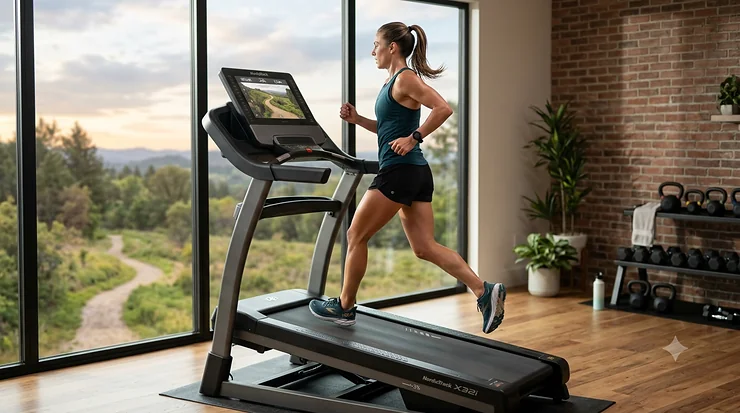
Here’s a strange thing about treadmills: they’ll happily send you up a mountain, but almost none of them will bring you back down. Flat, uphill, steeper uphill — that’s the usual menu. Yet every outdoor route that climbs eventually descends, and your body treats those two directions completely differently. That gap is exactly what a negative incline treadmill closes.
A negative incline treadmill is a machine whose running deck can tilt below level — typically anywhere from -1% to -6% — so the belt slopes downhill beneath your feet. This lets you train the eccentric, “braking” muscle work of descending, which flat and uphill-only machines simply can’t reproduce. In plain terms: it teaches your quads to absorb impact instead of ambushing them on race day.
That braking work matters more than most buyers realize. When you run downhill, your knee extensors lengthen under load to control your descent, and research on downhill running and localized muscle damage shows that’s precisely where the soreness and micro-damage concentrate. Train it gradually indoors, and your legs adapt. Ignore it, and your first steep race descent will leave you hobbling for four days.
The catch? Decline is genuinely rare. Most manufacturers skip it because it’s harder on the motor and adds mechanical complexity, so the field narrows fast to a handful of brands that do it well. Below, I’ve pulled together the seven models actually worth your money in 2026 — spanning budget walkers to $4,000 flagships — with honest analysis of who each one is really for.
Quick Comparison: The 7 Best Decline Treadmills at a Glance
| # | Model | Decline / Incline | Motor | Best For | Price Range |
|---|---|---|---|---|---|
| 1 | Sunny Health & Fitness Commercial Level Ultimate | -5% / 50% | 2.5 HP | Budget walkers & hikers | Value pick — check current price |
| 2 | NordicTrack Commercial 1750 | -3% / 12% | 4.25 CHP | Best all-round runner’s value | ~$1,500–$2,000 range |
| 3 | Sole F85 | -6% / 15% | 4.0 HP | Best folding decline for runners | ~$2,000–$2,300 range |
| 4 | Sole TT8 | -6% / 15% | 4.0 HP | Commercial-grade, no subscription | ~$2,400–$2,600 range |
| 5 | Sole F89 | -6% / 15% | 4.0 HP | Big-screen folding entertainment | high-$2,000s range |
| 6 | NordicTrack X16 | -6% / 40% | 4.25 CHP | Extreme range on a (relative) budget | ~$3,000 range |
| 7 | NordicTrack X24 | -6% / 40% | 4.25 CHP | Flagship terrain simulation | low-to-mid $4,000s range |
Read the table sideways and a clear story emerges: your money mostly buys three things — decline depth, motor muscle, and screen real estate. If you only ever walk or hike, the Sunny at the top delivers a legitimate -5% for a fraction of the cost of everything below it. But if you actually run, the -3% floor of the NordicTrack 1750 or the -6% of the Sole trio is where real downhill conditioning begins, and the two NordicTrack X-series machines are the only ones here that also climb to a wall-like 40%. Prices swing constantly, so treat these as bands and confirm current pricing before you buy.
💬 Just one click — help other cruising parents make better packing decisions too!😊
💬 Found this comparison useful? Share it — you might save a friend from a very sore post-race Monday!
The 7 Best Negative Incline Treadmills: Expert Analysis
1. Sunny Health & Fitness Commercial Level Ultimate — best decline value for walkers
This one earns its spot by doing something almost unheard of at its price: a true -5% decline paired with a genuinely absurd 50% max incline. That range is its whole personality.
The spec that defines it is speed — or the lack of it. Topping out at 5 MPH, this is unapologetically a walking and hiking machine, not a runner’s tool. The 2.5 HP rear-drive motor, 20.1″ x 43.3″ cushioned deck, and 330-pound capacity are built to grind through steep grade work rather than sprints. In practice, that means it excels at the low-and-slow terrain training — 12-3-30 style sessions, incline hiking, gentle downhill recovery — where impact control matters more than pace.
Who’s it for? Beginners, deconditioned users returning to exercise, and anyone whose goal is joint-friendly hill work rather than tempo runs. The double-deck shock absorption is the standout here, doing a lot of quiet work to keep steep sessions comfortable. What most buyers overlook is that a walking-only machine with real decline can be smarter training than an underpowered “running” treadmill that fakes both directions poorly.
Aggregated owner sentiment skews positive on stability and the “great on the knees” cushioning, with the multi-grip handrails singled out as a genuine confidence-booster on steep grades; the main gripe is simply that it can’t run.
Pros:
- ✅ Rare true -5% decline at a budget price
- ✅ Extreme 50% incline for serious hill work
- ✅ Double-deck cushioning that’s kind to joints
Cons:
- ❌ 5 MPH ceiling — walking and hiking only
- ❌ Basic LED console, no touchscreen
Verdict: the most affordable way into real decline training — just buy it knowing it’s a hiker, not a sprinter. Check current price before purchasing.
2. NordicTrack Commercial 1750 — best all-round value for runners
If the Sunny is the walker’s pick, the 1750 is the runner’s default — and it consistently tops “best overall treadmill” lists for good reason.
Its numbers tell you exactly why it’s the sweet spot: a -3% to 12% incline/decline range driven by a beefy 4.25 CHP motor, on a full 22″ x 60″ belt with a 16″ HD touchscreen. That -3% decline is modest next to the Sole and X-series machines, but here’s what the spec sheet won’t tell you — for most recreational runners, -3% covers the vast majority of real-world downhill grades you’ll actually train on. You don’t need -6% to get 90% of the benefit.
This machine suits the largest slice of buyers: everyday runners who want cushioned, quiet mileage plus enough decline to condition their quads, without stepping into commercial-price territory. The iFIT integration auto-adjusts speed and incline through trainer-led classes, which is either magic or overkill depending on how much you like being told what to do.
Owners rate it highly for the responsive touchscreen and smooth, well-cushioned deck; the recurring caveat across reviews is the ongoing iFIT subscription cost, which unlocks much of the machine’s personality.
Pros:
- ✅ Powerful 4.25 CHP motor handles daily running
- ✅ Excellent cushioning and belt size
- ✅ Immersive auto-adjusting iFIT workouts
Cons:
- ❌ Only -3% decline (modest vs rivals)
- ❌ Best features locked behind a subscription
Verdict: the smartest balance of price, power, and decline for the average runner — often in the $1,500–$2,000 range; prices may vary.
3. Sole F85 — best folding treadmill with a real decline function
The F85’s trick is having it both ways: a full -6% decline and a 4.0 HP motor in a frame that actually folds up. That combination is genuinely uncommon.
Under the hood you get a 22″ x 60″ deck, a 15.6″ touchscreen, a 375-pound capacity, and — crucially — a lifetime warranty on frame and motor with no mandatory subscription. On paper this means you’re getting near-commercial internals in a home-friendly, storable package. The -6% decline matches machines costing far more, and Sole’s cushioned flex deck is engineered to soften footstrikes, which pays off most during decline work where impact forces spike.
This is the pick for space-conscious runners who still want serious downhill training and refuse to pay a monthly fee to use their own treadmill. Race-oriented athletes training for hilly courses will appreciate that -6% ceiling. Based on the spec comparison, the F85 arguably offers the best “capability per dollar” of any folding decline machine in 2026.
Reviewers consistently praise Sole’s build quality and its subscription-free stance; the common knock is that the folding hinge introduces slightly more flex than a fixed frame, and the software feels utilitarian next to iFIT’s polish.
Pros:
- ✅ True -6% decline in a folding frame
- ✅ Lifetime frame and motor warranty
- ✅ No subscription required to use it
Cons:
- ❌ Software less immersive than iFIT
- ❌ Folding design adds minor deck flex
Verdict: the folding decline champion — around $2,000–$2,300 range and worth it for storage-limited runners; check current price.
4. Sole TT8 — the commercial-grade tank
Where the F85 bends to fold, the TT8 refuses to move — and that’s the point. This is a non-folding, light-commercial machine built to outlive your motivation to run.
The build is the headline: a 4.0 HP DC motor, a 400-pound weight capacity, 3-inch rollers, and a heavy steel Z-frame on a 22″ x 60″ deck, with the same -6% to 15% range as the F85. Those oversized rollers and the two-ply belt aren’t glamorous, but they’re why this machine shrugs off heavy daily use where lighter treadmills start to wobble and wear. The CushionFlex Whisper Deck is tuned to reduce impact meaningfully versus pavement — a real asset when downhill braking is pounding your joints.
This is the buy-it-for-life option for serious or heavier runners, multi-user households, and anyone who wants mechanical reliability over software flash. What most buyers overlook: the wider-feeling stability and the absence of a subscription can matter more over five years than any touchscreen.
Owners frequently describe the TT8 as a “tank” and favor it over subscription-locked rivals for durability; the consistent complaints are underpowered cooling fans and tinny speakers, and a couple of testers noted the decline itself feels slightly less refined than the incline.
Pros:
- ✅ 400 lb capacity, genuinely commercial build
- ✅ -6% decline with no subscription
- ✅ 3-inch rollers for long-term durability
Cons:
- ❌ Non-folding — needs permanent space
- ❌ Weak fans and mediocre speakers
Verdict: the durability king for dedicated runners with room to spare — around $2,400–$2,600 range; prices may vary.
5. Sole F89 — big-screen folding decline
The F89 is, mechanically, the F85’s twin with a bigger face — and that honesty is exactly why it’s worth knowing about before you overpay for the wrong reason.
It carries the same -6% to 15% range, the same 4.0 HP motor, the same folding frame and lifetime warranty, but swaps the 15.6″ display for a 21.5″ Android touchscreen. On paper this means the roughly few-hundred-dollar premium over the F85 is almost entirely about screen size, not performance. If you stream shows or follow visual-heavy classes during long sessions, that extra real estate genuinely changes the experience; if you zone out and just run, it doesn’t.
This suits the runner who wants folding convenience and decline capability but also treats the treadmill as an entertainment hub. Here’s what to weigh: you’re paying for pixels, not power. That’s a perfectly reasonable trade — as long as you make it on purpose.
Review sentiment mirrors the F85’s, with added appreciation for the larger, sharper display; the same subscription-free, build-quality praise applies, and the same slight folding-frame flex is the recurring caveat.
Pros:
- ✅ Large 21.5″ touchscreen for immersive runs
- ✅ Full -6% decline, folds for storage
- ✅ Lifetime warranty, no subscription
Cons:
- ❌ Premium is mostly for the screen
- ❌ Mechanically identical to the cheaper F85
Verdict: choose it only if the bigger screen matters to you — high-$2,000s range; otherwise the F85 saves you money. Check current price.
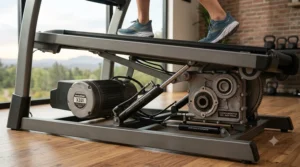
6. NordicTrack X16 — extreme range without the flagship price
The X16 is the value play in NordicTrack’s incline-trainer family: it delivers the eye-watering -6% to 40% range for meaningfully less than its big-screen sibling.
That 46-percentage-point swing from steepest decline to steepest incline is the widest terrain simulation available in a home machine, powered by a 4.25 CHP motor on a 22″ x 60″ deck with a 400-pound capacity and SpringFlex cushioning. The only real difference between it and the X24 is a 16″ screen instead of 24″. On paper this means you get identical training capability — the same brutal climbs, the same -6% descents — and simply forgo the cinematic display, which is easy to live without if you tend to lock into a run rather than watch content.
This is the pick for trail runners, hikers, and terrain junkies who want maximum range but balk at flagship pricing. What the spec sheet won’t tell you, but reviewers note: better cushioning at extreme grades isn’t a luxury — at 40% incline and -6% decline, the forces through your knees climb sharply, and SpringFlex is doing protective work exactly when you need it.
Owner sentiment is strong on the incline/decline range and the improved 400-pound capacity and lifetime motor warranty; the main friction point, as with all NordicTrack, is the iFIT subscription that unlocks full functionality.
Pros:
- ✅ Unmatched -6% to 40% terrain range
- ✅ Same performance as the X24 for less
- ✅ 400 lb capacity, lifetime motor warranty
Cons:
- ❌ iFIT subscription for full features
- ❌ Large, heavy, non-folding footprint
Verdict: the best way to get flagship terrain range without flagship cost — around $3,000 range; prices may vary.
7. NordicTrack X24 — the flagship terrain simulator
If the X16 is the sensible sibling, the X24 is the show-off — same guts, bigger everything, and a 24″ pivoting touchscreen that turns your basement into a trailhead.
It shares the defining -6% to 40% range and 4.25 CHP motor, but adds a swiveling 24″ display (handy for off-treadmill workouts), premium SpringFlex cushioning, a 400-pound capacity, and NordicTrack’s most immersive iFIT experience with streaming apps built in. One honest detail buyers should know: for safety, the machine caps speed at steep decline — around 6 MPH at -6% — so it’s built for controlled downhill conditioning, not flat-out downhill sprinting. That’s a sensible design choice, not a flaw.
This is unapologetically for the enthusiast with budget and space: serious trail runners, hikers training for real mountains, and anyone who wants the largest, most engaging screen on the market. Based on the spec comparison, you’re paying roughly a thousand-dollar premium over the X16 almost entirely for screen size and the pivot mechanism.
Reviewers rave about the immersive display and rock-solid stability even at high inclines; the recurring critiques are its sheer size and weight (plan for white-glove delivery) and, once again, the iFIT subscription.
Pros:
- ✅ Widest terrain range plus 24″ pivoting screen
- ✅ Extremely stable at extreme grades
- ✅ 400 lb capacity, premium cushioning
Cons:
- ❌ Genuinely massive and heavy to place
- ❌ Priciest option, plus iFIT subscription
Verdict: the no-compromise flagship for terrain obsessives — low-to-mid $4,000s range; check current price and financing options.
Understanding the Decline Percentage Range: -3% vs -5% vs -6%
Not all decline is created equal, and the decline percentage range you actually need depends entirely on where you run. The number sounds abstract until you translate it into real hills.
| Max Decline | Terrain It Mimics | Who It Suits |
|---|---|---|
| -1% to -3% | Gentle road descents, rolling routes | Most recreational runners |
| -4% to -5% | Moderate trail and hill descents | Hikers, hill trainers |
| -6% | Steep sustained downhills, race courses | Serious/competitive runners |
Reading that table, the honest takeaway is that -3% (the NordicTrack 1750’s floor) already covers the descents most people encounter on paved routes, so it’s plenty for the average runner. The -5% Sunny steps into legitimate hill territory for walkers, while the -6% Sole and NordicTrack machines are the only ones equipped for the steep, sustained descents that wreck untrained quads. What most buyers overlook is that going deeper than -6% offers rapidly diminishing returns for indoor training — the marginal benefit shrinks while the joint stress climbs. Choose your range by your terrain, not by the biggest number on the box.
Knee Impact Reduction: What Decline Training Actually Does to Your Joints
This is the section where decline treadmills either earn their keep or get misunderstood — because the story on knee impact reduction is genuinely two-sided, and honesty matters here.
First, the counterintuitive part: downhill running is harder on your knees than flat running, not easier. As you descend, your quadriceps contract while lengthening — eccentric loading — to brake each step, and a comprehensive review of uphill and downhill running biomechanics documents how vertical impact peaks and patellofemoral joint stress rise sharply on downhill grades. So a decline treadmill isn’t a magic joint-saver in the moment.
The knee-protective payoff comes from adaptation over time. By exposing your legs to controlled, gradual downhill stress indoors — the “repeated bout effect” — you build eccentric strength and resilience so that real-world descents cause far less damage. It’s the training equivalent of a vaccine: a small controlled dose now prevents a big painful reaction later. That’s the real knee impact reduction benefit — not softer steps today, but tougher, better-prepared knees for tomorrow.
Two practical rules follow. Start shallow (-1% to -3%) and short, adding decline volume slowly over weeks, because the biggest muscle damage hits the unaccustomed. And lean on cushioning: the flex decks on the Sole machines and SpringFlex on the NordicTrack X-series exist precisely to blunt those elevated impact forces while you adapt. Combine gradual exposure with good cushioning and you get the resilience without the wreckage.
How to Choose the Best Treadmill With Decline Function
Finding the best treadmill with decline function comes down to matching six criteria to how you’ll actually train. Here’s the priority order I’d use.
- Decline depth vs your terrain. Match the range to your real routes — -3% for road runners, -6% for steep-course athletes. Don’t overbuy the number.
- Motor power. For running, insist on at least 3.0 CHP; decline is harder on motors, so 4.0+ CHP (like the Sole and NordicTrack picks) buys longevity.
- Cushioning quality. Since decline elevates impact, prioritize a proven flex or spring deck over a basic hard surface.
- Belt size and capacity. A 22″ x 60″ deck and a capacity with 20–30 lb of headroom above your weight keeps you stable during fatigued downhill strides.
- Subscription vs one-time cost. Decide upfront whether you’ll pay monthly (iFIT) or want a subscription-free machine (Sole) — it changes total cost dramatically.
- Folding vs fixed. Fold if space is tight (F85/F89); go fixed for maximum stability (TT8, X-series).
Work down that list in order and the field narrows itself. The mistake is starting with the screen — the most visible feature — instead of the motor and cushioning, which are the parts you’ll feel every single session.
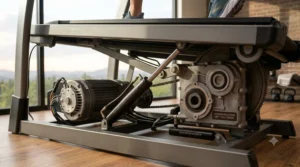
Downhill Decline Treadmill vs Traditional Flat Treadmill
The case for a downhill decline treadmill over a standard flat machine is really a case about completeness of training. A flat treadmill trains half your legs’ job; a decline machine trains both halves.
| Factor | Decline Treadmill | Flat Treadmill |
|---|---|---|
| Muscle training | Concentric + eccentric (braking) | Mostly concentric |
| Race-course realism | High — simulates descents | Low — no downhill prep |
| Quad conditioning | Excellent | Limited |
| Price | Higher | Lower |
| Complexity | More moving parts | Simpler, fewer failures |
Looking at the comparison, the decline machine’s advantage is specificity: it prepares your body for the eccentric braking that flat treadmills never touch, which is why trail runners and hilly-marathoners swap over. But it’s an honest trade — you pay more, and there are more mechanical parts that can eventually need service. For a purely flat road runner on flat routes, a good traditional treadmill is the smarter, cheaper buy. For anyone whose real world tilts downhill, the decline machine closes a training gap that flat belts leave wide open.
Race Day Simulation: Training Your Quads for the Descents
Here’s where decline earns cult status among competitive runners: race day simulation. Some of the most famous courses on Earth are defined by their downhills, and they quietly destroy undertrained legs.
Consider the classic net-downhill marathon profile — a course that lures you with “free speed” early, then bills your quads with interest at mile 20. The problem is eccentric fatigue: research on downhill running consistently shows measurable strength loss, elevated muscle-damage markers, and soreness that can linger for days, with a broad review of graded-running physiology noting that trail runners face notably higher injury rates than road runners, concentrated at the knee. Your cardio can be race-ready while your descending muscles are total rookies.
Decline training fixes that mismatch. If you’re targeting a downhill-heavy course, the transformation is straightforward: in the final 8–10 weeks, add one or two weekly sessions at -3% to -6%, mirroring your goal course’s steepest sustained grades. Start with short blocks — 5 to 10 minutes of decline inside an easy run — and build toward sustained descents at your goal pace. The -6% machines (Sole TT8, F85, and the NordicTrack X-series) let you rehearse the real thing; even the 1750’s -3% is enough for a rolling course.
The payoff is that your race-day descents feel practiced rather than punishing. You’ll hold form when others are quad-locked, and your post-race Monday will involve stairs instead of dreading them.
🏔️ Ready to Bulletproof Your Legs Before Race Day?
Pick the decline machine that matches your goal course and start conditioning those quads now. Click any highlighted model above to check current pricing and availability — future-you, descending strong at mile 22, will thank you.
Practical Setup, Break-In, and Maintenance
Buying the machine is the easy part; the first 30 days decide whether you love it. A little know-how here separates a decade-long workhorse from a squeaky regret.
Setup and placement. Decline machines need clearance both ways — remember that at high incline the deck and your head rise dramatically, so eight-foot ceilings get tight on the NordicTrack X-series. Level the machine on a solid floor and use a treadmill mat to cut vibration and protect flooring. For the heavy fixed models (TT8, X24), pay for white-glove delivery; these are 300-to-445-pound beasts, not solo carries.
Break-in. For the first week, run flat and moderate to let the belt settle, then introduce decline gradually — this protects both the machine’s motor and your unaccustomed quads. Resist the urge to slam it to -6% on day one; that’s how people end up too sore to use their new toy.
Maintenance schedule. Wipe down the deck and console after sweaty sessions. Check belt tension and centering monthly. Lubricate per the manufacturer’s guidance (some Sole decks use lower-maintenance waxed belts; many others need silicone lube every few months). Vacuum under the machine quarterly, since dust is a motor’s quiet enemy.
Common first-month mistakes: skipping lubrication until something squeaks, over-tightening the belt, and neglecting the safety clip. Clip in every time — decline running at speed is exactly when you don’t want a stumble to become a launch.
Real-World Scenarios: Which Decline Treadmill Fits You?
Specs are abstract until you map them onto an actual life. Here are three buyer profiles and the honest match for each.
The apartment marathoner. You’re training for a hilly race, but you live in 800 square feet and can’t dedicate a room to a fixed monster. The Sole F85 is your machine: a true -6% decline for course-specific conditioning, folded against the wall between runs, with no subscription nibbling your budget. It’s the rare “serious runner in a small space” answer.
The budget-first beginner. You’re returning to fitness, walking is your speed, and knees are a concern. The Sunny Health & Fitness Commercial Level Ultimate gives you genuine -5% decline and cushioned, joint-friendly hill work for far less than the running machines — and its 5 MPH ceiling is a non-issue because you’re not sprinting anyway. Spend your savings on good shoes.
The terrain-obsessed enthusiast. You hike real mountains, chase trail races, and want your treadmill to feel like the outdoors. The NordicTrack X16 (or the X24 if the big screen motivates you) delivers -6% to 40% — the widest range made — so no gradient outsmarts your training. Budget for the iFIT subscription and a strong floor.
The pattern across all three: buy for your actual use case, not the aspirational one. The best machine is the one whose strengths line up with the training you’ll genuinely do.
Common Mistakes When Buying a Decline Treadmill
Even good buyers stumble on this niche, because decline adds variables that flat-treadmill shopping doesn’t. Here are the pitfalls worth dodging.
The biggest is chasing the deepest decline you can find. As covered above, -6% is the practical ceiling for indoor training, and -3% already handles most road descents — so don’t pay a premium for a number you’ll rarely use. The second mistake is underestimating the motor: decline strains a motor more than flat running, and a cheap sub-3.0 CHP unit will overheat under sustained grade work, so treat motor power as non-negotiable for runners.
Third, buyers forget the total cost of ownership. A “cheaper” NordicTrack plus years of iFIT can cost more than a pricier subscription-free Sole — run the three-year math before you’re seduced by the sticker. Fourth, people ignore footprint and ceiling height; a 40%-incline machine needs vertical clearance most basements don’t advertise. Finally, many skip cushioning quality, which is exactly backwards — since decline elevates impact, the deck matters more here, not less. Avoid these five and you’ll buy once instead of twice.
What the Reviews Reveal: Aggregated Owner Sentiment
Reading across brands, the pattern in treadmill with negative incline reviews is remarkably consistent — and more useful than any single star rating.
The clearest theme is the Sole-vs-NordicTrack divide. Sole owners consistently celebrate build quality, lifetime warranties, and the absence of subscriptions, describing machines like the TT8 as buy-for-life “tanks”; their recurring complaints are utilitarian software, weak fans, and unremarkable speakers. NordicTrack owners, conversely, love the immersive iFIT experience, the auto-adjusting workouts, and the class-leading incline/decline range — while the near-universal gripe is the ongoing subscription cost that unlocks the machine’s best features. Neither is “better”; they’re different philosophies, and reviews reflect which one each buyer values.
A second cross-brand theme is decline refinement: several testers note that decline can feel slightly less polished than incline on some machines, since it’s the rarer, harder-to-tune direction. And across every model, cushioning earns disproportionate praise from owners doing steep work — reinforcing that the deck, not the screen, is what people actually feel. The honest synthesis: pick your brand by your relationship with subscriptions and software, and weight build quality and cushioning above marketing specs.
Long-Term Cost, Warranty & Value
The sticker price is only the opening bid; the real number is what the machine costs you over five years, and that’s where these models diverge sharply.
| Model | Warranty Highlight | Subscription | Value Note |
|---|---|---|---|
| Sole F85 / F89 / TT8 | Lifetime frame & motor | None required | Best long-run value |
| NordicTrack 1750 / X16 / X24 | Lifetime motor, 10-yr frame | iFIT for full features | Great experience, recurring cost |
| Sunny Commercial Level Ultimate | Standard limited | Free app (optional) | Lowest upfront cost |
The lesson from that table is that “affordable” and “cheap” aren’t the same word. Sole’s subscription-free, lifetime-warranty structure means the price you pay is close to the price you’re done paying — strong long-term value for set-it-and-forget-it owners. NordicTrack delivers a richer connected experience, but iFIT at roughly $39/month adds well over a thousand dollars across three years, so its true cost is higher than it looks. The Sunny wins on upfront affordability with an optional free app. Match the payment structure to your temperament: if recurring fees annoy you, buy Sole; if guided immersion keeps you running, NordicTrack’s subscription may be money well spent. Note that many of these machines are HSA/FSA eligible, which can soften the blow — check current eligibility.
Frequently Asked Questions
❓ What is a negative incline treadmill?
❓ Is downhill running on a decline treadmill bad for your knees?
❓ What decline percentage range do I actually need?
❓ Which is the best treadmill with decline function for the money?
❓ Can a decline treadmill help with race day simulation?
The Bottom Line
Decline is the half of running most machines ignore, and closing that gap is what a good negative incline treadmill quietly does for your legs. The right pick isn’t about grabbing the steepest number on the box — it’s about matching decline depth, motor power, and cushioning to the way you actually train.
If you run and want one honest recommendation, the NordicTrack Commercial 1750 is the value sweet spot, while the Sole F85 wins for anyone short on space or allergic to subscriptions. Walkers and budget-first buyers get real -5% decline from the Sunny Health & Fitness Commercial Level Ultimate, and terrain obsessives who want the widest -6% to 40% range should climb aboard the NordicTrack X16 or flagship X24. The Sole TT8 remains the buy-it-for-life tank, and the Sole F89 is there when a bigger screen genuinely matters to you.
Whichever you choose, the winning strategy is the same: start shallow, progress your decline gradually, and let cushioning and consistency do the rest. Your quads adapt, your descents get stronger, and race-day soreness stops being a foregone conclusion. Train the downhill now, and the hills stop being the enemy.
🚀 Ready to Train the Half of Running You’ve Been Skipping?
Pick the decline treadmill that fits your terrain, budget, and space, then click the highlighted model to check current pricing and availability. The steep stuff won’t train itself — start conditioning those knees today! 💪
Recommended for You
- Treadmill for Downhill Running Training: 7 Real Picks (2026)
- Manual Incline Treadmill: 7 Top Picks Reviewed for 2026
- Steep Incline Treadmill: 7 Best Picks for Hill Training in 2026
Disclaimer: This article contains affiliate links. As an Amazon Associate, I earn from qualifying purchases. If you purchase products through these links, we may earn a small commission at no additional cost to you. Product specifications and availability are accurate to the best of our research at the time of writing; prices change frequently, so always check current pricing before buying. This content is for informational purposes and is not medical advice — consult a professional before beginning a new training program.
✨ Found this helpful? Share it with a running friend! 💬🤗
