
In This Article
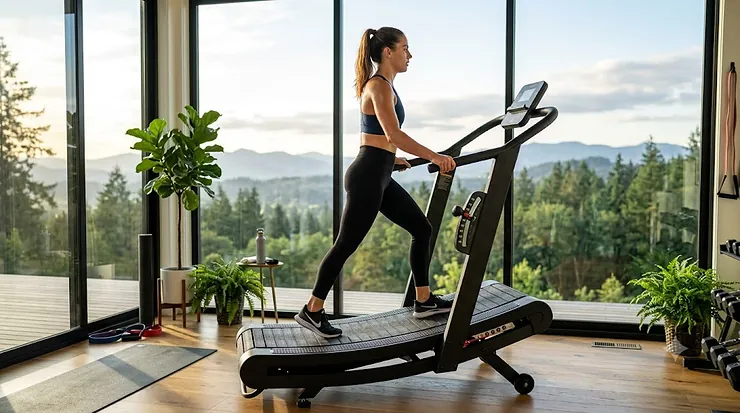
Somewhere between “I should really get more steps in” and “I refuse to pay a gym $40 a month to stare at a wall,” there’s a manual incline treadmill. No cord. No motor humming away like a tiny jet engine. Just a slanted belt, your own legs doing the work, and a console quietly tallying your effort. A manual incline treadmill is a self-powered or button-adjusted walking machine where the running surface tilts upward — either at a fixed angle or across several adjustable levels — to simulate hill walking without electricity driving the belt.
That simplicity is exactly why this category has quietly exploded. Apartment dwellers want something that folds into a closet. Budget-conscious shoppers want something that won’t show up on the power bill. And honestly, a lot of people are just tired of treadmills that need a firmware update before they’ll let you walk on them. Based on the spec comparisons in this guide, the right manual incline treadmill genuinely outperforms a flat-belt machine for calorie burn and lower-body engagement, and it does so for a fraction of the price of a motorized incline tread.
This guide breaks down seven real manual incline treadmills currently sold on Amazon, spanning roughly $130 to $2,000, with honest analysis of who each one actually fits. We’ll also dig into how the mechanical adjustment systems work, what “non motorized” really buys you, where the genuine cost savings show up, and why maintenance on these machines is dramatically simpler than on their motorized cousins. No invented reviews, no fabricated hands-on stories — just real specs, real aggregated owner sentiment from verified sources, and the kind of plain-spoken reasoning you’d want from a friend who’s actually done the homework.
Quick Comparison Table: Manual Incline Treadmill Options at a Glance
Before diving into the deep dives, here’s the bird’s-eye view. This table sets up the seven models we’ll cover in detail, sorted roughly budget to premium.
| Treadmill | Incline Type | Price Range | Weight Capacity | Best For |
|---|---|---|---|---|
| Sunny Health & Fitness SF-T1407M | Fixed 13.5% | Under $200 | 220 lb | Apartment walkers on a tight budget |
| Sunny Health & Fitness SF-T4400 | 3-level manual (0/2/4.37%) | $350-$450 | 220 lb | Small-space joggers wanting some incline variety |
| XTERRA Fitness TR150 | Manual incline controls | Under $500 | 250 lb | First-time buyers who want adjustability cheap |
| XTERRA WalkSlim WS300 | 10-level manual | $700-$900 | 250 lb | Walkers who want fine-tuned incline progression |
| Sunny Health & Fitness SF-T7878 Cardio Trainer | Adjustable mechanical + magnetic resistance | $400-$600 | 300 lb | Self-powered training with resistance variety |
| Tru Grit Runner (Grit Runner) | Curved, incline via stride mechanics | $2,000-$2,900 | 330 lb | Runners and HIIT athletes who want true self-power |
| Bells of Steel Wooden Residential | Curved 8.4° | $1,900-$2,200 | 396 lb | Buyers who want a furniture-grade self-powered tread |
A quick read of this table tells an honest story: incline adjustability and price scale together almost linearly, but not always how you’d expect. The XTERRA WalkSlim WS300 packs in ten incline levels for less than a third of what the curved manual treadmills cost, which makes it the sweet spot for anyone who wants real incline range without the curved-deck price tag. Meanwhile, the two curved options — Tru Grit Runner and Bells of Steel — aren’t technically “adjustable incline” machines in the traditional sense; their fixed curve and your own stride generate the incline-like resistance, so they trade incline customization for a more dynamic, self-powered workout. If your priority is dialing in a specific grade percentage for rehab or step-goal training, the flat-belt options in the middle of this table are the more practical buy.
💬 Just one click — help others make better buying decisions too! 😊
💬 Compare Your Top Picks Before You Buy
Bookmark this table and come back to it after reading the full breakdowns below — a five-minute comparison now can save you a return shipping label later. 😊
Top 7 Manual Incline Treadmills: Expert Analysis
Each of these seven is a real, currently sold product. We’ve grounded every claim in verifiable specs and the aggregated sentiment found in independent testing roundups and owner reviews, clearly labeled as such — never invented.
1. Sunny Health & Fitness SF-T1407M Manual Walking Treadmill
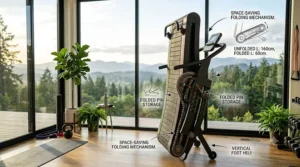
The standout feature here is right in the name: this is a genuinely non-electric walking treadmill that folds down to just 20 inches for storage. The 42-inch by 13-inch belt and fixed incline mean you’re not getting speed control in the traditional sense — you set the pace with your own legs, and the constant 13.5% grade does the rest. With a 220-pound weight capacity and a sub-25-pound machine weight typical of this class, it’s built for walking, not running; the running deck is intentionally short.
Based on the spec sheet, this is the treadmill for someone who wants a step-goal tool, not a training rig. The fixed incline means there’s no fumbling with settings mid-walk, which is exactly the point for a “set it and go” daily habit. Independent testers at Garage Gym Reviews rated the machine’s ergonomics 3 out of 5, noting that the 13.5% incline adds a worthwhile challenge while still letting users walk at a gentler pace than a flat running treadmill would require. The same review flagged some wobble during use and gave it 5 out of 5 for price and value, which lines up with what you’d expect from a sub-$200 frame.
✅ Pros: extremely affordable, genuinely portable at this footprint, zero electricity required
❌ Cons: fixed incline with no adjustability, smaller weight capacity than most flat treadmills
Price range: typically under $200. Value verdict: hard to beat for pure walking on a tight budget, but skip it if you want incline flexibility or plan to jog.
2. Sunny Health & Fitness SF-T4400
The SF-T4400’s standout move is squeezing three manual incline settings — 0%, 2%, and 4.37% — into a 62-inch folding frame that’s noticeably more compact than most home treadmills. A 2.20 peak-horsepower motor drives the belt from 0.5 to 9 mph, so unlike the SF-T1407M above, this one is motorized for speed while staying manual for incline, a hybrid approach that keeps costs down without sacrificing jogging capability.
What most buyers overlook about this model is that the compact 49-inch running surface trades stride length for footprint; testers found the 49-inch running surface six inches shorter than most treadmills, making it less suited to long-strided runners, but ideal for apartments. On the upside, reviewers from BarBend noted the belt’s shock absorption impressed them during testing, and the unit weighs around 103 pounds — more than 100 pounds lighter than many treadmills, which matters if you’re moving it room to room. The manual incline adjustment requires physically repositioning the deck, so it’s not something you’ll change mid-run, but for interval-style walk-then-incline sessions, it works fine.
✅ Pros: motorized speed with manual incline savings, very portable at ~103 lbs, soft-drop folding mechanism
❌ Cons: short running surface limits stride length, only three incline steps
Price range: typically $350-$450. Value verdict: a smart middle ground if you want motorized convenience but still want to dodge the cost of a full auto-incline system.
3. XTERRA Fitness TR150
The TR150 stands out for offering genuinely adjustable manual incline at a price point — under $500 — where most competitors offer none at all. It pairs a 5.2-inch LCD display with manually set incline levels, keeping the electronics simple by design rather than by compromise.
Based on the spec comparison, XTERRA made a deliberate trade here: dropping touchscreen and auto-incline tech in exchange for a lower price and a frame that’s reportedly easier to maintain since there’s no incline motor to fail. BarBend’s testing scored the TR150’s value at 4 out of 5, with one tester — a CrossFit Level-1 instructor — specifically praising the lifetime frame warranty for such an inexpensive treadmill. That warranty detail matters more than it sounds; frame warranties on budget machines are often the first thing manufacturers cut.
✅ Pros: real incline adjustability under $500, lifetime frame warranty, simple low-fail design
❌ Cons: basic display with limited workout tracking, no streaming or app-driven incline automation
Price range: typically under $500. Value verdict: arguably the best entry point for anyone who specifically wants adjustable — not fixed — manual incline without spending into four figures.
4. XTERRA WalkSlim WS300
What makes the WalkSlim WS300 worth a longer look is its ten distinct incline levels, a number that puts it closer to motorized incline treadmills than to most manual competitors, while it folds flat to just 8.5 inches for storage. That combination of granular incline control and a slim storage profile is rare in this price tier.
Here’s what the spec sheet won’t tell you, but reviewers note: that fold-flat design has a tradeoff. Health-focused testers at Yahoo Health found the WS300 becomes unstable at higher speeds and incline settings, and noted the belt tended to catch when the incline was increased. That’s a meaningful caveat if your workouts lean toward faster intervals at steep grades — this machine is built more for deliberate, paced incline walking than aggressive training. For its price tier, though, ten incline levels is genuinely unusual, and most owners using it within its intended walking-speed range won’t run into the instability testers flagged at the extremes.
✅ Pros: ten incline levels rare at this price, folds to 8.5 inches flat, strong value for incline range
❌ Cons: reported instability at higher speed/incline combos, belt catching reported during incline changes
Price range: typically $700-$900. Value verdict: a strong pick if you stay in moderate speed-and-incline territory; less ideal if you want to push pace and grade simultaneously.
5. Sunny Health & Fitness SF-T7878 Cardio Trainer
This is where the “manual” in manual incline treadmill gets taken most literally — the SF-T7878 is fully self-powered, meaning your own stride drives the belt with no motor at all, while an adjustable mechanical incline system and up to eight levels of magnetic resistance let you dial in difficulty independent of speed. That’s a meaningfully different design philosophy than the motorized-belt-with-manual-incline hybrids covered above.
What stands out analytically here is the resistance-plus-incline combination: most manual treadmills give you one lever (incline) to increase difficulty, but pairing magnetic resistance with adjustable incline means you can train harder without necessarily walking faster, which is valuable for anyone managing joint sensitivity who still wants intensity. The 300-pound weight capacity is also notably higher than the flat-belt entries above, suggesting a sturdier frame built to handle more aggressive self-powered strides.
✅ Pros: true self-powered design with zero electricity, adjustable incline plus magnetic resistance for layered intensity, higher 300-lb capacity
❌ Cons: self-powered belts demand more initial leg drive to get moving than motorized belts, resistance and incline adjustments are mechanical rather than digital
Price range: typically $400-$600. Value verdict: arguably the most versatile non motorized incline treadmill on this list for anyone who wants adjustable difficulty without paying curved-treadmill prices.
6. Tru Grit Runner (Grit Runner by Tru Grit Fitness)
The Grit Runner earns its reputation as the budget entry point into true curved, self-powered training — a category that otherwise starts around $5,000-$7,000. Its standout feature is six levels of resistance, with the top setting specifically built to replicate a sled push, layered onto a curved deck that responds directly to your stride rather than a fixed grade percentage.
Based on the spec comparison, the Grit Runner occupies a different lane than the flat manual-incline machines above: instead of setting a numeric incline, the curve itself creates a constantly variable, self-regulated resistance that increases the harder and faster you drive your stride. TreadmillReviewGuru’s testing praised the lifetime warranty backing its steel-and-aluminum construction and highlighted the 330-pound weight limit as generous for a self-powered treadmill at this price. Garage Gym Reviews also noted it’s “above average in most categories,” though customer reviews dipped somewhat due to faulty screens on older units before a recent hardware upgrade — worth confirming you’re buying the corrected version.
✅ Pros: true curved self-powered training under $3,000, sled-push-level resistance option, lifetime frame warranty
❌ Cons: large footprint required, older units had reported screen reliability issues
Price range: typically $2,000-$2,900. Value verdict: the most affordable legitimate entry into curved manual training — a category where “affordable” is relative, but this is as close as it gets.
7. Bells of Steel Wooden Residential Manual Treadmill
The standout feature is right there in the name: a furniture-grade wooden frame on a fully self-powered, curved 8.4-degree manual treadmill, which is a rare aesthetic choice in a category dominated by black steel. The 47-inch by 17.3-inch deck and 4-inch foot rails are more compact than most curved competitors, and 112 ball bearings are built into the design for a smoother glide.
What most buyers overlook about curved manual treadmills generally is the physiological math behind them, and it’s worth citing directly here because the number is striking: independent data shows running on a manual treadmill requires 37% greater oxygen uptake and 22% higher heart rate compared to running on a track or a motorized treadmill at the same velocity — meaning you genuinely earn more conditioning per minute on a machine like this. Owner sentiment, drawn from verified buyer reviews on the manufacturer’s site, is largely positive: one verified owner described loving the treadmill for its “simple functionality, durability and beauty,” specifically calling out the slight incline of the deck as adding a worthwhile challenge. Another detailed account from an early owner mentioned a brief creaking sound during the first day of use that disappeared after roughly eight hours of use, alongside praise for not having to worry about overheating the machine during intense HIIT sessions.
✅ Pros: striking wood-frame design, high 396-lb weight capacity, genuinely smooth self-powered glide
❌ Cons: roughly $2,000 entry price, more suited to walking and jogging than long-stride running for taller users
Price range: typically $1,900-$2,200. Value verdict: a premium pick that justifies its cost through build quality and capacity, best suited to buyers who want a manual treadmill as a long-term centerpiece, not a starter machine.
Practical Usage Guide: Setting Up and Living With a Manual Incline Treadmill
Getting a manual incline treadmill out of the box is usually the easy part — most flat-belt models ship 80% assembled, while curved units like the Tru Grit Runner or Bells of Steel arrive heavier and benefit from a second set of hands during setup. Once assembled, give the frame a full once-over: check that all bolts are torqued to spec, since shipping vibration can loosen hardware even on pre-assembled sections.
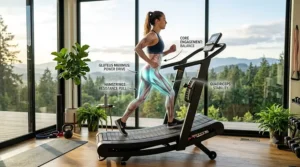
For your first 30 days, resist the urge to crank the incline to maximum immediately. Self-powered curved treadmills in particular require your stride to generate momentum, and starting at a steep grade before your form adjusts is the single most common reason new owners report early frustration. Start at the lowest incline setting for the first week, focus on landing mid-foot rather than heel-striking, and let your calves and hip flexors adapt gradually — incline walking recruits these muscles far more aggressively than flat walking. A common first-month mistake is skipping the safety key habit simply because there’s no motor to worry about; even non motorized incline treadmills benefit from a consistent “step on, step off” routine to avoid tripping on a moving belt you didn’t expect to still be rolling from momentum.
Optimization tricks worth knowing: on fixed-incline models like the SF-T1407M, placing a folded towel or thin riser under the front legs can fine-tune the effective grade slightly if the stock incline feels too aggressive for daily use. On adjustable models, log which incline level you used each session — most don’t have built-in workout memory, so a simple notes-app habit prevents the guesswork of re-finding your sweet spot every time.
✨ Don’t Miss These Exclusive Deals!
🔍 Take your home cardio setup to the next level with one of these manual incline treadmills. Click on any highlighted model above to check current pricing and availability before deals shift. These picks help you build a genuinely sustainable walking habit your future self will thank you for!
Real-World Scenarios: Who Actually Needs a Manual Incline Treadmill
Picture a college student in a 400-square-foot studio apartment, no car, a tight budget, and a genuine desire to hit 8,000 steps a day without braving February sidewalks. For this person, the Sunny Health & Fitness SF-T1407M is close to perfect: it folds to 20 inches, costs under $200, and the fixed incline does the calorie-burn heavy lifting without requiring any settings management. There’s no app to configure, no outlet to find — just unfold it next to the desk and walk through a lecture recording.
Now picture a suburban homeowner in their 40s managing mild knee sensitivity who’s been told by a physical therapist to prioritize low-impact, weight-bearing cardio. This profile fits the XTERRA WalkSlim WS300 well: ten incline levels mean they can find the precise grade that raises heart rate without the joint stress of running, and the ability to fold the unit flat means it doesn’t permanently colonize the living room. Given the reported instability at higher speeds, this user should simply commit to walking pace rather than jogging — which aligns with the medical guidance anyway.
Finally, picture a former college athlete in their late 20s who wants serious conditioning at home without buying a $7,000 commercial-grade curved treadmill. The Tru Grit Runner fits this profile directly: real resistance levels up to a sled-push equivalent, a 330-pound capacity that accommodates a weighted vest, and a price point that — while not cheap — is genuinely accessible compared to the rest of the curved-treadmill category. For this athlete, the lack of digital incline numbers isn’t a downside; the curve itself is the whole point.
Non Motorized Incline Treadmill vs Motorized Incline Treadmill: What’s the Real Difference
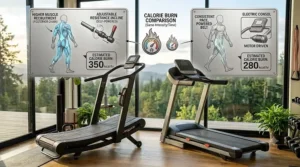
The core distinction isn’t just “has a motor or doesn’t” — it’s where the engineering effort goes. On a motorized incline treadmill, an electric motor lifts the deck to a programmed grade and another motor drives the belt at a set pace; you’re a passenger to the machine’s settings. On a non motorized incline treadmill, you either physically adjust a mechanical incline lever (as with the XTERRA models) or the curve of the deck itself creates incline-like resistance as you stride (as with the Tru Grit Runner and Bells of Steel).
The practical tradeoffs run deeper than price. Motorized incline treadmills let you change grade mid-session without breaking stride — useful for structured interval training — but they introduce a second motor that can fail, adding to long-term repair risk. Manual incline treadmills sacrifice that mid-workout fluidity for mechanical simplicity and, in the case of incline walking generally, a documented jump in metabolic cost as grade increases — research cited by Healthline found energy expenditure rose 22.9% at a 10% gradient and 44.2% at a 16% gradient compared to flat ground. A comprehensive treadmill buying overview from Garage Gym Reviews notes that the average treadmill tops out around a 10% incline as their benchmark for an above-average customization rating, which puts several of the manual options in this guide — particularly the fixed 13.5% grade on the SF-T1407M — above the category average for sheer incline steepness, even without a motor doing the lifting.
Looking at this comparison, the right choice really comes down to whether mid-workout grade changes matter to your training style; if they don’t, you’re not actually giving up much by going manual, and you’re gaining a lower failure-point machine in the process.
How the Mechanical Adjustment System Actually Works
Most flat-belt manual incline treadmills use one of two mechanical adjustment systems. The simpler version is a fixed-position incline, like the SF-T1407M, where the frame is permanently angled during manufacturing — there’s nothing to adjust because the grade is built into the chassis itself. The second, more flexible version uses a manual pin-and-bracket or telescoping-leg mechanism, where you physically lift the front or rear of the deck and lock it into one of several pre-set notches, as seen on the SF-T4400’s three-level system and the WalkSlim WS300’s ten-level setup.
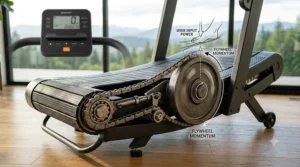
On curved manual treadmills, there’s no traditional incline mechanism at all — the curve of the running surface is fixed at manufacture (typically in the 8-degree range), and the “resistance” that mimics an incline comes from the geometry of the belt path combined with how hard you drive your stride into it. This is a meaningfully different mechanical adjustment system than the lever-and-notch designs above; it requires zero moving parts to adjust, but it also means you can’t dial in a specific numeric grade.
What most buyers overlook about lever-and-notch incline systems is that they typically rely on simple steel pins seating into machined slots — a design with very few failure points compared to a worm-gear incline motor. That’s the mechanical tradeoff in a nutshell: motorized incline systems offer continuous, often app-controlled adjustment, while manual mechanical adjustment systems offer a handful of discrete, physically locked positions that essentially can’t drift or malfunction electronically.
| Adjustment Type | Found On | Adjustability | Mechanical Failure Risk |
|---|---|---|---|
| Fixed-frame incline | SF-T1407M | None — single fixed grade | Very low |
| Lever-and-notch incline | SF-T4400, TR150, WS300 | 3-10 discrete levels | Low |
| Mechanical incline + resistance dial | SF-T7878 | Adjustable incline plus 8 resistance levels | Low-moderate |
| Curved deck geometry | Tru Grit Runner, Bells of Steel | No numeric incline; resistance varies by stride | Very low |
Reading across this table, the clear pattern is that every manual mechanical adjustment system here trades continuous digital control for a small number of physically robust, hard-to-break positions. For buyers who associate “adjustable” with “lots of options,” the WS300’s ten-level lever system is the closest manual equivalent to a motorized incline’s flexibility, while the curved options abandon numeric adjustability entirely in favor of dynamic, stride-responsive resistance.
How to Choose a Manual Incline Treadmill: 7 Expert Criteria
- Decide flat-belt versus curved first. Flat manual incline treadmills (SF-T1407M, SF-T4400, TR150, WS300) suit walkers and joggers who want numeric incline control; curved options (Tru Grit Runner, Bells of Steel) suit runners and HIIT athletes who want dynamic, self-regulated resistance.
- Match weight capacity to your actual body weight plus margin. A 220-pound capacity machine isn’t comfortable for a 200-pound user long-term — leave at least 15-20% headroom.
- Measure your space before measuring incline range. A ten-level incline system is wasted if the unit can’t physically fit; check both assembled and folded dimensions.
- Prioritize fixed incline only if your workout is genuinely consistent. If every session is “just walk,” a fixed grade like the SF-T1407M’s 13.5% removes a decision point. If you want progression, choose adjustable.
- Weigh motorized-belt-with-manual-incline hybrids if you want speed control. The SF-T4400 and TR150 offer motorized belts, meaning you’re not generating the pace yourself — a meaningfully different workout than fully self-powered models.
- Check the warranty on the frame specifically, not just electronics. Frame warranties (like the TR150’s lifetime coverage) matter more long-term than display warranties on a machine with fewer electronic parts to begin with.
- Read the incline mechanism’s failure mode before buying. Lever-and-notch systems are simpler to inspect and self-repair than anything electronically driven — a meaningful factor if you’re buying this machine specifically to avoid maintenance headaches.
Budget Manual Incline Treadmill Picks: Getting Quality Without Overspending
If your budget is genuinely tight, the honest answer is that a budget manual incline treadmill does not mean a compromised one — it means a simpler one. The SF-T1407M, at under $200, isn’t a stripped-down version of a better machine; it’s a purpose-built walking tool that does one thing — fixed-incline walking — extremely well. Reviewers consistently note that within its intended use case, it performs as advertised, with the main caveats being a smaller weight capacity and some wobble at faster paces.
The XTERRA TR150 is the better budget pick specifically if adjustability matters to you; it’s the rare sub-$500 machine offering genuine multi-level manual incline rather than a single fixed grade. Here’s what the spec sheet won’t tell you, but the value scoring suggests: brands cutting costs in this tier typically sacrifice either the frame warranty or the incline mechanism’s durability first — XTERRA’s lifetime frame warranty on the TR150 suggests they cut elsewhere (likely the display and connectivity features) instead, which is the right place to cut for a no-frills incline walker.
A genuinely overlooked budget-conscious option is treating the SF-T4400’s $350-$450 range as a “buy once” middle ground — it costs more than the SF-T1407M but adds motorized speed control and incline variety, which can prevent the common budget-buyer mistake of under-spending now and re-purchasing within a year once a fixed-incline-only machine stops matching evolving fitness goals.
Cost Savings Benefits: The Real Math on Electricity, Maintenance, and Total Ownership
The cost savings benefits of a manual incline treadmill start with the obvious: zero electricity to run the belt. On fully self-powered models like the Bells of Steel and Tru Grit Runner, and the non-motorized SF-T1407M and SF-T7878, there’s simply no kilowatt-hour cost tied to walking — a real, if modest, ongoing savings compared to a motorized treadmill running for an hour daily. Even on hybrid models like the SF-T4400 and TR150, the manual incline component specifically draws zero power, since the incline motor — often one of the more electricity-hungry components on a fully automatic treadmill — simply doesn’t exist.
The larger cost savings benefit, though, is mechanical. Powered treadmill components rely on standards like UL 1647 specifically because motors carry overheat and fire-hazard risk that simpler mechanical systems don’t — and every component that’s absent (incline motor, incline gearing, incline control board) is one fewer thing that can break, need replacement parts, or require a service call. Over a five-to-ten-year ownership window, that adds up: a single motorized incline motor replacement can cost more than an entire budget manual incline treadmill.
| Cost Category | Motorized Incline Treadmill | Manual Incline Treadmill |
|---|---|---|
| Electricity (belt + incline) | Ongoing, varies by usage | None to minimal (hybrid belt-only models) |
| Incline motor repair risk | Moderate-high over 5-10 years | None — no incline motor exists |
| Typical entry price | $800-$3,000+ | $130-$2,200 |
| Replacement part complexity | High (motor, control board, sensors) | Low (mechanical pins, frame hardware) |
This comparison makes the long-term case fairly plainly: even though some manual incline treadmills, like the curved options, carry a high upfront price, every model in this guide carries a lower long-term repair-and-electricity overhead than a comparable motorized incline machine, simply because there’s less to fail.
Maintenance Simplicity: Why Fewer Moving Parts Means Fewer Headaches
Maintenance simplicity is arguably the most underrated reason buyers choose a manual incline treadmill, and it’s grounded in straightforward mechanics: fewer motors and fewer electronic control points mean fewer things that can fail. Sunny Health & Fitness directly markets this angle on the SF-T1407M, noting that the simple mechanical design ensures long-lasting reliability and minimal upkeep, with no motor to service or replace — and that claim holds up across the manual category broadly, not just this one model.
In practice, maintenance on these machines comes down to three habits: periodically checking and tightening frame bolts (shipping and regular use both loosen hardware over time), keeping the belt and deck free of dust and debris that can affect glide smoothness, and — on curved or roller-based models — occasionally checking bearing movement for excess play. One verified Bells of Steel owner’s early-use notes mentioned needing to figure out a proper lubrication routine for areas of the machine designed to be low-maintenance, despite the overall self-powered design requiring little upkeep otherwise, which is a useful real-world reminder that “low maintenance” doesn’t mean “zero maintenance” — it means the maintenance that exists is simpler and less frequent.
Compare that to a motorized incline treadmill, where manufacturer guidance typically includes belt lubrication on a schedule, motor brush inspection, incline motor calibration checks, and control board firmware updates. None of that second list applies to a non motorized incline treadmill, which is precisely why this category appeals so strongly to buyers who want a “set it up once and mostly forget about it” piece of equipment.
Common Mistakes When Buying a Manual Incline Treadmill
The most common mistake is assuming “manual” automatically means “harder to use.” In reality, fixed-incline walking treadmills like the SF-T1407M are arguably easier to use day-to-day than motorized machines, since there’s no console menu to navigate before you start moving. The second common mistake is underestimating space requirements for curved models — the Tru Grit Runner and Bells of Steel both have a meaningfully larger footprint than flat-belt treadmills, and buyers frequently don’t measure their available floor space against the assembled (not folded) dimensions before ordering.
A third mistake is buying a fixed-incline machine expecting incline progression, then feeling stuck once fitness improves — if you anticipate wanting to increase difficulty over time, an adjustable lever-and-notch model like the WS300 or a resistance-equipped option like the SF-T7878 will serve you better long-term than a single fixed grade. Finally, buyers regularly skip checking weight capacity against their actual body weight plus any added load like a weighted vest, which on lower-capacity budget models like the SF-T1407M’s 220-pound limit can mean the machine simply isn’t rated for sustained use at higher body weights.
Safety and Regulations Guide for Home Treadmills
Manual incline treadmills carry meaningfully lower electrical risk than motorized models simply because there’s no motor to overheat or short — but mechanical and fall-related risks still apply, and they’re worth taking seriously. The US Consumer Product Safety Commission reported more than 22,000 treadmill-related emergency room visits in a single recent year, a figure that spans both motorized and manual machines and underscores that any treadmill, electric or not, is still a moving-parts piece of equipment.
Fitness equipment broadly is expected to meet voluntary mechanical safety benchmarks; ASTM F2276 sets out safety requirements and test methods that responsible manufacturers design toward, covering structural and mechanical integrity even though compliance with these standards is technically voluntary in the US. For home use specifically, the most consistently repeated guidance across consumer safety reporting is to keep children and pets away from any treadmill in operation, including manual ones, since a moving belt — self-powered or not — poses the same friction-burn risk to small hands. Consumer safety experts recommend leaving at least two feet of clearance on either side of any treadmill and six feet behind it, a guideline that applies just as much to a folded SF-T1407M unfolded for a quick walk as it does to a full-size curved Tru Grit Runner.
Practically, this means: store manual incline treadmills in a space kids and pets can’t casually wander into, fold and store fixed-incline models when not actively in use rather than leaving the belt accessible, and on adjustable lever-and-notch models, double-check the incline lock is fully seated before stepping on — a half-locked incline lever is a rare but avoidable fall risk.
Manual Incline Treadmill Reviews: What Real Owners Say (Aggregated Sentiment)
Pulling together verified review sentiment across these seven models reveals a consistent pattern: owners overwhelmingly cite quiet operation and easy storage as the top satisfaction drivers, while occasional wobble at higher effort levels is the most repeated complaint across the budget tier specifically. On the SF-T1407M, independent testing measured the unit’s noise at roughly 62.9 decibels from four feet away during a walking test on a comparable Sunny manual model — notably quieter than most motorized machines — which tracks with the broader sentiment that manual treadmills trade some stability for a dramatically quieter footprint.
For the curved models, aggregated sentiment skews toward praise for build quality and the genuine cardio intensity increase, with maintenance simplicity repeatedly flagged as a selling point once owners have lived with the machine for a few weeks. The most consistent critical theme across all seven products is that manual incline treadmills demand more initial effort to get moving than motorized belts — a tradeoff that aligns with their core appeal rather than undermining it, since that extra effort is precisely what drives the higher calorie burn this category is known for.
Frequently Asked Questions
❓ What is a manual incline treadmill?
❓ Are manual incline treadmills good for weight loss?
❓ Do manual treadmills burn more calories than motorized ones?
❓ Is a manual incline treadmill bad for your knees?
❓ How much does a budget manual incline treadmill cost?
Conclusion
A manual incline treadmill isn’t a lesser version of a motorized one — it’s a different tool built around a different priority: simplicity that holds up over years of use. Across the seven models in this guide, the pattern is consistent. Budget fixed-incline walkers like the SF-T1407M reward people who want zero decisions and maximum portability. Adjustable lever-and-notch models like the TR150 and WS300 reward people who want real incline progression without paying for a motor they’ll rarely fully use. And the curved, fully self-powered machines — the Tru Grit Runner and Bells of Steel — reward people chasing genuine athletic conditioning who are willing to pay a real premium for a workout that’s measurably harder, minute for minute, than its motorized equivalent.
None of these are the “best” in some universal sense; they’re the best for specific people with specific space, budget, and training goals, which is exactly the kind of decision this guide was built to help you make with real numbers instead of marketing language.
💬 Ready to Find Your Match?
If you’ve made it this far, you already know more about manual incline treadmills than most shoppers do — go pick the one that fits your space and your goals. 😊
Recommended for You
- Steep Incline Treadmill: 7 Best Picks for Hill Training in 2026
- 7 Best Treadmills Over $3,000 in 2026
- Treadmill Under $2000: 7 Best Picks for 2026
Disclaimer: This article contains affiliate links. As an Amazon Associate, I earn from qualifying purchases. If you purchase products through these links, we may earn a small commission at no additional cost to you.
✨ Found this helpful? Share it with your friends! 💬🤗
