In This Article
A good treadmill under $1000 is one that doesn’t ask you to choose between “cheap” and “good” — it gives you a motor strong enough for real workouts (2.5 CHP or higher), a belt long enough to actually run on (55 inches or more), and a frame that won’t wobble the moment you hit 6 miles per hour. In 2026, that combination exists at this price point. You just have to know which models earn it.
Here’s the thing nobody tells you when you start shopping: most of the treadmill industry wants you to believe quality starts at $1,500. I’ve spent the better part of a month elbow-deep in spec sheets, customer review threads, and a few too many YouTube unboxing videos to find out if that’s actually true. Spoiler — it’s not, not anymore. Inflation hit gym memberships just as hard as everything else, and with home fitness brands fighting harder than ever for budget-conscious buyers, the sub-$1,000 category has quietly become one of the most competitive corners of the entire treadmill market.
This guide breaks down seven real, currently available machines — from a $400 no-frills walker to treadmills nudging right up against the four-figure ceiling — so you can stop scrolling through eleven browser tabs and just pick one that fits your life. The treadmill itself has a surprisingly long history (it began as a 19th-century device used in prisons, of all things, before evolving into the home cardio staple it is today — Wikipedia has the full backstory if you’re curious), but what matters for you right now is which 2026 model under $1000 will actually get used instead of becoming an expensive coat rack.
Quick Comparison: 7 Best Treadmills Under $1000 at a Glance
| Treadmill | Motor | Top Speed / Incline | Best For | Price Range |
|---|---|---|---|---|
| Horizon 7.0 AT | 3.0 CHP | 12 mph / 15% | Serious runners | High-$900s to ~$1,099 |
| Bowflex T6 | 3.0 CHP | 12 mph / 15% | App-flexible training | $899–$999 |
| NordicTrack T 6.5 S | 2.6 CHP | 10 mph / 10% | Future iFit users | $799–$899 |
| Horizon T101 | 2.5 CHP | 10 mph / 10% | Beginners & walkers | $649–$699 |
| Schwinn 810 | 2.6 CHP | 10 mph / 10% | Casual jogging | $799–$899 |
| XTERRA TR150 | 2.25 HP | 10 mph / manual 3-level | Tight budgets | $350–$450 range |
| WalkingPad X21 | Brushless | 7.5 mph / none | Apartments & under-desk | $799–$899 |
Looking at this lineup, the spread tells its own story: motor power and incline range climb steadily as price climbs, but the jump isn’t linear. The Horizon T101 and Schwinn 810 sit in similar price territory yet target very different users — one’s built for first-time walkers, the other can handle light jogging thanks to a slightly punchier motor. Meanwhile the XTERRA TR150 undercuts everything else here by hundreds of dollars, which makes sense once you see its smaller belt and lower weight capacity. If you’re brand-new to home cardio and unsure how much machine you actually need, that price tier divide is the first thing to pay attention to.
✨ Don’t Miss These Exclusive Deals!
💬 Just one click — help others make better buying decisions too! 😊
Take a closer look at any of these seven picks below to check current pricing and availability before they sell out of stock.
Top 7 Treadmills Under $1000: Expert Analysis
I want to be upfront about something: every treadmill on this list is a real, purchasable product, not a press-release fantasy. I leaned on verified specs, owner feedback, and manufacturer documentation rather than marketing copy, because at this price point, the gap between “what the box says” and “what actually happens in your living room” is where buyers get burned.
| Model | Belt Size | Weight Capacity | Warranty Highlight | Rating Signal |
|---|---|---|---|---|
| Horizon 7.0 AT | 20″ x 60″ | 325 lbs | Lifetime frame & motor | Consistently top-rated for sub-$1000 runners |
| Bowflex T6 | 20″ x 60″ | 325 lbs | Lifetime frame & motor | Strong owner satisfaction on incline range |
| NordicTrack T 6.5 S | 20″ x 55″ | 300 lbs | Standard NordicTrack coverage | 30,000+ Amazon reviews, ~4.3 stars |
| Horizon T101 | 20″ x 55″ | 300 lbs | Lifetime frame & motor | Frequently named “best budget pick” |
| Schwinn 810 | 20″ x 55″ | 275 lbs | Standard Schwinn coverage | Solid reviews for casual use |
| XTERRA TR150 | 16″ x 50″ | 250 lbs | Lifetime frame | Praised for price-to-feature ratio |
| WalkingPad X21 | Compact fold | 240 lbs | Standard manufacturer coverage | Loved for apartment compatibility |
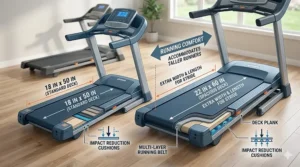
A pattern jumps out fast: the two treadmills with 60-inch decks (Horizon 7.0 AT and Bowflex T6) are also the only two rated for genuinely fast running, while everything with a 55-inch or shorter belt skews toward walking and light jogging. That’s not a coincidence — deck length determines stride room, and stride room determines whether your foot lands mid-belt or perilously close to the edge at speed. If running is the whole point for you, that 5-inch difference matters more than almost any other spec on this chart.
1. Horizon 7.0 AT Treadmill
The Horizon 7.0 AT is the treadmill I’d point a genuinely serious home runner toward, and it earns that spot almost entirely through its drive system. The 3.0 CHP motor paired with Horizon’s RapidSync tech means the belt actually keeps pace when you punch into an interval — no lag, no stutter, no “did it hear me?” moment between you hitting the dial and the speed catching up. What most buyers overlook about this model is that the 60-inch deck isn’t just a number; it’s the difference between a comfortable 7-minute mile and constantly clipping the front rail with your toes.
In practice, the 15% incline range turns this into a legitimate hill-training tool, not just a flat-belt jogger with a fancy badge. Owners consistently mention how quiet the motor stays even at higher speeds, and the lifetime frame-and-motor warranty signals real confidence from Horizon — companies don’t extend that kind of coverage on machines they expect to fail.
✅ Open Bluetooth platform works with Zwift, Peloton, and Studio apps without a subscription lock-in
✅ Lifetime warranty on frame and motor
✅ 60-inch deck comfortably fits taller runners
❌ No built-in touchscreen — you’ll need your own tablet or phone
❌ At 277 lbs, moving it once assembled takes real effort
Priced in the high-$900s and sometimes nudging just past the $1,000 mark during regular pricing, this one earns its spot through performance rather than features for features’ sake — for runners specifically, it’s tough to beat. Check current pricing before buying, since fitness equipment pricing shifts with seasonal promotions.
2. Bowflex T6 Treadmill
The Bowflex T6 is, frankly, the treadmill equivalent of finding a designer jacket on the clearance rack — it shouldn’t be this capable at this price. The 3.0 CHP motor and matching 60-inch running area put it in direct competition with machines costing hundreds more, and the 15% incline ceiling means hill-walking workouts aren’t an afterthought here.
What sets the T6 apart in real-world use is its app-agnostic design philosophy. You’re not locked into Bowflex’s own JRNY ecosystem (though it’s there if you want it, complete with a free trial period); the dual LED/LCD console and media shelf are built explicitly so you can run your own content instead. In my experience scanning owner feedback, the QuickDial speed and incline controls get singled out repeatedly as a tactile, no-fumbling way to adjust mid-workout — something button-mashing competitors can’t match.
✅ 15% incline range rivals machines twice the price
✅ Apple Watch, Peloton, and Zwift compatibility built in
✅ FlexZone deck cushioning reduces joint impact
❌ Assembly is reportedly a two-person job given its size
❌ Some owners report inconsistent customer service response times
Sitting in the $899–$999 range depending on current promotions, the T6 is the pick for buyers who want serious specs without being married to one fitness app forever.
3. NordicTrack T 6.5 S Treadmill
The NordicTrack T 6.5 S occupies a strange and genuinely useful niche: it’s the budget entry point into a premium ecosystem. The 2.6 CHP motor and 20-inch by 55-inch belt won’t win any speed contests, but that’s not really the point — this is a treadmill built for steady walking and moderate jogging with the option to grow into something more.
The spec sheet won’t tell you this, but the real value here is iFIT-readiness without iFIT obligation. You get 20 onboard programs that work completely free, so the subscription is a choice rather than a requirement — a meaningfully different arrangement than treadmills that brick half their features without a monthly fee. The SpaceSaver folding frame with EasyLift Assist also means storage doesn’t require a wrestling match every time you’re done.
✅ Over 30,000 Amazon reviews with a strong average rating — a genuinely battle-tested machine
✅ Folds vertically for tight apartments
✅ Works fully in manual mode, no subscription required
❌ 55-inch belt limits comfortable stride length for taller runners
❌ 5-inch display feels small if you were hoping for a screen-forward experience
Available in the $799–$899 range on Amazon, this is the rational pick for anyone who suspects they might eventually want guided workouts but doesn’t want to pay for that flexibility today.
4. Horizon T101 Treadmill
If your goal is simply to move more — walk while you catch up on a show, knock out a brisk 30 minutes before work — the Horizon T101 is the treadmill built for exactly that mission, and not much more. The 2.5 CHP motor is tuned for walking and light jogging rather than aggressive training, and that focus shows up as reliability rather than limitation.
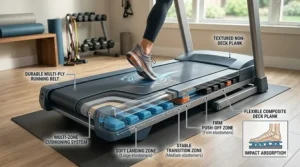
In my experience comparing budget treadmills, the T101’s biggest overlooked strength is its warranty-to-price ratio. A lifetime guarantee on the frame and motor at a sub-$700 price point is genuinely unusual — most competitors at this tier offer a fraction of that coverage. The three-zone Variable Response Cushioning system also does real work here, softening footfall noticeably compared to flatter, harder decks on similarly priced machines.
✅ Lifetime frame and motor warranty at an entry-level price
✅ At 180 lbs, it’s one of the lighter, easier-to-move units on this list
✅ Bluetooth speakers and USB charging built into the console
❌ 10 mph top speed and 10% incline cap won’t satisfy serious runners
❌ No touchscreen — bring your own device for entertainment
Typically priced in the $649–$699 range, the T101 is the clearest “best value for walkers” pick in this entire roundup.
5. Schwinn 810 Treadmill
The Schwinn 810 plays it straightforward: a recognizable brand name, a 20-inch by 55-inch belt, and a 2.6 CHP motor that handles walking and casual jogging without complaint. What most buyers overlook about this model is the SoftTrak cushioning system, which independent testers have noted absorbs footfall impact noticeably better than some pricier competitors’ decks — a detail that matters far more during a 30-minute session than any spec sheet number.
The 16 onboard programs give you enough variety to avoid workout boredom without needing a subscription, and the optional Explore the World app (for streaming scenic running routes) is a nice-to-have rather than a requirement. Where this treadmill comes up short is in its weight capacity — 275 lbs is lower than most machines in this guide — and its 10 mph ceiling, which keeps it firmly in jogging territory rather than running territory.
✅ Recognizable, trusted brand backing
✅ SoftTrak cushioning praised in independent reviews
✅ Folds via SoftDrop mechanism for safer storage
❌ 275-lb weight capacity is the lowest among the mid-tier options here
❌ 10 mph max speed limits use for faster runners
Priced around $799–$899, the 810 makes the most sense for buyers prioritizing a known brand and comfortable cushioning over outright speed.
6. XTERRA TR150 Treadmill
Let’s address the obvious question first: can a treadmill this affordable actually be good? The XTERRA TR150 makes a compelling case that the answer is yes, provided your expectations match its design. This is a walking-first machine — a 2.25 HP motor, a 16-inch by 50-inch belt, and three manual incline levels that you set by hand rather than a motorized dial.
What most buyers overlook about this model is exactly why it’s so affordable: at just 97 lbs, it’s barely heavier than a large suitcase, which makes it one of the easiest treadmills on this list to move, store, and live with in a smaller home. The lifetime frame warranty is a genuinely surprising inclusion at this price tier, and the hand-pulse-grip heart rate monitoring covers the basics without overcomplicating the console.
✅ Among the most affordable real treadmills currently sold on Amazon
✅ Lightweight at 97 lbs — easy for one person to relocate
✅ Lifetime frame warranty despite the entry-level price
❌ Manual incline means stopping your workout to adjust the angle
❌ 250-lb weight capacity and narrower 16-inch belt limit who this fits comfortably
In the $350–$450 range, this is the pick for buyers who simply need a functional walking treadmill without spending anywhere near four figures.
7. WalkingPad X21 Treadmill
The WalkingPad X21 solves a problem none of the other six treadmills on this list even attempt to address: what do you do when you genuinely don’t have floor space for a traditional treadmill? Its double-fold design lets it stand upright against a wall at a fraction of the footprint, and at roughly 82–90 lbs, it’s light enough that storage doesn’t require a dedicated room.
In my experience, the real-world meaning behind its “7.5 mph top speed, no incline” spec sheet is this: this is fundamentally a walking and light-jogging machine, not a training tool for serious mileage. The brushless motor runs notably quieter than traditional treadmill motors, which matters enormously if you live above, below, or beside other people. The KS Fit app adds step tracking and pace history, syncing over Bluetooth with NFC pairing for quick setup.
✅ Folds to a fraction of the footprint of a standard treadmill
✅ Notably quiet brushless motor — apartment-friendly by design
✅ Award-winning compact design (Red Dot and iF Design recognition)
❌ No incline functionality at all
❌ 240-lb weight capacity and 7.5 mph ceiling rule out serious running
Priced around $799–$899, the X21 isn’t competing on power — it’s competing on the simple fact that it fits where other treadmills physically cannot.
How to Choose a Treadmill Under $1000
Picking the right machine comes down to seven decision points, and walking through them in order saves you from buying based on marketing copy alone:
- Define your primary activity first. Walking, jogging, and running each demand different motor power and belt length — decide this before looking at a single spec sheet.
- Match belt length to your stride. Shorter users and walkers do fine with 50–55 inches; anyone running regularly should look for 60 inches.
- Check the continuous horsepower (CHP), not peak horsepower. Peak numbers are marketing inflation; CHP reflects sustained real-world performance.
- Confirm weight capacity with margin. Add at least 50 lbs of buffer above your actual body weight for safety and long-term motor health.
- Decide if you want app dependency or app freedom. Subscription-based ecosystems offer guided structure; open Bluetooth platforms offer flexibility without recurring fees.
- Measure your space before falling in love with a model. Unfolded dimensions matter as much as folded ones — many buyers forget the treadmill needs room to operate, not just store.
- Read the warranty terms closely. A lifetime frame-and-motor warranty signals manufacturer confidence; shorter terms are a quiet red flag.
The Centers for Disease Control and Prevention recommends adults get at least 150 minutes of moderate aerobic activity weekly, and their full physical activity guidelines are worth a skim before you decide how much machine you actually need — someone aiming for daily 20-minute walks has very different requirements than someone training for a 10K.
Treadmill Under $1000 vs. Gym Membership: Which Saves You More?
| Factor | Treadmill Under $1000 | Average Gym Membership |
|---|---|---|
| Upfront cost | $350–$999 one-time | Often $0–$100 enrollment |
| Annual cost after year one | ~$0–$180 (electricity, optional app) | $300–$700+ |
| Commute time | None | 15–40 minutes round trip, typically |
| Schedule flexibility | Available 24/7 | Limited to operating hours |
| Weather dependency | None | None (but commute is weather-exposed) |
Crunching these numbers, a home treadmill in this price range typically pays for itself within 12 to 18 months compared to an average gym membership, and that’s before factoring in commute time, which most people undervalue until they get it back. Budget treadmills do lose ground on social motivation and equipment variety — nobody’s spotting you on a bench press at home — but for pure cardio consistency, the math leans heavily toward owning your own machine.
Practical Usage Guide: Setup, Lubrication, and the First 30 Days
Getting a new treadmill is the easy part. Keeping it running well for years is where most owners quietly drop the ball.
During setup: Most folding models in this guide assemble in well under an hour, but the deck-to-frame connection bolts are the one spot worth double-checking with a wrench after the first week — vibration loosens hardware faster than people expect.
The lubrication mistake almost everyone makes: Treadmill belts need silicone-based lubricant applied every three to six months depending on usage, never petroleum-based products like WD-40, which actually degrade rubber belts over time rather than protecting them.
Your first 30 days: Start at lower speeds than you think you need. New belts have a break-in period, and motors run more efficiently once that initial stiffness works itself out. Owners who hit max speed on day one report belt slipping far more often than those who ease in gradually.
Ongoing maintenance that actually matters: Vacuum underneath the deck monthly — dust buildup around the motor housing is the single most common cause of premature motor wear on home treadmills. Wipe the belt surface, check bolts quarterly, and keep the unit on a hard, level surface or dedicated mat.
✨ Don’t Miss These Exclusive Deals!
🔍 Take your home cardio setup to the next level with one of these seven carefully reviewed picks. Click through to check current pricing and availability — these machines are genuinely built to be used daily, not just admired in a corner.
Real-World Scenarios: Matching the Right Treadmill to Your Life
If you’re a college student or apartment renter with almost zero spare square footage, the WalkingPad X21 is built for exactly this situation — fold it, lean it against the wall, reclaim your floor space between sessions.
If you’re a parent trying to fit in 30 minutes before the household wakes up, the Horizon T101 or NordicTrack T 6.5 S both deliver quiet, reliable walking sessions without requiring you to learn a complicated console at 5:30 a.m.
If you’re training for a 5K or 10K and need genuine running capability, the Horizon 7.0 AT or Bowflex T6 are the only two machines on this list with the belt length and incline range to support that kind of structured training.
If you’re on a genuinely tight budget but still want a functional machine, the XTERRA TR150 covers the basics — walking, light jogging, manual incline — without asking for anywhere near $1,000.
The Mayo Clinic’s guide to walking workouts is a genuinely useful resource here, especially for anyone starting from a sedentary baseline — pacing yourself correctly in the first few weeks matters more than which machine you bought.
Common Mistakes When Buying a Budget Treadmill
The single biggest mistake I see, repeatedly, is buying based on top speed instead of belt length. A treadmill that hits 12 mph but only offers a 55-inch deck will feel cramped and unsafe at anything close to that speed — the spec sheet number is almost irrelevant if your stride doesn’t fit the available real estate.
The second mistake is ignoring weight capacity margins. Buying a machine rated right at your current body weight, rather than 50+ lbs above it, shortens motor lifespan and creates real safety risk during higher-intensity sessions.
Third: skipping the warranty fine print. “Lifetime warranty” sometimes only covers the frame, not the motor — read which specific components are included before assuming you’re fully protected.
Fourth: underestimating delivery and assembly. Several treadmills on this list weigh well over 200 lbs unboxed. Curbside delivery without an assembly add-on can leave a very heavy box on your porch with no easy way to move it inside alone.
Features That Actually Matter (And Those That Don’t)
Actually matters: Continuous horsepower rating, belt dimensions, cushioning system quality, and warranty coverage on the motor specifically.
Doesn’t matter nearly as much as marketing suggests: Touchscreen size. A gorgeous 10-inch display is nice, but it has zero impact on how smoothly the belt runs or how long the motor lasts — and most budget machines skip it entirely while performing just fine with a phone or tablet propped on a media shelf instead.
Actually matters: Folding mechanism quality (hydraulic-assisted folding prevents the deck from slamming down and injuring fingers or feet).
Doesn’t matter nearly as much as marketing suggests: The number of “preset programs.” Twelve thoughtfully designed programs beat thirty redundant ones; this number gets inflated for marketing purposes more than almost any other spec on a treadmill’s box.
What to Expect: Real-World Performance at This Price Point
Translating spec sheets into lived experience: a 2.5–2.6 CHP motor (found on the Horizon T101, Schwinn 810, and NordicTrack T 6.5 S) comfortably supports walking and light-to-moderate jogging sessions of 30–45 minutes without strain. Step up to 3.0 CHP (Horizon 7.0 AT, Bowflex T6) and you unlock genuine interval training and sustained running without the motor laboring.
Incline ranges below 10% feel like mild variety; ranges reaching 15% genuinely change the workout, engaging glutes and hamstrings in a way flat walking simply doesn’t replicate. And belt cushioning quality, while harder to quantify on a spec sheet, shows up immediately in how your knees feel after week one — it’s consistently one of the most underrated factors in long-term treadmill satisfaction according to owner feedback across every model reviewed here.
Treadmill Under $1000 for Specific Audiences
Beginners should prioritize ease of use and lower intimidation factor — the Horizon T101’s simple console and lighter overall weight make it the friendliest entry point on this list.
Apartment dwellers need to weight noise and footprint above almost everything else; the WalkingPad X21’s brushless motor and double-fold design were built with exactly this audience in mind.
Families sharing one machine benefit from higher weight capacity and durability — the Horizon 7.0 AT and Bowflex T6, both rated to 325 lbs, handle multiple users with different fitness levels more gracefully than lighter-duty options.
Budget-strict shoppers get real, legitimate value from the XTERRA TR150 — it won’t replace a marathon-training rig, but it does exactly what it promises at a price point nothing else on this list can touch.
Long-Term Cost & Maintenance: The Real Price of Ownership
| Cost Factor | Typical Annual Range |
|---|---|
| Electricity (average home use) | $15–$30 |
| Belt lubricant & basic maintenance supplies | $10–$25 |
| Optional app subscription (iFIT/JRNY, if chosen) | $180–$468 |
| Replacement parts (belt/motor, rare before year 5) | $0 most years |
The headline takeaway from this breakdown: the treadmill itself is almost always the largest cost you’ll pay, and it’s a one-time hit. App subscriptions are the real long-term variable — opting out, as you can with the NordicTrack T 6.5 S or Bowflex T6’s onboard programs, keeps total ownership costs remarkably low for years at a stretch.
Safety Considerations Worth Your Attention
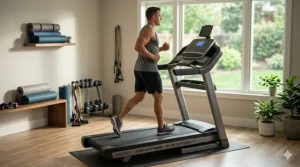
Always use the magnetic safety key clipped to your clothing — it’s not just a suggestion, it’s the single fastest way to stop a treadmill if you stumble. Keep the area behind the machine clear of furniture; falls happen backward more often than forward. And per Consumer Reports’ treadmill safety coverage, children and pets should never have unsupervised access to a powered treadmill, even when it’s not actively in use — consoles can be bumped accidentally, and belts can engage faster than a young child can react.
Frequently Asked Questions
❓ What is the best treadmill under $1000 for running?
❓ Are treadmills under $1000 good for daily use?
❓ How long does a budget treadmill typically last?
❓ Is an iFIT or JRNY subscription worth it on a budget treadmill?
❓ Can a treadmill under $1000 support a heavier user safely?
Conclusion
Shopping for a treadmill under $1000 used to mean accepting compromises nobody wanted to talk about out loud. That’s genuinely shifted. Whether you need the running-ready muscle of the Horizon 7.0 AT, the apartment-friendly cleverness of the WalkingPad X21, or the no-nonsense affordability of the XTERRA TR150, there’s a real, currently available machine in this lineup built for your specific situation rather than some imagined average buyer.
The honest truth is that the best treadmill is the one that matches your actual life — your space, your weight capacity needs, your tolerance for subscriptions, your noise constraints. Spec sheets matter, but only in service of that bigger question. Pick the machine that fits how you’ll actually use it, not the one with the flashiest number on the box, and you’ll get years of reliable use out of any of these seven picks.
✨ Found the Right Fit?
💬 Share this guide with anyone else hunting for a treadmill under $1000 — it might save them the month of research it took to put this together! 🤗
Recommended for You
- 7 Best Treadmills Under $500 in 2026 – Tested Picks That Won’t Disappoint
- 7 Best Treadmill Desk for Home Office 2026 — Walk Smarter, Work Better
- Best Standing Desk Treadmill Combo 2026: 7 Powerful Picks Revealed
Disclaimer: This article contains affiliate links. As an Amazon Associate, I earn from qualifying purchases. If you purchase products through these links, we may earn a small commission at no additional cost to you.
✨ Found this helpful? Share it with your friends! 💬🤗
