In This Article
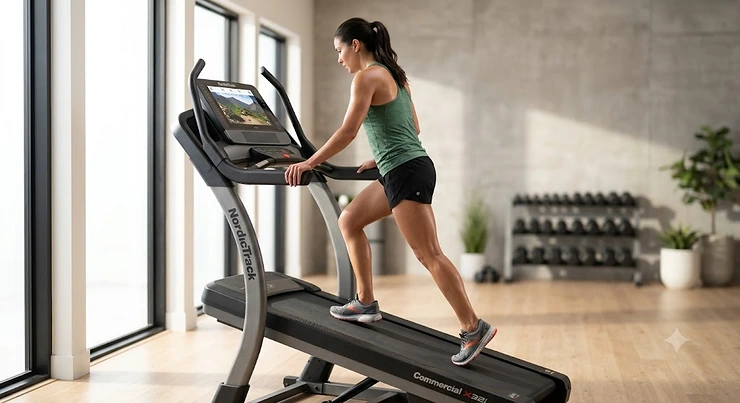
A steep incline treadmill is a motorized treadmill that tilts well beyond the typical 10% grade found on most home machines, with some models climbing to 20%, 30%, or even a mountain-grade 40%. It’s built for hikers, hybrid athletes, and anyone trying to torch calories without pounding their joints on a flat belt.
If you’ve ever tried to train for a hike, a Hyrox event, or just a leaner midsection on a flat treadmill, you’ve probably hit a wall. Walking fast only gets you so far before your knees start complaining and your motivation starts fading. That’s where a steep incline treadmill earns its keep — it lets you simulate real mountain grades from your living room, recruiting your glutes and calves in a way flat walking simply can’t.
I’ve spent the last few weeks digging through specs, owner reviews, and manufacturer data on the machines currently available, and I want to walk you through what actually separates a great steep incline treadmill from a glorified flat-walker with a fancy name. We’ll cover seven real options — from a sub-$500 compact folder to a four-figure machine that tilts to a genuinely absurd 40% — so you can find the one that fits your space, your budget, and your training goals.
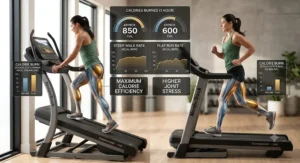
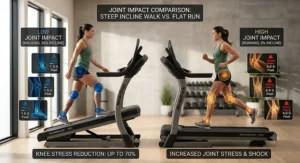
One thing worth knowing upfront: incline training isn’t just a gimmick. Walking at a 10-20% incline can roughly double your calorie burn compared to flat walking at the same pace, according to research cited by the National Institutes of Health, and it does it at a lower-impact speed than running. That’s the whole appeal in a nutshell — more intensity, less wear and tear on your joints.
Let’s get into the comparison.
Quick Comparison Table: Steep Incline Treadmills at a Glance
| Treadmill | Max Incline | Top Speed | Motor | Best For | Price Range |
|---|---|---|---|---|---|
| NordicTrack X16 | 40% / -6% decline | 12 mph | 4.25 CHP | Serious hill/mountain training | $3,000-$3,600 |
| NordicTrack Commercial 1750 | 12% / -3% decline | 12 mph | ~4.0 CHP | Tech-forward home gyms | $1,700-$2,200 |
| Horizon 7.8 AT | 15% | 12 mph | 4.0 CHP | No-subscription power users | $1,800-$2,000 |
| Sole F80 | 15% | 12 mph | 3.5 CHP | Heavier users, durability | $1,400-$1,900 |
| Bowflex T6 | 15% | 12 mph | 3.0 CHP | Budget HIIT training | $900-$1,300 |
| XTERRA TRX3500 | 12% | 12 mph | 3.0 HP | Best value, no-frills | $900-$1,300 |
| UMAY 20% Auto Incline | 20% | 8-9.5 mph | 3.5-4.0 HP | Small spaces, tight budgets | $300-$500 |
Looking at the spread above, the steepest grades cluster at opposite ends of the price spectrum — the NordicTrack X16 buys its 40% incline with a premium price tag and a massive non-folding frame, while the compact UMAY model surprisingly punches above its weight class with a 20% incline for a fraction of the cost. If your priority is raw incline percentage on a budget, the UMAY and Bowflex T6 punch well above their price point, while the X16 remains the only machine here that can replicate a genuine mountain ascent.
✨ Don’t Miss These Exclusive Deals!
💬 Just one click — help others make better buying decisions too! 😊
Top 7 Steep Incline Treadmills: Expert Analysis
Before breaking down each pick, here’s how the top 7 stack up on the numbers that matter most for incline training specifically.
| Treadmill | Deck Size | Weight Capacity | Folds? | Subscription Needed? |
|---|---|---|---|---|
| NordicTrack X16 | 22″ x 60″ | 400 lbs | ❌ No | iFIT for full features |
| NordicTrack Commercial 1750 | 20-22″ x 60″ | 300 lbs | ✅ Yes | iFIT for full features |
| Horizon 7.8 AT | 22″ x 60″ | 375 lbs | ✅ Yes | ❌ None required |
| Sole F80 | 22″ x 60″ | 350-375 lbs | ✅ Yes | ❌ None required |
| Bowflex T6 | 20″ x 60″ | 325 lbs | ✅ Yes | JRNY optional |
| XTERRA TRX3500 | 20″ x 60″ | 350 lbs | ✅ Yes | ❌ None required |
| UMAY 20% Auto Incline | ~16-18″ x 42-44″ | 400 lbs | ✅ Yes (ultra-flat) | ❌ None required |
This table tells a story the incline numbers alone don’t: four of these seven machines run completely subscription-free, which matters a lot if you’re trying to avoid a recurring bill on top of your treadmill payment. Notice also that the UMAY trades deck length for foldability and price — fine for walking workouts, but its shorter belt isn’t built for a full running stride at speed.
1. NordicTrack X16
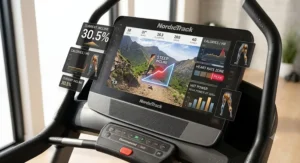
The NordicTrack X16 is the only treadmill on this list that tilts to a genuinely mountain-grade 40% incline, with a -6% decline on the other end for downhill simulation. That 4.25 CHP motor isn’t just a number on a spec sheet — it’s what lets the deck shift that dramatically without bogging down mid-stride, and the 22″ x 60″ deck means you’ve got room to actually run, not just shuffle, even at extreme angles.
What most buyers overlook about this machine is that the incline range matters more than the touchscreen. You’re paying for the mechanical ability to train like you’re climbing a real trail, not just for the iFIT subscription that powers the on-screen coaching. This is the pick for hikers prepping for elevation gain, rucking enthusiasts, and anyone who’s outgrown a standard 12-15% incline ceiling.
Owners consistently praise its stability at steep grades and call out the cushioned SpringFlex deck for reducing joint strain during long sessions. The tradeoffs are real, though: it doesn’t fold, so it needs a dedicated 7+ foot stretch of floor, and you’ll want an iFIT membership to unlock the full trainer library.
✅ Unmatched 40% incline-to-decline range
✅ Massive, stable 22″ x 60″ deck
✅ Lifetime motor warranty
❌ Doesn’t fold — needs permanent floor space
❌ Full feature set requires an iFIT subscription
In the $3,000-$3,600 range, the X16 is the most expensive entry here, but if you genuinely need a 40% incline for mountain-specific training, there’s no real substitute at this writing.
2. NordicTrack Commercial 1750
The NordicTrack Commercial 1750 trades incline extremity for tech polish, with a 12% incline to -3% decline range paired with a pivoting touchscreen that turns your living room into a guided trail-running studio.
The 12% ceiling sounds modest next to the X16, but in practice it’s the same grade most outdoor coaches use for serious hill repeats — and the AutoAdjust feature means the incline shifts automatically as you follow an iFIT trainer through a real-world route. The cushioned RunFlex deck softens the steeper grades noticeably compared to flat-incline budget machines.
This one’s for the person who wants guided coaching as much as they want incline. If you’re the type who needs a video trainer talking you through a workout to actually finish it, the touchscreen earns its keep. If you just want raw incline without monthly fees, look elsewhere on this list.
Reviewers tend to love the immersive workout library but flag the incline ceiling as limiting for advanced trail athletes chasing steeper grades.
✅ 16″ pivoting touchscreen with automatic terrain matching
✅ Quiet, powerful motor for its price tier
✅ Folds for storage between sessions
❌ 12% incline tops out lower than several rivals here
❌ Full functionality requires an ongoing iFIT membership
Expect to pay in the $1,700-$2,200 range, making it a strong middle-ground pick if guided coaching matters as much to you as the incline number itself.
3. Horizon 7.8 AT
The Horizon 7.8 AT is built for buyers who want serious incline power without being locked into a subscription ecosystem. Its 15% incline and 4.0 CHP “Rapid Sync” motor are tuned specifically for fast transitions during interval training.
What the spec sheet won’t tell you is how quickly this machine shifts incline mid-workout — the QuickDial controls let you roll into a hill climb without breaking stride, which matters enormously during HIIT-style sessions where every second of fumbling with buttons costs you intensity. The 22″ x 60″ deck matches the X16 in size, so taller runners won’t feel cramped even at a steep grade.
This is the machine for someone who wants a workhorse, not a media center. You bring your own tablet for entertainment; the 7.8 AT brings the durability and a lifetime frame-and-motor warranty.
Owners frequently mention the machine feels like commercial gym equipment, though a few have noted the console looks dated next to touchscreen rivals, and very heavy users should test the incline-speed combination cautiously before committing to top settings.
✅ 15% incline with zero required subscription
✅ Heavy-duty frame backed by a lifetime warranty
✅ Fast, responsive QuickDial speed and incline adjustments
❌ No touchscreen — just a high-contrast TFT display
❌ At roughly 330 lbs, it’s not easily moved solo
Priced in the $1,800-$2,000 range, this is the pick for buyers who want Horizon’s reputation for durability without ongoing fees.
4. Sole F80
The Sole F80 has built its reputation on one thing: it just keeps running. With 15 incline levels reaching roughly 12-15% and a 3.5 CHP motor, it’s less about extreme grades and more about long-term reliability for daily incline walking and jogging.
The standout feature here is the Cushion Flex Whisper Deck, which Sole’s own testing claims reduces impact by up to 40% compared to running on asphalt. In practice, that cushioning is what makes daily 30-45 minute incline sessions sustainable instead of something your knees dread. The preloaded streaming apps (Netflix, YouTube, Prime Video, and more) mean you’re not paying a monthly fee just to watch something while you climb.
This is the treadmill for heavier users and households that want one machine to last a decade. Sole backs the F80 with a lifetime frame and motor warranty, and owners with 2,000+ logged miles report minimal issues beyond a standard belt replacement.
✅ 15 incline levels with genuinely cushioned landings
✅ Lifetime frame and motor warranty
✅ No subscription required for built-in entertainment apps
❌ At roughly 270+ lbs, it needs a dedicated, sturdy space
❌ Incline ceiling is lower than premium rivals like the X16
Typically found in the $1,400-$1,900 range, the F80 is the value pick for buyers who prioritize longevity over maximum incline.
5. Bowflex T6
The Bowflex T6 proves you don’t need to spend four figures to get a real 15% incline. Its 3.0 CHP motor and MaxReact drive system are tuned for HIIT-style interval training rather than marathon distance running.
The QuickDial controls on the handrails are the real differentiator here — in my experience, treadmills under $1,000 usually bury incline adjustment behind a maze of small buttons, but the T6’s dial system lets you crank the grade up mid-interval without losing your stride. Pairing with an Apple Watch or Samsung Galaxy Watch is genuinely seamless, and it connects to Peloton and Zwift if you’d rather skip the JRNY subscription entirely.
This is the entry point for budget-conscious buyers who still want a real hill-training experience. It’s not built for ultramarathon mileage, but for daily incline walks and interval sessions, it punches well above its price class.
Most owners report smooth assembly and reliable performance, though a small number have flagged isolated quality-control issues with electronics — worth keeping your purchase protection in mind regardless of which budget model you choose.
✅ Genuine 15% incline at a sub-$1,000 price point
✅ Intuitive QuickDial speed and incline controls
✅ Syncs with Apple Watch, Samsung Galaxy Watch, Peloton, and Zwift
❌ Small dual LED/LCD display instead of a built-in screen
❌ A minority of buyers report inconsistent quality control
At roughly $900-$1,300, the T6 is the best entry point on this list for incline training without a major financial commitment.
6. XTERRA TRX3500
The XTERRA TRX3500 is the definition of no-frills value: a commercial-size 60″ x 20″ belt, a 3.0 HP motor, and a 12% power incline, all without a touchscreen or subscription tax.
The 30 preset programs are the sleeper feature here — most budget treadmills skip built-in programming entirely, but the TRX3500 lets you run structured incline intervals straight out of the box, no app required. Bluetooth FTMS connectivity means you can still pair with Zwift or Kinomap if you want app-based tracking later, but you’re never locked into needing one.
This is the pick for buyers who’ve been burned by subscription fatigue and just want a sturdy, capable treadmill that does incline training well without nickel-and-diming them afterward.
Long-term owners generally praise the price-to-quality ratio, though a handful have reported needing occasional belt tightening and lubrication maintenance after a year or more of regular use — standard treadmill upkeep, but worth budgeting time for.
✅ Commercial-size 60″ belt at a budget price
✅ Lifetime frame and motor warranty
✅ 30 built-in programs with zero subscription requirement
❌ 3.0 HP motor is best suited to lighter and moderate users
❌ Requires standard DIY belt maintenance over time
Sale pricing regularly lands it in the $900-$1,300 range, making it one of the strongest value plays in mid-range incline treadmills.
7. UMAY Fitness 20% Auto Incline Treadmill
The UMAY Fitness 20% Auto Incline Treadmill is the surprise of this list — a sub-$500 compact folder that out-inclines several machines costing three times as much, topping out at a 20% auto-adjusting grade.
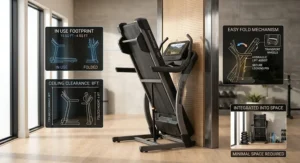
The headline feature is the fold-flat design: this thing collapses to roughly 6.5 inches thick, sliding under a bed or behind a couch in seconds. That’s only possible because the running deck is shorter and narrower (around 16-18″ x 42-44″) than the commercial-style decks on pricier machines, so it’s built for walking and incline hiking workouts rather than full-stride running.
This is the pick for apartment dwellers, beginners easing into incline training, or anyone who wants to test whether steep-grade walking actually works for them before committing to a premium machine.
Buyers consistently highlight the easy setup and surprisingly quiet 3.5-4.0 HP motor, with multiple owners specifically using the high incline settings for low-impact, joint-friendly calorie burn after injuries or surgery.
✅ Steepest incline-per-dollar of any treadmill on this list
✅ Folds to roughly 6.5″ for true small-space living
✅ 400-lb weight capacity despite its compact size
❌ Shorter, narrower deck isn’t built for sprinting
❌ Lacks the decades-long brand track record of legacy fitness companies
At under $500, this is the easiest entry point into steep incline training for anyone short on space or budget.
Practical Usage Guide: Getting the Most From Your Steep Incline Treadmill
Buying the machine is the easy part — using it correctly is where most people leave results on the table. Start every incline session with five minutes flat to warm up your calves and Achilles tendons; jumping straight to a 15-20% grade cold is the fastest way to a strained calf.
Lubricate the belt every 150-200 miles regardless of brand — incline training puts extra lateral stress on the deck, and a dry belt wears out noticeably faster under a steep grade than on flat walking. Most manufacturers ship lubricant with the machine; mark a calendar reminder so it doesn’t slip.
For the first 30 days, resist the urge to max out the incline immediately. Build up in 5% increments week over week. Your cardiovascular system adapts faster than your tendons and stabilizer muscles, and rushing the incline progression is the single most common cause of early injury among new incline-treadmill owners.
Real-World Training Scenarios: Matching the Treadmill to Your Goals
If you’re training for a multi-day hike with serious elevation gain, the NordicTrack X16’s 40% incline is genuinely the closest home simulation available — nothing else here gets you that close to mountain-grade conditioning.
If you’re a budget-conscious beginner in a small apartment trying to build a sustainable habit, the UMAY 20% Auto Incline makes the most sense: low cost, low footprint, and still steep enough to meaningfully raise your heart rate without joint-jarring impact.
If you’re training for a Hyrox event or general HIIT-style fat loss and want fast incline transitions without a subscription, the Horizon 7.8 AT or Bowflex T6 both fit — pick the 7.8 AT if budget allows for the bigger deck and motor, the T6 if you want to keep costs under $1,000.
How to Choose a Steep Incline Treadmill: 7 Expert Criteria
- Decide your minimum incline threshold. If you’re training for actual mountain terrain, you need 20%+; for general fat-loss and HIIT, 12-15% is genuinely sufficient.
- Check the deck size against your stride. Anyone over 6 feet tall or running (not walking) should look for at least a 60″ deck length.
- Match motor CHP to your bodyweight and pace. Heavier users or anyone running at speed should prioritize 3.5+ CHP motors.
- Decide if you want a subscription or not. Touchscreen-driven machines like the X16 and Commercial 1750 lean on iFIT; Horizon, Sole, and XTERRA don’t require one.
- Confirm your ceiling height. Steep-incline decks rise significantly at maximum grade — measure your space before buying a non-folding machine.
- Check the weight capacity with margin. Don’t buy a treadmill rated exactly at your bodyweight; leave at least 50-75 lbs of headroom.
- Factor in folding needs. If floor space is tight, eliminate non-folding options like the X16 immediately, regardless of how appealing the incline number is.
Common Mistakes When Buying a Steep Incline Treadmill
The single biggest mistake is chasing the incline percentage without checking deck size or motor power to match. A 40% incline on an underpowered motor with a short deck is a worse experience than a well-built 15% incline machine.
The second mistake is ignoring ceiling height. A treadmill deck at full incline sits noticeably higher off the ground than at flat — tall users in basements with low ceilings have returned otherwise great machines for this exact oversight.
The third mistake is buying based on touchscreen size alone. A gorgeous screen on a machine with a weak incline motor or a cramped deck is form over function — prioritize the mechanical specs first, the entertainment layer second.
Steep Incline Treadmill vs Traditional Flat Treadmill: What Actually Changes
| Factor | Flat Treadmill | Steep Incline Treadmill |
|---|---|---|
| Calorie burn at same pace | Baseline | Up to 2x higher at 10-15%+ grade |
| Joint impact | Higher at running speeds | Lower — intensity from grade, not speed |
| Muscle engagement | Quads, hamstrings | Adds glutes, calves, posterior chain |
| Outdoor terrain simulation | Minimal | Strong, especially 15%+ models |
The data here makes the case plainly: incline lets you raise intensity without raising speed, which is exactly why it’s become the go-to tool for low-impact fat loss. A 20-40% incline session at a slow walking pace can rival the caloric output of a much faster flat run, while sparing your joints the repetitive pounding that comes with higher running speeds, as outlined by general physical activity guidance from the CDC.
What to Expect: Real-World Performance at Steep Grades
At 10-15% incline, expect your heart rate to climb noticeably faster than flat walking at the same speed — most people find 3-3.5 mph at 12% feels comparable in effort to a 5-6 mph flat jog.
Beyond 20%, the experience shifts from “walking” to something closer to stair-climbing. Your stride shortens automatically, your arms naturally start pumping for balance, and your calves will likely feel it the next morning if you’re not used to it.
At the NordicTrack X16’s maximum 40% grade, most testers describe it as genuinely difficult to sustain for more than a few minutes — which is exactly the point. It’s designed for short, intense bursts rather than steady-state cardio, more akin to mountaineering training than a casual stroll.
Features That Actually Matter (And Those That Don’t)
What matters: incline range, motor CHP relative to your bodyweight, deck cushioning quality, and weight capacity headroom. These directly affect whether the machine survives years of steep-grade use without breaking down.
What matters less than marketing suggests: touchscreen size alone. A 16-inch screen feels nice, but it doesn’t change how the machine performs mechanically — plenty of budget machines with no screen at all deliver a better incline experience than a flashy display on a weak motor.
Built-in speakers and water bottle holders are nice-to-haves, not differentiators. Don’t let a long features list distract you from checking the three specs that actually determine your training experience: incline ceiling, motor power, and deck size.
Long-Term Cost & Maintenance: The Real Price of Ownership
A touchscreen treadmill running on iFIT or JRNY can add $400-$1,000+ over three years in subscription fees alone — factor that into your total cost of ownership, not just the sticker price.
Subscription-free machines like the Horizon 7.8 AT, Sole F80, and XTERRA TRX3500 cost more upfront relative to their incline range but save significantly over a multi-year ownership period if you don’t need guided coaching content.
Routine maintenance — belt lubrication every 150-200 miles and periodic bolt checks — costs roughly $10-20 a year in supplies regardless of which model you choose, so don’t let that factor sway your decision between brands.
FAQ: Steep Incline Treadmill Questions Answered
❓ What is a good incline percentage for a steep incline treadmill?
❓ How much does a steep incline treadmill cost?
❓ Can a steep incline treadmill replace outdoor hill training?
❓ Do I need decline as well as incline on a treadmill?
❓ What incline burns the most calories on a treadmill?
Conclusion
There’s no single “best” steep incline treadmill — there’s a best one for your space, your budget, and your training goals. If you genuinely need mountain-grade training, the NordicTrack X16’s 40% incline stands alone. If you want serious incline power without a subscription, the Horizon 7.8 AT and Sole F80 both deliver durable, long-term value. And if you’re just getting started or working with a tight budget and small apartment, the Bowflex T6 and UMAY 20% Auto Incline prove you don’t need to spend a fortune to start training uphill.
Whichever you choose, the science backs the approach: incline training lets you burn more calories at a lower-impact pace than running, which is exactly why it’s become a staple recommendation among physical therapists and trainers alike.
✨ Found a treadmill that fits your goals? Don’t let it sell out!
🔍 Take your hill training to the next level with these carefully selected picks. Click on any highlighted item to check current pricing and availability.
Recommended for You
- 7 Best Treadmills Over $3,000 in 2026
- Treadmill Under $2000: 7 Best Picks for 2026
- 7 Best Treadmills Under $1000 That Actually Deliver (2026)
Disclaimer: This article contains affiliate links. As an Amazon Associate, I earn from qualifying purchases. If you purchase products through these links, we may earn a small commission at no additional cost to you.
✨ Found this helpful? Share it with your friends! 💬🤗
