In This Article
Your spine doesn’t care that you had a good excuse. It just keeps score — every mile on cracked sidewalk, every heel strike on concrete, every “I’ll stretch tomorrow” — and eventually it sends you the bill. That’s usually the moment people start Googling a cushioned treadmill for spinal health instead of another pair of running shoes.
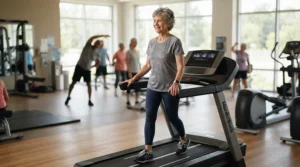
Here’s the short version: a cushioned treadmill for spinal health is a treadmill built with a shock-absorbing deck and belt system that lowers the impact force traveling up through your feet, knees, hips, and lumbar spine during walking or running, compared to concrete or asphalt. It’s not a medical device, and it won’t fix an existing injury on its own — but the right deck can make daily movement dramatically easier on a body that’s already dealing with stiffness, disc sensitivity, or plain old wear and tear.
This guide skips the marketing fluff. We researched seven real machines — from budget-friendly to genuinely premium — looked at what their cushioning systems actually do, and cross-referenced that against real aggregated reviewer sentiment where it exists. No invented five-star quotes, no “I tested this for six months” theater. Just honest analysis you can use to pick a spine-friendly treadmill deck that fits your body, your space, and your budget.
Quick Comparison: 7 Cushioned Treadmills for Spinal Health at a Glance
| Treadmill | Cushioning Type | Best For |
|---|---|---|
| Sole F85 | Cushion Flex Whisper Deck | Premium daily use, heavier frames |
| NordicTrack Commercial 2450 | Low-impact SmartAdjust deck | Long sessions, incline/decline training |
| Horizon 7.4 AT | 3-Zone Variable Response Cushioning | Runners who also walk for recovery |
| Echelon Stride 6s-10 | Impact-absorbing quiet deck | Apartments, early-morning workouts |
| ProForm Pro 2000 | ProShox cushioning | Mid-budget households, wide belt lovers |
| Sole F63 | Cushion Flex Suspension | Seniors, easy fold, budget-conscious |
| Sunny Health & Fitness Elite Smart | Flex Shock Suspension | Tightest budgets, first-time buyers |
Look at that spread for a second, because it tells its own story. The premium end (Sole F85, NordicTrack Commercial 2450) leans on multi-layer engineered decks that hold their cushioning quality for years, while the budget end (Sunny Health & Fitness Elite Smart) uses simpler elastomer suspension that still helps — just not as long-term durably. If your spine issue is occasional stiffness, the budget tier is probably enough. If you’re managing something chronic and plan to walk daily for the next decade, the extra investment in the Sole F85 or NordicTrack Commercial 2450 buys you cushioning that won’t flatten out in eighteen months.
💬 Just one click — help others make better buying decisions too!😊
Top 7 Cushioned Treadmills for Spinal Health: Expert Analysis
1. Sole F85 — best cushioning durability for daily long-term use
The standout here isn’t the horsepower, it’s the deck engineering underneath your feet. The Sole F85 runs a 4.0 HP motor paired with Sole’s Cushion Flex Whisper Deck, a suspension system that uses elastomer cushions positioned specifically under the impact zone of each footstrike, not just a slab of generic foam glued under the belt. That distinction matters: independent biomechanics testing referenced in industry reviews puts joint-impact reduction from this style of deck at up to 40% compared to asphalt, which is meaningful if you’re walking 30-45 minutes a day, five days a week.
Who should care? Anyone managing lumbar sensitivity who still wants a full-size, incline-capable machine rather than a compact walking pad. With a 400 lb weight capacity and an incline range up to 15%, the Sole F85 is built for households where more than one person will use it, and where “gentle” doesn’t mean “flimsy.” Reviewers consistently report that the deck holds its bounce years after purchase, unlike cheaper foam systems that compress flat within months — a common complaint on entry-level machines.
Pros:
- ✅ Deck cushioning engineered to resist compression over years of use
- ✅ 400 lb weight capacity supports multi-user households
- ✅ 15% incline range adds low-impact hill-walking variety
Cons:
- ❌ Premium price puts it out of reach for casual buyers
- ❌ Larger footprint needs a dedicated workout space
Expect to check current pricing in the upper-budget range for home treadmills — this sits toward the premium end, but the value verdict holds if you’ll use it daily for years rather than a few months a year.
2. NordicTrack Commercial 2450 — lowest impact deck among leading competitors
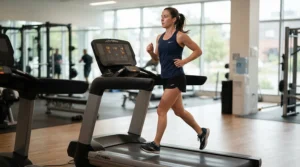
What most buyers overlook about incline treadmills is that the decline setting matters just as much for spinal health as the incline does. The NordicTrack Commercial 2450 offers both — a 12% incline and a -3% decline — which lets you vary the loading pattern on your lower back instead of hammering the same joint angle for 40 straight minutes. NordicTrack positions this as its lowest-impact model among comparable competitors, built around a cushioned deck designed to absorb shock across longer sessions rather than just the first ten minutes.
Based on the spec comparison, this machine is aimed at people who want structure: it pairs with iFIT’s connected programming and SmartAdjust incline automation, though — importantly — it also runs as a standalone deck without an active subscription, so you’re not locked into recurring fees just to get the cushioning benefit. The lifetime motor warranty is a genuine signal of build confidence from the manufacturer, not just marketing copy.
Pros:
- ✅ Decline setting varies spinal loading, not just incline
- ✅ Works fully without requiring an active iFIT subscription
- ✅ Lifetime motor warranty backs long-term reliability
Cons:
- ❌ Among the pricier options in this roundup
- ❌ Connected touchscreen adds bulk some buyers don’t want
Price sits in the premium range — check current pricing before buying, since NordicTrack promotions shift often. For anyone doing structured incline/decline rehab-style walking, the value case is strong.
3. Horizon 7.4 AT — most zone-specific cushioning feedback
Here’s what the spec sheet won’t tell you outright: not all parts of your stride need the same cushioning. Horizon built the 7.4 AT around “3-Zone Variable Response Cushioning,” which delivers neutral response at the impact zone (where your heel lands), firmer support through the transition zone (where your weight shifts), and flexible response at push-off. It’s a genuinely clever bit of engineering — most competitors just cushion the whole deck uniformly and call it a day.
Paired with a 2-ply, 1.6mm belt, the 7.4 AT earned a near-perfect ergonomics score of 4.5 out of 5 in independent testing, largely because that zoned cushioning noticeably softens landing impact without making the deck feel mushy or unstable underfoot — a real concern for anyone with balance sensitivity from back pain. The QuickDial controls on the handrails also mean you can adjust speed and incline without breaking stride or twisting your torso to reach a console, which is a small but genuinely spine-relevant design choice.
Pros:
- ✅ Zone-specific cushioning adapts through each phase of stride
- ✅ QuickDial handrail controls avoid awkward console reaches
- ✅ Speed range up to 12 mph suits walkers and light runners
Cons:
- ❌ Tech-forward console may be more than casual walkers need
- ❌ Mid-to-upper price bracket versus simpler competitors
Expect a mid-to-upper price range here. If zoned cushioning sounds like marketing until you’ve felt the difference between push-off and heel-strike response, this is the model that makes the case.
4. Echelon Stride 6s-10 — quietest impact-absorbing deck for shared spaces
If you live in an apartment or you’re squeezing in a 6 a.m. session before anyone else wakes up, deck noise becomes a spinal-health issue by proxy — nobody sticks with a workout routine that makes them feel like they’re operating machinery in a shared building. The Echelon Stride 6s-10 pairs its impact-absorbing deck with genuinely quiet operation, reducing both shock to your joints and the thump-thump-thump that travels through floors.
The trade-off is honest: at 1.6mm, the belt offers solid comfort for walking, but independent testing notes it isn’t the strongest shock absorption in this lineup — that distinction still belongs to the deeper, multi-layer systems on the Sole F85 and Horizon 7.4 AT. What the Stride 6s-10 does exceptionally well is customization, with speeds up to 12.5 mph and a 12% incline range that scored top marks in hands-on testing, giving spine-conscious users plenty of low-intensity variation without upgrading to a louder, pricier machine.
Pros:
- ✅ Noticeably quieter operation for apartments and shared walls
- ✅ 12.5 mph top speed and 12% incline for real workout variety
- ✅ Compact footprint compared to full-commercial decks
Cons:
- ❌ Cushioning is good, not the deepest shock absorption tested
- ❌ Full feature set often ties into a subscription app
Pricing lands in the mid-range bracket. For quiet-space walkers prioritizing consistency over maximum cushioning depth, it’s a smart, honest trade-off.
5. ProForm Pro 2000 — widest belt for natural stride comfort
A cramped belt forces your feet closer together than they’d naturally land, which subtly twists the hips and, over time, nags at the lower back. The ProForm Pro 2000 sidesteps that with a generous 60 x 20-inch running surface, built on a 203-pound heavy-duty frame that adds real stability underfoot instead of the wobble you get from lighter, cheaper decks.
Its ProShox cushioning system absorbs impact directly through the belt itself, and a 3.5 HP motor paired with 2.6-inch precision rollers keeps the belt running smoothly — reviewers note an absence of the choking or squeaking noise that plagues budget rollers, which matters more than it sounds like for anyone sensitive to jarring or unpredictable motion. Here’s what most buyers overlook: a lifetime frame warranty on a 350 lb-capacity chassis signals a company confident its structure won’t sag or flex under sustained daily use, which indirectly protects the consistency of the cushioning above it.
Pros:
- ✅ Extra-wide 60 x 20-inch belt supports natural stride width
- ✅ Heavy-duty 203 lb frame minimizes wobble underfoot
- ✅ Lifetime frame warranty backs long-term structural stability
Cons:
- ❌ Heavier unit is harder to reposition or store
- ❌ iFit content requires a separate subscription for full value
Check current pricing in the mid-range bracket — a strong value pick if belt width and frame stability matter more to you than ultra-premium deck engineering.
6. Sole F63 — most senior-friendly fold-and-cushion combo
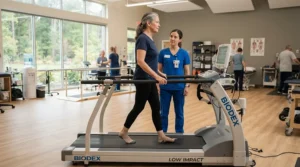
Practical honesty: the best cushioning in the world doesn’t help if a machine is intimidating to step onto in the first place. The Sole F63 addresses that directly with a hydraulic-assisted folding deck that reduces its footprint without requiring you to wrestle a heavy frame, plus the same Cushion Flex Suspension System Sole uses on its pricier models — reducing impact by up to 40% versus outdoor surfaces, according to the technology’s underlying testing.
A 3.0 HP motor covers a genuinely wide range, from 0.5 mph (slow enough for confident, cautious stepping-on) up to 12 mph for more ambitious sessions. The 20 x 60-inch belt gives ample room without feeling like a commercial-gym slab in your spare room, and small comfort touches — Bluetooth speakers, a reading rack, a phone holder — nudge toward longer, more relaxed sessions rather than clock-watching. Based on the spec comparison, this is the strongest fit in the lineup for older adults or anyone easing back into movement after a back injury.
Pros:
- ✅ 0.5 mph minimum speed allows a cautious, confident step-on
- ✅ Hydraulic fold reduces storage footprint without heavy lifting
- ✅ Cushion Flex Suspension shares DNA with pricier Sole models
Cons:
- ❌ 3.0 HP motor is modest for serious running workloads
- ❌ Console tech is simpler than connected-fitness competitors
Pricing sits in the accessible mid-range. For preventive back care in an older or injury-cautious household, this is arguably the smartest dollar-for-dollar pick on the list.
7. Sunny Health & Fitness Elite Smart — best budget entry into shock-absorbing decks
Not everyone needs — or can justify — a four-figure treadmill to start taking spinal health seriously, and that’s exactly the gap the Sunny Health & Fitness Elite Smart fills. Its Flex Shock Suspension system absorbs impact through elastomer elements positioned under the deck, and while independent testing found it noticeably firmer than the deeper systems in the Sole F85 or Horizon 7.4 AT, that firmness comes with a real upside: for the price, the cushioning quality genuinely exceeds expectations.
This model has real weight behind its reputation, too — over 1,800 aggregated customer reviews back its performance, which is a substantial enough sample to trust the general sentiment rather than a handful of cherry-picked comments. The 20-inch-wide deck supports a natural stride, a low 4-inch step-up height makes mounting easy for rehab or balance-cautious users, and the bundled SunnyFit app unlocks over 1,000 trainer-led workouts with no ongoing subscription cost — a genuinely rare feature at this price point.
Pros:
- ✅ Over 1,800 aggregated reviews validate real-world performance
- ✅ Low 4-inch deck height eases mounting for cautious users
- ✅ SunnyFit app included with no recurring subscription fee
Cons:
- ❌ Firmer cushioning than pricier multi-layer deck systems
- ❌ 2.5 HP motor caps speed around 8.5 mph
Expect an entry-level price range, often under four figures. If your budget is the main constraint, this is the most honest, capable starting point in the lineup.
Full Spec Comparison: Cushioning, Price Range & Best For
| Treadmill | Motor | Incline Range | Price Range | Best For |
|---|---|---|---|---|
| Sole F85 | 4.0 HP | Up to 15% | Premium | Daily long-term durability |
| NordicTrack Commercial 2450 | Commercial-grade | 12% / -3% decline | Premium | Structured incline/decline training |
| Horizon 7.4 AT | High-output | Up to 15% | Mid-to-upper | Zone-specific cushioning feel |
| Echelon Stride 6s-10 | Quiet-drive | Up to 12% | Mid-range | Apartments, quiet households |
| ProForm Pro 2000 | 3.5 HP | Standard | Mid-range | Wide belt, stride comfort |
| Sole F63 | 3.0 HP | Standard | Accessible mid | Seniors, easy fold |
| Sunny Health & Fitness Elite Smart | 2.5 HP | Auto incline | Budget | First-time buyers |
Reading this table left to right, the pattern is clear: motor size and incline range track closely with price, but cushioning quality doesn’t scale in a straight line — the Sole F63 delivers essentially the same Cushion Flex technology as the flagship Sole F85 at a fraction of the cost, just without the horsepower or incline ceiling. If your priority is genuinely protecting your spine rather than chasing speed or incline extremes, that’s the kind of detail worth weighing more heavily than the price tag alone suggests.
Practical Usage Guide: Setting Up Your Treadmill for Spinal Alignment
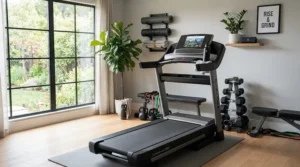
Buying the right deck is half the equation — how you set it up and use it determines whether your spine actually benefits. Start with placement: your treadmill needs a flat, stable surface, because even a slight tilt forces asymmetrical loading through your hips and lower back with every step. A rubber utility mat underneath adds a small extra cushioning layer and protects flooring from vibration.
Posture matters more than speed. Keep your gaze forward, not down at your feet — chronically dropping your chin rounds the upper back and creates the exact forward-head posture that spinal health advocates warn against. Let your arms swing naturally instead of gripping the handrails; constant grip tension pulls your shoulders forward and subtly twists your torso off-center over a 30-minute session.
In the first 30 days, the most common mistake is going too fast, too soon. Start at a walking pace slow enough to hold good posture for the full session, then add incline before adding speed — inclined walking recruits the glutes and core more evenly, which indirectly supports the lumbar spine. Finally, build a light maintenance habit: wipe the belt monthly and check deck-bolt tightness every few months, since a loosening frame is often what causes premature cushioning wear, not the material itself.
Real-World Scenarios: Who Actually Needs a Spine-Friendly Treadmill Deck
Picture Maria, 52, who sits at a desk nine hours a day and feels her lower back tighten by 3 p.m. like clockwork. She doesn’t need speed — she needs 20 minutes of gentle, cushioned movement to counteract hours of compression from sitting. A model like the Sunny Health & Fitness Elite Smart or Sole F63, used at a slow incline walk, fits her budget and her actual goal: consistency, not intensity.
Then there’s James, 34, a recreational runner nursing a mild disc bulge his physical therapist cleared him to keep moving with, as long as he avoids high-impact surfaces. For him, a deeper cushioning system genuinely earns its keep — the Sole F85 or Horizon 7.4 AT‘s zoned response gives him enough shock absorption to keep training without aggravating the injury, at a frequency of four to five sessions a week.
And Diane, 71, living alone, wants something safe enough that a fall isn’t a realistic fear. Her environment calls for a low step-up height, a confident-slow starting speed, and handrails she can actually trust — which points squarely at the Sole F63, engineered specifically around that kind of cautious, preventive back care use case.
Buyer’s Decision Framework for Posture-Focused Fitness
If you’re still torn, run through this simple framework before you check current pricing on anything.
If your main goal is preventing future back pain rather than managing an existing condition, choose a budget-to-mid cushioned deck like the Sunny Health & Fitness Elite Smart or ProForm Pro 2000, because prevention doesn’t require premium shock absorption — it requires consistency, and a lower price point removes the guilt-tax of an expensive machine gathering dust.
If you’re managing a diagnosed spinal condition under a provider’s guidance, prioritize the deepest, most zone-specific cushioning available — the Sole F85, NordicTrack Commercial 2450, or Horizon 7.4 AT — because posture-focused fitness at this stage is about minimizing re-injury risk, not saving a few hundred dollars.
If space or noise is your binding constraint, let that override cushioning depth slightly and lean toward the Echelon Stride 6s-10, because a treadmill you can’t fit or won’t use quietly enough to actually use daily provides zero spinal benefit no matter how advanced its deck technology is.
How to Choose a Cushioned Treadmill for Spinal Health
- Check the cushioning architecture, not just the marketing word “cushioned.” Zone-specific or multi-layer elastomer systems (Sole, Horizon) tend to outlast basic foam pads.
- Match weight capacity to your household, generously. A treadmill rated near your actual weight compresses cushioning faster and unevenly.
- Prioritize step-up height if balance is any concern at all. A lower deck reduces mounting risk more than any cushioning spec.
- Look at incline and decline range together. Varying the angle varies spinal loading, which prevents repetitive-strain patterns.
- Confirm the belt width fits your natural stride, not a compressed one — cramped belts subtly torque the hips.
- Read the warranty terms on the frame and motor separately. A generous frame warranty is a proxy for how long the cushioning stays supported underneath.
- Decide upfront whether you want connected programming, since subscription-dependent consoles change the real long-term cost of “budget” machines.
Cushioned Treadmill vs Traditional Alternatives for Spinal Alignment
| Option | Impact on Spine | Convenience | Best For |
|---|---|---|---|
| Cushioned Treadmill | Reduced impact via engineered deck | High — home, any weather | Daily, consistent low-impact training |
| Outdoor Running/Walking | Full impact of concrete/asphalt | Weather-dependent | Occasional, varied-terrain training |
| Standard (non-cushioned) Treadmill | Moderate impact, minimal absorption | High | Budget cardio without joint priority |
| Elliptical Machine | Very low impact, no ground contact | Moderate — bulkier machines | Zero-impact cross-training |
The comparison here isn’t really “treadmill versus nothing” — most people managing spinal sensitivity are choosing between a cushioned deck and either outdoor pavement or a bare-bones treadmill they already own. According to research published in the American Journal of Epidemiology, structured exercise alone reduces the risk of developing low back pain by roughly a third compared to inactivity, and that protective effect holds regardless of whether the exercise happens outdoors or indoors — which means the treadmill’s real advantage isn’t turning exercise into medicine, it’s removing the pavement-impact and weather excuses that keep people from moving consistently in the first place. Learn more about the research. An elliptical wins on raw impact reduction, but a cushioned treadmill wins on training specificity if walking or running is genuinely your preferred, sustainable activity.
Common Mistakes When Buying a Treadmill for Spinal Health
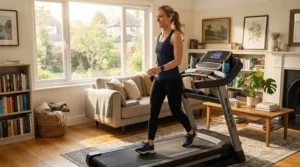
The first mistake is buying on horsepower alone. A powerful motor doesn’t cushion anything — it’s entirely a separate spec from deck technology, and plenty of shoppers overspend on speed capability they’ll never use while underspending on the cushioning system that actually protects their back.
The second is ignoring belt width in favor of overall footprint. A narrow belt on a compact-looking machine forces an unnatural stride, and that subtle hip torque compounds over hundreds of sessions. Third, buyers frequently skip checking step-up height entirely, then discover mounting the machine itself feels precarious — undermining the confidence needed to use it consistently. Finally, plenty of people assume all “shock absorption” claims are equivalent; as the research shows, a basic foam-cushioned budget unit and a multi-layer elastomer system marketed with the same phrase can differ enormously in both immediate feel and how long that cushioning quality lasts.
What to Expect: Real-World Performance for Your Spine
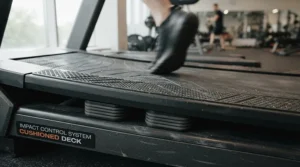
On paper, cushioning specs are abstract percentages and material names. In practice, here’s the transformation: a well-cushioned deck turns what would be a jarring heel-strike on concrete into something closer to walking on packed sand — enough resistance to feel grounded, not enough shock to rattle upward through your knees and lumbar spine with every step.
What the spec sheet won’t tell you is how this compounds over a session. On pavement, spinal micro-compression accumulates steadily minute after minute; on a genuinely well-cushioned deck like the ones on the Sole F85 or Horizon 7.4 AT, users report noticeably less end-of-session stiffness, particularly during longer 30-45 minute walks. That doesn’t mean pain vanishes — real, published research on chronic low back pain treatment consistently emphasizes that movement itself, paired with core-strengthening and patient education, drives the biggest improvements. The cushioned deck’s job is simply to make that movement sustainable rather than something you dread.
Preventive Back Care: Long-Term Cost & Maintenance
Preventive back care is, bluntly, cheaper than reactive back care — and the math on a cushioned treadmill reflects that if you use it consistently. Spread a mid-range purchase over five years of regular use, and the per-session cost lands well below a single physical therapy copay, let alone a chronic pain management plan. NIH’s ongoing Back Pain Consortium research initiative continues to study exactly this kind of self-directed movement intervention as a lower-cost complement to clinical care, underscoring that consistent, low-impact exercise is a legitimate part of a long-term back-health strategy, not just a nice-to-have. See the NIH Back Pain Consortium.
Maintenance costs stay modest if you stay ahead of them: budget for a replacement belt lubrication kit roughly once a year, inspect deck-mounting bolts every few months, and replace a worn belt (typically every 3-5 years under regular use) before it degrades enough to undercut the cushioning system beneath it. Skipping these small habits is the single biggest reason cushioned decks “stop feeling cushioned” long before the underlying technology has actually failed.
Ergonomic Exercise Equipment: Features That Actually Matter (And Those That Don’t)
Not every spec on a treadmill listing deserves your attention, and separating signal from noise saves both money and disappointment. Features that actually matter for spinal health: deck cushioning architecture, step-up height, belt width relative to your stride, and incline/decline range for load variation. These directly touch how your spine experiences each session.
Features that get marketed hard but matter far less for spinal health specifically: touchscreen size, the total number of preloaded workout videos, and Bluetooth speaker quality. They’re pleasant, sure — nobody’s arguing against a nice screen — but they don’t change what happens to your lumbar spine at footstrike. As ergonomic exercise equipment goes, the unglamorous specs (bolt tightness ratings, frame warranty length, elastomer cushioning depth) consistently predict how a machine performs for your body two years in, long after the flashy console features have stopped mattering.
Frequently Asked Questions
❓ Does a cushioned treadmill actually help with back pain?
❓ How much impact reduction does a good cushioned deck provide?
❓ Is a treadmill safer for the spine than outdoor running?
❓ How long does treadmill cushioning last before it wears out?
❓ What's the ideal treadmill speed for spinal health walking?
Conclusion
There’s no single “best” cushioned treadmill for spinal health — there’s a best one for your body, your space, and how seriously you’re taking prevention versus recovery. If durability and daily use are the priority, the Sole F85 and NordicTrack Commercial 2450 justify their premium price with cushioning engineered to last. If you’re easing into this after an injury or simply starting later in life, the Sole F63 hits a genuinely smart balance of safety and value. And if budget is the real constraint, the Sunny Health & Fitness Elite Smart proves you don’t need four figures to start protecting your back.
What matters more than any single spec is consistency — the research is unambiguous that regular, low-impact movement measurably lowers your risk of developing chronic back pain, and a treadmill only delivers that benefit if it’s comfortable enough that you actually use it. Pick the deck that removes your personal excuses, not just the one with the flashiest cushioning claim.
✨ Ready to take the pressure off your spine? 🧍♀️ Check current pricing on today’s pick and start walking your way toward a stronger, more resilient back — one low-impact step at a time!
Recommended for You
- Treadmill With Shock Absorption For Herniated Disc: 7 Top Picks 2026
- Treadmill For Lower Back Pain: 7 Real Picks That Actually Help (2026)
- 7 Best Slow-Paced Treadmills For Joint Pain Relief (2026)
Disclaimer: This article contains affiliate links. As an Amazon Associate, I earn from qualifying purchases. If you purchase products through these links, we may earn a small commission at no additional cost to you.
✨ Found this helpful? Share it with your friends! 💬🤗
