In This Article
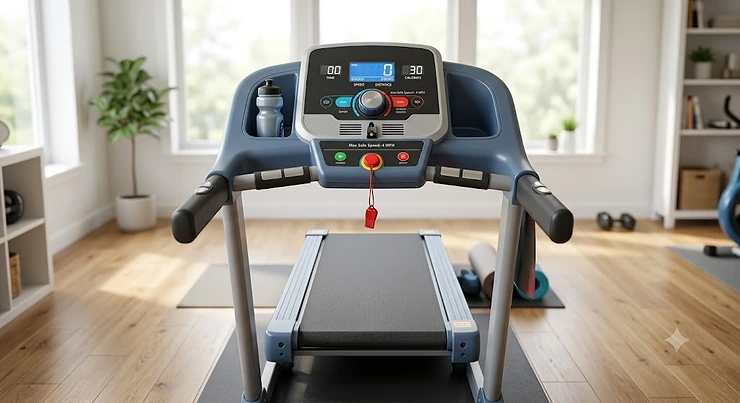
Here’s a scene every parent knows: your kid begs for a treadmill “just like Dad’s,” and somewhere in your gut, an alarm bell goes off. Good instinct. A standard adult machine can hit 10, 12, even 15 mph — speeds that turn a wobbly 9-year-old into a projectile the second their foot slips. That’s exactly why a youth treadmill with speed limiter exists as its own category, not just a smaller paint job on grown-up gear. A youth treadmill with speed limiter is a walking or jogging machine engineered — or manually configured — with a hard ceiling on belt speed, so a child physically cannot exceed a safe pace, whether they’re seven or fourteen. Below, we’ve dug into seven real, currently available machines, from featherweight manual models to app-connected smart treadmills, so you can match the right one to your kid’s age, size, and energy level (which, let’s be honest, is usually “unlimited”). We’ll break down real specs, honest trade-offs, and the parental controls that actually matter — not the marketing fluff stamped on the box.
Quick Comparison Table
| Product | Type | Top Speed | Best For |
|---|---|---|---|
| Redmon Fun & Fitness for Kids Manual Treadmill | Non-motorized | Self-paced (no motor) | Ages 3-7, tightest budget |
| KidsFit Cardio Kids Big Foot Treadmill | Motorized | 3.5 mph (hard-capped) | Ages 7+, school/therapy use |
| Fitnex XT5 Kids Treadmill | Motorized | 10 mph (adjustable cap) | Ages 6-12, serious home training |
| Sunny Health & Fitness SF-T7603 | Motorized | 9 mph (parent-set cap) | Budget-conscious families with teens |
| Sunny Health & Fitness Smart TP20 | Motorized | 6 mph (naturally capped) | Small spaces, younger teens |
| Sunny Health & Fitness SF-T4400SMART | Motorized | 9 mph (app-monitored) | Parents who want data, not guesswork |
| KidsFit 700 Manual Treadmill Elementary | Non-motorized | Self-paced (incline-limited) | Ages 7+, classroom-style safety |
Looking at the spread above, the split between motorized and non-motorized machines is really the first fork in the road: non-motorized units like the Redmon Fun & Fitness for Kids Manual Treadmill physically cannot run away from a child because there’s no motor pushing the belt, while motorized options like the Fitnex XT5 Kids Treadmill need a genuine speed limiter feature to do the same job electronically. Families with younger or smaller kids tend to do better with a hard-capped or manual unit, while households with older, more athletic teens often want the flexibility (and safety key) that comes with an adjustable-but-capped motorized model like the Sunny Health & Fitness SF-T4400SMART.
💬 Just one click — help other parents make safer buying decisions too!😊
Top 7 Youth Treadmills With Speed Limiters: Expert Analysis
1. Redmon Fun & Fitness for Kids Manual Treadmill — zero-motor design removes runaway-speed risk entirely
There’s something almost old-fashioned-genius about this one: no motor means no way for the belt to outrun the kid standing on it. Built for ages 3 to 7, it’s powered entirely by the child’s own footsteps, so the “speed limiter” is really just their leg strength and coordination — a built-in ceiling that scales with them naturally.
Specs-wise, it’s a steel-and-plastic frame rated for up to 100 lbs, with an electronic monitor that tracks time and includes an automatic shut-off after 10 minutes of inactivity, a nice touch for parents who don’t want a treadmill quietly “on” in the background. Based on the spec comparison with motorized rivals, this is the pick for parents who want zero mechanical risk and don’t mind that it can’t simulate a real jogging pace.
Reviewers consistently note that assembly is quick and that younger kids treat it more like a novel toy than serious cardio equipment, which is honestly fine for this age bracket — the goal here is movement, not marathon training. It’s not going to hold up to a rough-and-tumble 10-year-old who wants to sprint, and the plastic components feel exactly as budget as the price suggests.
Pros:
- ✅ No motor means genuinely zero runaway-speed risk
- ✅ Auto shut-off timer prevents unattended standby use
- ✅ Lightweight and simple enough for solo toddler setup
Cons:
- ❌ Weight cap of 100 lbs rules out bigger kids fast
- ❌ Plastic build won’t survive aggressive daily use
Expect this one in the budget bracket, generally under $200, and for the price, it’s a fair value pick if your child is firmly in the 3-7 window and you want a genuinely foolproof introduction to treadmill movement.
2. KidsFit Cardio Kids Big Foot Treadmill — commercial-grade frame with a hard 3.5 mph speed ceiling
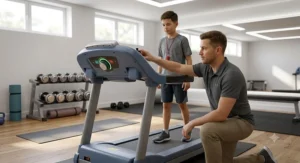
This is the machine you’ll actually find bolted into elementary school gyms and pediatric physical therapy clinics, and that institutional pedigree shows. The motorized deck is factory-limited to a speed range of roughly 0.5 mph (a slow stroll) up to about 3.5 mph, which lands right at the point where walking becomes light jogging — deliberately, since the manufacturer built it for supervised group settings where a runaway machine simply isn’t an option.
What most buyers overlook about this model is that the steel-reinforced frame supports users up to 300 lbs, meaning it’s rated less by age and more by size, so it can serve a wide range of body types from age 7 through early teens. The children’s computer readout displaying speed, time, distance, and calories gives kids just enough feedback to stay motivated without overwhelming them with adult-style metrics.
Aggregated reviewer sentiment from institutional buyers frequently praises the durability and the accessible customer support, though a few reviewers with home settings note that the shipped-freight delivery process is a hassle compared to a standard Amazon box.
Pros:
- ✅ Hard 3.5 mph cap prevents accidental sprinting speeds
- ✅ Commercial-grade steel frame handles up to 300 lbs
- ✅ Built-in emergency stop and safety side rails
Cons:
- ❌ Ships freight, which complicates home delivery logistics
- ❌ Premium price for a walking-only speed range
At a price generally in the $1,500-$2,000 range, this is a premium pick best justified for families genuinely serious about a school-quality machine — or those replicating a physical-therapy setup at home.
3. Fitnex XT5 Kids Treadmill — widest adjustable speed range with a parent-set ceiling
If the Redmon and KidsFit models are training wheels, the Fitnex XT5 Kids Treadmill is the bike your kid actually grows into. Its 2.5 HP motor pushes speeds from 0.5 up to 10 mph, but the practical value here isn’t the top end — it’s that a parent can lock the console to a lower maximum, effectively turning a full-range adult-style machine into a genuine youth treadmill with speed limiter.
The 18″ x 52″ belt and 3/4″-thick deck with SDS cushioning mean it’s built to handle real jogging strides rather than just shuffling steps, and the 12% incline range lets an athletic 11-year-old actually train, not just fidget. Here’s what to weigh: at 152 lbs of machine supporting a 200 lb max user weight, it’s tailored more toward smaller-statured kids and pre-teens than a fully grown 16-year-old.
Reviewers note the price tag is steep — commonly cited near $2,000 — but also point out a genuinely long warranty window (up to 20 years on the motor for residential use), which softens the sting for families planning to keep it for years.
Pros:
- ✅ Console-adjustable speed cap fits multiple age stages
- ✅ 3/4-inch cushioned deck reduces joint impact
- ✅ Long residential motor warranty adds long-term value
Cons:
- ❌ Among the priciest options in this entire roundup
- ❌ 200 lb user cap limits it for larger teens
Value verdict: pricey, but for a family committed to youth-specific equipment over multiple growth spurts, the Fitnex XT5 Kids Treadmill earns its premium price range through longevity and adjustability.
4. Sunny Health & Fitness SF-T7603 — budget adult-style deck with manually enforced low-speed use
Not every youth treadmill with speed limiter needs to be marketed to kids — sometimes the smarter move is a genuinely affordable adult treadmill that a parent deliberately caps low. The Sunny Health & Fitness SF-T7603 runs a speed range of 0.5 to 9 mph, but the real feature here is the handrail speed controls paired with a safety key, letting a supervising adult set and hold a conservative pace for a tween or young teen.
The 220 lb max user weight and compact 49″ x 15.5″ deck keep the footprint apartment-friendly, and the emergency stop clip means an adult can kill the belt instantly if a kid gets wobbly. What the spec sheet won’t tell you, but user reports suggest, is that this machine feels distinctly budget-grade at higher speeds — vibration increases noticeably past 6 mph, which, conveniently, is well above where most youth sessions should sit anyway.
Reviewers consistently describe it as “fine for walking and light jogging” but not built for serious running, which lines up well with what pediatric guidance actually recommends for younger users.
Pros:
- ✅ Handrail controls let a parent enforce a low pace
- ✅ Safety key and emergency stop for instant shutdown
- ✅ Compact footprint fits small home gyms easily
Cons:
- ❌ Noticeable vibration once speed climbs past 6 mph
- ❌ 220 lb capacity is modest for a shared family machine
Priced in the low-$300s range, this is the value pick for parents who want an adult-capable machine they can dial down rather than a kid-only unit they’ll outgrow.
5. Sunny Health & Fitness Smart TP20 — naturally capped 6 mph ceiling built for smaller users
Sometimes the simplest speed limiter is just a lower factory ceiling, full stop. The Sunny Health & Fitness Smart TP20 tops out at 6 mph, which conveniently sits right in the “brisk walk to light jog” zone that’s appropriate for most kids under 14 — no manual capping required.
Its compact 40″ x 16″ walking deck extends for jogging when the handlebar is deployed, and the 1.5 HP motor keeps things quiet enough for shared living spaces, a detail parents of light sleepers will appreciate. A remote control for speed adjustments and a physical safety key add two extra layers between an unsupervised child and an active belt, and the 245 lb max weight capacity means it can flex from a 9-year-old up through a full-grown adult using it for a walk.
Reviewers frequently highlight the Wi-Fi and Bluetooth connectivity for syncing to a smart TV or the SunnyFit app, though a few also note the low top speed means older teen athletes will find it limiting for genuine training.
Pros:
- ✅ Factory-capped 6 mph ceiling needs no manual setup
- ✅ Remote control and safety key add layered protection
- ✅ Compact deck and quiet motor suit shared spaces
Cons:
- ❌ Top speed too low for serious teen athletes
- ❌ Smaller deck limits stride length for taller kids
Sitting in the mid-$300s range, this is a smart value pick specifically for younger kids or smaller teens where 6 mph is plenty of challenge.
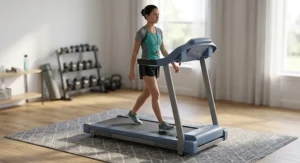
6. Sunny Health & Fitness SF-T4400SMART — app-based monitoring turns supervision into real data
Physical speed limiters are one layer of protection; visibility is another, and that’s where the Sunny Health & Fitness SF-T4400SMART pulls ahead. It runs the same 0.5-9 mph range and 2.2 HP motor as its sibling models, but its standout feature is Bluetooth pairing with the free SunnyFit app, which logs every session’s speed, duration, and distance to a parent’s phone.
Based on the spec comparison with the non-connected models in this roundup, that logging capability is the single biggest differentiator — a parent working from another room can check exactly how fast their kid actually ran, not just trust a verbal “I kept it slow, promise.” The 285 lb weight capacity and 49″ x 16″ cushioned deck make it comfortably sized for a household mixing teen and adult users, and the soft-drop folding mechanism keeps it from becoming a permanent floor fixture.
What most buyers overlook is that the app itself doesn’t enforce a hard speed lock — it reports after the fact, so it complements rather than replaces direct supervision or a manually set low pace.
Pros:
- ✅ App logging gives parents real speed and time data
- ✅ Roomy 285 lb capacity suits mixed teen-and-adult homes
- ✅ Foldable soft-drop design saves floor space
Cons:
- ❌ App tracks speed but doesn’t hard-lock a maximum
- ❌ Bluetooth setup adds a mild tech learning curve
At a price generally landing in the $300-$400 range, this is the pick for tech-comfortable parents who want data alongside — not instead of — supervision.
7. KidsFit 700 Manual Treadmill Elementary — commercial-grade manual deck with incline-based pacing
Rounding out the list, the KidsFit 700 Manual Treadmill Elementary takes the same no-motor philosophy as the Redmon but scales it up to commercial durability. Designed specifically for ages 7 and older, it swaps a motor for an adjustable incline that a facility operator — or parent — uses to control how demanding, and therefore how fast, a child can comfortably move the belt.
The reinforced running surface and welded steel frame handle up to 350 lbs, making it one of the most durable non-motorized options on this list, built more like the equipment you’d find in a school gymnasium than a garage impulse-buy. Aggregated sentiment from institutional buyers frequently praises its resilience under heavy daily rotation of different-sized kids, though home users note that, without a motor, younger or less coordinated children may need a few sessions to get comfortable finding a steady rhythm.
Because there’s no belt motor to run away from a child, it functions as one of the most inherently safe speed-limiting designs available, at the cost of the smoother, more game-like feel a motorized console can offer.
Pros:
- ✅ Incline adjustment lets you control effective difficulty
- ✅ 350 lb capacity is the highest on this entire list
- ✅ Zero motor means zero runaway-speed possibility
Cons:
- ❌ Requires a slight learning curve for rhythm and pacing
- ❌ Lacks the game-like console features kids often want
Typically priced in the mid-$300s to $450 range depending on the retailer, it’s a strong value pick for families prioritizing raw durability and safety over bells and whistles.
Practical Usage Guide: Setting Up Your Youth Treadmill With Speed Limiter
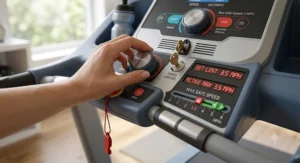
Getting the machine in the door is the easy part; setting it up so the speed limiter actually does its job takes a little more care. First, always place the treadmill against a wall with the console side facing into the room, so a supervising adult can see the display and reach the emergency stop from any angle — not tucked in a corner where a struggling child is out of sight. Second, during the first 30 days, resist the urge to unlock the full speed range immediately; start at the lowest setting for at least the first week so your child builds balance and reflexes before intensity increases. A common mistake here is leaving the safety key in the machine between sessions — always remove it and store it separately, exactly as CPSC recommends for home exercise equipment safety. For maintenance, wipe down the belt weekly and check for fraying every month, since kids’ shoes track in more grit than adult sneakers typically do. Finally, if your model has an app, spend ten minutes during setup actually configuring notification alerts — most parents skip this step and lose the single biggest advantage of buying a connected machine in the first place.
Real-World Scenario: Matching the Right Machine to Your Kid
Picture three households. First, there’s the family with a 5-year-old who just wants to copy Mom’s morning routine — for them, the Redmon Fun & Fitness for Kids Manual Treadmill is close to perfect, since there’s no way for the belt to move faster than tiny legs can push it, and the price point doesn’t sting if interest fades in a few months. Second, there’s the household with an active 11-year-old training for school cross-country tryouts, where the adjustable-but-capped Fitnex XT5 Kids Treadmill makes more sense, letting speed and incline scale up as fitness improves while a parent keeps a hard ceiling in place. Third, picture the family with two teenagers and one shared home gym budget — here, the Sunny Health & Fitness SF-T4400SMART earns its keep, since its app logging lets one machine serve both a cautious 13-year-old and a more advanced 16-year-old, with actual data instead of guesswork about who used it and how fast.
✨ Don’t Miss These Exclusive Deals!
🔍 Take your child’s home fitness routine to the next level with these carefully selected, speed-limited treadmills. Click on any highlighted model to check current pricing and availability — these picks help build safe, lasting exercise habits your whole family will love!
How to Choose a Youth Treadmill With Speed Limiter
- Match weight capacity to your child’s actual size, not just their age — a sturdy 10-year-old can easily exceed a “kids'” machine’s rated limit.
- Confirm the speed cap is hardware-based, not just a suggested setting — true limiters restrict the motor itself, not just a default screen.
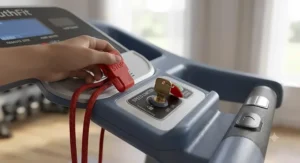
- Check for a physical safety key or emergency stop clip — this is non-negotiable for any motorized unit in a home with kids.
- Look at deck size relative to stride length — a cramped belt increases trip risk far more than speed does.
- Consider whether app-based monitoring adds real value for your household — it’s a bonus, not a substitute for supervision.
- Factor in noise level if the treadmill shares space with bedrooms — lower-HP motors like those in the Sunny Health & Fitness Smart TP20 run noticeably quieter.
- Budget for the whole lifecycle, not just the sticker price — belts, key fobs, and cushioning pads wear out and need replacing.
Common Mistakes When Buying a Kids’ Treadmill
The single most common mistake is buying based on age range alone, ignoring the listed weight capacity — a big-for-his-age 8-year-old can quietly exceed a machine’s limit within a year. A second frequent misstep is assuming “kids’ treadmill” automatically means “speed-limited”; some marketed-to-children machines actually share full adult speed ranges with no meaningful cap, so always verify the actual mph ceiling in the spec sheet, not just the marketing copy. Parents also commonly skip reading the incline specs, not realizing that a low top speed paired with a high incline can still produce a genuinely intense workout — intensity isn’t only about speed. Another overlooked error is placing the treadmill somewhere it’s easy for younger siblings to wander up to unsupervised; even a “safe” capped machine still has moving parts that pose a pinch and burn hazard to a toddler’s fingers. Finally, some buyers skip checking return policies, which matters enormously here since a machine that feels “just right” in a showroom can feel entirely different once an actual, wriggling child steps on the belt at home.
Youth Treadmill vs Standard Adult Treadmill
The core difference isn’t cosmetic — it’s the ceiling. A standard adult treadmill routinely tops out between 10 and 12 mph, a speed range built for adult training goals like interval sprints, and most consoles have zero meaningful lockout for a curious child who taps the speed-up button repeatedly. A genuine youth treadmill with speed limiter, by contrast, either physically cannot reach those speeds (as with non-motorized designs like the KidsFit 700 Manual Treadmill Elementary) or lets a parent lock the console well below the hardware’s maximum (as with the Fitnex XT5 Kids Treadmill). Where adult machines win is in longevity of usefulness — a family that buys strictly adult-only equipment can still lock it down later using PIN codes or removable safety keys, essentially building their own limiter into a full-range machine, which is exactly the workaround several Sunny Health & Fitness models in this list rely on. The trade-off is peace of mind versus flexibility: dedicated youth machines remove nearly all guesswork, while capped adult machines require more consistent parental diligence but grow with the family for years longer.
What to Expect: Real-World Performance
On paper, a 3.5 mph cap sounds almost too gentle — but in practice, that’s a brisk walking pace that gets a young heart rate up meaningfully within minutes, especially paired with even a modest incline. Parents often expect their kids to want to run flat-out immediately; in reality, most children under 10 naturally gravitate toward a walk-jog rhythm well within a capped machine’s range, making the speed limiter feel less restrictive day-to-day than it sounds on a spec sheet. Where performance differs noticeably between models is deck cushioning — machines like the Fitnex XT5 Kids Treadmill with SDS cushioning feel noticeably softer underfoot than budget decks, which matters over repeated 20-30 minute sessions. Noise is another real-world factor that specs undersell: a 1.5-2 HP motor, like the one in the Sunny Health & Fitness Smart TP20, runs quietly enough for a child to watch a show or chat with a sibling mid-session, while heavier-duty motors hum more noticeably.
Pediatric Fitness Guidelines and Safety Regulations
Before buying anything, it helps to know what health authorities actually recommend. Per the CDC’s Physical Activity Guidelines for school-aged children and adolescents, kids ages 6-17 should get 60 minutes or more of moderate-to-vigorous activity daily, and a treadmill can reasonably contribute to that total without needing to hit adult-level speeds. On the safety side, the numbers are sobering enough to take seriously: the U.S. Consumer Product Safety Commission has documented tens of thousands of treadmill-related emergency room visits annually, with young children at disproportionate risk of hand and finger injuries from moving belts. A peer-reviewed review of pediatric treadmill injury data found that most injuries in children under five happen when a child approaches a machine already in use by an adult, underscoring that speed limiters matter for the child actually using the machine, but active supervision and physical barriers matter just as much for younger siblings nearby. These pediatric fitness guidelines aren’t meant to scare families away from home treadmills — they’re meant to frame realistic expectations: capped speed, active supervision, and sturdy hardware together, not any single feature alone.
Speed-Capped Treadmill for Kids: Why the Cap Number Matters More Than the Brand
When shopping specifically for a speed-capped treadmill for kids, resist getting drawn in by brand names before checking the actual number on the spec sheet. A 3.5 mph cap, like on the KidsFit Cardio Kids Big Foot Treadmill, suits younger children and walking-focused routines, while a 6 mph cap, like the Sunny Health & Fitness Smart TP20, opens the door to light jogging for older kids without approaching genuinely risky speeds. Adjustable-cap machines, such as the Fitnex XT5 Kids Treadmill, effectively let one purchase serve as several different speed-capped treadmills over a child’s growth years, which can offset the higher upfront price over time. The honest trade-off: a fixed, low-cap machine is simpler and arguably safer by default, while an adjustable cap demands that a parent actually remembers to reset it down after letting an older sibling use a higher setting.
Youth-Safe Treadmill Settings Every Parent Should Configure
Beyond the top speed cap itself, several other youth-safe treadmill settings deserve attention during setup. Incline should generally start at 0% for at least the first few sessions, since combining an unfamiliar incline with any new speed setting increases fall risk for a child still building coordination. Auto-stop or auto-pause timers, available on models like the Redmon Fun & Fitness for Kids Manual Treadmill, should be configured to the shortest reasonable interval rather than left at a default that might run for 20+ unattended minutes. If the console offers adjustable acceleration ramp time — how quickly the belt reaches target speed — set it to the slowest available option, since a sudden jump to even a capped top speed can catch a child off guard. Volume and display brightness settings matter more than people expect too: an overly bright or noisy console can distract a young user at exactly the moment they need to focus on their footing.
Parental Controls Worth Prioritizing
Not all “parental controls” marketing claims translate to genuinely useful features, so it’s worth separating the meaningful ones from the fluff. A physical, removable safety key — standard on every Sunny Health & Fitness model in this roundup — remains the single most reliable parental control, since it makes the machine physically inoperable without adult involvement. App-based monitoring, like what the Sunny Health & Fitness SF-T4400SMART offers through SunnyFit, adds a valuable second layer by logging actual usage data, though as covered earlier, it reports rather than restricts. PIN-lock consoles, increasingly common on mid-range connected treadmills, let a parent set a numeric code required to unlock speeds above a chosen threshold, functioning similarly to a built-in babysitter for the settings menu. Whatever combination you choose, the honest takeaway is that no single parental control feature replaces direct supervision for children under about 10 — these tools work best as backup layers, not primary safeguards.
Kids’ Exercise Equipment: Where a Treadmill Fits In
A speed-limited treadmill is just one piece of a broader kids’ exercise equipment picture, and it’s worth being honest that it isn’t always the first purchase a family should make. For younger children especially, unstructured equipment like a mini trampoline or balance beam often builds foundational coordination more effectively than a treadmill’s repetitive motion. Where a treadmill genuinely earns its place in a kids’ exercise equipment lineup is for households in colder climates, families managing a child’s specific cardio goals (like off-season training for a sport), or homes where outdoor space simply isn’t reliably available. If a treadmill is your next purchase, pairing it with basic complementary equipment — a jump rope, resistance bands sized for kids, or a simple pull-up bar — rounds out the muscle- and bone-strengthening activity that pure treadmill walking doesn’t fully cover on its own.
Long-Term Cost & Maintenance
The sticker price is only the opening bid in what a youth treadmill with speed limiter actually costs over its lifespan. Belts on budget models typically need replacement or professional realignment every 2-3 years of regular use, running commonly in the $50-$150 range depending on the model and whether you DIY it. Safety keys and remote fobs, easy for kids to misplace, are worth budgeting a replacement or two into the total cost of ownership. On the value side, motorized models with longer warranties — like the Fitnex XT5 Kids Treadmill‘s extended residential motor coverage — can work out cheaper per year of use than a bargain machine that needs full replacement after two seasons of heavy use. Electricity costs are genuinely negligible for home motorized treadmills, but it’s worth factoring in that non-motorized options like the KidsFit 700 Manual Treadmill Elementary sidestep both electricity costs and motor-replacement risk entirely, which meaningfully lowers their total cost of ownership over a decade of use.
Frequently Asked Questions
❓ What speed is safe for a child on a treadmill?
❓ Can you add a speed limiter to a regular treadmill?
❓ Is a manual or motorized kids' treadmill safer?
❓ At what age can a child safely use a treadmill?
❓ Do youth treadmills need a safety key?
Conclusion
Choosing a youth treadmill with speed limiter really comes down to matching hardware to your specific kid, not chasing the flashiest console. Younger, smaller children are almost always better served by a non-motorized option like the Redmon Fun & Fitness for Kids Manual Treadmill or the KidsFit 700 Manual Treadmill Elementary, where the absence of a motor removes runaway-speed risk entirely. Older, more athletic kids benefit from the adjustable ceiling of something like the Fitnex XT5 Kids Treadmill, while budget-focused families can get real mileage out of a capped adult-style unit like the Sunny Health & Fitness SF-T7603 or its app-connected sibling, the SF-T4400SMART. Whatever you land on, remember that a speed limiter is a tool, not a babysitter — pair it with active supervision, a removable safety key, and honest conversations about treadmill rules, and you’ve covered the fundamentals that actually keep kids safe.
Recommended for You
- 7 Best Treadmills for Elderly Under $600 in 2026
- Treadmill for Elderly Recovering From Surgery: 7 Safest 2026 Picks
- Walking Treadmill for Elderly: 7 Safest Picks for 2026
Disclaimer: This article contains affiliate links. As an Amazon Associate, I earn from qualifying purchases. If you purchase products through these links, we may earn a small commission at no additional cost to you.
✨ Found this helpful? Share it with your friends! 💬🤗
