
In This Article
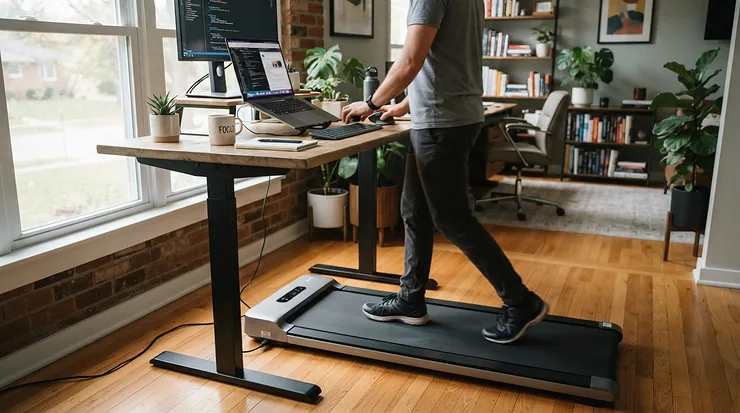
Every renter knows the dance. You sign a twelve-month lease, measure the studio twice, and then wonder how a machine the size of a loveseat is supposed to share space with a bed, a desk, and a landlord who has opinions about floors. A treadmill for renters with storage constraints has to win three fights at once. It must shrink when you’re done, survive the next move without a crew of friends, and keep your downstairs neighbor from becoming a sworn enemy. 🏃♂️
What Is a Treadmill for Renters With Storage Constraints?
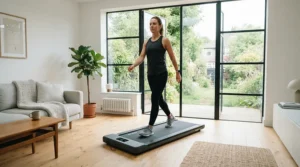
A treadmill for renters with storage constraints is a walking or running machine designed to disappear when you’re finished. It folds flat for under-bed or closet storage, tips upright against a wall, or weighs little enough to move without help. It trades giant touchscreens for a small footprint, manageable weight, and quieter operation.
Why bother at all? The CDC’s adult physical activity guidelines call for at least 150 minutes of moderate-intensity activity a week, and brisk walking counts. A belt in your living room turns “it’s pouring outside” into a non-excuse. In 2026, the market has split into two camps. Ultra-slim walking pads slide under furniture, and full-size folding treadmills tip upright for people who still want to run.
Everything below rests on published spec sheets, independent expert testing, and aggregated review sentiment, not personal ownership. Where I couldn’t verify something, I say so. Think of it as a spec-sheet translator for people whose square footage is measured in regrets.
Quick Comparison Table: 7 Space-Smart Treadmills at a Glance
| Product | Type | Approx. price range* | Stored shape | Best For |
|---|---|---|---|---|
| WalkingPad Z1 | Walking pad | Budget tier (check current price) | Folds flat, 180° | Studio renters who only walk |
| Sperax Walking Pad (P2 Pro) | Walking pad | Budget tier (check current price) | Flat or upright | Frequent movers who hate lifting |
| UREVO Strol 2E | Walk/jog hybrid | Budget tier (check current price) | Fold-down with handle | Walkers who want a jogging option |
| WalkingPad R2 | Tri-fold compact | Around $500–$650 | Slim, roughly 6 in. tall | Under-bed storage with more speed |
| ProForm Carbon TL | Full-size folding | Around $650–$750 | Upright, tall | Budget runners with a closet corner |
| Sole F63 | Full-size folding | Around $900–$1,100 | Upright, deep | Runners with a long lease |
| Horizon 7.0 AT | Full-size folding | Around $900–$1,100 | Upright, heavy | Cushioning-first runners |
*Prices shift constantly, so treat these as ballparks at the time of research and check current price on the listing.
Look at the table and the split is obvious. The three walking pads and the WalkingPad R2 are the true under-bed machines. The ProForm Carbon TL, Sole F63, and Horizon 7.0 AT are real running treadmills that fold upright but still claim a corner of a room. If your lease allows only a closet’s worth of surrender, pick from the top half. If you run more than you walk, the bottom half is where the motors live.
💬 Just one click — help others make better buying decisions too!😊
Top 7 Treadmills for Renters With Storage Constraints: Expert Analysis
These seven span walking-only slimline pads to proper running machines. Each section interprets the specs in practical terms and flags what could not be verified.
1. WalkingPad Z1 — folds a full 180° for flat storage
The standout trick of the WalkingPad Z1 is its 180-degree fold, which collapses the deck into a slab you can slide beneath a bed or sofa. It weighs about 23 kg (roughly 50 lb) and arrives fully assembled, so there’s no weekend lost to an Allen wrench.
Top speed is 6 km/h, about 3.7 mph. That is a purposeful walk, not a jog, and the 110 kg (about 243 lb) capacity fits most lighter-to-average walkers. Shock absorption is claimed to ease joint load. In practice, a 50-pound object is easy to slide and annoying to carry up stairs, so treat it as a “stays in the apartment” machine rather than a “tote it to the third floor” one.
This is for the remote worker or studio dweller who wants steady daily steps. Which? included the Z1 in its January 2026 walking-pad tests, though its detailed scores sit behind a membership wall. I couldn’t verify a pooled customer-review rating, so check recent buyer feedback on belt noise before you commit.
Pros:
- ✅ Full 180° fold slides under most furniture
- ✅ Arrives fully assembled and ready to use
- ✅ Remote and app control for hands-free speed
Cons:
- ❌ Walking-only top speed of about 3.7 mph
- ❌ Weight capacity trails the heavy-duty alternatives
Price check: it sits in the budget tier, so confirm the current price on the listing. Value is strong if walking is the goal.
2. Sperax Walking Pad (P2 Pro) — lightest mover in this group
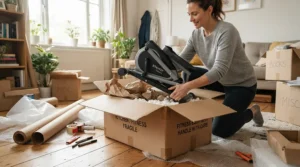
What makes the Sperax special for renters is how little it weighs. OutdoorGearLab measured its reviewed Sperax pad at 45 lb with wheels on the front corners, so you can push, roll, or even lift it. Stood on end, it measures about 48 inches tall and just under 20 inches wide, which is how it tucks beside a closet door.
One honest comparison: an independent write-up pits the Sperax P2 Pro against UREVO’s CyberPad and finds the Sperax roughly half the weight and well under two-thirds the height. That matters when you’re relocating every year. The same write-up notes the P2 Pro uses a 400W servo motor and lists a 350 lb capacity. Two caveats apply. Nothing I found calls that motor brushless, and OutdoorGearLab wouldn’t recommend its tested pad to anyone over about 220 lb despite the higher stated limit. The 15.25-inch belt is also narrower than some rivals.
It suits lighter walkers and serial movers. For reviews, I’d rely on the expert testing above rather than an invented consensus. The brand’s own site, per that comparison, lists a one-year warranty.
Pros:
- ✅ About 45 lb, easy to roll or lift
- ✅ Stands upright in a narrow footprint
- ✅ Quick to start, with simple controls
Cons:
- ❌ Narrow belt compared with some walking pads
- ❌ Real-world comfort for heavier users is questionable
Price check: budget tier, so verify the current price. The value case rests on portability.
3. UREVO Strol 2E — the one that dares you to jog
The UREVO Strol 2E is a 2-in-1 with a split personality. Its running mode reaches 6.2 mph, while folding walking mode tops out at 4 mph. The belt is 15 × 40.2 inches, the motor is rated at 2.25 HP, and eight silicone shock absorbers sit under the deck. A folding safety handle gives hesitant beginners something to grab.
The practical read is this. If you want a light jog now and then, this is one of the few compact machines that even entertains the idea. A 40-inch belt is short, though, so a long stride will feel cramped. The 265 lb capacity sits in the normal range for the category. The remote includes a one-key mute and magnetic storage, a small detail that matters when your neighbors work nights.
A roundup I found lists it as a best-value pick with several thousand reviews, which suggests a big buyer pool. I couldn’t verify the exact rating, so read recent reviews for belt-slip and noise comments yourself.
Pros:
- ✅ Walk mode and a 6.2 mph run mode
- ✅ Folding safety handle for steadier balance
- ✅ Remote with one-key mute
Cons:
- ❌ Short belt limits a full running stride
- ❌ Handle adds bulk when stored upright
Price check: budget tier, so confirm the current price. Value is solid for the hybrid ability.
4. WalkingPad R2 — more speed, still under the bed
The WalkingPad R2 is the middle child between slim pads and proper treadmills. Its tri-fold design collapses to roughly 72 cm wide, 100 cm deep, and just 16.2 cm tall, which converts to about 28 × 39 × 6.4 inches. A retailer listing gives a 0.3 to 7.5 mph range. Other regional listings quote up to 10–12 km/h, so specs vary by market and version. Check the exact model before buying.
It weighs around 36 kg (about 79 lb), which is a real thing to haul upstairs. The belt is roughly 120 × 43–44 cm (about 47 × 17 inches) and capacity is 110 kg, around 243 lb. One roundup placing it near the $550 mark calls it the best ultra-compact pick but flags that it’s no replacement for a serious running machine. It’s best for brisk walking, recovery days, and light cardio.
I couldn’t verify a trustworthy pooled customer rating, so lean on the spec comparison here and read recent buyer feedback.
Pros:
- ✅ Folds to roughly 6.4 inches tall
- ✅ Wider speed range than basic pads
- ✅ Transport wheels for shifting rooms
Cons:
- ❌ Around 79 lb is heavy for stairs
- ❌ Specs differ across regional versions
Price check: roughly the $500–$650 range. Fair value if you want under-bed storage with more speed.
5. ProForm Carbon TL — the budget runner that stands upright
The ProForm Carbon TL is where the category stops being a walking toy. It has a 2.6 CHP motor, a 0–10 mph speed range, 0–10% incline, and an 18 × 55 inch belt on a steel frame. Retailers list a 300 lb capacity. It uses ProShox deck cushioning and offers iFIT connectivity, though you don’t need a subscription to use it manually.
Storage is the catch. Its EasyLift fold stands the deck upright, with one retailer listing a folded footprint near 38 × 35 inches and a height around 67 inches. Listed weights range from about 166 to 222 lb across retailers (likely shipping versus assembled), so verify before you plan stair logistics. A roundup crowned it the best budget runner-style fold at around $700.
It suits a renter with a spare closet corner and no plans to move soon. Warranty terms on a retailer listing show one year on parts and labor and ten on the frame. I couldn’t verify pooled reviews, so check the latest buyer feedback before ordering.
Pros:
- ✅ Real running speeds up to 10 mph
- ✅ 10% incline and ProShox cushioning
- ✅ EasyLift upright fold saves floor space
Cons:
- ❌ About 5.5 feet tall when folded
- ❌ Heavy to move between apartments
Price check: roughly $650–$750. Good value for a runner on a tight budget.
6. Sole F63 — big motor, bigger footprint
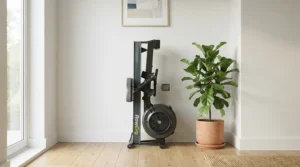
The Sole F63 is the “I actually run” option. It carries a 3.0 CHP motor and weighs about 224 lb. A comparison from Garage Gym Reviews notes it has a footprint roughly 6 inches longer than the Horizon 7.0 and that it shakes slightly at running speeds. Their comparison also says it lacks the deck cushioning the Horizon offers, while another roundup praises both machines for cushioning. Sources disagree, so check the current spec sheet.
For a renter, that shake matters. Floor vibration travels, and a heavy, planted frame helps, but running at speed will still be audible downstairs. The upside is no mandatory subscription, with onboard programs and free app options. A roundup placed it near $1,000 and credited it with the best motor in this group.
This fits the long-lease renter with a ground-floor or concrete-slab apartment. I couldn’t verify an independent customer-review consensus, so the expert comparisons above are my anchor.
Pros:
- ✅ 3.0 CHP motor handles serious running
- ✅ No required subscription for core use
- ✅ Folds upright for floor reclamation
Cons:
- ❌ Noticeable shake at running speeds
- ❌ Deep, heavy frame resists easy moves
Price check: around $900–$1,100. Worth it only if you truly run.
7. Horizon 7.0 AT — cushioning-first fold for apartment runners
The Horizon 7.0 AT earns its place on one word: cushioning. Comparisons credit it with deck cushioning that the Sole F63 reportedly lacks, plus a slightly smaller footprint. Horizon doesn’t disclose motor horsepower, which is mildly annoying, but testers place it among leaders in folding-treadmill cushioning and max speed.
The weight is the trade-off. At about 277 lb, it’s one of the heaviest machines here, so think of it as a “move once, then stay” investment. That mass helps stability and likely damps vibration, though no machine makes a second-floor run silent. A roundup names it the best pick for apartment runners at around $1,000, and treats it as a rival to the Sole F63.
It’s for the committed runner who wants gentler impact. I couldn’t verify a pooled review score. If you want an alternative, the Sole F63 is the main rival, and the pricier Sole F80 reportedly adds more motor and a touchscreen for roughly $700 more.
Pros:
- ✅ Strong deck cushioning for joint comfort
- ✅ Slightly smaller footprint than its main rival
- ✅ Fold-up deck reclaims floor space
Cons:
- ❌ Roughly 277 lb makes moving a project
- ❌ Motor horsepower isn’t clearly disclosed
Price check: around $900–$1,100. Strong value for cushioning-focused runners.
Setup, Noise Control, and Your First 30 Days
Buying the machine is half the job. Here’s a practical first-month plan that listings rarely provide.
Week one: place it right. Position the treadmill near an interior wall rather than the middle of an open floor span, since an NordicTrack apartment guide notes mid-span floors transmit more. Lay a rubber mat under the full footprint. Property managers quoted by Brick Underground suggest thick padding topped by a half-inch rubber mat, but warn that anything too soft makes the machine unstable.
Week two: build a schedule. Run at reasonable hours and tell your neighbors you own one. A heads-up costs nothing and defuses more complaints than any mat.
Week three: maintain. Lubricate the belt per the manual, wipe down the deck, and check alignment. A dry belt is a loud belt.
Week four: audit. Look for vibrations in shelves or glass, which signal floor resonance. Common first-month mistakes include skipping the mat, ignoring belt lube, and storing the machine damp. Fix those three and most problems never appear.
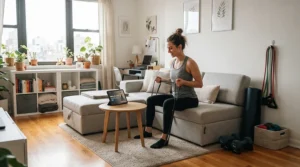
Real-World Scenarios: Which Treadmill Fits Which Renter?
Profiles beat spec sheets, so here are three composites built from the research above.
The studio-dwelling remote worker. She lives in a 450-square-foot unit on the fourth floor, walks while on calls, and has no desire to run. Her priority is under-bed storage and low noise. The WalkingPad Z1 or Sperax Walking Pad (P2 Pro) fits, because both fold flat, stay light, and handle steady walking. A heavier machine would be a stairwell punishment.
The two-year relocator. He moves for work every 18–24 months, shares a car with a roommate, and wants to jog occasionally. The UREVO Strol 2E gives him a 6.2 mph run mode without a full-size footprint. If the next apartment has an elevator, the WalkingPad R2 becomes a candidate, since its 79 lb weight is only a problem on stairs.
The ground-floor runner. She signed a three-year lease on a concrete-slab ground floor and runs five days a week. This is the ProForm Carbon TL, Sole F63, or Horizon 7.0 AT situation. If joint comfort leads her list, the Horizon 7.0 AT earns the edge. If her wallet leads, the ProForm Carbon TL does.
💡 The pattern: match machine to lease length and floor level first, then to workout style.
How to Choose a Treadmill for Renters With Storage Constraints
Use these seven steps in order:
- Measure your storage zone first. Under-bed clearance, closet depth, and wall space decide everything. Measure folded height, not marketing claims.
- Decide walking or running. Walking pads top out near 4–7 mph. Running needs a real motor and longer belt.
- Check weight against your stairs. A 45 lb machine and a 277 lb machine are different lifestyles.
- Verify weight capacity honestly. Stated limits can exceed recommended use, as one tester warned about a 320 lb claim.
- Prioritize cushioning and noise. Impact noise, not motor hum, usually bothers neighbors.
- Read your lease. Some buildings restrict exercise equipment or quiet hours.
- Confirm warranty and assembly. Fully assembled units save a weekend, and Consumer Reports advises checking whether assembly is included with delivery.
Follow those, and you’ll eliminate roughly 80% of poor fits before reading a single review.
Easy-to-Store Treadmill for Renters: Walking Pad vs Folding Treadmill
The core question is simple: do you want an easy-to-store treadmill for renters that vanishes under a bed, or a bigger machine that parks upright? Consumer Reports’ foldable guide notes that folding treadmills are generally about half as long when stored, but they still take up space and often have shorter decks than non-folding models.
| Factor | Walking pad | Full-size folding treadmill |
|---|---|---|
| Stored footprint | Slides under a bed or sofa | Tall, stands against a wall |
| Typical weight | Roughly 45–80 lb | Roughly 200–280 lb |
| Running ability | Limited, light jog at best | Genuine running speeds |
| Moving difficulty | One or two people | Usually needs help or dollies |
| Best For | WalkingPad Z1, Sperax, UREVO Strol 2E, WalkingPad R2 | ProForm Carbon TL, Sole F63, Horizon 7.0 AT |
The table makes the trade-off plain. Walking pads win on storage and moving, while folding treadmills win on performance. For most renters whose main goal is daily steps, the lighter machines are the smarter easy-to-store treadmill for renters. If you’re training for a 10K, pay the weight tax.
Treadmill for Frequent Movers: Weight, Wheels, and Stairs
A treadmill for frequent movers lives or dies by one number: how many pounds you can carry down a staircase. The Sperax Walking Pad (P2 Pro) at roughly 45 lb is the clear winner, since it can be lifted and rolled. The WalkingPad Z1 at about 50 lb is close behind.
At roughly 79 lb, the WalkingPad R2 is a two-person job on stairs, though its transport wheels help on flat floors. The upright-fold group is a different category entirely. At about 224 lb for the Sole F63 and 277 lb for the Horizon 7.0 AT, these are “hire movers or skip it” machines.
Here’s a useful rule of thumb. If you expect to move more than once in the lease cycle, buy under 80 lb. Keep the original box if you can, because flat-pack protection is worth far more at move-out than the shelf space it steals. For a true treadmill for frequent movers, light and fully assembled beats powerful and permanent almost every time.
Lease Flexibility: What to Check Before You Plug In
Lease flexibility is the unsexy part of buying a treadmill. Read your lease for equipment, noise, and quiet-hour clauses before ordering. Some buildings, especially wood-joisted ones, restrict heavy exercise equipment altogether, as one property manager told Brick Underground.
Floors matter next. Landlords generally can’t charge for normal wear and tear, but they can deduct for damage beyond it. The National Association of Realtors explains that deep scratches and gouges from dragging heavy items can be tenant responsibility. Photograph your floors on move-in day, use protective mats, and lift rather than drag.
Practical lease-flexibility moves include asking in writing, keeping the approval email, and picking machines you can return or resell. Rules vary by state, so confirm local requirements. This is general information, not legal advice. When in doubt, ask your landlord first; a two-line email costs less than a deposit dispute.
Moving-Friendly Furniture: Treat Your Treadmill Like a Sofa
Smart renters think of moving-friendly furniture as anything that survives a move without drama, and a treadmill should be judged by the same rules. Does it break down, fold, or roll? Can one person move it? Does it need tools?
Under that lens, the WalkingPad Z1 behaves like a rolling ottoman, folding flat and sliding anywhere. The Sperax Walking Pad (P2 Pro) acts like a luggage cart, light enough to stand on end by a door. The upright-fold group behaves more like a bookshelf you assembled in a fit of optimism: sturdy, useful, and unwelcome in a fifth-floor walkup.
Choose moving-friendly furniture habits from day one. Keep the manual, keep the hex key in a labeled bag, and photograph the fold mechanism. Cover the deck during storage so dust doesn’t reach the belt. The goal isn’t owning the cleverest machine. It’s owning one that costs you nothing but a Saturday when the lease ends.
Closet/Under-Bed Storage Solutions: Measure Before You Buy
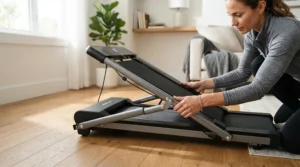
The best closet/under-bed storage solutions start with a tape measure, not a shopping cart. For under-bed use, measure clearance from floor to bed frame at the lowest point, then compare it to the folded height. One buying guide says ultra-slim pads can fold to roughly 6.5 inches, and the WalkingPad R2 lists about 6.4 inches folded.
Don’t forget one safety fact: you can’t use these machines while they sit under a bed, and you need genuine overhead clearance when walking. For closets, measure depth and door swing, because upright folds like the ProForm Carbon TL are roughly 33–38 inches deep when folded and stand tall.
Smart closet/under-bed storage solutions also include bed risers for extra height, a sliding fabric cover, and a wall-mounted hook for the remote. Stand a Sperax pad behind a door, or tuck the WalkingPad Z1 under a sofa. If the numbers don’t work on paper, they won’t work on Monday morning.
What to Expect: Real-World Noise and Performance
Treadmill noise comes in two flavors, according to NordicTrack’s apartment guide. Motor noise is the hum, and impact noise is the percussive thud of footfalls. Impact noise is what travels through floors, and it’s the one that triggers complaints.
Walking is far gentler than running. Walking pads at 3–4 mph generate mostly motor hum, which is why they suit apartments. Running on a Sole F63 or Horizon 7.0 AT is a different story. Even good cushioning only reduces, never eliminates, transmitted vibration. One weighty frame advantage: heavier machines transmit less vibration, per that same guide.
Realistic expectations: walking pad users should hear a soft whir, while runners should plan for audible footfalls on upper floors. Properly mat the unit, avoid shared walls, and avoid early or late hours. If glassware clinks on a nearby shelf, you’ve got floor resonance and your neighbors feel it too.
Long-Term Cost & Maintenance
Sticker price is only the opening bid. Total cost of ownership includes mats, belt lubricant, and possible moving costs.
| Cost factor | Walking pad | Folding treadmill |
|---|---|---|
| Purchase | Budget to low-mid range | Mid-range, around $650–$1,100 |
| Floor protection | Small mat | Full-length mat, often more |
| Maintenance | Occasional belt lubrication | Lubrication, alignment, deeper checks |
| Move-out cost | Minimal, one person | Possible movers or dollies |
| Best For | WalkingPad Z1, UREVO Strol 2E | ProForm Carbon TL, Horizon 7.0 AT |
Notice how the folding group’s hidden costs stack up. Warranty length matters too. One ProForm Carbon TL listing cites ten years on the frame but only one on parts and labor. Spread over daily use, even the pricier machines work out to pennies per workout, provided you actually use them. A dusty machine is the most expensive one.
FAQ
❓ Can you use a treadmill in an apartment without annoying neighbors?
❓ How much weight can a walking pad support?
❓ Do renters need landlord permission for a treadmill?
❓ Can I run on a folding walking pad?
❓ Where do you store a treadmill in a small apartment?
Conclusion
The right treadmill for renters with storage constraints isn’t the most powerful machine. It’s the one that matches your floor, your lease, and your staircase. If you walk, the WalkingPad Z1, Sperax Walking Pad (P2 Pro), and UREVO Strol 2E deliver a vanishing act for modest money. If you want speed in a compact shell, the WalkingPad R2 bridges the gap. If you run, the ProForm Carbon TL, Sole F63, and Horizon 7.0 AT deserve a closet corner, as long as your lease and your back agree.
Before you buy, read your lease, measure your storage, and favor lighter machines if you move often. A little planning turns a treadmill for renters with storage constraints from a stress into a daily habit.
✨ Ready to Reclaim Your Floor Space?
🔍 Pick the machine that fits your closet, your lease, and your stride, then click any highlighted product to check current pricing and availability. Your future self, and your downstairs neighbor, will thank you!
Recommended for You
- Treadmill For Apartments With Thin Walls: 7 Proven Quiet Picks (2026)
- Foldable Treadmill For Apartments Under $500: 7 Smart Picks 2026
- Quietest Treadmill For Apartment Living: 7 Proven Picks 2026
Disclaimer: This article contains affiliate links. As an Amazon Associate, I earn from qualifying purchases. If you purchase products through these links, we may earn a small commission at no additional cost to you.
✨ Found this helpful? Share it with your friends! 💬🤗
