
In This Article
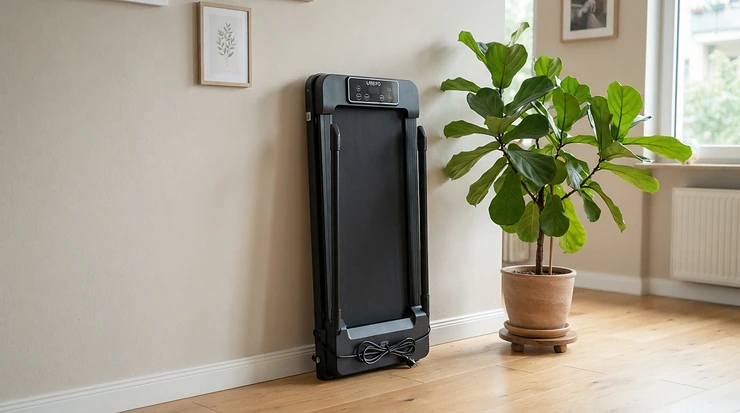
A compact treadmill for studio apartment walking is a motorized, space-efficient machine, usually a folding treadmill or slim walking pad. It is built for walking speeds and light jogging at most, with a folded footprint small enough to slide under a bed or tuck beside a sofa. It trades top speed and deck length for the one thing every studio dweller lacks: floor.
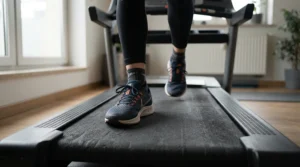
Let’s be honest about studio living. Your bed, desk, dining table, and “gym” are all negotiating over the same 450 square feet. A full-size treadmill in that arrangement is less an appliance and more a hostile roommate. Yet walking is still the most practical way to move more. CDC reporting on the Physical Activity Guidelines for Americans points to at least 150 minutes a week of moderate-intensity activity such as brisk walking, and that is entirely achievable on a machine the size of a yoga mat when folded.
Here’s the catch: the compact category is a minefield of inflated horsepower claims, belts too short for a normal stride, and “folded” dimensions that quietly ignore the handrail. This guide cuts through it. We compare 7 real models, from handrail-equipped folding treadmills to handrail-free walking pads. We explain motor power continuous horsepower figures, belt width and length, and the folded footprint in plain English. And we look at what renters need to know before the first step. 🚶♂️
Everything below is built from published specs and aggregated reviewer findings. Nothing here is based on claimed hands-on testing.
Quick Comparison: 7 Compact Treadmills for Studio Apartment Walking at a Glance
| Product | Handrail? | Motor (as listed) | Best For |
|---|---|---|---|
| Sperax P3pro | Yes, folds down | 2.5 HP peak, brushless | Balance plus tiny storage |
| Goplus 2-in-1 Folding Treadmill | Yes, folds down | 2.25 HP | Tight budgets |
| Sunny Health & Fitness SF-T7603 | Handles with speed controls | 2.2 CHP | Budget buyers who want a CHP rating |
| Sunny Health & Fitness SF-T7643 | Padded handlebars | Not verified | Heavier users (350 lb capacity) |
| Echelon Stride-6s-10 | Check listing | 3.0 HP | Quiet, flat-fold storage |
| WalkingPad C2 | No | 1 HP brushless | Minimalists who want a slim fold |
| WalkingPad A1 Pro | No | Brushless (brand claims 3.75 HP) | Wider belt, sturdier feel |
Read that table with one eye on the motor column. Peak horsepower and continuous horsepower are different measurements, and the gap between them is where most marketing lives. The only motor in this lineup with a clearly stated continuous rating is the SF-T7603. Goplus 2-in-1 and Sperax P3pro give you handrails for balance at very different price points. The two pad-style models trade handrails for the smallest possible footprint.
💬 Just one click — help others make better buying decisions too!😊
Top 7 Compact Treadmills for Studio Apartment Walking: Expert Analysis
Prices below are ranges from the time of research and will move. Always check the current price before buying.
1. Sperax P3pro — foldable handrail, wide 40 cm belt
The handrail on the Sperax P3pro is the headline here. It folds flat for storage and doubles as a tablet holder. Lowering it also switches the machine into vibration-pad mode, a safety interlock that keeps the belt from running with the rail down.
On paper you get a 2.5 HP brushless servo motor, noise listed under 50 dB, a 40 cm (about 15.7 inch) belt, and a 7 mph ceiling per the brand’s page. That top speed is irrelevant for walking, but the handrail and belt width matter. A rail you can grip is a genuine confidence boost on a moving belt, especially in a studio where a stumble means hitting furniture.
Here’s the honest caveat. The 2.5 HP figure is a peak rating. Earlier Sperax-branded pads list 0.54 CHP alongside 2.5 HP peak. OutdoorGearLab’s review of another Sperax walking pad found a 0.75 HP motor behind a 2.5 HP advertisement. I could not verify independent reviews of the P3pro itself, so treat motor power continuous horsepower as unconfirmed and read the spec sheet closely. The belt length also isn’t stated on the brand page.
Pros:
- ✅ Foldable handrail adds real balance support
- ✅ 40 cm belt is roomy for its class
- ✅ Listed under 50 dB for apartment living
Cons:
- ❌ Motor rating is peak HP, not continuous
- ❌ Belt length not published; independent reviews unverified
Price: check current price. Verdict: a strong concept, but verify the specs before you commit.
2. Goplus 2-in-1 Folding Treadmill — cheapest way to get a fold-down handrail
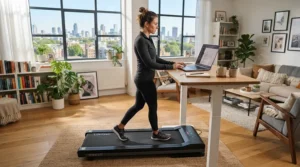
The Goplus 2-in-1 Folding Treadmill earns its spot through versatility. With the handrail up, it behaves like a small treadmill. With it folded down, it becomes an under-desk walker.
Specs worth translating: a 2.25 HP motor, a five-layer shock-absorbing belt, and a handrail-up footprint of roughly 51 inches long by 27 wide by 41.5 tall. OutdoorGearLab called it the smallest treadmill it tested in run mode. Retail listings cap walking mode at about 2.5 mph with the handrail down, which is a stroll, not a power walk. If you walk briskly, you’ll live with the handrail up.
Reviewers’ verdicts are consistent. Garage Gym Reviews calls it a budget, bare-bones machine that suits walkers and occasional joggers but not sustained running. The same review flags a fixed handrail height of about 3.5 feet as a poor fit for taller users. BarBend notes the limited deck feels cramped for longer strides. One listing also states the handles must be removed before folding, so factor that step into your storage routine.
Pros:
- ✅ Fold-down handrail suits tiny rooms
- ✅ Very compact for a handrail model
- ✅ Budget-friendly entry point
Cons:
- ❌ Fixed handrail height is wrong for tall users
- ❌ Short deck feels cramped at faster paces
Price: around $300-$350 range. Verdict: excellent value if you’re average height and walking-focused.
3. Sunny Health & Fitness SF-T7603 — rated CHP, sturdy steel frame
The Sunny Health & Fitness SF-T7603 is the budget pick that states its motor honestly: 2.2 CHP. That matters because continuous horsepower is the number that predicts whether the motor will cope with a 30-minute walk without overheating.
Garage Gym Reviews highlights an all-steel frame, easy folding, light weight, and shock absorption. A soft-drop gas shock lowers the deck gently, so you’re not wrestling it down. Handle-mounted speed controls and nine preset programs round out a no-frills console. The listed maximum user weight is 220 lbs.
My read: this is the “boring in a good way” option. It won’t impress anyone at a dinner party, but for a walker who values a real handrail and a verified CHP rating, it’s hard to argue with the math. Garage Gym Reviews’ headline question was whether a roughly $350 treadmill can actually be good, and its pros list suggests the answer leans yes for the right buyer.
Pros:
- ✅ 2.2 CHP motor, a genuine continuous rating
- ✅ Soft-drop folding is gentle and easy
- ✅ Sturdy steel frame at a low price
Cons:
- ❌ 220 lb capacity excludes heavier users
- ❌ Basic console with few frills
Price: in the mid-$300s. Verdict: best value-per-dollar for walkers who want handrails.
4. Sunny Health & Fitness SF-T7643 — 350 lb capacity with padded handlebars
Most compact treadmills quietly exclude heavier users. The Sunny Health & Fitness SF-T7643 doesn’t. It lists a 350 lb weight capacity, which is rare in this footprint class and the single biggest reason to consider it.
The brand describes a six mph maximum (enough for brisk walking and light jogging), padded non-slip handlebars, quick-speed buttons, an emergency stop clip, and shock absorption on a low-profile deck. A hydraulic soft-drop system handles folding, and built-in wheels help you roll it into a closet.
For balance-minded walkers, those padded bars are the point. A higher weight rating also tends to signal a sturdier frame, which means less wobble underfoot, something worth caring about on a floor above neighbors. The brand’s own listing shows a 4.3-star average across 40 reviews at the time of research. That’s self-reported and a small sample, so I’d weigh it lightly. I did not verify the motor rating, so check the listing for continuous horsepower before buying.
Pros:
- ✅ 350 lb capacity is unusually high here
- ✅ Padded, non-slip handlebars aid balance
- ✅ Soft-drop hydraulic fold with wheels
Cons:
- ❌ Motor rating not verified in my research
- ❌ Heavier than pad-style walkers to maneuver
Price: check current price. Verdict: the pick when capacity and stability outrank everything else.
5. Echelon Stride-6s-10 — folds completely flat for under-bed storage
Flat storage is the Echelon Stride-6s-10‘s party trick. Garage Gym Reviews recommends it as the compact option that folds completely flat, sliding under a bed or couch. In a studio where every square foot has a job, that matters more than any feature on the console.
Treadmill Review Guru highlights the quiet 3.0 HP motor and describes the machine as built with upper-level floors and apartments in mind, with the sensible condition that your lease permits treadmill use. Quiet operation is the real value proposition here. A motor that hums rather than whines won’t turn your downstairs neighbor into your enemy.
Here’s what I couldn’t verify: exact belt dimensions, weight capacity, and handrail configuration. The sources I reviewed don’t spell them out, so confirm each on the product page, especially if the handrail is why you’re shopping. Aggregated tester feedback is positive on the space-saving design, and that’s the finding I’d trust.
Pros:
- ✅ Folds completely flat for tight storage
- ✅ Quiet 3.0 HP motor suits apartments
- ✅ Tester-recommended for small spaces
Cons:
- ❌ Belt and handrail specs unconfirmed in sources
- ❌ Lease rules may still restrict treadmill use
Price: check current price. Verdict: promising for noise-sensitive renters, pending spec confirmation.
6. WalkingPad C2 — slimmest fold, 5.5 inches tall
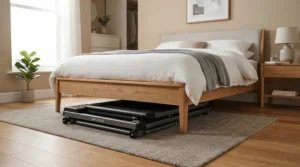
If minimalism is a lifestyle, the WalkingPad C2 is its treadmill. A 180-degree fold collapses it to roughly 32 by 20 by 5.5 inches, short enough to slide under most sofas.
The listed specs: a 1 HP brushless motor, a 47.2 by 15.8 inch belt, a 0.5 to 3.7 mph speed range, a 220 lb weight limit, and a 55 lb net weight. That 1 HP figure sounds small beside the 2.5 HP numbers elsewhere. But it’s a brushless motor tuned for walking, and the maker recommends a maximum of two hours of use before a 15-minute rest. In practice, that’s plenty for walking and a limit if you wanted marathon sessions.
Reviewers split on value. Garage Gym Reviews notes the roughly $600 price sits above similar competitors it would rather own, and that moving it is awkward even folded. Tom’s Guide calls it a decent option for people short on space but feels flimsier than the pricier A1 Pro. No handrail means no balance support, so this is for confident walkers only.
Pros:
- ✅ Slim 5.5 inch folded height
- ✅ Brushless motor for quiet walking
- ✅ Easy app and remote control
Cons:
- ❌ No handrail for balance
- ❌ Pricey versus similar competitors
Price: around $600. Verdict: great design, but you pay a premium for it.
7. WalkingPad A1 Pro — wider belt, sturdier feel than the C2
The WalkingPad A1 Pro is the C2’s more substantial sibling. Its belt measures about 47 by 16.5 inches, a little wider than the C2’s, and the in-use footprint is roughly 56 by 21.5 by 5 inches. Brand material cites a 3.75 HP brushless motor running under 65 dB. Read that as a manufacturer claim, and as another case where continuous rating is the number to ask about.
Tom’s Guide’s comparison is useful here. It found the C2 feels a little flimsier, with a thinner plastic border between belt and edge, and noted the A1 Pro costs more. A review roundup also names the A1 Pro the best under-desk walking treadmill for ultra-compact storage. A wider belt means less anxiety about drifting sideways off the deck. For a daily walker, that confidence is worth something.
The tradeoff is the same as the C2: no handrail. You also pay more, at around $700 in the review I found. If you’ve never walked on a moving belt without holding something, rehearse in a store or at a friend’s place first.
Pros:
- ✅ Wider 16.5 inch belt feels more secure
- ✅ Sturdier build than the C2
- ✅ Very slim for under-sofa storage
Cons:
- ❌ No handrail for balance
- ❌ Highest price in this lineup
Price: around $700. Verdict: the premium handrail-free pick for confident walkers.
Side-by-Side Specs: Belt, Weight, and Reviewer Takeaways
| Product | Belt / Footprint Detail | Weight Limit | Reviewer Takeaway | Price Range | Best For |
|---|---|---|---|---|---|
| Sperax P3pro | 40 cm belt, length unlisted | Not verified | Independent reviews unverified | Check current price | Balance seekers |
| Goplus 2-in-1 | 51 x 27 x 41.5 in (handrail up) | Not verified | Budget walker; poor fit for tall users | Around $300-$350 | Tight budgets |
| SF-T7603 | Soft-drop folding | 220 lb | Compact, easy to fold | Mid-$300s | Budget plus CHP rating |
| SF-T7643 | Low-profile deck | 350 lb | Brand shows 4.3 stars (40 reviews) | Check current price | Heavier users |
| Stride-6s-10 | Folds completely flat | Not verified | Tester pick for small spaces | Check current price | Quiet-minded renters |
| C2 | 47.2 x 15.8 in belt | 220 lb | Compact but pricey | Around $600 | Slim-fold minimalists |
| A1 Pro | 47 x 16.5 in belt | Not verified | Sturdier than the C2 | Around $700 | Premium walkers |
The pattern is clear. Handrail models cluster in the lower price tiers, and the pad-style machines charge for slimness. If you must choose between a rail and a thinner fold, ask yourself honestly how steady you feel on the belt. The best compact treadmill for studio apartment walking is the one you’ll actually step on every day.
✨ Don’t Miss These Exclusive Deals!
🔍 Take your daily walking routine to the next level with these carefully selected treadmills.Click on any highlighted item to check current pricing and availability. These machines will help you build a steady habit without sacrificing your floor space!
How to Choose a Compact Treadmill for Studio Apartment Walking
Choosing well comes down to seven checks, in this order:
- Measure the in-use and folded footprint. Both numbers matter. A treadmill that folds small but needs a 6-foot runway behind it may still dominate your studio.
- Check continuous horsepower, not peak. For walking, a continuous rating around 2.0 CHP is generally considered sufficient. Anything advertised only as “2.5 HP” deserves a follow-up question.
- Confirm belt width and length. A belt around 39 by 15 inches handles many walking strides. Taller users benefit from more length.
- Decide on handrails. If balance is a concern, prioritize a model with a rail. If you want invisibility, accept the pad-style tradeoff.
- Add headroom to the weight capacity. Choose a limit comfortably above your body weight plus any carried items.
- Check noise and your lease. Quieter motors help, but your building’s rules decide whether you can use it at all.
- Look at the warranty and return policy. Compact treadmills run on thin margins, and a clear return window is cheap insurance.
Folded Footprint: How to Measure Your Studio Before You Buy
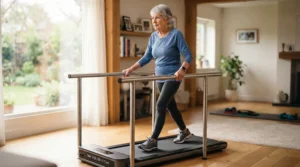
The folded footprint is the headline number in every listing. It is also the least useful on its own. Consider the C2: folded, it’s roughly 32 by 20 by 5.5 inches, but in use it stretches to about 57 inches long. The Goplus 2-in-1 is the opposite case, because its handrail makes the in-use height roughly 41.5 inches.
Consumer Reports’ testing lead advises that whether or not a treadmill folds, you still need adequate room around it while it’s in use. The guidance is 2 to 3 feet on either side and 6 to 8 feet behind. That advice is aimed at full-size machines, and slim, handrail-free pads need less margin in practice. Still, it’s a useful ceiling for your planning.
Try a masking-tape test. Mark the in-use footprint on your floor and leave it for three days. If you keep stepping over it, you’ve learned something valuable for free. Then tape the folded footprint where it will live and check that doors, closets, and under-bed clearances actually work. A treadmill you can’t store is just a very expensive coat rack.
Motor Power Continuous Horsepower: What Walking Actually Needs
Think of peak horsepower as a sprinter’s burst and continuous horsepower as a marathoner’s pace. Motor power continuous horsepower figures tell you what the motor can sustain across a full workout without overheating. Peak figures describe a brief burst and flatter the marketing.
For walking, buying guides generally land around 1.5 to 2.5 CHP, with roughly 2.0 CHP a common benchmark. Running pushes recommendations to 2.5 to 3.0 CHP or higher, which is why walking-first buyers shouldn’t overpay for running muscle they won’t use. Within this lineup, the SF-T7603 states 2.2 CHP, and the Echelon Stride-6s-10 lists a 3.0 HP motor. Both Sperax P3pro and A1 Pro show larger numbers that read as peak or brand claims.
OutdoorGearLab’s testing is a cautionary tale here. An earlier Sperax-branded pad advertised 2.5 HP but was found to carry a 0.75 HP motor, and reviewers said it struggled under heavier loads. The lesson: ask for the continuous rating. A weak motor on a walking-only machine still shows up as stutters, heat, and a shorter lifespan.
Belt Width and Length: Sizing the Deck to Your Stride
Belt width and length decide whether walking feels natural or like crossing a balance beam. A practical walking-pad guideline is a belt of at least 39 inches long and 15 inches wide for moderate speeds. Larger guides recommend 48 by 18 inches for walking and 50 by 20 for full-size walking use.
Here’s how this lineup stacks up. The C2 offers about 47.2 by 15.8 inches. The A1 Pro gives you roughly 47 by 16.5. The Sperax P3pro lists a 40 cm (about 15.7 inch) width but no length. Slim belts feel fine on straight, steady walking, and they punish any sideways drift.
Stride length is the other half. Taller people take longer steps, and a short deck can leave you clipping the rear roller on brisk walks. If you’re over six feet, either prioritize a longer belt or look past the shortest pads. Remember that width isn’t just comfort. It’s your safety margin when you glance at your phone or reach for water.
Compact Treadmill with Handrails for Balance: Who Actually Needs Them
A compact treadmill with handrails for balance isn’t about fitness level. It’s about confidence. Moving belts feel different from solid floors, and a rail gives your hands a vote.
Handrails especially help three groups: newcomers, older adults, and anyone recovering from an injury. CDC guidance, as summarized by Fortune and the American Council on Exercise, advises adults 65 and older to include balance-improving activity in their routines. A rail turns the treadmill from a fall risk into a place to practice.
In this lineup, the Goplus 2-in-1, SF-T7603, and SF-T7643 pair rails with budget-friendly prices. The Sperax P3pro adds a fold-down rail and tablet holder. Handrails cost you footprint, though. The Goplus 2-in-1 stands about 41.5 inches tall when the rail is up, and handles need removal before folding on some models. If you’re confident on your feet, a pad like the C2 frees up space. If you’re unsure, take the rail. Floor space is renewable; a fall isn’t.
Space Saving Treadmill for Renters: Lease, Noise, and Floors
A space saving treadmill for renters has to clear three hurdles: the lease, the neighbors, and the floor. Start with the lease. Some buildings restrict exercise equipment on upper floors, and Treadmill Review Guru’s note that the Echelon Stride-6s-10 suits apartments comes with the phrase “if your lease allows.” Read yours.
Noise is next. Brand claims like under 50 dB for the Sperax P3pro and under 65 dB for the A1 Pro suggest quiet motors, but footfalls and vibration travel through floors regardless of what the motor does. A dense rubber mat under any machine is cheap, effective insurance. Walk during daytime hours first, then ask a neighbor how it sounded.
The floor matters too. Soft-drop folding, as on the SF-T7603 and SF-T7643, protects hardwood and your fingers. Weight matters when you’re moving out: the C2 weighs about 55 lbs. Pick a machine you can lift, store, and carry down stairs without a second person, because renters move far more often than owners.
Compact Treadmill vs Walking Pad vs Full-Size Alternatives
| Option | Footprint | Handrail | Noise Risk | Best For |
|---|---|---|---|---|
| Compact folding treadmill | Moderate; folds | Usually yes | Low to moderate | Balance-minded walkers |
| Handrail-free walking pad | Smallest when folded | No | Low | Confident walkers, WFH |
| Full-size treadmill | Large; semi-permanent | Yes | Moderate to high | Dedicated runners |
| Outdoor walking or gym | None at home | N/A | None | Fair-weather walkers |
A full-size machine gives you a longer deck and a bigger motor, but it eats a studio alive. The Garage Gym Reviews tester specifically points to flat-folding models like the Echelon Stride-6s-10 for people who have no space for a bulky folder. Outdoor walking is free and wonderful until it’s 95 degrees or sleeting.
The table makes the tradeoff obvious. If you walk daily and live on a small footprint, the compact folding treadmill or pad wins on convenience and consistency. If you intend to run training miles, you’ve outgrown this category and should look at full-size machines, accepting the space cost. Consistency beats peak performance for most people: the best treadmill is the one that’s actually there at 7 a.m. in February.
Long-Term Cost and Maintenance of a Compact Treadmill for Studio Apartment Walking
Total cost isn’t just the sticker. Think purchase price, a floor mat, occasional belt lubrication, and replacement parts. A common guideline is lubricating the belt every few months, but follow your manual, since some compact models use maintenance-light designs.
Cost per use is the clarifying math. A machine around $600 used four times a week for three years comes to roughly 620 sessions, or about a dollar each. A budget model around $330 on the same schedule works out to roughly half that. A gym membership costs more and requires a commute.
| Tier | Example Models | Price Range | Value Verdict | Best For |
|---|---|---|---|---|
| Budget handrail | Goplus 2-in-1, SF-T7603 | Around $300-$350 | Highest value for walkers | Cost-conscious beginners |
| Premium pad | C2, A1 Pro | Around $600-$700 | Pay for slimness | Handrail-free minimalists |
| Unverified pricing | Sperax P3pro, SF-T7643, Stride-6s-10 | Check current price | Verify before buying | Specific needs |
The table points to a simple strategy. Spend less if walking is the goal and the handrail is welcome, and spend more only if the slimmer fold changes your daily life. Duty cycles matter too: the C2‘s maker recommends a maximum of two hours before a 15-minute cooldown, so a long walking-desk workday may stress it. Match the machine’s habits to yours.
Practical Usage Guide: Setup, Maintenance, and Your First 30 Days
Setup isn’t glamorous, but it prevents most problems. Place the machine on a level surface with a protective mat. Keep the cord clear of the belt and route it so it won’t snag when you fold. If you’re using a handrail model, set the handrail firmly before every session.
In week one, walk slowly and short. Ten to fifteen minutes at a gentle pace lets you learn how the belt responds. Hold the rail if you have one. Learn the emergency stop before you need it, and attach the stop clip if your model includes one, like the SF-T7643.
By week two, check belt alignment. User reports on budget models, including the Goplus 2-in-1, mention occasional belt centering. A quick look under the deck after a few sessions catches drift early. Don’t ignore a belt creeping to one side.
Through week four, build the habit. CDC guidance centers on 150 minutes of moderate activity weekly, which is 30 minutes five days a week. Chunk it if necessary. Ten minutes after each meal counts, and it’s easier to start than a single half-hour slog. Store the machine out of sight, because a hidden treadmill is one you can’t use as a clothes hanger.
Real-World Scenarios: Which Compact Treadmill Fits Your Life?
These are illustrative profiles, not testimonials.
The remote worker in a 450 square foot studio. She wants a walking desk setup and has no space for handrails. A slim pad like the C2 or A1 Pro slides beside the standing desk and under the sofa afterward. The wider belt on the A1 Pro suits someone who’ll walk while typing, and her budget supports around $600 to $700.
The 60-something renter who values stability. Balance matters more than top speed. A handrail model like the SF-T7603, at a mid-$300s price, gives him a verified continuous motor rating and rails to hold. The soft-drop fold protects his back and the floor. The CDC’s balance advice for older adults makes the rail a feature, not a compromise.
The heavier user building a daily habit. At 300 lbs, the weight limits on many compact treadmills rule things out. The SF-T7643‘s 350 lb capacity and padded handlebars make it the logical starting point. Check the motor rating on the listing first, then choose a mat to protect the floor.
Match the machine to the person, not the other way round. Budget, balance, and body weight will narrow your list faster than any spec comparison.
Problem → Solution Guide for Studio Walkers
Problem: the neighbors can hear it. Add a dense rubber mat, walk during daytime hours, and consider a quiet-motor option like the Echelon Stride-6s-10. Footfall vibration travels farther than motor hum, so address the floor first.
Problem: the belt drifts sideways. Budget-model owners report this occasionally. Check alignment after the first few sessions and follow the manual’s adjustment steps rather than guessing.
Problem: there’s no room for it. Pick a flat-folding or slim model. Garage Gym Reviews’ tested roundup of folding treadmills highlights models that slide under beds or couches, and the C2‘s 5.5 inch folded height does the same job.
Problem: you stop using it. Keep it visible but unobtrusive. Walk during a daily show or call, and start with ten minutes. A treadmill used for ten minutes beats a premium one gathering dust.
Problem: you feel unsteady. Choose a handrail model or practice at slow speeds with a spotter nearby. If you still feel unsure, a handrail-free pad isn’t for you yet.
FAQ
❓ Can you use a treadmill in an apartment without bothering neighbors?
❓ Is 2.0 CHP enough for a walking treadmill?
❓ How much clearance does a folding treadmill need in a studio?
❓ Which compact treadmill suits someone who wants handrails for balance?
❓ Are walking pads worth it for renters?
Conclusion
The right compact treadmill for studio apartment walking comes down to three honest questions. How steady are you on a moving belt? How much floor can you really spare? And how much are you willing to pay for a slimmer fold?
If balance matters, the handrail models win. The SF-T7603 offers a verified 2.2 CHP motor at a mid-$300s price. The SF-T7643 brings a 350 lb capacity for heavier users. The Goplus 2-in-1 gives you the cheapest fold-down rail, and the Sperax P3pro is intriguing once its continuous rating is confirmed. If you want near-invisible storage and you’re a confident walker, the C2 and A1 Pro are the slimmest options here, with the Echelon Stride-6s-10 worth a look for quiet, flat-fold storage.
Whatever you pick, apply the same checklist: confirm motor power continuous horsepower rather than peak numbers, match belt width and length to your stride, measure both footprints, and check your lease. A space saving treadmill for renters should disappear when you’re done and be there at 7 a.m. when you’re not. Start small, walk daily, and let the habit do the heavy lifting. 🚶♀️
✨ Ready to Reclaim Your Studio Floor?
🔍 Compare these compact treadmills, check current pricing and availability, and pick the one that fits your balance, budget, and square footage. Your future self (and your step count) will thank you!
Recommended for You
- Treadmill For Renters With Storage Constraints: 7 Best Picks 2026
- Treadmill For Apartments With Thin Walls: 7 Proven Quiet Picks (2026)
- Foldable Treadmill For Apartments Under $500: 7 Smart Picks 2026
Disclaimer: This article contains affiliate links. As an Amazon Associate, I earn from qualifying purchases. If you purchase products through these links, we may earn a small commission at no additional cost to you.
✨ Found this helpful? Share it with your friends! 💬🤗
