
In This Article
Let’s be honest: kids’ bedrooms are basically Tetris boards with stuffed animals in them. So when a parent starts hunting for a compact treadmill for children’s bedroom use, the real question isn’t “does it work?” — it’s “will it actually fit, and will it survive contact with a nine-year-old?” A compact treadmill for children’s bedroom setup is, in plain terms, a scaled-down walking or jogging machine — usually manual or low-powered — sized and built to squeeze into a small room without swallowing the floor space kids need for everything else. The catch is that “fits in the room” and “safe for a child to use unsupervised in that room” are two very different bars to clear, and this guide treats both seriously.

We dug into real product listings, manufacturer specs, and the safety record the treadmill industry would rather you not think about too hard, because the CDC recommends 60 minutes or more of daily moderate-to-vigorous activity for kids aged 6 to 17, and a rainy-day indoor option genuinely helps families hit that number. Below you’ll find seven real, currently available machines spanning manual toddler-friendly treadmills up through compact motorized walking pads for tweens and teens, plus the buying framework, safety rules, and setup advice that most Amazon listings conveniently skip.
Quick Comparison Table: compact treadmill for children’s bedroom at a Glance
Before the deep dives, here’s the fast version for parents skimming on a phone in a toy-store parking lot.
| Product | Type | Best For | Price Range |
|---|---|---|---|
| AKLUER Kids Treadmill Walking Pad | Non-motorized | Toddlers & early elementary, safety-first buyers | Under $150 |
| Redmon Fun and Fitness for Kids Treadmill | Manual, self-propelled | Ages 3-7, classic sturdy build | Under $150 |
| Hey Play Manual Kids Walking Treadmill | Manual, entry-level | Tightest budgets, occasional use | Under $50 |
| WalkingPad C2 | Motorized, folding | Tweens/teens with supervision, small footprint treadmill for kids room needs | $500-$650 range |
| UMAY L10 | Motorized, folding, incline | Older teens wanting a real cardio workout | $300-$400 range |
| MCQ Compact Treadmill | Motorized, under-desk style | Budget-conscious families wanting a light motor | Under $150 |
| Echelon Stride-6 | Motorized, flat-fold | Premium storage-friendly equipment, folds under a bed | $800-$1,000+ range |
A pattern jumps out immediately: the safest options for younger kids are the least powerful ones, and the most impressive specs belong to machines that genuinely need adult supervision every single time they’re used. That’s not a coincidence — it’s physics. A motor that can move a belt fast enough to be fun for a teenager is also a motor that can pull a small child’s clothing or fingers toward the rear roller if nobody’s watching. Keep that trade-off in mind as you scroll, because it shapes almost every recommendation below.
💬 Found a match already? Compare current pricing before you commit — availability on kids’ fitness gear shifts fast.
Top 7 compact treadmill for children’s bedroom Picks: Expert Analysis
1. AKLUER Kids Treadmill Walking Pad — non-motorized, so there’s no belt motor to fear
Right out of the gate, this one solves the single biggest worry on this list: it has no drive motor. Kids power the belt themselves by walking, which means there’s no risk of the machine yanking a child forward or trapping a limb the way a motorized rear roller can.
The dual-flywheel design and anti-slip belt sit on an alloy frame rated for real household use, and the LCD display tracks time, speed, and calories so kids get a little game-ification out of what’s essentially a glorified walking mat. Because there’s no motor, top speed is entirely dictated by how fast a child’s legs can move — which, based on the spec sheet, is exactly the point: it removes the runaway-belt scenario that plagues cheap motorized units.
Based on the spec comparison with motorized alternatives, this is the pick for parents whose main anxiety is safety rather than fitness intensity. It’s built for kids who want to move, fidget, and burn energy between homework sessions, not train for a 5K. We could not independently verify a large, aggregated body of customer reviews for this specific listing at the time of research, so treat the “no motor, no entrapment risk” argument as a design-level safety advantage rather than a promise backed by a long review history — worth noting honestly rather than glossing over.
Pros:
- ✅ No motor means no belt-speed or entrapment hazard
- ✅ Alloy frame built for repeated kid use
- ✅ LCD tracks time, speed, and calories for motivation
Cons:
- ❌ Top speed is limited by the child’s own effort
- ❌ Independently verified review history is currently thin
Expect to find this in the budget bracket, generally under $150 depending on retailer promotions — a strong value if peace of mind matters more than workout intensity.
2. Redmon Fun and Fitness for Kids Treadmill — classic manual build with a built-in auto shutoff
This is the treadmill a lot of parents remember from a friend’s playroom, and it’s held up well because the engineering is dead simple: a self-propelled, non-motorized deck built for kids roughly 3 to 7 years old.
The steel frame is powder-coated for durability, the handles are grip-friendly for small hands, and — critically — the electronic monitor includes an automatic shutoff after 10 minutes, which nudges kids toward breaks instead of marathon sessions. Weight capacity sits around 100 pounds, and the footprint (about 37 by 38 inches) is genuinely bedroom-appropriate rather than gym-sized.
Based on real customer sentiment, this model earns solid marks, sitting around 4 out of 5 stars across its review base. Reviewers highlight the sturdy steel-and-plastic build, the outlet it gives kids for excess energy, and that it’s straightforward enough for a parent to assemble in an afternoon. A recurring theme in feedback is that the added steel raises the shipped weight noticeably, which is a fair trade for durability but worth knowing before you carry it up two flights of stairs.
Pros:
- ✅ Auto shutoff after 10 minutes limits overuse
- ✅ Sturdy steel-and-plastic frame built to last
- ✅ Compact enough for a genuine bedroom footprint
Cons:
- ❌ Heavier than average for its size, per user feedback
- ❌ Age range tops out around 7, so kids outgrow it
Price typically lands in the same sub-$150 range as the AKLUER pick, making this a straightforward head-to-head decision based on frame style rather than budget.
3. Hey Play Manual Kids Walking Treadmill — the lowest entry price on this list
Sometimes the honest answer to “what’s the best space-saving treadmill for children” is “the cheapest one that still does the job,” and this manual model exists specifically for that budget tier.
It’s a no-frills, manually powered walking deck with a simple monitor and a lightweight frame, priced well under $50 at the time of research. There’s no motor, no incline, and no smart features — just a basic belt a young child can walk or jog on for short bursts. What most buyers overlook about entry-level equipment like this is that “basic” isn’t automatically “bad” for a five-year-old’s attention span; most toddlers and preschoolers won’t use any treadmill for more than 10-15 minutes at a stretch anyway; paying for advanced features they won’t engage with is often wasted money.
We couldn’t verify a robust, independently aggregated review dataset for this exact listing during research, so we’re flagging that honestly rather than inventing a star rating. Judge it primarily on its spec sheet and its price point, both of which are genuinely modest and low-risk.
Pros:
- ✅ Lowest price point on this entire list
- ✅ Fully manual, so there’s no motor-related risk
- ✅ Lightweight enough for easy repositioning in small rooms
Cons:
- ❌ No incline, speed tracking, or smart features
- ❌ Verified review volume is limited at this time
At under $50, it’s a reasonable low-commitment way to test whether your child actually wants a bedroom treadmill before spending more.
4. WalkingPad C2 — the small footprint treadmill for kids room that actually folds flat
This is the model that keeps showing up on “best compact treadmill” roundups for a reason: an 180-degree folding hinge that lets the whole unit collapse thin enough to slide under a bed frame or sofa, which is exactly the storage profile a shared kids’ bedroom needs.
Independent testers who’ve put dozens of compact treadmills through paces single it out as a go-to pick under the $600 mark, largely because the fold doesn’t sacrifice deck stability the way some ultra-cheap folding hinges do. It’s motorized, with speed and basic tracking controlled remotely, which makes it a genuinely useful walking-pad option for a tween or teen doing homework while pacing, rather than a toy for a toddler.
Here’s the honest caveat: because it has a motor and a rear roller, this is not a “leave your seven-year-old alone with it” product — it belongs in the same supervised-use category as any adult walking pad, just sized for a smaller room. Reviewers and testers consistently frame it as an under-desk or small-apartment solution first, kids’ room second, so plan on active parental oversight, not a set-and-forget toy.
Pros:
- ✅ 180-degree fold creates a genuinely flat storage profile
- ✅ Slides under a bed or sofa when not in use
- ✅ Remote speed control suits homework-pacing routines
Cons:
- ❌ Motorized rear roller requires active adult supervision
- ❌ Overkill and higher cost for children under about 10
Expect a price in the $500-$650 range, positioning it as a mid-to-premium pick reserved for older kids who can follow safety rules consistently.
5. UMAY L10 — the incline-capable option for teens who want a real workout
If your “child” is closer to 15 than 5, the calculus changes, and the UMAY L10 is built for that older end of the spectrum. It’s a 3.5-horsepower folding treadmill with up to a 20 percent incline and a top speed near 8.7 mph — numbers that put it closer to an adult home-gym machine than a toy.
The incline range is the standout feature here: it turns a flat walk into genuine hill-training, which matters if a teenager is using the machine for actual conditioning rather than casual pacing. The ultra-slim folded profile and roughly 400-pound weight capacity mean it can double as a family treadmill that occasionally lives in a bigger kid’s room rather than being purpose-built as a children’s product.
Based on the spec sheet, this is squarely a supervised, older-teen-or-shared-family machine — not something a young child should operate solo. We were not able to verify a large, trustworthy customer review archive specifically tied to this newer listing at the time of research, so weigh the strong spec sheet against that review-data gap rather than assuming five-star sentiment by default.
Pros:
- ✅ 20 percent incline enables genuine hill-training
- ✅ 400-pound capacity supports growing teens and shared use
- ✅ Ultra-slim folded profile aids storage-friendly equipment goals
Cons:
- ❌ Too powerful and fast for unsupervised younger kids
- ❌ Independently verified review history is still building
Pricing generally sits in the $300-$400 range, which is competitive for the incline and horsepower on offer.
6. MCQ Compact Treadmill — the budget motorized pick for light indoor activity for kids
For families who want a motor’s convenience without a premium price tag, this under-desk-style walking pad brings a quiet motor and a genuinely tight footprint to the table, and it’s built primarily for light walking rather than running.
Real customer sentiment puts this model around 4.1 out of 5 stars, with reviewer feedback specifically calling out its manageable size and suitability for casual walking sessions. What the spec sheet won’t tell you, but user reports suggest, is that “quiet” is relative — it’s noticeably quieter than a full-size gym treadmill, but a bedroom directly above a living room will still transmit some hum through the floor, so placement matters.
Because it’s motorized, the same supervision rule applies as with every powered machine on this list: it’s a good option for a tween who can follow safety instructions, not a toddler’s unsupervised plaything. The safety key and remote control are worth using every single time, without exception.
Pros:
- ✅ Solid 4.1-star aggregate rating from real buyers
- ✅ Motor stays notably quieter than full-size machines
- ✅ Tight, genuinely bedroom-appropriate footprint
Cons:
- ❌ Best suited to walking, not running or hard training
- ❌ Still requires supervision due to the motorized belt
Look for it in the under-$150 bracket, making it one of the more accessible motorized entries here.
7. Echelon Stride-6 — premium storage-friendly equipment that folds nearly flat
At the top of this list sits a genuinely different fold design: instead of folding upright like most treadmills, this one folds down toward the floor, creating a near-flat profile that professional testers specifically call out for fitting under a bed frame or sofa.
Independent testing rates its footprint highly for exactly that reason, and despite weighing in around 182 pounds, testers note it’s still light enough relative to its category to reposition without a struggle for an adult. That combination — near-flat storage plus manageable weight — is precisely what “storage-friendly equipment” means in practice for a household that needs the floor back every evening.
On paper, this is the premium choice for parents who’ve decided a bedroom treadmill is a long-term investment rather than a trial purchase, and who have an older child or teen capable of following supervised-use rules consistently. It’s still a motorized machine with a rear roller, so the same non-negotiable supervision guidance applies regardless of price tag.
Pros:
- ✅ Near-flat fold rated highly for under-furniture storage
- ✅ Manageable weight for its size and premium positioning
- ✅ Professional testing backs its footprint and portability claims
Cons:
- ❌ Highest price point on this list by a wide margin
- ❌ Still requires full adult supervision like any motorized deck
Expect pricing in the $800-$1,000-plus range at the time of research, positioning it as an investment piece rather than an impulse buy.
Top 7 Roundup: Specs, Price Range & Best For
| # | Product | Motor Type | Reported Rating | Best For |
|---|---|---|---|---|
| 1 | AKLUER Kids Treadmill Walking Pad | None (manual) | Not independently verified | Safety-first toddlers |
| 2 | Redmon Fun and Fitness for Kids Treadmill | None (manual) | ~4/5 | Ages 3-7 |
| 3 | Hey Play Manual Kids Walking Treadmill | None (manual) | Not independently verified | Tightest budgets |
| 4 | WalkingPad C2 | Motorized | Tester-recommended pick | Tweens/teens, flat storage |
| 5 | UMAY L10 | Motorized | Not independently verified | Older teens, incline training |
| 6 | MCQ Compact Treadmill | Motorized | ~4.1/5 | Budget motorized option |
| 7 | Echelon Stride-6 | Motorized | Professionally tested, high footprint score | Premium storage-friendly pick |
Looking at the table above, the split between manual and motorized options isn’t just about price — it’s the clearest proxy for how much supervision a given machine demands. The Redmon Fun and Fitness for Kids Treadmill and AKLUER Kids Treadmill Walking Pad suit rooms where an adult can’t always be present, while the WalkingPad C2, UMAY L10, MCQ Compact Treadmill, and Echelon Stride-6 all assume an adult is actively supervising every session. Choose based on your child’s age and your realistic supervision bandwidth, not just the footprint measurements.
Setting Up bedroom fitness setups the Right Way: A Practical Usage Guide
Buying the machine is the easy part. Getting bedroom fitness setups right long-term comes down to placement, routine, and a maintenance habit most parents skip until something squeaks.
Start with placement: put the treadmill against a wall, away from curtains, cords, and anything that could get pulled toward a moving belt, and make sure there’s at least two feet of clearance on all open sides. For motorized units, keep the safety key on a cord around your wrist or on a high shelf when the machine isn’t in supervised use — not clipped to the machine itself, where a curious sibling can find it.
In the first 30 days, the most common mistake is letting kids operate speed and incline controls independently before they’ve demonstrated they understand the emergency stop. Walk through the stop function together at least five times before ever leaving the room, even briefly. For maintenance, wipe the deck weekly, check belt tension monthly per the manual, and vacuum under and around motorized units regularly — dust buildup near the motor housing is a common and preventable failure point. Set a simple house rule: motorized machines only run with an adult in the room, full stop, no exceptions for “just a minute.”
Real Kids, Real Rooms: Case Studies for indoor activity for kids
The rainy-day preschooler. A 4-year-old in a small apartment bedroom, high energy, low attention span, no motor experience needed. The AKLUER Kids Treadmill Walking Pad or Redmon Fun and Fitness for Kids Treadmill fits perfectly here — no motor risk, a built-in shutoff timer, and a price point that doesn’t sting if the novelty wears off in a month.
The homework-pacer tween. An 11-year-old who focuses better while moving, sharing a small bedroom with limited floor space. The MCQ Compact Treadmill or WalkingPad C2 works well, since both fold or tuck away when it’s time to reclaim the floor for LEGO empires, and both suit a kid old enough to respect the safety key rule.
The competitive teen athlete. A 15-year-old training for cross-country who wants incline work at home on bad-weather days. The UMAY L10 or Echelon Stride-6 makes sense here, given the incline range and higher weight capacity, provided a parent is still nearby during sessions and the room has enough clearance around the deck.
Problem → Solution: Fixing the Most Common compact treadmill for children’s bedroom Headaches
Problem: the room is too small for any motorized unit. Solution: default to a manual option like the Redmon Fun and Fitness for Kids Treadmill or Hey Play Manual Kids Walking Treadmill — no motor housing means a genuinely smaller footprint and nothing to bolt to the floor.
Problem: noise disturbs siblings or downstairs neighbors. Solution: place a rubber gym mat under the unit to dampen vibration, and favor lower-horsepower motorized picks like the MCQ Compact Treadmill over high-incline machines like the UMAY L10.
Problem: a young child keeps trying to use it unsupervised. Solution: store the safety key separately, and for households with kids under 8, skip motorized machines entirely in favor of the manual picks on this list.
Problem: storage space disappears the moment it’s not in use. Solution: prioritize flat-folding designs — the Echelon Stride-6 and WalkingPad C2 both fold thin enough to slide under furniture instead of standing upright against a wall.
Problem: the child outgrows it within a year. Solution: for kids already at the older end of a model’s range, size up initially — a motorized pick with more headroom, used under supervision, often outlasts a toddler-specific manual unit by several years.
How to Choose a small footprint treadmill for kids room: 7 Expert Criteria
- Age match first. Manual units suit roughly ages 3-8; motorized units are appropriate for tweens and teens who can follow safety rules consistently.
- Motor or no motor. No motor means dramatically lower entrapment risk — the single biggest factor for younger kids.
- Folded footprint, not just floor footprint. Check folded dimensions, not just the size while in use, since bedroom floor space matters most when the machine is stored.
- Weight capacity headroom. Buy for where your child will be in a year or two, not just today’s weight.
- Auto shutoff or safety key. Non-negotiable for any motorized pick; treat its absence as a dealbreaker.
- Noise level. Shared walls and downstairs neighbors make quiet motors genuinely worth a small price premium.
- Verified review history. Favor listings with a real, aggregated customer review base you can actually read, over unverified newcomers with flashy spec sheets.
Common Mistakes When Buying a space-saving treadmill for children
The single biggest mistake is buying based on a photo’s implied size rather than the actual folded and unfolded dimensions in inches — bedroom furniture eats space fast, and a treadmill that “looked compact” online can still block a closet door in practice. A close second is assuming any treadmill marketed with cartoon branding is automatically motor-free; several “kids'” branded listings on major marketplaces are simply adult under-desk walking pads with kid-friendly packaging, so always check for the words “non-motorized” or “manual” explicitly in the specs.
A third common error is skipping the weight-capacity check because “they’re a kid, they’re light” — growth spurts happen fast, and undersized capacity shortens a product’s useful life dramatically. Finally, many parents underestimate maintenance: motorized belts need periodic tension checks, and skipping them is a leading cause of the sudden speed changes and stalls that show up in safety complaints across the walking-pad category generally.
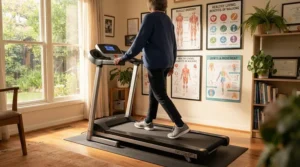
space-saving treadmill for children vs Traditional Playground & Outdoor Play
| Factor | Bedroom Treadmill | Playground / Outdoor Play |
|---|---|---|
| Weather dependence | None — usable year-round | Fully weather-dependent |
| Supervision needed | High for motorized units | Moderate, situational |
| Social interaction | Minimal | High |
| Space required | Small, indoor footprint | Large, outdoor footprint |
| Best For | Rainy days, quick energy bursts | Full-body play, social skills |
The honest analysis here is that a bedroom treadmill is a supplement, not a replacement — it fills the gap on days when outdoor play isn’t realistic, but it can’t replicate the social, sensory, and full-range-of-motion benefits of a playground. Parents leaning too heavily on an indoor unit risk losing the unstructured, imaginative play that outdoor time uniquely provides, so treat this as one tool among several rather than the whole solution.
✨ Don’t Miss These Exclusive Deals!
🔍 Compare today’s pricing on the picks above before you buy — check current availability and grab whichever fits your child’s room and age range best.
What to Expect: Real-World Performance in bedroom fitness setups
Specs on a product page rarely translate cleanly into lived experience, so here’s the practical translation. For readers wanting the mechanical basics of how these machines work at all, the Wikipedia overview of treadmill design is a useful primer on belt, motor, and deck fundamentals before you start comparing spec sheets line by line. A non-motorized unit like the Redmon Fun and Fitness for Kids Treadmill will feel effortful and self-limiting in the best way — kids naturally slow down or stop when tired, since there’s no belt dragging them along. A motorized pick like the WalkingPad C2 or MCQ Compact Treadmill, by contrast, will feel closer to a real cardio session, with the belt setting the pace rather than the child, which is exactly why supervision matters more with these models.
Expect noise somewhere between “background hum” and “notice it in the next room” for most motorized picks — none of these are silent, whatever the marketing copy implies. Expect manual units to be used in short, high-energy bursts of 10-15 minutes, while older kids on motorized units can sustain 20-30 minute sessions more comfortably, particularly on incline-capable machines like the UMAY L10. The overarching theme from real-world use: younger kids treat these as play equipment, while teens treat them as actual fitness tools, and buying decisions should follow that distinction closely.
Safety, Age Guidelines & Regulations Every Parent Should Know
This is the section that matters most, and it deserves a direct answer up front: motorized treadmills of any size pose a real, documented entrapment risk to young children, and that risk doesn’t disappear because a machine is marketed as compact or kid-friendly.
The clearest evidence for this comes from federal regulators themselves. After nearly 40 reported incidents, including one child’s death, regulators concluded that a widely used motorized treadmill posed serious risks of abrasions, fractures, and death to children, specifically from entrapment and pull-under injuries near the rear roller. The official recall notice explicitly instructs that if a treadmill must be used in a home with children, it should be operated only in a locked room, with the safety key stored away from the machine and out of children’s reach when not in supervised use — guidance that applies broadly to any motorized treadmill, not just the recalled model.
That single case is also a useful lens for evaluating every product in this article: any machine with a motorized belt and rear roller carries some version of that same risk profile, scaled to its size and speed. This is precisely why every motorized pick above — the WalkingPad C2, UMAY L10, MCQ Compact Treadmill, and Echelon Stride-6 — comes with a repeated, non-negotiable supervision requirement in this article, while the manual options are positioned as the safer default for children under roughly 8 years old. Regulations here are less about a specific certification checklist and more about consistent household rules: never allow unsupervised access, store safety keys separately, and treat a bedroom treadmill the same way you’d treat a power tool — useful, but not a toy left unattended.
Long-Term Cost, Maintenance & storage-friendly equipment
Sticker price is only part of the real cost picture. Manual units like the AKLUER Kids Treadmill Walking Pad carry near-zero ongoing cost — no electricity, minimal wear parts — but they’re also more likely to be outgrown and replaced within a couple of years. Motorized units cost more upfront and add a small electricity draw, but a well-maintained motorized deck can serve a growing child from tween through teen years, spreading that higher cost over a longer useful life.
| Cost Factor | Manual Picks (e.g. Redmon, AKLUER) | Motorized Picks (e.g. WalkingPad C2, UMAY L10) |
|---|---|---|
| Upfront price | Under $150 typically | $150-$1,000+ range |
| Ongoing electricity cost | None | Modest, a few dollars monthly with regular use |
| Expected usable lifespan | 1-3 years before outgrowing | 3-6+ years with good maintenance |
| Maintenance needs | Minimal — occasional cleaning | Belt tension checks, motor housing dust removal |
Looking at the table above, the value calculation really hinges on how long a specific child will realistically use the machine. A Redmon Fun and Fitness for Kids Treadmill bought for a 3-year-old is genuinely great value even if it’s retired by age 7, because the price is low enough that a short lifespan doesn’t sting. A premium motorized pick like the Echelon Stride-6, on the other hand, only makes financial sense if a family expects several years of use across a growing teen, since amortizing that higher price over just one season would be a poor return.
For storage-friendly equipment specifically, remember that folded dimensions matter as much as price when calculating real value — a slightly pricier model that tucks flat under a bed effectively “returns” usable floor space every single day, which has real value in a small shared room even if it’s harder to put a dollar figure on.
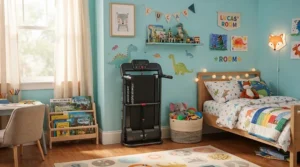
Frequently Asked Questions
❓ Is it safe to put a treadmill in a child's bedroom?
❓ What size treadmill fits in a small kids' room?
❓ Do non-motorized kids' treadmills actually give a real workout?
❓ How much does a compact treadmill for a child's bedroom typically cost?
❓ What's the biggest safety risk with kids and treadmills?
Conclusion
The right compact treadmill for children’s bedroom use isn’t the one with the flashiest spec sheet — it’s the one that matches your child’s age, your household’s realistic supervision bandwidth, and the actual square footage you’re working with. For younger kids, the manual AKLUER Kids Treadmill Walking Pad and Redmon Fun and Fitness for Kids Treadmill remove the biggest safety variable entirely by skipping the motor. For tweens and teens who can follow safety rules consistently, the WalkingPad C2, MCQ Compact Treadmill, UMAY L10, and premium Echelon Stride-6 offer real cardio value in a genuinely storage-friendly package.
Whichever you choose, treat the safety guidance in this article as non-negotiable, not optional flavor text: store keys separately, supervise every motorized session, and reassess as your child grows. Consumer advocacy groups have pushed for stronger federal safety standards around motorized exercise equipment and children specifically, which is worth a read if you want the fuller policy context behind the household rules above. Do that, and a bedroom treadmill can be a genuinely useful tool for hitting daily activity goals on the days outdoor play just isn’t in the cards.
Recommended for You
- Treadmill for Kids Under 12: 7 Safe Picks Families Love (2026)
- Safe Treadmill For Kids With Auto Shut-off: 7 Trusted Picks for 2026
- 7 Best Youth Treadmill With Speed Limiter Picks for 2026
Disclaimer: This article contains affiliate links. As an Amazon Associate, I earn from qualifying purchases. If you purchase products through these links, we may earn a small commission at no additional cost to you.
✨ Found this helpful? Share it with your friends! 💬🤗
