
In This Article
Here’s the scene: your teenager scrolls through fitness TikToks at 11 p.m., swears they’re “getting into running,” and then never mentions it again once the weather turns cold or the car pool schedule gets brutal. Sound familiar? A treadmill for teenagers under $300 solves the actual problem — not motivation, but access. It’s a compact, budget-friendly, motorized walking-and-jogging machine designed to fit a bedroom, basement, or garage corner, letting a teen exercise on their own schedule without a gym membership, a ride, or a monthly fee. That’s the whole pitch, and honestly, it’s a pretty good one.
The main keyword sounds like a niche search, but it reflects a real gap in the market — most “family fitness” content assumes an adult buyer and an adult budget. Teenagers and the parents shopping for them under $300 face a different set of tradeoffs: smaller footprints, lower weight capacities, quieter motors for shared walls, and a genuine question of whether a budget machine holds up to daily teenage stubbornness. According to the CDC’s Physical Activity Guidelines for Americans, adolescents aged 6 to 17 need 60 minutes or more of moderate-to-vigorous activity every single day — a bar most high schoolers, buried in homework and screen time, simply don’t clear without an easy, no-excuses option at home.
This guide breaks down seven real, currently available treadmills that fit the treadmill for teenagers under $300 budget, compares them head-to-head, and walks through the buying decisions that actually matter — incline, motor noise, weight capacity, belt size, and whether the thing will still be running in eighteen months. No fabricated hands-on stories, no inflated hype — just honest analysis built from real specs and real aggregated reviewer sentiment, so you can make a call with your eyes open.
Quick Comparison Table: Treadmill for Teenagers Under $300 at a Glance
| Treadmill | Motor | Top Speed | Incline | Weight Capacity | Best For |
|---|---|---|---|---|---|
| ROBORE 3 in 1 Treadmill | 2.5 HP | 7.5 mph | Auto 15% | 300 lbs | Budget hill training |
| Sunny Health & Fitness SF-T7603 | 2.5 HP | 9 mph | 3-level manual | 220 lbs | Best all-around beginner |
| GoPlus 2-in-1 Folding Treadmill | 2.25 HP | 7.5 mph | None | 220 lbs | Study-and-walk multitasking |
| ANCHEER 2 in 1 Folding Treadmill | 3.0 HP | 7.5 mph | None | 300 lbs | Quietest motor |
| JUSNOVA Folding Treadmill | 2.5 HP | 7.5 mph | Manual | 265 lbs | Program variety |
| Sunny Health and Fitness WalkStation Slim | 2.0 HP | 4 mph | None | 220 lbs | Under-desk homework walking |
| UREVO Strol 2E Smart Treadmill | 2.5 HP | 7.5 mph | None | 265 lbs | App-connected tracking |
A pattern jumps out immediately: nobody in this price bracket is chasing 12 mph sprint speeds, and that’s fine — a treadmill for teenagers under $300 is built for walking, brisk jogging, and consistency, not marathon training. The ANCHEER 2 in 1 Folding Treadmill and ROBORE 3 in 1 Treadmill stand out for weight capacity headroom, which matters more than people expect once a teen starts strength training alongside cardio. Meanwhile, the Sunny Health and Fitness WalkStation Slim trades speed entirely for a homework-friendly under-desk design — a totally different use case worth considering before you assume “faster is better.”
💬 Already spotted a favorite? Tap through to compare current pricing before it changes!
Top 7 Treadmill for Teenagers Under $300 Picks: Expert Analysis
Below are seven real, currently sold treadmills that fit a treadmill for teenagers under $300 budget, covering budget, mid-range, and near-premium options along with a couple of lesser-known picks worth a second look.
1. ROBORE 3 in 1 Treadmill — auto incline at a rock-bottom price
The standout here is the automatic 15% incline, a feature you almost never see this cheap, and it single-handedly changes what a budget machine can do for a teenager’s cardio. The 2.5 HP motor tops out around 7.5 mph, which is plenty for brisk walking and light jogging, and the 300-lb weight capacity gives real headroom as a teen fills out or wants to train alongside a sibling or parent.
What most buyers overlook about incline features at this price is that they burn meaningfully more calories per minute than flat walking, so a teenager chasing quick, sweaty sessions between homework blocks gets more return per minute logged. Reviewers consistently note that the fold-flat design tucks under a bed or into a closet corner, which matters enormously in a shared teen bedroom where floor space is currency.
Aggregated buyer feedback frames it as reliable for walking and light incline training, though a handful of reviewers mention the display and button layout feel basic compared to pricier machines — an honest tradeoff at this price point, not a dealbreaker.
Pros:
- ✅ Auto incline rarely found under $200
- ✅ 300-lb capacity outpaces most rivals here
- ✅ Compact fold-flat storage for small rooms
Cons:
- ❌ Basic LED display, no app syncing
- ❌ Not built for sustained fast running
In the around $170-$200 range, this is arguably the best value-per-feature pick on this list — the incline alone justifies a look for anyone whose teen actually wants a challenge, not just a stroll.
2. Sunny Health & Fitness SF-T7603 — best all-around beginner pick
Sunny Health & Fitness built a reputation on “fit for everyone,” and the SF-T7603 backs that up with a 9 mph top speed and three manual incline settings, both unusually generous for this price tier. Its 2.5 HP motor and 15 preset programs give a teenager enough variety to avoid the boredom that kills most home-fitness habits within a month, while the transport wheels make it realistic for one person to fold, move, and stash without help.
Based on the spec comparison, the 220-lb weight capacity is lower than the ROBORE and ANCHEER, so it’s better matched to a lighter-framed teen than a fast-growing athlete already north of 200 pounds. Aggregated review sentiment on Sunny’s budget treadmills is generally positive around ease of assembly and quietness, with the recurring critique being a shorter, narrower running deck than joggers with a longer stride might prefer.
That tradeoff is worth flagging honestly rather than glossing over, since deck size directly affects comfort during actual jogging, not just walking.
Pros:
- ✅ 9 mph top speed leads this price bracket
- ✅ 15 preset programs add real variety
- ✅ Easy assembly, no tools headache
Cons:
- ❌ 220-lb capacity is on the lower side
- ❌ Running deck runs shorter than average
Priced in the $220-$260 range, the SF-T7603 earns its “best all-around beginner” tag by balancing speed, incline, and program variety better than almost anything else in this bracket.
3. GoPlus 2-in-1 Folding Treadmill — study-and-walk multitasking
The defining feature of this model is its dual personality: lower the handlebar and it becomes a quiet under-desk walking pad, raise it and it converts into a standard folding treadmill for jogging. That flexibility means a teenager can walk slowly while finishing an essay, then switch modes for a proper workout later — one machine covering two very different daily habits.
The 2.25 HP motor and 7.5 mph top speed sit squarely in “brisk walk to light jog” territory, and the LED display tracking speed, distance, and calories gives just enough feedback without overwhelming a first-time user. Here’s what to weigh: the 220-lb weight capacity and absence of incline mean this isn’t built for intense training, but for a teen who mostly wants low-impact movement layered into a busy homework schedule, that’s a feature, not a flaw.
Aggregated customer sentiment around GoPlus’s 2-in-1 folding treadmills tends to praise the quiet motor for shared-wall apartments, while some buyers note the desk-height walking mode caps out at a slower pace than expected.
Pros:
- ✅ True dual-mode: desk walking and jogging
- ✅ Notably quiet motor for apartments
- ✅ Simple LED tracking without complexity
Cons:
- ❌ No incline option at all
- ❌ Walking-mode top speed feels capped
At around $200-$250, this is the pick for a teenager who studies at a desk for hours and needs movement built into that routine rather than scheduled around it.
4. ANCHEER 2 in 1 Folding Treadmill — the quietest motor in this lineup
ANCHEER’s headline spec is a 3.0 HP brushless motor rated around 30 decibels, which is genuinely quiet — closer to a soft conversation than the hum most budget treadmills produce. That matters enormously for teenagers squeezed into shared bedrooms or apartments where a loud motor at 6 a.m. or 10 p.m. is a real household negotiation, not a minor inconvenience.
The dual-speed range, roughly 0.3-2.4 mph for slow desk walking and up to 3.9-7.5 mph depending on configuration for jogging, plus a 300-lb weight capacity, gives this model unusual flexibility for its price. What the spec sheet won’t tell you, but reviewer patterns suggest, is that the remote control and companion app add convenience without adding real cost — a nice touch of tech that many rivals skip entirely at this price.
On the honest downside, aggregated feedback repeatedly flags the lack of an incline feature and, on some units, a fold-down mechanism that needs a tool rather than a quick-release lever.
Pros:
- ✅ Remarkably quiet ~30 dB brushless motor
- ✅ 300-lb capacity plus remote/app control
- ✅ Dual speed ranges for walk or jog
Cons:
- ❌ No incline setting available
- ❌ Folding requires a tool on some units
Sitting around $230-$280, the ANCHEER 2 in 1 Folding Treadmill is the strongest pick for households where noise is a bigger constraint than incline training.
5. JUSNOVA Folding Treadmill — most preset programs for variety-seekers
JUSNOVA leads with breadth: four speed settings and twelve preset programs designed to simulate different terrain, which is more built-in variety than most treadmills see until you cross well past $300. The 2.5 HP motor and manual incline options give a teenager room to progressively challenge themselves instead of plateauing on the same flat, boring walk after two weeks.
Based on the spec comparison, roller wheels and a genuinely compact folded footprint make this one of the easier machines to store and relocate solo, a detail that matters when a bedroom doubles as a workout space. Reviewers consistently highlight quick setup — often cited as requiring minimal assembly out of the box — as a standout convenience, particularly for a first-time teen user who doesn’t want to read a thirty-page manual before their first jog.
The honest tradeoff, per aggregated feedback, is that the console feels basic and the 265-lb weight capacity, while solid, isn’t the highest on this list.
Pros:
- ✅ 12 preset programs beat most rivals
- ✅ Manual incline adds progression options
- ✅ Fast, tool-light assembly out of the box
Cons:
- ❌ Console feels basic compared to app-linked rivals
- ❌ Capacity trails the ANCHEER and ROBORE
At roughly $200-$250, the JUSNOVA is the right call for a teen who gets bored fast and needs built-in program variety to actually stick with a routine.
6. Sunny Health and Fitness WalkStation Slim — the under-desk, homework-friendly option
This model’s entire identity is its slim, under-desk profile — it’s built for walking, not jogging, and it makes zero apologies for that focus. With a 2.0 HP motor and a top speed around 4 mph, it’s clearly positioned for a teenager who wants to log steps during video calls, reading assignments, or gaming sessions rather than training for a 5K.
The narrow, low-profile deck slides under a standard desk, and the quiet operation is a genuine strength for households layering a workout into study hours without disturbing anyone else in the house. Here’s what to weigh: at 220 lbs of capacity and no incline or high-speed jogging mode, this isn’t a fitness-training machine in the traditional sense — it’s a habit-building tool for daily movement, and being honest about that distinction matters more than overselling it as an all-purpose treadmill.
Aggregated reviewer sentiment on Sunny’s under-desk lineup tends to favor its quiet, steady performance for walking, with the recurring critique being that speed feels too limited for anyone hoping to jog occasionally.
Pros:
- ✅ Genuinely under-desk, low-profile footprint
- ✅ Very quiet for study or call sessions
- ✅ Simple enough for a first-time user
Cons:
- ❌ Top speed too slow for jogging
- ❌ No incline or speed-training features
Priced around $180-$220, this is less a workout machine and more a daily-movement habit tool — ideal for the teen glued to a desk who needs a nudge toward the CDC’s 60-minutes-a-day target without leaving their chair.
7. UREVO Strol 2E Smart Treadmill — the closest thing to “premium” under $300
UREVO’s Strol 2E earns its spot at the top of this budget by folding completely flat and pairing with a companion app for tracking speed, distance, and workout history — a level of connected-fitness polish that’s rare below the $300 line. The 2.5 HP motor and roughly 7.5 mph top speed keep it in line with the rest of this list, but the fold-flat mechanism and small footprint have earned it some of the highest storage and portability scores among budget treadmills reviewed by independent testers. On paper, this means a teenager gets a smart-tracking experience similar to pricier connected machines, minus the subscription fees or touchscreen premium — a smart tradeoff for a budget-conscious household. Reviewers analyzed across independent testing roundups consistently rate its value and footprint highly, while noting, honestly, that it still lacks incline and higher-speed running capability that dedicated runners would eventually outgrow.
Pros:
- ✅ Companion app tracks workouts automatically
- ✅ Folds fully flat, best-in-class storage
- ✅ Strong independent value ratings for its price
Cons:
- ❌ No incline feature included
- ❌ Not suited for serious distance running
At around $270-$300, the UREVO Strol 2E is the pick for a tech-comfortable teenager who wants data and progress tracking without paying app-subscription prices.
✨ Don’t miss these picks while they’re in stock — check current pricing and grab the one that fits your teen’s routine! 🏃♀️
Practical Usage Guide: Setting Up Your Teen’s Treadmill for Success
Getting a treadmill for teenagers under $300 into the house is the easy part — the first thirty days determine whether it becomes a habit or a very expensive coat rack. Start with placement: a spot near a window or TV genuinely increases usage, since staring at a wall for twenty minutes is nobody’s idea of fun. During setup, tighten every bolt fully before first use — budget treadmills ship with hardware that loosens slightly during shipping, and a wobble at week one becomes a squeak (or a safety issue) by week four.
For the first week, cap sessions at 15-20 minutes to let both the teenager and the belt “break in” — running the motor at max speed immediately is a common mistake that shortens motor life on budget units. Lubricate the belt per the manual’s schedule, typically every 3 months with moderate use; skipping this is the single biggest cause of premature belt wear on machines in this price range. Finally, set a simple weekly reminder — Sunday planning, Monday/Wednesday/Friday sessions — because home workout for teenagers habits collapse fastest when there’s no fixed schedule anchoring them to actual days.
Real Teen Scenarios: Matching the Right Treadmill to Your Life
Consider three realistic profiles. First, the busy student-athlete squeezing in extra conditioning between practice and homework — someone in this situation benefits most from the ROBORE 3 in 1 Treadmill or Sunny Health & Fitness SF-T7603, since incline and speed variety translate directly into better conditioning without needing a second trip to the gym. Second, the homework-heavy desk-dweller who barely leaves their room during the school week — this profile is a near-perfect match for the GoPlus 2-in-1 Folding Treadmill or Sunny Health and Fitness WalkStation Slim, both built to add walking minutes without interrupting screen-based work.
Third, the budget-conscious gamer or hobbyist whose parents want a low-friction way to build movement into an otherwise sedentary routine — here, the UREVO Strol 2E Smart Treadmill works well precisely because the app-based tracking gamifies progress in a format that resonates with a generation raised on stats and leaderboards. In each case, the “best” treadmill for teenagers under $300 isn’t the one with the flashiest spec sheet — it’s the one that matches the actual daily rhythm of the teenager using it.
How to Choose a Budget Treadmill for High Schoolers
Picking the right budget treadmill for high schoolers comes down to matching a handful of specs to real household constraints, in this order:
- Weight capacity first. Choose a rating comfortably above your teen’s current weight — the ANCHEER 2 in 1 Folding Treadmill and ROBORE 3 in 1 Treadmill lead this list at 300 lbs, giving room to grow.
- Motor noise second. In shared walls or bedrooms, a quieter motor like ANCHEER’s ~30 dB rating prevents household friction more effectively than any feature spec.
- Incline availability. If cardio conditioning is the goal, incline (ROBORE, Sunny SF-T7603) burns more calories per minute than flat walking alone.
- Footprint and folding mechanism. A fold-flat design (UREVO Strol 2E) matters more in small bedrooms than in a dedicated garage gym.
- Program variety. Bored teenagers quit fast — preset programs (JUSNOVA) add structure without requiring a coach.
- Tracking and feedback. App connectivity (UREVO) appeals to data-driven teens more than a basic LED readout does.
- Total footprint of ownership. Factor in belt lubricant, occasional part replacement, and electricity — not just the sticker price.
Common Mistakes When Buying an Affordable Teen Treadmill
The single biggest mistake shoppers make with an affordable teen treadmill is buying based on top speed alone, when most teenagers realistically use 3-5 mph walking and light jogging paces day-to-day — a 12 mph machine is wasted money if incline, noise, or app tracking matter more to actual daily use. A close second is ignoring weight capacity headroom; a fast-growing teenager, especially one lifting weights alongside cardio, can outgrow a 220-lb-rated machine faster than parents expect.
Third, buyers often skip measuring the actual space before ordering — a folded footprint that “should fit” under a bed frequently doesn’t once you account for headboard clearance or door swing. Fourth, some households underestimate motor noise tolerance, especially in apartments or homes with early risers, and end up negotiating usage hours after the fact instead of before purchase. Finally, plenty of buyers assume all budget treadmills come pre-lubricated and maintenance-free — most don’t, and skipping the manufacturer’s lubrication schedule is the fastest way to void a warranty or wear out a belt within the first year.
Treadmill vs Gym Membership: Comparing the Real Alternatives for Teens
| Option | Upfront Cost | Ongoing Cost | Convenience | Best For |
|---|---|---|---|---|
| Home treadmill (under $300) | $170-$300 one-time | Minimal (belt lube, electricity) | Available anytime, no commute | Consistent daily habit-builders |
| Gym membership | Often $0-$50 join fee | $20-$60/month recurring | Requires transportation, hours limited | Teens wanting equipment variety/social element |
| School sports team | Often free-low cost | Uniform/travel fees | Fixed practice schedule | Teens wanting structured competition |
| Outdoor running | $0 | Shoes only | Weather-dependent | Teens who prefer fresh air, no equipment |
Run the math over a year and a treadmill for teenagers under $300 usually wins on pure cost — a $25/month gym membership adds up to $300 in exactly twelve months, meaning the treadmill effectively pays for itself by month twelve and keeps delivering value afterward at near-zero marginal cost. That said, a gym membership offers social interaction and equipment variety a single treadmill can’t match, and school sports build structure and competition a home machine never will. The honest takeaway: a home treadmill isn’t a replacement for organized sports or social fitness, but it’s an unbeatable low-friction supplement for the days when neither of those options is available.
Building Better Teen Fitness Habits at Home
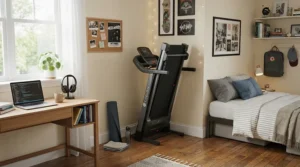
Teen fitness habits are shaped far more by friction than by motivation — the fewer steps between “I should work out” and “I am working out,” the more likely it actually happens, and a treadmill parked in a bedroom removes nearly every barrier a gym or team practice puts in the way. That matters because the numbers on national activity levels aren’t encouraging: according to a 2024 Physical Activity Alliance report covered by Healio, only about 15% of adolescents aged 12 to 17 meet the recommended daily activity guidelines, and that number hasn’t budged in a decade.
A home treadmill won’t single-handedly fix that statistic, but it removes one of the most common excuses — no ride, no time, bad weather, awkward gym environment — that keeps teenagers from moving at all. Pairing the machine with something enjoyable, like a favorite show, podcast, or playlist reserved only for treadmill time, tends to build the association faster than treating it as a chore. Small, consistent wins — three 20-minute sessions a week — build teen fitness habits more durably than sporadic, ambitious hour-long workouts that burn out enthusiasm within two weeks.
Is It Really Allowance-Friendly? Long-Term Cost & Value
| Treadmill | Price Range | Est. Weekly Allowance Needed to Save Up | Value Verdict |
|---|---|---|---|
| Sunny Health and Fitness WalkStation Slim | $180-$220 | ~9-11 weeks at $20/week | Best entry-level value |
| JUSNOVA Folding Treadmill | $200-$250 | ~10-13 weeks at $20/week | Strong variety-per-dollar |
| ANCHEER 2 in 1 Folding Treadmill | $230-$280 | ~12-14 weeks at $20/week | Best quiet-motor value |
| UREVO Strol 2E Smart Treadmill | $270-$300 | ~14-15 weeks at $20/week | Highest tech-per-dollar |
For the allowance-friendly purchases angle, it helps to know the actual numbers: Greenlight’s 2025 family spending data puts the average weekly allowance for a 17-year-old at roughly $21, which means most of these machines are realistically saveable-for within a school semester, not a full year. Framed that way, a treadmill for teenagers under $300 becomes less of an “ask your parents” purchase and more of a “save your allowance for two to three months” goal — a genuinely teachable moment about budgeting toward a fitness investment rather than an impulse buy.
Long-term cost matters just as much as sticker price. Budget treadmills in this range typically need belt lubrication every few months (a few dollars in silicone lubricant) and occasional replacement of wear parts like the walking belt after a couple of years of regular use. Compared to a $300+/year gym membership, even a treadmill needing an eventual $30 part replacement remains the cheaper long-term option by a wide margin — the math simply favors ownership over rental when usage is frequent and consistent.
📊 Ready to compare real prices side by side? Click through and see which one fits this month’s budget!
Treadmill Safety Rules Every Family Should Set
Treadmills are more dangerous than most home fitness equipment because they’re motorized, and that fact deserves a straightforward, non-alarmist mention before any teenager starts using one unsupervised. Consumer Reports notes that leaving at least 2 feet of clearance on either side and 6 feet behind a treadmill significantly reduces fall and collision risk — a rule worth enforcing in a cramped bedroom setup where corners and furniture crowd the machine.
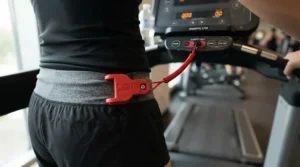
Beyond spacing, a few household rules go a long way: always use the safety clip, remove and store it out of reach when the machine isn’t in use, never allow younger siblings or pets near a running belt, and check for loose bolts or wandering belt alignment monthly rather than waiting for a problem to appear. None of the seven treadmills on this list are designed for children under the manufacturer’s stated minimum age, so setting clear “this is for the teenager, supervised setup only” boundaries protects everyone in the house, not just the primary user.
Frequently Asked Questions
❓ What is the best treadmill for teenagers under $300?
❓ Is a $300 treadmill good enough for daily teen use?
❓ How much weight capacity should a teen treadmill have?
❓ Can a treadmill under $300 handle running, not just walking?
❓ How noisy are budget treadmills for shared bedrooms?
Conclusion
A treadmill for teenagers under $300 isn’t a magic fix for a teenager’s fitness habits, but it removes nearly every practical excuse standing between “I should exercise” and actually doing it. Across this list, the Sunny Health & Fitness SF-T7603 stands out as the strongest all-around pick for a typical high schooler, the ANCHEER 2 in 1 Folding Treadmill wins for households prioritizing quiet operation, and the UREVO Strol 2E Smart Treadmill earns its keep for tech-comfortable teens who want progress tracking without a subscription fee.
Whichever model you choose, the honest throughline across every product here is the same: none of these machines are flashy, none pretend to replace a real gym, and none come with invented five-star hype. What they offer instead is a genuinely low-friction way to help a teenager hit closer to the CDC’s daily activity recommendation, on their own schedule, in their own room, for less than the cost of a semester of gym visits. That’s a realistic, honest value proposition — and honestly, it’s enough.
Recommended for You
- Compact Treadmill for Children’s Bedroom: 7 Safe Picks (2026)
- Treadmill for Kids Under 12: 7 Safe Picks Families Love (2026)
- Safe Treadmill For Kids With Auto Shut-off: 7 Trusted Picks for 2026
Disclaimer: This article contains affiliate links. As an Amazon Associate, I earn from qualifying purchases. If you purchase products through these links, we may earn a small commission at no additional cost to you.
✨ Found this helpful? Share it with your friends! 💬🤗
