In This Article
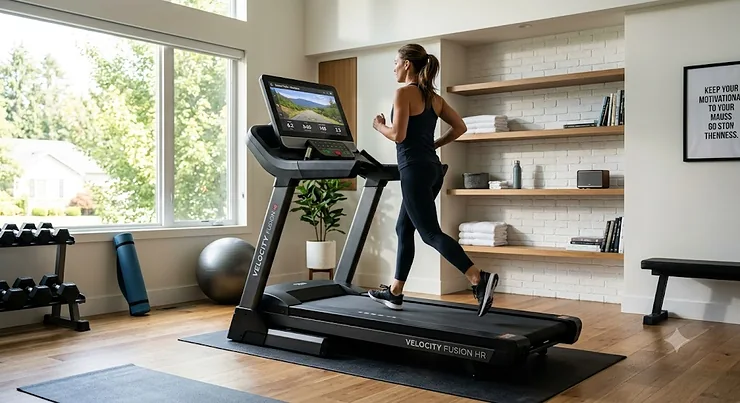
Somewhere around your third year of running outside in January sleet, you start fantasizing about a machine that won’t judge you for training at 5 a.m. in your basement. A high performance home treadmill is built for exactly that moment — it’s a treadmill engineered with a stronger continuous-horsepower motor, a top speed of 11-14 mph or more, a deeper incline range, and a commercial-grade deck designed to survive years of hard mileage rather than the occasional Sunday stroll. The distinction matters because “treadmill” is a category that spans everything from a $400 folding walking pad to a $7,000 machine that shrugs off marathon-block training weeks without flinching.
This guide exists because most buying advice online reads like a copy-pasted spec sheet, and that’s not useful when you’re about to drop real money on equipment you’ll stand on for an hour a day. What follows is a research-backed breakdown of seven real, currently available machines spanning entry-level “high performance” to full commercial-grade, plus the mechanical literacy you need — motor horsepower, deck construction, belt geometry — to tell marketing fluff from genuine engineering. We’ll also dig into who actually needs a 14 mph top speed versus who’s paying for numbers they’ll never touch, all in service of the broader goal outlined in the ACSM physical activity guidelines: consistent aerobic training, whatever equipment gets you there.
Quick Comparison Table
Here’s the condensed version for anyone who wants the shape of the market before diving into the weeds.
| Treadmill | Top Speed | Motor | Best For |
|---|---|---|---|
| NordicTrack Commercial 2450 | 14 mph | 4.25 CHP | Competitive runners doing intervals |
| TRUE Fitness Performance 3000 | 12 mph | 4.0 CHP | Joint comfort, multi-user households |
| Matrix TF50 | 12.5 mph | 3.25 CHP | Sprint stability, commercial feel |
| Sole F80 | 12.5 mph | 3.5 CHP | Deep incline / hill training |
| Peloton Tread | 12.5 mph | 3.0 CHP | Class-driven motivation |
| NordicTrack Commercial 1750 | 12 mph | 3.75 CHP | All-around mid-range value |
| Sole F65 | 12 mph | 3.0 CHP | Entry point into serious training |
A glance at this table tells a story most buyers miss: top speed and motor horsepower don’t move in lockstep. The NordicTrack Commercial 2450 hits 14 mph on a 4.25 CHP drive, while the TRUE Fitness Performance 3000 tops out lower but leans on cushioning engineering instead of raw speed. If your training is mostly tempo runs and long steady miles, the horsepower number matters less than deck quality — but if intervals and sprint work are the point, both numbers deserve equal attention.
💬 Already have a favorite from this list? Skip ahead and lock in the current price before it changes.
Top 7 High Performance Home Treadmills: Expert Analysis
1. NordicTrack Commercial 2450 — fastest top speed for serious interval work
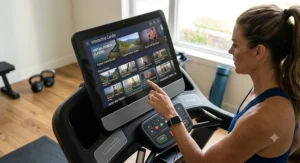
The headline number here is the 14 mph top speed, which is genuinely rare in the residential category and puts this machine in a different conversation than nearly everything else on this list. Under the hood sits a 4.25 CHP motor paired with a 60-inch belt and Runflex cushioning that’s engineered to soften heel strike without turning mushy under a hard push-off. Incline runs from 0 to 12%, and the console can auto-adjust both incline and speed mid-workout when paired with iFit’s coached programming.
Based on the spec comparison against everything else in this price bracket, the 2450 is built specifically for runners who do structured speed work — think 400m repeats, tempo intervals, or fartlek sessions where you need the belt to snap up to a 4:17 mile pace without hesitation. What most buyers overlook is that reaching 14 mph on a treadmill is a genuinely different skill than reaching it outdoors, since the belt is moving your foot backward rather than you moving forward, and first-timers often need a few sessions to trust the top-end speed. Reviewers consistently note the 24-inch swiveling touchscreen as a standout, alongside praise for how quickly the machine transitions between speed and incline compared to older iFit-enabled models — though a recurring complaint in aggregated feedback is fan noise at higher speeds, and some owners have reported slower-than-ideal customer service response times.
Pros:
- ✅ 14 mph top speed — highest in this roundup
- ✅ Fast, responsive speed and incline transitions
- ✅ Large 60-inch belt comfortable for taller runners
Cons:
- ❌ Requires iFit subscription for full feature access
- ❌ Some owners report fan noise during hard efforts
Expect this one to sit in a premium price range, generally in the mid-$2,000s to low-$3,000s depending on promotions — check current price, as Amazon listings shift often. For a runner training toward a specific race with real interval work on the schedule, the value case is strong; for someone doing mostly easy mileage, you’re paying for headroom you may never use.
2. TRUE Fitness Performance 3000 — best joint-friendly cushioning and longevity
TRUE built its reputation on deck engineering rather than screen size, and the Performance 3000 (also sold as the PS3000) shows it. The signature Soft System deck uses a front-loaded cushioning zone that absorbs initial foot strike, then firms up toward the rear of the belt so push-off doesn’t feel like stepping into sand. A 4.0 CHP commercial-grade motor drives the belt, and the frame carries TRUE’s long-standing 25-year frame and motor warranty on current residential models.
Here’s what the spec sheet won’t tell you directly: that graduated deck softness is the single biggest reason runners with cranky knees or a history of shin splints gravitate toward TRUE over flashier competitors. Reviewers consistently describe minimal vibration and unusually stable footing even during faster efforts, which tracks with TRUE’s robotically welded steel frame construction — a detail that matters more than most buyers realize once a machine has logged a few thousand miles. This is the treadmill for someone who values twenty years of reliable service over a giant touchscreen; there’s no built-in subscription content ecosystem here, which some shoppers will see as a drawback and others as a relief from monthly fees.
Pros:
- ✅ Graduated Soft System deck cushions joints without mushiness
- ✅ Commercial-grade frame with a 25-year warranty
- ✅ No subscription required to use core features
Cons:
- ❌ Console and display feel basic next to touchscreen rivals
- ❌ Premium price without the flashy content library
Price sits in the mid-$3,000s to upper-$4,000s range depending on console configuration — always check current price directly with TRUE or an authorized dealer. For multi-user households or serious runners planning to keep one treadmill for a decade-plus, the long-term value math tends to favor this machine even against a lower sticker price elsewhere.
3. Matrix TF50 — most stable deck at sprint speeds
Matrix built its name on commercial gym floors, and the TF50 is essentially that DNA shrunk to fit a home gym. A quiet 3.25 CHP Johnson Drive System powers the belt up to 12.5 mph, and the incline range stretches from 0% to a genuinely useful 15%. The Ultimate Deck System combines a thick one-inch commercial running surface with industrial-grade cushioning designed to absorb hard impacts while keeping the foot strike feeling natural rather than trampoline-bouncy.
Based on the spec comparison, what separates this machine from softer, bouncier competitors is stability under load — the frame and deck are engineered to stay planted during all-out sprints rather than flexing or shifting laterally, which matters enormously once you’re moving at a sub-5-minute mile pace. What most buyers overlook about commercial-pedigree machines like this one is that the 24-inch HD touchscreen and drive system were designed first for gym floors that see hundreds of users a week, meaning the home version has considerably more mechanical headroom than its price tag might suggest. Aggregated owner feedback frequently highlights the notched rolling dials for speed and incline as best-in-class for mid-run adjustments, letting you shift pace without breaking stride during interval sets.
Pros:
- ✅ Commercial-grade deck stability at sprint speeds
- ✅ 15% incline range for serious hill training
- ✅ Precise dial controls for mid-run adjustments
Cons:
- ❌ Smaller brand recognition than NordicTrack or Peloton
- ❌ Fewer built-in workout programs than subscription-first rivals
Pricing generally lands in the $3,000-$4,000 range at the time of research — confirm current pricing before buying, since Matrix pricing varies more by dealer than direct-to-consumer brands. If deck stability and commercial-grade durability rank above content and touchscreen flash on your priority list, this is one of the strongest values in the premium tier.
4. Sole F80 — deepest incline range for hill training
The Sole F80 pushes incline further than almost anything else here, climbing from 0% all the way to 15%, which effectively turns a flat basement run into legitimate hill-repeat training. A 3.5 CHP motor drives the belt to a 12 mph top speed across a double-woven belt that Sole positions as a middle ground between a stiff commercial belt and an overly soft cushioned one.
Based on the spec comparison, the F80’s real advantage shows up for runners who want to build strength and aerobic capacity through incline work rather than pure speed — a 15% grade at a moderate pace can spike your heart rate into serious training zones without needing to sprint, which is valuable for anyone managing joint stress but still chasing fitness gains. What most buyers overlook is that Sole’s cushioning tends to run slightly softer underfoot than commercial rivals like Matrix or TRUE, a tradeoff some reviewers describe as comfortable for long efforts but occasionally “squishy” during faster intervals. The console itself is more modest than newer touchscreen competitors, with a 10.1-inch display that some owners feel is undersized given the treadmill’s otherwise strong performance credentials.
Pros:
- ✅ 15% max incline — among the deepest in its class
- ✅ Comfortable double-woven belt for long efforts
- ✅ Strong 3.5 CHP motor for the price point
Cons:
- ❌ 10.1-inch display feels small next to touchscreen rivals
- ❌ Belt can feel soft during fast interval work
Expect a price range in the mid-$2,000s to around $3,000, with periodic promotional pricing — check current price before purchasing, as Sole runs sales a few times a year. Hill-focused runners and anyone rehabbing from injury who still wants a genuine cardio challenge will get outsized value from that incline range specifically.
5. Peloton Tread — best content ecosystem for motivation-driven training
Peloton’s Tread reaches a 12.5 mph top speed and 12.5% incline off a 3.0 horsepower motor, numbers that are respectable but not chart-topping — the real draw here is everything wrapped around the hardware. A large HD touchscreen anchors a library of live and on-demand classes, leaderboards, and a training ecosystem that’s arguably the most polished in the connected-fitness space, and the frame notably skips the “motor hood” design other brands use, which means there’s nothing to clip your foot on during fast turnover work.
Honest framing matters here: the Tread’s value proposition isn’t primarily mechanical superiority, it’s behavioral — reviewers and fitness coaches alike consistently point to Peloton’s coached-class format as the single biggest driver of consistency for people who struggle to self-motivate on a treadmill alone. Based on the spec comparison, the 3.0 CHP motor sits at the lower end of this list’s power range, meaning it’s better matched to steady-state runs and moderate interval work than to marathon-length high-mileage weeks at max effort. What most buyers overlook is the subscription cost: Peloton’s membership runs roughly $44 a month at the time of research, a recurring cost that should factor into any total-cost-of-ownership comparison against subscription-free machines like the TRUE Performance 3000.
Pros:
- ✅ Best-in-class class library and leaderboard motivation
- ✅ No motor hood — safer footing during fast turnover
- ✅ Sleek, compact frame for smaller spaces
Cons:
- ❌ Requires an ongoing monthly subscription
- ❌ Non-folding frame demands dedicated floor space
Hardware pricing generally runs in the $3,000-$3,500 range before subscription costs — check current price, since Peloton periodically runs hardware discounts. This is the strongest pick for anyone who knows their consistency problem is motivational rather than mechanical.
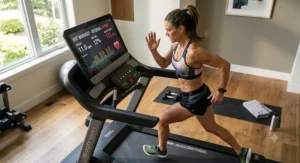
6. NordicTrack Commercial 1750 — best all-around mid-range value
The Commercial 1750 offers a generous 60-inch by 21.5-inch running surface, a 12 mph top speed, and a 3% decline paired with 12% incline capability — a decline feature that’s genuinely uncommon at this price point and useful for simulating downhill running mechanics. NordicTrack’s Runflex cushioning uses elastomer-damped dampers positioned strategically across the deck rather than uniform padding.
Based on the spec comparison against pricier siblings like the 2450, the 1750 trades top-end speed and horsepower for a lower price while keeping the running surface size and cushioning quality largely intact — a reasonable trade for runners who don’t need 14 mph but still want a wide, stable belt. What most buyers overlook is that the decline function, while a nice touch, sees far less real-world use than incline; most owners engage it occasionally for variety rather than as a training staple, so don’t let it be a deciding factor over deck cushioning or motor durability. Aggregated reviewer sentiment frequently compares this favorably to the Sole F80 on cushioning feel, with some owners noting the Runflex system edges out Sole’s double-woven belt for shock absorption during longer runs.
Pros:
- ✅ Wide 60-inch belt with true decline capability
- ✅ Strong cushioning-to-price ratio in its class
- ✅ Reliable brand with long track record
Cons:
- ❌ Requires iFit for full feature functionality
- ❌ 12 mph ceiling limits appeal for elite interval work
Price generally sits in the upper-$1,900s to mid-$2,400s range depending on promotions — check current price, since NordicTrack runs frequent seasonal sales. For a runner who wants commercial-adjacent quality without commercial-adjacent pricing, this is consistently one of the smartest picks in the category.
7. Sole F65 — best entry point into true high performance territory
The Sole F65 rounds out this list as the accessible doorway into the high performance category: a 3.0 CHP motor, 12 mph top speed, and a 22-inch by 60-inch belt paired with Sole’s Cushion Flex Whisper Deck, which uses cushioning elastomers positioned to reduce joint impact without a subscription or premium price tag attached. A hydraulic folding mechanism also solves a real problem for buyers without a dedicated home gym room.
Based on the spec comparison, the F65 punches above its price class specifically because it doesn’t cut corners on motor size or belt width the way many budget treadmills do — most machines priced similarly drop to a 2.5 CHP motor or a narrower belt, both of which show up quickly once you’re running rather than walking. What most buyers overlook is that folding treadmills, as a category, sacrifice some frame rigidity for the hinge mechanism, and while Sole’s engineering minimizes this tradeoff, runners doing serious sprint work may notice slightly more flex than on the rigid, non-folding machines higher on this list. Reviewers consistently praise the fold-and-lift mechanism as smooth and genuinely space-saving, a detail that matters enormously for apartment dwellers and anyone without a dedicated workout room.
Pros:
- ✅ Strong 3.0 CHP motor for its price tier
- ✅ Space-saving hydraulic fold mechanism
- ✅ No subscription needed for core functionality
Cons:
- ❌ Slightly more frame flex than non-folding rivals
- ❌ Console lacks touchscreen or coached-class features
Expect a price range roughly between $1,300 and $1,600 depending on current promotions — check current price, as Sole frequently runs limited-time discounts. This is the clear starting point for anyone stepping up from a big-box treadmill without wanting to spend commercial-grade money.
Practical Usage Guide: Setup, Break-In, and Your First 30 Days
Getting a high performance treadmill out of the box is only step one — the machine’s long-term feel depends heavily on how you set it up and treat it early on. Place it on a hard, level surface with at least six inches of clearance on every side, and resist the urge to push it directly against a wall; motors need airflow, and cramped placement is a common cause of premature overheating. Most manufacturers recommend a “break-in” period of the first 10-15 hours of use at moderate speeds, letting the belt and deck surfaces mate properly before you start hammering intervals at top speed.
Lubrication is the maintenance step almost everyone forgets. Commercial-grade decks like the ones on the Matrix TF50 or TRUE Fitness Performance 3000 are engineered to need less frequent silicone lubrication than cheaper belts, but “less frequent” isn’t “never” — a quarterly check, or monthly if you’re logging 20+ miles a week, prevents the friction buildup that quietly shortens motor life. Belt tracking (making sure it runs centered rather than drifting to one side) should be checked every few weeks; most consoles include simple tension-adjustment bolts at the rear rollers for exactly this purpose. A common first-30-days mistake is over-tightening the belt to “fix” a squeak that’s actually a lubrication issue, which just adds unnecessary strain to the motor and rollers.
✨ Ready to stop guessing and start training? Compare current prices on today’s top picks before your favorite sells out.
Who Actually Needs This Much Machine: Real-World Scenarios
If you’re a marathon-training runner logging 40+ miles a week with structured speed sessions, the calculus is straightforward: a machine like the NordicTrack Commercial 2450 or Matrix TF50 earns its keep through sheer durability and the ability to hit genuine race-pace speeds without redlining the motor. The math changes for a suburban parent squeezing in 20-30 minutes of steady cardio three times a week between school runs — for that use case, the Sole F65 or NordicTrack Commercial 1750 delivers essentially all the practical benefit at a meaningfully lower cost, since you’re unlikely to ever touch 12+ mph territory anyway.
Consider a third profile: someone recovering from a knee injury who still wants meaningful cardio without pounding pavement. Here, motor horsepower and top speed matter far less than deck cushioning quality, which points squarely toward the TRUE Fitness Performance 3000‘s graduated Soft System deck or the Sole F80‘s incline-driven training approach, since walking a steep grade builds cardiovascular fitness with dramatically less joint stress than running flat and fast. A fourth scenario worth naming: the household where two or three people with different fitness levels share one machine. In that case, prioritize belt width and frame durability over speed ceiling, since a wider, sturdier deck like the 1750’s 21.5-inch belt accommodates a wider range of strides and body types comfortably.
How to Choose a High Performance Home Treadmill
- Start with motor horsepower, not top speed. A treadmill rated for 3.5+ CHP (continuous horsepower) will hold up far better under sustained hard use than one advertising a flashy top speed on a 2.5 CHP motor that overheats after twenty minutes.
- Measure your actual space before falling for a big belt. A 60-inch belt is fantastic for taller runners, but only if it physically fits your room with clearance on all sides — don’t skip this step.
- Decide if you actually need decline, or just incline. Decline is a nice-to-have for downhill-running simulation; incline is the workhorse feature that matters for most training goals.
- Weigh subscription costs into the real price. A cheaper hardware price with a $30-45/month content subscription can cost more over three years than a pricier subscription-free machine.
- Prioritize deck cushioning if joint health is a concern. Graduated cushioning systems like TRUE’s Soft System or NordicTrack’s Runflex reduce impact without sacrificing push-off responsiveness.
- Check warranty terms carefully. Frame and motor warranty length is one of the more reliable proxies for how confident a manufacturer is in long-term build quality.
- Read aggregated review sentiment, not just star averages. A 4.3-star average hides a lot; look for recurring specific complaints (fan noise, console lag, belt drift) rather than the number alone.
Treadmill Motor Horsepower Explained
Motor horsepower on a treadmill comes in two flavors that get conflated constantly: peak horsepower and continuous horsepower (CHP). Peak horsepower is a marketing-friendly number measuring a brief burst the motor can handle; continuous horsepower measures what the motor can sustain hour after hour without strain, and it’s the number that actually predicts real-world durability. A machine listing a big peak number alongside a modest CHP rating (say, a “5.0 HP peak, 2.5 CHP continuous” spec) is quietly telling you it’s built for shorter, lighter sessions rather than serious daily mileage.
Based on the spec comparison across this list, machines in the 3.5-4.25 CHP range — the NordicTrack Commercial 2450, TRUE Fitness Performance 3000, and Sole F80 among them — are engineered to sustain higher speeds and heavier daily use without the motor working at its ceiling constantly, which in practice means longer component life and less heat-related wear. What most buyers overlook is that a motor running near its maximum capacity for extended periods generates more heat, and heat is the primary driver of premature belt and bearing wear — so a treadmill’s CHP rating relative to your actual typical speed matters more than its advertised top speed. If you’re a runner who trains mostly in the 6-8 mph range but occasionally pushes to 10-11 mph for intervals, a 3.0-3.25 CHP motor is comfortably sufficient; it’s the runners regularly living above 10 mph who benefit most from the extra headroom higher-CHP machines provide, consistent with the intensity thresholds described in the Physical Activity Guidelines for Americans summary of moderate versus vigorous aerobic effort.
Running Deck Stability: What Actually Matters
Deck stability is one of the most misunderstood specs in the entire category, partly because it’s hard to quantify on a spec sheet the way speed or horsepower can be. In practice, stability comes down to three engineering factors: deck thickness (commercial-grade decks like Matrix’s Ultimate Deck System run around one full inch), frame rigidity (welded steel frames flex less than bolted assemblies under lateral load), and cushioning design (graduated systems that firm up toward the rear of the belt resist the “bounce” that destabilizes footing during fast strides).
Reviewers consistently describe screen shake and lateral wobble as the two biggest red flags during sprint-speed testing, and both trace back to inadequate frame rigidity rather than motor power. What most buyers overlook is that a treadmill can have a powerful motor and still feel unstable at speed if the frame and deck weren’t engineered together as a system — this is exactly why commercial-pedigree brands like Matrix and TRUE tend to outperform newer connected-fitness entrants on stability specifically, even when the horsepower numbers look similar on paper. For runners doing genuine sprint work above 10 mph, deck stability arguably matters more than any other single spec, since an unstable deck at speed isn’t just uncomfortable — it’s a legitimate injury risk if your footing becomes unpredictable mid-stride.
Treadmill vs Outdoor Running
The treadmill-versus-outdoor debate isn’t really about which is “better” — it’s about which variables you want to control. A treadmill locks pace, controls incline precisely, and removes weather, traffic, and terrain unpredictability entirely, which makes it genuinely superior for structured interval work where hitting an exact pace matters more than anything else. Outdoor running, meanwhile, engages stabilizer muscles more actively due to uneven terrain and wind resistance, and research on running biomechanics has long noted subtle differences in muscle activation patterns between treadmill and overground running, particularly around propulsion mechanics — see this background on treadmill mechanics for the underlying engineering.
Based on the spec comparison of what a high performance treadmill actually offers versus the road, the honest analysis is this: a quality treadmill is not a lesser substitute for outdoor running, it’s a different tool suited to different training goals. Marathon-block long runs genuinely benefit from outdoor terrain variation and mental toughness building; interval sessions, recovery runs in bad weather, and injury-rehab walking-incline work genuinely benefit from a treadmill’s precision and joint-friendly cushioning. What most buyers overlook is that the best training plans for competitive runners typically use both, treating the treadmill as a controlled-environment tool rather than a full replacement for road or track work.
Treadmill Top Speed: 12 mph or Higher, Do You Really Need It?
Twelve miles per hour works out to a five-minute-mile pace, which is genuinely fast — faster than the vast majority of recreational runners will ever sustain for more than a few hundred meters. So why does nearly every machine on this list advertise 12+ mph? Because interval training benefits enormously from short, sharp bursts well above your normal running pace, even if your steady-state pace is nowhere close to that number; a runner who jogs at 6 mph might still use 30-second bursts at 11-12 mph as a genuine VO2max-building tool.
Based on the spec comparison, competitive runners training for 5K or 10K races are the group that most consistently uses the full top-speed range these machines offer, since race-pace intervals for a sub-20-minute 5K genuinely require sustained speeds in the 9-11 mph range. What most buyers overlook is that top speed matters far less for marathon or half-marathon training, where the vast majority of quality work happens well below 10 mph — meaning a shopper training exclusively for longer distances can often save real money by prioritizing a 12 mph machine like the Sole F65 over a 14 mph one like the NordicTrack Commercial 2450, since that extra speed ceiling will likely go unused.
High Performance Home Treadmill for Competitive Runners
Competitive runners have genuinely different requirements than fitness-focused users, and it shows up in three specific places: motor durability under sustained near-max effort, deck stability at speed, and console responsiveness for mid-interval adjustments. Based on the spec comparison, the NordicTrack Commercial 2450 and Matrix TF50 stand out most clearly here — both combine higher CHP ratings with dial-based (rather than button-based) speed and incline controls, which matters enormously when you’re trying to shift from a 9 mph tempo pace to an 11 mph interval without breaking stride or fumbling a touchscreen.
What most buyers overlook is that competitive training also demands consistency over years, not months, which pushes durability and warranty terms to the front of the priority list alongside raw performance numbers — a machine that delivers blistering top speed but starts developing belt drift or motor strain after eighteen months of serious mileage isn’t actually serving a competitive runner’s needs. Aggregated feedback from serious runners using commercial-pedigree machines consistently emphasizes reliability under high weekly mileage as the deciding factor over flashier features, which is worth remembering before letting a big touchscreen sway a purchase decision that should really be about the drive system and deck underneath it.
Common Mistakes When Buying a High Performance Home Treadmill
The most common mistake is chasing top speed numbers without checking continuous horsepower, which leads to buyers ending up with a machine that technically hits 12 mph but strains audibly and heats up doing it. A close second is underestimating belt width needs — a 20-inch belt feels tight fast for anyone over six feet tall or with a wider natural stride, and it’s not something you can fix after the purchase. Buyers also frequently overlook total floor space requirements, forgetting that non-folding commercial-style frames like the Peloton Tread demand permanently dedicated square footage rather than the fold-away flexibility of machines like the Sole F65.
Another frequent misstep: ignoring subscription costs when comparing sticker prices. A treadmill priced $500 less upfront but requiring a $40/month content subscription can cost meaningfully more over a three-year ownership window than a pricier subscription-free alternative — run the actual math before deciding based on the box price alone. Finally, many buyers skip reading aggregated review sentiment for recurring mechanical complaints (fan noise, console lag, belt tracking issues) in favor of just checking the star rating, which hides exactly the kind of pattern that predicts your own future experience with the machine.
Long-Term Cost and Maintenance
Total cost of ownership on a high performance treadmill extends well past the sticker price, and it’s worth running the numbers before committing. Subscription-based machines like the Peloton Tread or iFit-enabled models like the NordicTrack Commercial 2450 and NordicTrack Commercial 1750 carry ongoing monthly costs — commonly landing somewhere in the $30-45/month range at the time of research — that add up to well over a thousand dollars across three years of ownership. Subscription-free machines like the TRUE Fitness Performance 3000 and Sole F65 avoid that recurring cost entirely, which can meaningfully offset a higher upfront price over time.
Routine maintenance costs are modest but real: expect to budget for occasional belt lubrication supplies, and eventually a belt replacement somewhere around the five-to-eight-year mark depending on mileage, along with potential motor brush replacement on older models. Machines carrying longer frame and motor warranties — TRUE’s 25-year residential warranty being the standout example on this list — meaningfully reduce the risk of unplanned repair costs, which is worth weighing heavily for anyone planning to keep a treadmill for a decade or more rather than upgrading every few years.
High Performance Treadmill vs Gym Membership: Value Comparison
| Factor | Home Treadmill | Gym Membership |
|---|---|---|
| Upfront cost | $1,300-$4,500+ | Low to none |
| Ongoing cost | $0-$45/month (subscription-dependent) | $30-$80/month typical |
| Availability | 24/7, zero commute | Limited hours, travel required |
| Equipment wait times | None | Common during peak hours |
| Best For | Consistent home training | Variety and social motivation |
Running the numbers over a three-year window, a mid-range machine like the NordicTrack Commercial 1750 at roughly $2,200 upfront, even paired with an iFit subscription, tends to land in a similar total cost ballpark to a standard gym membership over that same period — but without the commute, the equipment wait times, or the schedule constraints. The gym still wins on social motivation and equipment variety, which matters for some people more than raw convenience; the honest analysis is that a home treadmill makes the most financial sense for anyone who trains consistently enough that a monthly membership fee reliably gets used, since an unused gym membership is the single biggest hidden cost in this comparison.
According to the CDC’s physical activity guidelines for adults, consistency matters more than intensity for long-term health outcomes, which is worth remembering when weighing convenience against gym variety — the setup you’ll actually use regularly usually beats the one with more bells and whistles attached.
Frequently Asked Questions
❓ What is a good motor horsepower for a high performance treadmill?
❓ Is 12 mph fast enough for a home treadmill?
❓ How much does a high performance home treadmill cost?
❓ Do high performance treadmills need a subscription?
❓ What incline range should a competitive runner look for?
Conclusion
Picking the right high performance home treadmill really comes down to matching the machine to your actual training pattern rather than the flashiest spec sheet. Competitive runners chasing race-pace intervals will get genuine value from the extra horsepower and top speed in machines like the NordicTrack Commercial 2450 or Matrix TF50. Anyone prioritizing joint health and long-term durability should take a hard look at the TRUE Fitness Performance 3000‘s cushioning engineering, while hill-focused training points squarely at the Sole F80‘s deep incline range. If motivation is your real obstacle, the Peloton Tread‘s content ecosystem solves a problem no spec sheet can fix. And for anyone stepping into this category for the first time without commercial-grade money to spend, the Sole F65 and NordicTrack Commercial 1750 both deliver real performance without the premium price tag.
Whichever you land on, the underlying advice stays consistent: check continuous horsepower before top speed, factor subscription costs into your real total price, and don’t underestimate deck cushioning if you’re logging serious weekly mileage. A well-matched machine, cared for properly, should serve you for a decade or more — a rare thing to say about most home fitness purchases.
Recommended for You
- Treadmill for Serious Runners: 7 Elite Picks for 2026
- 7 Best Treadmills for High Mileage Runners in 2026
- Treadmill For Interval Training At Home: 7 Top Picks (2026)
Disclaimer: This article contains affiliate links. As an Amazon Associate, I earn from qualifying purchases. If you purchase products through these links, we may earn a small commission at no additional cost to you.
✨ Found this helpful? Share it with a friend who’s still running in the rain! 💬🏃♀️
