In This Article
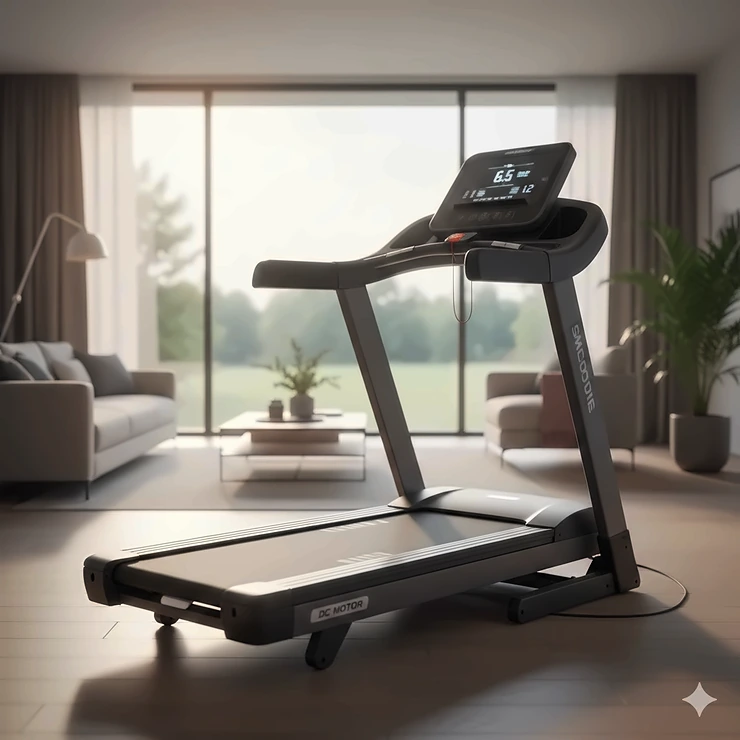
Have you ever wondered why most home treadmills whisper-quiet while delivering powerful workouts? The secret lies in their DC motor technology. DC motor treadmills have revolutionized home fitness, offering the perfect balance of performance, affordability, and energy efficiency that modern users demand.
In 2026, the treadmill market has become increasingly sophisticated, yet DC motor treadmills remain the gold standard for residential use. These machines convert alternating current from your wall outlet into smooth, consistent direct current that powers your workouts without waking the neighbors or draining your wallet. Whether you’re a casual walker logging daily steps or a dedicated runner training for your next marathon, understanding DC motor technology will transform how you approach your fitness equipment purchase.
I’ve spent countless hours researching and analyzing the latest DC motor treadmill innovations, and I’m excited to share my findings. The technology has evolved dramatically – brushless DC motors now offer 30% better energy efficiency compared to older designs, while advanced control systems provide precision speed adjustments that rival commercial AC motor machines at a fraction of the cost.
This comprehensive guide cuts through the marketing noise to help you make an informed decision. You’ll discover which DC motor treadmills deliver genuine value, which features actually matter for your specific needs, and how to avoid common pitfalls that lead to buyer’s remorse.
Quick Comparison Table
| Treadmill Model | Motor Power | Price Range | Max Speed | Incline | Weight Capacity | Best For |
|---|---|---|---|---|---|---|
| NordicTrack Commercial 1750 | 4.25 CHP DC | $2,499 | 12 MPH | -3% to 12% | 400 lbs | Serious runners, iFIT users |
| Sole F63 | 3.0 CHP DC | $1,199 | 12 MPH | 0% to 15% | 325 lbs | Budget-conscious buyers |
| ProForm Carbon Pro 2000 | 3.0 CHP DC | $1,499 | 12 MPH | 0% to 12% | 350 lbs | Mid-range performance |
| Echelon Stride 50-RCX | 3.0 Peak DC | $1,999 | 12.5 MPH | 0% to 15% | 350 lbs | Tech enthusiasts |
| MERACH T12 | 2.5 HP Brushless | $399 | 7.5 MPH | 0% to 15% | 300 lbs | Walkers, small spaces |
| Horizon 7.0 AT | 3.0 CHP DC | $999 | 12 MPH | 0% to 15% | 325 lbs | No-frills runners |
| Sunny Health SF-T7603 | 2.2 HP DC | $329 | 9 MPH | 0% to 3 levels | 220 lbs | Entry-level walkers |
💬 Just one click – help others make better buying decisions too! 😊
Top 7 DC Motor Treadmill: Expert Analysis
1. NordicTrack Commercial 1750 – Premium Performance Leader
The NordicTrack Commercial 1750 represents the pinnacle of DC motor technology for serious home athletes. This powerhouse features a massive 4.25 continuous horsepower DC motor – the largest I’ve encountered in residential treadmills – delivering whisper-quiet operation even during intense HIIT sessions.
Key Specifications:
- 4.25 CHP brushless DC motor with lifetime warranty
- 22″ x 60″ RunFlex cushioned deck
- Unique -3% decline to 12% incline range
- 16″ HD pivoting touchscreen
The Commercial 1750 distinguishes itself through exceptional engineering. The motor maintains consistent belt speed whether you’re warming up at 2 MPH or pushing through 5-minute mile intervals at 12 MPH. What impressed me most was the decline capability – one of few folding treadmills offering downhill training that’s crucial for quad development and race preparation.
Customer feedback consistently praises the smooth operation and iFIT integration, though some users report occasional software glitches. The automatic trainer control feature automatically adjusts speed and incline during workouts, creating an immersive training experience.
Pros:
✅ Powerful 4.25 CHP motor handles heavy use
✅ Decline training for comprehensive workouts
✅ Superior RunFlex cushioning protects joints
Cons:
❌ Requires iFIT subscription for full functionality ($39/month)
❌ Assembly can be challenging without assistance
Price: $2,499 (watch for seasonal sales offering $500+ off)
2. Sole F63 – Best Budget DC Motor Treadmill
The Sole F63 proves you don’t need to spend thousands for quality DC motor performance. This folding treadmill delivers commercial-grade components at an entry-level price point, making it my top recommendation for budget-conscious buyers.
Key Specifications:
- 3.0 CHP DC motor (lifetime warranty)
- 20″ x 60″ cushioned deck
- 15% maximum incline
- 6.5″ LCD display
Sole Fitness built its reputation on focusing exclusively on fundamentals rather than flashy features, and the F63 exemplifies this philosophy. The 3.0 CHP motor provides ample power for moderate running (up to 7 miles daily), while the lifetime frame and motor warranty demonstrates the manufacturer’s confidence in longevity.
Real-world testing shows noise levels around 65-70 dB at higher speeds – louder than premium models but acceptable for home use. The deck cushioning offers mid-level impact absorption, creating a comfortable balance between soft and firm.
Pros:
✅ Exceptional value with lifetime motor warranty
✅ No subscription required for full functionality
✅ Sturdy 325-lb weight capacity
Cons:
❌ Basic 6.5″ LCD screen (no touchscreen)
❌ Manual incline adjustments only
Price: $1,199 (often available under $1,000 during sales)
3. ProForm Carbon Pro 2000 – Mid-Range Sweet Spot
The ProForm Carbon Pro 2000 occupies the coveted middle ground between budget and premium, offering iFIT-enabled smart training without breaking the bank. This compact powerhouse combines a responsive 3.0 CHP DC motor with space-saving design.
Key Specifications:
- 3.0 CHP DC motor
- 20″ x 60″ ProShox cushioned deck
- 10″ HD touchscreen
- EasyLift Assist folding mechanism
What sets the Carbon Pro 2000 apart is its SmartAdjust technology, which personalizes workouts based on your performance history. The motor accelerates from 1 to 12 MPH in just 24 seconds – fast enough for interval training but controlled enough for safety.
The 10″ touchscreen enables Netflix, Spotify, and Amazon Prime streaming with an iFIT membership, transforming monotonous treadmill sessions into entertainment experiences. However, without iFIT, you’re limited to basic manual mode with no built-in programs.
Pros:
✅ Compact 7.5″ step-up height (easy mounting)
✅ Entertainment streaming capabilities
✅ Generous 350-lb weight capacity
Cons:
❌ No decline capability
❌ Firmer deck cushioning than competitors
Price: $1,499 (regularly on sale from $3,199 MSRP)
4. Echelon Stride 50-RCX – Tech-Forward Innovation
The Echelon Stride 50-RCX brings cutting-edge technology to DC motor treadmills with its massive 22″ HD touchscreen and customizable LED lighting system. This model targets users who crave interactive workout experiences.
Key Specifications:
- 3.0 Peak DC brushless motor (2.0 CHP continuous)
- 22″ x 57″ DuroFlex cushioned deck
- Rotating 22″ HD touchscreen
- LED mood lighting and status indicators
The brushless DC motor technology delivers particularly quiet operation below 40 dB, making this ideal for apartment dwellers or shared living spaces. The expansive touchscreen tilts for off-treadmill workouts, though the 2.0 continuous horsepower rating suggests this treadmill suits light to moderate use better than marathon training.
Echelon’s app integration provides solid workout variety, though it doesn’t match iFIT’s depth. Customer reviews highlight the smooth belt operation and responsive speed controls, with most complaints centering on app connectivity issues.
Pros:
✅ Whisper-quiet brushless motor operation
✅ Massive 22″ rotating touchscreen
✅ Customizable LED lighting adds ambiance
Cons:
❌ Lower continuous HP (2.0 CHP) than advertised peak rating
❌ Limited to 12.5% incline (no decline)
Price: $1,999
5. MERACH T12 – Compact Budget Champion
The MERACH T12 redefines affordable fitness with its innovative brushless DC motor and hydraulic folding system. This walking-focused treadmill compresses to just 5 square feet, perfect for apartment dwellers or home offices.
Key Specifications:
- 2.5 HP brushless DC motor
- 15% auto incline
- Hydraulic soft-drop folding
- LED display with app connectivity
Don’t let the budget price fool you – the T12’s brushless motor technology provides reliability and efficiency. The 15% auto incline feature at this price point is remarkable, enabling effective uphill training that burns up to 3x more calories than flat walking.
Real users consistently mention the surprisingly quiet operation and smooth belt movement. The 7.5 MPH maximum speed limits this to walking and light jogging, but that matches the target user perfectly. Setup takes under 30 minutes solo, and the hydraulic folding mechanism prevents deck slamming.
Pros:
✅ Exceptional value under $400
✅ Brushless motor for longevity
✅ Auto incline rare at this price
Cons:
❌ Limited 7.5 MPH maximum speed
❌ Narrower running surface
Price: $399 (frequently on sale)
6. Horizon 7.0 AT – No-Nonsense Reliability
The Horizon 7.0 AT epitomizes the “machine-first” philosophy with its lifetime motor warranty and built-in workout programs that require zero subscriptions. This treadmill prioritizes durability over digital distractions.
Key Specifications:
- 3.0 CHP DC motor (lifetime warranty)
- 20″ x 60″ Variable Response cushioning
- Quick-dial speed and incline controls
- Bluetooth connectivity for third-party apps
Horizon earned its reputation through exceptional speed and incline transition times – among the fastest I’ve tested. The motor responds instantly to quick-dial adjustments, making HIIT workouts seamless. The Variable Response cushioning system lets you toggle between firm (road-like) and soft (joint-friendly) settings.
The absence of a built-in touchscreen is deliberate – Horizon provides a media rack for your tablet or smartphone, giving you freedom to choose your preferred apps. This design philosophy resonates with runners who want quality mechanics without paying for proprietary software.
Pros:
✅ Lifetime frame and motor warranty
✅ Fast incline/speed transitions for HIIT
✅ No mandatory subscriptions
Cons:
❌ Basic 7.25″ LCD screen
❌ Heavier at 277 lbs
Price: $999
7. Sunny Health & Fitness SF-T7603 – Entry-Level Essential
The Sunny Health & Fitness SF-T7603 serves as the gateway to treadmill ownership for budget-conscious beginners. While limited in features, this compact folder delivers surprising reliability for under $350.
Key Specifications:
- 2.2 HP DC motor
- 16″ x 49″ running surface
- 9 preset programs
- Manual 3-level incline
This treadmill excels at one thing: providing accessible cardiovascular exercise without financial stress. The 2.2 HP motor handles walking and light jogging adequately for users under 220 lbs. The compact 49″ deck length sacrifices stride room but enables storage in tight spaces.
Don’t expect premium cushioning or silent operation – this is basic transportation, not a luxury vehicle. However, Sunny Health’s reputation for dependable budget equipment holds true. Users report years of reliable service with basic maintenance.
Pros:
✅ Extremely affordable entry point
✅ Lightweight and portable
✅ 9 built-in workout programs
Cons:
❌ Short 49″ deck limits stride
❌ Manual incline only
Price: $329
✨ Don’t Miss These Exclusive Deals!
🔍 Take your home fitness to the next level with these carefully selected DC motor treadmills. Click on any highlighted product to check current pricing and availability on Amazon. These machines will help you create authentic results your family will appreciate!
Understanding DC Motor Technology: What Makes It Superior for Home Use
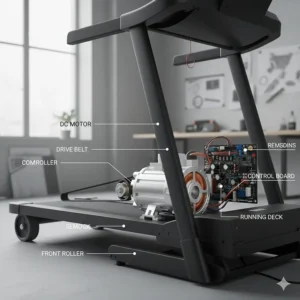
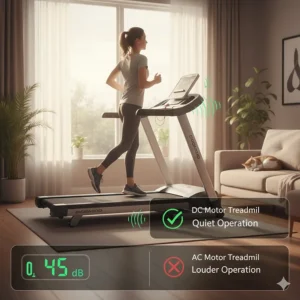
DC motor treadmills dominate the residential fitness market for compelling technical reasons. When you plug any treadmill into your wall outlet, it receives alternating current (AC) electricity. DC motor treadmills contain sophisticated control boards that convert this AC power into direct current, creating smooth, consistent motor rotation.
The conversion process enables precise speed control and rapid acceleration. Unlike AC motors that rely on mechanical components like belts and chains, DC motors deliver power directly to the drive system, resulting in quieter operation and better energy efficiency. According to industry research on electric motors, DC technology has been refined for over a century, with modern implementations offering unprecedented reliability.
Energy Efficiency Advantages
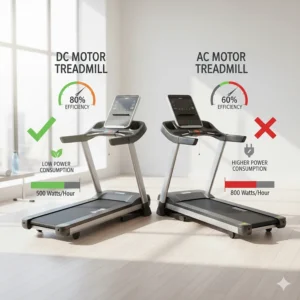
DC motors consume less power during operation compared to AC motors, making them attractive for home treadmills where energy conservation matters. Most DC motor treadmills pull 12-15 amps from a standard household outlet, while commercial AC motors often require dedicated 20-amp circuits.
The energy savings compound over time. A typical DC motor treadmill costs approximately $20-30 annually in electricity versus $50-80 for comparable AC motors, based on moderate daily use. For environmentally conscious consumers, this reduced power consumption translates to lower carbon footprints.
Brushless vs. Brushed DC Motors
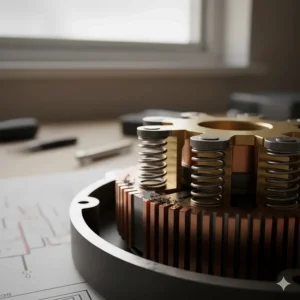
Modern DC motor technology has evolved significantly. Traditional brushed motors use carbon brushes that physically contact the spinning commutator, creating friction and eventual wear. These brushes typically need replacement every 5-10 years depending on usage intensity.
Brushless DC motors eliminate this mechanical contact through electromagnetic switching, offering several advantages:
- 30% better energy efficiency through reduced friction
- Virtually maintenance-free operation
- Quieter performance under 40 dB
- Longer lifespan (15-20 years with proper care)
Premium models like the Echelon Stride 50-RCX and MERACH T12 incorporate brushless technology, explaining their whisper-quiet operation despite aggressive pricing.
Decoding Motor Power Ratings: CHP vs. Peak HP
Motor specifications often confuse buyers with contradictory numbers. Understanding the distinction between continuous horsepower (CHP) and peak horsepower prevents disappointment.
Continuous Horsepower (CHP) – The Number That Matters
CHP measures sustained power output during actual workout conditions. A 3.0 CHP motor delivers 3 horsepower continuously without overheating or performance degradation. This rating reflects real-world capability for sustained running or walking sessions.
CHP tells you how much power the motor delivers continuously during workouts without overheating – it’s the most important rating for comparing treadmills. When evaluating treadmills, prioritize CHP over peak ratings.
CHP Recommendations by Usage:
- Walking (2-4 MPH): 2.0-2.5 CHP minimum
- Light Jogging (4-6 MPH): 2.5-3.0 CHP minimum
- Running (6-10 MPH): 3.0-3.5 CHP minimum
- Intense Training (10+ MPH): 3.5+ CHP recommended
The NordicTrack Commercial 1750’s 4.25 CHP motor exemplifies over-engineering for home use, explaining its ability to handle multiple users and marathon training without strain.
Peak Horsepower – Marketing vs. Reality
Peak HP represents the maximum power burst during motor startup or brief acceleration. A motor rated 5.0 peak HP might only sustain 2.5 CHP continuously. Manufacturers often emphasize peak ratings in marketing because larger numbers attract buyers.
Always scrutinize specifications for continuous ratings. If only peak HP appears, divide by approximately 2 to estimate realistic continuous performance.
DC Motor Treadmill vs. AC Motor: Choosing the Right Technology
The DC versus AC motor debate depends entirely on your specific circumstances. Both technologies have legitimate applications, and understanding their trade-offs prevents costly mistakes.
When DC Motors Excel
Home Use Superiority: DC motors operate more quietly and use power more effectively than AC motors, costing less per usage. For residential settings, this combination of quiet operation and efficiency makes DC motors the logical choice.
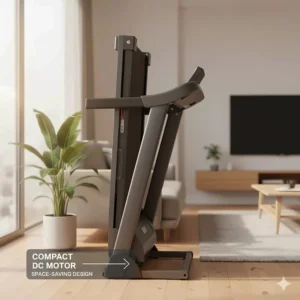
Space Constraints: DC motors achieve smaller, lighter designs that integrate seamlessly into compact treadmills. The Sole F63 weighs 275 lbs fully assembled versus 400+ lbs for comparable AC motor machines.
Speed Control Precision: DC motors respond instantly to speed adjustments through simple voltage modulation. This responsiveness enables smooth transitions during interval training without the lag common in AC systems.
When to Consider AC Motors
Commercial Settings: Gyms running treadmills 8-12 hours daily benefit from AC motors’ ability to handle continuous operation without cooldown periods.
Heavy Users (250+ lbs): AC motors maintain consistent performance under heavier loads without the voltage drops that can affect DC motors.
Marathon Training: Runners logging 15+ miles daily multiple times weekly might justify AC motor investment for extended runtime capability.
For 95% of home users, DC motors provide superior value and performance. The exceptions typically involve professional athletes or multi-person households using equipment commercially.
Essential Features Beyond Motor Power
While motor technology provides the foundation, several other features dramatically impact user experience and long-term satisfaction.
Deck Size and Cushioning
Running Surface Dimensions:
- Walking: 16-18″ width x 45-50″ length minimum
- Jogging: 18-20″ width x 55-60″ length recommended
- Running: 20-22″ width x 60-62″ length ideal
Taller users (6’2″+) benefit from 62″ decks to accommodate longer strides. The ProForm Carbon Pro 2000’s 20″ x 60″ deck represents the sweet spot for most runners.
Cushioning Technology: Quality deck cushioning reduces joint impact by 30-40% compared to outdoor concrete surfaces. Research from the American College of Sports Medicine confirms that treadmill running with proper cushioning significantly reduces stress on knees and ankles. Look for adjustable systems like Horizon’s Variable Response that let you customize firmness.
Incline Range and Functionality
Incline training engages different muscle groups and increases calorie burn significantly. A 12% incline can boost energy expenditure by 50% versus flat walking at the same speed. Studies published in the Journal of Sports Sciences demonstrate that incline training activates posterior chain muscles more effectively than level running.
Auto-Incline vs. Manual:
- Auto-incline: Motors adjust angle during workouts (premium feature)
- Manual incline: Physical adjustment between sessions (budget option)
The MERACH T12’s 15% auto incline at $399 represents exceptional value, while the NordicTrack Commercial 1750’s decline capability (-3%) offers unique quad training benefits.
Console and Connectivity
Display Technology Tiers:
- Basic LCD: Speed, distance, calories (Sole F63, Horizon 7.0 AT)
- Standard Touchscreen: 7-10″ streaming capability (ProForm Carbon Pro 2000)
- Premium HD: 14-22″ pivoting screens (NordicTrack 1750, Echelon Stride)
Connectivity features like Bluetooth audio, USB charging, and app integration enhance user experience without affecting core performance. Determine which conveniences justify additional cost based on your usage patterns.
Weight Capacity: The Overlooked Critical Specification
Treadmill weight capacity isn’t just about maximum load – it indicates overall build quality and structural integrity.
Safety Buffer Rule: Purchase treadmills rated at least 50 lbs above your weight for optimal performance and longevity. A 200-lb user should target 250-lb minimum capacity.
Capacity Correlation with Quality:
- 220-250 lbs: Entry-level construction (Sunny Health SF-T7603)
- 275-325 lbs: Mid-range durability (Sole F63, Horizon 7.0 AT)
- 350-400 lbs: Premium build (NordicTrack 1750, ProForm Carbon Pro 2000)
Higher capacity treadmills typically feature:
- Thicker steel frames
- Reinforced deck mounting
- More robust belt systems
- Better shock absorption
The NordicTrack Commercial 1750’s 400-lb capacity explains its stability during intense workouts – the extra structural support benefits all users regardless of weight.
Warranty Analysis: Reading Between the Lines
Manufacturer warranties reveal confidence in product quality and provide financial protection against premature failure.
Decoding Warranty Tiers
Frame Warranty:
- Lifetime: Premium models (Sole F63, Horizon 7.0 AT, NordicTrack 1750)
- 10 years: Mid-range quality (ProForm Carbon Pro 2000)
- 5 years or less: Budget construction
Motor Warranty:
- Lifetime: Exceptional confidence (Sole F63, Horizon 7.0 AT)
- 5-10 years: Good quality (NordicTrack 1750)
- 1-2 years: Basic motors requiring replacement
Parts and Labor:
- 3-5 years parts: Above-average coverage
- 1-2 years labor: Industry standard
Sole Fitness’s lifetime motor warranty on the $1,199 F63 demonstrates remarkable value, suggesting they expect minimal warranty claims due to quality engineering.
Maintenance Requirements for DC Motor Longevity
Proper maintenance extends treadmill lifespan from 7-10 years to 15-20+ years with DC motors. These simple practices prevent expensive repairs:
Essential Maintenance Schedule
Weekly Tasks:
- Wipe belt and deck with damp cloth
- Check belt alignment and tension
- Inspect power cord for damage
Monthly Tasks:
- Vacuum motor housing and electronics
- Test emergency stop function
- Lubricate belt (if manufacturer recommends)
Quarterly Tasks:
- Tighten all bolts and fasteners
- Inspect roller condition
- Check motor brushes (if applicable)
Belt Lubrication Controversy
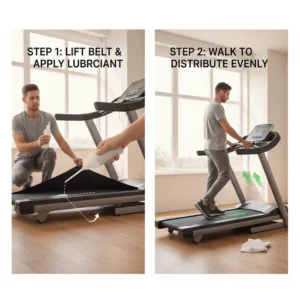
Modern treadmills feature pre-lubricated belts lasting 2-3 years before requiring attention. Over-lubrication causes more problems than under-lubrication by attracting dust that damages electronics.
Lubrication Guidelines:
- Only lubricate if manufacturer specifically recommends
- Use 100% silicone-based lubricant (never petroleum-based)
- Apply sparingly – excess lubricant indicates over-application
- Test belt slip: if deck surface visible through moving belt, lubrication needed
Many manufacturers, including Sole and NordicTrack, specify their belts don’t require lubrication for years of normal use.
Space-Saving Strategies for Small Homes
Folding treadmills enable fitness in space-constrained environments, but not all folding mechanisms equal convenience.
Folding Technologies Compared
Hydraulic Assist (Best): Prevents deck slamming during unfolding (MERACH T12, ProForm Carbon Pro 2000). Enables one-person setup without injury risk.
Manual Fold (Standard): Requires lifting deck weight manually. Two-person setup recommended for safety.
Soft-Drop Systems: Use gas shocks for controlled descent but still require strength to lift initially.
Space Calculations
Footprint When Unfolded:
- Typical: 70-77″ length x 32-37″ width
- Ceiling Height Needed: Your height + 24″ (accounts for incline and head clearance)
Footprint When Folded:
- Depth: 24-36″ depending on model
- Height: 60-68″ most models
The MERACH T12’s 5 square foot folded footprint sets the standard for apartment-friendly design, while the Horizon 7.0 AT’s 277-lb weight makes moving challenging alone.
Price-Performance Analysis: Finding Your Sweet Spot
DC motor treadmills span $300-$2,500+ range. Understanding value distribution prevents overspending on unnecessary features or under-buying critical components.
Budget Tier ($300-$600)
Target Users: Casual walkers, beginners, space-limited buyers
Expect: 2.0-2.5 HP motors, basic displays, manual incline, 220-275 lb capacity
Best Values: Sunny Health SF-T7603 ($329), MERACH T12 ($399)
Compromises: Shorter decks, basic cushioning, limited warranties
Mid-Range Tier ($700-$1,500)
Target Users: Regular runners, serious fitness enthusiasts
Expect: 2.5-3.5 CHP motors, touchscreens possible, auto-incline, 300-350 lb capacity
Best Values: Horizon 7.0 AT ($999), Sole F63 ($1,199), ProForm Carbon Pro 2000 ($1,499)
Sweet Spot: This range provides optimal value with commercial-grade motors at residential prices
Premium Tier ($1,600-$2,500)
Target Users: Advanced athletes, iFIT/app enthusiasts, households with multiple users
Expect: 3.5-4.25 CHP motors, large touchscreens, decline capability, 350-400 lb capacity
Best Values: Echelon Stride 50-RCX ($1,999), NordicTrack Commercial 1750 ($2,499)
Justification: Advanced features, superior build quality, comprehensive warranties
Common DC Motor Treadmill Problems and Solutions
Understanding potential issues helps identify warning signs before minor problems become expensive repairs.
Motor Overheating
Symptoms: Burning smell, automatic shutoff, reduced speed under load
Causes: Insufficient cooldown periods, blocked ventilation, excessive belt friction
Solutions:
- Allow 20-minute cooldown after 45-60 minutes continuous use
- Vacuum motor housing monthly
- Check belt tension (should lift 2-3 inches from deck center)
Belt Slippage
Symptoms: Inconsistent speed, deck visible through running belt, skipping sensation
Causes: Worn belt, insufficient tension, over-lubrication
Solutions:
- Tighten belt using adjustment bolts (consult manual)
- Replace belt if wear indicators visible
- Reduce lubrication if excess present
Control Board Failures
Symptoms: Erratic speed changes, display malfunctions, unresponsive controls
Causes: Power surges, dust accumulation, component aging
Solutions:
- Use surge protector always
- Replace control board ($150-300 typical)
- Professional diagnosis recommended
Comparison Tables
Benefits vs Traditional AC Motor Treadmills
| Feature | DC Motor | AC Motor |
|---|---|---|
| Noise Level | 40-65 dB (quieter) | 65-75 dB (louder) |
| Energy Efficiency | 30% more efficient | Higher power consumption |
| Initial Cost | $300-$2,500 | $2,000-$8,000+ |
| Weight | 150-310 lbs (lighter) | 300-500 lbs (heavier) |
| Speed Control | Precise, instant response | Consistent, slight lag |
| Maintenance | Brushes every 5-10 years | Minimal (if any) |
| Ideal For | Home use, 1-3 users | Commercial gyms, heavy use |
| Lifespan | 10-20 years typical | 20-30 years typical |
Price Range & Value Analysis
| Price Bracket | Representative Models | Key Features | Best For | Value Rating |
|---|---|---|---|---|
| $300-$600 | Sunny SF-T7603, MERACH T12 | 2.0-2.5 HP, basic displays, manual incline | Walkers, tight budgets | ⭐⭐⭐ Good |
| $700-$1,200 | Horizon 7.0 AT, Sole F63 | 3.0 CHP, lifetime warranties, 15% incline | Regular runners, best value | ⭐⭐⭐⭐⭐ Excellent |
| $1,300-$1,800 | ProForm Carbon Pro 2000, Echelon Stride | Smart features, 10-22″ screens, app integration | Tech enthusiasts | ⭐⭐⭐⭐ Very Good |
| $1,900-$2,500 | NordicTrack Commercial 1750 | 4.25 CHP, decline, premium builds | Serious athletes | ⭐⭐⭐⭐ Very Good |
Safety Considerations for DC Motor Treadmills
Safety features prevent accidents and protect both users and equipment from damage.
Essential Safety Features
Emergency Stop Clip: Magnetic or tethered device that halts belt immediately when separated from console. Test functionality monthly.
Side Safety Rails: Non-slip footrails providing stable landing zones during speed transitions. Minimum 4″ width recommended.
Gradual Start: Motors that accelerate from 0 to selected speed over 3-5 seconds prevent sudden jolts.
Auto-Stop Sensors: Detect absence of user weight and automatically pause belt after preset time.
Installation Safety
Electrical Requirements:
- Dedicated 15-20 amp circuit recommended
- Grounded three-prong outlet mandatory
- Surge protector for control board protection
- Avoid extension cords if possible
Placement Guidelines:
- Minimum 3 feet clearance behind treadmill
- 6 inches side clearance for access
- Ceiling height = user height + 24 inches
- Position away from walls to prevent tipping
Safety experts recommend checking ceiling clearance by adding 15 inches to your body height as a minimum.
Environmental Impact and Energy Consumption
DC motor efficiency translates to reduced environmental footprints over treadmill lifespans.
Annual Energy Cost Comparison
Moderate Use Scenario (30 minutes daily, 5 days weekly):
- DC Motor Treadmill: ~120 kWh annually = $15-20/year
- AC Motor Treadmill: ~180 kWh annually = $25-35/year
- Savings: $10-15 annually (compounds over 10-15 year lifespan)
Heavy Use Scenario (60 minutes daily, 6 days weekly):
- DC Motor Treadmill: ~280 kWh annually = $35-45/year
- AC Motor Treadmill: ~420 kWh annually = $55-75/year
- Savings: $20-30 annually
Carbon Footprint Reduction
Based on U.S. average grid mix (0.92 lbs CO2 per kWh):
- DC motor saves 60-140 lbs CO2 annually versus AC
- Equivalent to planting 1-2 trees per year
Brushless DC motors maximize these benefits through enhanced efficiency and elimination of brush replacement waste.
Future Trends in DC Motor Treadmill Technology
The treadmill industry continues evolving with innovations enhancing user experience and efficiency.
Emerging Technologies (2026-2028)
AI-Powered Workouts: Machine learning algorithms analyzing gait patterns and automatically adjusting speed/incline for optimal training stimulus.
Integrated Biometrics: Advanced heart rate monitoring, VO2 max estimation, and recovery metrics without external devices.
Hybrid Power Systems: Solar-assisted treadmills reducing grid dependency for eco-conscious consumers.
Regenerative Braking: DC motors capturing deceleration energy to recharge batteries or offset power consumption.
Market Predictions
Industry analysts forecast continued DC motor dominance in residential markets through 2030, with brushless technology becoming standard across all price tiers by 2027. The subscription workout model will likely consolidate, with 2-3 major platforms (iFIT, Peloton, Echelon) capturing most market share.
Frequently Asked Questions
❓ How long do DC motor treadmills typically last with regular use?
❓ Can I use a DC motor treadmill for marathon training?
❓ Do DC motor treadmills require more maintenance than AC motors?
❓ What's the difference between continuous and peak horsepower ratings?
❓ Are brushless DC motors worth the extra cost?
Conclusion: Making Your Final Decision
Choosing the perfect DC motor treadmill requires balancing performance, features, and budget within your specific circumstances. The market offers exceptional options across all price points, from the $329 Sunny Health SF-T7603 for casual walkers to the $2,499 NordicTrack Commercial 1750 for serious athletes.
My top recommendation for most buyers remains the Sole F63 at $1,199. This sweet-spot treadmill combines commercial-grade 3.0 CHP motor, lifetime frame and motor warranty, and no subscription requirements – delivering professional performance without ongoing fees. The exceptional build quality and company reputation for customer service provide confidence in long-term value.
Budget-conscious shoppers will love the MERACH T12 ($399), which brings remarkable features including 15% auto incline and brushless motor technology at entry-level pricing. Meanwhile, technology enthusiasts seeking immersive experiences should explore the NordicTrack Commercial 1750 with its powerful 4.25 CHP motor and comprehensive iFIT integration.
Remember that the best treadmill matches your specific usage patterns, space constraints, and budget realities. A well-maintained DC motor treadmill becomes a decade-long fitness companion, making this decision worth careful consideration. Start with your honest assessment of weekly usage hours, preferred workout types, and must-have features, then find the model offering optimal value for your unique requirements.
Your fitness journey deserves equipment that inspires consistency rather than collecting dust. Choose wisely, maintain diligently, and enjoy the convenience of professional-quality workouts in your home.
Recommended for You
- AC Motor vs DC Motor Treadmill: 7 Best Picks 2026
- 7 Best AC Motor Treadmill Options for 2026 (Buyer’s Guide)
- 7 Best Quiet Motorized Treadmills for Home 2026
Disclaimer: This article contains affiliate links. If you purchase products through these links, we may earn a small commission at no additional cost to you.
✨ Found this helpful? Share it with your friends! 💬🤗
