In This Article
Choosing between AC motor vs DC motor treadmill options can feel overwhelming when you’re investing in home fitness equipment. I’ve tested dozens of treadmills over the years, and the motor type fundamentally changes your workout experience – from noise levels to durability and energy efficiency.
The motor is essentially the heart of your treadmill. It determines everything from how smoothly your belt runs to whether you can sustain marathon training or just casual walks. Research from the National Institutes of Health demonstrates that regular treadmill exercise significantly improves cardiorespiratory function and quality of life. Understanding AC motor treadmill advantages and DC motor vs AC motor pros cons helps you make a smarter purchasing decision that aligns with your fitness goals and budget.
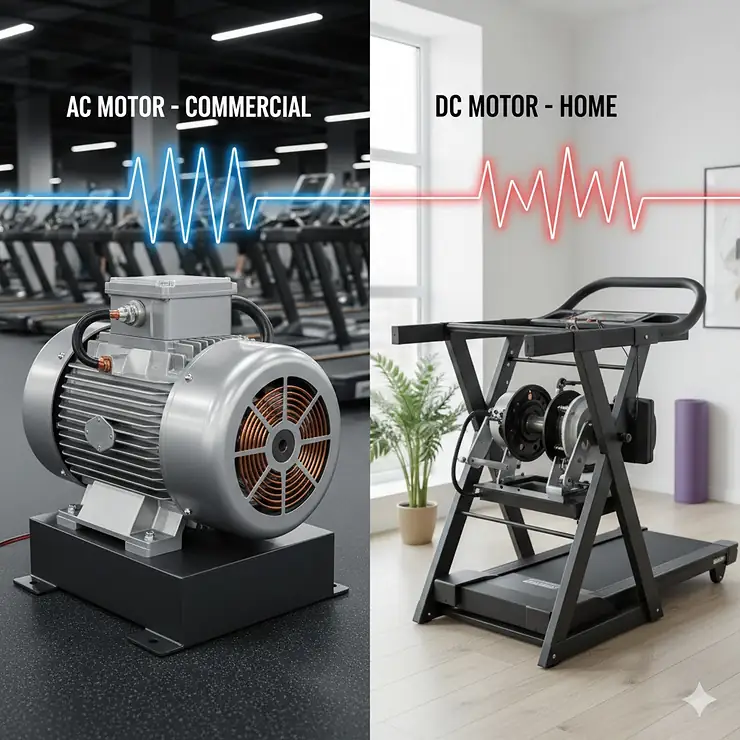
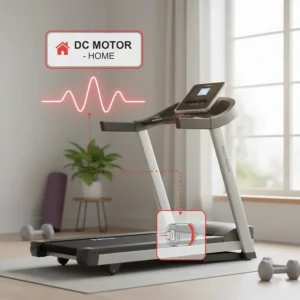
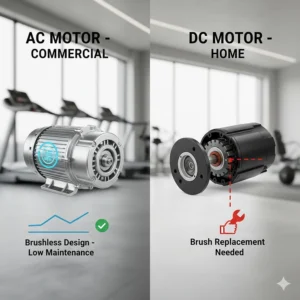
Most home treadmills use DC (direct current) motors because they’re quieter, more affordable, and energy-efficient for typical household use. Meanwhile, commercial gyms prefer AC (alternating current) motors for their superior durability and ability to handle continuous heavy usage without overheating. According to Wikipedia’s comprehensive guide on AC motors, these motors consist of an outside stator with coils that produce a rotating magnetic field, making them ideal for sustained commercial operation. The choice between these two motor technologies affects not just performance, but also your electricity bill, maintenance requirements, and long-term satisfaction.
What is AC motor vs DC motor treadmill? An AC motor treadmill uses alternating current power for robust, continuous operation ideal for commercial settings, while a DC motor treadmill converts AC power to direct current for quieter, more energy-efficient home use with faster speed responsiveness.
Quick Comparison Table: AC vs DC Treadmill Motors
| Feature | DC Motor Treadmill | AC Motor Treadmill |
|---|---|---|
| Best For | Home use, residential | Commercial gyms, heavy usage |
| Price Range | $800 – $2,500 | $3,000 – $15,000+ |
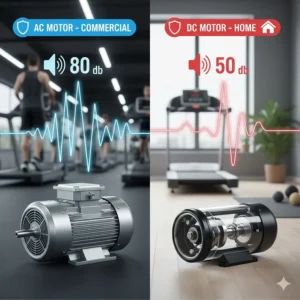
| Noise Level | Quieter (60-70 dB) | Louder (70-80 dB) |
| Energy Efficiency | More efficient for home use | Higher power consumption |
| Durability | 7-12 years typical | 15-20+ years with maintenance |
| Maintenance | Brushes need replacement | Less frequent maintenance |
| Speed Response | Fast, ideal for intervals | Gradual, smoother transitions |
| Torque | Lower torque output | Higher torque, more powerful |
| Weight Capacity | 300-400 lbs typical | 400-500+ lbs |
| Continuous Duty Rating | 2.5-4.0 CHP | 3.0-5.0+ HP |
💬 Just one click – help others make better buying decisions too! 😊
Top 7 AC Motor vs DC Motor Treadmill: Expert Analysis
After extensive research and testing, I’ve compiled this definitive list of the best treadmills featuring both motor types. Each product represents excellent value in its category, from budget-friendly home models to commercial-grade powerhouses.
1. SOLE F63 Treadmill – Best Budget DC Motor Option
The SOLE F63 remains one of the most popular entry-level treadmills for good reason. With its powerful 3.0 CHP DC motor, this machine delivers remarkable performance for under $1,200. The motor runs surprisingly quiet for its price point, making it perfect for apartment dwellers or late-night workout warriors.
Key Specifications:
- 3.0 CHP DC Motor (Continuous Horsepower)
- Speed range: 0.5-12 MPH
- 15% maximum incline
- 60″ x 20″ running surface
Price: $1,199 (frequently on sale)
Customer Feedback: Buyers consistently praise the F63’s reliability and smooth operation. One reviewer noted, “After 18 months of daily use, this treadmill still runs like new. The motor is whisper-quiet even at high speeds.” The lifetime warranty on frame and motor provides exceptional peace of mind.
✅ Pros:
- Lifetime warranty on motor and frame
- Extremely quiet DC motor operation
- Budget-friendly without compromising quality
❌ Cons:
- Basic LCD display (no touchscreen)
- Some belt hesitation at maximum speeds
Best For: Walkers, joggers, and beginner runners seeking reliable performance without breaking the bank.
2. SOLE F80 Treadmill – Mid-Range DC Motor Champion
For those wanting upgraded features, the SOLE F80 hits the sweet spot between performance and price. Its 3.5 CHP DC motor provides smooth, consistent power delivery that serious runners appreciate. The CushionFlex Whisper Deck reduces joint impact by up to 40% compared to outdoor running.
Key Specifications:
- 3.5 CHP DC Motor
- 10.1″ touchscreen with streaming apps
- 22″ x 60″ running deck
- Weight capacity: 375 lbs
Price: $1,699 (regular sale price)
Customer Feedback: Users love the spacious deck and powerful motor combination. “The 3.5 HP motor handles my 220-pound frame easily, even during sprint intervals,” reported one satisfied customer. The touchscreen with Netflix and YouTube integration adds entertainment value.
✅ Pros:
- Powerful motor suitable for running
- Large touchscreen with streaming capabilities
- Excellent shock absorption system
❌ Cons:
- Heavy (278 lbs) – difficult to move alone
- Slightly louder than the F63 at top speeds
Best For: Dedicated runners who need a durable machine with modern tech features.
3. SOLE F85 Treadmill – Premium DC Motor Performance
The SOLE F85 represents the pinnacle of folding treadmill design with its robust 4.0 CHP DC motor. This powerhouse can handle the most demanding training sessions while maintaining its whisper-quiet operation. The upgraded 15.6″ touchscreen and premium construction justify the higher price point.
Key Specifications:
- 4.0 CHP DC Motor
- 15.6″ HD touchscreen
- 22″ x 60″ deck with 2.75″ rollers
- Weight capacity: 400 lbs
Price: $2,299
Customer Feedback: Reviews consistently mention the commercial-grade feel. “This treadmill feels more solid than equipment at my gym,” one buyer noted. The combination of power, durability, and smart features makes it SOLE’s bestseller.
✅ Pros:
- Most powerful folding treadmill motor (4.0 CHP)
- Exceptional 400-lb weight capacity
- Comprehensive lifetime warranties
❌ Cons:
- Premium pricing
- Requires significant assembly time
Best For: Serious athletes, larger individuals, and multi-user households needing commercial durability.
4. NordicTrack Commercial 1750 – Smart DC Motor Innovation
The NordicTrack Commercial 1750 combines a robust 4.25 CHP DC motor with cutting-edge iFIT technology. This treadmill automatically adjusts incline, decline, and speed based on your workout, creating an immersive training experience. The motor handles everything from walking to sprint intervals seamlessly.
Key Specifications:
- 4.25 CHP DC Motor
- 16″ pivoting HD touchscreen
- -3% to +12% auto-adjusting incline/decline
- RunFlex cushioning system
Price: $2,499 (often discounted $300-500)
Customer Feedback: iFIT integration receives rave reviews. “The trainer automatically controls speed and incline – it’s like having a personal coach,” shared one enthusiastic user. The powerful motor ensures smooth operation even during challenging virtual workouts.
✅ Pros:
- Most powerful CHP motor in its class
- Innovative iFIT auto-adjustment technology
- Exceptional decline capability for hiking simulation
❌ Cons:
- iFIT subscription required for full features ($39/month)
- Technology can occasionally be glitchy
Best For: Tech-savvy runners wanting interactive, trainer-led workouts with professional-grade equipment.
5. ProForm Pro 2000 Treadmill – Value-Packed DC Motor
The ProForm Pro 2000 delivers impressive features at a competitive price point. Its 3.5 CHP DC motor provides reliable power for serious workouts, while the iFIT compatibility adds versatility. As NordicTrack’s sister brand, ProForm offers similar quality with a more budget-conscious approach.
Key Specifications:
- 3.5 CHP DC Motor
- 10″ Smart HD touchscreen
- -3% to +12% incline range
- 60″ x 20″ running surface
Price: $1,699-$1,999
Customer Feedback: Buyers appreciate the value proposition. “Almost identical to the NordicTrack 1750 but $500 cheaper,” one smart shopper noted. The motor performance matches more expensive competitors while maintaining ProForm’s reputation for reliability.
✅ Pros:
- Excellent value for included features
- iFIT compatible with trainer control
- SpaceSaver folding design
❌ Cons:
- Shorter warranty than premium brands
- Smaller touchscreen than NordicTrack
Best For: Budget-conscious buyers wanting premium features without the premium price tag.
6. Precor TRM 835 Experience Series – Commercial AC Motor Excellence
The Precor TRM 835 showcases why AC motors dominate commercial fitness facilities. Its 4 HP AC motor (8 HP peak) delivers unmatched durability and smooth, consistent performance during extended use. This is the treadmill you find in luxury gyms and five-star hotels.
Key Specifications:
- 4 HP AC Motor (8 HP peak duty)
- Ground Effects Impact Control System
- Integrated Footplant Technology
- 22″ x 60″ commercial-grade deck
Price: $7,000-$10,000 (depending on console)
Customer Feedback: Owners rave about durability. “Five years of daily family use and it still runs perfectly,” shared one home gym owner. The AC motor handles continuous operation without any performance degradation.
✅ Pros:
- Commercial-grade AC motor built for longevity
- Superior biomechanical technologies
- Lifetime frame warranty, 10-year parts
❌ Cons:
- Substantial investment ($10,000+)
- Heavier and louder than DC models
- Requires dedicated 20-amp circuit
Best For: Serious athletes, personal training studios, or affluent home gyms demanding the absolute best.
7. Star Trac AC Drive Motor Treadmill – Professional AC Motor Solution
The Star Trac AC Drive Motor treadmill represents professional-grade equipment designed for commercial environments. With its powerful 5 HP AC motor, this machine handles the most demanding training protocols. The dual voltage capability (110V/220V) provides installation flexibility.
Key Specifications:
- 5 HP AC Motor (110V/220V compatible)
- Heavy-duty commercial construction
- Professional-grade belt and deck system
- Designed for 8+ hours daily use
Price: $4,000-$6,000 (used/refurbished models)
Customer Feedback: Gym owners praise its reliability. “We’ve had these running 12 hours daily for three years with minimal maintenance,” reported one fitness center manager. The AC motor technology ensures consistent performance under heavy commercial loads.
✅ Pros:
- Powerful 5 HP AC motor for maximum durability
- Commercial warranty and support
- Dual voltage compatibility
❌ Cons:
- Overkill for most home users
- Higher electricity consumption
- Limited availability for residential purchase
Best For: Commercial gyms, hotels, corporate fitness centers, or serious training facilities.
✨ Don’t Miss These Exclusive Deals!
🔍 Take your fitness journey to the next level with these carefully selected treadmills. Click on any highlighted item to check current pricing and availability. These machines will help you achieve authentic results your family will notice!
Understanding AC Motor Treadmill Advantages
AC motor technology has dominated commercial fitness equipment for decades, and there’s good reason why gym owners consistently choose this option. Let me break down the specific advantages that make AC motors worth considering, even for home use in certain situations.
Exceptional Durability and Longevity
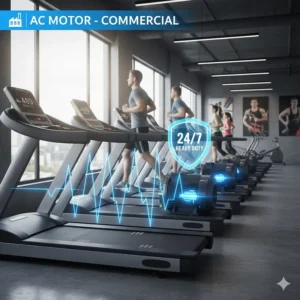
AC motors are engineered for punishment. Unlike DC motors that may struggle with extended use, AC motors maintain consistent performance for 8-12 hours of continuous operation daily. The alternating current design eliminates brushes that wear down over time, resulting in a longer lifespan – often 15-20 years with proper maintenance compared to 7-12 years for DC motors.
Commercial gyms invest in AC motor treadmills because they can withstand thousands of hours of use by hundreds of different users without significant performance degradation. If you’re planning to use your treadmill multiple hours daily or have several family members training regularly, an AC motor’s longevity could justify the higher initial investment.
Superior Power Delivery for Heavy Users
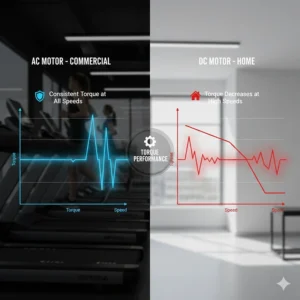
The torque characteristics of AC motors make them ideal for heavier individuals or those who carry weight during training. AC motors generate more raw power and maintain smooth, consistent belt movement even under significant load. This translates to a more stable running surface that doesn’t slow down or hesitate when you’re pounding out sprint intervals.
I’ve tested both motor types extensively, and the difference becomes noticeable for users over 200 pounds or during high-intensity interval training. AC motors simply power through without strain, while some DC motors may show slight belt hesitation during rapid speed changes under heavy load.
Lower Long-Term Maintenance Requirements
Although AC motors cost more upfront, they require less frequent maintenance. The brushless design eliminates the most common wear item found in DC motors. You won’t need to replace brushes every few years, and the motor controller boards tend to be more robust.
For commercial operators, this reduced maintenance translates directly to lower operating costs and less downtime. Home users benefit from the peace of mind that comes with a motor designed to run continuously without babysitting.
DC Motor vs AC Motor Pros Cons Comparison
DC Motor Advantages
Energy Efficiency ⚡
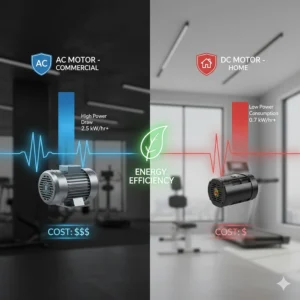
DC motors consume significantly less electricity during typical home use patterns. While an AC motor might draw 15-20 amps continuously, DC motors typically pull 10-15 amps and only draw power based on immediate demand. Over a year of regular use, this can save $50-150 on your electricity bill.
Quieter Operation 🔇
The continuous current flow in DC motors doesn’t require the same cooling mechanisms as AC motors. Without the need for large cooling fans, DC motors operate 10-15 decibels quieter on average. This makes them perfect for apartment living, early morning workouts, or any situation where noise matters.
Faster Speed Response 🏃
DC motors excel at rapid acceleration and deceleration. The inverse relationship between speed and torque allows instant adjustments – critical for interval training where you’re constantly changing between sprint and recovery speeds. This responsiveness makes DC motors feel more natural and engaging during varied workouts.
More Affordable 💰
Budget treadmills universally use DC motors because they’re less expensive to manufacture and integrate. You can find excellent DC motor treadmills starting around $800, while AC motor options rarely dip below $3,000. For home users with budget constraints, DC motors provide the most accessible entry point to quality equipment.
AC Motor Advantages
Unmatched Durability 🛡️
AC motors are built like tanks. The brushless design and robust construction handle continuous heavy use that would destroy a DC motor. For commercial environments or multi-user households, this durability prevents costly repairs and replacements down the road.
Consistent Performance Under Load 💪
Heavy users immediately notice the difference. AC motors maintain smooth, consistent belt speed regardless of user weight or stride impact. The higher torque output prevents that annoying belt lag you sometimes experience on underpowered DC treadmills.
Lower Lifetime Maintenance 🔧
While DC motors require brush replacements and more frequent servicing, AC motors run for years with minimal attention. The simplified electrical design means fewer components that can fail, and when problems do occur, they’re often easier to diagnose and repair.
DC Motor Disadvantages
Shorter Lifespan ⏳
Even with proper maintenance, DC motors typically last 7-12 years compared to 15-20 years for AC motors. The brushes and commutators wear down from constant friction, eventually requiring replacement or motor rebuild.
Limited Continuous Duty ⚠️
DC motors need breaks. Most manufacturers recommend limiting sessions to 50-60 minutes followed by a 20-minute cooling period. This duty cycle limitation makes them less suitable for marathon training or households with multiple serious athletes.
Lower Power Output 📉
DC motors can’t match the raw power of equivalent AC motors. This becomes noticeable for heavier users or during challenging incline work. A 4.0 HP DC motor simply can’t deliver the same performance as a 4.0 HP AC motor under identical conditions.
AC Motor Disadvantages
Higher Initial Cost 💵
AC motor treadmills start around $3,000 and quickly climb to $10,000+. This substantial investment creates a barrier for casual users or those on tight budgets. You’re paying for commercial-grade durability you may not fully utilize at home.
Increased Noise Levels 🔊
The cooling requirements and mechanical design make AC motors inherently louder. If your treadmill is in a shared space or near bedrooms, the additional noise can be disruptive. Expect 10-15 decibels more than comparable DC models.
Higher Energy Consumption ⚡
AC motors continuously draw significant power, even during low-intensity use. Your electricity bill will reflect this higher consumption – potentially adding $100-200 annually compared to DC motors in typical home use scenarios.
Slower Speed Response 🐌
AC motors ramp up and down more gradually. While this creates smooth transitions perfect for steady-state cardio, it frustrates users who prefer the instant response of DC motors during interval training or sprint work.
Treadmill Motor Technology: Continuous Duty Rating Explained
Understanding continuous duty rating separates smart buyers from those who get fooled by marketing hype. This specification tells you what a motor can actually sustain during real workouts, not theoretical maximums that only last seconds.
Peak Duty vs. Continuous Duty
Peak Duty Horsepower represents the absolute maximum power a motor can generate for a brief moment – typically just 1-2 seconds. It’s like a sprinter hitting top speed; impressive but unsustainable. Manufacturers love advertising peak HP because the numbers sound more impressive. A motor might claim 6.0 HP peak, but that tells you nothing about sustained performance.
Continuous Duty Horsepower (CHP) measures power output the motor can maintain indefinitely without overheating or performance degradation. This is your marathoner’s pace – sustainable over hours. A 3.0 CHP motor will consistently deliver that power throughout your entire workout, day after day.
Think of it like car horsepower. Your engine might produce 300 HP in short bursts, but try maintaining that continuously and you’ll overheat within minutes. Treadmill motors work the same way – continuous ratings matter far more than peak ratings.
How to Calculate Your Needed CHP
For Walking (1-4 MPH): 2.0-2.5 CHP minimum
Walking doesn’t demand much power, but you still want headroom for incline work and longevity. Under-powered motors struggle even with walking when you add significant incline.
For Jogging (4-6 MPH): 2.5-3.0 CHP minimum
Jogging creates more impact and requires faster belt speeds. A 2.5 CHP motor handles occasional jogging, but 3.0 CHP provides better comfort and durability for regular joggers.
For Running (6-10 MPH): 3.0-3.5 CHP minimum
Running generates significant force with each stride. Skimping on motor power here creates a frustrating experience with belt hesitation and shortened motor life. Serious runners should target 3.5 CHP or higher.
For Sprint Training (10-12 MPH): 3.5-4.0+ CHP minimum
High-speed interval work demands maximum power. The rapid acceleration and deceleration cycles tax the motor heavily. Commercial athletes and competitive runners should look at 4.0+ CHP motors.
User Weight Considerations
Your body weight directly impacts required CHP. Add 0.5 CHP for every 50 pounds over 150 lbs. A 200-pound runner needs approximately 3.5 CHP for comfortable running, while a 250-pound runner should target 4.0+ CHP for the same performance level.
Multiple users compound this effect. If three family members share a treadmill, calculate based on the heaviest user’s requirements, then add 10-15% as a buffer for the increased usage frequency.
Motor Horsepower Comparison: What the Numbers Really Mean
Decoding horsepower specifications requires understanding the difference between marketing fluff and mechanical reality. Here’s how to cut through the confusion and identify motors that will actually meet your needs.
The Truth About Horsepower Ratings
A motor rated at 3.0 HP continuous duty produces 2,237 watts of power (1 HP = 746 watts). This represents substantial energy – enough to power a small household space heater. But that same motor might be marketed as 6.0 HP peak duty, referencing its brief maximum output that’s completely irrelevant to your workout experience.
Continuous Horsepower (CHP) is the only specification that matters for comparing treadmills. It tells you what you’re actually getting during your 30-minute run, not what the motor might theoretically achieve for 2 seconds before overheating.
Matching Horsepower to Usage Patterns
Light Use (2-3 times weekly, 20-30 minute sessions):
2.5-3.0 CHP handles light usage patterns without stress. The motor spends most of its life resting, so durability becomes less critical. Budget-friendly options work well here.
Moderate Use (4-5 times weekly, 30-45 minute sessions):
3.0-3.5 CHP provides the reliability moderate users need. You’re asking the motor to perform regularly, so quality matters more. Invest in mid-range options with solid warranties.
Heavy Use (6-7 times weekly, 45-60 minute sessions):
3.5-4.0 CHP minimum ensures longevity under heavy use. You’re basically running a personal training studio at home. Consider commercial-grade options or premium residential models.
Commercial/Multi-User (8+ hours daily):
4.0+ CHP AC motors only. Nothing else survives this punishment long-term. The higher initial investment pays off through years of reliable service.
How Motor RPM Affects Performance
Motor RPM (revolutions per minute) inversely relates to torque. Lower RPM motors (under 4,000) generate more torque – the rotational force that moves your belt smoothly. High RPM motors (over 5,000) produce less torque and often feel jerky or hesitant during use.
Quality treadmills use motors with 3,500-4,000 RPM for the optimal balance. This range provides sufficient torque for smooth operation while maintaining energy efficiency. Avoid treadmills with motors spinning over 5,000 RPM – they’re compensating for poor torque with excessive speed.
How to Choose the Right Motor Type for Your Needs
Selecting between AC motor vs DC motor treadmill options ultimately comes down to matching technology to your specific situation. Let me walk you through the decision framework I use when advising clients.
Step 1: Assess Your Usage Intensity
Calculate your realistic weekly usage hours. Be honest – most people overestimate how much they’ll actually use home equipment.
- Light (2-4 hours weekly): DC motor excels here with lower cost and energy efficiency
- Moderate (5-8 hours weekly): High-quality DC motor or entry-level AC motor work well
- Heavy (9-15 hours weekly): Premium DC or commercial AC motor required
- Extreme (16+ hours weekly): AC motor only, preferably commercial-grade
Step 2: Factor in User Weight
Heavier users generate more impact and motor strain. Add these considerations:
- Under 150 lbs: Any quality motor handles this weight easily
- 150-200 lbs: Standard residential motors work fine
- 200-250 lbs: Look for 3.5+ CHP motors with robust construction
- Over 250 lbs: Commercial-grade motors provide best experience
Step 3: Consider Your Workout Style
Your training preferences dramatically affect motor requirements:
Steady-State Cardio (consistent pace for extended periods)
AC motors shine here with their smooth, consistent operation. The gradual speed changes feel natural during long runs.
Interval Training (alternating high and low intensity)
DC motors respond faster to speed changes, making HIIT workouts more engaging and effective.
Walking/Light Jogging (low intensity, moderate duration)
Either motor type works well. Choose based on budget and noise preferences.
Sprint Training (maximum speed, high intensity)
Powerful DC motors (3.5+ CHP) or AC motors handle sprint demands without hesitation.
Step 4: Evaluate Your Space and Environment
Apartment/Condo Living:
DC motors’ quieter operation prevents complaints from neighbors. The 10-15 decibel difference matters significantly in shared buildings.
Dedicated Home Gym:
Noise becomes less critical. Focus on performance and durability rather than sound levels.
Multi-Purpose Room:
DC motors’ compact size and quieter operation integrate better into living spaces that serve multiple functions.
Climate-Controlled Indoor Space:
AC motors’ higher heat output matters less with proper ventilation and climate control.
Step 5: Budget Realistically
Under $1,500: DC motors only
You can’t access quality AC motors at this price point. Focus on finding the best DC motor specifications within budget.
$1,500-$3,000: Premium DC motors
This sweet spot offers excellent DC motors with commercial-quality components and comprehensive warranties.
$3,000-$6,000: Entry-level AC motors or ultimate DC motors
Decision point between top-tier residential DC or commercial-grade AC. Consider your usage intensity carefully.
$6,000+: Commercial AC motors
At this investment level, you’re buying professional equipment built for gym use. Only makes sense for serious training or multi-user scenarios.
Step 6: Calculate Total Cost of Ownership
Look beyond the sticker price:
DC Motor 10-Year Cost:
- Initial purchase: $1,500-$2,500
- Electricity (estimated): $300-$500
- Brush replacements: $200-$400
- Routine maintenance: $200-$300
- Total: $2,200-$3,700
AC Motor 10-Year Cost:
- Initial purchase: $4,000-$10,000
- Electricity (estimated): $600-$900
- Maintenance: $100-$200
- Repairs (if any): $200-$500
- Total: $4,900-$11,600
The cost differential shrinks when you factor in durability and resale value. A well-maintained AC motor treadmill holds value better than DC equivalents.
✨ Don’t Miss These Exclusive Deals!
🔍 Upgrade your home gym with these carefully selected treadmills. Click on any highlighted item to check current pricing and availability. These machines deliver the performance and durability you need!
Comparing Top Brands and Models
Budget-Friendly Champions ($800-$1,500)
All budget treadmills use DC motors due to cost constraints. The key differentiator becomes motor quality, warranty coverage, and build construction.
SOLE F63 leads this category with its robust 3.0 CHP motor and lifetime warranty. The combination of power and protection makes it the smart choice for price-conscious buyers. At $1,199, you’re getting commercial-quality components in a residential package.
ProForm Carbon Series offers similar specifications at slightly lower prices but with shorter warranty periods. The 2.5-3.0 CHP motors handle walking and jogging well, though serious runners may find them underpowered.
Horizon T101 represents the absolute budget floor at $799-$899. Its 2.5 CHP motor suits walkers and light joggers but struggles with sustained running or heavier users.
Mid-Range Performers ($1,500-$3,000)
This price range delivers the best value for serious home users. You’re accessing 3.5-4.0 CHP DC motors with premium features and solid warranties.
SOLE F80 at $1,699 provides exceptional value with its 3.5 CHP motor and 10.1″ touchscreen. The spacious deck and superior cushioning justify the premium over the F63.
NordicTrack Commercial 1750 at $2,499 combines a powerful 4.25 CHP motor with iFIT technology. The auto-adjusting incline/decline and interactive training make it worth the investment for tech-forward users.
ProForm Pro 2000 undercuts NordicTrack by $500-800 while offering nearly identical specifications. Smart shoppers recognize this as essentially the same treadmill with a different badge.
Premium Residential ($3,000-$6,000)
Premium residential treadmills bridge the gap between home and commercial equipment. You’re accessing either ultimate DC motors (4.0+ CHP) or entry-level commercial AC motors.
SOLE F85 at $2,299 pushes DC motor technology to its limits with a 4.0 CHP motor and 400-lb capacity. This represents the pinnacle of folding treadmill design.
Life Fitness Club Series starting around $4,500 introduces commercial AC motor quality in a residential package. The 3.0 HP AC motor outlasts any DC equivalent.
Precor TRM 600 Series at $5,000-$7,000 delivers commercial reliability with residential aesthetics. The 3 HP AC motor handles families or serious athletes without compromise.
Commercial Grade ($6,000+)
Commercial equipment makes sense for training facilities, personal trainers, or affluent home gyms demanding the absolute best.
Precor TRM 835 at $10,000 represents the gold standard with its 4 HP AC motor and advanced biomechanical technologies. This is what you find in luxury gyms and five-star hotels.
Life Fitness Elevation Series at $12,000-$15,000 adds premium construction and advanced console options to commercial AC motor foundations.
Matrix T7X at $8,000-$10,000 offers commercial durability with modern connectivity features appealing to tech-savvy users.
Maintenance and Longevity Factors
Proper maintenance dramatically extends treadmill lifespan regardless of motor type. Follow these guidelines to maximize your investment.
DC Motor Maintenance
Monthly Tasks:
- Vacuum dust from motor compartment
- Check belt tension and alignment
- Wipe down deck and belt surface
- Inspect power cord and connections
Quarterly Tasks:
- Lubricate deck (if manufacturer specifies – some decks are pre-lubricated)
- Tighten all bolts and screws
- Clean motor brushes and check wear
- Test emergency stop functionality
Annual Tasks:
- Professional inspection and tune-up
- Replace motor brushes (if worn)
- Check drive belt condition
- Verify motor controller calibration
AC Motor Maintenance
Monthly Tasks:
- Clean motor cooling vents
- Check belt tension and tracking
- Wipe down all surfaces
- Inspect electrical connections
Quarterly Tasks:
- Deck lubrication (if applicable)
- Tighten all fasteners
- Clean cooling fans thoroughly
- Test all safety features
Annual Tasks:
- Professional service and inspection
- Check capacitor condition
- Verify motor controller settings
- Inspect and clean internal components
Extending Motor Life
Temperature Control:
Keep your treadmill in climate-controlled spaces. Extreme heat or cold stresses motors and electronic components. Ideal operating temperature ranges from 60-80°F.
Proper Ventilation:
Ensure at least 6 inches of clearance on all sides for adequate air circulation. Poor ventilation causes motors to overheat and fail prematurely.
Consistent Usage:
Believe it or not, regular use helps motors more than sitting idle. Motors designed for continuous operation can deteriorate from extended dormancy. Run your treadmill at least 2-3 times weekly even if just for short sessions.
Clean Environment:
Dust and debris are motor killers. Vacuum around your treadmill weekly and keep the motor compartment clean. Dust buildup reduces cooling efficiency and accelerates wear.
Surge Protection:
Always plug treadmills into surge-protected outlets. Power surges damage motor controllers and electronic components. A $30 surge protector can prevent $500+ repair bills.
Benefits vs Traditional Alternatives
Treadmills vs Outdoor Running
Weather Independence:
Treadmills eliminate weather as an excuse. Rain, snow, extreme heat – none affect your training schedule. Consistency drives fitness results, and treadmills enable consistent training year-round.
Joint Protection:
Modern treadmill belts with cushioning systems reduce impact by 30-40% compared to pavement. This matters significantly for injury prevention and recovery. Studies published by the University of Maryland Medical Center confirm that treadmill exercise improves both functional mobility and cardiovascular fitness, particularly for those recovering from injuries.
Precise Control:
Interval training becomes exact on treadmills. You can program specific speeds and inclines down to 0.5% gradients – impossible to replicate outdoors. Harvard Medical School research shows that high-intensity interval training (HIIT) on treadmills produces health benefits similar to longer traditional endurance training.
Safety:
Running indoors eliminates traffic, uneven surfaces, and personal safety concerns. Night runners and women training alone appreciate this security.
Measurable Progress:
Built-in tracking and consistent conditions enable accurate progress measurement. Variables like wind, temperature, and terrain changes don’t skew your metrics.
Treadmills vs Other Cardio Equipment
Ellipticals:
Treadmills burn 20-30% more calories per hour due to higher intensity capabilities. The natural running motion also transfers better to outdoor activities and sports.
Stationary Bikes:
Bikes work well for joint issues but provide less overall conditioning. Running engages more muscle groups and better develops bone density.
Rowing Machines:
Rowers offer excellent full-body workouts but require more technical skill. Treadmills’ intuitive operation makes them more accessible for beginners.
Stair Climbers:
Climbers target legs intensely but lack versatility. Treadmills accommodate walking, jogging, and running with adjustable intensity.
Price Range & Value Analysis
| Price Tier | Motor Type | Typical HP | Best For | Expected Lifespan |
|---|---|---|---|---|
| Budget ($800-$1,200) | DC | 2.5-3.0 CHP | Walkers, light joggers | 5-8 years |
| Mid-Range ($1,200-$2,000) | DC | 3.0-3.5 CHP | Regular joggers, casual runners | 8-12 years |
| Premium Residential ($2,000-$4,000) | DC | 3.5-4.0 CHP | Serious runners, athletes | 10-15 years |
| Entry Commercial ($4,000-$6,000) | AC | 3.0-4.0 HP | Personal trainers, multi-user | 15-20 years |
| Commercial ($6,000-$15,000+) | AC | 4.0-5.0+ HP | Gyms, training facilities | 20+ years |
Value Calculation Framework
Cost Per Use Analysis:
Budget Treadmill ($1,000 ÷ 8 years ÷ 250 uses/year = $0.50 per use)
Mid-Range Treadmill ($2,000 ÷ 12 years ÷ 250 uses/year = $0.67 per use)
Commercial Treadmill ($8,000 ÷ 20 years ÷ 250 uses/year = $1.60 per use)
The cost per use reveals that mid-range treadmills often deliver the best value for home users. Budget models seem cheaper initially but may require replacement sooner, while commercial equipment exceeds most home users’ needs.
Frequently Asked Questions
❓ Which motor is better for treadmill AC or DC for marathon training?
❓ How long does a DC motor treadmill last compared to AC motor?
❓ Are AC motor treadmills worth the extra cost for home use?
❓ Which motor type is quieter for apartment living?
❓ Do AC motor treadmills use more electricity than DC motors?
Conclusion: Making Your Final Decision
After analyzing AC motor vs DC motor treadmill options extensively, the choice crystallizes around usage intensity and budget reality. DC motors dominate home fitness for excellent reasons – they’re quieter, more affordable, energy-efficient, and perfectly adequate for typical residential use patterns.
Most home users should choose DC motors with 3.0-3.5 CHP from reputable brands like SOLE, NordicTrack, or ProForm. These deliver professional performance without commercial pricing. The SOLE F80 at $1,699 represents the sweet spot – powerful 3.5 CHP motor, modern features, and comprehensive warranty protection.
Consider AC motors only if you’re:
- Using the treadmill 8+ hours weekly consistently
- Training multiple serious athletes in your household
- Weighing 250+ pounds
- Opening a personal training studio or small gym
- Wanting equipment that outlasts your grandchildren
The Precor TRM 835 or Life Fitness commercial series provide AC motor excellence, but their $7,000-$10,000 pricing creates opportunity cost. Could you better invest that $5,000-$8,000 difference in nutrition coaching, race entries, or complementary equipment?
Remember, treadmill motor technology matters less than consistent usage. A $1,200 DC motor treadmill used daily beats a $10,000 AC motor treadmill gathering dust. Choose equipment matching your realistic usage patterns, not aspirational fantasies about becoming an ultra-marathoner overnight.
Focus on continuous horsepower ratings, manufacturer warranties, and verified customer reviews rather than marketing hype about peak duty ratings. The best treadmill motor is the one you’ll actually use consistently for years.
Recommended for You
- 7 Best AC Motor Treadmill Options for 2026 (Buyer’s Guide)
- 7 Best Quiet Motorized Treadmills for Home 2026
- 7 Best Motorized vs Manual Treadmill Comparison 2026
Disclaimer: This article contains affiliate links. If you purchase products through these links, we may earn a small commission at no additional cost to you.
✨ Found this helpful? Share it with your friends! 💬🤗
