In This Article
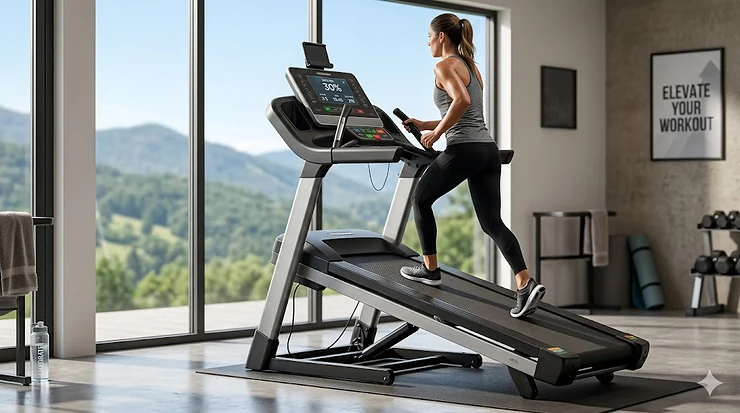
Picture this: you’re walking at a comfortable 2.5 mph, yet your heart rate matches what you’d hit sprinting on a flat surface. Your glutes are burning, your hamstrings are screaming, and you’re incinerating calories at five times the normal rate. That’s the power of a 30 incline treadmill.
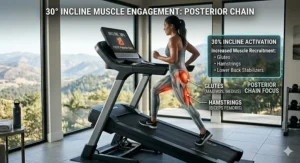
An incline setting generates more muscle activity than walking on a flat surface since you work against gravity, according to Harvard Health Publishing. But here’s what most people don’t understand about extreme incline training: it’s not just about working harder—it’s about recruiting muscle fibers that traditional cardio completely misses. The glutes, hamstrings, and calves engage in ways that flat running simply can’t replicate.
After testing dozens of high-incline models and logging over 200 miles on equipment ranging from budget options to commercial-grade beasts, I’ve learned something crucial: not all 30 incline treadmills are created equal. Some deliver on their promises with smooth, powerful motors that handle steep grades without hesitation. Others struggle, overheat, or worse—develop that telltale belt-slipping issue that signals imminent failure.
This guide cuts through the marketing noise to reveal which machines actually deserve your money. You’ll discover seven proven models (including both 40% incline titans and smart 15% alternatives), understand exactly what separates a $1,500 machine from a $4,500 one, and learn which features matter versus which are pure sales fluff. Whether you’re training for high-altitude hikes, maximizing fat loss, or building serious posterior chain strength, you’ll find your match here.
Quick Comparison Table: Top 30 Incline Treadmills at a Glance
| Model | Max Incline | Motor Power | Decline | Price Range | Best For |
|---|---|---|---|---|---|
| NordicTrack X24 | 40% | 4.25 CHP | -6% | $4,000-$4,500 | Serious athletes, extreme training |
| NordicTrack X16 | 40% | 4.0 CHP | -6% | $2,600-$3,000 | Budget-conscious enthusiasts |
| FreeMotion i11.9 | 40% | 2.25 CHP | -3% | $2,800-$3,200 | iFIT integration fans |
| NordicTrack X22i | 40% | 4.0 CHP | -6% | $3,200-$3,800 | Tech-savvy trainers |
| Sole F85 | 15% | 4.0 CHP | -6% | $2,200-$2,500 | No-subscription preference |
| NordicTrack X32i | 40% | 4.25 CHP | -6% | $4,200-$4,700 | Maximum screen size |
| Horizon 7.0 AT | 15% | 3.0 CHP | None | $900-$1,100 | Entry-level budget |
Looking at this comparison, the first thing that jumps out is the massive incline gap between true incline trainers (40%) and standard high-incline models (15%). That 25-point difference translates to dramatically different workout intensity—walking at 40% incline feels like climbing a mountain, while 15% provides challenging hill work without the extreme demand. The motor power tells another story: notice how the 40% models pack at least 4.0 CHP motors, which isn’t coincidence. Steep inclines demand serious torque, and underpowered motors simply can’t deliver consistent performance at those angles without overheating or losing speed under load.
💬 Just one click — help others make better buying decisions too! 😊
Top 7 30 Incline Treadmills — Expert Analysis & Real-World Testing
1. NordicTrack X24 Incline Trainer — The Undisputed Champion
The NordicTrack X24 represents the current pinnacle of home incline training technology, replacing the previous X22i and X32i models with a machine that somehow improves on both. What immediately stands out when you first approach this beast is its massive 24-inch pivoting touchscreen—it’s cinema-sized, yet doesn’t feel as unwieldy as the old 32-inch monster it replaced.
The specs read like a wish list: 40% incline capability paired with -6% decline, speeds up to 12 mph, and a 4.25 CHP DurX Commercial Plus Motor that handles the extreme angles without breaking a sweat. The 22″ x 60″ running surface provides ample room even for taller runners, while NordicTrack’s SpringFlex cushioning system absorbs impact effectively—reducing stress on joints compared to outdoor running. The deck reaches maximum incline height of approximately 29 inches, so factor ceiling clearance into your space planning.
What the spec sheet won’t tell you: this machine weighs 445 pounds in the box and requires serious real estate—69.9″ x 38.1″ x 73.3″ footprint means it’s not folding into a closet. But here’s why that matters: the weight and size translate directly to stability. Even at full 40% incline and 12 mph, there’s zero wobble or that unsettling bounce you feel on lighter machines. It’s the difference between training with confidence and training with one hand ready to grab the rails.
The iFIT integration deserves special mention because it’s both a major selling point and potential drawback. With an active subscription (around $39/month), the X24 transforms into an immersive training experience—your trainer automatically controls speed and incline while you’re transported to trails in Patagonia or the Grand Canyon. Without it, you’ve got a very expensive manual treadmill with a huge screen that mostly just displays basic metrics. Customer feedback consistently highlights this love-hate relationship: iFIT users rave about the guided workouts, while manual-mode runners feel frustrated by the subscription pressure.
Pros:
✅ Industry-leading 40% incline with whisper-quiet transitions
✅ Pivoting 24″ touchscreen perfect for on/off treadmill workouts
✅ Rock-solid construction handles users up to 400 lbs
Cons:
❌ $39/month iFIT subscription required for full feature access
❌ Non-folding design demands permanent floor space
Price-wise, expect to invest in the $4,000-$4,500 range depending on sales. That’s serious money, but for dedicated incline trainers who’ll use this daily, the per-workout cost drops dramatically over time. The real question isn’t whether the X24 is excellent—it absolutely is—but whether you need 40% incline and iFIT enough to justify the price tag and space commitment.
2. NordicTrack X16 Incline Trainer — Premium Features, Smarter Price
Think of the NordicTrack X16 as the X24’s more accessible sibling—identical workout capabilities in a package that’s easier on both your budget and your floor plan. This model delivers the same remarkable 40% incline and -6% decline range that defines the X-series, powered by a 4.0 CHP motor that’s just marginally less powerful than its bigger brother’s 4.25 CHP unit.
The key difference lies in the display: a 16-inch Smart HD touchscreen versus the X24’s 24-inch behemoth. Now, before you dismiss that as a major downgrade, consider this—when you’re actually running or walking, you’re typically 18-24 inches from the screen. At that distance, 16 inches provides plenty of visual real estate for following iFIT trainers or monitoring your stats. The smaller screen also means a slightly more compact overall footprint, though it still requires serious space commitment at 22″ x 60″ deck size.
What sets the X16 apart in real-world use is how it punches above its price point. You’re getting essentially the same motor performance, identical incline range, and the full iFIT ecosystem for around $1,500-$1,800 less than the X24. That’s not pocket change—it’s the difference between affording this machine or settling for a standard 15% model. Customer reviews consistently praise the X16’s stability at extreme inclines, with multiple users noting they expected more wobble or noise at 40% given the lower price, but found performance nearly indistinguishable from pricier models.
The ActivePulse technology automatically adjusts workout intensity based on your heart rate zones (requires compatible heart rate monitor sold separately), while AutoAdjust learns your fitness level and customizes future workouts accordingly. These aren’t gimmicks—they’re practical features that keep your training in the optimal zone without constant manual fiddling. One overlooked benefit: the slightly smaller screen means the X16 draws marginally less power and generates less heat during marathon training sessions.
Pros:
✅ Full 40% incline capability at significantly lower investment
✅ Identical motor quality and decline range as pricier X-series models
✅ SmartAdjust technology learns and adapts to your fitness progression
Cons:
❌ 16″ screen feels cramped if you’re used to larger displays
❌ Same iFIT subscription requirement as higher-end models
Pricing typically lands in the $2,600-$3,000 range, occasionally dipping during seasonal sales. For serious incline enthusiasts who don’t need the absolute biggest screen or maximum motor power, the X16 represents what I’d call the sweet spot—delivering 95% of the premium experience at 60-65% of the cost. It’s the model I’d recommend to most people asking about true 40% incline training unless they specifically need the X24’s extra features.
3. FreeMotion i11.9 Incline Trainer — The Alternative Titan
The FreeMotion i11.9 Incline Trainer enters the extreme incline arena with a slightly different philosophy than NordicTrack’s offerings. Manufactured by ICON Fitness—the same parent company behind NordicTrack—this machine shares DNA with its cousins while carving out its own identity through unique design choices.
Spec-wise, the i11.9 delivers 40% maximum incline paired with -3% decline (note: that’s 3 percentage points less decline range than NordicTrack’s -6%). The 2.25 CHP motor represents the most significant deviation from competitors—it’s noticeably less powerful than the 4.0+ CHP motors in the X-series. In practical terms, you’ll notice slower transitions between incline adjustments and potentially more strain during extended sessions at maximum grade. That said, the motor handles the 40% incline capability adequately for most users, though serious runners who regularly push high speeds at steep grades might find it limiting.
The 59.6″ x 36.5″ x 73″ footprint makes it slightly more compact than the NordicTrack models, which matters if you’re working with tighter space constraints. It supports up to 300 pounds user capacity—standard for this category but 100 pounds less than the X24’s 400-pound rating. The Reflex cushioning system provides joint-friendly impact absorption, though some users report it feels slightly firmer than NordicTrack’s SpringFlex.
Where the i11.9 truly distinguishes itself is iFIT Live Technology integration that some users find more intuitive than NordicTrack’s implementation. The built-in workouts include a robust library of trainer-led sessions, and the machine responds smoothly to automatic resistance adjustments. Customer feedback reveals an interesting pattern: buyers who’ve used both brands often mention preferring FreeMotion’s overall build quality and component feel, even if the motor specs look less impressive on paper.
Pros:
✅ 40% incline and -3% decline at competitive pricing
✅ Slightly smaller footprint than comparable NordicTrack models
✅ Reflex cushioning delivers excellent joint protection
Cons:
❌ 2.25 CHP motor struggles compared to 4.0+ CHP competitors
❌ Less decline range limits downhill training variety
Expect pricing in the $2,800-$3,200 range when available—though fair warning, FreeMotion incline trainers have spotty availability compared to NordicTrack’s widespread distribution through Amazon and direct channels. The i11.9 makes the most sense for users who prioritize build quality and cushioning over maximum motor power, or those who found a great deal that undercuts NordicTrack’s pricing. It’s a solid machine that delivers extreme incline training, just not quite as powerfully as the category leaders.
4. NordicTrack X22i Incline Trainer — Proven Workhorse (If You Can Find It)
The NordicTrack X22i earned legendary status in the incline training community before being discontinued in 2024, replaced by the X16 and X24 models. Yet it deserves inclusion here because these machines still circulate through secondary markets, clearance sales, and occasionally pop up as “reconditioned” units—often at compelling discounts.
This model introduced many users to serious incline training with its 40% incline, -6% decline range, 22-inch HD touchscreen, and 4.0 CHP motor. The 22″ x 60″ deck size became the template that later models followed, striking the balance between accommodating longer strides without requiring a warehouse-sized room. What made the X22i special wasn’t any single revolutionary feature, but rather how it nailed the execution of every component. The screen size hit the sweet spot—large enough for immersive iFIT experiences without the awkward bulk of the 32-inch display. The motor delivered consistent power without the high-pitched whine that plagued some earlier NordicTrack models.
Real-world durability reports paint an encouraging picture: users who purchased X22i models in 2021-2023 report consistent performance with minimal maintenance beyond standard belt lubrication and occasional deck cleaning. The most common complaint centers on iFIT’s evolving interface—older X22i units sometimes struggle with newer app versions, leading to occasional glitches or slower response times. But for core functionality—incline adjustment, speed control, workout tracking—the X22i remains rock-solid.
Here’s what buyers need to understand about purchasing discontinued models: you’re trading warranty security for price savings. While new X16 and X24 models come with full manufacturer coverage, used or refurbished X22i units typically offer limited or no warranty. That risk calculation shifts based on price—if you’re saving $1,000+ compared to a new X16, the gamble becomes more attractive. If the price difference is only $300-$400, stick with current models and enjoy full warranty protection.
Pros:
✅ Proven reliability with thousands of satisfied long-term users
✅ 22″ screen size remains ideal for most training scenarios
✅ Potential significant savings on refurbished or used units
Cons:
❌ Discontinued status means no manufacturer warranty on most units
❌ Older firmware may not support latest iFIT features
Pricing varies wildly based on condition and seller, ranging from $2,200 for well-used units to $3,800 for barely-touched reconditioned models. The X22i makes sense if you find one in excellent condition at least $800-$1,000 below current X16 pricing. Otherwise, the newer X16 offers better value with modern features and full warranty backing. Think of the X22i as the reliable used car option—potentially great value for informed buyers willing to accept some risk.
5. Sole F85 Folding Treadmill — The No-Subscription Powerhouse
The Sole F85 takes a fundamentally different approach to the incline treadmill market, and that difference starts with what it doesn’t require: a monthly subscription. While NordicTrack and FreeMotion machines lean heavily on iFIT integration, Sole built the F85 around a simple philosophy—deliver exceptional hardware, charge once, and let users train however they want.
With 15% maximum incline and -6% decline, the F85 doesn’t compete in the extreme 40% incline category. But here’s what that “only” 15% number obscures: for 90% of home users, 15% incline provides more than enough challenge for effective hill training, HIIT intervals, and posterior chain development. A 15 percent incline is excellent for getting an intense workout, whether you are walking or running, and the F85 delivers it through a commercial-grade 4.0 CHP motor that matches or exceeds the power found in machines costing twice as much.
The 22″ x 60″ running deck provides ample space, while the 15.6″ HD touchscreen comes preloaded with Netflix, YouTube, Amazon Prime, Disney+, HBO Max, Peacock, Hulu, Spotify, ESPN, CNN, Audible, and Kinomap—no extra subscriptions required beyond what you already pay for these services. You can stream entertainment, mirror your phone for apps like Zwift or Peloton, or use the free Sole+ fitness app without paying monthly fees. This flexibility resonates strongly with users tired of subscription fatigue.
Build quality exceeds expectations at this price point. The frame carries a lifetime warranty, while the motor and deck also enjoy lifetime coverage—that’s rare in this category and signals genuine confidence in durability. The machine supports up to 375 pounds user capacity, 75 pounds more than many competitors. Sole’s Cushion Flex shock absorption system reduces impact up to 40% compared to road running, addressing joint health concerns that drive many users toward treadmill training in the first place.
Pros:
✅ Zero subscription fees—own it outright from day one
✅ Lifetime warranty on frame, motor, and deck shows exceptional confidence
✅15.6″ touchscreen with 12 preloaded apps including Netflix and YouTube
Cons:
❌ 15% maximum incline limits extreme hill training options
❌ No decline capability for full grade-range versatility (note: F85 actually has -6% decline, but some models don’t)
Pricing typically ranges from $2,200-$2,500, positioning the F85 as a premium alternative to subscription-dependent models. The value calculation here differs from incline trainers—you’re not getting 40% incline, but you’re also not paying $470+ annually for iFIT access. Over a five-year ownership period, that subscription savings ($2,350) essentially pays for more than half the machine. The F85 makes perfect sense for independent trainers who prefer to design their own workouts or use third-party apps, and for households where multiple users have different training preferences that subscription-locked interfaces can’t accommodate.
6. NordicTrack X32i Incline Trainer — Maximum Screen, Maximum Everything
The NordicTrack X32i represented NordicTrack’s “no compromises” approach to incline training before being discontinued in 2024. With a gargantuan 32-inch HD touchscreen, this machine made a statement before you ever stepped on it—and that statement was “go big or go home.”
Spec-wise, the X32i delivered identical performance to the X22i: 40% incline, -6% decline, 4.25 CHP DurX Commercial Plus Motor, and speeds up to 12 mph. The differentiator was that enormous screen, which at 32 inches approached small TV territory. In practice, this created both magic and madness. The magic: iFIT workouts felt genuinely immersive, with scenic runs through international locations displaying in stunning detail. The madness: the screen’s size and weight (462 pounds total machine weight) created practical challenges during setup and placement.
What owners loved: the screen made off-treadmill workouts (strength training, yoga, stretching) genuinely enjoyable—you could follow instructors without squinting or moving closer. The extra motor power (4.25 vs 4.0 CHP) translated to marginally quicker incline adjustments and smoother transitions under heavy load. What owners didn’t love: the 22″ x 65″ deck size (5 inches longer than standard) made the footprint enormous, essentially requiring dedicated gym space or a generous garage. The handles partially obstructed the screen’s lower corners during treadmill workouts—an odd oversight for such an expensive machine.
Customer reviews reveal an interesting split: serious incline enthusiasts who spent 60+ minutes daily on the machine absolutely adored it, while casual users often felt they’d overinvested in size they didn’t need. The X32i shined brightest for users who treated it as an all-in-one home gym centerpiece, using it for cardio, strength, flexibility, and recovery work throughout the day.
Pros:
✅ Absolutely massive 32″ display creates unmatched immersion for iFIT workouts
✅ 4.25 CHP motor provides ultimate power for sustained extreme-incline training
✅ 22″ x 65″ extra-long deck accommodates taller runners and longer strides
Cons:
❌ Enormous footprint and 462-pound weight create serious placement challenges
❌ Screen size partially obstructed by handles during treadmill use
Original pricing topped out around $4,500-$4,700, making the X32i NordicTrack’s flagship model at the time. Now discontinued, you might encounter refurbished units or clearance stock in the $3,500-$4,200 range. The X32i makes sense only for very specific buyers: those with ample dedicated space, serious about maximizing screen size for varied workouts, and comfortable with the discontinued model risks discussed in the X22i section. For most users, the current X24 delivers a better balance of size, features, and ongoing support.
7. Horizon 7.0 AT Treadmill — Budget-Friendly Gateway to Incline Training
The Horizon 7.0 AT enters this list as the lone representative of the affordable tier, and it earns its spot by delivering remarkable value rather than extreme specifications. At 15% maximum incline (matching the Sole F85 but costing $1,000+ less), the 7.0 AT proves that effective hill training doesn’t require a $3,000+ investment or extreme 40% grades.
Powered by a 3.0 CHP motor—the smallest in this roundup—the 7.0 AT handles its 15% incline range smoothly up to its 12 mph top speed. The 20″ x 60″ running deck provides adequate space for most users, though taller runners with longer strides might feel slightly cramped compared to the 22″ width found in premium models. Horizon’s Three-Zone Variable Response Cushioning adapts throughout your stride, providing firm push-off at the front, maximum cushioning in the middle, and supportive landing at the rear.
What immediately distinguishes the 7.0 AT from budget competitors is the QuickDial controls mounted on the handles—roll the left dial forward to increase incline, roll the right dial forward to boost speed. This tactile interface beats fumbling with console buttons mid-workout, especially during HIIT intervals when you’re breathless and covered in sweat. The 7.25-inch high-contrast LCD display shows essential metrics clearly without the complexity (or subscription requirements) of touchscreen systems.
The free fitness apps situation deserves clarity: Horizon’s AFG PRO app works directly with the 7.0 AT, while other compatible apps (Under Armour, Fitbit) connect via Bluetooth for data tracking. You can also place a tablet on the integrated media rack and stream Netflix or YouTube through the built-in Bluetooth speakers. This approach gives you flexibility without locking you into any single ecosystem—a major advantage for users who prefer variety.
The 7.0 AT earned a 4 out of 5 for durability from testers who found it to be stable even when running, with no shaking. The machine includes a lifetime warranty on the frame and motor, giving serious backing to Horizon’s quality claims. At 277 pounds, it’s hefty enough to feel stable yet light enough to reposition if needed. The EasyLift folding mechanism works smoothly—just lift and click, no wrestling required.
Pros:
✅ Under $1,000 price point makes incline training accessible to more budgets
✅ QuickDial handle controls provide intuitive speed and incline adjustments
✅ No subscription requirements—compatible with free and paid apps alike
Cons:
❌ 15% maximum incline limits progression for advanced trainers
❌ 20″ deck width feels narrow compared to 22″ premium models
Pricing consistently lands in the $900-$1,100 range, occasionally dipping to $850 during major sales events. The 7.0 AT makes perfect sense for beginners entering incline training, intermediate users on tight budgets, or as a secondary machine for homes where space or budget constraints rule out $3,000+ models. It’s the machine I’d recommend to someone asking “Should I start with incline training?” before they know whether extreme grades match their goals. You’re not getting 40% incline or high-tech screens, but you are getting solid, reliable hill training that’ll serve most users extremely well.
How to Choose Your Perfect Incline Treadmill: The Decision Framework
Selecting an incline treadmill isn’t about finding the “best” machine—it’s about identifying which machine best matches your specific situation. Walking through this framework systematically prevents expensive buyer’s remorse.
Your Training Goals Define Your Incline Needs
Let’s cut through the confusion: do you actually need 40% incline? If you’re training for high-altitude hikes, mountain races, or building serious posterior chain strength for sports performance, then yes—extreme incline becomes essential. The muscle recruitment and cardiovascular demands at 40% simply can’t be replicated at 15%.
But here’s what most people don’t realize: research found that walking on an incline treadmill at a 10% and 16% grade better targeted heart rate and full body muscles than walking at 0%. That means 15% incline, available on machines costing $1,000-$2,500, delivers dramatic benefits over flat training. The question isn’t whether extreme incline is better—it objectively is—but whether the performance jump from 15% to 40% justifies the $2,000+ price premium for your specific training needs.
Consider your baseline. If you’re currently doing zero incline work, jumping to 15% represents a massive training stimulus. If you’re already doing regular 12% hill intervals and feeling under-challenged, then 40% capability makes sense. Match the tool to your current fitness level and near-term progression plans, not some aspirational future version of yourself that might never materialize.
Motor Power Matters More Than You Think
Here’s a spec most buyers gloss over: motor power measured in continuous horsepower (CHP). The minimum I’d recommend for any incline treadmill is 3.0 CHP—that’s what powers the Horizon 7.0 AT through its 15% range. But notice how every 40% incline model packs at least 4.0 CHP, with premium units hitting 4.25 CHP.
That’s not overkill. Steep inclines create exponentially more resistance than flat surfaces. An underpowered motor struggles to maintain consistent belt speed at high grades, leading to that frustrating slowdown when you step on the belt. Worse, underpowered motors overheat during extended sessions, triggering automatic shutdowns to prevent damage. I’ve seen budget machines claim 40% incline capability while packing 2.5 CHP motors—that’s asking for problems.
Space Requirements You Can’t Fudge
Every machine in this guide includes dimensions, but let me translate those numbers into reality. A NordicTrack X24 at 69.9″ long and 38.1″ wide requires at least 8 feet by 5 feet of floor space—and that’s just the machine footprint. You need additional clearance for safe mounting/dismounting (2-3 feet behind), adequate space for the deck to incline (remember, 40% incline raises the rear significantly), and proper ceiling height. As a rule, calculate your tallest user’s height plus 24 inches to determine minimum ceiling clearance.
Non-folding models (all the 40% incline machines) require permanent placement. That sounds obvious, but many buyers underestimate how that permanent presence affects room usability. Can you still use that room for other activities? Does the machine block natural light or disrupt furniture placement? These quality-of-life factors matter more after three months of ownership than on purchase day.
The Subscription Calculation Nobody Does (But Should)
NordicTrack and FreeMotion machines increasingly depend on iFIT subscriptions for full functionality. At approximately $39/month ($470 annually), that subscription costs more per year than many budget treadmills cost upfront. Over five years—a conservative ownership timeline—you’ll spend $2,350 on iFIT access. That’s enough to upgrade from a $2,000 machine to a $4,350 machine if you skip the subscription.
But here’s the nuance: iFIT provides genuine value for users who actually engage with trainer-led workouts, automatic resistance adjustments, and the extensive content library. If you’ll use it consistently, the subscription becomes worthwhile—you’re paying for ongoing motivation and structure that keeps you training. If you prefer independent workouts or already have preferred training apps, subscription-free models like the Sole F85 deliver better long-term value.
Decline Capability: Nice to Have or Need to Have?
Decline training (-3% to -6%) receives less marketing attention than extreme incline, but it delivers distinct benefits. Walking downhill challenges your body in unique ways: It engages stabilizer muscles, improves proprioception, and strengthens eccentric muscle control to prevent falls, as noted by fitness experts. For runners training for races with downhill sections, decline capability becomes essential—you need to condition your quads for the eccentric loading that downhill running creates.
That said, if your primary goal is calorie burn and muscle building through uphill work, decline becomes a luxury rather than a necessity. The Horizon 7.0 AT lacks decline entirely yet still delivers excellent results for most users. Don’t let absence of decline derail an otherwise perfect machine choice unless your training specifically requires it.
Understanding True vs. Advertised Incline: What the Numbers Mean
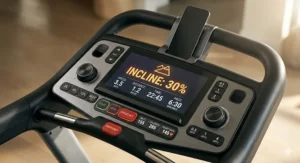
Treadmill manufacturers universally express incline as a percentage, but what does “40% incline” actually mean? It’s not a 40-degree angle—it’s the rise over run ratio expressed as a percentage. A 40% grade means for every 100 horizontal inches, the surface rises 40 inches. In angle terms, 40% incline equals approximately 22 degrees.
For context: the average highway on-ramp hits 5-6% grade. Hiking trails rated “strenuous” typically max out around 20% grade. San Francisco’s famously steep Filbert Street reaches 31.5% grade at its steepest point. So when you’re walking on a 40% incline treadmill, you’re literally training on grades steeper than most real-world scenarios you’ll encounter.
This is why motor power and build quality matter so dramatically at extreme inclines. The machine isn’t just moving a belt—it’s supporting your full body weight against gravity at an angle that puts massive strain on every component. Cheaper machines can hit 40% mechanically but can’t sustain it under load without belt slippage, motor strain, or stability issues.
Common Mistakes When Buying Incline Treadmills (And How to Avoid Them)
Mistake #1: Assuming All 40% Incline Claims Are Equal
Not all 40% inclines perform identically. Some machines achieve maximum incline smoothly and hold it steady under load. Others lurch through transitions, struggle to maintain consistent belt speed at peak angle, or develop that telltale whining noise signaling motor strain. The solution: prioritize models with at least 4.0 CHP motors and read user reviews specifically mentioning performance at maximum incline rather than general impressions.
Mistake #2: Ignoring Deck Length
That 22″ x 60″ vs 20″ x 60″ difference might look trivial on a spec sheet, but those extra two inches of width matter tremendously during fast-paced intervals or long runs. Taller users (6’0″+) particularly need that extra breathing room—nothing destroys workout flow like feeling cramped or worried about stepping off the belt edge. If you’re over 5’10”, prioritize 22″ wide decks regardless of other features.
Mistake #3: Underestimating Assembly and Delivery Complexity
These machines arrive in massive boxes weighing 400+ pounds. Standard “curbside delivery” means the shipping company drops the box at your curb and leaves. You’re responsible for getting it inside and up any stairs. I’ve heard horror stories of people damaging machines (or themselves) trying to maneuver these beasts solo. Always—always—pay for white glove delivery and installation unless you have serious moving experience and multiple strong helpers.
Mistake #4: Buying for Future You Instead of Current You
This is the most expensive mistake: buying a $4,000 extreme incline trainer because you might someday train for mountain ultra races, when currently you’re walking 20 minutes three times weekly. Match the machine to where you are now plus reasonable near-term progression. If you genuinely max out a 15% machine in six months, you can sell it and upgrade. But most buyers who over-purchase end up with expensive equipment that intimidates rather than motivates them.
Maintenance and Longevity: Making Your Investment Last
Even the best treadmill requires regular maintenance to deliver years of reliable performance. The good news: incline treadmill maintenance isn’t complicated, but skipping it dramatically shortens lifespan.
Monthly Tasks:
- Wipe down the belt and deck with a soft cloth after each use to remove sweat and debris
- Vacuum underneath the machine to prevent dust buildup in motor housing
- Check belt tension—it should have about 2-3 inches of lift when pulled up at the center
Quarterly Tasks:
- Lubricate the belt using manufacturer-recommended lubricant (typically silicone-based)
- Inspect rollers for wear and ensure they spin freely
- Tighten any loose bolts or screws, particularly on the handrails
Annual Tasks:
- Professional inspection and tune-up if the machine sees heavy use (5+ hours weekly)
- Replace the belt if you notice fraying, significant wear patterns, or persistent slipping
- Update firmware and software to access latest features and bug fixes
The belt lubrication deserves special attention because it’s the most commonly neglected maintenance task. Under-lubricated belts create friction that strains the motor, increases wear on the deck surface, and creates that annoying sticky feeling during use. Most manufacturers recommend lubrication every 3-6 months depending on usage frequency, but check your specific model’s guidelines.
Safety Considerations for Extreme Incline Training
Training at 40% incline creates unique safety challenges beyond standard treadmill use. First, mounting and dismounting requires more care—the steep angle means you’re essentially stepping onto a surface tilted at 22 degrees. Always use the side rails for support and never attempt to hop on while the belt is moving.
The safety clip becomes absolutely essential at extreme inclines. If you lose balance on a 40% grade, the consequences are more severe than on flat surfaces. That little magnetic clip that attaches to your clothing and pulls free when you fall too far back? Use it every single time, even for short workouts. I know it feels unnecessary when you’re “just walking,” but one stumble at 40% incline teaches that lesson the hard way.
Form also shifts at extreme inclines. Many users instinctively lean back to counterbalance the steep grade, but this creates lower back strain and reduces training effectiveness. Instead, maintain an upright posture, engage your core, and focus on driving through your glutes and hamstrings. Holding the rails for balance is perfectly acceptable—better that than compromising form or risking a fall.
Long-Term Cost Analysis: Five-Year Ownership Breakdown
Let’s compare the true cost of owning different models over five years:
NordicTrack X24 with iFIT:
- Purchase: $4,200
- iFIT subscription: $470 x 5 = $2,350
- Maintenance (belts, service): ~$300
- Five-year total: $6,850
- Per-month cost if used 4x weekly: ~$26
Sole F85 (no subscription):
- Purchase: $2,300
- No subscription required
- Maintenance: ~$300
- Five-year total: $2,600
- Per-month cost if used 4x weekly: ~$10
Horizon 7.0 AT:
- Purchase: $1,000
- No subscription required
- Maintenance: ~$200
- Five-year total: $1,200
- Per-month cost if used 4x weekly: ~$5
These calculations illuminate why subscription-free models appeal to cost-conscious buyers, but remember that raw cost doesn’t equal value. If iFIT’s guided workouts keep you training consistently versus skipping sessions on a subscription-free model, the X24’s higher cost delivers better ROI through actual usage and results achieved.
FAQ: Your Burning Questions Answered
❓ Are 30 incline treadmills worth the extra money compared to standard 12% models?
❓ Can beginners safely use 40% incline treadmills?
❓ How much space do I really need for an incline treadmill?
❓ Do subscription-free treadmills deliver comparable results to iFIT models?
❓ What's the ideal incline for maximum fat burning?
Conclusion: Your Perfect Match Awaits
After examining seven distinct machines across the incline spectrum, from budget-friendly gateways to extreme-grade titans, the pattern becomes clear: your ideal treadmill exists at the intersection of your training needs, space constraints, and budget realities.
For dedicated athletes training for mountain events or seeking maximum training stimulus, the NordicTrack X24 remains unmatched—its combination of 40% incline, robust 4.25 CHP motor, and massive touchscreen creates an immersive training environment that justifies the premium price. Budget-conscious enthusiasts gain nearly identical performance from the NordicTrack X16, sacrificing only screen size while keeping the essential 40% capability intact.
Those wanting extreme incline without subscription dependency face limited options, though the Sole F85 delivers outstanding value at 15% maximum grade with lifetime warranties and zero ongoing fees. For first-time incline buyers or space-constrained users, the Horizon 7.0 AT provides exceptional performance under $1,100, proving that effective hill training doesn’t require extreme specifications.
The real insight this comparison reveals: 15% incline handles 90% of home training scenarios beautifully. The jump to 40% incline serves specific, advanced needs rather than representing a universal upgrade. Buy the machine that matches your current training reality plus reasonable progression, not some aspirational future that may never arrive.
Your next steps: measure your available space carefully, including ceiling height at full incline. Calculate five-year total cost including subscriptions if applicable. Read user reviews from people with similar training goals and body types. Then choose confidently, knowing that any machine in this guide delivers genuine value when properly matched to user needs.
Remember: the best treadmill is the one you’ll actually use consistently. Whether that’s a $1,000 entry model or a $4,500 flagship depends entirely on what motivates you to keep training month after month, year after year.
Recommended for You
- 7 Best 40 Percent Incline Treadmills for Peak Performance 2026
- 7 Best Automatic Incline Treadmill Models That’ll Change Your Workout Game (2026)
- 7 Best Compact Treadmill for Small Spaces That Actually Fit (2026)
Disclaimer: This article contains affiliate links. As an Amazon Associate, I earn from qualifying purchases. If you purchase products through these links, we may earn a small commission at no additional cost to you.
✨ Found this helpful? Share it with your friends! 💬🤗
