In This Article
A treadmill for weight loss under $1000 is a home machine priced below the four-figure mark that still delivers what fat-loss training demands: a motor strong enough for sustained brisk walking or jogging, adjustable incline, a stable deck, and controls you’ll actually use. It trades luxury screens for durable fundamentals.

The treadmill doesn’t burn the fat. You do. The machine just removes every excuse: rain, darkness, a neighbor’s overenthusiastic dog, a 6 a.m. chill. That leaves you one job, which is to show up. So the right treadmill for weight loss under $1000 is less about bells and whistles and more about whether you’ll still be using it come March.
The bar for “worth it” is lower than you’d think. The CDC’s adult activity guidelines call for at least 150 minutes of moderate-intensity activity a week, roughly 30 minutes, five days a week. That’s a brisk walk with a good podcast. A sturdy treadmill for weight loss under $1000 can deliver exactly that, plus incline work that raises your effort without hammering your joints.
Below you’ll find seven real models across budget, mid-range and top-of-the-bracket tiers, each analyzed for what its specs mean in practice. We also cover the weight loss treadmill features to look for, calorie deficit basics, cardio workout plans, and the real home fitness investment behind a machine like this.
A note on method: this guide synthesizes published specs and professional testing notes. It doesn’t claim personal ownership of any machine, and prices appear as ranges because they change constantly.
Quick Comparison: Treadmill for Weight Loss Under $1000 at a Glance
Before the deep dives, here’s the cheat sheet. Think of it as the menu before you commit to the tasting course.
| Treadmill | Motor | Deck / Footprint Note | Standout Spec | Best For |
|---|---|---|---|---|
| Horizon 7.0 AT | 3.0 HP | 20″ x 60″ | 0-15% incline, up to 12 mph | Committed walkers and joggers |
| NordicTrack T Series 5 | 2.6 CHP | 18″ x 55″ | iFIT auto-adjust, 0-10% incline | Guided-class fans |
| ProForm Carbon TLS | 2.6 CHP | 18″ x 55″, folds | iFIT auto-adjust | Apartments plus classes |
| Horizon T101 | 2.5 HP | 20″ x 55″ | 0-10% incline, no subscription | Simple daily walking |
| DeerRun A1 Pro | 3 HP | Folds about 8″ tall | 10 mph, 350-lb capacity | Tight budgets |
| Sunny SF-T722022 | 2 HP | 17″ x 47″ | 12 automatic incline levels | Budget hill intervals |
| WalkingPad X21 | Light-duty | 18″ x 48″, folds twice | Closet-friendly design | Small spaces, light jogging |
Reading across the rows, the Horizon 7.0 AT is the only machine here that pairs a 3.0 HP motor with a 60-inch deck and a 15% incline, which is why it anchors the top of this list. If you’d rather follow a coach than twist dials, the NordicTrack T Series 5 and ProForm Carbon TLS share the same motor and deck size, but only the ProForm Carbon TLS folds. Budget shoppers should note that the Sunny SF-T722022 and WalkingPad X21 save money and floor space by shrinking the deck and motor. That’s fine for walking, but limiting for longer runs.
💬 Just one click — help others make better buying decisions too!😊
Top 7 Treadmill for Weight Loss Under $1000 Picks: Expert Analysis
Each pick below is framed the same way: what the specs mean in real life, who it suits, and where it stumbles. Where I couldn’t verify a large sample of customer reviews, I say so rather than pad the gap. Skim the latest verified-purchase reviews on the product page before you buy.
1. Horizon 7.0 AT — lifetime motor warranty and a real running deck
The headline is durability. The frame and motor carry lifetime coverage, which is rare this close to the $1000 ceiling.
The 3.0 HP motor, 20″ x 60″ deck and 0.5-12 mph range let you jog with a natural stride instead of shortening your steps. Most rivals in this roundup top out at a 55-inch deck. The 15% incline is the steepest here, and that matters because incline is the cheapest way to raise your effort without running faster. A 325-lb capacity and an 8.6-inch step-up height also make it friendlier to larger bodies and stiff knees.
Based on the spec comparison, this is the machine for someone who expects to walk or jog four or five days a week for years. The QuickDial controls sit near your arm swing, so switching from a brisk walk to an incline burst doesn’t break your rhythm. No subscription is required, and Bluetooth pairs with apps and wearables, including Apple Watch.
Professional testers name it the best overall pick in this price class, praising the warranty and the quick speed and incline changes. The recurring critique is that the console is functional rather than flashy, and that you toggle between heart-rate and app Bluetooth modes.
Pros:
- ✅ 3.0 HP motor handles walking and jogging
- ✅ 15% incline, the steepest in this group
- ✅ Lifetime frame and motor warranty
Cons:
- ❌ Must toggle between heart-rate and app Bluetooth modes
- ❌ Console looks plain next to touchscreen rivals
Pricing sits at the upper end of the bracket, so check current price. For a serious treadmill for weight loss under $1000, the value verdict is strong.
2. NordicTrack T Series 5 — iFIT coaching without a built-in screen
This one’s hook is the trainer. Connect it over Bluetooth to the iFIT app on your phone or tablet, and classes can automatically adjust speed and incline while you hang on for the ride.
Specs first: a 0-10% incline, a 10 mph top speed, a 2.6 CHP motor and an 18″ x 55″ deck. In practice, that means comfortable walking and light jogging, but not the long-stride, high-mileage running that wants a 60-inch deck. The 300-lb capacity is respectable, and a 10-year frame warranty sits alongside a 1-year parts-and-labor term. It doesn’t fold, so you’re committing floor space permanently.
Here’s the analytical take. Hands-free incline changes matter more for fat loss than they sound, because a class will push you into hills you’d never choose alone. Just remember that an iFIT account is required to use the treadmill, whether or not you pay for a membership. Factor that into your home fitness investment.
Testers describe it as great value for its size and suitable for walking and light running, while cautioning that runners with long strides or heavy weekly mileage will feel cramped. I couldn’t verify a broad set of customer reviews, so check recent buyer comments on iFIT setup and assembly.
Pros:
- ✅ Automatic speed and incline changes with iFIT classes
- ✅ 300-lb capacity with a 10-year frame warranty
- ✅ Solid 0-10% incline and 10 mph range
Cons:
- ❌ Limited features without an iFIT account
- ❌ Doesn’t fold and has a compact deck
Expect a mid-range price bracket; check current price. It’s good value if you’ll actually use guided classes.
3. ProForm Carbon TLS — foldable iFIT treadmill for small spaces
Same class-driven idea as the NordicTrack T Series 5, with one big difference: this one folds. Unfolded it measures about 67.5″ long by 31.6″ wide, and folded it stands about 32.9″ long and 65.7″ tall. It ships at about 205 lbs, less once the packaging is off.
The 18″ x 55″ deck and 2.6 CHP motor put it in the walking and lower-mileage jogging zone. Testers say it comes close to the 3.0 HP they like to see for running, but not quite. In practical terms, it’s a great fit if your treadmill has to vanish into a corner between workouts.
The analysis here hinges on iFIT. Much of its content follows coaches through outdoor routes, so incline changes feel like real hills, and that can keep an otherwise dull walk interesting for months. The trade-off is a recurring membership on top of the purchase price. Without iFIT, testers say features are very limited.
Professional reviewers call it a decent option for beginners and lower-mileage runners, but note the motor and deck may not suit dedicated runners. A verified customer-review sample wasn’t available for this guide, so check the newest reviews for folding-mechanism feedback.
Pros:
- ✅ Folds to a compact footprint
- ✅ Pairs with iFIT for automatic adjustments
- ✅ Simple, straightforward console
Cons:
- ❌ Very limited features without iFIT
- ❌ Motor and deck less suited to runners
Price sits in the mid-range bracket; check current price. It’s a good value for apartment dwellers who want coaching, and a poor one if you’ll skip the app.
4. Horizon T101 — no-subscription simplicity that gets you walking
Some machines want a relationship. The Horizon T101 just wants you to press Go. It’s Horizon’s most affordable treadmill, built around EasyDial controls and a tidy console.
The 2.5 HP motor, 0-10% incline and 20″ x 55″ deck are right-sized for walking. The frame and motor carry lifetime coverage for the original owner (non-transferable), though parts and labor last only a year. Weighing about 180 lbs with transport wheels, it’s easier to shuffle around than most. The 300-lb capacity is decent.
The built-in programs include calorie and distance targets, fat burn, hill climb and intervals. Basic, yes, but basics remove decision fatigue. Bluetooth lets you connect third-party apps like Zwift and Peloton, so you can add coaching without a machine-specific subscription. What the spec sheet won’t say plainly: the Horizon T101 is a walker’s machine first, and larger or faster runners will outgrow it.
Testers frequently pick it as their best walking treadmill, and its main knock is that it isn’t ideal for running. As always, scan recent buyer comments for delivery and assembly notes.
Pros:
- ✅ Lifetime frame and motor warranty
- ✅ No subscription; onboard programs included
- ✅ Fast speed and incline adjustments
Cons:
- ❌ Not ideal for running, especially larger users
- ❌ Simpler programs than pricier options
It falls in the lower-to-middle part of the bracket; check current price. Value is excellent for a walking-first plan.
5. DeerRun A1 Pro — sturdy budget pick that folds flat
Here’s the underdog. A reviewer noted it was priced under $500 at the time of their write-up (check current price), yet it offers a 3 HP motor, a 10 mph top speed and a 350-lb capacity.
Those specs mean a lot. A 3 HP motor keeps a walker or jogger from overworking the machine, and a 350-lb rating is unusually generous at this price. It weighs about 86 lbs and folds to roughly 8 inches tall, so you can slide it under furniture. A tester was able to run 5+ miles on the compact deck but had to be mindful of stride length and foot placement.
The analysis: this is the smartest entry for someone testing whether they’ll stick with treadmill workouts. The trade-offs are real, though. Incline is manual and limited to 0% or 6%, which makes hill intervals clunkier, and folding requires an Allen wrench. No subscription is needed, and the optional PitPat app works as a secondary console.
Testers were impressed with the machine and its running capacity for its size. I couldn’t verify a broad customer-review sample, so read recent buyer feedback on the folding mechanism before buying.
Pros:
- ✅ 3 HP motor and 10 mph top speed
- ✅ Supports up to 350 lbs
- ✅ Light at 86 lbs and folds flat
Cons:
- ❌ Fold and unfold need an Allen wrench
- ❌ Manual incline offers only 0% or 6%
Budget bracket, under $500 per the reviewer; check current price. It’s the value winner for first-time buyers.
6. Sunny SF-T722022 — automatic incline on a shoestring
The standout is a feature usually reserved for pricier machines: motorized incline. Twelve levels are adjustable with a button, so you don’t hop off and stop the belt to change your workout.
The deck is 17″ x 47″, the motor is 2 HP and the top speed is 9 mph. Folded, it measures about 57″ x 32″ and 8.5″ tall. Those numbers point to a walking-first machine. A short deck and modest motor mean jogging is possible, but tall or long-striding users will feel squeezed. The 265-lb weight limit is also the lowest in this roundup.
Here’s the honest take. For fat loss, auto incline is useful because hill intervals are one of the simplest ways to raise your heart rate without adding speed. Sunny’s free SunnyFit app adds trainer-led classes with no paywall, which testers rated among the best free treadmill content they’d seen. You’ll need an Allen wrench to fold and unfold it.
The tester’s verdict is that it’s a good walker with running capability, and the caution is about deck size and motor. Verified customer reviews weren’t available in my research, so check the latest ones for durability comments.
Pros:
- ✅ 12 automatic incline levels
- ✅ Free SunnyFit app with trainer-led classes
- ✅ Folds flat to under 9 inches tall
Cons:
- ❌ 47-inch running surface feels short for jogging
- ❌ 265-lb weight limit restricts some buyers
Budget bracket; check current price. It delivers strong value for walkers who want incline convenience.
7. WalkingPad X21 — closet-friendly jogger
The WalkingPad X21 folds twice, then tucks up against the motor hood. You could forget it’s there, which is either a feature or a guilt trip.
It tops out at 7.5 mph on an 18″ x 48″ deck and weighs about 93 lbs with transport wheels. In practice, that’s perfect for easy and steady runs and walking, and wrong for sprints or long-stride runners. There’s no incline, so intensity comes from speed intervals, not hills. A crossbar dial makes speed changes intuitive.
Analysis: this is the option when square footage matters more than horsepower. Testers say the deck fold seam is noticeable underfoot at first, and that it became less noticeable with cushioned shoes. A phone rack keeps your podcast or coaching audio close, though the console height makes watching video awkward.
Testers were pleasantly surprised at how well it held up to running, calling it a fit for runners without space or budget for alternatives. I couldn’t verify a broad customer-review sample, so look at recent reviews for noise and belt feedback.
Pros:
- ✅ Folds twice for closet-level storage
- ✅ Intuitive speed dial on the crossbar
- ✅ Easy to relocate at about 93 lbs
Cons:
- ❌ Fold seam is noticeable underfoot
- ❌ No incline and a 7.5 mph speed cap
It sits in the budget-to-mid bracket; check current price. Value is best for small homes and lighter, easier-paced sessions.
Now, here’s the value snapshot across all seven.
| Treadmill | Price Tier (check current price) | Warranty Highlight | Best For |
|---|---|---|---|
| Horizon 7.0 AT | Upper end of the bracket | Lifetime frame and motor | Long-term daily use |
| NordicTrack T Series 5 | Mid-range | 10-year frame; 1-year parts and labor | iFIT class lovers |
| ProForm Carbon TLS | Mid-range | Check manufacturer terms | Small spaces plus classes |
| Horizon T101 | Lower-to-mid | Lifetime frame and motor (non-transferable) | Simple walking routines |
| DeerRun A1 Pro | Budget (reviewer cited under $500) | Check manufacturer terms | Tight budgets |
| Sunny SF-T722022 | Budget | Check manufacturer terms | Walkers wanting auto incline |
| WalkingPad X21 | Budget-to-mid | Check manufacturer terms | Compact, easy-pace jogging |
The warranty column tells the real story. The Horizon 7.0 AT and Horizon T101 offer the most reassurance on the parts that are costliest to replace, which raises their long-term value beyond the sticker. The DeerRun A1 Pro wins on upfront savings, but confirm its warranty details before buying. Overall, the price gap between budget and mid-range often buys you motor strength, deck length and coverage, not just a nicer screen.
Your First 30 Days: Setup, Maintenance and Optimization
Buying is the easy part. Month one decides whether the machine becomes a fitness tool or the world’s priciest coat rack.
Set it up right. Place it on a level floor with room to spare. Leave about 2 feet on each side and 6 feet behind, a clearance guideline Consumer Reports shares. Add a mat to reduce vibration and protect flooring. Keep the manual handy, because lubrication needs vary by model, and some belts want periodic attention while others don’t.
Ramp up on a schedule.
- Week 1: three flat walks of 15-20 minutes at a pace where you can talk.
- Week 2: add 1-2% incline for part of each session.
- Week 3: try short intervals, like one brisk minute followed by two easy ones.
- Week 4: build toward five sessions of about 30 minutes.
Avoid the classic first-month mistakes. Don’t grip the handrails (it cuts calorie burn and wrecks your posture), don’t chase speed before you’ve built consistency, and don’t ignore the safety key.
Simple maintenance. Wipe down the console and deck weekly, vacuum around the motor hood monthly, and check bolts and belt alignment every few weeks. It’s five minutes that can extend the treadmill’s life.
Real-World Scenarios: Which Treadmill Fits Which Person?
Specs are abstract. Lives are specific. Here are three profiles matched to machines with reasoning.
Scenario 1: The studio-apartment walker. You have about 500 square feet, a modest budget and a plan to walk 30 minutes most evenings. The DeerRun A1 Pro or WalkingPad X21 fits, because both fold small and neither needs a permanent home. If you want incline, the Sunny SF-T722022 adds automatic hills.
Scenario 2: The busy parent who needs external motivation. Your schedule is chaotic and willpower is rationed. Choose the ProForm Carbon TLS if space is tight or the NordicTrack T Series 5 if you have a permanent spot. Guided classes take the planning out of a 25-minute window, and auto-adjusting incline keeps you honest. Just budget for the recurring membership.
Scenario 3: The heavier beginner easing in with sensitive knees. A 325-lb capacity, a low 8.6-inch step-up height and a long 60-inch deck make the Horizon 7.0 AT the most comfortable long-term pick. The DeerRun A1 Pro (350 lbs) is the budget alternative. Skip the machines with a 265-lb limit.
In each case, the best treadmill for weight loss under $1000 is the one that matches your space, your body and your habits.
How to Choose: Weight Loss Treadmill Features to Look For
Here are the weight loss treadmill features to look for, in priority order:
- Motor power. For frequent walking, 2.0 HP or more works. For jogging, look for roughly 2.5-3.0 HP. A stronger motor runs cooler and lasts longer.
- Deck size. Around 20″ x 55″ is a comfortable minimum for jogging. Shorter decks suit walkers only.
- Incline. Powered incline changes intensity without stopping the belt. A 10-15% range gives you room to grow.
- Weight capacity. Choose a limit comfortably above your body weight, since the rating reflects build strength.
- Warranty. Lifetime frame and motor coverage is the standout, but read the parts-and-labor terms.
- Programs and app support. Built-in fat burn and interval programs, or Bluetooth for apps, keep workouts varied.
- Fold and safety. Fold-flat frames save space, and a reachable safety key is non-negotiable.
Notice what’s missing: a giant touchscreen. A tester’s advice is to decide how you’ll train, whether that’s streaming, music or just walking, and then pay only for features that make it happen.
Calorie Deficit Basics: What a Treadmill Can and Can’t Do
Let’s be blunt. Fat loss runs on energy balance, and the treadmill is only one side of the ledger.
The CDC’s healthy weight guidance notes that most weight loss comes from reducing calories, while regular physical activity is what helps maintain it. The Mayo Clinic’s calorie guidance adds that cutting about 500 calories a day may produce roughly ½ to 1 pound of loss a week, though that varies by body, sex and activity level. The old “3,500 calories per pound” rule is a rough guide, not a law.
So how does the treadmill fit? Picture a modest deficit built from both sides. Trim a portion of your daily intake and burn extra through your walks. Calorie burn varies widely with body weight, speed and incline, so treat any estimate from a console or app as approximate.
Three practical takeaways:
- Don’t out-walk a poor diet. Thirty minutes doesn’t cancel a large dessert.
- Avoid extreme cuts. Crash dieting invites rebound and fatigue that kills consistency.
- Track trends, not days. Weekly averages tell the truth that daily weigh-ins hide.
If you have medical conditions, talk to a doctor or dietitian about a target that fits you.
Cardio Workout Plans for Your New Treadmill
The American Heart Association recommends at least 150 minutes of moderate-intensity aerobic activity per week, or 75 minutes of vigorous activity, plus muscle-strengthening on at least two days. These cardio workout plans fit inside that framework.
Beginner (weeks 1-4). Three days a week, 20-30 minutes at a conversational pace. Moderate effort means your breathing is noticeably faster but you can still talk.
Intermediate incline intervals (weeks 5-8). Four days a week:
- 5-minute warm-up walk
- 8 rounds of 1 minute at a brisk pace and 3-5% incline, then 2 minutes easy
- 5-minute cooldown
Steady-state fat burner. Two longer sessions of 40-45 minutes at moderate effort, plus one interval day.
The popular 12-3-30 routine. It’s a social-media favorite: 12% incline, 3 mph, 30 minutes. Only the Horizon 7.0 AT in this roundup reaches 12% incline, while the NordicTrack T Series 5 and Horizon T101 top out at 10%. Adapt it to what your machine offers.
Add two strength days. Bodyweight squats, lunges and push-ups count. Cardio alone leaves a gap.
The CDC also advises talking to your doctor before starting vigorous activity if you’ve been inactive or have overweight. Start easy, build gradually.
Mid-Range Treadmill for Fat Loss: Where the Extra Money Goes
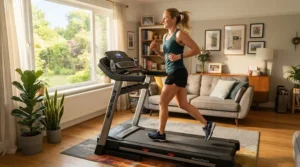
Define terms first. In this guide, a mid-range treadmill for fat loss means roughly the upper-middle of the sub-$1000 bracket, where features start to separate from budget picks. That’s my framing, not an industry standard.
What does the extra spend buy? Usually four things: a stronger motor, a longer deck, powered incline, and better warranties. Those upgrades reduce friction in your fat-loss routine. A Horizon 7.0 AT lets you jog without shortening your stride, and the NordicTrack T Series 5 or ProForm Carbon TLS add coaching that adjusts incline automatically.
Here’s the cost-per-use logic. Take a hypothetical machine in the mid-$700s. Used four times a week for three years, that’s about 624 sessions, or roughly $1.20 per workout before any subscription. A machine that sits unused costs infinite dollars per session, which is why comfort and habit matter more than raw specs.
When is a mid-range treadmill for fat loss the wrong move? If you only plan to walk casually, the DeerRun A1 Pro or Horizon T101 may be plenty. If you’re unsure you’ll stick with it, start lower and upgrade later.
✨ Don’t Miss These Exclusive Deals!
🔍 Take your fitness plan to the next level with these carefully selected treadmills. Click on any highlighted product to check current pricing and availability, and pick the one that fits your space, your body and your habits! 🏃♂️
Treadmill vs Alternatives: How Does It Stack Up?
Treadmills compete with walking outside, stationary bikes and gym memberships. Here’s how they compare for fat loss.
| Option | Weather-Proof | Upfront Cost | Joint Impact | Best For |
|---|---|---|---|---|
| Home treadmill | Yes | Moderate | Adjustable via speed and incline | Consistent daily routines |
| Outdoor walking or running | No | Low | Varies with surface | Fresh-air lovers |
| Stationary bike | Yes | Low to moderate | Low | Knee-sensitive users |
| Gym membership | Yes | Low upfront, ongoing fees | Varies | Variety and equipment access |
The treadmill’s real edge is convenience. There’s no commute, no schedule and no forecast, and that’s a huge advantage for habit-building. Its weakness is the upfront outlay and the floor space. If your knees complain, a bike may be gentler, though a padded deck and slower speeds can make a treadmill manageable. Outdoor walking is free but weather-dependent, and it’s the option most people abandon in January.
Home Fitness Investment: Long-Term Cost and Maintenance
A treadmill isn’t one purchase. It’s a small ecosystem of costs, and smart shoppers price it accordingly. This is where home fitness investment thinking pays off.
Consider the total picture:
- Purchase price. The sticker is only the start.
- Subscriptions. Machines built around iFIT, like the NordicTrack T Series 5 and ProForm Carbon TLS, become far more useful with a membership. That recurring cost adds up over years.
- Accessories. A mat, a device holder and proper shoes.
- Maintenance. Belt care, cleaning and the occasional part.
- Lifespan. One tester’s survey of users suggests treadmills last about 10 years, plus or minus 5, with heavy use shortening that.
Warranties help, which is why lifetime coverage on the Horizon 7.0 AT and Horizon T101 carries real weight. Timing helps too. Sales commonly cluster around Black Friday, Cyber Monday, New Year’s and holidays like Presidents’ Day, and brands often clear older models as new ones arrive. Prices vary, so check current price before you buy.
Finally, resale matters less than use. A treadmill you use for years turns out cheaper than a bargain you abandon. That’s the truest measure of any home fitness investment.
Treadmill Safety and Common Buying Mistakes
Safety comes first. According to figures cited by Consumer Reports, the CPSC estimated about 22,500 treadmill injuries in 2019. The basics matter:
- Always clip the safety key to your clothing.
- Straddle the belt when starting.
- Never step off a moving belt.
- Remove and store the key when you’re done, especially with kids or pets around.
Common buying mistakes.
- Buying for the person you hope to be. Choose for your current routine, not a marathon fantasy.
- Ignoring deck size. A short deck turns jogging into a shuffle.
- Forgetting the fold footprint. Measure both open and stored dimensions.
- Overlooking subscriptions. Recurring costs change the real price.
- Skipping warranty fine print. Motor, frame and labor terms differ.
A treadmill for weight loss under $1000 rewards careful matching. Get the fit right and the machine mostly disappears into your routine.

FAQ
❓ What is the best treadmill for weight loss under $1000 if I live in a small apartment?
❓ Can I run on a treadmill for weight loss under $1000, or is it walking only?
❓ Do I need an iFIT membership for the NordicTrack T Series 5 or ProForm Carbon TLS?
❓ How many days a week should I use a treadmill to lose weight?
❓ When is the best time to buy a treadmill for weight loss under $1000?
Conclusion
A treadmill for weight loss under $1000 won’t do the work for you. What it does is remove friction: no weather, no commute, no gym schedule. The best machine is the one that fits your body, your space and your habits well enough that you keep showing up.
If you want the sturdiest all-rounder, the Horizon 7.0 AT leads on motor, deck, incline and warranty. For guided classes, the NordicTrack T Series 5 and ProForm Carbon TLS make coaching easy, with the ProForm Carbon TLS better for tight spaces. Simplicity fans will like the Horizon T101. On a tight budget, the DeerRun A1 Pro, Sunny SF-T722022 and WalkingPad X21 deliver real workouts in small packages, with clear limits on deck size and running mileage.
Remember the bigger picture. Calorie deficit basics do most of the fat-loss heavy lifting, your cardio workout plans build the habit, and the right treadmill for weight loss under $1000 is a home fitness investment that pays back in every session you actually complete. Choose a mid-range treadmill for fat loss if you want room to grow, or start lean and upgrade later.
Recommended for You
- Treadmill For Desk Workers With Back Pain: 7 Proven Picks 2026
- Treadmill Under $600 For Back Pain: 7 Picks That Won’t Wreck You (2026)
- 7 Best Cushioned Treadmills For Spinal Health In 2026
Disclaimer: This article contains affiliate links. As an Amazon Associate, I earn from qualifying purchases. If you purchase products through these links, we may earn a small commission at no additional cost to you.
✨ Found this helpful? Share it with your friends! 💬🤗
