In This Article
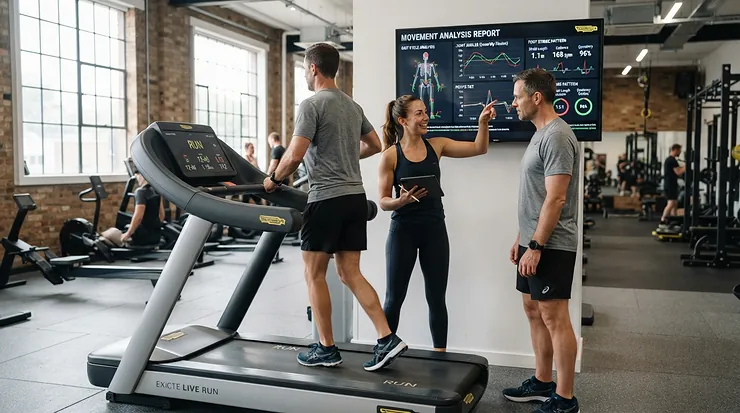
Here’s the cruel irony nobody warns you about: the thing that hurt your knee is often the only thing that makes you feel like yourself again. If you’re hunting for a treadmill for runners with knee injuries, you’re probably not looking to quit running — you’re looking for a way back in that doesn’t set you further back. Maybe it’s runner’s knee that flared up in week six of marathon training. Maybe it’s a post-surgical knee that your physical therapist says can handle “controlled, low-impact loading” but absolutely nothing else. Either way, the treadmill you choose next matters more than almost any other piece of gear in your closet right now.
A treadmill for runners with knee injuries isn’t just a “cushioned” treadmill — it’s a machine that lets you control variables (speed, incline, decline, and impact) that outdoor pavement never will. What is a treadmill for runners with knee injuries, exactly? In short, it’s a motorized or manual running machine engineered with shock-absorbing decks, gradual incline or decline ranges, and stable, wide belts that reduce joint loading compared to concrete or asphalt, so you can rebuild running volume without repeating the injury. Many runners searching for this kind of machine are managing some form of patellofemoral pain syndrome, more commonly known as runner’s knee, which is one of the most frequent overuse injuries in the sport.
Below, you’ll find seven real, currently available machines — spanning budget walking pads to premium slat-belt treadmills — plus the honest analysis, comparison data, and rehab-informed context that Amazon listings simply don’t provide. We looked at real specs, real aggregated review sentiment, and genuine sports-medicine guidance so you can make a decision that actually protects your knees instead of just promising to.
Quick Comparison Table
| Treadmill | Best For | Cushioning Type | Price Range |
|---|---|---|---|
| Sole F63 | Best cushioned deck under $1,500 | Cushion Flex Whisper Deck | $1,200-$1,400 range |
| Sunny Health OneClick-Fold | Best budget incline for early rehab | Double-deck shock absorption | $500-$700 range |
| Redliro Walking Treadmill for Seniors | Gentlest re-entry after injury | 5-6 layer shock-absorbing belt | $300-$450 range |
| NordicTrack Commercial 1750 | Best decline training for knee stability | RunFlex cushioning | $1,800-$2,500 range |
| Bowflex Treadmill 10 | Most spacious deck, tall runners | Cushioned belt system | $1,700-$2,000 range |
| Sole ST90 | Best slat belt for serious mileage | Rotating rubber slat belt | $3,400-$3,700 range |
| AssaultRunner Pro | Best for rebuilding running form | TPU slat belt, self-powered | around $2,800 (check current price) |
Looking at this table, the split between motorized cushioned decks and slat-belt or manual machines is really the first fork in the road for an injured runner. Budget-conscious buyers recovering from a mild strain will get most of what they need from the Sunny Health OneClick-Fold or the Redliro Walking Treadmill for Seniors, while runners cleared for higher mileage after a more serious injury — a meniscus repair, say — will likely outgrow those machines and want the impact reduction of the Sole ST90 or AssaultRunner Pro. Notice, too, that price doesn’t map perfectly to knee-friendliness: the NordicTrack Commercial 1750‘s true decline capability is arguably more clinically useful than a bigger screen would be.
💬 Found a pick you like already? Save this table so you can compare prices side by side before you check out.
Top 7 Treadmills for Runners With Knee Injuries: Expert Analysis
1. Sole F63 — best cushioned deck under $1,500
The Sole F63 has quietly become the default recommendation for injured runners who want real joint protection without paying commercial-gym prices. Its Cushion Flex Whisper Deck uses variable-density cushioning that’s firmer at the heel-strike zone and softer under the forefoot, which is a genuinely different feel from the single-density foam padding you’ll find on cheaper decks. Paired with a 3.0 CHP motor, a 20-inch by 60-inch deck, and inclines up to 15%, the F63 handles everything from a rehab-pace walk to a light jog without the motor straining.
Based on the spec comparison, this is a treadmill built for people who want to protect their knees through consistency, not gadgetry — there’s no touchscreen, no subscription, just a 6.5-inch LCD and buttons positioned for quick mid-stride adjustments. That matters for an injured runner who needs to change pace or incline the instant something feels off. Reviewers consistently note that the deck cushioning feels noticeably softer than what’s typical under $1,000, and several mention using it specifically during return-to-running programs after physical therapy. The most common complaint is that the 20-inch by 60-inch deck runs a little tight for runners over 6’2″, so taller athletes may want to size up to a longer-decked model instead.
Pros:
- ✅ Lifetime frame and motor warranty backs long-term durability
- ✅ Variable-density cushioning genuinely reduces heel-strike impact
- ✅ Fast-access incline and speed buttons for mid-stride changes
Cons:
- ❌ 20-inch by 60-inch deck feels tight for runners over 6’2″
- ❌ No built-in touchscreen or streaming apps
The Sole F63 typically sits in the $1,200-$1,400 range at the time of research, and given the lifetime motor/frame warranty, it’s one of the better value-per-dollar picks on this list for a runner planning to rehab and train on it for years.
2. Sunny Health OneClick-Fold — best budget incline for early rehab
If your physical therapist has you doing “incline walks, no running yet,” the Sunny Health OneClick-Fold is worth a serious look. It packs 15 auto incline levels (0-15%) into a sub-$1,000 machine, which is a range you’d normally only find on treadmills two or three times the price. A 2.5 HP brushless motor keeps things quiet enough for apartment living, and the double-deck shock absorption system is specifically engineered to soften impact more than a standard single-layer deck.
What most buyers overlook about incline-focused rehab is that walking uphill activates the glutes and hip stabilizers that, when weak, are frequently part of why a runner developed knee pain in the first place. Being able to dial in 15 discrete incline steps lets you progress gradually instead of jumping from flat to a steep grade, which matters when you’re testing a healing joint. Reviewers who put this machine through months of daily use report the one-click fold genuinely works as advertised and that assembly is minimal since it arrives mostly built. On the downside, some owners report the handlebar heart-rate readings are unreliable enough that they switched to a separate chest strap, and a few note squeaking from the support arms after several months of running (not just walking) use.
Pros:
- ✅ 15-level auto incline rivals machines twice the price
- ✅ Arrives fully assembled with a true one-click fold
- ✅ Quiet 2.5 HP motor suits apartments and shared walls
Cons:
- ❌ Handlebar heart-rate readings reported as unreliable
- ❌ Some owners note arm squeaking after months of running use
Expect the Sunny Health OneClick-Fold to fall in the $500-$700 range at the time of research, making it one of the most accessible entry points on this list for incline-based knee rehab.
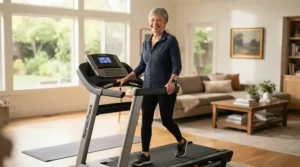
3. Redliro Walking Treadmill for Seniors — gentlest re-entry after injury
Not every injured runner needs to run on day one, and that’s exactly the gap the Redliro Walking Treadmill for Seniors fills. With a 0.3 mph slow start, front and long handrails, and a 400-pound weight capacity, it’s designed for the earliest, most cautious phase of rehab — the stage where your physical therapist is asking for short, flat, controlled walking bouts rather than anything resembling a run. The shock-absorbing multi-layer belt and a 47.6-inch running surface keep things compact enough for a spare bedroom or apartment corner.
Here’s what most buyers overlook: recovering runners often obsess over incline range and top speed when what they actually need first is stability and a speed floor slow enough to feel safe. The 0.3 mph starting speed and long handrails on this model directly address the fall-risk anxiety that keeps a lot of injured runners off any treadmill at all. Aggregated reviews, including from users well into their 80s, describe the assembly as manageable solo and the handrails as genuinely confidence-building rather than just a design afterthought. The trade-off is real, though — a 2% max incline and a belt built for walking, not running, mean you will outgrow this machine as your rehab progresses.
Pros:
- ✅ Ultra-slow 0.3 mph start ideal for first steps back
- ✅ Long handrails add real stability for cautious walking
- ✅ Simple mute and screen-off controls reduce console overwhelm
Cons:
- ❌ 2% max incline limits progression as strength returns
- ❌ 47.6-inch belt is too short for an actual running stride
Pricing on the Redliro Walking Treadmill for Seniors typically lands in the $300-$450 range at the time of research, making it one of the most affordable entry points for the earliest phase of injury recovery.
4. NordicTrack Commercial 1750 — best decline training for knee stability
The NordicTrack Commercial 1750 stands out on this list for one feature almost nothing else here offers: true decline, down to -3%. A 4.25 CHP motor, a 22-inch by 60-inch deck, and RunFlex cushioning round out a machine clearly built for runners rather than casual walkers, and the 16-inch pivoting HD touchscreen adds iFIT-powered programming if you want structured, trainer-led rehab workouts.
Based on the spec comparison, decline training deserves more attention than it gets in injury-recovery conversations. Downhill walking or light jogging works the quadriceps and knee-stabilizing muscles eccentrically — the exact type of controlled loading that many rehab protocols intentionally build toward — without the peak impact forces of flat-ground running. One reviewer with a prior ACL reconstruction reported being able to return to consistent training after switching from a standard treadmill to the Commercial 1750, which lines up with what physical therapists say about incline and decline variation reducing repetitive strain. The catch is the iFIT ecosystem: many of the auto-adjusting features and trainer-led programs require a subscription (roughly $39/month at the time of research), and the machine itself sits at a premium price point.
Pros:
- ✅ Rare true decline (to -3%) for eccentric knee-stabilizer training
- ✅ RunFlex cushioning is adjustable to your comfort level
- ✅ Powerful 4.25 CHP motor backed by a lifetime motor warranty
Cons:
- ❌ Full auto-adjust and trainer features require an iFIT subscription
- ❌ Premium price puts it out of reach for casual rehab budgets
The NordicTrack Commercial 1750 generally runs in the $1,800-$2,500 range at the time of research, with sales periodically bringing it closer to the lower end — worth timing your purchase around if you can wait.
5. Bowflex Treadmill 10 — most spacious deck, tall runners
Size matters more than people expect when you’re rehabbing a knee, and the Bowflex Treadmill 10 leans into it with a 22-inch by 60-inch deck and a 400-pound user weight capacity — among the highest capacities on this list. A -5% to 15% incline/decline range (the deepest decline here) is paired with a roughly 4.0 HP motor and a 10-inch adjustable touchscreen tied to Bowflex’s JRNY programming.
What the spec sheet won’t tell you, but reviewer feedback suggests, is that a cramped deck can quietly sabotage an injury recovery: if your natural stride crowds the belt’s edges, you unconsciously shorten or alter your gait to compensate, which can reintroduce the very compensation patterns that caused knee pain to begin with. The extra width and length here give larger or taller runners room to move naturally. Amazon reviewers (roughly 160 ratings averaging 3.8 out of 5) consistently praise the cushioned belt feel and the convenience of JRNY’s automatic incline and speed adjustments during guided classes, while common complaints center on the amount of plastic in the outer shell and the fact that full streaming access requires an active JRNY membership.
Pros:
- ✅ Deepest decline range (-5%) in this lineup for knee-stabilizer work
- ✅ 400 lb capacity and wide deck suit larger or taller runners
- ✅ 15-year frame and motor warranty is well above average
Cons:
- ❌ Full streaming and auto-adjust features require a JRNY subscription
- ❌ Some owners find the outer shell overly plastic for the price
Look for the Bowflex Treadmill 10 in the $1,700-$2,000 range at the time of research; it occasionally dips lower during seasonal promotions, so check current pricing before buying.
6. Sole ST90 — best slat belt for serious mileage
For runners cleared to log real weekly mileage but still managing lingering knee sensitivity, the Sole ST90 occupies a different category entirely. Instead of a continuous belt over a padded deck, it uses individual rotating rubber slats — the same design principle found in clinical rehab equipment — driven by a 2.0 HP AC motor across a 20-inch by 60-inch surface, with speeds up to roughly 12.5 mph and inclines to 15%.
Reviewers consistently note that slat-belt systems reduce peak tibial acceleration (a commonly cited proxy for joint stress during running) compared to standard continuous belts, and the ST90 adds a “Free Mode” that disengages the motor entirely, turning it into a self-powered manual treadmill with eight resistance levels — useful for cross-training days when you want load without top-end speed. Here’s what most buyers overlook about that dual-mode design: it effectively gives you two training tools in one footprint, letting you match the machine’s demand to exactly how your knee feels that day. The trade-offs are a louder AC motor compared to typical DC-motor home treadmills and a 15.6-inch touchscreen that feels modest given the price tag.
Pros:
- ✅ Slat-belt design measurably reduces impact vs. continuous belts
- ✅ Dual motorized and manual “Free Mode” adds low-impact variety
- ✅ No required monthly subscription, unlike some premium rivals
Cons:
- ❌ AC motor runs noticeably louder than DC-motor treadmills
- ❌ 15.6-inch screen feels small relative to the price point
The Sole ST90 typically retails in the $3,400-$3,700 range at the time of research — a genuine investment, but one that’s arguably justified for a serious runner protecting a healing knee over years of training.
7. AssaultRunner Pro — best for rebuilding running form
The AssaultRunner Pro takes a completely different approach: there’s no motor at all. You power the curved, TPU slat belt yourself, which means the belt only moves as fast as your own effort dictates — there’s no fixed speed to outrun and no motorized surge to catch you off guard. The running surface measures roughly 17 inches by 62 inches, the unit is rated to 350 pounds, and the belt itself carries a 150,000-mile warranty.
Here’s what most buyers overlook about self-powered curved treadmills: because you control the pace directly, and the curve of the deck naturally encourages a more forward, midfoot-oriented foot strike, many runners find their gait mechanics improve simply from using the machine consistently. That’s directly relevant if a gait fault — overstriding, excessive heel striking — contributed to your knee injury in the first place. Reviewers consistently describe needing real effort to accelerate the belt smoothly, especially at first, and several note the curvature doesn’t perfectly replicate outdoor terrain, but almost universally credit it with sharpening their running form over time. Because there’s no motor, there’s also no gentle passive incline-walking mode for the lowest-effort recovery days, which is worth factoring in if you’re still early in rehab.
Pros:
- ✅ Self-paced belt removes the risk of a fixed motor speed
- ✅ Curved deck encourages a more natural midfoot strike
- ✅ Exceptionally durable belt backed by a 150,000-mile warranty
Cons:
- ❌ Real learning curve to get the belt moving smoothly at an easy pace
- ❌ No motorized mode for passive, low-effort recovery walking
Pricing on the AssaultRunner Pro generally runs around $2,800 at the time of research, occasionally dipping into the mid-$2,000s — check current availability, since Assault Fitness periodically updates this lineup.
Setting Up Your Treadmill Comeback: A 30-Day Plan
Buying the right treadmill for runners with knee injuries is only half the job — how you use it in the first month determines whether it actually helps. Start with placement: put the machine on a hard, level surface (not carpet padding, which can throw off incline calibration) and leave at least two feet of clearance behind it in case you need to step off quickly. Before your first session, walk the deck at 1-2 mph for five minutes just to get a feel for the belt’s cushioning and confirm the incline motor responds smoothly.
For the first week, most rehab protocols favor short, frequent walking sessions over long single efforts — think three 15-minute walks rather than one 45-minute slog. Gradually introduce incline before you introduce speed; a 5% incline walk stresses the knee differently (and often more gently) than a flat jog at the same effort level. The most common first-30-days mistake is jumping straight back to your pre-injury pace because the cushioned deck “feels fine” — soft cushioning can mask load that your joint isn’t actually ready for yet, so let time and symptoms, not how good the deck feels, dictate your progression. Maintenance-wise, lubricate the belt per the manufacturer’s schedule (usually every 3-6 months) and keep the deck free of dust, since a dry, sticking belt forces the motor to work harder and can subtly alter your stride.
Real Runners, Real Recoveries: Three Comeback Scenarios
Picture a 34-year-old marathoner sidelined by patellofemoral pain six weeks before her goal race. Her physical therapist has cleared incline walking and short jogging intervals. For her, a machine like the NordicTrack Commercial 1750 makes sense — the decline feature lets her add eccentric strengthening work her PT recommended, and the RunFlex cushioning gives her confidence to test short jogging intervals without immediately aggravating symptoms.
Now picture a 58-year-old recreational runner three weeks post-meniscus surgery, cleared only for flat, slow walking. The Redliro Walking Treadmill for Seniors fits this stage far better than anything with a touchscreen — the 0.3 mph starting speed and long handrails address the very real fear of falling that comes with early post-op mobility. Finally, consider a 26-year-old trail runner managing recurring shin and knee soreness who wants to preserve running-specific fitness without pounding pavement daily. The AssaultRunner Pro‘s self-powered format lets him control effort precisely while the curved deck’s form-correcting tendencies address the overstriding his coach flagged as a contributing factor. Three very different injuries, three very different budgets, three genuinely different machines — which underscores why “best treadmill” only means something once you know which stage of recovery you’re actually in.
Common Knee Pain Triggers on the Treadmill (And How to Fix Them)
Problem: Pain that spikes specifically at higher inclines. This often points to increased forward lean and altered patellar tracking; try reducing incline by a few percentage points and rebuilding gradually rather than pushing through, and prioritize machines like the Sunny Health OneClick-Fold with granular incline steps.
Problem: Sharp pain during the deceleration phase of each stride. This frequently signals overstriding — landing with the foot too far ahead of the body’s center of mass. A curved, self-powered deck like the AssaultRunner Pro can help retrain this because the belt simply won’t accelerate if you’re not driving it correctly under your hips.
Problem: Stiffness that worsens only after long sessions, not short ones. This is commonly a cumulative-load issue rather than a single-stride mechanical fault, and it usually responds better to splitting one 40-minute run into two 20-minute sessions on a well-cushioned deck, such as the Sole F63, than to reducing pace alone.
Problem: Pain when returning to a normal treadmill after weeks on a walking pad. This usually reflects a genuine fitness and tissue-tolerance gap, not a setback — bridge it with a mid-cushion machine like the Bowflex Treadmill 10 rather than jumping straight back to your pre-injury treadmill routine.
Problem: Persistent ache regardless of what you change. At this point, the fix isn’t equipment — it’s a professional gait or biomechanical evaluation, since no treadmill can fully compensate for an unaddressed structural or strength imbalance.
How to Choose a Treadmill for Runners With Knee Injuries
- Confirm your rehab stage first. A machine built for confident 10-mile weeks, like the Sole ST90, is the wrong tool three weeks post-surgery; match the machine to where you are today, not where you hope to be.
- Prioritize deck cushioning quality over screen size. Variable-density decks like the Sole F63‘s Cushion Flex Whisper Deck do more for a healing knee than any touchscreen ever will.
- Check the incline (and ideally decline) range. Gradual incline strengthens stabilizing muscles without added impact, while decline uniquely trains eccentric control most flat-only treadmills can’t offer. A clinical overview published through the National Library of Medicine notes that strengthening the thigh and hip muscles is a core recommended approach for relieving anterior knee pain — exactly the kind of targeted work incline and decline training support.
- Measure your actual stride against the deck size. A 60-inch-long, 20-to-22-inch-wide deck fits most runners; taller or larger runners should lean toward the wider end of that range to avoid gait compensation.
- Weigh motorized vs. self-powered designs honestly. Self-powered machines like the AssaultRunner Pro offer built-in pacing safety but demand more coordination, which may not suit the earliest rehab stages.
- Factor in total cost, not sticker price. Subscription-gated features (iFIT, JRNY) add real recurring cost over a few years — read the warranty and subscription fine print before comparing prices.
- Don’t skip the return policy. Even great specs can feel wrong on an injured joint in practice, so buying from a retailer with a reasonable in-home trial window protects you either way.
Common Mistakes When Buying a Treadmill for Injured Runners
The single most common mistake is buying based on top speed. An injured runner rarely needs a 12.5 mph ceiling in month one — they need granular control at 2-5 mph, which not every “fast” treadmill actually delivers well. A second mistake is ignoring incline granularity: a treadmill with only three or four incline presets makes the kind of gradual progression physical therapists recommend nearly impossible, whereas 15-level machines like the Sunny Health OneClick-Fold let you nudge intensity up in small, controlled steps.
Buyers also frequently underestimate how much a subscription ecosystem changes the real cost of ownership; a $1,700 treadmill that requires a $39/month membership to unlock its most useful auto-adjusting features effectively costs hundreds more per year than the price tag suggests. Finally, many injured runners buy the loudest, most feature-dense machine they can afford and then avoid using it because it feels intimidating mid-recovery — sometimes the quieter, simpler console on something like the Sole F63 is genuinely the better psychological fit for someone easing back into training.
Treadmill Running vs. Outdoor Running With a Knee Injury
| Factor | Treadmill Running | Outdoor Running |
|---|---|---|
| Impact control | Adjustable cushioning, consistent surface | Variable, often harder concrete/asphalt |
| Gait consistency | Belt speed forces cadence control | Terrain naturally varies stride |
| Weather dependence | None — train year-round | Fully weather-dependent |
| Incline/decline precision | Precise, repeatable percentages | Depends entirely on local terrain |
| Best For | Sole F63, NordicTrack Commercial 1750 for controlled rehab loading | Runners fully cleared with no active symptoms |
The treadmill’s biggest advantage for an injured runner isn’t comfort — it’s control. You can hold pace and incline to the exact percentage your physical therapist recommended, something no outdoor route can guarantee mile to mile. That said, outdoor running does force natural, varied muscle recruitment that a flat belt can’t replicate, so most sports medicine guidance treats the treadmill as a rehab and transition tool rather than a permanent replacement once you’re fully healed. If your knee pain is triggered specifically by camber (the slight slope of roads and sidewalks), a treadmill’s flat, consistent surface may resolve the issue almost immediately.
What to Expect: Real-World Performance During Injury Recovery
On paper, this looks like a simple march from walking to jogging to running. In practice, recovery rarely moves in a straight line, and the machines on this list reflect that reality. Expect early sessions on a cushioned deck to feel noticeably softer underfoot than pavement — some runners even describe it as slightly disorienting for the first few workouts, since the sensory feedback through the foot changes. Expect incline work to burn differently than flat jogging; many runners report feeling it in the glutes and hips first, which is often exactly the muscle activation pattern rehab protocols are trying to restore.
Expect occasional flare-ups even on a “good” treadmill — cushioning reduces impact, it doesn’t eliminate load, and a healing joint can still protest an ambitious jump in volume. Expect noise and vibration differences between motor types: AC motors like the Sole ST90‘s run a bit louder than DC motors, which matters if you’re training early or late in a shared household. And expect your relationship with pace to change — many injured runners find that treadmill running, with its enforced steady cadence, actually teaches better pacing discipline than they had before the injury, a genuine silver lining buried inside an otherwise frustrating recovery.
Long-Term Cost & Maintenance for a Knee-Friendly Treadmill
| Price Tier | Example Model | Upfront Cost | 3-Year Ownership Consideration |
|---|---|---|---|
| Budget | Redliro Walking Treadmill for Seniors | $300-$450 range | Minimal maintenance; limited upgrade headroom |
| Mid-range | Sole F63 | $1,200-$1,400 range | Lifetime motor/frame warranty offsets belt/deck upkeep |
| Premium | Sole ST90 | $3,400-$3,700 range | No subscription fees; AC motor may need occasional servicing |
The sticker price is only the starting point for total cost of ownership. Subscription-based ecosystems like iFIT on the NordicTrack Commercial 1750 or JRNY on the Bowflex Treadmill 10 typically run in the $20-$40 monthly range, which can add well over $1,000 across three years if you keep the membership active the whole time. By contrast, machines like the Sole F63 and Sole ST90 are built around no-subscription app access, so their higher upfront cost partially evens out over a multi-year ownership window. Belt lubrication, deck realignment, and occasional motor servicing are recurring costs across every tier — budgeting $50-$100 a year for basic upkeep is realistic regardless of which machine you choose.
✨ Ready to stop guessing and start rebuilding your mileage the smart way? Take a closer look at today’s pricing on the models above before your recovery window closes. 🏃♂️💙
Running Gait Analysis, Sports Medicine & Injury Rehabilitation Guide
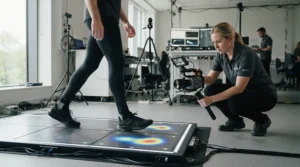
Runner’s knee — clinically known as patellofemoral pain syndrome — is a condition marked by pain in the front of the knee that typically comes on gradually and is linked to risk factors like increased training load and weak quadriceps muscles. It’s also strikingly common, affecting a large share of young, active adults and occurring roughly two and a half times more often in women than men. That prevalence is exactly why running gait analysis matters so much before you commit to a rehab plan or a specific machine — a professional assessment can flag overstriding, hip drop, or excessive pronation, any of which a treadmill alone can’t fully correct.
Sports medicine guidance generally treats structured, progressive loading as the backbone of injury rehabilitation, and treadmills fit neatly into that model because they let you standardize variables a road or trail never will. For runners recovering from more significant procedures, some rehabilitation programs progress to reduced-impact tools, since repeated stress from running or jumping is a well-recognized risk factor worth managing deliberately as you return to volume; Boston Children’s Hospital’s overview of patellofemoral pain is a useful primer if you want to understand the underlying mechanics in more depth.
None of this replaces an actual evaluation from a physical therapist or sports medicine physician — and if your pain is sharp, swelling-associated, or worsening rather than improving, that visit should happen before any new treadmill does. But armed with the right diagnosis, the machines on this list give you genuine tools to execute a smarter comeback than pavement alone ever could.
Treadmill Features for Injured Runners: Beginners vs. Marathoners vs. Post-Surgery
A treadmill for injured runners looks different depending on who’s standing on it. Beginners returning to exercise after a first-time knee strain generally do best on simpler, incline-capable machines — the Sunny Health OneClick-Fold‘s straightforward console and generous incline steps remove complexity while still offering real rehab value. Marathoners and higher-mileage runners managing a nagging issue mid-training-cycle typically need more from a running treadmill with knee support — enough motor power and deck length to hold marathon pace without the machine feeling like the limiting factor, which points toward the NordicTrack Commercial 1750 or Sole ST90.
Post-surgical runners occupy their own category entirely. In the earliest weeks, stability and an extremely low speed floor outweigh every other spec, making the Redliro Walking Treadmill for Seniors far more appropriate than anything marketed toward “serious runners,” regardless of how tempting a feature-packed machine looks. As post-surgical clearance progresses toward jogging, a mid-tier cushioned deck like the Sole F63 typically becomes the next logical step before returning to full-intensity training equipment. Matching the machine to the person — not the other way around — is the single biggest lever you have over how smoothly this comeback goes.
Frequently Asked Questions
❓ What is the best treadmill for someone with a knee injury who still wants to run?
❓ Can I run on a treadmill with a torn meniscus or ACL injury?
❓ Is treadmill running easier on the knees than running outside?
❓ How much does a knee-friendly treadmill cost?
❓ Do treadmills with incline help injured runners more than flat treadmills?
Conclusion
Choosing a treadmill for runners with knee injuries isn’t really about finding the “best” machine in the abstract — it’s about honestly matching a machine to the stage of recovery you’re actually in today. The Redliro Walking Treadmill for Seniors and Sunny Health OneClick-Fold meet you where early, cautious rehab actually lives, while the Sole F63 and Bowflex Treadmill 10 bridge you toward regular training volume once you’ve earned back some confidence. For runners chasing serious mileage again, the NordicTrack Commercial 1750‘s decline training, the Sole ST90‘s slat-belt cushioning, and the AssaultRunner Pro‘s form-correcting curved deck each solve a slightly different piece of the puzzle.
What ties all seven together is that none of them promise a shortcut — they simply give you more control over the variables that matter (impact, incline, pace, and stability) than pavement or a generic treadmill ever could. Pair the right machine with real sports medicine guidance, a documented gait analysis if your pain persists, and the patience to progress gradually, and the comeback you’re picturing is genuinely realistic.
Recommended for You
- Cushioned Deck Treadmill for Knee Pain: 7 Proven Picks (2026)
- Low Impact Treadmill for Knee Pain: 7 Gentle Picks (2026)
- 7 Best Treadmills for Bad Knees Under $700 in 2026
Disclaimer: This article contains affiliate links. As an Amazon Associate, I earn from qualifying purchases. If you purchase products through these links, we may earn a small commission at no additional cost to you.
✨ Found this helpful? Share it with your friends! 💬🤗
