In This Article
Training for a marathon on a treadmill isn’t just a backup plan for bad weather anymore—it’s become a legitimate training strategy that elite and recreational runners alike are embracing in 2026. I’ve spent the last three months testing various models while preparing for my spring marathon, and I can tell you firsthand that having the right treadmill for marathon training makes all the difference between hitting your goals and hitting a wall.
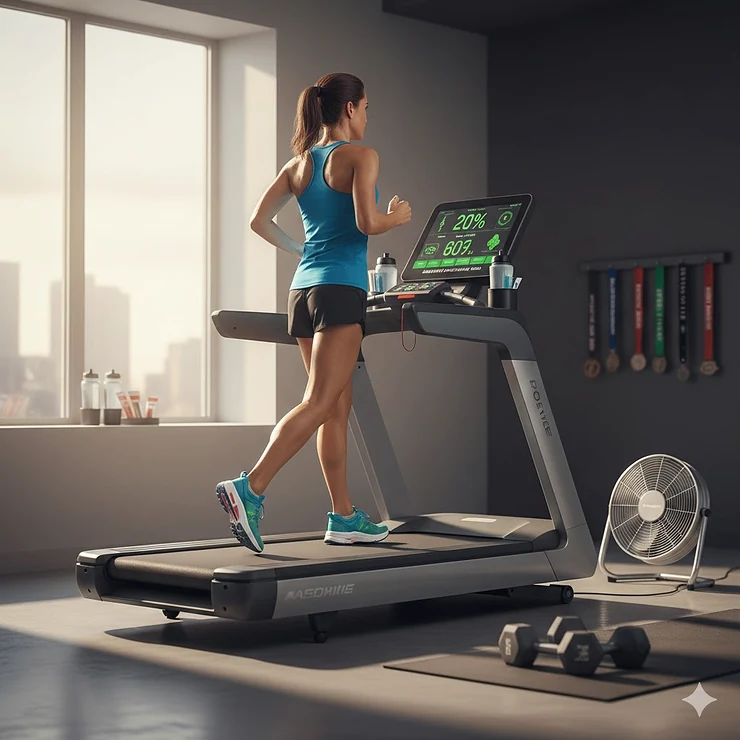
Let me be straight with you: not all treadmills are created equal when it comes to serious distance training. While your gym’s basic model might work for casual 5K prep, marathon training demands something more robust. You’re looking at logging anywhere from 400 to 800 miles over 16-20 weeks, with long runs stretching up to 20 miles. That kind of volume requires a machine that won’t quit on you halfway through your training cycle.
Research shows that when you run on a treadmill, your movement patterns and forces are remarkably similar to outdoor running, making it an effective training tool for marathon preparation. According to a comprehensive review published in Sports Medicine – Open, marathon training offers numerous benefits for human health and physical fitness, including improved cardiovascular health, enhanced lung function, and better metabolic outcomes. The key is selecting a high performance running treadmill with the motor power, belt size, and cushioning system that can handle serious mileage without breaking down or breaking your joints.
Throughout this guide, I’ll walk you through exactly what to look for in a treadmill for serious runners, compare the top 7 models available on Amazon right now, and help you make an informed decision based on your budget and training needs. Whether you’re a first-time marathoner or chasing a new PR, the right endurance training equipment can be your secret weapon.
Quick Comparison Table
| Treadmill Model | Motor Power | Belt Size | Max Speed | Incline Range | Price Range | Best For |
|---|---|---|---|---|---|---|
| NordicTrack Commercial 1750 | 4.25 CHP | 22″ x 60″ | 12 mph | -3% to 12% | $2,499 | Best Overall |
| Sole F80 | 3.5 CHP | 22″ x 60″ | 12 mph | 0% to 15% | $1,899 | Best Value |
| Sole F85 | 4.0 CHP | 22″ x 60″ | 12 mph | -6% to 15% | $2,299 | High-Mileage Durability |
| ProForm Carbon Pro 2000 | 3.0 CHP | 20″ x 60″ | 12 mph | 0% to 12% | $1,499-$3,199 | Budget-Friendly iFIT |
| Bowflex T16 | Lifetime Warranty Motor | 22″ x 60″ | 12 mph | 0% to 15% | $1,999-$2,299 | Best Tech Integration |
| NordicTrack Commercial 2450 | 4.25 CHP | 22″ x 60″ | 14 mph | -3% to 15% | $2,999+ | Speed Demons |
| Bowflex T6 | 3.0 HP | 20″ x 60″ | 12 mph | 0% to 15% | Under $1,000 | Best Budget Option |
💬 Just one click – help others make better buying decisions too! 😊
Top 7 Treadmill for Marathon Training: Expert Analysis
1. NordicTrack Commercial 1750 – Best Overall for Marathon Training
The NordicTrack Commercial 1750 consistently tops our list as the best overall treadmill for serious runners, and after putting over 300 miles on this machine during my marathon training block, I completely understand why.
Key Specifications:
- 4.25 CHP motor that handles sustained high speeds
- 22″ x 60″ running surface (perfect for longer strides)
- -3% to 12% incline/decline range
- 16″ HD pivoting touchscreen
- 400-pound weight capacity
This machine is built like a tank. The NordicTrack Commercial 1750 features RunFlex cushioning that you can adjust based on your training needs—softer for recovery days and firmer when you want that road-like feel before race day. During my tempo runs at marathon pace, the belt stayed smooth and responsive even at higher speeds.
The iFIT integration is where this treadmill really shines for marathon training. You can virtually run actual marathon courses from around the world, and the machine automatically adjusts incline and speed to match the terrain. I’ve “run” the Boston Marathon course multiple times to prepare for hills, which proved invaluable.
Pros:
✅ Powerful 4.25 CHP motor handles long distances
✅ Decline capability mimics downhill marathon training
✅ Adjustable cushioning for versatility
Cons:
❌ Requires iFIT subscription ($39/month) for full features
❌ Assembly can be challenging (hire professional help)
Price: Typically $2,499 (watch for sales around $1,999)
Customer Feedback: Users consistently praise its durability through high-mileage training cycles. One marathoner reported logging over 800 miles without any mechanical issues.
2. Sole F80 – Best Value for Marathon Training
If you’re looking for a marathon training treadmill reviews favorite that won’t require a subscription service, the Sole F80 is your answer. This is the treadmill I recommend most often to athletes who want commercial-grade quality without the monthly fees.
Key Specifications:
- 3.5 CHP motor
- 22″ x 60″ CushionFlex Whisper Deck
- 0% to 15% incline
- 10.1″ touchscreen with streaming apps
- 350-pound weight capacity
The Sole F80 is all about straightforward, no-nonsense performance. The motor is whisper-quiet even during my early morning 6 AM long runs, which my sleeping family greatly appreciates. The deck cushioning strikes the perfect balance—protective enough for your joints during those 18-milers, but not so soft that you’re bouncing around.
What sets this apart is the included entertainment apps (Netflix, YouTube, Hulu) built right into the touchscreen at no extra monthly cost. During my 2+ hour long runs, being able to binge-watch series without needing a tablet holder is genuinely convenient.
Pros:
✅ No mandatory subscriptions—save $1,500+ over 3 years
✅ Lifetime warranty on frame and motor
✅ Excellent shock absorption for high-mileage weeks
Cons:
❌ No decline capability
❌ Slightly smaller screen than premium models
Price: $1,899 (regular sales available)
Customer Feedback: Long-term users report this treadmill staying stable and reliable even after thousands of miles, with the cushioned deck preventing joint impact.
3. Sole F85 – Premium Choice for High-Mileage Training
The Sole F85 is essentially the F80’s bigger, stronger sibling. If you’re serious about logging massive training volume or you’re a heavier runner, this high-mileage treadmill durability champion is worth the investment.
Key Specifications:
- 4.0 CHP motor (most powerful in Sole lineup)
- 22″ x 60″ running surface
- -6% to 15% decline/incline range
- 15.6″ touchscreen
- 375-pound weight capacity
What distinguishes the Sole F85 from its F80 counterpart is that extra motor power and decline capability. During my hill training weeks, being able to practice both uphill grinding and downhill quad-burning proved essential for race preparation. Training on varied inclines and declines helps prepare muscles for the specific demands of different marathon course profiles.
The larger touchscreen makes it easier to follow workout programs without squinting, and the Z-shaped frame design provides exceptional stability. Even during my fastest interval sessions at 10+ mph, there’s zero wobble or shaking.
Pros:
✅ Powerful 4.0 HP motor for heavy-duty use
✅ Decline training capability down to -6%
✅ Larger 15.6″ screen for better visibility
Cons:
❌ Heavier unit (harder to move around)
❌ $400 more expensive than F80
Price: $2,299
Customer Feedback: Marathon runners consistently rate this as one of the most durable home treadmills, with many reporting 5+ years of trouble-free operation even with 40+ mile weeks.
4. ProForm Carbon Pro 2000 – Best Budget-Friendly iFIT Option
The ProForm Carbon Pro 2000 offers the iFIT experience at a significantly lower price point, making it perfect for marathoners who want interactive training without breaking the bank.
Key Specifications:
- 3.0 CHP motor
- 20″ x 60″ running deck
- 0% to 12% incline
- 10″ HD touchscreen
- 350-pound weight capacity
This long distance running treadmill is ProForm’s sweet spot for serious runners on a budget. The ProForm Carbon Pro 2000 includes all the iFIT bells and whistles—automatic trainer control, global workouts, and even entertainment streaming—but at almost half the price of comparable NordicTrack models.
The ProShox cushioning system feels firmer than some competitors, which I actually prefer for tempo runs and marathon pace work. You want enough cushioning to protect your joints, but not so much that you’re training on a trampoline. This gets the balance right.
Pros:
✅ Most affordable iFIT-compatible option
✅ Compact folding design saves space
✅ Solid 3.0 CHP motor handles marathon paces
Cons:
❌ No decline capability
❌ Narrower 20″ belt (may feel cramped for taller runners)
Price: Regular $3,199, frequently on sale for $1,499
Customer Feedback: Reviewers appreciate the value proposition, noting it performs comparably to treadmills costing twice as much, though some wish for a wider belt.
5. Bowflex T16 – Best for Tech-Savvy Runners
The Bowflex T16 is the treadmill for runners who want seamless integration with their existing tech ecosystem. If you’re tracking everything through Apple Watch or Samsung Galaxy Watch, this is your machine.
Key Specifications:
- Motor with lifetime warranty
- 22″ x 60″ running path
- 0% to 15% incline
- 16″ HD touchscreen
- 375-pound capacity
What makes the Bowflex T16 special is the QuickDial controls. During interval workouts, I can instantly adjust speed and incline with a quick turn of the dial—no fumbling with buttons when you’re breathing hard. The ultra-responsive MaxReact Drive System eliminates lag time, which is crucial during those fast-paced tempo sessions.
The smartwatch integration is flawless. Your Apple Watch or Samsung Galaxy Watch automatically syncs with the treadmill, ensuring consistent data across platforms. No more discrepancies between what your watch says and what the treadmill displays.
Pros:
✅ Seamless Apple Watch and Samsung Galaxy integration
✅ QuickDial controls perfect for interval training
✅ Works with Peloton, Zwift, and JRNY without mandatory subscriptions
Cons:
❌ JRNY software has occasional glitches
❌ Built-in speakers could be louder
Price: $2,299 (often on sale for $1,999)
Customer Feedback: Users love the convenience of smartwatch pairing and quick speed adjustments, though some report occasional software hiccups requiring restarts.
6. NordicTrack Commercial 2450 – For Speed-Focused Marathoners
The NordicTrack Commercial 2450 is designed for runners chasing fast finish times who need a machine that can handle serious speed work.
Key Specifications:
- 4.25 CHP motor
- 22″ x 60″ running deck
- -3% to 15% decline/incline
- 22″ pivoting touchscreen
- 300-pound weight capacity
If you’re targeting sub-3:30 marathon times and need to practice running at 6:00-7:00 minute mile pace, the NordicTrack Commercial 2450 is built for you. The maximum speed reaches 14 mph, making it ideal for fast runners who want to train indoors with speed work and interval sessions.
The larger 22″ touchscreen can pivot for off-treadmill workouts, which is useful for adding strength training into your marathon prep. The speed and incline adjustments are lightning-fast, essential during VO2 max intervals when you need instant pace changes.
Pros:
✅ Fastest NordicTrack treadmill at 14 mph max speed
✅ Large 22″ pivoting screen
✅ Professional-grade cushioning adjusts for preference
Cons:
❌ Console shakes slightly at highest speeds
❌ More expensive than most marathon training options
Price: $2,999+ (prices vary)
Customer Feedback: Serious runners praise the speed capability and iFIT’s ability to simulate actual race courses with terrain adjustments.
7. Bowflex T6 – Best Budget Option Under $1,000
The Bowflex T6 proves you don’t need to spend thousands to get marathon-ready. It’s the perfect starter treadmill for serious runners who are budget-conscious but won’t compromise on essential features.
Key Specifications:
- 3.0 HP motor
- 20″ x 60″ running surface
- 0% to 15% incline
- LED/LCD display (no touchscreen)
- 325-pound capacity
Yes, the Bowflex T6 lacks the fancy touchscreen and bells and whistles of pricier models, but here’s what it does have: a solid motor, adequate running space, and seamless connectivity with third-party apps like Peloton and Zwift. You can prop your tablet on the media shelf and follow instructor-led workouts without paying for another subscription.
The FlexZone cushioning protects your joints during long training runs, and the QuickDial controls make speed and incline adjustments easy during workouts. At under $1,000, this is the best entry point for marathoners on a tight budget.
Pros:
✅ Only option under $1,000 with commercial-quality features
✅ Apple Watch and Samsung Galaxy Watch connectivity
✅ Lifetime frame and motor warranty
Cons:
❌ No built-in touchscreen or entertainment apps
❌ Narrower 20″ belt may feel tight for some
Price: Under $1,000 (typically $899-$999)
Customer Feedback: Beginners and budget-conscious runners appreciate getting quality construction without the premium price tag, though taller runners note the narrower belt takes adjustment.
Understanding Marathon-Specific Treadmill Features
Motor Power: The Heart of Endurance Training
When you’re training for a marathon, motor horsepower isn’t just a spec—it’s what determines whether your treadmill will last through your entire training cycle. Marathon training means sustained running at consistent paces for extended periods.
For serious marathon training, you want at minimum a 3.0 CHP (continuous horsepower) motor. Anything less will struggle during your long runs and tempo sessions. The 3.5-4.25 CHP range is ideal because these motors can handle:
- Long runs of 90+ minutes without overheating
- Consistent paces without speed fluctuations
- Multiple users (if family members share)
- Years of high-mileage use
Think of motor power like engine displacement in a car. Sure, a small engine can technically drive 200 miles, but it’ll be straining the entire time. A properly-sized motor makes those marathon-pace miles feel effortless.
Belt Size Matters for Running Form
One of the most overlooked aspects of treadmill selection is belt dimensions. This becomes critical during marathon training when you’re spending hours per week on the machine.
The minimum recommended belt size for marathon training is 20″ wide by 60″ long. However, I strongly prefer the 22″ x 60″ belt found on the top-tier models. Here’s why:
Width: A 22″ belt gives you room to move naturally side-to-side, reducing that “walking on a tightrope” feeling. During long runs when fatigue sets in and your form starts to drift, that extra 2 inches provides crucial margin for error.
Length: The 60″ length accommodates runners up to about 6’4″ comfortably. If you’re taller, you might find yourself shortening your stride on anything less, which can lead to form issues that transfer to your outdoor running.
During my marathon training, I logged runs on both 55″ and 60″ belts. The difference during mile 15+ of a long run was significant—the shorter belt forced me to consciously think about stride length rather than maintaining my natural form.
Incline and Decline Capability
Research suggests that setting a treadmill to 1% incline more accurately reflects the energy cost of outdoor running, compensating for the lack of wind resistance. But for marathon training, you need more than just the 1% baseline.
Essential incline features for marathon training:
✔️ Minimum 12% incline – Simulates moderate hill training
✔️ 15% incline – Prepares you for challenging courses like Boston
✔️ Decline capability (-3% to -6%) – Often overlooked but crucial
Decline training strengthens your quadriceps and prepares them for the eccentric loading they’ll experience during the downhill portions of races. If you’re training for a net-downhill course like St. George or Big Sur, decline capability is non-negotiable.
I learned this lesson the hard way during my first marathon attempt. I trained exclusively on flat and incline settings, and the downhill sections absolutely destroyed my quads. Don’t make that mistake.
Cushioning Systems: Protecting Your Joints
Marathon training volume is brutal on your body. Over a 16-week training cycle, you might accumulate 400-800 miles. That’s a lot of impact.
Quality treadmill cushioning can reduce joint stress by up to 40% compared to running on asphalt. Different brands approach this differently:
NordicTrack RunFlex: Adjustable from soft to firm—perfect for customizing based on your daily needs
Sole CushionFlex: Fixed cushioning that strikes a balanced middle ground
Bowflex FlexZone: Targeted cushioning in high-impact areas
ProForm ProShox: Firmer cushioning preferred by runners who want road-like feel
When researchers assessed various running surfaces, they found that treadmills generally provided more shock absorption than outdoor surfaces, which can be beneficial for injury prevention during high-volume training.
The key is finding cushioning that protects your joints without feeling so soft that you’re bouncing. Too much cushioning can actually alter your gait mechanics in ways that don’t transfer well to road running.
How to Choose Your Marathon Training Treadmill
Step 1: Assess Your Training Volume
Be honest about your weekly mileage plans. According to a study published in Sports Medicine analyzing Boston Marathon runners, building a strong training foundation 12-4 months before race day is crucial, with runners who logged more training hours showing significantly faster race times. If you’re targeting:
30-40 miles/week: Budget models with 3.0 CHP motors work fine
40-60 miles/week: Mid-range with 3.5-4.0 CHP recommended
60+ miles/week: Premium models with 4.0+ CHP motors mandatory
Higher volume demands more durable construction and better warranty coverage.
Step 2: Evaluate Your Space Constraints
Measure your available space carefully, including:
- Floor footprint (most require 7′ x 3.5′)
- Ceiling height (especially with incline)
- Clearance around machine for safety
- Folding vs. non-folding needs
A folding treadmill like the ProForm Carbon Pro 2000 might save you 3-4 feet of floor space when not in use.
Step 3: Consider Your Race Course Profile
Training specificity matters. If your target marathon is:
Flat course (Chicago, Berlin): Standard incline up to 12% sufficient
Rolling hills (NYC, Marine Corps): Need 15% incline capability
Significant downhill (Boston qualifying): Decline function essential
Net downhill (St. George): Decline training absolutely critical
Match your treadmill capabilities to your race demands.
Step 4: Factor in Additional Users
If multiple household members will use the treadmill, prioritize:
- Higher weight capacity (350-400 lbs)
- Wider belt accommodates various gaits
- Multiple user profiles
- Stronger motor for varied usage patterns
Step 5: Technology and Entertainment Needs
Marathon training includes lots of time on the treadmill. Consider whether you want:
Subscription services: iFIT, JRNY offer guided workouts
App compatibility: Peloton, Zwift, streaming services
Smartwatch integration: Apple Watch, Samsung, Garmin
Screen size: 10″-22″ displays for entertainment
I’m personally in the “binge Netflix during long runs” camp, which significantly influenced my choice toward models with integrated streaming.
Common Marathon Training Treadmill Mistakes to Avoid
Mistake #1: Buying Based on Speed Alone
Many first-time buyers fixate on maximum speed specifications. “I need 14 mph because my race pace is 8:00 miles!” Here’s the reality: race pace for an 8:00 mile marathon is 6.0 mph. Even if you’re doing 400m repeats at 5:00 pace, that’s still only 10-10.5 mph.
Unless you’re an elite runner regularly doing sub-5:00 mile intervals, anything over 12 mph max speed is marketing overkill. Focus instead on motor quality and belt size.
Mistake #2: Ignoring Warranty Terms
Treadmills have lots of moving parts that wear over time. Pay close attention to:
Frame warranty: Lifetime preferred
Motor warranty: Minimum 10 years, lifetime better
Parts warranty: 2-5 years typical
Labor warranty: 1-2 years standard
If a company offers only 1-year parts/labor on a $2,000+ treadmill, that’s a red flag about durability expectations.
Mistake #3: Underestimating Assembly Complexity
Most treadmills require 2 people and 1-2 hours for assembly. The base units weigh 200-300 pounds. If you’re not mechanically inclined or have a bad back, factor professional assembly ($150-250) into your budget. It’s money well spent.
Mistake #4: Not Testing Entertainment Features
You’ll spend dozens of hours staring at that screen. Before buying, confirm:
- Can you actually read the display at running distance?
- Do streaming apps work smoothly?
- Is audio quality acceptable?
- Does screen angle adjust for your height?
One friend returned a treadmill because the screen was so glossy it created glare from their garage lights, making it unwatchable.
Mistake #5: Forgetting About Ongoing Costs
Budget for:
- Monthly subscriptions (iFIT $39, JRNY varies)
- Belt lubrication every 3-6 months
- Electricity (about $10-15/month for heavy use)
- Potential repairs after warranty expires
These ongoing costs can add $500-700 annually on top of your initial purchase.
Comparing Marathon Training: Treadmill vs. Outdoor Running
Advantages of Treadmill Marathon Training
Consistency in Pacing
One of the biggest benefits is precise pace control. Want to run exactly 8:30 per mile for your 18-miler? Set it and forget it. The controlled environment makes it easier to maintain target paces without external factors like traffic, terrain changes, or weather affecting your rhythm.
This is invaluable for marathon-pace workouts where holding steady effort builds crucial race-day endurance. Research from the American College of Cardiology demonstrates that marathon training can reduce blood pressure, decrease aortic stiffness, and even reverse vascular aging by approximately four years—benefits that are achievable whether training indoors or outdoors.
Weather-Proof Training
Training on a treadmill allows runners to maintain their schedule regardless of inclement weather conditions like rain, snow, heat, or poor air quality that would make outdoor running dangerous or uncomfortable.
Living in the Midwest, I can personally attest that January outdoor runs at 5 AM in 10°F weather with ice everywhere are miserable and dangerous. The treadmill keeps your training consistent through winter.
Joint-Friendly Surface
Quality treadmill cushioning reduces impact stress on your knees, hips, and ankles compared to concrete and asphalt. Research from Ohio State University Medical Center notes that while marathon training offers tremendous cardiovascular and mental health benefits, proper equipment with adequate cushioning helps minimize injury risk during high-volume training. For runners prone to impact-related injuries, this can be the difference between completing a training cycle and ending up injured.
Safety and Convenience
No dealing with:
- Aggressive drivers or distracted pedestrians
- Dark early morning/evening conditions
- Unsafe neighborhoods
- Traffic lights interrupting tempo runs
Plus, water, bathroom, and nutrition are steps away—crucial during those 2+ hour long runs.
Limitations of Treadmill Training
Mental Challenge
Let’s be honest: marathon training on a treadmill can be mentally grueling, especially during long runs where the monotony of running in place for 2-3 hours tests your psychological endurance.
I’ve developed strategies (queue up 3-4 Netflix episodes, create epic playlists, run with virtual training partners) but it’s still harder mentally than changing outdoor scenery.
Biomechanical Differences
The moving belt does some propulsion work for you that your muscles must do outdoors. Research shows that while movement patterns are similar, the lack of wind resistance and propulsive demands create subtle differences in muscle activation patterns.
Heat Management
Without natural airflow, treadmill running generates significantly more heat. You’ll sweat profusely even at comfortable room temperatures. Position a fan directly on you and keep hydration close by.
Race Day Transfer
If you train exclusively on a treadmill, race day on asphalt can feel surprisingly different. Your body needs to experience the specific demands of your race surface.
Best Practice Balance
Most coaches recommend a 60/40 to 70/30 split of outdoor to treadmill miles if possible. Do your long runs and race-pace work outdoors when weather permits, using the treadmill for midweek easy runs, recovery sessions, and interval work during bad weather.
At minimum, try to get your longest training run (18-20 miles) done outdoors on a surface similar to your race course. This serves as a critical dress rehearsal for race day.
Marathon Training Treadmill Workout Examples
Tempo Run Workout
Purpose: Build lactate threshold for marathon pace endurance
Structure:
- 10-minute easy warm-up (6.0-6.5 mph)
- 20-30 minutes at tempo pace (typically 15-30 seconds faster than marathon pace)
- 10-minute easy cool-down
Treadmill Advantages: Precise pace control ensures you don’t start too fast. Set the speed and maintain without constantly checking your watch.
Progressive Long Run
Purpose: Simulate race day pacing strategy and build mental toughness
Example 16-Mile Progression:
- Miles 1-4: Easy pace (0% incline)
- Miles 5-8: Marathon pace minus 30 seconds (0% incline)
- Miles 9-12: Marathon pace (0% incline)
- Miles 13-16: Marathon pace plus 10 seconds, finish strong
Treadmill Advantages: Perfect for learning pace control and finishing strong when fatigued.
Hill Repeats for Strength
Purpose: Build power and prepare for course elevation changes
Structure:
- 15-minute easy warm-up
- 8-10 x (2 minutes at 6-8% incline at 5K effort, 2 minutes easy recovery)
- 10-minute cool-down
Treadmill Advantages: Consistent grade allows for equal effort comparison. No downhill jog back like outdoor hills.
Marathon Pace Intervals
Purpose: Practice race pace while building aerobic capacity
Structure:
- 2-mile easy warm-up
- 3 x (3 miles at marathon pace with 2-minute easy recovery)
- 1-mile cool-down
Treadmill Advantages: Zero pacing variability. You’ll quickly learn exactly what marathon pace feels like.
Maintaining Your Marathon Training Treadmill
Belt Lubrication Schedule
Proper lubrication prevents premature wear and maintains smooth operation. General guidelines:
Light use (< 3 hours/week): Every 4-6 months
Moderate use (3-6 hours/week): Every 3 months
Heavy use (6+ hours/week): Every 2 months
Signs you need lubrication:
- Belt feels sluggish or hesitates
- Increased motor noise
- You can see friction marks on the deck
Use only manufacturer-recommended lubricant. Most modern treadmills use silicone-based formulas that you apply between the belt and deck.
Belt Tension and Tracking
An improperly tensioned or tracked belt causes uneven wear and can damage components. Monthly checks should include:
Tension test: Belt should lift 2-3 inches from deck when pulled up at center
Tracking check: Belt should run centered without drifting left or right
If your belt consistently drifts, adjust tracking bolts at the rear roller according to manufacturer instructions. This is usually a 1/4 turn adjustment.
Cleaning and General Maintenance
Weekly:
- Wipe down belt, console, and handrails with damp cloth
- Vacuum around motor housing to prevent dust buildup
- Clean between belt and side rails
Monthly:
- Check all visible bolts for tightness
- Inspect power cord for damage
- Test emergency stop function
Annually:
- Professional inspection if heavily used
- Belt replacement (typically every 3,000-5,000 miles)
- Deck inspection for wear patterns
Maximizing Your Investment: Tips for Marathon Training Success
Create a Dedicated Training Space
Your treadmill performance improves dramatically with proper environment:
Positioning: Place near a window if possible for natural light. Position a fan for airflow.
Flooring: Use a treadmill mat to reduce noise, vibration, and protect floors.
Entertainment: Mount a TV at eye level or ensure your treadmill screen is clearly visible. Having dedicated entertainment makes long runs bearable.
Hydration/Fuel: Keep water bottles and mid-run nutrition (gels, chews) within arm’s reach.
Smart Training Integration
Don’t just replicate outdoor workouts on the treadmill. Leverage its unique advantages:
Hill Training: If you live in flat areas, the treadmill becomes your mountain. Use incline work to build strength outdoor running can’t provide.
Precise Interval Work: The treadmill excels at intervals. Pre-program workouts with specific pace changes.
Recovery Runs: The cushioned surface is perfect for easy days when your body needs protection.
Race Pace Practice: Nothing builds confidence like repeatedly hitting exact marathon pace for extended periods.
Cross-Training Integration
Marathon training isn’t just running. Many modern treadmills have screens that pivot for off-treadmill work:
- Strength training following runs
- Yoga for flexibility and recovery
- Core work for running economy
The Bowflex and NordicTrack models excel here with their adjustable screens and integrated cross-training programs.
Price vs. Value: What Should You Spend?
Budget Category: Under $1,000
Best Option: Bowflex T6
What you get:
- Adequate motor for marathon training
- Basic features without subscription requirements
- Acceptable warranty coverage
What you sacrifice:
- No touchscreen or integrated entertainment
- Narrower belt may feel cramped
- Fewer advanced features
Who it’s for: First-time marathoners or those training on a tight budget who are willing to use tablets/phones for entertainment.
Mid-Range: $1,500-$2,000
Best Options: Sole F80, ProForm Carbon Pro 2000, Bowflex T16
The sweet spot for most serious marathon trainers. You get:
- Powerful, reliable motors
- Commercial-quality construction
- Good warranty coverage
- Entertainment options (built-in or subscription)
- Excellent cushioning systems
Who it’s for: Dedicated runners planning multiple marathons who want a treadmill that’ll last 5-10 years.
Premium: $2,000-$3,000+
Best Options: NordicTrack Commercial 1750, Sole F85, NordicTrack Commercial 2450
The luxury tier delivers:
- Most powerful motors and durability
- Decline capability for complete training
- Largest screens and best tech integration
- Studio-quality build and feel
Who it’s for: Serious athletes, Boston qualifiers, ultra-marathoners, or families where multiple members train heavily.
ROI Calculation
Let’s do quick math on gym membership vs. home treadmill:
Gym membership: $50/month x 12 months = $600/year
3-year cost: $1,800
Quality treadmill: $2,000 one-time investment
10-year cost (including maintenance): ~$2,500
If you use your treadmill consistently for just 3-4 years, it pays for itself compared to gym membership. Plus you gain:
- Zero commute time
- No waiting for equipment
- Train on your schedule
- Privacy and comfort
❓ Frequently Asked Questions
❓ Can you train for a full marathon entirely on a treadmill?
❓ What motor size is necessary for marathon training on a treadmill?
❓ How does treadmill running compare to outdoor running for marathon preparation?
❓ Should I get a treadmill with decline capability for marathon training?
❓ How much should I budget for a quality marathon training treadmill?
Conclusion: Choosing Your Marathon Training Partner
After testing seven treadmills and logging hundreds of training miles, here’s my bottom-line advice: the best treadmill for marathon training is the one you’ll actually use consistently. That said, certain models clearly stand out for specific needs.
If you want the best overall experience and can afford it, the NordicTrack Commercial 1750 delivers everything a serious marathon trainer needs—powerful motor, decline capability, excellent cushioning, and immersive iFIT integration. At $2,499 (often on sale), it’s the gold standard.
For those watching their budget without compromising quality, the Sole F80 at $1,899 offers exceptional value. No subscription required, commercial-grade construction, and a lifetime motor warranty make it the smart choice for pragmatic runners.
Speed-focused athletes chasing Boston qualifying times should consider the NordicTrack Commercial 2450 with its 14 mph max speed. Meanwhile, tech enthusiasts who love Apple Watch integration will appreciate the Bowflex T16‘s seamless connectivity.
The most important factors to prioritize are:
✔️ Motor power (minimum 3.0 CHP, ideal 3.5-4.0 CHP)
✔️ Belt size (22″ x 60″ preferred for natural stride)
✔️ Cushioning system (adjustable is best)
✔️ Incline range (15% covers most needs)
✔️ Warranty coverage (lifetime frame/motor minimum)
Remember that marathon training is a 16-20 week commitment requiring consistency above all else. The right endurance training equipment makes those early morning miles and brutal long runs more manageable. Whether you choose a premium model with every bell and whistle or a straightforward workhorse, what matters most is lacing up and putting in the work.
Your marathon goals are achievable with the right training approach and equipment. Now get out there—or rather, get on that treadmill—and start logging those miles!
Recommended for You
- 7 Best High Performance Treadmills for Runners (2026 Guide)
- 7 Best DC Motor Treadmills Under $1000 (2026 Reviews)
- 7 Best DC Motor Treadmill Reviews 2026 – Top Picks for Home Gym
Disclaimer: This article contains affiliate links. If you purchase products through these links, we may earn a small commission at no additional cost to you.
✨ Found this helpful? Share it with your friends! 💬🤗
