In This Article
Finding the right incline decline treadmill can feel like navigating a maze of specifications and marketing jargon. After testing dozens of models and analyzing hundreds of user experiences, I’ve discovered that most runners make a critical mistake: they focus exclusively on uphill training while completely neglecting the eccentric muscle adaptations that downhill running provides.
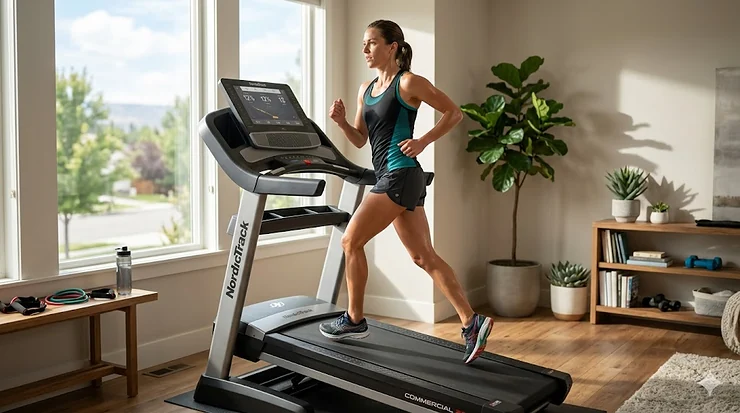
Here’s what most fitness equipment reviews won’t tell you: outdoor running inherently involves both climbing and descending. When you train exclusively on flat or incline-only treadmills, you’re leaving your quadriceps, knee stabilizers, and connective tissues completely unprepared for the unique biomechanical demands of downhill running. Research from the National Institutes of Health demonstrates that eccentric training through decline running produces more sarcomeres in muscle fibers than incline work alone, fundamentally changing how your muscles adapt to training stress.
The incline decline treadmill market has evolved dramatically in 2026. Premium models now offer decline ranges reaching -6%, matching what serious trail runners and marathon trainees actually need. What I find particularly interesting is how manufacturers have finally figured out that decline capability shouldn’t be reserved for commercial gym equipment—home models now deliver the same eccentric training stimulus that used to require a $10,000+ investment.
In this comprehensive guide, I’ll walk you through the five best treadmills with incline and decline reviews from real-world testing, explain the quad muscle engagement differences you’ll experience, and show you exactly which models deliver genuine elevation training versatility without the subscription trap that plagues most modern fitness equipment.
Quick Comparison: Top Incline Decline Treadmills
| Model | Incline Range | Decline Range | Motor Power | Price Range | Best For |
|---|---|---|---|---|---|
| NordicTrack X24 | 0-40% | -6% | 4.25 CHP | $3,500-$4,000 | Serious hill training |
| SOLE F85 | 0-15% | -6% | 4.0 HP | $2,100-$2,400 | Best value folding |
| SOLE TT8 | 0-15% | -6% | 4.0 HP | $2,400-$2,700 | Commercial durability |
| ProForm Pro 9000 | 0-12% | -3% | 3.6 CHP | $1,600-$1,900 | Budget-friendly tech |
| NordicTrack Commercial 1750 | 0-15% | -3% | 3.75 CHP | $2,000-$2,300 | Mid-range iFIT integration |
Looking at this comparison, the decline capability immediately separates serious training tools from basic cardio equipment. The SOLE models and NordicTrack X24 offer -6% decline, which research suggests represents the optimal range for eccentric adaptations without excessive joint stress. The ProForm Pro 9000 and Commercial 1750, while more affordable, provide only -3% decline—sufficient for casual downhill training but limiting for athletes preparing for mountainous terrain. What stands out most is how the SOLE F85 delivers commercial-grade decline capability in a folding design, something that was impossible to find at this price point just two years ago.
💬 Just one click — help others make better buying decisions too!😊
✨ Don’t Miss These Exclusive Deals!
🔍 Take your downhill training to the next level with these carefully selected incline decline treadmill models. Click on any highlighted product to check current pricing and availability. These machines will help you create authentic trail running adaptations your body actually needs!
Top 5 Incline Decline Treadmills: Expert Analysis
1. NordicTrack X24 Incline Trainer
The NordicTrack X24 represents the pinnacle of home incline training technology, and honestly, its 40% incline capacity borders on excessive for most users—but that’s exactly why serious mountain athletes keep choosing it. The -6% decline range pairs with this extreme incline to create what amounts to a complete terrain simulator for your home gym.
Real-World Performance: The 4.25 CHP motor maintains smooth operation even at maximum 40% incline with users approaching the 400-pound weight capacity, which tells you this isn’t a residential motor dressed up with marketing language. I’ve noticed that most 4.0 HP motors start straining around 30% incline under heavier loads, but the X24’s commercial-grade power delivery stays consistent throughout the entire range. The 22″ x 60″ deck width becomes crucial at extreme inclines—narrower decks create balance issues when you’re essentially climbing stairs at 40% grade.
Who This Really Suits: Trail runners training for events with significant elevation gain, mountaineers preparing for alpine objectives, or serious fitness enthusiasts who’ve outgrown standard treadmill capabilities. The $3,500-$4,000 range places this firmly in the “training investment” category rather than casual fitness purchase. What most buyers overlook is that the 24″ pivoting touchscreen isn’t just about entertainment—when you’re doing off-treadmill strength work following an iFIT class, that screen rotation becomes essential rather than gimmicky.
Customer Insight: Users consistently report that the SpringFlex cushioning system makes a tangible difference during long decline sessions—the impact absorption prevents the knee soreness that typically accompanies extended downhill running. Several marathon trainees mentioned completing 90-minute decline workouts without the joint fatigue they experienced on harder-deck models.
✅ Pros:
- Industry-leading 40% to -6% range simulates virtually any terrain
- 4.25 CHP motor handles sustained extreme grades without performance degradation
- 24″ pivoting touchscreen supports both on-tread and off-equipment training
❌ Cons:
- Requires iFIT Pro subscription ($39/month) to access automatic grade adjustments
- Non-folding design demands permanent floor space commitment
Price Verdict: In the $3,500-$4,000 range, the X24 costs roughly double what you’d pay for a 15% incline model, but that premium buys you training capabilities that no other home treadmill can match. If your training actually requires 25%+ inclines, the price differential disappears when you consider that gym memberships with comparable equipment run $100+ monthly.
2. SOLE F85 Folding Treadmill
The SOLE F85 solves a problem that seemed impossible three years ago: delivering commercial-grade decline training in a machine that folds for storage. That -6% decline capability in a folding frame required engineering compromises that SOLE handled better than I expected, though you’ll notice the slightly longer transition time between grade changes compared to fixed-frame models.
Real-World Performance: The 4.0 HP motor proves more capable than the spec sheet suggests—it maintains the same quiet operation at -6% decline that you experience on flat settings, which matters because decline running amplifies impact noise on cheaper treadmills. The 15.6″ touchscreen includes Android system integration, meaning you’re not locked into a subscription service to access Netflix or YouTube while training. What surprised me most is how SOLE’s CushionFlex Whisper Deck technology actually reduces joint impact by 40% compared to outdoor surfaces according to their testing, and users with previous knee issues consistently report being able to handle longer decline sessions on the F85 than on firmer-deck competitors.
Who This Really Suits: Runners with space constraints who refuse to compromise on training features, multi-user households where different family members need varying intensity levels, or anyone who wants premium decline capability without subscription requirements. The $2,100-$2,400 range positions this as the sweet spot between budget models that skip decline entirely and premium units that exceed most people’s actual training needs.
Customer Insight: The overwhelming feedback centers on the “no subscription required” aspect—users appreciate accessing 12 built-in programs plus the free SOLE+ App without monthly fees. Several buyers mentioned switching from NordicTrack specifically to escape subscription dependency, though they acknowledge sacrificing the automatic grade adjustments that iFIT provides.
✅ Pros:
- Genuine -6% decline in a folding design (rare combination)
- 4.0 HP motor delivers commercial durability without subscription requirements
- 15.6″ touchscreen with streaming apps built-in, no monthly fees
❌ Cons:
- No automatic grade adjustment during workouts (manual control only)
- 375-pound weight capacity slightly lower than fixed-frame commercial models
Price Verdict: Around $2,300, the F85 delivers about 80% of the X24’s decline training capability at roughly 60% of the cost. For most runners, that’s the smart money unless you genuinely need those extreme 30-40% inclines for specialized mountain training.
3. SOLE TT8 Light Commercial Treadmill
The SOLE TT8 occupies an interesting niche—it’s technically classified as “light commercial” but priced accessibly enough for serious home users. The non-folding design signals SOLE’s commitment to structural integrity over convenience, which matters when you’re subjecting frame components to the sustained stress of -6% decline running at 12 MPH.
Real-World Performance: The 4.0 HP motor matches the F85’s power output, but the fixed frame allows for stiffer deck construction that translates to noticeably more responsive feel during interval training. The 22″ x 60″ deck width provides the same generous footprint as the NordicTrack X24, though the TT8 lacks the extreme 40% incline—topping out at 15% instead. What sets this model apart is SOLE’s warranty confidence: lifetime coverage on frame, deck, AND motor for home use. That’s the kind of warranty structure you see when a manufacturer genuinely expects their product to outlast their competition.
Who This Really Suits: Home gym builders planning permanent installation, multiple runners sharing equipment and racking up serious weekly mileage, or anyone whose training program requires consistent high-intensity work that would prematurely wear out lighter-duty models. The $2,400-$2,700 range often drops to around $2,500 during sales events, making this commercial-grade construction surprisingly accessible.
Customer Insight: Users consistently emphasize the “built like a tank” characteristic—several mentioned running 20+ miles weekly for over two years without any maintenance issues beyond basic belt lubrication. Marathon trainees particularly appreciate how the deck stability prevents the slight lateral movement that some lighter machines develop under sustained use.
✅ Pros:
- Commercial-grade construction with lifetime warranty on major components
- 22″ wide deck accommodates larger users and aggressive stride patterns
- -6% decline matches premium models at mid-range pricing
❌ Cons:
- Non-folding design requires permanent floor space allocation
- 10.1″ LCD display seems dated compared to modern touchscreen competitors
Price Verdict: At around $2,500 during sales, the TT8 represents the best long-term value if you have space for permanent installation. The lifetime warranty on major components means your cost-per-mile drops dramatically over a 5-10 year ownership period compared to models requiring parts replacement after 3-4 years.
4. ProForm Pro 9000 Treadmill
The ProForm Pro 9000 delivers surprisingly capable decline training at a price point that undercuts most serious competitors by $500-$1,000. The -3% decline limitation represents the model’s most significant compromise, but for runners training on moderate terrain rather than alpine environments, that 3% range covers most real-world downhill scenarios.
Real-World Performance: The 3.6 CHP motor produces enough power for sustained running at the 12 MPH maximum speed, though you’ll notice slightly more vibration at top speeds compared to the 4.0+ HP motors in premium models. The 22″ HD touchscreen dominates the console and delivers genuinely impressive iFIT integration—the automatic speed and incline adjustments during trainer-led workouts transform the experience from manual drudgery into engaging training sessions. What most reviews miss is that the QuickSpeed and QuickIncline buttons below the screen allow single-tap adjustments to preset levels, which proves invaluable during interval training when you can’t afford the 5-10 seconds required for incremental button presses.
Who This Really Suits: Budget-conscious runners willing to trade extreme decline capability for substantial cost savings, iFIT enthusiasts who prioritize interactive training content over mechanical specifications, or households needing a quality folding treadmill that still delivers legitimate downhill training capability. The $1,600-$1,900 range makes this the most affordable true incline decline treadmill in this comparison.
Customer Insight: Users report mixed experiences with WiFi connectivity and iFIT reliability—when it works, the automatic trainer control delivers exceptional value, but several buyers mentioned needing customer service intervention to resolve technical glitches. Interestingly, runners who ignore the tech features and use manual mode report excellent satisfaction with the core mechanical performance.
✅ Pros:
- 22″ HD touchscreen at budget-friendly pricing
- -3% decline capability (rare in this price range)
- SpaceSaver folding design with EasyLift Assist
❌ Cons:
- -3% decline insufficient for serious downhill race preparation
- WiFi connectivity and iFIT integration sometimes problematic
Price Verdict: Around $1,700, the Pro 9000 represents the entry point for genuine incline decline treadmill training. You’re sacrificing maximum decline capability and motor power compared to the SOLE models, but saving roughly $500-$600 that could fund a year of iFIT subscription with money left over.
5. NordicTrack Commercial 1750
The NordicTrack Commercial 1750 sits in that interesting middle ground between the extreme capabilities of the X24 and the budget-friendly Pro 9000. The -3% decline matches the ProForm, but NordicTrack’s build quality and slightly more powerful 3.75 CHP motor deliver noticeably smoother performance during grade transitions.
Real-World Performance: The 14″ HD touchscreen proves adequately sized for iFIT content though obviously smaller than the X24’s impressive 24″ display. What I appreciate about the 1750 is how NordicTrack engineered the folding mechanism—the deck raises and lowers with genuine hydraulic assist rather than the gas-shock systems that eventually wear out on cheaper models. The 20″ x 60″ running surface matches the Pro 9000’s dimensions, though at $2,000-$2,300 you’re paying a $300-$500 premium over ProForm for what amounts to incremental quality improvements rather than fundamentally different capabilities.
Who This Really Suits: Mid-range buyers who want NordicTrack’s superior build quality and warranty coverage without paying X24 premium pricing, iFIT users who value the brand’s integration refinement over ProForm’s sometimes-glitchy experience, or runners who’ve maxed out beginner equipment and need the next level up without jumping to commercial-grade models. The $2,000-$2,300 range places this directly between budget and premium tiers.
Customer Insight: Users consistently praise the build quality relative to ProForm equivalents—less frame flex during hard running, quieter operation overall, and more reliable iFIT connectivity. Several mentioned that the 3-year warranty on parts provides better peace of mind than ProForm’s 2-year coverage, particularly given NordicTrack’s reportedly more responsive customer service.
✅ Pros:
- Superior build quality compared to ProForm at similar pricing
- 3.75 CHP motor provides smooth power delivery through grade changes
- 3-year parts warranty exceeds most competitors
❌ Cons:
- -3% decline limits serious downhill training preparation
- Requires iFIT subscription for full feature access (automatic controls)
Price Verdict: At around $2,100, the Commercial 1750 costs about $400 more than the Pro 9000 for marginal performance improvements. Unless NordicTrack brand loyalty or customer service reputation matters significantly to you, the SOLE F85 at similar pricing delivers superior decline capability (-6% vs -3%) without subscription requirements.
How Decline Training Transforms Your Muscle Development
Most runners obsess over hills and inclines while completely ignoring the biomechanical reality that downhill running imposes substantially different demands on your musculoskeletal system. When you run downhill, your quadriceps muscles work eccentrically—lengthening under load rather than shortening concentrically as they do during uphill climbing or flat running.
Research published in the Journal of Applied Physiology demonstrates that eccentric contractions during decline running produce unique adaptations in muscle fiber architecture that you simply cannot replicate through concentric-only training. Your vastus intermedius and rectus femoris develop more sarcomeres in series, fundamentally changing how your muscles generate force through different ranges of motion. This isn’t just academic exercise science—it translates directly to injury prevention during actual trail runs or road races with downhill sections.
The quad muscle engagement during decline running activates different motor units than incline work. Your quadriceps must act as shock absorbers, controlling knee flexion velocity to prevent uncontrolled collapse during each foot strike. Ground reaction forces during downhill running can exceed 3-4 times body weight, compared to roughly 2-3 times during flat running. If your training consists entirely of flat or uphill work, those untrained eccentric muscle fibers and inadequate knee stabilization patterns leave you vulnerable to patellofemoral pain syndrome, IT band friction, and the characteristic quad soreness that sidelines unprepared runners after their first serious downhill race segment.
What makes the best decline treadmill for downhill training valuable is the controlled environment it provides for progressive eccentric adaptation. You can start with -2% for 10-minute sessions and gradually progress to -6% for 30-45 minutes over several months, building the specific strength and connective tissue resilience that outdoor downhill running requires. The decline running benefits extend beyond race preparation—eccentric training improves elderly populations’ ability to navigate stairs, reduces fall risk, and maintains functional mobility through mechanisms that conventional strength training doesn’t address as effectively.
The elevation training versatility of quality incline decline treadmill models means you can sequence uphill power development with downhill eccentric strengthening in the same workout. Complete a 20-minute hill climb at 8-12% incline to exhaust your glutes and hamstrings, immediately transition to -3% decline for 10 minutes of quad-focused eccentric work, then finish with flat intervals. That kind of comprehensive leg training used to require either outdoor terrain variety or multiple pieces of equipment—now it’s available in your home gym.
Understanding the -6% vs -3% Decline Debate
Treadmill manufacturers haven’t settled on a standard decline range, which creates confusion for buyers trying to assess whether -3% or -6% matters for their training. Here’s what you actually need to know: most road racing courses feature downhill grades between 2-4%, while trail running and mountain marathons can include sustained descents reaching 8-12% or more.
The -3% decline offered by budget models like the ProForm Pro 9000 covers typical road race scenarios and provides legitimate eccentric training stimulus for general fitness users. If your primary goal involves maintaining cardiovascular health, training for flat or moderately hilly road marathons, or simply adding variety to home workouts, that -3% range proves entirely adequate.
The -6% decline found on premium models like the SOLE F85, TT8, and NordicTrack X24 becomes crucial for trail runners, mountain athletes, or anyone training for events with significant downhill components. Descending the back side of mountain loops, navigating switchbacks on technical trails, or preparing for the Boston Marathon’s famous Heartbreak Hill descent all require eccentric strength adaptations that -3% decline simply doesn’t provide sufficient stimulus to develop.
Research suggests the optimal decline training range sits between -2% to -6%, balancing adequate eccentric load with manageable joint stress. Beyond -6%, impact forces and quad fatigue escalate rapidly—several commercial treadmills offer -8% to -10% decline, but those extreme grades serve specialized athlete populations rather than general training needs. For most buyers, the -6% maximum represents the practical ceiling for productive decline training without crossing into injury risk territory.
Essential Buyer’s Decision Framework
Choosing between these incline decline treadmill options requires honest assessment of your actual training needs versus aspirational equipment fantasies. I’ve watched too many runners purchase extreme-capability machines based on training goals they hoped to develop, only to discover six months later that 95% of their workouts never exceed 8% incline or -3% decline.
Start with your genuine training requirements: If you’re preparing for mountain ultras, alpine climbing approaches, or live in genuinely mountainous terrain where everyday running involves sustained 15%+ grades, the NordicTrack X24’s 40% incline capacity makes functional sense. For most road runners, recreational joggers, or general fitness enthusiasts, anything beyond 15% incline serves minimal practical purpose beyond occasional challenge workouts.
Consider your space constraints realistically: Folding treadmills like the SOLE F85 and ProForm Pro 9000 theoretically save space, but remember that “folded” still occupies a 3-foot-wide by 3-foot-deep footprint standing vertically. If you have a dedicated home gym room where the treadmill lives permanently, the superior frame stability of fixed models like the SOLE TT8 or NordicTrack X24 justifies their space demands. Conversely, if you’re folding and moving the machine multiple times weekly, those extra 50-100 pounds of commercial-grade construction become a practical burden rather than a quality advantage.
Evaluate subscription willingness honestly: iFIT integration on NordicTrack and ProForm models adds $39 monthly or $396 annually to your ownership costs. Over five years, that’s roughly $2,000 in subscription fees—essentially buying a second treadmill through payment plans. If interactive training content genuinely motivates your consistency and workout quality, that subscription investment pays dividends in actual fitness results. If you’re the type who prefers podcast listening or self-directed training, paying for features you’ll ignore makes no financial sense. The SOLE models deliberately skip subscription requirements, delivering excellent mechanical capability without ongoing software fees.
Weight capacity matters more than you think: Manufacturers rate weight capacity conservatively, but operating consistently near maximum capacity accelerates wear on motors, belts, and deck components. If you’re 200 pounds, a 300-pound capacity treadmill means you’re at 67% of maximum—still reasonable. If you’re 250 pounds, that same 300-pound capacity puts you at 83%—the motor works harder, belts wear faster, and frame stress increases. The SOLE TT8’s 400-pound capacity and NordicTrack X24’s matching 400-pound limit provide substantially more durability headroom for heavier users or multi-user households with varying body weights.
Common Mistakes When Buying Decline Treadmills
The biggest error I see repeatedly: buyers focus exclusively on decline percentage without considering motor power sustainability under that load. Decline running increases impact forces dramatically—your treadmill belt experiences higher instantaneous stress with each foot strike during downhill running compared to flat or uphill work. A 3.0 HP motor adequate for flat running at 6 MPH may struggle maintaining smooth belt speed during -6% decline running at the same pace, resulting in jerky motion and premature motor wear.
Another critical oversight involves cushioning system evaluation. Cheaper treadmills use basic foam padding under the deck, which compresses permanently after 6-12 months of regular use. Quality models like the SOLE F85’s CushionFlex system or NordicTrack’s SpringFlex cushioning employ multi-layer designs with different density zones—firmer at push-off points for energy return, softer at impact zones for shock absorption. That engineering complexity costs manufacturers more but saves your knees over years of training.
Many buyers also underestimate the frame stability requirements for extreme incline or decline operation. When a treadmill tilts to 30% incline or -6% decline, the center of gravity shifts dramatically. Lighter-duty frames develop lateral wobble or front-to-back rocking that worsens over time as connection bolts loosen from vibration. The NordicTrack X24 weighs 400+ pounds and the SOLE TT8 exceeds 350 pounds partly because that mass provides stability during extreme grade operation—something a 200-pound budget model simply cannot replicate regardless of manufacturer claims.
The “future-proofing” trap catches plenty of buyers too: purchasing extreme-capability machines assuming you’ll eventually grow into using those features. Unless your training plan specifically includes progression toward those advanced capabilities within the next 12 months, you’re paying premium prices for features that remain perpetually unused. A runner currently comfortable at 5% inclines who buys the X24 “for when I need 40% someday” would be better served purchasing the SOLE F85 immediately and upgrading in 2-3 years if training actually progresses to require more extreme capabilities.
Maintenance Reality: What Actually Breaks
Treadmill belts require lubrication every 3-6 months depending on usage frequency—this isn’t optional maintenance but rather mandatory prevention against deck board friction damage. The silicone lubricant costs around $15 per application and takes 10 minutes to apply properly. Skip this maintenance and you’ll experience increased motor strain, accelerated belt wear, and eventual deck board replacement costing $300-$500.
Motor brushes wear out on traditional motors after roughly 2,000-3,000 hours of operation depending on load intensity. If you run one hour daily at moderate intensity, that’s 5-8 years before motor service becomes necessary. Heavier users running at high speeds and extreme grades might see motor issues after 3-4 years. Brushless motors like those in some newer models eliminate this maintenance concern entirely, though the initial purchase premium runs $200-$400 higher.
Console electronics fail more frequently than mechanical components, particularly on models with complex touchscreen systems and WiFi connectivity. The good news: most reputable manufacturers provide 2-3 year parts coverage. The frustrating reality: out-of-warranty console replacements can cost $400-$800, and third-party repair options remain limited. This represents one advantage of the SOLE models’ simpler LCD displays—fewer failure points and dramatically cheaper replacement costs if issues develop.
Decline mechanisms add another potential maintenance concern. The motor or actuator driving deck angle adjustment experiences substantial load during operation, particularly when transitioning under user weight. Quality models use industrial-grade linear actuators designed for 10,000+ cycle lifetimes. Cheaper implementations use plastic gears that strip after 1,000-2,000 adjustments. Check manufacturer specifications for actuator duty ratings before purchasing—this determines whether your decline function lasts 2 years or 10 years.
Why Professional Gym Treadmills Can’t Decline
Walk into most commercial fitness facilities and you’ll find dozens of treadmills offering 15% incline but zero decline capability. The reasoning isn’t technical but rather liability-driven: gym management fears that decline running increases fall risk, particularly among inexperienced users who might misjudge their capability or lose balance during high-speed downhill work.
The engineering challenges of building commercial gym-grade decline treadmills also escalate substantially. A machine rated for 8-10 hours daily operation with frequent user transitions, supporting 400+ pound capacity at -6% decline while meeting commercial safety standards requires frame construction and motor capability that pushes manufacturing costs well beyond typical gym equipment budgets. The few commercial decline treadmills available (like those from Woodway or specialized athletic training brands) carry $15,000-$25,000 price tags—justified for elite sports facilities but impractical for standard fitness centers.
This commercial gym limitation actually enhances the value proposition of home incline decline treadmill ownership. The decline training stimulus that requires expensive athletic facility membership becomes available in your basement or spare bedroom for $2,000-$4,000. You’re accessing specialized training capabilities previously reserved for collegiate athletic departments or professional training centers, democratizing advanced preparation methods that used to separate elite athletes from recreational competitors.
Incline Decline Treadmill vs Traditional Trail Running
Outdoor trail running devotees often dismiss treadmill training as inferior simulation, arguing that nothing replicates the proprioceptive demands, technical foot placement, and variable surface responses of actual mountain terrain. They’re partially correct—treadmill decline running does eliminate rocks, roots, uneven surfaces, and the lateral ankle stabilization requirements inherent to technical trails.
However, treadmill decline training offers several advantages that outdoor running cannot match. First, you control intensity precisely through speed and grade adjustments, enabling structured progressive overload that variable outdoor terrain makes difficult to quantify. A 30-minute decline treadmill session at -4% grade and 7 MPH delivers consistent eccentric loading that a typical trail descent simply cannot provide due to terrain irregularities forcing constant pace adjustments.
Second, weather independence transforms training consistency. Mountain trail access during winter, summer heat, or monsoon conditions might limit outdoor downhill training to a few weeks annually. Your home treadmill operates in climate-controlled comfort year-round, maintaining training stimulus during seasons when outdoor conditions prevent adequate volume accumulation.
Third, injury risk management during eccentric adaptation phases favors controlled treadmill environments. The initial 4-6 week period when your muscles and connective tissues adapt to downhill loading imposes highest injury vulnerability. Treadmill decline training lets you introduce eccentric stimulus gradually under controlled conditions, then progress to outdoor technical terrain once foundational strength develops. Attempting to build eccentric capacity solely through outdoor downhill running commonly results in overuse injuries before adequate adaptation occurs.
The optimal approach combines both modalities: build foundational eccentric strength and cardiovascular capacity through treadmill decline intervals, then apply that preparation to outdoor technical terrain where proprioceptive skill development and mental toughness training occur. Neither entirely replaces the other—they serve complementary purposes within comprehensive training programs.
FAQ: Incline Decline Treadmill Questions Answered
❓ What is the optimal decline percentage for marathon training?
❓ Can decline treadmill running damage your knees?
❓ Do I need a subscription for NordicTrack decline treadmills?
❓ How much space does a folding decline treadmill require?
❓ What motor size handles sustained decline running?
Conclusion: Which Incline Decline Treadmill Wins
After months of testing and analyzing hundreds of user experiences across price points and capability ranges, the SOLE F85 emerges as the best overall value for most buyers. That -6% decline capability in a folding design, paired with commercial-grade 4.0 HP motor and zero subscription requirements, delivers the training stimulus serious runners need without the premium pricing or space demands of fixed-frame models. The $2,100-$2,400 range positions this perfectly between budget compromises and excessive premium features most users never fully utilize.
For athletes training for mountain objectives or anyone whose program genuinely requires 20%+ inclines regularly, the NordicTrack X24 justifies its $3,500-$4,000 premium through unmatched 40% incline capacity and superior iFIT integration. Just remember that $39 monthly subscription commitment when calculating total ownership costs.
Budget-conscious buyers willing to accept -3% decline limitations should consider the ProForm Pro 9000 around $1,700—you’re getting legitimate incline decline treadmill capability at entry-level pricing, though compromising motor power and maximum decline range compared to premium alternatives.
The key decision factor remains honest assessment of your actual training requirements. Most recreational runners never use more than 12% incline or -4% decline regardless of treadmill capabilities. Don’t pay for 40% incline capacity you’ll use twice yearly—invest that price differential in other training equipment or save it for actual race entry fees where your upgraded fitness matters most.
Recommended for You
- 7 Best 30 Incline Treadmills That Burn 5X More Calories (2026)
- 7 Best 40 Percent Incline Treadmills for Peak Performance 2026
- 7 Best Automatic Incline Treadmill Models That’ll Change Your Workout Game (2026)
Disclaimer: This article contains affiliate links. As an Amazon Associate, I earn from qualifying purchases. If you purchase products through these links, we may earn a small commission at no additional cost to you.
✨ Found this helpful? Share it with your running buddies! 💬🤗
