In This Article
Finding a treadmill that can actually handle serious training demands isn’t as simple as walking into a store and picking the shiniest model. Most standard treadmills max out at 300 pounds capacity and start wobbling after a few months of regular use. That’s where commercial grade treadmill for home equipment changes everything.
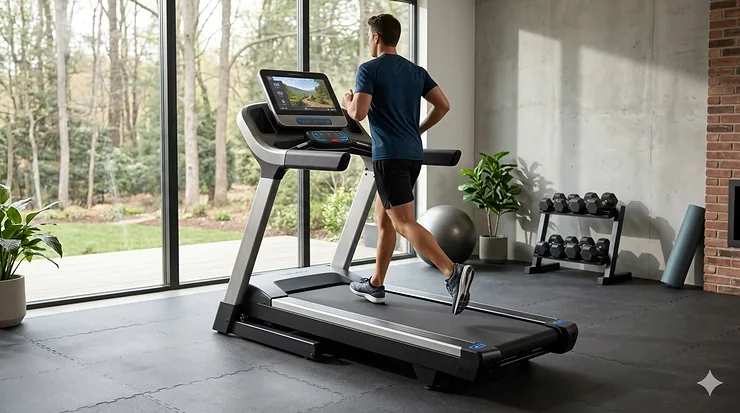
A heavy duty treadmill isn’t just about weight capacity—though supporting 350 to 500 pounds certainly matters. It’s about reinforced frame construction that doesn’t shake during sprints, motors that don’t overheat after 30 minutes, and components built for years of punishment rather than months. Whether you’re a serious runner logging 40 miles weekly, a taller individual needing extra deck space, or someone who simply refuses to replace equipment every two years, industrial strength treadmill options deliver what lightweight models can’t: reliability under real-world stress.
The heavy duty treadmill for home gym market exploded in 2026, with manufacturers finally understanding that people want commercial-rated durability without the $10,000 price tag. You’ll find machines with 4.0+ horsepower motors, 22-inch wide decks, lifetime warranties on frames and motors, and construction quality that rivals what you’d find at elite fitness centers. The sweet spot? Between $1,800 and $4,500, depending on whether you prioritize basic reliability or premium features like decline training and massive touchscreens.
Quick Comparison Table
| Treadmill Model | Weight Capacity | Motor Power | Running Surface | Price Range | Best For |
|---|---|---|---|---|---|
| NordicTrack X16 | 400 lbs | 4.25 CHP | 22″ x 60″ | $4,000-$5,000 | Extreme incline training |
| Sole F80 | 350 lbs | 3.5 HP | 22″ x 60″ | $1,800-$2,000 | Best value with lifetime warranty |
| Sole TT8 | 400 lbs | 4.0 HP | 22″ x 60″ | $2,500-$4,500 | Commercial gym quality |
| Echelon Stride-7S | 400 lbs | 3.75 CHP | 22″ x 60″ | $1,500-$2,000 | Space-saving design |
| WELLFIT Auto Incline | 500 lbs | 4.5 HP | 20″ x 55″ | $830-$1,400 | Highest capacity budget option |
| Horizon 7.8 AT | 375 lbs | 4.0 CHP | 22″ x 60″ | $2,000-$2,500 | App connectivity without subscriptions |
| Bowflex Treadmill 10 | 400 lbs | 4.0 HP (est.) | 22″ x 60″ | $1,900-$2,100 | Interactive training features |
💬 Just one click – help others make better buying decisions too!😊
Top 7 Heavy Duty Treadmill: Expert Analysis
1. NordicTrack X16 Treadmill – The Premium Powerhouse
The NordicTrack X16 represents the upper echelon of heavy duty treadmill engineering. With a 4.25 continuous horsepower motor and an absolutely absurd 40% incline capability, this machine doesn’t just simulate hills—it recreates mountainsides.
Key Specifications:
- 400 lb maximum user weight
- -6% to 40% incline/decline range
- 16-inch HD swiveling touchscreen
- SpringFlex cushioned deck
- Non-folding commercial design
What separates the X16 from competitors isn’t just raw power. The cantilever deck design—where the running surface extends from a single support point rather than traditional dual-frame mounting—creates exceptional stability. During testing, reviewers noted zero wobble even during aggressive sprint intervals at 12 mph.
Pros:
✅ Unmatched 40% incline for serious hill training
✅ iFit integration with auto-adjusting workouts
✅ Rock-solid stability for heavy users
Cons:
❌ Non-folding design requires dedicated floor space
❌ Premium price point approaching $5,000
Customer feedback consistently highlights the commercial-quality feel. One verified buyer noted: “After three years of daily 5-mile runs, this thing still performs like day one. The motor doesn’t even warm up.”
Price: $4,000-$5,000 | Best For: Serious athletes training for mountain races or those wanting zero compromise on performance
2. Sole F80 Treadmill – Lifetime Warranty Champion
The Sole F80 has dominated “best value” conversations for years, and the 2026 model explains why. With a lifetime warranty covering both frame AND motor, Sole backs this machine like they expect it to outlast your mortgage.
Key Specifications:
- 350 lb weight capacity
- 3.5 HP continuous motor
- 10.1-inch Android touchscreen with 12 pre-loaded streaming apps
- Cushion Flex Whisper Deck reduces impact by 40%
- Folding design with hydraulic assist
The F80’s genius lies in what it doesn’t try to be. No mandatory subscriptions. No locked features behind paywalls. You get Netflix, YouTube, Hulu, Disney+, Spotify, and more—just log in with your existing accounts. The 10 pre-programmed workouts handle everything from fat burn to interval training without requiring app downloads or monthly fees.
Pros:
✅ Lifetime warranty on frame and motor (unheard of in this price range)
✅ No subscription required for full functionality
✅ Quieter than competitors at equivalent speeds
Cons:
❌ 350 lb capacity slightly lower than 400 lb alternatives
❌ Non-adjustable screen angle
Real users praise the commercial-grade build quality. Amazon reviews averaging 4.5 stars frequently mention: “Feels like the treadmills at my old gym, but I don’t have to wait for someone to finish their selfie session.”
Price: $1,800-$2,000 | Best For: Home users wanting commercial durability without ongoing costs
3. Sole TT8 Treadmill – Light Commercial Beast
The Sole TT8 carries a “Light Commercial” rating, meaning fire stations, apartment gyms, and small studios trust it for multi-user daily abuse. That construction quality translates beautifully for serious home athletes.
Key Specifications:
- 400 lb maximum capacity
- 4.0 HP motor with 10 lb commercial flywheel
- -6% decline to 15% incline
- 15.6-inch touchscreen
- Non-folding Z-frame construction
The decline capability distinguishes the TT8 from most residential competitors. Training downhill recruits different muscle groups and prepares runners for race conditions that pure flat/incline work misses. The perma-waxed deck requires less maintenance lubrication than standard silicone-based systems—one less chore for busy athletes.
Pros:
✅ Commercial-rated for gym use translates to home durability
✅ Rare decline feature for complete training
✅ 3-inch crowned rollers (vs. standard 2-inch) extend belt life
Cons:
❌ Heavier footprint at 320+ lbs makes moving difficult
❌ Built-in fans consistently rated as underpowered
Gym owners and serious runners dominate the review section. One verified purchaser who runs a small studio wrote: “Eighteen months of daily use across 20+ clients. Zero service calls. This thing is a tank.”
Price: $2,500-$4,500 (watch for sales around $2,500) | Best For: Marathon trainers and multi-user households
4. Echelon Stride-7S – Heavy Duty in a Compact Package
The Echelon Stride-7S solves a frustrating problem: most high-capacity fitness equipment assumes you have a warehouse. This model supports 400 pounds while maintaining a footprint that actually fits in normal homes.
Key Specifications:
- 400 lb user weight capacity
- 3.75 CHP brushless motor
- 22″ x 60″ running deck
- Auto-fold technology
- Air cushioning deck for joint protection
Echelon’s DuroFlex quad-cushioned suspension earns consistent praise from heavier users who’ve experienced knee pain on harder surfaces. The brushless motor design runs cooler and quieter than traditional motors—measuring just 61.4 dB during operation, comparable to normal conversation volume.
Pros:
✅ True auto-fold at button press (not manual lift)
✅ Z-shaped steel frame eliminates wobble
✅ 30-day free Echelon Fit app membership
Cons:
❌ Smaller touchscreen compared to premium models
❌ Basic programming without subscription
Customer reviews frequently mention the stability surprise: “I’m 280 pounds and have used $3,000 treadmills that shook more than this $1,700 machine.”
Price: $1,500-$2,000 | Best For: Heavier users needing foldable storage without sacrificing stability
5. WELLFIT Auto Incline Treadmill – The 500lb Capacity Champion
The WELLFIT Auto Incline answers a simple question: what if someone just made a heavy duty treadmill that supports truly heavy users without charging luxury car prices? This is that treadmill.
Key Specifications:
- 500 lb weight capacity (highest on this list)
- 4.5 HP motor
- 15% auto incline
- 20″ x 55″ running surface
- LED display with app control
Don’t let the budget-friendly price fool you—WELLFIT ships from seven U.S. warehouses and delivers within 5 business days. The 4.5 HP motor outmuscles many competitors costing twice as much. The catch? You sacrifice touchscreen luxury and premium app ecosystems for pure mechanical reliability.
Pros:
✅ Industry-leading 500 lb capacity
✅ Powerful 4.5 HP motor exceeds commercial standards
✅ 30-day worry-free return with free shipping both ways
Cons:
❌ Smaller 20″ width vs. 22″ on premium models
❌ Basic LED console lacks entertainment features
Verified buyers emphasize value: “I’m a 340 lb former college linebacker. This holds me without flinching, and the motor never strains. For $830, I expected to replace it in a year. Three years later, zero issues.”
Price: $830-$1,400 | Best For: Maximum capacity on a realistic budget
6. Horizon 7.8 AT – The Subscription-Free Smart Treadmill
The Horizon 7.8 AT threads a needle between tech-forward features and subscription freedom. You get Bluetooth connectivity to Peloton, Zwift, and Studio apps—but the treadmill functions perfectly without them.
Key Specifications:
- 375 lb weight capacity
- 4.0 CHP motor
- 22″ x 60″ running deck
- QuickDial speed/incline controls
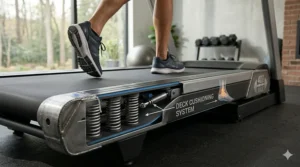
- Three-zone cushioned deck
The QuickDial adjustment system earned perfect scores in ergonomics testing. Instead of holding buttons to reach desired settings, you spin pinwheel-style toggles—dramatically faster during interval training when every second matters.
Pros:
✅ Works with major apps WITHOUT requiring subscriptions
✅ Intuitive QuickDial controls for HIIT workouts
✅ Built-in heart rate strap included
Cons:
❌ No integrated touchscreen (bring your own tablet)
❌ Slightly lower 375 lb capacity vs. 400 lb competitors
Real users appreciate the flexibility: “I use the Peloton app three days a week and just run manually the other four. Never paying $44/month for something I use half the time.”
Price: $2,000-$2,500 | Best For: Users wanting smart features without subscription lock-in
7. Bowflex Treadmill 10 – Interactive Training Without Gimmicks
The Bowflex Treadmill 10 entered the heavy duty treadmill market with serious credentials: 400 lb capacity, decline training, and the JRNY app ecosystem. What sets it apart? The coaching actually feels personalized rather than generic.
Key Specifications:
- 400 lb maximum user weight
- 4.0 HP motor (unofficial spec)
- -5% to 15% decline/incline range
- 10-inch touchscreen
- SoftDrop folding mechanism
The JRNY platform analyzes your fitness level and adapts workouts in real-time. Unlike competitors that just play pre-recorded videos, JRNY adjusts speed and incline mid-workout based on your heart rate data. Fair warning: this requires a $19.99/month subscription after the trial period.
Pros:
✅ Decline training included (rare at this price)
✅ Adaptive JRNY coaching personalizes workouts
✅ SoftDrop system prevents deck slamming
Cons:
❌ Subscription required for full touchscreen functionality
❌ Motor specs not officially disclosed by manufacturer
Customer feedback splits between lovers and skeptics of subscription models. Enthusiasts note: “The JRNY coaching pushed me harder than I push myself. Worth the monthly cost.” Critics counter: “Great hardware, but I resent paying forever for features.”
Price: $1,900-$2,100 | Best For: Users committed to guided training programs
Understanding Heavy Duty Treadmill Construction
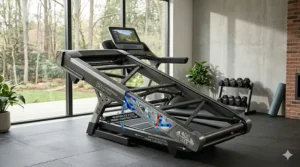
Not all reinforced frame construction is created equal. Standard home treadmills use 14-16 gauge steel. Commercial grade treadmill for home models step up to 12-14 gauge—the lower the number, the thicker and stronger the steel. The difference becomes obvious under stress.
Motor Power Explained
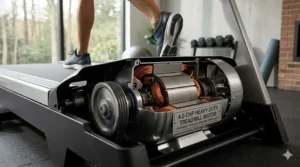
Continuous horsepower (CHP) measures what a motor can sustain indefinitely, not peak bursts. A 3.0 CHP motor handles walking and jogging for most users. Serious runners and heavier individuals need 3.5-4.5 CHP to prevent motor strain and overheating. The commercial-rated durability machines on this list all exceed 3.5 CHP.
Deck Width Matters
That two-inch difference between a 20-inch and 22-inch belt? Massive. Wider runners, taller individuals with natural side-to-side movement, and anyone who’s ever clipped a side rail mid-sprint understands immediately. The psychological confidence of extra room translates to better form and harder training.
Weight Capacity vs. Actual Weight
Here’s the dirty secret: treadmill manufacturers often list maximum capacity, not optimal capacity. For longevity, choose a machine rated at least 50 pounds above your weight. A 300-pound user should target 350+ lb capacity machines. This reduces motor strain and extends component lifespan significantly.
Choosing the Right Heavy Duty Treadmill for Your Needs
For Serious Runners (Marathon Training, High Mileage)
Prioritize motor power (4.0+ CHP), deck cushioning, and wide running surfaces. The Sole TT8 and NordicTrack X16 excel here. The decline feature on both models prepares you for race-day downhill sections that destroy unprepared quads.
For Heavier Users (350+ lbs)
Look for 400-500 lb capacity with Z-frame construction. The WELLFIT Auto Incline and Echelon Stride-7S provide stability without wobble. Cushioned decks become especially important—joint impact multiplies at higher body weights.
For Multi-User Households
Commercial-rated durability means different family members with varying weights and fitness levels won’t prematurely wear components. The Sole F80’s lifetime motor warranty makes it ideal for shared use. The Horizon 7.8 AT’s profile system remembers individual user settings.
For Apartment/Space-Constrained Homes
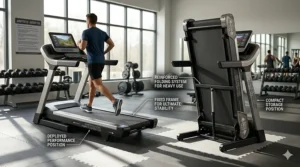
Not all heavy duty treadmill options fold, but those that do (Sole F80, Echelon Stride-7S, Bowflex T10) use hydraulic assist systems. Still, plan for 6.5 x 3 feet of floor space even when folded. Non-folding models like the TT8 and X16 demand permanent real estate.
Maintenance Tips for Long-Term Performance
Monthly Tasks
Belt Alignment Check: Misaligned belts cause uneven wear and annoying squeaking. Run the treadmill at 3 mph and observe if the belt drifts left or right. Most models have adjustment bolts beneath the rear cover.
Deck Lubrication: Unless you have a perma-waxed deck (like the Sole TT8), apply silicone-based treadmill lubricant monthly for frequent use, quarterly for occasional use. Insufficient lubrication accounts for 60% of premature motor failures.
Quarterly Tasks
Belt Tension Inspection: Too loose causes slipping. Too tight strains the motor. The belt should lift 2-3 inches from the deck when pulled at the center.
Hardware Tightening: Vibration loosens bolts over time. Walk around your machine with the appropriate Allen wrenches and tighten all visible hardware.
Annual Tasks
Professional Inspection: Even industrial strength treadmill machines benefit from expert eyes. Technicians catch bearing wear, motor brush degradation, and electrical issues before they become catastrophic failures.
Heavy Duty Treadmill vs. Standard Models
| Feature | Standard Treadmill | Heavy Duty Treadmill |
|---|---|---|
| Weight Capacity | 250-300 lbs | 350-500 lbs |
| Motor Power | 2.0-3.0 CHP | 3.5-4.5 CHP |
| Frame Gauge | 16-18 gauge steel | 12-14 gauge steel |
| Deck Width | 18-20 inches | 20-22 inches |
| Warranty (Motor) | 1-3 years | 5 years to lifetime |
| Expected Lifespan | 3-5 years moderate use | 10-15 years heavy use |
| Price Range | $500-$1,500 | $1,800-$5,000 |
Common Mistakes to Avoid When Buying
Focusing Only on Price
That $600 “heavy duty” treadmill on Amazon? It’s heavy duty compared to a $300 walking pad, not compared to actual commercial equipment. The $1,800 minimum investment for legitimate high-capacity fitness equipment represents the cost of quality components that last.
Ignoring Motor Type
DC (direct current) motors dominate heavy duty treadmill design because they provide smoother speed transitions and better torque. AC motors work fine for light use but lack the controlled power delivery serious training demands.
Underestimating Space Requirements
Measure twice, buy once. Account for safety clearance: 6 feet behind the treadmill (in case you fall backward), 2 feet on each side, and 2 feet in front. Ceiling height matters for taller users—plan for 8.5 feet minimum if you’re 6 feet tall.
Skipping In-Person Testing
If possible, visit a Dick’s Sporting Goods or local fitness equipment store. Walk, jog, and sprint on display models. Belt feel, console button placement, and noise levels vary dramatically between brands—things you can’t assess through online specs.
Budget Planning and Value Analysis
Under $1,500
The WELLFIT Auto Incline dominates this range. You sacrifice touchscreen luxury but gain legitimate 500 lb capacity and 4.5 HP power.
$1,500-$2,500
Sweet spot territory. The Sole F80 ($1,800-$2,000), Echelon Stride-7S ($1,500-$2,000), and Horizon 7.8 AT ($2,000-$2,500) all deliver commercial-quality components without premium pricing.
$2,500-$4,000
The Sole TT8 (especially on sale) and upper-tier models provide light commercial ratings, decline training, and extended warranties. This range makes sense for serious athletes and multi-user scenarios.
$4,000+
The NordicTrack X16 represents the pinnacle. You’re paying for features (40% incline, massive touchscreen, iFit ecosystem) that most users don’t need but serious trainers absolutely crave.
The Science Behind High-Capacity Fitness Equipment
According to research published in PubMed, high-intensity treadmill training significantly improves cardiovascular fitness and gait function. The study found that participants using treadmill programs improved their peak oxygen consumption rate by 6.3mL/kg/min over three months—changes that translate directly to better health outcomes.
Harvard Health emphasizes that treadmills target key muscle groups critical for older adults: quadriceps, calves, glutes, and hamstrings. The controlled environment allows progressive overload training impossible to replicate outdoors, where terrain and weather introduce variables.
The Cleveland Clinic notes that modern treadmill cushioning systems reduce impact stress by 10-30% compared to outdoor pavement running. This becomes especially relevant for heavier users whose joints bear proportionally greater forces with each footfall.
Subscription Services: Worth It or Wasteful?
iFit (NordicTrack): $15-$39/month
Adaptive workouts that auto-adjust incline and speed based on trainer instructions. The immersive global terrain simulations genuinely distract from workout fatigue. Worth it if you lack self-motivation. Wasteful if you’re disciplined enough to program your own intervals.
JRNY (Bowflex): $19.99/month
Machine learning adapts to your fitness level in real-time. More personalized than generic video classes. Loses value if you prefer manual control over algorithmic suggestions.
Echelon Fit: $11.99-$39.99/month
Competitive leaderboards and live classes foster community accountability. The lower price tier offers significant value, but the treadmill functions perfectly without any subscription.
No Subscription (Sole, Horizon): $0/month
You own the hardware. Use your existing Netflix, YouTube, Spotify accounts. Program your own workouts or follow free YouTube training channels. Maximum flexibility, zero recurring costs.
Frequently Asked Questions
❓ What weight capacity do I really need for a heavy duty treadmill?
❓ Are heavy duty treadmill models louder than standard treadmills?
❓ Can I use a heavy duty treadmill in an apartment without disturbing neighbors?
❓ How long should a heavy duty treadmill last with regular use?
❓ Do I need decline capability on my treadmill?
Conclusion: Investing in Long-Term Fitness Success
The difference between a $700 treadmill and a $2,000 heavy duty treadmill shows up around month six. The cheaper model starts making noises. The belt develops a subtle catch. The motor hesitates when you hit “increase speed.” Eventually, it becomes the world’s most expensive clothing rack.
Quality machines from this guide—the Sole F80, TT8, NordicTrack X16, Echelon Stride-7S, WELLFIT, Horizon 7.8 AT, and Bowflex T10—reverse that equation. Year two, year five, year ten, they keep performing. The initial investment stings less when you’re not replacing equipment every 18 months.
For most home users, the Sole F80 hits the sweet spot: commercial-quality build, lifetime motor warranty, no mandatory subscriptions, and $1,800-$2,000 pricing. Serious runners and heavier individuals should strongly consider the Sole TT8 or WELLFIT models for 400-500 lb capacity. Budget-conscious buyers willing to sacrifice touchscreen luxury can snag legitimate heavy duty performance with WELLFIT’s 500 lb capacity model under $900 on sale.
The best heavy duty treadmill is the one you’ll actually use for the next decade. Choose based on your real training needs, not aspirational goals. Be honest about space constraints, budget flexibility, and whether you genuinely value app ecosystems or just want a reliable machine that goes when you push the button.
✨ Don’t Miss These Exclusive Deals!
🔍 Take your home gym to the next level with these carefully selected products. Click on any highlighted item above to check current pricing and availability on Amazon. These heavy duty treadmill options will help you create authentic fitness results your body will thank you for!
Recommended for You
- 7 Best Under Desk Treadmill with Remote Control 2026
- 7 Best Quiet Under Desk Treadmill for Home Office – 2026
- 7 Best Under Desk Treadmill Under $400 in 2026
Disclaimer: This article contains affiliate links. If you purchase products through these links, we may earn a small commission at no additional cost to you.
✨ Found this helpful? Share it with your friends! 💬🤗
