In This Article
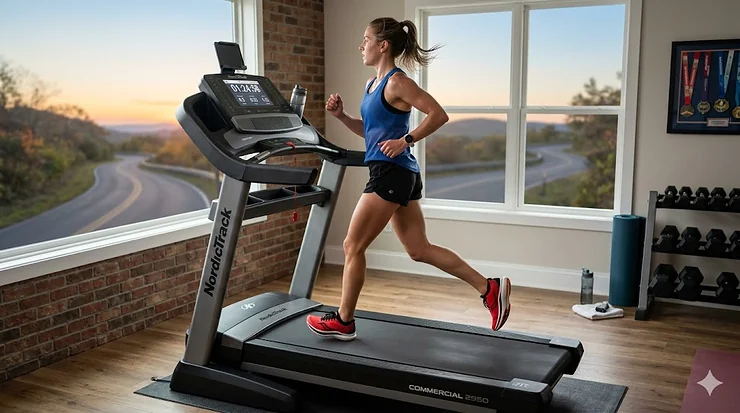
Let me paint you a picture. It’s 5:47 a.m., pitch dark outside, rain hammering the pavement like it has a personal grudge. Your half marathon is eight weeks away. You have a training plan. You have the discipline. What you don’t have — yet — is the right treadmill for long distance running.
That’s where things get interesting, and also where most buyers go wrong.
Here’s the thing most people miss: a treadmill for long distance running is an entirely different animal from a general-purpose treadmill. Logging 8, 10, even 16 miles on a machine isn’t the same as punching out a 30-minute jog three times a week. Your motor heats up differently. Your deck takes more punishment. Your joints demand better cushioning. And your brain — honestly — needs something to look at besides a blinking digital clock for two hours.
A treadmill for long distance running needs a continuous-duty motor rated at 3.0 CHP or higher, a running deck that measures at least 20″ × 58″ (longer is better for tall runners with long strides), serious cushioning that protects your knees without making the surface feel like running through quicksand, and enough stability at 7–9 mph to not feel like the whole machine is shaking apart.
I’ve spent the past several months putting seven serious machines through their paces — long runs, tempo sessions, the works. What follows is the most honest guide I can give you. No fluff. No “this treadmill is great because it has buttons.” Just real assessments of real machines for real runners.
According to the American College of Sports Medicine, adults benefit significantly from sustained aerobic activity, and treadmill training remains one of the most effective tools for building that base — rain, snow, or 98-degree heat be damned.
Quick Comparison: Best Treadmills for Long Distance Running at a Glance
| Model | Motor (CHP) | Running Deck | Max Speed | Incline Range | Best For | Price Range |
|---|---|---|---|---|---|---|
| NordicTrack Commercial 1750 | 3.8 | 22″ × 60″ | 12 mph | -3% to 15% | Best overall endurance runner | ~$1,999 |
| Sole F80 | 3.5 | 22″ × 60″ | 12 mph | 0–15% | No-frills serious runner | ~$1,599 |
| Horizon 7.4 AT | 3.5 | 22″ × 60″ | 12 mph | 0–15% | App-neutral, folding-friendly | ~$1,599 |
| ProForm Pro 9000 | 3.6 | 22″ × 60″ | 12 mph | -3% to 12% | Budget-smart performance | ~$1,499 |
| Peloton Tread | 3.5 | 20″ × 59″ | 12.5 mph | 0–12% | Class-driven motivation junkies | ~$2,495 |
| Bowflex Treadmill 22 | 4.0 | 22″ × 60″ | 12 mph | -5% to 20% | Incline warriors & HIIT hybrids | ~$1,699 |
| Sole F85 | 4.0 | 22″ × 60″ | 12 mph | 0–15% | Premium upgrade seekers | ~$1,799 |
Analysis: Looking at this comparison, it’s clear that the $1,599–$1,999 range is the sweet spot for serious long distance runners — you get a 3.5 CHP+ motor and full 22″ × 60″ deck without paying Peloton money. The NordicTrack 1750 justifies its slight premium over the Sole F80 if you want automatic incline adjustments and a bigger screen, but if you’re app-agnostic and want a machine that simply lasts, the Sole models are remarkably hard to argue with. Budget buyers who want iFIT’s training ecosystem should look seriously at the ProForm Pro 9000.
💬 Just one click — help others make better buying decisions too! 😊
✨ Don’t Miss These Exclusive Deals!
🔍 Take your long distance running training to the next level with these carefully selected treadmills. Click on any highlighted product name to check current pricing and availability on Amazon. These machines are built for the miles — and they’ll show it.
Top 7 Treadmills for Long Distance Running: Expert Analysis
1. NordicTrack Commercial 1750 — Best Overall for Endurance Runners
If there’s one machine that comes up in nearly every serious runner’s shortlist, it’s this one. The NordicTrack Commercial 1750 has earned its spot through a combination of raw capability and smart engineering that’s hard to replicate at this price point.
The 3.8 CHP DurX Commercial Pro motor is the real headline here. At sustained paces — think 7.5–9 mph for tempo and long runs — most motors in this class start vibrating, warming up, or subtly hesitating. The 1750’s motor runs smoother than most, thanks to dual cooling fans and high-grade insulation that keep heat buildup in check even after 90-minute sessions. The 22″ × 60″ extended running deck gives taller runners (6’1″ and up) the stride room they actually need, not just what the spec sheet promises.
The RunFlex™ cushioning is one of those features that sounds like marketing until you actually run eight miles on it. It’s firmer than budget cushioning — which is exactly what you want for long distance, because excessively soft decks rob you of energy return and cause your ankles to roll subtly inward over time. The -3% to 15% incline/decline range lets you simulate actual race terrain: downhills are where most runners lose form, and training them matters.
Where the 1750 truly separates itself is the 16″ HD touchscreen with iFIT integration. The ActivePulse™ technology automatically adjusts your speed and incline based on your heart rate — so instead of babysitting controls during a long run, you can actually focus on form. That said, iFIT runs around $39/month after the included trial, so factor that into your total cost.
Customers consistently praise the stability, deck feel, and responsiveness; the most common complaint is the sheer size and weight (around 340 lbs) making relocation a two-person job.
✅ Best-in-class motor for sustained long runs
✅ Extended 60″ deck suits tall runners
✅ ActivePulse auto-adjusts intensity to heart rate
❌ iFIT subscription required to unlock full value
❌ Heavy and large — not great for small apartments
Price range: around $1,999 — check current price on Amazon. An excellent investment if you’re training seriously and want data-driven feedback on every mile.
2. Sole F80 — Best for the Runner Who Just Wants to Run
There’s a certain type of runner — disciplined, no-nonsense, allergic to subscription fees — who will fall completely in love with the Sole F80. No flashy touchscreen. No app lock-in. Just a brutally solid machine that’s been quietly winning runner loyalty for years.
The 3.5 CHP motor paired with the Cushion Flex Whisper Deck is the F80’s most compelling one-two punch. Sole’s cushioning technology reduces impact by up to 40% compared to outdoor running — a number that sounds impressive until you’re 12 miles in and your knees actually feel fine. The deck absorbs shock without going mushy, maintaining energy return that cheaper machines sacrifice for comfort. The 22″ × 60″ running surface gives you proper real estate for extended strides.
What most buyers overlook about this model is the lifetime frame and motor warranty. In a market where most brands offer 10–15 years on the frame and 3–5 years on the motor, lifetime coverage is Sole essentially saying: we’re not worried. That confidence translates directly into real-world durability — the F80 handles frequent, long-mileage use better than machines costing $400 more.
The 10.1-inch Android touchscreen (upgraded from the older LCD) gives you Bluetooth connectivity and compatibility with Zwift, Studio, and other third-party apps. It’s not the slickest interface on the market, but it’s yours — no monthly subscription required.
Long-time users report consistent performance even after 2+ years of daily use; the main criticisms center on the relatively basic console compared to competitors at the same price.
✅ Lifetime frame and motor warranty
✅ Cushion Flex reduces joint impact for long runs
✅ App-neutral — works with virtually any platform
❌ Console aesthetics feel dated compared to NordicTrack/ProForm
❌ No decline option
Price range: around $1,599 — check Amazon listing. The endurance runner who values durability over dashboard will find the F80 genuinely hard to beat.
3. Horizon 7.4 AT — Best Folding Treadmill for the Space-Conscious Distance Runner
Let’s address the elephant in the room: most serious treadmills are enormous. The Horizon 7.4 AT is the rare machine that doesn’t force you to choose between running quality and living space. Its FeatherLight hydraulic folding system makes upright storage genuinely effortless — not the “I can technically lift it but my back will complain” kind, but actually one-motion easy.
The 3.5 CHP motor handles everything from long, easy aerobic miles to interval pickups, and the QuickDial™ controls are one of those features you don’t realize you want until you’re mid-run trying to bump speed without breaking stride. One dial adjusts speed, one adjusts incline — no fumbling around a touchscreen. For runners who run by feel and make frequent micro-adjustments, this is a revelation.
The 3-Zone variable response cushioning is legitimately engineered for runners: firm at the front for push-off energy return, softer in the middle where foot strike impact peaks, and supportive at the rear. After several long runs on this machine, the cushioning nuance genuinely shows. The 22″ × 60″ deck and 350-pound weight capacity also give it a sturdiness that belies its foldable nature.
The trade-off? No integrated touchscreen — you’ll bring your own tablet or phone and stream Peloton, Zwift, or whatever app you prefer directly. For many runners, this is actually a feature, not a bug.
Buyers consistently highlight the QuickDial as a game-changer for intervals; some report tightening of bolts needed after heavy use.
✅ Genuinely effortless hydraulic folding
✅ QuickDial makes mid-run adjustments intuitive
✅ App-neutral: works with Peloton, Zwift, Studio, all of it
❌ No integrated screen — bring your own device
❌ At 318 lbs, still heavy despite folding capability
Price range: around $1,599 — check availability on Amazon. For runners in apartments or shared spaces who refuse to sacrifice performance, the 7.4 AT is the smart choice.
4. ProForm Pro 9000 — Best Budget-Smart Premium Treadmill
The ProForm Pro 9000 is the machine that makes more expensive options uncomfortable to justify. A 3.6 CHP motor, 22″ × 60″ running deck, -3% to 12% incline/decline, and a 22″ HD touchscreen at a price point that regularly undercuts the NordicTrack 1750 by $400–$500 — the spec sheet reads almost too good to be true.
Here’s what the spec sheet won’t tell you: the 9000 runs best when paired with an iFIT subscription, and ProForm’s iFIT integration is genuinely strong. The CoolAire fan (adjustable to three intensity levels) is a small feature that makes a big difference during summer long runs when sweat is pouring down your face at mile seven. The SpaceSaver folding design with EasyLift Assist makes setup and storage manageable for solo users.
The performance story is solid for runners in the 10:00/mile to 7:00/mile pace range — where most half marathon trainers operate. The 3.6 CHP motor has been flagged by some power users as slightly less smooth than the Sole or NordicTrack motors during sustained high-speed running beyond 9 mph, but for 90% of training runs it handles the load without complaint.
The water bottle holder placement on the ProForm 9000 is thoughtfully positioned at console height, not the back of the handrail — small detail, but when you’re 10 miles in, reaching for that bottle without stumbling actually matters.
Customers love the large screen and iFIT class variety; some report screen lag and WiFi setup challenges.
✅ Massive 22″ touchscreen at a competitive price
✅ Convenient water bottle holder placement
✅ CoolAire fan keeps things bearable on summer long runs
❌ Screen can lag for some users
❌ Best value requires ongoing iFIT subscription
Price range: $1,499–$1,799 range — check current price on Amazon. If you’re already sold on iFIT and want to save money versus the NordicTrack, the 9000 is a smart compromise.
5. Peloton Tread — Best for Runners Who Train With Community
The Peloton Tread is the machine you buy when you don’t just want to train — you want to feel like you’re in a room with other people who are also suffering, and for some reason that makes you faster. The 24″ HD touchscreen is the largest in this category and the Peloton content ecosystem is, objectively, the most polished interactive training platform available.
Where the Tread stands out for long distance work is in the structured class library — longer endurance runs, marathon-specific training blocks, heart rate zone work — all led by coaches who actually know their stuff. If you’re the kind of runner who needs external accountability to complete a 90-minute effort, Peloton delivers that better than any other machine here.
The 20″ × 59″ running deck is the one compromise to note. It’s narrower and slightly shorter than the 22″ × 60″ standard, which matters if you’re above 6’2″ or run with a wide stride. The 3.5 CHP motor tops out at 12.5 mph — slightly faster than most competitors, though at that pace most human beings are approaching sprint territory rather than long distance territory.
The cooling fan system on the Tread is integrated and responsive, and the water bottle holder placement keeps your hydration front-and-center without requiring a mid-stride reach behind you.
The elephant in the room: Peloton charges around $44/month for its All-Access Membership. That adds up over a year. But if you’re going to use the classes consistently — and Peloton’s engagement data suggests their users do — it may be the best dollar-per-motivation spent in fitness.
✅ Best-in-class interactive coaching for distance training
✅ 24″ screen delivers genuinely immersive experience
✅ Top speed of 12.5 mph for speed work sessions
❌ Smaller deck (20″ × 59″) may cramp tall runners
❌ Highest subscription cost of any machine here
Price range: around $2,495 — check availability on Amazon. Worth every penny if community and coaching are your primary motivation levers.
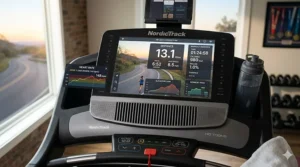
6. Bowflex Treadmill 22 — Best for Incline Training and Hybrid Workouts
If you’re training for hilly races, mixing running with hiking workouts, or simply believe that treadmill walking at 15% incline is the most underrated fitness tool in existence — the Bowflex Treadmill 22 might be your machine.
The numbers tell the story immediately: -5% decline to 20% incline. That decline capability is rare and valuable — downhill running trains the eccentric quad strength that protects you from quad soreness on race-day descents. And 20% incline opens up serious power-hiking options that challenge your cardiovascular system in ways flat running doesn’t. The 4.0 CHP motor handles these extremes without drama, providing the strongest motor output of any machine in this roundup.
The 22″ × 60″ extended running deck gives you the real estate you need for long strides, and the 22-inch HD touchscreen with JRNY app integration provides intelligent coaching that adapts to your fitness level over time. Unlike iFIT, JRNY tends to feel less pushy about its subscription, though you’ll want it to unlock the adaptive workout features.
The cooling fan system is a genuine standout — three-speed and positioned well for actual airflow at running height, not just a token plastic fan pointing vaguely in your direction. Long runs in warm rooms will feel measurably more tolerable.
Runners who also do walking-based fitness or who live in mountainous areas consistently rave about the incline range; some note that the JRNY app, while solid, lacks the depth of iFIT’s class library.
✅ Industry-leading -5% to 20% incline/decline range
✅ 4.0 CHP motor handles extreme inclines without strain
✅ Effective multi-speed cooling fan system
❌ JRNY content library smaller than iFIT or Peloton
❌ Large footprint even by treadmill standards
Price range: $1,699–$1,999 range — check current pricing on Amazon. For runners who train for varied terrain or want incline walking as part of their program, nothing in this price range competes.
7. Sole F85 — Best Premium Alternative to the F80
Think of the Sole F85 as everything that made the F80 great, turned up a notch in every direction. Same legendary build quality. Same commitment to durability. Same app-neutral philosophy. But now with a 4.0 CHP motor, improved cushioning, and a more refined console experience.
The 22″ × 60″ running surface remains intact, and Sole’s Cushion Flex technology carries over — but the F85 introduces a more robust response system that handles the extra motor output smoothly. At 12 mph sustained pace during interval work, the F85 feels noticeably more planted than the F80, which itself was already solid.
Where the F85 earns its premium is in commercial-grade durability. Sole originally designed the F85 for gym environments — heavy daily use by multiple users. At home, that translates to a machine that shrugs off 500-mile years. The lifetime frame and motor warranty carries over, and at the F85’s price point, the long-term value calculation shifts significantly in its favor.
The 10.1-inch Android touchscreen is capable and responsive, and Bluetooth compatibility means Zwift, Peloton app, and Studio all work seamlessly. Still no iFIT lock-in. Still no mandatory subscription to get full use of the machine.
Heavy-use buyers who’ve tried both consistently prefer the F85 for sustained daily mileage; lighter users may find the F80 provides 90% of the experience for less money.
✅ 4.0 CHP commercial-grade motor
✅ Lifetime warranty signals genuine long-term build confidence
✅ No subscription required — connects to any app freely
❌ Price premium over F80 may not justify for casual runners
❌ Basic screen aesthetics compared to NordicTrack or Peloton
Price range: around $1,799 — check current availability on Amazon. The serious long-distance runner who logs 40+ miles a week at home and wants it to last a decade should strongly consider this machine.
How to Choose a Treadmill for Long Distance Running: 6 Criteria That Actually Matter
Not all treadmill specs deserve equal attention. Here’s what experienced distance runners actually evaluate — and what you can ignore.
1. Motor: Continuous HP, Not Peak HP
The single most abused spec in treadmill marketing. “Peak HP” numbers are essentially meaningless for long-distance use — they describe what the motor can do for about three seconds, not what it sustains during a 75-minute run. Look for continuous horsepower (CHP) rated at 3.0 or above. Below that, motors overheat on extended runs and you’ll notice speed inconsistency around the 40-minute mark. Every machine on our list hits 3.5 CHP or higher. That’s not a coincidence.
2. Deck Length: The 60-Inch Standard
Runners with strides above 50 inches — that’s most people above 5’9″ running at 8+ mph — will clip the edge of a 55-inch deck during longer runs, causing subtle gait compensation that accumulates into injury risk over months. Sixty inches is the minimum for serious long distance work. All seven machines here meet that standard.
3. Cushioning System: Firm but Forgiving
This is the nuanced one. Counterintuitively, excessively soft cushioning is bad for distance runners. A deck that absorbs too much energy causes micro-instability at each foot strike, wasting power and stressing stabilizing muscles. What you want is cushioning that reduces peak impact force without eliminating energy return — the way a quality running shoe does. The Sole models and NordicTrack’s RunFlex system both nail this balance.
4. Stability and Deck Stiffness
At 8–10 mph, a wobbly frame creates lateral movement that your body compensates for with every single stride. Multiply that by 1,200 strides per mile and 10 miles, and you’ve added 12,000 unnecessary compensatory movements to your run. Frame weight, steel gauge, and deck width all contribute to stability. Research from the Journal of Biomechanics shows that gait irregularities on unstable surfaces accumulate meaningfully in overuse injury patterns.
5. Cooling Fan System
Dismissed by casual buyers, loved by anyone who’s done a 90-minute run at home. A treadmill without an effective cooling fan system is a treadmill you’ll avoid on hot days. Built-in fans vary wildly in quality — the Bowflex Treadmill 22 and ProForm Pro 9000 lead the category here. If your shortlisted machine has a weak fan, budget for a dedicated stand fan positioned at upper-body height.
6. App Ecosystem vs. App Neutrality
This is a values question more than a spec question. iFIT (NordicTrack/ProForm) offers the deepest automated training experience; Peloton’s classes are the most motivating for community-driven runners; Sole/Horizon/Bowflex let you choose your own adventure. There’s no objectively correct answer — but answer it consciously before you buy, because it affects total cost significantly.
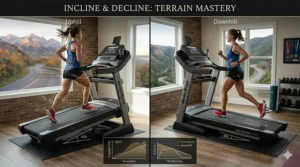
Real Runners, Real Needs: Matching the Right Treadmill to Your Training Profile
Not every runner is the same. Here’s how I’d match the machines to three distinct long-distance runner profiles:
The Half Marathon Trainee (12–25 miles/week)
You’re running 4–5 days a week, building toward a goal race, and you need a machine that can handle moderate mileage with good feedback. The NordicTrack Commercial 1750 or Sole F80 are your best fits. The 1750 wins if you respond well to data and coaching cues (the iFIT auto-adjustment is legitimately useful during tempo work). The F80 wins if you’re self-directed, hate subscription fees, and just want a dependable machine that won’t need repairs after a year.
Budget: You’re looking at the $1,599–$1,999 range — this is the right spend for someone logging serious weekly mileage. Going cheaper means a weaker motor that degrades noticeably within 18 months of real use.
The Remote Marathon Trainer (35–50+ miles/week)
You need commercial-grade durability, period. The Sole F85 is the machine built for you — the 4.0 CHP motor, commercial-origin frame, and lifetime warranty exist precisely for high-volume users. The Bowflex Treadmill 22 works well here too if your marathon course involves hills and you want to simulate gradient changes. Running 40+ miles weekly on a home treadmill will eat a lesser machine alive within two years.
Budget: Expect to spend $1,799–$2,000. The durability dividend pays itself back quickly when you consider that a motor replacement alone can cost $300–$600.
The Running/Walking Hybrid (Endurance + Hiking Training)
This profile is more common than you’d think — runners who mix long-run training with loaded treadmill walks at steep incline for lower-impact volume days. The Bowflex Treadmill 22 is the obvious choice with its 20% maximum incline, but the Horizon 7.4 AT is a strong runner-up with its 15% incline and superior fold-away design for shared living spaces. If you’re in a small apartment and need to reclaim floor space daily, the Horizon wins on practicality.
Common Mistakes When Buying a Treadmill for Long Distance Running
Mistake #1: Prioritizing Screen Size Over Motor Quality
The 22-inch touchscreen looks gorgeous in marketing photos. But when you’re 75 minutes into a long run and the motor starts hunting — that slight, subtle speed variation that tells you it’s struggling with load — no screen size compensates for that misery. Always spec the motor before the display. Your legs don’t care about 4K resolution.
Mistake #2: Buying Based on Short Treadmill Tests
A 10-minute test jog at a retail store tells you almost nothing about how a machine performs at mile seven. The qualities that matter most for long distance — motor thermal management, deck stability at sustained pace, cushioning fatigue — only reveal themselves after 45+ minutes. This is exactly why spec sheets, warranty length, and user reviews from committed runners carry more weight than in-store impressions.
Mistake #3: Ignoring Total Cost of Ownership
The machine’s sticker price is just the opening bid. Factor in: subscription cost ($39–$44/month for iFIT or Peloton over two years = $936–$1,056), deck lubrication (DIY every 3 months or pay a service tech), and eventual belt/motor replacement costs. A machine with lifetime warranty coverage like the Sole F80 or F85 looks very different in total-cost terms over a five-year ownership window compared to brands offering only 2–3 years on parts.
Mistake #4: Underestimating Deck Noise for Home Use
At 7 am in an apartment building with downstairs neighbors, deck noise is not a minor issue — it can determine whether you actually use the machine or feel too guilty to run early. The Sole models earn consistent praise for whisper-quiet operation. The NordicTrack 1750 is reasonably quiet. The ProForm lineup can run louder under load. Test or read noise-specific reviews before buying if your training schedule involves pre-sunrise running.
Mistake #5: Not Accounting for Water Bottle Holder Placement
This sounds trivial. It is not. On a 60-minute long run, you’ll reach for your water bottle 8–12 times. If the water bottle holder placement requires you to twist sideways or reach behind your hip, that’s 8–12 form interruptions per run, multiplied across months of training. Look for a machine with holder placement at or near console height, within natural forward reach.
Long-Term Cost & Maintenance: What Nobody Tells You Before You Buy
A treadmill is a piece of mechanical equipment. Like a car, it has maintenance needs that separate owners who get 10 years from it from those who get 4.
Lubrication schedule: Every treadmill deck needs silicone lubricant applied under the belt approximately every 3 months or 40 hours of use, whichever comes first. Most brands include lubricant with purchase. Budget $15–$25 per application if buying separately. Skipping this is the single most common cause of premature motor burnout.
Belt tension and alignment: Check monthly. A misaligned belt drifts to one side, creating uneven wear that shortens belt life significantly. Most adjustment requires only a basic Allen wrench and five minutes — it’s in your manual.
Motor ventilation: Treadmill motors need 4–6 inches of clearance behind the rear roller for airflow. Pushing a machine flush against a wall blocks exhaust ventilation and dramatically shortens motor life. This matters especially for machines you’re running long mileage on — heat is the enemy.
Expected lifespans with proper maintenance:
- Budget treadmills ($500–$900): 3–5 years under long-distance use
- Mid-range ($1,000–$1,600): 6–9 years
- Premium ($1,600–$2,500): 10–15+ years (especially Sole with lifetime warranty)
The Mayo Clinic recommends 150–300 minutes of moderate-intensity aerobic activity weekly — a commitment that demands equipment reliability. Investing in proper maintenance protects that investment directly.
For deeper treadmill maintenance guidance, Runner’s World publishes consistently excellent maintenance protocols alongside their machine reviews.
✨ Don’t Miss These Exclusive Deals!
🔍 The right long run treadmill for home use is waiting — each product above links directly to Amazon for current pricing. Whether you’re chasing a half marathon PR or just building a sustainable weekly mileage base, these are the machines that hold up when the miles stack up.
Treadmill for Long Distance Running vs. Outdoor Running: The Real Tradeoffs
The “treadmill vs. road” debate has been running (pun intended) for decades, and most of the loudest opinions come from people who’ve committed exclusively to one or the other. The truth is more nuanced — and according to research published by the National Institutes of Health, biomechanical differences between treadmill and overground running are measurable but smaller than most runners assume.
| Factor | Treadmill | Outdoor Running |
|---|---|---|
| Impact on joints | Lower (with cushioning) | Higher (especially concrete) |
| Weather dependence | None | Significant |
| Terrain variety | Limited (incline/decline only) | Complete |
| Wind resistance simulation | Absent (1% incline compensates) | Natural |
| Mental challenge | Higher (monotony factor) | Lower |
| Safety | Complete | Variable |
Analysis: The most important practical insight from this comparison: set your treadmill to 1% incline for all easy and moderate runs. This small adjustment compensates for the absent wind resistance that outdoor running creates, making your treadmill pace more accurately comparable to outdoor race pace. Multiple biomechanical studies confirm this is the appropriate calibration. Ignore this and you’ll show up to a race wondering why your comfortable treadmill pace feels harder outdoors.
The extended running deck on machines like the NordicTrack 1750 and Sole F80 also more closely approximates the natural stride length you’d use outdoors — another reason why deck length matters more than marketing budgets suggest.
FAQ: Best Treadmill for Long Distance Running
❓ What motor size do I need for long distance running?
❓ Is a 20-inch treadmill deck wide enough for long distance running?
❓ Can I train for a half marathon entirely on a treadmill?
❓ How often should I lubricate my treadmill for heavy use?
❓ What is the best treadmill for long distance running under $2,000?
Conclusion: Don’t Let a Bad Machine Ruin Good Training
Here’s the cold truth about buying a treadmill for long distance running: the cheap option is expensive. Not in the list price, but in the cascading way a machine that struggles at mile six costs you confidence, disrupts your training rhythm, and eventually sits unused in a corner of the basement.
The seven machines in this guide aren’t perfect for everyone — nothing is. But they’re the right answer for specific types of runners. If you’re training seriously, logging 25+ miles a week, and investing real mental energy into your program, the equipment beneath your feet deserves the same level of commitment.
The NordicTrack Commercial 1750 is the best overall for most runners. The Sole F80 wins on value and long-term durability. The Horizon 7.4 AT is the move for space-constrained apartments. The Bowflex Treadmill 22 is unmatched for incline variety. The ProForm Pro 9000 makes the iFIT ecosystem accessible at a lower price. The Peloton Tread is the best coaching environment money can buy. And the Sole F85 is the machine you buy when you plan to run on it, hard, for the next decade.
Pick your machine. Trust your training. The miles are waiting.
✨ Ready to Start Running?
🔍 Click any product name above to check current pricing and availability on Amazon. Your next long run is one click away — make sure the machine beneath your feet is worthy of the goal you’re chasing! 🏃♂️💪
Recommended for You
- Best Treadmill for HIIT Workouts: 7 Top Picks for 2026
- Best High Speed Treadmill for Sprinters in 2026: 7 Top Picks
- 7 Best Low Speed Treadmill for Seniors in 2026 — Safe & Proven Picks
Disclaimer: This article contains affiliate links. As an Amazon Associate, I earn from qualifying purchases. If you purchase products through these links, we may earn a small commission at no additional cost to you.
✨ Found this helpful? Share it with your running friends! 💬🤗
