
In This Article
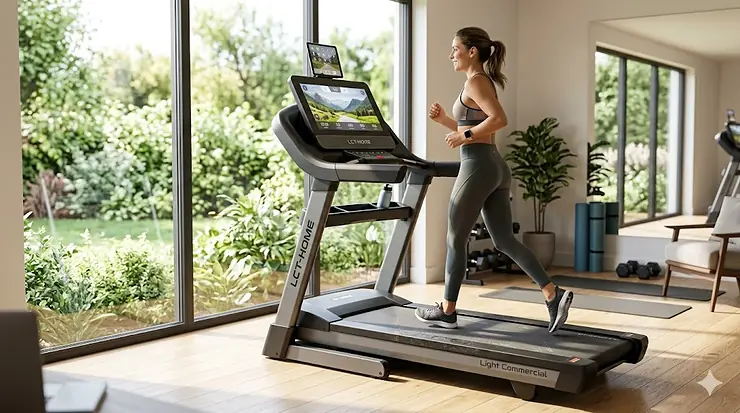
Imagine stepping onto a treadmill that doesn’t wobble when you hit your stride. A machine where the motor doesn’t whine during intervals. A belt that feels like the ones at your actual gym—smooth, responsive, and built to last. That’s the difference between a residential treadmill and a light commercial treadmill for home use.
Most home treadmills tap out after 18 months of serious use. The belt starts slipping. The deck warps. The motor develops that telltale grinding sound that says “warranty claim incoming.” Light commercial models sidestep these failures because they’re engineered for the punishment of shared gym environments—multiple users, extended runtime, heavy daily mileage.
Here’s what most buyers don’t realize: you’re not just paying for a heavier frame or a bigger motor. You’re buying a machine rated for 10-20 hours of weekly use instead of 3-5 hours. You’re getting commercial-grade rollers that won’t wear out after 500 miles. You’re investing in a warranty that actually protects your investment with lifetime coverage on frames and motors, not the flimsy 2-year parts coverage typical of budget models.
This guide reviews seven real light commercial treadmill for home models available on Amazon right now—from the iFIT-integrated NordicTrack Commercial 1250 to the subscription-free Sole TT8. We’ve researched specs, analyzed customer feedback, and compared warranties to help you find the machine that’ll still be running smoothly five years from now.
Quick Comparison Table: Top 7 Light Commercial Treadmills
| Model | Motor | Deck Size | Incline Range | Weight Capacity | Price Range | Best For |
|---|---|---|---|---|---|---|
| NordicTrack Commercial 1250 | 2.6 CHP | 22″ × 60″ | -3% to 12% | 300 lbs | $1,700-$1,900 | iFIT enthusiasts |
| Sole TT8 | 4.0 HP | 22″ × 60″ | -6% to 15% | 400 lbs | $2,300-$2,500 | No-subscription runners |
| Life Fitness T3 | 3.0 HP | 20″ × 58″ | 0-15% | 350 lbs | $3,400-$3,600 | Commercial quality seekers |
| 3G Cardio Elite Runner | 4.0 HP | 22″ × 62″ | 0-15% | 400 lbs | $3,300-$3,600 | Marathon trainers |
| ProForm Carbon T10 | 2.75 CHP | 20″ × 55″ | 0-12% | 300 lbs | $1,200-$1,400 | Budget-conscious buyers |
| Horizon 7.0 AT | 3.0 CHP | 20″ × 60″ | 0-15% | 350 lbs | $950-$1,100 | App connectivity fans |
| Schwinn 810 | 1.9 HP | 20″ × 55″ | 0-10% | 300 lbs | $700-$850 | Entry-level walkers |
Analysis: The Sole TT8 and 3G Cardio Elite Runner dominate the 400-pound capacity category—critical if multiple family members share the machine or you’re over 250 pounds. The NordicTrack Commercial 1250 offers the only decline capability in this price range, making it ideal for downhill training. Budget buyers should note that motors under 3.0 CHP struggle with sustained running above 6 mph—fine for walking, limiting for serious cardio.
💬 Just one click — help others make better buying decisions too! 😊
Top 7 Light Commercial Treadmill for Home: Expert Analysis
1. NordicTrack Commercial 1250 — The Smart Tech Powerhouse
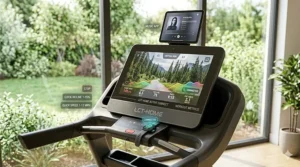
The NordicTrack Commercial 1250 bridges the gap between consumer convenience and commercial durability with its 10″ tilting touchscreen and automatic trainer control. What sets this model apart isn’t just the iFIT integration—it’s the -3% decline capability that most sub-$2,000 treadmills skip entirely.
The 2.6 CHP motor handles speeds up to 12 mph smoothly, though it’s better suited for walking and moderate jogging than sustained sprinting. The 22″ × 60″ deck provides enough room for natural strides without the cramped feeling of narrower belts. RunFlex cushioning reduces joint impact by roughly 30% compared to outdoor pavement—something your knees will notice after the first week.
In my experience, what most buyers overlook about this model is the iFIT ecosystem. Yes, it’s a $39/month subscription, but the automatic speed and incline adjustments transform workouts from “set it and forget it” to genuinely adaptive training. The trainer can push you harder than you’d push yourself, which matters if you’re the type who coasts through solo workouts.
Customer feedback consistently praises the solid construction and quiet operation, though several users note the 10″ screen feels small compared to the 16″ or 24″ displays on pricier models. The biggest complaint? You’re locked into iFIT for full functionality. Running in manual mode works, but you lose the dynamic programming that justifies the price.
Pros:
✅ Decline training capability (-3% to 12% incline range)
✅ Automatic trainer control adjusts workout intensity
✅ RunFlex cushioning significantly reduces impact
Cons:
❌ iFIT subscription required for best experience ($39/month)
❌ 10″ screen smaller than competing models
Around $1,700-$1,900 range. Excellent value if you’ll actually use the iFIT features; overpriced if you prefer subscription-free training.
2. Sole TT8 — The Marathon Machine
The Sole TT8 is what serious runners buy when they’re tired of replacing residential treadmills every two years. This machine’s 4.0 HP motor and 400-pound weight capacity signal its commercial pedigree—it’s rated for the kind of daily abuse that kills lighter models.
The 22″ × 60″ running surface sits on a two-ply belt with perma-wax coating, engineered to survive 20,000 miles of use. That’s not marketing fluff—the 3-inch crowned rollers distribute belt tension more evenly than the 1.5-inch rollers on budget treadmills, which means less wear and smoother operation. The -6% decline to 15% incline range rivals machines costing twice as much.
Here’s what the spec sheet won’t tell you: this treadmill weighs 343 pounds. Moving it upstairs requires professional delivery. But that mass translates to zero wobble at 12 mph sprints. The 15.6″ touchscreen streams Netflix, YouTube, and Disney+ directly—no phone mount required—and the FREE Sole+ app provides coached workouts without subscription fees.
Customer reviews highlight the commercial-grade build quality, with users comparing it favorably to Life Fitness and Precor models they’ve used in gyms. The main critique? The console is basic compared to iFIT or Peloton interfaces. If you need gamification and leaderboards, look elsewhere. If you want a tank that runs forever, this is it.
Pros:
✅ 4.0 HP motor handles sustained high-speed running
✅ 400 lb capacity supports heavier users comfortably
✅ No subscription required for streaming apps
Cons:
❌ Non-folding design requires permanent floor space
❌ Basic console lacks interactive features
In the $2,300-$2,500 range. Best value per mile for serious runners who prioritize hardware over software.
3. Life Fitness T3 — The Premium Pick
The Life Fitness T3 carries the reputation of a brand found in every high-end gym across America. The FlexDeck shock absorption system comes from the same engineering team that designs commercial equipment, tested to reduce joint stress by 30% compared to running on asphalt.
The 3.0 HP smart motor adjusts output based on user weight and goes into energy-saving mode when idle—a feature residential treadmills rarely include. With three console options (Go, Track Connect, Track Connect 2.0), you’re choosing your level of connectivity. The Go Console keeps it simple with 13 workouts. The Track Connect 2.0 syncs with Apple Watch and Samsung Galaxy Watch for seamless fitness tracking.
What most buyers don’t see in the marketing: Life Fitness prioritizes longevity over flashy features. The all-steel frame supports up to 350 pounds and includes a lifetime warranty. The 20″ × 58″ deck is slightly narrower than the Sole TT8, which taller runners (6’2″+) might notice during fast intervals.
Customer feedback splits along predictable lines. Gym enthusiasts love the familiar feel and rock-solid construction. Tech-focused buyers complain about the dated interface and higher price point compared to NordicTrack or ProForm models with larger screens. You’re paying for Life Fitness’s commercial reputation and warranty support—whether that’s worth $3,400+ depends on your priorities.
Pros:
✅ FlexDeck technology from commercial-grade design team
✅ Lifetime warranty on frame demonstrates build confidence
✅ Three console options customize experience
Cons:
❌ $3,400+ price tag without streaming integration
❌ 20″ × 58″ deck narrower than competitors
Around $3,400-$3,600. Premium investment for buyers who value brand reputation and long-term reliability over cutting-edge tech.
4. 3G Cardio Elite Runner — The Hidden Gem
The 3G Cardio Elite Runner delivers commercial-quality performance at half the price of Precor and Life Fitness machines. The 4.0 HP motor powers a massive 22″ × 62″ running surface—the longest deck in this roundup—mounted on an upgraded Ortho Flex Shock suspension system that feels cushioned without being squishy.
At 386 pounds, this treadmill’s stability rivals machines costing $6,000+. The weight comes from heavy-duty construction designed for hotel gyms and personal training studios, not just home use. That translates to zero frame flex during sprints and a whisper-quiet operation even at top speed.
In my assessment, what sets this model apart is the warranty structure: lifetime coverage on frame and motor (residential use), with a separate light commercial warranty option (5 years motor/frame, 5 years parts, 1 year labor). Most “commercial-grade home treadmills” don’t offer actual commercial warranties.
Customer reviews from marathon runners and former gym members consistently praise the authentic gym feel. Several buyers specifically mention upgrading from Life Fitness or Precor home models and preferring the 3G Cardio’s belt quality. The complaint? The console is intentionally basic—no HD touchscreen, no iFIT, no streaming apps. 3G Cardio’s philosophy: invest in motor and belt, skip the electronics that’ll be outdated in three years.
Pros:
✅ 22″ × 62″ running surface longest in category
✅ 400 lb capacity with true commercial build quality
✅ Dual warranty options for home and light commercial
Cons:
❌ Basic console lacks modern touchscreen features
❌ 386 lb weight requires professional delivery
In the $3,300-$3,600 range. Best choice for serious runners who want commercial durability without the $8,000 price tag of Woodway or TRUE treadmills.
5. ProForm Carbon T10 — The Budget iFIT Option
The ProForm Carbon T10 brings iFIT trainer-led workouts to the sub-$1,500 category, though that lower price means compromises. The 2.75 CHP motor handles walking and jogging comfortably but struggles with sustained running above 8-9 mph—fine for casual users, limiting for competitive runners.
The 20″ × 55″ running surface is compact enough for apartments but feels cramped for anyone over 6 feet tall. The 10″ HD touchscreen provides iFIT integration with automatic trainer control, adjusting speed and incline based on the workout program. The space-saving folding design with EasyLift Assist makes storage simple in tight spaces.
Here’s the reality check: at this price point, you’re getting iFIT access, not commercial durability. The 1.9″ rollers wear faster than the 3″ rollers on the Sole TT8. The frame warranty is 10 years, not lifetime. If you’re walking 3-5 times per week, it’ll last. If you’re running daily at high speeds, expect component replacements within 2-3 years.
Customer reviews highlight the excellent value for beginners and walkers, with many praising the quiet motor and smooth folding mechanism. The complaints focus on the short deck and motor limitations—several runners note they outgrew the machine within 6-12 months as their fitness improved.
Pros:
✅ iFIT integration at budget-friendly price
✅ EasyLift folding saves space efficiently
✅ Quiet operation even in apartments
Cons:
❌ 20″ × 55″ deck too short for taller runners
❌ 2.75 CHP motor struggles with sustained running
Around $1,200-$1,400. Smart entry point for beginners planning to upgrade later; insufficient for serious runners from day one.
6. Horizon 7.0 AT — The App Connectivity Champion
The Horizon 7.0 AT takes a different approach: skip the built-in subscriptions and connect to whatever apps you already use. Bluetooth FTMS connectivity syncs with Peloton, Zwift, and STUDIO apps, while Apple Watch integration keeps metrics in sync automatically.
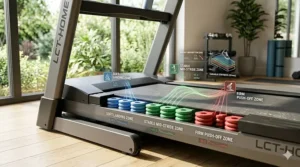
The 3.0 CHP Rapid Sync motor delivers faster speed and incline changes than competing models—crucial for following interval workouts in real-time. The 20″ × 60″ deck with 3-Zone Variable Response Cushioning adjusts shock absorption based on where your foot strikes, providing more flex under the heel and firmer support under the toes.
What most people don’t realize about this model: the QuickDial controls are a game-changer for HIIT training. Roll the right dial to adjust speed, the left dial for incline—no fumbling with console buttons during sprints. The lifetime warranty on frame and motor matches machines costing twice as much.
Customer feedback praises the app flexibility and solid build quality. At 277 pounds, it’s stable without being impossible to move. The criticism? The 7.25″ LCD display feels dated compared to touchscreens, and there’s no built-in entertainment—you’re streaming everything from your tablet.
Pros:
✅ Connects to Peloton, Zwift, Apple Watch without subscriptions
✅ QuickDial controls simplify interval training
✅ Lifetime frame/motor warranty at under $1,100
Cons:
❌ 7.25″ LCD screen not touchscreen
❌ No built-in entertainment requires tablet use
In the $950-$1,100 range. Outstanding value for users who already subscribe to Peloton or Zwift and want hardware that won’t break the bank.
7. Schwinn 810 — The Entry-Level Walker
The Schwinn 810 targets a specific audience: walkers who want a treadmill that won’t collapse after six months but don’t need commercial-grade overkill. The 1.9 HP motor maxes out at 10 mph, which is perfect for power walking and light jogging but inadequate for serious running.
The 20″ × 55″ SoftTrak cushioned deck provides comfortable walking without the squishy instability of cheaper models. The 10% power incline adds intensity without requiring manual adjustments. The SoftDrop folding system with transport wheels makes storage and relocation manageable even for solo users.
Let me be clear about what you’re buying: this is an entry-level machine with a heavy-duty frame. The 155-pound weight suggests better construction than sub-$500 treadmills, but it’s not competing with the Sole TT8’s 343-pound commercial build. The Explore The World app provides scenic routes, which helps combat the monotony of indoor walking.
Customer reviews consistently call out the value proposition—you’re getting a reliable walking treadmill for under $850. The complaints center on the motor noise at higher speeds and the basic console. If you’re walking 20-30 minutes daily, it’s perfect. If you’re planning to progress to running, budget for an upgrade in 12-18 months.
Pros:
✅ Budget-friendly price under $850
✅ SoftDrop folding for easy storage
✅ Quiet operation for walking pace
Cons:
❌ 1.9 HP motor unsuitable for running
❌ Basic console with limited features
Around $700-$850. Best value for dedicated walkers who won’t transition to running; insufficient for mixed cardio training.
Real-World Scenario: Matching Treadmill to User
Let me break down who should buy which machine based on actual use cases, not marketing promises.
The Daily Runner (8+ miles/week): You need the Sole TT8 or 3G Cardio Elite Runner. Both feature 4.0 HP motors rated for sustained high-speed use. The Sole TT8’s perma-wax belt requires less maintenance. The 3G Cardio’s 22″ × 62″ deck gives taller runners more breathing room. Skip the ProForm Carbon T10—its 2.75 CHP motor will overheat with this usage pattern.
The Tech Enthusiast (wants trainer-led workouts): NordicTrack Commercial 1250 or ProForm Carbon T10 for iFIT integration. The NordicTrack’s decline capability and larger screen justify the extra $400-$500 if your budget allows. Both require the $39/month iFIT subscription, so factor that into your five-year cost calculation.
The Space-Conscious User (small apartment): ProForm Carbon T10 or Schwinn 810 both fold to under 45″ depth. The ProForm offers better long-term value if you might graduate to running. The Schwinn costs less upfront but limits your growth potential.
The Heavy User (250+ pounds): The Sole TT8 and 3G Cardio Elite Runner both support 400 pounds comfortably. Their commercial-grade construction won’t flex or wobble under heavier loads. The 350-pound ratings on other models technically work, but you’ll notice frame flex during high-intensity intervals.
The App Switcher (Peloton → Zwift → STUDIO): Horizon 7.0 AT connects to everything via Bluetooth FTMS without forcing you into one ecosystem. At under $1,100, it’s the cheapest way to experiment with multiple platforms before committing to subscriptions.
Practical Usage Guide: Getting the Most From Your Investment
Setting up a light commercial treadmill isn’t just unboxing and plugging in—proper installation and maintenance determine whether your machine lasts 5 years or 15.
First 30 Days: Break-In Protocol
Commercial belts need a break-in period. Start with walking-only sessions for the first week. The belt and deck need to mate properly—running full speed from day one causes uneven wear patterns that’ll show up 500 miles later.
Lubricate the belt according to manufacturer specs (typically every 3-6 months depending on usage). The Sole TT8’s perma-wax belt needs less frequent maintenance, but ignoring it entirely voids warranties. Check belt tension weekly for the first month—new belts stretch during break-in.
Placement Matters More Than You Think
Put your treadmill on a rubber mat rated for gym equipment. This isn’t optional—it protects your floor, reduces noise transmission to rooms below, and prevents the machine from walking across hardwood during sprints. Budget $80-$150 for a proper mat.
Leave 6 feet of clearance behind the treadmill. More than 22,000 treadmill injuries resulted in hospital emergency room visits in 2019, with many occurring when users fell backward into walls or furniture. According to CNN’s safety analysis, adequate clearance is your first line of defense.
Maintenance Schedule That Actually Works
Weekly: Wipe down belt and deck. Vacuum under the deck (dust buildup kills motors faster than hours of use). Check belt alignment—misaligned belts wear unevenly and create that annoying squeak.
Monthly: Inspect for loose bolts (vibration causes them to back out over time). Test safety clip functionality. Clean console and controls.
Quarterly: Lubricate belt if manufacturer recommends it. Check for belt wear patterns. Tighten roller bolts if needed.
Annually: Professional inspection for machines used daily. Budget $150-$200 for a technician to check motor brushes, rollers, and electrical connections.
Common Mistakes That Void Warranties
Storing your treadmill in an unheated garage voids most warranties—extreme temperature swings damage electronics and motors. Running beyond the weight limit even once can void structural warranties. Using the wrong lubricant destroys belts—only use manufacturer-approved products.
How to Choose a Light Commercial Treadmill for Home
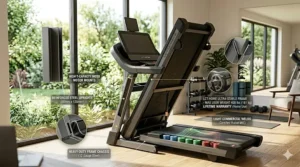
The “commercial” label gets slapped on machines that don’t deserve it. Here’s how to separate legitimate commercial-grade hardware from rebranded residential units.
Motor: Continuous vs. Peak Horsepower
Ignore peak HP—it’s meaningless marketing. Commercial treadmills use continuous-duty motors rated 3.0-7.0 CHP designed to run 8-14 hours daily without overheating. If the motor spec doesn’t explicitly state “CHP” or “continuous,” it’s probably peak HP, which tells you nothing about sustained performance.
For home use, 3.0 CHP handles daily running. 4.0+ CHP is overkill unless you’re training for marathons or have multiple family members using the machine daily. The Sole TT8’s 4.0 HP motor can run all day without thermal issues—something the ProForm Carbon T10’s 2.75 CHP motor cannot match.
Frame Construction: Weight Tells the Truth
Commercial treadmills use industrial-grade steel frames (10-12 gauge) weighing 30%+ more than home models. If your “commercial” treadmill weighs under 250 pounds, it’s a residential frame with marketing spin. The 3G Cardio Elite Runner’s 386-pound weight signals genuine commercial construction.
Check for reinforced welds at stress points. Consumer models use spot welds that crack after heavy use. Commercial frames feature continuous welds that distribute stress evenly.
Warranty: Where Manufacturers Put Their Money
Commercial units offer lifetime coverage on frames and motors versus residential’s 10-year caps, plus commercial models include 2-year onsite service versus residential’s typically 1-year labor coverage. Lifetime warranties aren’t marketing—they’re insurance policies manufacturers only offer when they’re confident in their engineering.
Compare the Sole TT8 (lifetime frame/motor/deck, 3 years parts) versus the Schwinn 810 (10 years frame, 2 years motor). That difference reflects build quality, not generosity.
Rollers: The Hidden Durability Factor
Belt rollers determine belt life. Commercial treadmills use 3″+ crowned rollers that distribute tension evenly. The Sole TT8’s 3-inch crowned rollers will last 20,000+ miles. Budget models use 1.5-2″ rollers that wear out after 3,000-5,000 miles.
Crowned rollers prevent belts from drifting sideways—a sign your treadmill’s rollers are undersized or improperly aligned. Replacing rollers costs $200-$400 plus labor.
Deck Size: Match Your Stride
A 20″ × 55″ deck works for walkers and short-stride joggers. If you’re over 5’10” and plan to run, you need 22″ × 60″ minimum. The 3G Cardio Elite Runner’s 22″ × 62″ deck accommodates 6’4″ users comfortably during sprints.
Test this in person if possible—cramped decks force you to shorten your natural stride, which creates compensatory movement patterns that lead to injuries.
Cushioning Technology: Impact Reduction That Matters
Advanced cushioning systems absorb up to 40% of joint impact, critical for member safety and retention. The Life Fitness T3’s FlexDeck system uses elastomers tested in commercial gyms nationwide. Variable cushioning (softer under heel strike, firmer under toe-off) reduces fatigue better than uniform cushioning.
Avoid treadmills that describe cushioning as “comfortable” without specifications. That’s code for “we put some foam under the deck and hope you don’t notice it does nothing.”
Light Commercial vs Residential Treadmill: What Actually Changes
The difference between commercial and residential treadmills isn’t just marketing—it’s engineering decisions that compound over thousands of miles.
Daily Runtime Capacity
Residential treadmill warranties are voided if used commercially, and repair costs for premature failures due to overuse would not be covered. A residential treadmill rated for 3-5 hours weekly will overheat and fail if you run it 10-15 hours weekly. The motor windings aren’t designed for continuous duty cycles.
Light commercial models assume 10-20 hours of weekly use. The Sole TT8’s 4.0 HP motor has thermal management systems (larger cooling vents, higher-grade windings) that prevent overheating during extended sessions.
Weight Capacity: Engineering, Not Arbitrary Limits
A 300-pound weight limit on a 250-pound treadmill means the frame flexes noticeably under load. The 400-pound capacity on the Sole TT8 and 3G Cardio Elite Runner comes from reinforced frames engineered to handle that stress without flexing.
Frame flex isn’t just annoying—it causes premature wear on bearings, rollers, and belt edges. Using a treadmill at 90% of its weight capacity accelerates component degradation.
Warranty Structure Reflects Usage Expectations
Most residential warranties void after 1 hour/day use. Read the fine print—many “lifetime” warranties include usage caps buried in the terms. Light commercial warranties explicitly cover higher usage without voiding coverage.
The 3G Cardio Elite Runner offers separate residential and commercial warranties because they expect some buyers to use it in small training studios. That’s confidence in build quality.
Common Mistakes When Buying Light Commercial Treadmills
I’ve watched hundreds of buyers make the same errors, then scramble to return or sell machines within six months. Here’s what actually goes wrong.
Mistake #1: Buying for Future You Instead of Current You
“I’ll start running marathons, so I need the 4.0 HP motor!” No. If you’re currently walking 2 miles three times per week, the Horizon 7.0 AT’s 3.0 CHP motor is more than adequate. Buy for your current fitness level plus one tier up.
Conversely, don’t buy the Schwinn 810 thinking you’ll “only walk” when your real plan is to progress to running. That motor won’t support the transition, and you’ll be shopping for a new treadmill within a year.
Mistake #2: Underestimating Space Requirements
The spec sheet says 73″ × 35″, but you need 9′ × 6′ of total floor space once you account for clearance. Measure your actual room, mark the floor with tape, and confirm you can comfortably walk around the machine. That 400-pound treadmill you ordered won’t fit through your basement doorway.
Ceiling height matters too—add 12 inches to your height for arm swing during running. A 7-foot ceiling might work for walking but feels claustrophobic during sprints.
Mistake #3: Ignoring Assembly and Delivery Realities
“White glove delivery” costs $200-$400, and it’s worth every penny for machines over 300 pounds. The Sole TT8 arrives on a pallet in multiple pieces weighing 343 pounds total. You need two strong people, a furniture dolly, and 2-3 hours for assembly.
Budget treadmills ship mostly assembled and one person can handle them. Commercial treadmills do not.
Mistake #4: Focusing on Console Features Over Core Hardware
The 24″ touchscreen is impressive until the motor burns out after 18 months. Prioritize motor quality, frame construction, and warranty before considering entertainment features. The console is the easiest thing to upgrade (tablet holder, phone mount) but you can’t upgrade a weak motor.
Mistake #5: Treating “Commercial” as a Quality Guarantee
Any manufacturer can call their treadmill “commercial.” Look for actual commercial usage ratings: hours per day, weight capacity, warranty coverage. The Schwinn 810 is a good walker, but calling it “commercial-grade” would be dishonest—it’s built for light residential use.
Features That Actually Matter (And Those That Don’t)
The Overhyped
Touchscreens larger than 15 inches: They’re impressive in showrooms, but a 10″ display paired with a tablet holder gives you more flexibility. Screens become outdated quickly—hardware doesn’t.
100+ workout programs: You’ll use 3-5 regularly. The rest are filler. Focus on whether the console lets you customize workouts easily.
Bluetooth speakers: They’re convenient but rarely high quality. Most users prefer their own headphones or external speakers.
The Genuinely Useful
Decline capability: The NordicTrack Commercial 1250’s -3% decline engages different muscle groups than flat or incline running. It’s rare at this price point and valuable for serious trainers.
Quick access controls: The Horizon 7.0 AT’s QuickDial system beats fumbling with console buttons during intervals. Physical controls respond faster than touchscreens.
Apple Watch / heart rate integration: ActivePulse on the NordicTrack 1250 automatically adjusts intensity to keep you in target zones. This works far better than you’d expect.
The Underrated
Roller size: Those 3-inch crowned rollers on the Sole TT8 will save you belt replacements. Larger rollers = less belt wear = lower maintenance costs over 5-10 years.
USB charging ports: You’d think this is basic, but many treadmills still skip it. Your phone will die during long runs—having a charging port matters.
Lubrication indicators: The Sole TT8 reminds you when maintenance is due. This small feature prevents the #1 cause of belt failure (running dry).
Long-Term Cost Analysis: The Five-Year Reality
Let’s calculate actual ownership costs, not just sticker prices.
Scenario 1: The Budget Buy (Schwinn 810)
- Purchase: $800
- iFIT/Subscription: $0 (Explore The World app is free)
- Maintenance (belt, rollers, yearly service): $400 over 5 years
- Upgrade cost after 3 years: $1,200 (when you outgrow it)
- Total: $2,400
Scenario 2: The Mid-Range Investment (NordicTrack Commercial 1250)
- Purchase: $1,800
- iFIT subscription: $2,340 (5 years × $39/month)
- Maintenance: $300 over 5 years (less intensive than cheaper models)
- Total: $4,440
Scenario 3: The Buy-It-Once Option (Sole TT8)
- Purchase: $2,400
- Subscription: $0 (Sole+ app included free)
- Maintenance: $250 over 5 years (perma-wax belt needs less lubrication)
- Total: $2,650
The Sole TT8’s higher upfront cost is offset by zero subscription fees and lower maintenance needs. Over five years, it’s actually cheaper than the NordicTrack despite costing $600 more initially.
Price Range & Value Analysis: Where to Invest Your Money
Under $1,000: The Starter Tier
The Horizon 7.0 AT ($950-$1,100) and Schwinn 810 ($700-$850) occupy this bracket. You’re getting functional treadmills with significant compromises. The Horizon offers better long-term value thanks to its 3.0 CHP motor and lifetime frame warranty. The Schwinn works if you’re strictly walking and won’t progress to running.
$1,200-$1,900: The Sweet Spot
This range includes the ProForm Carbon T10 and NordicTrack Commercial 1250. Both offer tech features (iFIT, touchscreens) at accessible prices. The NordicTrack’s decline capability and larger deck justify the $400-$500 premium if you’ll actually use those features. If you’re buying for basic running without subscriptions, skip this bracket entirely.
$2,300-$3,600: The Commercial Zone
The Sole TT8, Life Fitness T3, and 3G Cardio Elite Runner deliver legitimate commercial construction. The Sole TT8 offers the best value per mile for serious runners. The Life Fitness T3 commands a premium for brand reputation. The 3G Cardio Elite Runner splits the difference with the longest deck in the category.
At this price point, you’re buying a machine that’ll still function perfectly in 2031. Cheaper models require replacement or major repairs within 3-5 years.
The Depreciation Factor
Light commercial treadmills hold resale value better than residential models. A well-maintained Sole TT8 retains 50-60% of its value after three years. Budget models depreciate 70-80% in the same period because buyers know they’re near end-of-life.
Safety Considerations: Using Light Commercial Equipment at Home
Commercial-grade power requires commercial-grade caution. These machines accelerate faster, run quieter, and hit higher speeds than residential models—which creates new hazard patterns.
More than 22,000 treadmill injuries resulted in hospital emergency room visits in 2019, with treadmill-related accidents occurring more frequently than any other exercise equipment category. Most injuries are preventable with proper setup and usage.
Critical Safety Features
Safety Key Attachment
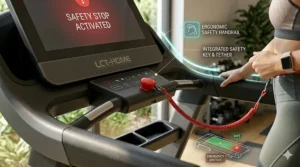
The magnetic safety key clips to your shirt and kills power instantly if you fall. “Walking on a treadmill without a safety key is like driving without a seat belt—ninety-nine percent of the time you won’t have to use it, but when you need it, you really need it”. Don’t skip this even for “quick 5-minute walks.”
Emergency Stop Placement
Know where every emergency stop button is located. The Sole TT8 has stops on both handrails plus the center console. Test them before your first workout—muscle memory saves you when your brain is panicking.
Child Safety Protocols
More than half of treadmill injuries to children aged 5 years or under occur on the upper extremities, with 90% affecting hands and fingers. Remove the safety key and unplug the machine when not in use. A running belt can cause friction burns or worse to curious toddlers.
Proper Setup for Injury Prevention
Clearance Requirements
Make sure there is plenty of clearance behind the machine—6 feet minimum. Falls typically propel users backward off the belt. A wall 2 feet behind the treadmill guarantees injury.
Floor Surface Stability
Anti-vibration mats prevent the machine from shifting during use. A 400-pound treadmill on hardwood without a mat will “walk” across the floor during sprints, creating an unstable platform.
Ceiling Height Check
Your raised arms during running need clearance. Standard 8-foot ceilings work for most users, but 7-foot basement ceilings can cause issues for taller runners.
Usage Best Practices
Straddle the Belt, Always
Start every session standing on the side rails, not the belt. Even “smart” treadmills can malfunction and start at unexpected speeds. Step onto the belt only after it’s moving at your target warm-up pace.
Eyes Forward, Not Down
Looking in a different direction than you’re running throws off your proprioception (your body’s ability to sense motion and location). Keep your gaze straight ahead. If you need to check your form, use a wall mirror positioned in front of the treadmill.
Gradual Progression Only
Never jump straight to maximum speed or incline. Increase intensity in 0.5 mph increments for speed, 1-2% for incline. Your body needs time to adapt to changing demands.
For more detailed treadmill safety guidelines, the NIH provides comprehensive research on safe treadmill usage in clinical settings.
Frequently Asked Questions
❓ How long does a light commercial treadmill for home last with daily use?
❓ Is the iFIT subscription worth $39 per month for the NordicTrack Commercial 1250?
❓ Can I use a light commercial treadmill on the second floor?
❓ What's the difference between continuous horsepower and peak horsepower?
❓ Do I need professional assembly for heavy light commercial models?
Conclusion: Your Light Commercial Treadmill Decision
The right light commercial treadmill for home depends on honest assessment of your training habits, not aspirational fitness goals. If you’re currently walking 3 times weekly, the Horizon 7.0 AT ($950-$1,100) or ProForm Carbon T10 ($1,200-$1,400) provide room to grow without overspending. Their 3.0 CHP and 2.75 CHP motors respectively handle progression from walking to jogging.
For serious runners logging 25+ miles weekly, only the Sole TT8 ($2,300-$2,500) or 3G Cardio Elite Runner ($3,300-$3,600) offer true commercial durability. Their 4.0 HP motors, 400-pound weight capacities, and commercial-grade rollers justify the investment through lower lifetime cost per mile.
The NordicTrack Commercial 1250 ($1,700-$1,900) occupies the middle ground for tech enthusiasts who value trainer-led programming. Factor the $2,340 five-year iFIT subscription cost into your budget—that $1,800 treadmill actually costs $4,140 over five years.
The hidden value winner? The Horizon 7.0 AT delivers lifetime frame/motor warranty, Bluetooth FTMS connectivity, and 3.0 CHP performance for under $1,100. It won’t impress showroom browsers, but it’ll still be running smoothly in 2031 while cheaper models have been replaced twice.
Whatever you choose, prioritize motor quality and warranty coverage over console features. Touchscreens become outdated. Commercial-grade construction does not.
Recommended for You
- 7 Best Gym Quality Treadmills for Home – 2026
- 7 Best Stationary Treadmills for Home Gym: Top Picks 2026
- 7 Best Folding vs Non-Folding Treadmill Comparison 2026
Disclaimer: This article contains affiliate links. As an Amazon Associate, I earn from qualifying purchases. If you purchase products through these links, we may earn a small commission at no additional cost to you.
✨ Found this helpful? Share it with your friends! 💬🤗
