In This Article
You know that feeling when you’re about to start a workout, but first you need to wrestle with folding mechanisms, double-check stability settings, and pray the thing doesn’t wobble when you hit your stride? Yeah, I’ve been there too.
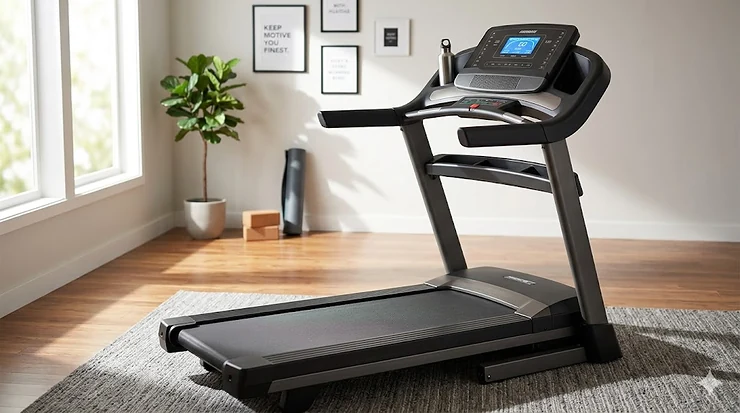
Here’s the thing about stationary treadmill models: they’re the antithesis of those flimsy, fold-up compromises gathering dust in your spare bedroom. When you commit to a non folding treadmill, you’re making a statement. You’re saying “I’m serious about my fitness, and I need equipment that’s just as committed as I am.”
The permanent treadmill for home gym setup transforms your space into a legitimate training center. Unlike their portable cousins that shimmy and shake at higher speeds, a fixed treadmill for basement or dedicated fitness room stands firm through sprint intervals, long runs, and everything in between. The stable treadmill for running experience you get from these machines simply can’t be replicated by folding models that prioritize space-saving over performance.
According to the Centers for Disease Control and Prevention, regular physical activity provides immediate and long-term health benefits, including reduced risk of heart disease, improved brain health, and better sleep quality. A dedicated cardio equipment piece in your home removes the barriers between you and consistent exercise.
What makes these machines special? Weight. Stability. Industrial-grade construction. We’re talking about 250-350 pound behemoths engineered for thousands of hours of punishment. The kind of permanent fitness installation that your grandkids will inherit someday (probably still running perfectly). Whether you’re training for a marathon or just trying to outrun your office job’s sedentary effects, the non-portable treadmill category delivers performance you can feel with every footfall.
Quick Comparison Table
| Treadmill Model | Motor Power | Running Surface | Price Range | Best For |
|---|---|---|---|---|
| NordicTrack Commercial 2450 | 3.6 CHP | 22″ x 60″ | $2,499 | iFIT enthusiasts & serious runners |
| Sole F80 | 3.5 CHP | 22″ x 60″ | $1,799-$1,899 | Budget-conscious quality seekers |
| Horizon 7.0 AT | 3.0 CHP | 20″ x 60″ | $999 | Value-minded joggers & walkers |
| Peloton Tread | N/A | 20″ x 59″ | $3,295 | Interactive class devotees |
| ProForm Carbon Pro 2000 | 3.0 CHP | 20″ x 60″ | $1,699-$1,899 | Tech-savvy trainers |
| LifeSpan TR3000i | 2.75 CHP | 20″ x 56″ | $1,299 | Compact space solutions |
| Woodway Curve LTG | Manual | 17″ x 62″ | $3,995 | Performance athletes & HIIT |
💬 Just one click – help others make better buying decisions too! 😊
Top 7 Stationary Treadmills: Expert Analysis
1. NordicTrack Commercial 2450 – The Premium All-Rounder
When you step onto the NordicTrack Commercial 2450, you immediately notice the difference. This beast doesn’t just sit in your basement; it commands respect with its commercial-grade construction and whisper-quiet operation.
Key Specifications:
- 3.6 CHP motor (smooth as butter, even at 14 MPH max speed)
- 22″ x 60″ running deck with decline capability (-3% to 15% incline)
- 24″ HD touchscreen with iFIT integration
The NordicTrack Commercial 2450 is what happens when engineers decide that home treadmills shouldn’t compromise on anything. That massive 24-inch screen isn’t just for show – it brings trainer-led workouts from around the globe directly into your training space. The automatic trainer control adjusts speed and incline based on your chosen workout, which means you can focus entirely on form and breathing.
Price: $2,499
Customer Feedback: Users consistently praise the machine’s stability during high-intensity intervals and the decline feature that sets it apart from competitors. One marathon trainer noted it handles his 200-pound frame at full sprint without a hint of wobble.
✅ Pros:
- Industry-leading 14 MPH top speed for serious runners
- Decline training capability for comprehensive hill simulation
- Commercial-grade durability with lifetime motor warranty
❌ Cons:
- iFIT subscription required for full feature access ($39/month)
- Substantial footprint requires dedicated space
2. Sole F80 – The Subscription-Free Powerhouse
The Sole F80 represents everything right about the fitness industry when companies choose substance over subscriptions. This machine delivers commercial-grade performance without the monthly fees that nickle-and-dime you into poverty.
Key Specifications:
- 3.5 CHP motor with lifetime warranty
- 22″ x 60″ running surface with Cushion Flex deck
- 10.1″ Android-powered touchscreen with 12 pre-loaded apps
What makes the Sole F80 special? It’s the anti-subscription rebellion. While competitors lock features behind paywalls, Sole gives you Netflix, YouTube, Hulu, and Spotify access right out of the box. The 350-pound weight capacity speaks to its robust construction, and that lifetime warranty on both frame and motor shows Sole’s confidence in their engineering.
Price: $1,799-$1,899
Customer Feedback: Owners love the “set it and forget it” reliability. One user reported 2,000+ miles over three years with zero maintenance issues. The built-in wireless phone charging pad gets mentioned frequently as a thoughtful touch.
✅ Pros:
- Zero subscription fees with full entertainment access
- Exceptional joint cushioning (40% impact reduction vs. pavement)
- Incredibly quiet operation won’t disturb family members
❌ Cons:
- No decline feature (incline only goes to 15%)
- Screen smaller than premium competitors
3. Horizon 7.0 AT – The Budget Champion
Don’t let that $999 price tag fool you. The Horizon 7.0 AT punches way above its weight class with features you’d expect from machines costing twice as much.
Key Specifications:
- 3.0 CHP motor with lifetime warranty
- 20″ x 60″ running deck with 3-Zone cushioning
- QuickDial controls for instant speed/incline adjustments
The Horizon 7.0 AT is all about smart compromises. Yes, the screen is smaller (7.25″ LCD). Yes, it tops out at 12 MPH instead of 14. But here’s what matters: it’s built like a tank, runs whisper-quiet, and connects seamlessly to your favorite training apps via Bluetooth.
Price: $999
Customer Feedback: Users appreciate the intuitive QuickDial controls that let you adjust speed and incline mid-stride without breaking rhythm. The 60-inch deck accommodates taller runners comfortably, addressing a common complaint with budget models.
✅ Pros:
- Unbeatable value proposition under $1,000
- Responsive motor perfect for interval training
- Lifetime frame and motor warranty
❌ Cons:
- Basic LCD display lacks touchscreen functionality
- Manual incline adjustment on some workout modes
4. Peloton Tread – The Interactive Experience
The Peloton Tread isn’t just a treadmill; it’s your connection to a global community of runners and world-class instructors who somehow make you excited about 5 AM workouts.
Key Specifications:
- Compact 68″ x 33″ footprint
- 21.5″ HD touchscreen with 360° swivel
- 59″ running surface with auto-incline (0-12.5%)
What sets the Peloton Tread apart is the ecosystem. Those live classes with real-time leaderboards transform solo training into competitive events. The instructors don’t just count down intervals – they coach, motivate, and occasionally make you laugh mid-sprint. The slatted belt design provides exceptional shock absorption and a more natural running feel.
Price: $3,295
Customer Feedback: The community aspect gets mentioned repeatedly. Users report showing up for workouts they would’ve skipped otherwise, driven by instructor personalities and friendly competition with other members.
✅ Pros:
- Unmatched instructor-led class library
- Premium build quality with excellent shock absorption
- Compact design fits smaller spaces than most commercial-grade options
❌ Cons:
- Requires $49.99/month Peloton All-Access Membership
- 59″ deck slightly shorter than optimal for very tall runners (6’3″+)
5. ProForm Carbon Pro 2000 – The Smart Trainer
The ProForm Carbon Pro 2000 bridges the gap between budget-friendly and premium with intelligent design choices that maximize value.
Key Specifications:
- 3.0 CHP motor with quiet operation
- 20″ x 60″ running surface with ProShox cushioning
- 10″ HD touchscreen with iFIT compatibility
The ProForm Carbon Pro 2000 shines in its integration with iFIT’s global workout library. The automatic trainer control responds to your workout in real-time, adjusting both speed and incline to match the terrain of outdoor routes from Patagonia to Paris. The -3% to 12% incline/decline range adds training versatility missing from many competitors.
Price: $1,699-$1,899
Customer Feedback: Users highlight the smooth, powerful motor performance and the substantial feel during runs. The SpaceSaver design with EasyLift Assist makes storage surprisingly manageable for a machine this robust.
✅ Pros:
- Decline capability rare in this price range
- Excellent shock absorption protects joints
- Free 30-day iFIT trial to test full features
❌ Cons:
- Screen becomes basic display without iFIT subscription
- Slightly noisier than Sole F80 at comparable speeds
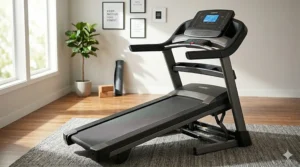
6. LifeSpan TR3000i – The Space-Efficient Performer
The LifeSpan TR3000i proves you don’t need a massive footprint to deliver serious performance, though some trade-offs exist for that compact size.
Key Specifications:
- 2.75 CHP motor (adequate for walkers and joggers)
- 20″ x 56″ running surface
- 38 workout programs including heart rate control
The LifeSpan TR3000i targets the sweet spot between full-size commercial machines and cramped compact models. The 56-inch deck works well for users under 6’2″, and the Intelli-Step feature tracks your steps with impressive accuracy. The 350-pound weight capacity exceeds many competitors in this price bracket.
Price: $1,299
Customer Feedback: Owners appreciate the variety of pre-programmed workouts and the ability to customize programs. The bluetooth speakers and USB charging add convenience for longer sessions.
✅ Pros:
- Excellent weight capacity for the price point
- Extensive program variety (38 workouts)
- Easy-fold design with safety lock mechanism
❌ Cons:
- Smaller motor struggles with sustained running above 8 MPH
- Shorter deck limits stride for taller runners
7. Woodway Curve LTG – The Performance Beast
The Woodway Curve LTG operates on a completely different philosophy than every other machine on this list. This is a manual, curved treadmill that demands you bring the power.
Key Specifications:
- 100% manual operation (no motor)
- 62″ x 17″ slat-belt running surface
- 3% curvature for natural running biomechanics
The Woodway Curve LTG is what serious athletes choose when they want equipment that matches their intensity. Because your legs power the belt, every stride burns 30% more calories than motorized alternatives. The instant response to pace changes makes it perfect for HIIT training – no waiting for motors to ramp up or down.
Price: $3,995
Customer Feedback: Athletes love the natural running feel and the fact that it requires zero electricity. The maintenance-free slat belt design lasts up to 150,000 miles without replacement. Users note a learning curve initially but report improved running form after adaptation.
✅ Pros:
- Burns significantly more calories per session
- Zero electricity costs and minimal maintenance
- Unlimited top speed (you control pace completely)
❌ Cons:
- Narrow 17″ width feels cramped for some runners
- Manual operation proves exhausting for longer steady-state runs
What Makes a Treadmill “Stationary”? Understanding the Difference
A stationary treadmill isn’t just a marketing term – it’s a fundamental design philosophy. These machines prioritize stability, durability, and performance over convenience and portability.
Engineering for Permanence
Traditional folding treadmills use hinges, pins, and locking mechanisms that inevitably introduce weak points. Every joint is a potential failure point. Stationary models eliminate these compromises by building from a single, continuous steel frame.
Think about it: would you rather run on a machine held together with pins and latches, or one welded into a singular piece of construction? The permanent treadmill for home gym approach means heavier gauge steel, larger motors, and industrial bearings designed for commercial gym abuse.
Weight Distribution and Stability
Here’s something most reviews won’t tell you: that extra 100 pounds in a non folding treadmill isn’t wasted metal. It’s strategically distributed weight that keeps the machine planted during your most intense workouts.
When you’re hitting 10+ MPH speeds or doing aggressive HIIT intervals, momentum tries to shift the machine. Lighter, portable models rely on friction pads and your bodyweight to stay put. A stable treadmill for running uses its own mass and wider base to laugh at physics.
Motor Longevity
Folding mechanisms require compromises in motor placement and cooling. Stationary designs position motors optimally for heat dissipation and vibration dampening. That’s why you see lifetime motor warranties on dedicated cardio equipment but only 5-10 years on folding versions.
According to research on treadmill history, modern consumer treadmills evolved from industrial machines designed for constant operation. The stationary approach returns to those reliability roots.
How to Choose Your Perfect Stationary Treadmill
Assess Your Running Style and Goals
Sprint intervals demand different specs than marathon training. If you’re a serious runner logging 30+ miles weekly, prioritize:
- Motors of 3.5+ CHP for sustained high speeds
- Decks measuring at least 60″ long (62″ if you’re over 6 feet tall)
- Advanced shock absorption systems
Walkers and casual joggers can focus on:
- 2.5-3.0 CHP motors (perfectly adequate)
- 56-60″ deck lengths
- Incline capability over top speed
Space Planning: The Non-Negotiable Measurements
Here’s where people mess up: they measure the treadmill’s footprint but forget the safety clearance. You need:
- 24 inches minimum on each side
- 78 inches behind the machine (emergency dismount space)
- 12 inches in front for step-on access
For basement installations, verify:
- Ceiling height accommodates your tallest user plus incline
- Floor can support 400+ pounds (machine plus user)
- Access routes allow delivery (measure doorways and stairwells!)
Budget Reality Check
Quality starts around $999 (Horizon 7.0 AT territory). The $1,500-$2,500 range delivers the sweet spot of features and durability. Above $3,000 enters premium territory with advanced tech and commercial components.
Don’t fall for the financing trap. That $50/month payment seems manageable until you realize you’re paying $2,400 for a $1,800 machine. Buy what you can afford outright, or save for another few months.
Warranty Translation Guide
When manufacturers offer warranties, they’re betting on how long their equipment lasts:
- Lifetime frame/motor: They expect it to outlive you (good sign)
- 5-10 year parts: Normal wear items covered adequately
- 1-2 year labor: Reflects service network confidence
- 90-day anything: Run away screaming
The fixed treadmill for basement category typically carries better warranties than folding models because manufacturers know they’re built to last.

Stationary vs. Folding Treadmills: The Honest Comparison
Benefits of Non-Folding Design
Structural Integrity: Zero moving joints means zero mechanical weak points. Your machine stays aligned, balanced, and solid through thousands of runs.
Performance Consistency: That rock-solid feeling at mile 1 remains identical at mile 1,000. Folding machines develop wobbles, squeaks, and misalignments as hinges wear.
Long-Term Value: A quality stationary treadmill appreciates like a classic car. You could sell a well-maintained Sole F80 for 60-70% of purchase price after five years. Try that with a folding model.
Professional-Grade Features: Manufacturers can include larger motors, better cooling systems, and advanced shock absorption when they’re not compromising for folding mechanisms.
When Folding Makes Sense
Look, I’m not here to trash folding treadmills entirely. They serve a purpose:
- Studio apartments where every square foot matters
- Homes with multiple users who need the space for other activities
- Temporary living situations (military families, renters)
But understand the compromise: you’re trading performance and longevity for convenience. That’s fine if convenience is your priority – just make the choice with open eyes.
The Hybrid Approach: Strategic Placement
Many serious runners choose both: a permanent fitness installation in the basement or spare room for training, plus a compact walking pad for the home office. Different tools for different purposes.
Installation and Setup: What to Expect
Delivery Day Realities
Most stationary treadmills arrive on pallets via freight carrier. Here’s what that means:
Curbside Delivery (Free): They drop it at your curb. You handle everything else. Budget at least 3 hours and recruit 2-3 strong friends. Seriously.
White Glove Service ($150-300): Professionals deliver, unbox, assemble, and remove packaging. Worth every penny for machines over 250 pounds.
Stairs Add Complexity: Each flight of stairs adds 30-45 minutes and considerable injury risk. If your dedicated space is upstairs, pay for professional delivery.
Assembly Process
Most non-portable treadmill models arrive 80% pre-assembled. You’re typically attaching:
- Console and display
- Handrails and safety features
- Front and rear stabilizer bars
Expect 1-2 hours with proper tools. The instruction manuals have improved dramatically – actual photos instead of cryptic diagrams!
Pro Tip: Before you start, completely clear the installation area. Nothing slows assembly like constantly moving boxes and tools around a 300-pound machine.
First Run Calibration
Don’t just jump on and start running. Take 15 minutes to:
- Level the machine using adjustable feet
- Center the belt (most ship slightly off-center)
- Test emergency stop mechanism
- Verify all console functions work
- Run through each speed and incline level briefly
This shake-down prevents small issues from becoming problems at mile 500.
Maintenance: Keeping Your Investment Running Strong
Weekly Checklist (5 Minutes)
- Wipe down belt and frame with dry cloth
- Check belt tracking (should stay centered)
- Tighten any loose handrail bolts
- Clear debris from motor housing vents
Monthly Tasks (15 Minutes)
- Vacuum underneath and around motor housing
- Inspect power cord for damage
- Clean console screen properly (microfiber only!)
- Test emergency stop mechanism
Quarterly Maintenance (30 Minutes)
Belt Lubrication: This is the big one people skip. Most manufacturers recommend silicone-based lubricant every 3 months or 150 hours of use. Too much lubricant causes slipping; too little causes excessive motor strain.
Belt Tension Check: A properly tensioned belt should lift 2-3 inches at the center when machine is off. Too loose causes slippage; too tight strains the motor unnecessarily.
Bolt Inspection: Walk around the machine checking every bolt you can reach. Vibration loosens fasteners over time.
Annual Professional Service
Even the best permanent treadmill for home gym benefits from professional inspection. A technician can:
- Measure motor amperage under load
- Inspect drive belt for wear
- Verify electronics operating within spec
- Identify issues before they become failures
Budget $150-250 for annual service. Cheaper than replacing a motor because you ignored warning signs.
Common Mistakes When Buying a Stationary Treadmill
Mistake #1: Prioritizing Screen Size Over Motor Power
That 24-inch touchscreen looks impressive, but it means nothing if the motor can’t handle your pace. Focus on mechanical specs first, tech features second.
Mistake #2: Ignoring Weight Capacity
Just because a machine “supports” 300 pounds doesn’t mean it performs well at that weight. Add a 50-pound safety margin. If you weigh 250 pounds, shop for 300+ pound capacity ratings.
Mistake #3: Buying for Your Current Fitness Level
You’re going to improve. Buy the machine that challenges your goals, not your current abilities. That 12 MPH max speed seems excessive today, but six months of consistent training changes everything.
Mistake #4: Skipping the Test Run
If possible, try the actual model before buying. Reviews help, but your biomechanics are unique. What feels perfect for a 5’6″ stride might cramp a 6’2″ runner.
Mistake #5: Forgetting About Noise
That “whisper-quiet” motor gets amplified by your floor structure. If your workout space sits above living areas, invest in a quality treadmill mat and extra noise dampening.
Maximizing Your Treadmill Workouts
Progressive Interval Training
The beauty of a dedicated cardio equipment setup is consistency. You can track progress precisely because the machine never changes. Try this progression:
Week 1-2: 30 seconds at 8.0 MPH, 90 seconds recovery at 4.0 MPH (8 rounds)
Week 3-4: 45 seconds at 8.5 MPH, 75 seconds recovery at 4.0 MPH (8 rounds)
Week 5-6: 60 seconds at 9.0 MPH, 60 seconds recovery at 4.5 MPH (8 rounds)
Incline Strategy for Calorie Burn
Running at 1% incline mimics outdoor running’s energy expenditure. Want to maximize calorie burn without increasing speed? Add incline:
- 5% incline = 50% more calories than flat
- 10% incline = 100% more calories than flat
- 15% incline = 150% more calories than flat
The stable treadmill for running category handles steep inclines without the wobble issues that plague cheaper models.
Form and Biomechanics
Your permanent fitness installation allows you to focus on proper form:
- Land mid-foot, not heel-first
- Keep shoulders relaxed and back
- Arms should swing naturally, not cross your centerline
- Eyes forward, not down at the console
Bad form on a treadmill reinforces bad outdoor running habits. Use the consistency to build proper mechanics.
Recovery and Active Rest
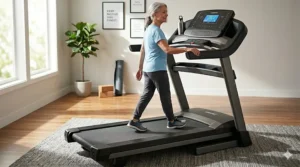
Don’t treat your treadmill like an all-or-nothing sprint machine. Some of the most valuable workouts happen at conversational pace:
- 30-minute easy runs at 60-70% max heart rate
- Walking intervals with steep incline (2.5-3.5 MPH at 12-15% grade)
- Post-strength training active recovery (15 minutes at comfortable pace)
❓ FAQ
❓ How much space do I need for a stationary treadmill?
❓ What's the difference between CHP and HP ratings on treadmill motors?
❓ Can a stationary treadmill increase home resale value?
❓ How often should I replace the belt on a non folding treadmill?
❓ Are manual treadmills like the Woodway Curve better for running form?
Conclusion: Your Journey to Permanent Fitness
Choosing a stationary treadmill represents more than buying exercise equipment. You’re making a commitment to yourself, your health, and your fitness journey. The machines we’ve reviewed here – from the feature-packed NordicTrack Commercial 2450 to the hardcore Woodway Curve LTG – each serve different needs and budgets.
The best choice depends on your specific situation. Serious runners logging high mileage need the robust construction of the Sole F80 or NordicTrack Commercial series. Value seekers get incredible bang-for-buck with the Horizon 7.0 AT. Performance athletes craving authentic training experiences choose the Woodway Curve LTG despite its premium price.
Remember what the CDC emphasizes about physical activity: regular exercise reduces risk of chronic diseases, improves brain health, and extends quality years of life. Your stationary treadmill isn’t an expense – it’s an investment in decades of healthier living.
The machines reviewed here will still be running strong when your kids inherit them. They represent the kind of dedicated cardio equipment that transforms casual exercise into serious fitness. Choose wisely, maintain properly, and you’ll wonder how you ever trained without one.
Your basement gym, spare room, or dedicated fitness space awaits. Pick your machine, commit to the process, and start logging those miles. The hardest step is always the first one – everything else is just putting one foot in front of the other.
Recommended for You
- 7 Best Heavy Duty Treadmills Under $1500 – 2026
- 7 Best Heavy Duty Treadmill for Running 2026 Review
- 7 Best Heavy Duty Treadmill 400 lb Capacity Options in 2026
Disclaimer: This article contains affiliate links. If you purchase products through these links, we may earn a small commission at no additional cost to you.
✨ Found this helpful? Share it with your friends! 💬🤗
