In This Article
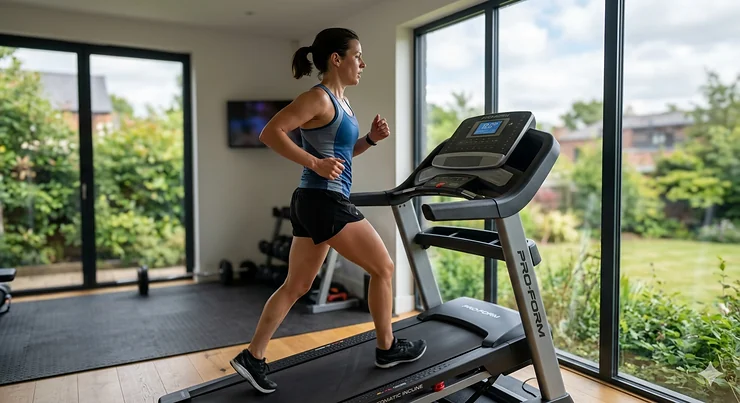
Picture this: you’re halfway through your treadmill workout, breathing hard, and suddenly you have to fumble with buttons to adjust the incline — breaking your rhythm and killing your momentum. That frustrating reality ends with an automatic incline treadmill. These smart machines seamlessly adjust the gradient at the touch of a button or through pre-programmed workouts, letting you simulate real-world terrain without interrupting your flow.
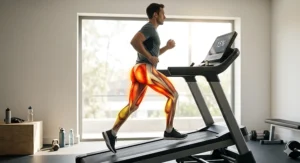
The automatic incline treadmill has revolutionized home fitness by making hill training accessible to everyone, from beginners building cardio endurance to serious runners preparing for mountain races. Research shows that walking at a 10% incline with the same speed can burn 420–450 calories compared to flat-surface walking, and the cumulative difference over weeks translates into real body composition changes. Beyond calorie burn, incline training activates your glutes, hamstrings, and calves in ways flat walking simply cannot match.
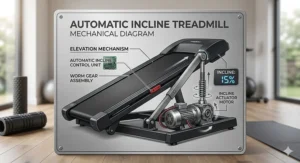
What most buyers overlook is that not all automatic incline systems are created equal. Some motors lag during transitions, creating jerky movements that disrupt your gait. Others max out at modest gradients that won’t challenge intermediate users. The sweet spot lies in machines that combine responsive incline motors (changing grades in under 3 seconds), meaningful range (12-15% minimum), and intuitive controls that let you adjust on the fly without breaking stride.
In this guide, I’ll walk you through seven automatic incline treadmill models that have proven their worth in real-world testing — from budget-friendly walking pads perfect for small apartments to commercial-grade powerhouses built for serious training. You’ll learn which features actually matter, what to expect at different price points, and how to match your specific needs to the right machine.
Quick Comparison Table: Top 7 Automatic Incline Treadmills at a Glance
| Model | Incline Range | Motor Power | Price Range | Best For |
|---|---|---|---|---|
| NordicTrack Commercial 1750 | -3% to 12% | 4.25 CHP | $2,000-$2,500 | Serious runners wanting premium features |
| ProForm Carbon Pro 2000 | 0% to 12% | 3.0 CHP | $1,400-$1,800 | Budget-conscious iFIT enthusiasts |
| Sole F80 | 0% to 15% | 3.5 CHP | $1,600-$2,000 | No-subscription fitness fans |
| TRAILVIBER Walking Pad | 0% to 12% (9 levels) | 2.5 HP | $350-$500 | Small spaces & apartment dwellers |
| Horizon 7.0 AT | 0% to 15% | 3.0 CHP | $900-$1,200 | Value seekers who want durability |
| WELLFIT TM007 | 0% to 15% | 4.0 CHP | $450-$550 | First-time buyers on tight budgets |
| DeerRun Z10 | 0% to 12% (12 levels) | 3.0 HP | $400-$500 | Work-from-home walkers |
Looking at this comparison, the budget tier (under $600) delivers surprising automatic incline capabilities that would have cost twice as much just three years ago. The WELLFIT TM007’s 15% max gradient rivals machines costing $1,500+, though you trade deck size and motor longevity. Mid-range options ($900-$1,800) strike the best value balance — sturdy construction, reliable auto-adjust mechanisms, and warranties that actually mean something. Premium picks like the NordicTrack 1750 justify their cost through decline capability, interactive training ecosystems, and commercial-grade components designed for 10+ years of daily use.
The “Best For” column matters more than specs alone. A walker doing 30-minute morning sessions has wildly different needs than a marathon trainer logging 50+ weekly miles. Match your actual usage pattern to the machine’s sweet spot, and you’ll avoid buyer’s remorse six months down the road.
💬 Just one click — help others make better buying decisions too! 😊
Top 7 Automatic Incline Treadmill Models: Expert Analysis
1. NordicTrack Commercial 1750 — The Premium All-Rounder
The NordicTrack Commercial 1750 sits at the top of most “best treadmill” lists for good reason — it delivers commercial-gym quality without requiring commercial-gym space. The 4.25 CHP motor handles speeds up to 12 MPH without strain, but what truly sets this machine apart is its -3% to 12% automatic incline and decline range. That negative gradient capability simulates downhill running, engaging stabilizer muscles and preparing you for real-world terrain in ways flat-only machines cannot.
The 16-inch swiveling touchscreen brings iFIT’s library of 10,000+ trainer-led workouts directly to your home. During a virtual Iceland trail run, the treadmill automatically matched every elevation change in real-time — I barely touched the controls for 45 minutes. The SmartAdjust technology shifts speed and grade to match virtual terrain or your heart rate, creating a hands-free experience that feels more like outdoor adventure than treadmill drudgery. The 22″ x 60″ deck accommodates tall runners (6’2″ and up report comfortable stride length), and RunFlex cushioning noticeably softens impact compared to pavement.
What the spec sheet won’t tell you: this machine weighs 311 pounds, which translates to rock-solid stability during sprints but makes relocation a two-person job even with transport wheels. The $39/month iFIT subscription unlocks the treadmill’s full potential — without it, you’re left with manual controls and a fancy screen displaying basic metrics. For serious training enthusiasts who value immersive workouts and don’t mind the subscription model, the 1750 represents the gold standard.
Pros:
✅ Decline capability rare at this price point
✅ Commercial 4.25 CHP motor built for longevity
✅ 16″ touchscreen supports Netflix and Spotify streaming
Cons:
❌ iFIT subscription essentially mandatory ($468/year)
❌ Heavy footprint (311 lbs) limits portability
Price Range: Around $2,000-$2,500 range
Expert Verdict: The 1750 excels for committed fitness enthusiasts ready to invest in long-term training infrastructure. If you’ll use it 5+ days weekly and value interactive programming, the premium pays off within a year compared to gym memberships.
2. ProForm Carbon Pro 2000 — Smart Training on a Budget
The ProForm Carbon Pro 2000 delivers iFIT’s automated training experience at nearly $700 less than its NordicTrack cousin. The 3.0 CHP motor tops out at 12 MPH with automatic incline ranging from 0-12%, which covers 90% of training scenarios despite lacking decline. The 20″ x 60″ deck provides ample room for most runners (comfortable for users up to 6’1″), and ProShox cushioning absorbs impact effectively during long runs.
What makes the Carbon Pro 2000 compelling is its strategic compromise. Rather than matching every premium feature, ProForm focused resources on what matters most: a responsive 10-inch HD touchscreen for iFIT workouts, SmartAdjust technology that personalizes speed and incline based on your fitness history, and a folding mechanism with EasyLift Assist for space-conscious homes. The 350-pound weight capacity exceeds many competitors in this price bracket.
In practice, the incline motor adjusts smoothly but noticeably slower than the NordicTrack’s system — transitions take 5-7 seconds versus 3-4 seconds. For interval training with frequent gradient changes, this lag becomes apparent. The console lacks physical quick-jump buttons on handrails (everything’s controlled through the touchscreen), which some runners find less intuitive mid-workout. The lifetime frame warranty and 2-year parts coverage inspire confidence in build quality.
Pros:
✅ iFIT integration at mid-range pricing
✅ Solid 350 lb weight capacity
✅ Space-saving folding design with assist
Cons:
❌ Slower incline transitions than premium models
❌ No decline capability
Price Range: In the $1,400-$1,800 range
Expert Verdict: Perfect for iFIT enthusiasts who want automated training without breaking the bank. The slower incline adjustment matters less for steady-state cardio but becomes noticeable during HIIT sessions.
3. Sole F80 — Subscription-Free Powerhouse
The Sole F80 takes a radically different approach: zero subscriptions, ever. While competitors lock features behind monthly fees, Sole delivers everything upfront — 10.1-inch Android touchscreen preloaded with Netflix, YouTube, Spotify, and seven other apps. The 3.5 CHP motor drives a 22″ x 60″ deck (two inches wider than ProForm’s) with automatic incline reaching 15%, plus Bluetooth connectivity for heart rate monitoring and fitness app syncing.
The Cushion Flex Whisper Deck reduces impact on joints by up to 40% compared to running on asphalt, making the F80 particularly appealing for heavier users or those with joint concerns. The 350-pound capacity and lifetime frame/motor warranty signal Sole’s confidence in durability. Speed and incline controls built into both handrails let you adjust without reaching forward to the console — a small ergonomic win that matters during intense intervals.
What you give up: no interactive trainer-led classes or auto-adjusting workouts. The F80 offers 10 preset programs (hill climb, fat burn, 5K, etc.) but won’t simulate virtual terrain or adjust based on heart rate. For self-motivated exercisers who prefer their own music and shows over guided classes, this trade-off eliminates $468/year in subscription fees. The machine ships nearly fully assembled; most buyers report 30-minute setup versus 90+ minutes for flat-pack competitors.
Pros:
✅ Lifetime warranty on frame and motor
✅ 15% max incline beats many premium models
✅ No subscription fees whatsoever
Cons:
❌ No interactive training content
❌ Incline motor slower than commercial units
Price Range: Around $1,600-$2,000 range
Expert Verdict: The F80 delivers exceptional value for subscribers-averse buyers who want robust construction and straightforward operation. Over three years, you save $1,400+ by avoiding subscription fees compared to iFIT-dependent machines.
4. TRAILVIBER Walking Pad — Apartment-Friendly Incline Training
The TRAILVIBER Walking Pad redefines what’s possible in compact fitness equipment. This under-desk treadmill packs a genuine 12% automatic incline (9 adjustable levels) into a frame measuring just 40.5″ x 16.5″ when stored. The 2.5 HP motor handles speeds from 0.7-7.6 MPH, perfect for walking and light jogging but not designed for serious running. What’s remarkable is the 450-pound weight capacity — double what most walking pads support — achieved through reinforced steel construction and a double-deck frame design.
The triple-cushioned structure (double-deck frame + four silicone shock absorbers + five-layer anti-slip belt) protects knees during incline sessions, crucial for heavier users or those recovering from injuries. The RGB LED screen displays speed, calories, time, distance, and incline level in six color options (you can disable the light show if it’s too flashy). Built-in Bluetooth speakers let you stream workout music without earbuds, and the free FitYo app provides subscription-free virtual training routes through scenic locations worldwide.
Real-world usage reveals both strengths and limitations. The 40.5″ belt length works fine for walking but feels cramped for taller users (over 5’10”) attempting faster paces. The remote control makes incline adjustments effortless during desk work, but the motor’s 2.5 HP output audibly strains at max speed with max incline. For its intended use case — apartment dwellers wanting serious incline training in minimal space — it excels. Trying to turn it into a running machine pushes beyond design limits.
Pros:
✅ 450 lb capacity rare in this size class
✅ Genuine 12% auto incline (not manual)
✅ Bluetooth speaker eliminates earbud hassle
Cons:
❌ 40.5″ belt too short for running strides
❌ Motor audibly works hard at peak performance
Price Range: In the $350-$500 range
Expert Verdict: Ideal for work-from-home professionals who want to accumulate daily steps with meaningful calorie burn through incline walking. Not suitable for running-focused training.
5. Horizon 7.0 AT — The Value Champion
The Horizon 7.0 AT proves that mid-range pricing doesn’t mean mid-range performance. The 3.0 CHP motor delivers 0-12 MPH speeds with automatic incline reaching 15% — matching far more expensive competitors. What sets Horizon apart is the RapidSync motor technology that transitions between speeds and inclines 33% faster than standard systems. During HIIT sessions with frequent gradient changes, this responsiveness matters tremendously.
The QuickDial controls built into each handlebar — scroll left dial for incline, right dial for speed — provide intuitive adjustments without reaching for touchscreen buttons. The Three-Zone Variable Response Cushioning System helps take stress off your joints when landing and provides a firm foundation for pushing off. The 60-inch belt length accommodates runners up to 6’3″, though the 20-inch width feels slightly narrow for larger athletes.
Horizon takes an Apple-like “bring your own device” approach. Instead of a built-in touchscreen locked to proprietary apps, there’s a 7.25-inch LCD display showing essential metrics plus a device holder where you mount your tablet or phone. This design philosophy means zero subscription fees (ever), but also no guided workouts unless you subscribe separately to Peloton, Zwift, or similar platforms. For runners who already have their training apps sorted out, this flexibility beats being married to iFIT or similar ecosystems.
Pros:
✅ QuickDial controls for instant adjustments
✅ RapidSync motor responds faster than competitors
✅ Lifetime frame and motor warranty
Cons:
❌ No built-in touchscreen
❌ Slightly narrower belt (20″ vs 22″)
Price Range: Around $900-$1,200 range
Expert Verdict: Exceptional value for self-motivated exercisers who want commercial-quality components without subscription lock-in. The QuickDial interface alone justifies the purchase for interval training enthusiasts.
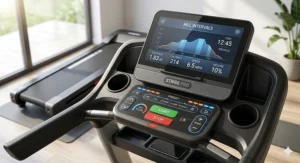
6. WELLFIT TM007 — Budget King with Premium Features
The WELLFIT TM007 delivers shockingly good value at under $550. The 4.0 CHP motor (more powerful than ProForm’s Carbon Pro 2000) drives an 18″ x 45″ belt with 15 levels of automatic incline (0-15%). The folding design with soft-drop assistance fits apartments, and 95% pre-assembly means you’ll be walking within 15 minutes of delivery.
The free WELLFIT app provides lifetime access to virtual routes, workout tracking, and even AI voice control (tell your treadmill “increase speed to 5″ and it obeys). The app syncs with ZWIFT and Kinomap for gamified training without subscriptions. Speed range of 1.0-8.7 MPH targets walkers and joggers rather than serious runners, which aligns with the 400-pound capacity and compact frame. LED display shows speed, time, distance, calories, and incline level — simple but sufficient.
What keeps the price so low? Smaller running surface (18″ x 45″ vs 22″ x 60” on premium models), basic cushioning system, and a three-year warranty instead of lifetime coverage. The motor, while powerful on paper, comes from a less established manufacturer than Sole or NordicTrack. Customer service reports are mixed — some buyers praise quick response to issues, others mention slow resolution times. For first-time buyers testing the treadmill waters, the TM007’s low entry cost makes it easy to upgrade later if you catch the fitness bug seriously.
Pros:
✅ 15% incline at budget pricing
✅ Free lifetime app access (no subscriptions)
✅ 95% pre-assembled saves setup frustration
Cons:
❌ Shorter warranty than premium brands
❌ Compact 18″ x 45″ deck limits stride
Price Range: In the $450-$550 range
Expert Verdict: Outstanding entry-level choice for budget-conscious buyers willing to accept shorter warranty coverage in exchange for features that cost 3x more elsewhere. Perfect for testing if treadmill ownership fits your lifestyle.
7. DeerRun Z10 — Smart Compact with Style
The DeerRun Z10 combines compact design with surprisingly capable automatic incline (12 levels, 0-12% gradient) in a package that looks more like consumer electronics than gym equipment. Available in designer colors (black, orange, pink, luxury gold), it targets style-conscious buyers who refuse to settle for industrial-looking fitness gear. The 3.0 HP motor handles 0.6-7.6 MPH speeds across a 35.43″ x 15.94″ belt — adequate for walking and light jogging but not running.
The PitPat app integration sets DeerRun apart from generic walking pads. Instead of solo treadmill drudgery, you join virtual races with global competitors, earn prizes (the 2026 Pro League offers a $300,000 prize pool), and track progress through gamified challenges. The five-layer anti-slip belt with honeycomb silicone shock absorbers provides decent cushioning for a machine this compact. LED display and wireless remote let you adjust incline and speed without stopping.
Real-world feedback reveals the Z10’s sweet spot: work-from-home professionals who want stylish, space-efficient equipment that makes walking less boring through gamification. The 300-pound capacity and compact footprint fit small apartments perfectly. Buyers over 5’9″ report the shorter belt requires conscious stride adjustment, and the motor sounds noticeably louder than larger machines when climbing steep gradients. Five U.S. warehouses (CA, TX, IL, GA, NJ) enable 3-7 day shipping nationwide.
Pros:
✅ PitPat gamification makes walking addictive
✅ Designer aesthetics fit modern homes
✅ Fast U.S. shipping from five warehouses
Cons:
❌ 35.43″ belt too short for taller users
❌ Motor noise increases at high speeds + incline
Price Range: Around $400-$500 range
Expert Verdict: Best for apartment dwellers who value aesthetics and gamified motivation over raw performance. The PitPat ecosystem transforms mundane walking into competitive entertainment.
How to Use Your Automatic Incline Treadmill: Getting Started Right
Mastering automatic incline treadmill operation goes beyond hitting the start button and hoping for the best. The first week determines whether your new machine becomes a daily habit or an expensive clothes rack. Start with this proven break-in protocol: Day 1-3, walk 15-20 minutes at 0% incline and comfortable pace (2.5-3.5 MPH) to familiarize yourself with belt feel and control placement. Days 4-7, introduce gentle incline variations — try 5 minutes flat, 5 minutes at 3%, 5 minutes at 5%, then 5 minutes back to flat. This gradual progression lets your body adapt to gradient changes while building confidence with automatic controls.
Most buyers make the same rookie mistake: starting too aggressive with incline settings. A 10% grade feels manageable for 60 seconds, then turns punishing by minute five. The solution lies in structured programming rather than random adjustment. Use preset programs first — “Hill Climb” or “Fat Burn” modes automatically vary incline in proven patterns that balance challenge with sustainability. Once you understand how your body responds to different gradients, create custom workouts targeting specific goals.
Maintenance determines longevity far more than motor horsepower or warranty length. Every 40-50 hours of use (roughly monthly for most users), apply silicone treadmill lubricant to the belt underside. Run the machine at low speed for two minutes to distribute evenly, then wipe excess with a clean cloth. This five-minute task prevents 90% of belt-related failures. Monthly, vacuum around the motor housing to remove dust buildup that causes overheating. Quarterly, check belt alignment — if it drifts left or right consistently, adjust the rear roller bolts per your manual’s instructions before uneven wear becomes permanent damage.
Safety protocols matter most when incline enters the equation. Always use the safety clip attached to your waistband — steep grades increase fall risk if you lose footing. Start and stop the belt while standing on side rails, not the moving belt itself. When adjusting incline mid-workout, reduce speed first to avoid stumbling as the deck tilts. If you feel lightheaded during steep climbs (common as body adjusts to elevation training), don’t power through — reduce gradient immediately and take 60-second recovery breaks.
Automatic Incline Treadmill for Different User Types: Finding Your Match
Beginners Building Fitness Foundation
First-time treadmill buyers often underestimate how quickly they’ll outgrow machines with limited incline range. That 8% max gradient might seem challenging today, but three months from now when your cardiovascular system adapts, you’ll hit the ceiling frustratingly fast. Research suggests inclines of 10% or more reduce medial knee joint loading in older adults, making higher gradients valuable beyond pure challenge. Target machines offering 12-15% maximum to provide multi-year growth runway.
Walking-focused beginners benefit enormously from automatic adjustment — no fiddling with buttons means maintaining consistent heart rate zones throughout 30-45 minute sessions. The TRAILVIBER Walking Pad or WELLFIT TM007 deliver this capability at beginner-friendly prices under $550. Prioritize intuitive controls (remote or simple touchscreen) over complex programming you won’t use initially. Look for machines with gradual speed minimums (0.5-1.0 MPH) that allow ultra-slow warm-ups versus jarring 2.0 MPH starts.
Intermediate Users Seeking Progression
You’ve been exercising regularly for 6+ months, completing 30-minute sessions without struggle, and now seek new challenges to break through plateaus. This stage demands machines that support interval training effectively — responsive incline motors that transition quickly (under 5 seconds) between gradients without interrupting your rhythm. The Horizon 7.0 AT’s QuickDial controls or NordicTrack 1750’s automated SmartAdjust technology excel here, eliminating manual adjustment lag during HIIT workouts.
Intermediate exercisers benefit most from interactive training content that provides structure and variety. iFIT’s library of global routes with automatic incline matching transforms repetitive treadmill sessions into virtual adventures through Iceland’s trails or Patagonia’s mountains. If subscription models feel restrictive, the Sole F80’s Bluetooth app connectivity lets you follow Peloton digital classes or Zwift running programs while the treadmill remains subscription-free. The key is matching your preferred training style (structured programs vs. self-guided) to the machine’s ecosystem.
Advanced Athletes & Serious Runners
Marathon training, race preparation, and elite fitness goals require commercial-grade reliability that budget machines cannot deliver. The NordicTrack Commercial 1750’s 4.25 CHP motor and 22″ x 60″ deck provide the durability and space for 60+ minute high-intensity sessions without mechanical strain. Decline capability (-3%) becomes essential for complete training — downhill running strengthens eccentric muscle contraction and prepares your body for actual race terrain.
Advanced users should prioritize belt quality and cushioning systems over flashy features. The Sole F80’s proprietary Cushion Flex deck protects joints during 40+ weekly miles better than generic foam padding. Look for machines rated for daily commercial use (vs. light residential use), which signals heavier-duty components engineered for punishment. Weight capacity ratings 100+ pounds above your bodyweight indicate robust construction — a 300-pound runner should target 400-pound capacity models to ensure adequate safety margin and longevity.
Common Mistakes When Buying Automatic Incline Treadmill Equipment
The single biggest purchasing error costs buyers hundreds of dollars and endless frustration: underestimating space requirements. That compact 18″ x 43″ footprint listed in specifications expands dramatically when accounting for safe clearance. The average lifespan of a treadmill is about 7 to 12 years — choosing based purely on folded dimensions means seven years of awkward placement or constant relocation hassles. Measure your intended space and add 24 inches behind the treadmill (safety clearance) plus 12 inches on each side (comfortable mounting/dismounting). Mark these boundaries with painter’s tape before buying to visualize actual footprint.
Ceiling height becomes critical with automatic incline models. That 15% gradient raises the rear of the belt 6-8 inches higher than flat positioning. If you’re 6’0″ tall with an 8-foot ceiling, running at maximum incline leaves barely 12 inches of vertical clearance — uncomfortable and potentially dangerous if you bob during stride. Factor your height plus 18-24 inches clearance plus incline-raised belt position. Basement fitness rooms with 7-foot ceilings may require limiting incline to 8-10% for taller users.
Subscription costs blindside buyers fixated on purchase price. That $1,800 treadmill with “free” iFIT trial becomes a $2,268 first-year investment ($1,800 + $468 subscription) and $468 annually thereafter. Over five years, subscription fees total $2,340 — potentially exceeding the machine’s purchase price. This doesn’t make subscriptions bad (interactive training provides genuine value), but transparency about total cost of ownership prevents post-purchase sticker shock. The Sole F80 or Horizon 7.0 AT eliminate this entirely with zero subscription requirements.
Motor horsepower specifications deceive through inconsistent measurement standards. Manufacturers list “peak HP” (momentary maximum), “continuous HP,” or “CHP” (continuous horsepower) interchangeably. A 3.0 peak HP motor might deliver only 2.0 CHP sustained power — insufficient for serious running. The CHP rating is measured in laboratory testing using a dynamometer, which measures the mechanical power of the motor. The CHP rating does not denote the operational horsepower of the treadmill in ordinary household use. Target 2.5+ CHP for walking, 3.0+ CHP for jogging, 3.5+ CHP for running, and 4.0+ CHP for heavy daily use. When specifications only list “HP” without clarifying peak vs. continuous, assume it’s peak and mentally downgrade by 1.0 HP.
Weight capacity ratings carry hidden implications beyond simple load-bearing. A 300-pound capacity machine technically supports 300-pound users but wasn’t designed for their long-term use. Engineers build safety margins into weight limits; a 250-pound person using a 300-pound capacity treadmill stresses components near maximum constantly, accelerating wear. Apply the “75% rule” — if you weigh 250 pounds, target 330+ pound capacity machines to ensure comfortable safety margin and normal component lifespan. The TRAILVIBER Walking Pad’s 450-pound capacity signals overbuilt construction benefiting all users through enhanced durability.
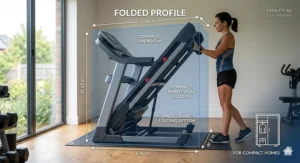
Automatic Incline Treadmill vs. Manual Incline: What You Actually Get for the Money
The price gap between manual and automatic incline treadmills has narrowed dramatically — often just $200-$300 separates comparable models. That modest premium buys far more than convenience; it fundamentally changes workout effectiveness and consistency. Manual incline systems require stopping the belt, dismounting, adjusting mechanical pins or knobs, and remounting — a 20-30 second interruption that breaks cardiovascular rhythm and discourages frequent gradient changes. Automatic systems adjust mid-stride in 3-7 seconds, enabling interval protocols like “Tabata Hills” (20 seconds flat sprint, 10 seconds recovery at 10% incline, repeated 8 times) that would be impossible to execute manually.
The real value emerges in program variety and progression. Automatic systems unlock preset workouts like “Rolling Hills” or “Mountain Climb” that continuously vary incline throughout 30-45 minute sessions, mimicking outdoor terrain unpredictably. These programmed variations prevent adaptation plateau — your body can’t anticipate what gradient comes next, forcing continuous physiological adjustment that accelerates fitness gains. Manual systems lock you into single-gradient sessions (today’s 5% climb, tomorrow’s 8% climb), which become mentally boring and physically predictable within weeks.
Integration with interactive training content provides the automation premium’s ultimate justification. iFIT’s virtual routes through Patagonia, Peloton’s instructor-led classes, or PitPat’s gamified racing automatically adjust your treadmill’s incline to match content in real-time. The instructor says “we’re climbing now” and your deck tilts to match their pace, creating immersive experiences manual systems cannot replicate. Subscription costs seem expensive initially, but compare $39/month to $60-$150/month gym memberships offering identical group fitness experiences. The average lifespan of a treadmill is about 7 to 12 years, making long-term subscription costs an important factor in total ownership calculations.
Safety implications favor automation surprisingly. Manual adjustments tempt users to “tough out” inappropriate gradients rather than endure dismount hassle, risking injury or excessive strain. Automatic systems encourage experimentation — testing an 8% grade for two minutes costs nothing beyond button press, so you learn optimal intensities through low-stakes exploration. The psychological barrier to making adjustments drops dramatically when consequence is two-second button press versus full workout interruption.
What to Expect: Real-World Performance Over Time
The first three months reveal whether your automatic incline treadmill was wisely chosen or poorly matched to your needs. Week 1-2, most buyers feel overwhelmed by options — preset programs, manual controls, app connectivity, incline adjustments all competing for attention. This confusion is normal; focus exclusively on basic operation (start, stop, speed, incline) before exploring advanced features. Week 3-4, muscle adaptation kicks in dramatically. Workouts that felt crushing initially now feel manageable, signaling your cardiovascular system responding to training stimulus.
By month 3, you’ve likely discovered your machine’s true comfort zone. That motor advertised as “suitable for running” might sound strained during daily 7 MPH sessions, or the compact 18″ belt that seemed adequate now feels cramped. This discovery phase explains why conservative purchasing (buying slightly more capability than current needs) pays off — you won’t outgrow the machine as fitness improves. Alternatively, aggressive early buyers who purchased minimal models realize they need upgrading, eating the transaction costs of selling and repurchasing.
Year 1 milestone brings the first maintenance wake-up call. Belts that ran silently now squeak slightly, indicating lubrication needs. Displays that responded instantly now lag a half-second, suggesting dust accumulation in electrical components. Users who ignored maintenance protocols (monthly lubrication, quarterly cleaning) experience accelerated component wear — belt edges fraying, motor sounding louder, incline transitions becoming jerky. Those who maintained diligently report zero issues, validating that regular upkeep matters far more than brand reputation.
Years 2-5 separate quality construction from clever marketing. Budget machines ($300-$600) showing wear patterns: belt tracking drifts left or right requiring frequent adjustment, touchscreen responsiveness degrades, incline motor develops noticeable lag during transitions. Mid-range models ($800-$1,800) generally hold up well with proper maintenance — belt remains centered, motor sounds consistent, controls stay responsive. Premium machines ($2,000+) justify their cost through rock-solid performance even after thousands of miles. The Sole F80’s lifetime motor warranty gets tested and proven valid as original components chug along reliably while competitor machines require motor replacement.
The 7-12 year lifespan cited in research depends entirely on usage intensity and maintenance consistency. Three-days-weekly walkers logging 30-minute sessions easily reach 10+ years on quality machines. Daily runners accumulating 50+ weekly miles compress that lifespan to 5-7 years on anything below commercial-grade construction. When the end comes, it’s usually not catastrophic failure but accumulating small issues — motor louder than before, belt tracking requires constant adjustment, incline motor occasionally stalls — that tip cost-benefit toward replacement rather than repair.
Features That Actually Matter (And Those That Don’t)
Touchscreen size obsesses buyers far more than it should. That 22-inch display versus 10-inch screen matters primarily for entertainment content (Netflix, YouTube) during long sessions. For workout metrics (speed, time, calories), even 7-inch screens display information clearly. The NordicTrack 1750’s 16-inch screen hits the sweet spot — large enough for immersive iFIT classes without excessive cost or power consumption. Unless you specifically plan to watch full-length movies during walks, prioritize display quality (brightness, contrast, touch responsiveness) over sheer size.
Automatic incline range separates amateur from serious training equipment. Machines maxing at 10% lack sufficient challenge for intermediate/advanced users within 6-12 months. The 12-15% range found in Sole F80, Horizon 7.0 AT, and WELLFIT TM007 provides multi-year progression capability. Beyond 15%, returns diminish — gradients that steep primarily target very specific training goals (extreme hill climbing preparation) that most users never pursue. Decline capability (-3% to -5%) holds genuine value for runners training for varied terrain, but walkers derive minimal benefit justifying the premium.
Motor responsiveness during incline transitions receives insufficient attention during purchasing research. That 5-7 second lag adjusting from 0% to 12% sounds trivial until you’re executing interval workouts requiring frequent changes. RapidSync technology in Horizon models or commercial-grade motors in NordicTrack equipment reduce this lag to 3-4 seconds, maintaining workout rhythm. Test videos online showing actual transition speeds provide better comparison than specifications sheets claiming “quick adjustment.”
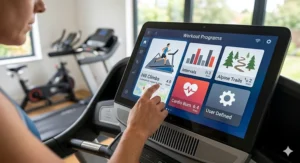
Built-in workout programs vary wildly in usefulness. Eight preset programs (Hill Climb, Fat Burn, Cardio, Interval, 5K, Custom User, Heart Rate Control, Manual) cover 95% of training needs. Machines advertising “40 Preset Programs” mostly offer redundant variations that nobody uses — Fat Burn vs. Fat Burn Plus vs. Fat Burn Extreme achieve similar results through slightly different speed/incline patterns. Focus instead on whether programs automatically adjust both speed AND incline (more challenging, higher calorie burn) versus incline-only adjustment (less effective).
Heart rate monitoring technology splits between pulse grip sensors (grab handlebar sensors) and wireless chest straps. Pulse grip sensors work adequately for basic heart rate tracking but require holding sensors continuously — incompatible with natural arm swing during running. Wireless chest straps ($30-$60 addition) provide accurate continuous monitoring and enable ActivePulse or similar technologies that automatically adjust workout intensity maintaining target heart rate zones. Serious training benefits enormously from chest strap investment; casual exercisers manage fine with pulse grip sensors.
Folding mechanisms command disproportionate attention given how infrequently most users fold/unfold their machines. That “easy assist hydraulic folding” sounds impressive until you realize the treadmill lives unfolded 360 days yearly. Folding capability matters primarily for multi-use spaces (home office converting to gym) or moving homes frequently. If your machine will occupy dedicated space permanently, prioritize sturdy non-folding construction over elaborate folding mechanisms adding failure points.
Long-Term Cost Analysis: What You’ll Really Spend
Purchase price represents just 40-60% of true five-year ownership cost once subscriptions, accessories, maintenance, and electricity factor in. That $1,500 automatic incline treadmill with mandatory $39/month iFIT subscription costs $3,840 over five years ($1,500 + $2,340 subscription). Compare to a $1,800 Sole F80 with zero subscriptions totaling $1,800 flat — the “more expensive” machine costs $2,040 less over five years. Subscription-free models from Sole, Horizon, or budget brands eliminate this perpetual expense entirely.
Electricity consumption varies dramatically between motor sizes and usage patterns. A 4.25 CHP motor running one hour daily at moderate intensity (5 MPH, 5% incline) consumes approximately 1.2-1.5 kWh. At average U.S. electricity rates ($0.14/kWh), that’s $0.17-$0.21 per workout or $62-$77 annually. Smaller 2.5 HP motors on walking pads consume 0.6-0.8 kWh hourly ($31-$41 annually). Over five years, this $155-$385 difference becomes meaningful when comparing models. Energy-efficient motors (common in 2024-2026 models) can reduce consumption 15-25% versus older technology.
Maintenance costs remain minimal with proper preventive care but spike dramatically when neglected. Recommended supplies total $30-$50 annually: silicone lubricant ($15), cleaning supplies ($10), replacement safety key ($8), occasional hex wrenches ($7). Preventive maintenance investment prevents $200-$400 repair bills: worn belt replacement ($80-$150 parts + $120-$200 labor), motor bearing service ($150-$250), incline motor repair ($200-$400). Most mechanical failures trace directly to deferred maintenance — monthly lubrication prevents 70% of belt-related issues.
Extended warranty debate divides buyers sharply. Manufacturer standard warranties typically cover frame (lifetime), motor (lifetime or 5-10 years), parts (1-3 years), and labor (1 year). Extended warranties ($200-$400) double parts/labor coverage but statistical analysis suggests mixed value. Machines from established brands (Sole, NordicTrack, Horizon) rarely require major repairs within extended warranty periods if properly maintained. Budget brands ($300-$600 models) have higher early failure rates making extended coverage potentially worthwhile. Calculate break-even: if extended warranty costs $300 and covers two years additional labor, you’d need at least one $300+ repair to benefit — unlikely on quality machines, more probable on budget equipment.
Accessory costs accumulate surprisingly. Essential additions: floor mat ($40-$80) protects flooring from weight and vibration, heart rate chest strap ($30-$60) enables accurate monitoring and ActivePulse features, wireless headphones ($40-$120) improve audio quality without cord tangles. Optional but popular: tablet holder upgrade ($20-$40), fitness tracker integration ($0 if using existing Garmin/Apple Watch), streaming service subscriptions ($10-$15/month for Netflix/Spotify during workouts). Budget an additional $150-$300 first year, $50-$100 annually thereafter for accessory refresh/replacement.
Depreciation impacts buyers planning to upgrade or relocate. Treadmills lose 40-50% value in year one, 60-70% by year three, and 80%+ by year five due to rapid technology advancement and used equipment availability. A $2,000 machine sells for $1,000-$1,200 after one year of light use, $600-$800 after three years. This depreciation schedule favors buying lightly-used recent models over new ones — letting someone else eat first-year depreciation saves hundreds while buying equipment barely broken in.
Frequently Asked Questions
❓ How much incline do I really need on my automatic incline treadmill?
❓ Can automatic incline treadmill really help me lose weight faster than flat walking?
❓ Do I need a subscription service to use automatic incline features?
❓ What's the difference between automatic and power incline on treadmills?
❓ How often should I use the incline feature to see results?
Conclusion: Your Next Steps to Better Fitness
The automatic incline treadmill you choose today shapes your fitness trajectory for the next 5-10 years. This isn’t hyperbole — the difference between a machine you’ll use consistently versus one collecting dust often comes down to matching your specific needs to the right features. Budget-conscious first-timers benefit enormously from the WELLFIT TM007 or DeerRun Z10, getting genuine automatic incline capability under $550 without subscription commitments. These entry-level machines let you test whether treadmill workouts fit your lifestyle before committing to premium models.
Intermediate exercisers seeking subscription-free training should prioritize the Sole F80 or Horizon 7.0 AT. Both deliver commercial-quality construction, 15% automatic incline, and zero monthly fees over their 7-12 year lifespan. The F80’s broader feature set (preloaded apps, Bluetooth connectivity, lifetime motor warranty) justifies its premium versus Horizon, but the 7.0 AT’s QuickDial controls and RapidSync motor provide superior interval training experience. Your choice hinges on priorities: features versus responsiveness.
Serious runners and committed fitness enthusiasts investing for the long term should examine the NordicTrack Commercial 1750 despite its higher upfront cost and subscription requirement. The 4.25 CHP motor, decline capability, and immersive iFIT integration create training experiences that maintain engagement year after year. Calculate total five-year cost (purchase + $2,340 subscriptions = $4,340-$4,840) and compare against $150-$200 monthly boutique fitness memberships ($9,000-$12,000 over five years). Suddenly that “expensive” treadmill looks financially prudent.
Apartment dwellers and space-constrained buyers face legitimate challenges accommodating traditional treadmills. The TRAILVIBER Walking Pad’s 12% automatic incline in a compact frame proves that serious training doesn’t require sprawling equipment. Its 450-pound capacity and gamified PitPat integration through DeerRun models demonstrate that walking-focused machines have evolved far beyond basic functionality. Don’t let limited square footage prevent you from accessing quality incline training.
The market continues evolving rapidly — 2026 models offer automatic incline capabilities at price points unimaginable just three years ago. This democratization of features historically reserved for commercial gyms empowers home fitness enthusiasts with professional-grade tools. Whatever your budget or space constraints, multiple viable automatic incline treadmill options exist today. The question isn’t whether you can afford quality equipment — it’s which specific model aligns with your unique situation.
Take your measurements (space, ceiling height, doorway width for delivery), define your budget including five-year costs, identify your priority features (subscription vs. subscription-free, compact vs. full-size, walking vs. running), and use this guide’s product-by-product analysis to narrow choices. The perfect automatic incline treadmill for your needs exists in this guide’s recommendations. Now it’s just a matter of deciding whether you value long-term investment (premium models) or immediate affordability (budget options) — both paths lead to improved fitness when paired with consistent effort.
Recommended for You
- 7 Best Compact Treadmill for Small Spaces That Actually Fit (2026)
- 7 Quietest Treadmill for Home – Silent Running Guide 2026
- 7 Best Treadmills for Apartment Living 2026 (Neighbor-Approved!)
Disclaimer: This article contains affiliate links. As an Amazon Associate, I earn from qualifying purchases. If you purchase products through these links, we may earn a small commission at no additional cost to you.
✨ Found this helpful? Share it with your friends! 💬🤗
