In This Article
If you’re serious about building a permanent home fitness setup, a stationary treadmill for home gym use changes everything. I’m not talking about those flimsy folding models that wobble during a light jog—I mean the kind of commercial-grade machines that become the cornerstone of your dedicated workout space. The kind you don’t fold up and shove in a closet because, honestly, you’ve committed the floor space and you’re not backing down.
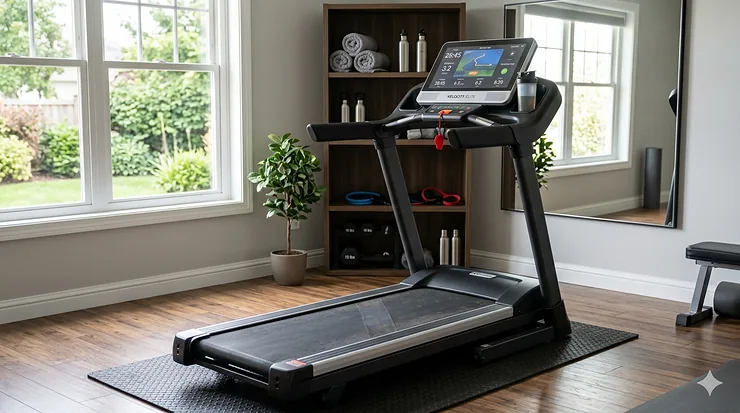
What most people overlook when shopping for a home gym non folding treadmill is that these machines aren’t just for running. A properly spec’d basement treadmill stationary setup becomes your daily wellness anchor—the equipment that survives 5 AM walks, post-dinner stress relief sessions, and those brutal HIIT workouts when the weather won’t cooperate. According to research from Harvard Medical School, incline treadmill training generates significantly more muscle activity than flat-surface work, and interval training can deliver cognitive benefits that last for years.
The challenge? Navigating a market flooded with marketing spin and finding the dedicated home gym treadmill that matches your training style, floor space, and long-term durability needs. After testing and researching dozens of models, I’ve identified seven machines that represent the best combination of permanent fitness setup quality, real-world performance, and value retention for serious home gym owners.
Quick Comparison Table: Top 7 Stationary Treadmills at a Glance
| Model | Motor Power | Running Surface | Incline/Decline | Weight Capacity | Price Range | Best For |
|---|---|---|---|---|---|---|
| NordicTrack Commercial 1750 | 3.5 CHP | 22″ × 60″ | 12% / -3% | 300 lbs | $2,000-$2,500 | Interactive training enthusiasts |
| Sole F80 | 3.5 CHP | 22″ × 60″ | 15% / 0% | 375 lbs | $1,600-$2,000 | Budget-conscious serious runners |
| Sole F85 | 4.0 CHP | 22″ × 60″ | 15% / -6% | 400 lbs | $2,100-$2,500 | Power users and heavy training |
| Precor TRM 445 | 3.0 HP | 20″ × 56″ | 15% / -2% | 350 lbs | $4,000-$5,000 | Premium build quality seekers |
| Horizon 7.8 AT | 4.0 CHP | 22″ × 60″ | 15% / 0% | 375 lbs | $1,800-$2,200 | App integration flexibility |
| LifeSpan TR5500i | 4.0 HP | 22″ × 60″ | 13% / -2% | 350 lbs | $2,000-$2,600 | Marathon training |
| Bowflex BXT216 | 4.0 CHP | 22″ × 60″ | 15% / 0% | 400 lbs | $1,900-$2,400 | Multi-user households |
Looking at this comparison, the Sole F85 and Horizon 7.8 AT emerge as the strongest all-around performers for most buyers—both deliver 4.0 HP motors and spacious decks in the mid-$2,000 range. However, if decline training is non-negotiable for your quad development, only the NordicTrack 1750, Sole F85, Precor TRM 445, and LifeSpan TR5500i deliver that capability. Budget-focused buyers should note that the Sole F80 sacrifices motor power and decline features but maintains the professional-grade 22″ × 60″ deck at a significantly lower entry point.
✨ Don’t Miss These Exclusive Deals!
🔍 Take your home gym cornerstone equipment to the next level with these carefully selected products. Click on any highlighted item to check current pricing and availability. These machines will help you create authentic fitness results your whole family can benefit from!
Top 7 Stationary Treadmills for Home Gym — Expert Analysis
1. NordicTrack Commercial 1750 — The Interactive Training Powerhouse
The NordicTrack Commercial 1750 represents what happens when traditional treadmill engineering meets modern streaming fitness. Built around a robust 3.5 CHP motor and featuring a 16″ HD pivoting touchscreen, this machine is designed for users who want their permanent home cardio equipment to deliver both hardware reliability and software engagement.
Real-World Performance Breakdown: The 3.5 CHP motor handles sustained 12 MPH speeds without the whine or heat buildup you’d experience on cheaper 3.0 HP units. More importantly, the -3% to 12% incline/decline range means you can simulate downhill quad work—something most home treadmills in this price bracket completely ignore. The 22″ × 60″ running surface accommodates stride lengths up to about 6’2″ comfortably, though taller runners might feel slightly cramped during all-out sprints.
Who This Is For: iFIT subscribers and users who need structured coaching to stay consistent. The automatic trainer control feature adjusts speed and incline based on the workout you’re streaming, removing the mental friction of constantly tweaking settings mid-run. If you’re the type who needs a virtual coach yelling encouragement, this setup works. If you’d rather watch Netflix and control your own intervals, you’re paying for features you won’t use.
Customer Experience Insights: Users consistently praise the decline feature for trail training simulation, though several mention the iFIT subscription requirement ($39/month) feels like a forced upsell. The folding mechanism works smoothly via a foot-activated release, but at 340 pounds assembled, this isn’t a machine you’re moving between rooms.
Pros:
✅ Decline training capability rare in this price range
✅ RunFlex cushioning reduces joint impact without feeling mushy
✅ 16″ screen pivots for off-treadmill floor workouts
Cons:
❌ iFIT subscription required for most advanced features
❌ 300 lb max capacity lower than competing models
Price & Value Verdict: In the $2,000-$2,500 range, this delivers if you’ll actually use the coaching features. For self-directed trainers, the Sole F80 offers better hardware value without the subscription tax.
2. Sole F80 — The Budget Champion for Serious Runners
The Sole F80 is what you get when a company strips away touchscreens and forced subscriptions to focus purely on running performance. With a 3.5 CHP motor, lifetime frame and motor warranty, and a price point that typically sits around $1,600-$2,000, this machine targets buyers who want commercial durability without commercial pricing.
Real-World Performance Breakdown: The CushionFlex Whisper Deck lives up to its name—footstrike impact is noticeably softer than asphalt without that unstable “running on a cloud” feeling some cushioned decks create. The 22″ width gives you elbow room during tempo runs, and the 15-level incline system adjusts smoothly without the jerky transitions cheaper models exhibit. What you sacrifice compared to pricier options is decline capability and a basic LCD display instead of a touchscreen.
Who This Is For: Self-motivated runners and walkers who use their phone or tablet for entertainment and don’t need a machine to gamify their workouts. If your training plan lives in a spreadsheet or app like Strava, and you just need reliable hardware to execute it, the F80 handles the job without asking you to subscribe to anything.
Customer Experience Insights: Owners report this machine holding up through 5+ years of daily use with minimal maintenance beyond belt lubrication. The 375 lb weight capacity is 25% higher than the NordicTrack 1750, making it a smarter choice for heavier users. Assembly takes about 90 minutes with two people.
Pros:
✅ No subscription fees—ever
✅ Lifetime warranty on frame and motor signals confidence
✅ Lower step-up height easier for users with mobility concerns
Cons:
❌ No decline training (15% incline only)
❌ 6.5″ LCD display feels dated compared to touchscreen competitors
Price & Value Verdict: Around $1,700, this is the best pure running machine for buyers who don’t need digital entertainment built into the console. Long-term value is exceptional given the warranty coverage.
3. Sole F85 — Maximum Power in a Folding Frame
The Sole F85 takes everything people love about the F80 and upgrades the motor to 4.0 CHP, adds a 15.6″ HD touchscreen, and includes -6% decline for serious hill training simulation. This is Sole’s answer to buyers who want commercial-grade power but still need the option to fold the deck when space is tight.
Real-World Performance Breakdown: The 4.0 CHP motor is the same commercial-rated unit found in hotel fitness centers, meaning it handles sustained high-speed intervals without overheating even when users approach the 400 lb weight limit. The -6% decline is deeper than most home treadmills offer, targeting your quads in ways flat or incline-only training simply can’t replicate. The 15.6″ touchscreen mirrors your device and provides access to built-in apps—no subscription required.
Who This Is For: Power users who run hard, train heavy, or share the machine with multiple family members across different fitness levels. If you’re alternating between zone 2 base runs and VO2 max intervals, the 4.0 HP motor delivers consistent performance across that entire spectrum. Heavier athletes (approaching 400 lbs) get a machine engineered for their needs without compromising on features.
Customer Experience Insights: Users highlight the whisper-quiet operation—many mention running at 10 MPH while watching TV at normal volume without any motor whine. The commercial-grade Z-frame design eliminates the wobble some folding treadmills develop after a year of use. At 294 lbs assembled, this is still manageable for two people during setup.
Pros:
✅ 4.0 CHP motor matches light commercial specifications
✅ -6% decline deepest in its price class for quad development
✅ Touchscreen with built-in apps, zero subscription pressure
Cons:
❌ Still a folding design—non-folding frames are slightly more stable
❌ Touchscreen software lags behind NordicTrack’s polish
Price & Value Verdict: In the $2,100-$2,500 range, this is arguably the best value for serious runners who need maximum motor power. You’re getting commercial durability at residential pricing.
4. Precor TRM 445 — The Premium Rebuild-for-Life Option
The Precor TRM 445 exists in a different pricing tier ($4,000-$5,000 range) for buyers who view fitness equipment as a 20-year investment, not a 5-year appliance. This is a non-folding, commercial-grade machine built to the same specifications Precor sells to rehabilitation centers and high-end gyms.
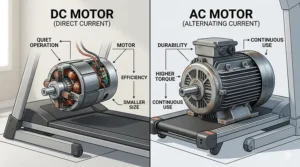
Real-World Performance Breakdown: Precor’s Ground Effects Impact Control System and Integrated Footplant Technology control belt deceleration when your foot plants and acceleration during push-off, creating a running feel that’s eerily close to outdoor pavement. The 3.0 HP motor is technically smaller than the Sole F85’s 4.0 HP, but it’s an AC motor (not DC) designed for continuous commercial use. The 15% incline and 2% decline range handles most training scenarios, though the decline is shallower than the Sole F85’s -6%.
Who This Is For: Buyers prioritizing longevity and serviceability over upfront cost. Precor machines are built to be serviced and rebuilt—parts remain available for 10+ years, and the design allows technicians to replace worn components without scrapping the entire unit. If you’re furnishing a dedicated home gym space and plan to stay in your home long-term, this is the “buy once, maintain forever” option.
Customer Experience Insights: Owners describe this as the smoothest, most natural-feeling treadmill they’ve used outside a physical therapy clinic. The R40 console is touchscreen-capable but not flashy—it prioritizes workout metrics over entertainment. Assembly requires professional installation (included in most purchases) due to the unit’s weight and complexity.
Pros:
✅ Patented belt control technology mimics outdoor running biomechanics
✅ Designed for serviceability—parts available for decades
✅ USA-manufactured with exceptional build quality
Cons:
❌ Price is 2-3× competing models for similar specs on paper
❌ 20″ × 56″ deck is narrower than 22″ × 60″ standard
Price & Value Verdict: Around $4,500, this is for buyers who understand total cost of ownership. You’re paying for a machine that outlasts two cheaper treadmills with maintenance costs factored in.
5. Horizon 7.8 AT — The App-Flexible Workhorse
The Horizon 7.8 AT is Sole’s primary competitor in the $1,800-$2,200 range, offering nearly identical specs but with a longer parts warranty and a console philosophy built around flexibility rather than proprietary ecosystems.
Real-World Performance Breakdown: The 4.0 CHP motor, 22″ × 60″ deck, and 375 lb capacity mirror the Sole F85 almost exactly. Where Horizon differentiates is the QuickDial speed and incline controls—physical dials that let you roll through speed changes smoothly instead of tapping buttons repeatedly. The 9.3″ backlit LCD display isn’t a touchscreen, but Bluetooth connectivity pairs with Zwift, Peloton Digital, Apple Fitness+, or any tablet you mount on the generous media shelf.
Who This Is For: Users who already subscribe to a fitness platform (Peloton Digital, Zwift, etc.) and want hardware that integrates seamlessly without forcing you into a proprietary ecosystem. If you switch between apps seasonally or share the machine with family members who each have different preferred platforms, this flexibility prevents friction.
Customer Experience Insights: Owners appreciate the 5-year parts warranty (versus 3 years on most competitors) and responsive customer service when issues arise. The 3-Zone Variable Response Cushioning adjusts firmness across the deck—softer at the front for impact absorption, firmer at the back for toe-off power. At 330 lbs assembled, this is one of the heavier residential models, which translates to stability.
Pros:
✅ QuickDial controls simplify interval training execution
✅ 5-year parts warranty longest in class
✅ Platform-agnostic Bluetooth works with any fitness app
Cons:
❌ No touchscreen (LCD display only)
❌ No decline capability (15% incline only)
Price & Value Verdict: Around $2,000, this is the smart choice for users already committed to Zwift, Peloton Digital, or Apple Fitness+ who need reliable hardware without a forced subscription.
6. LifeSpan TR5500i — The Marathon Trainer’s Dream
The LifeSpan TR5500i targets endurance athletes with its 13.5 MPH top speed (faster than the 12 MPH standard), 4.0 HP motor, and 50+ built-in workout programs designed around long-distance training progressions.
Real-World Performance Breakdown: The 13.5 MPH ceiling accommodates sub-4:30 mile pace training, which matters for competitive runners who need their home equipment to support race-specific speed work. The 13-level incline and 2-level decline range handles hill repeats, and the 10″ full-color touchscreen allows screen mirroring from YouTube for unlimited free workout content. Eight compression shocks under the 1″ thick deck create a running surface that feels stable without being punishingly hard.
Who This Is For: Marathon and half-marathon trainees who need a machine capable of supporting 60+ minute runs at varying paces and inclines. The 43 built-in workouts include race training protocols, tempo run structures, and interval ladders that remove the guesswork from daily training. If you’re following a structured plan and need equipment that won’t limit your progression, this handles everything from recovery jogs to threshold intervals.
Customer Experience Insights: Users highlight the YouTube mirroring feature as a game-changer for accessing free content without subscription fees. The Bluetooth speaker quality is surprisingly good for built-in audio. Assembly is straightforward, though the 120 kg (265 lb) weight requires two people for safe handling.
Pros:
✅ 13.5 MPH top speed accommodates serious speed work
✅ 50+ built-in programs eliminate need for external training plans
✅ Screen mirroring unlocks free YouTube workout content
Cons:
❌ 10″ screen smaller than competing touchscreens
❌ Decline range limited to -2% versus Sole F85’s -6%
Price & Value Verdict: In the $2,000-$2,600 range, this is the best option for runners training for events who need structured programming without ongoing subscription costs.
7. Bowflex BXT216 — The Family-Friendly Multi-User Solution
The Bowflex BXT216 (part of their Results Series) focuses on multi-user scenarios with four savable user profiles, 11 one-touch programs, and JRNY app compatibility that auto-adjusts workouts based on individual fitness levels.
Real-World Performance Breakdown: The 4.0 CHP motor and 22″ × 60″ deck match commercial specifications, while the Comfort Tech deck suspension uses variable cushioning—softer in the heel-strike zone, firmer at toe-off. The 9″ color LCD console isn’t a full touchscreen but connects with the JRNY app (subscription optional) for adaptive training. What sets this apart for families is the four user profile system that remembers each person’s preferred settings, workout history, and progress metrics.
Who This Is For: Households where multiple people with different fitness levels share equipment. If you’re alternating between your 5K training runs, your spouse’s walking routine, and your teenager’s sprint workouts, the saved profiles prevent constant reprogramming. The JRNY app integration (optional subscription) automatically adjusts intensity based on who’s using the machine.
Customer Experience Insights: Users appreciate the Zwift compatibility and tablet-mounting options that keep entertainment separate from workout tracking. The 400 lb weight capacity accommodates larger users without compromising deck stability. The 3-ply belt requires virtually no maintenance beyond occasional lubrication.
Pros:
✅ Four user profiles perfect for multi-generational households
✅ Comfort Tech variable cushioning reduces injury risk
✅ Zwift and JRNY compatibility without locking into one ecosystem
Cons:
❌ 9″ display smaller than premium competitors
❌ JRNY subscription adds cost if you want adaptive training
Price & Value Verdict: Around $1,900-$2,400, this delivers the best multi-user experience for families who need one machine to serve different training styles and fitness levels.
Setting Up Your Dedicated Home Gym: What the Treadmill Manual Won’t Tell You
Once you’ve selected your basement treadmill stationary setup, the Amazon product listing will tell you about motor specs and warranty coverage. What it won’t explain is how to maximize longevity and performance during your first 90 days of ownership—the critical break-in period where most user errors occur.
Month 1: Break-In Protocol
Your treadmill’s belt, motor, and deck need gradual conditioning. Start with 15-20 minute sessions at moderate pace (3.5-5 MPH) for the first week, even if you’re capable of running harder. This allows the belt to settle into its tracking pattern and lets the motor bearings seat properly under load. By week three, you can progress to your normal training intensity, but avoid maximum speed sprints until you’ve logged 15-20 hours of total use.
Floor Preparation No One Mentions
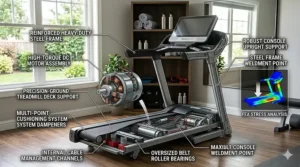
A dedicated workout space requires more than clearing floor space. Concrete basement floors need rubber matting (3/4″ minimum) to absorb vibration and protect both the machine and your foundation. Second-floor installations require structural assessment—a 300 lb treadmill plus a 200 lb user creates impact forces your floor joists weren’t designed for. Consult a structural engineer before installing any permanent home cardio equipment above ground level.
Maintenance That Actually Matters
Forget the monthly lubrication schedule in your manual—it’s based on light recreational use. If you’re logging 10+ hours weekly, lubricate the belt every 6 weeks using 100% silicone-based lubricant (not petroleum-based). Check belt tension monthly by lifting the center—you should be able to lift it 2-3 inches maximum. Vacuum underneath quarterly to prevent dust buildup on the motor cooling fan.
Choosing the Right Machine: A Decision Framework for Home Gym Cornerstone Equipment
The wrong approach to buying a dedicated home gym treadmill is comparing specs in a spreadsheet and choosing the highest numbers. The right approach recognizes that your training style, household situation, and long-term fitness goals determine which machine serves you best.
For Solo Serious Runners (Weekly Mileage 20+)
Prioritize: Motor power (4.0 HP minimum), deck size (22″ × 60″), decline capability for quad development, and warranty coverage on frame/motor. Your best matches: Sole F85 or LifeSpan TR5500i. Skip the subscription-dependent models unless you genuinely use coaching features—you’re buying hardware, not software.
For Multi-User Households (Different Fitness Levels)
Prioritize: Weight capacity (375+ lbs), user profile storage, wide speed range (0.5-12+ MPH), and platform-agnostic connectivity. Your best matches: Bowflex BXT216 or Horizon 7.8 AT. The saved profiles eliminate constant setting adjustments between users.
For Rehabilitation and Low-Impact Training
Prioritize: Cushioning quality, low step-up height, decline capability for eccentric quad loading, handrail stability. Your best matches: Sole F80 (lowest step-up) or Precor TRM 445 (superior biomechanics). Avoid machines marketed primarily for “power” or “performance.”
For Long-Term Investment (10+ Year Horizon)
Prioritize: Serviceability, parts availability, commercial-grade construction, non-folding frame. Your best match: Precor TRM 445. You’re paying 2× upfront but avoiding the replacement cycle cheaper machines require.
Common Mistakes When Buying a Basement Treadmill Stationary Setup
Mistake #1: Assuming Folding Equals Space-Saving
A folded treadmill still occupies 40″ × 34″ of floor space—you’ve just shifted it vertical. If your ceiling is 8 feet, the folded unit extends to roughly 6 feet tall, creating an imposing presence. True space-saving happens when you commit the floor space and use a non-folding frame that’s 30% more stable.
Mistake #2: Overvaluing Touchscreen Size
A 22″ touchscreen sounds impressive until you realize you’re watching it from 3-4 feet away while running. A tablet mounted on the media shelf delivers identical functionality at a fraction of the cost. Prioritize motor quality and deck dimensions over screen real estate.
Mistake #3: Ignoring Ceiling Height for Tall Users
If you’re over 6’2″, check the console height + your running posture. Most manufacturers assume a 5’10” user—taller runners risk clipping ceiling fans or low-hanging lights during treadmill sessions in basement setups. Measure your space with arm extension overhead before purchasing.
Mistake #4: Underestimating Electrical Requirements
Most treadmills require a dedicated 20-amp circuit. If you plug into a 15-amp circuit shared with other basement equipment, you’ll trip breakers mid-workout. Have an electrician install a dedicated circuit before delivery day.
What to Expect: Real-World Performance vs. Marketing Claims
Treadmill manufacturers love quoting peak specs that sound impressive on paper but rarely translate to actual user experience. Here’s what the numbers actually mean when you’re 30 minutes into a run:
Motor Power: CHP vs. HP Explained
A “3.5 HP” motor and “3.5 CHP” motor are not the same thing. HP (horsepower) refers to peak output—what the motor can deliver for a few seconds before overheating. CHP (continuous horsepower) measures sustained output during extended use. Always compare CHP figures. A 3.5 CHP motor handles sustained running at 8-10 MPH for multiple users daily. A 3.0 CHP motor starts to strain under those conditions after 12-18 months.
Cushioning: The Goldilocks Problem
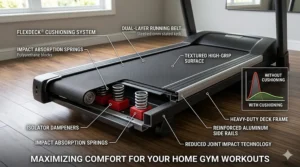
Too much cushioning feels unstable and reduces power transfer during toe-off. Too little creates joint impact comparable to concrete. Quality treadmills use variable cushioning—softer where your heel strikes, firmer where you push off. This prevents both impact injuries and the “running on a marshmallow” sensation that ruins your gait mechanics.
Noise Levels: What “Whisper-Quiet” Actually Means
A properly functioning treadmill at 6 MPH generates 55-60 decibels—roughly the volume of normal conversation. Your footsteps contribute another 10-15 decibels depending on your running form. Marketing claims of “whisper-quiet” operation ignore the biomechanical reality that you’re still pounding your body weight into a deck at 160+ beats per minute. Invest in quality flooring underneath, not marketing promises.
Stationary Treadmill for Home Gym vs. Commercial Gym Membership: The 5-Year Math
A mid-range dedicated home gym treadmill costs $2,000-$2,500. A commercial gym membership averages $50/month ($600/year). Break-even occurs at year 4-5, but that simple calculation ignores the hidden variables:
Time Savings Multiplier: Eliminating a 30-minute round-trip commute to the gym adds 15 hours monthly to your available training time. Over five years, that’s 900 hours—equivalent to 37.5 full days of your life. What’s that worth to you?
Consistency Premium: Research from Harvard Health shows that exercise consistency matters more than intensity for longevity benefits. Home equipment removes the friction that prevents workouts—no weather excuses, no parking hassles, no equipment-wait frustration.
Household Value: A single treadmill serves multiple family members simultaneously across different schedules. Your $2,500 investment divided by four users over five years equals $125/year per person—impossible to match with individual gym memberships.
❓ FAQ: Stationary Treadmills for Home Gyms
❓ What is the difference between a stationary treadmill for home gym and a folding treadmill?
❓ How much space do I need for a basement treadmill stationary setup?
❓ Can a 4.0 HP motor really make a difference compared to 3.5 HP?
❓ Do I need decline capability on my permanent home cardio equipment?
❓ What weight capacity should I choose for my dedicated workout space treadmill?
Conclusion: Building Your Perfect Dedicated Workout Space
Selecting the right permanent fitness setup treadmill isn’t about finding the machine with the longest spec list—it’s about matching equipment capabilities to your actual training patterns, household needs, and long-term fitness trajectory. The seven models I’ve analyzed represent the strongest options across different price points and use cases, from the budget-focused Sole F80 to the commercial-grade Precor TRM 445.
For most serious home gym builders, the Sole F85 and Horizon 7.8 AT deliver the best balance of motor power, deck dimensions, and value retention in the $2,000-$2,200 range. If interactive coaching keeps you consistent, the NordicTrack Commercial 1750 justifies its subscription model. Marathon trainees benefit from the LifeSpan TR5500i‘s extended speed range and structured programming. And buyers planning a 20-year ownership cycle should seriously consider the Precor TRM 445 despite its premium pricing.
Whatever you choose, remember that a dedicated home gym treadmill becomes the foundation of your daily wellness routine. It’s the equipment that survives New Year’s resolutions, supports injury rehabilitation, and witnesses your progression from casual walker to confident runner. Choose based on how you’ll actually use it, not how impressive the specs look on paper. Your future self—five years from now, logging consistent miles without weather excuses or gym commutes—will thank you for making the investment.
Recommended for You
- 7 Best Folding vs Non-Folding Treadmill Comparison 2026
- 7 Best Stationary Treadmills for Home Gym 2026
- 7 Best Heavy Duty Treadmills Under $1500 – 2026
Disclaimer: This article contains affiliate links. As an Amazon Associate, I earn from qualifying purchases. If you purchase products through these links, we may earn a small commission at no additional cost to you.
✨ Found this helpful? Share it with your friends! 💬🤗
